January 3, 2025
Well, 2025 is off with a bang. My New’s Eve hangover didn’t have time to kick in before the news from New Orleans rolled in. And then Las Vegas. Welcome to the worst year of our lives.
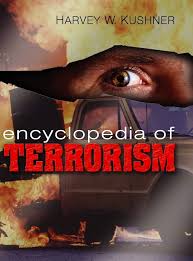
Forty years ago, my study of fascism was the focus of my second undergrad major of political science. That then moved headlong into the field of criminology. As a graduate student, my research on teenage skinheads evolved into a study of right-wing extremists groups. Once I had my PhD in my pocket, that work became a scholarship on domestic terrorism. When I was asked to contribute to the 2003 edition of the Encyclopedia of Terrorism, I knew had achieved the title of “terrorism expert.” And that meant I would spend a chunk of New Year’s Day talking to reporters.
The study terrorism is not exactly an exact science. And those coming from academia and those coming from law enforcement are going to have different focuses (root causes vs. threat assessments, for example). But where we come together is in vague intention to create terrorist profiles (which I jokingly refer to as terrorist stereotypes). The good news is that we have a massive amount of data from previous bombings, mass shootings, car rammings, and the like to have a pretty good picture of who commits these crimes, with a handful of relevant variables. The bad news is that we have all this data because of the success of these people in carrying out their deadly plots.
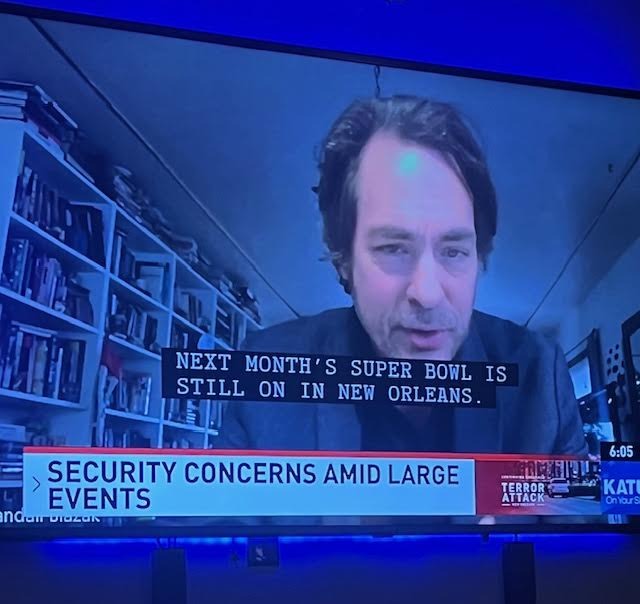
So with minimal facts available, I had a pretty clear picture of who Shamsud-Din Jabbar, the New Orleans attacker who killed 15, was and wasn’t. For example, despite the unhelpful grandstanding at Wednesday’s press conference, I was pretty certain Jabbar worked alone. The blather that Jabbar was a part of an “ISIS cell” fit conservative fear-mongering (since the “immigrant” narrative crashed), but did’t fit the typical profile. This was not the Oklahoma City Bombing. It was the Big Easy’s version of the 2016 truck attack in Nice, France. While Donald Trump decried “open borders,” I talked to local media about how we have seen this movie before.

You’ve got a guy with a military background who served in Afghanistan who probably saw the heavy hand of Uncle Sam in a Muslim land. That was enough for Army psychiatrist Nidal Hassan who went on a shooting spree at Fort Hood in 2009, killing 13 and injuring dozens. Jabbar also had a host of economic crises, including massive debt, and a dramatic divorce involving conflict over children. Most men who go on workplace mass shootings are in the same situation. Exactly. The insanity of ISIS gave him a place to put his anger. Their binary world of believers vs. non-believers is like a warm blanket to someone whose life in a complete spiral. Like the workplace shooter, Jabbar was ready to check-out (AKA die) but he was going to go out in a blaze of glory, spreading his pain to others as he barreled down Bourbon Street.
The case of Matthew Alan Livelsberger is a little less obvious. Livelsberger was the Army Special Forces operations master sergeant who drove a rented Tesla Cybertruck up to the front door of the Las Vegas Trump Hotel, shot himself in the head and set off a bomb in the truck. Again, the nattering nabobs of disinformation over at Fox News claimed this was an attack on the incoming president and his boss, Elon Musk. But, there were facts that didn’t add up to that claim, including the fact that Livelsberger was a green beret (not known for their liberal anything) and that the bomb was so poorly constructed it didn’t injure anybody. (He could have driven straight into the hotel lobby if he was after casualties.) There are clues to motive that have nothing to do with Trump or Musk.

We’ve seen a steady increase in the suicide rate of active military (523 cases in 2023, up 9% from 2022). We still know so little about the PTSD-suicide link, but we know it exists. Livelsberger was a new father, so that should have been a mediating factor. (When Cozy was born, I didn’t want to miss a single second, staring at her while she slept.) But we don’t know much about the sergeant’s internal and external life yet. We do know that soldiers who suffer trauma from combat who also experienced trauma as young children are significantly more likely to spin off the rails. Musk and Trump have been a constant presence in the news. It’s likely that he chose the car and hotel as part of a strategy to make his suicide more newsworthy. After all, how many of the over 500 military suicides last year hit the news cycle? (And the suicide rate for veterans is almost twice the non-veteran rate, so maybe both Livelsbergerm and Jabbar were demanding attention on the matter.)
If there’s any good news in all this carnage it’s that we know these profiles inside and out. Which means we know the antecedents to the terror, the proverbial red flags. And the red flags provide intervention points to head off calamity. As we dissect these two New Year’s Day attacks, we’ll find points where “somebody could have done something.” The Cure-PNW project I work on, funded by the Department of Homeland Security, has been finding angles to de-escalate political violence by strengthening communities and empowering people to intervene when they see a Livelsberger or Jabbar moving toward criminal action. (We refer to these interveners as “credible messengers.”) This is the work that needs to be upscaled on a national level as 2025 promises many more January firsts. (Unfortunately, our grant runs out with the new administration.)
After Election Day there was a lot of “the sky is falling” hysterics on my side of the aisle. Yeah, decency and democratic guardrails took a major hit. But the 2026 midterm election is only 96 weeks away and there is already dissent in the Trump-Musk-GOP ranks. Maybe the sky won’t fall, but what we can count on remaining constant are the factors that drive (almost exclusively) men into choices to commit acts of terror. Better understanding how to utilize that knowledge gives that “something” that we can do.
 Watching the Wheels