January 6, 2024
As a student of the history of fascism and a teacher of that history, I’m well aware of the echoes of the past. When Hitler came to power in Germany in 1933, the first targets of the Third Reich were not Jewish shop owners, but college professors. Germany’s universities were purged of faculty that were Jewish or branded to be communist, socialist, or liberal. Albert Einstein, among other intellectuals, wisely fled his home country. The main work of the Nazi purge was not done by the SS, but by fascist students who were part of the Hitler Youth movement.
One the reasons Einstein and others, including the brilliant social theorists of the Frankfurt School, came to America is because of our value of academic freedom. Academic freedom creates a space for faculty and students to have the right to the free exchange of ideas. One core tenet states, “Academic freedom gives both students and faculty the right to express their views — in speech, writing, and through electronic communication, both on and off campus — without fear of sanction, unless the manner of expression substantially impairs the rights of others or, in the case of faculty members, those views demonstrate that they are professionally ignorant, incompetent, or dishonest with regard to their discipline or fields of expertise.” (Source: Inside Higher Ed)

I highlight this passage because it is clear that Donald Trump plans to go after universities in his second term, which is also laid out in Project 2025, authored by his former and current advisors. Trump has derided universities as engaging in “radical left indoctrination” and promised using federal levers to turn higher ed into centers of ideological loyalism. This includes making it harder for non-wealthy students to attend college, deporting student protestors, and firing accreditors. American universities are encouraging international students to return before Trump reinstates his Muslim travel ban and other draconian travel restrictions. His vow to reclaim universities from the “radical left” is a page torn from 1933.
Trump is not even sworn in and academics are already feeling the pressure as emboldened MAGA students try to out their liberal professors at colleges and on social media. I remember the last version of this in the 1980s when the group, Students for America, tried to publicly ostracize professors they deemed to be leftists. It was chilling. This time those students will have POTUS and the repurposed Department of Education on their side. Teachers and professors, especially those who are un-tenured, may censor their lessons out of fear of being dragged before institutional review boards or disciplinary hearings for making MAGA students feel uncomfortable.
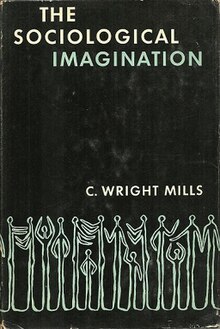
My job as an educator is to make students feel uncomfortable so I am not looking forward to the Trump Reich. As a sociologist, my entire pedagogy is based on C. Wright Mills concept of the sociological imagination, popularized in his 1959 book of the same name. Mills, writing at a peak moment in the Cold War, wanted Americans to be focused, not just on their (micro) personal lives, but the larger (macro) social structures that affect their personal lives. Mills argued that that happens with two conditions. First people have to be aware of their values and second is some sort of threat to those values. Mills argued that the threat puts people in a “crisis” where they begin to see things in a more sociological way.
I’m here to present the threat.
Don’t get me wrong. College classes are intended to be safe spaces, free from harassment. The threat is presented as challenges based on the Mills model. For example if your values say that women should have autonomy over their bodies, I will present how that right is threatened by politicians (including Trump) who have actively limited access to legal abortion procedures. That news should put you in a state of crisis, where you start thinking about social systems that allowed this to happen.
In my classes, we talk about race, gender, God, class, sex, and a bunch of other “uncomfortable” topics and my goal is to never make students feel more comfortable. (We called my own college Sociology 101 course, taken in 1981, the “everything you know is wrong class,” and I’m better for it.) I’m here to push buttons, but I’m guessing educators like me are concerned that some MAGA snowflakes are not going to respond well to intellectual challenges. They will be encouraged by a president who has positioned himself as the enemy of truth and science and the core values of The Enlightenment that brought us here.
When Trump is sworn in on the 20th, there will be numerous battlefields across the country, including the places where immigrants work and live, where women and girls get health care, and where trans people simply exist. I fear the classroom will also become a battleground. But instead of falling into the us vs. them narrative the fosters more conflict, my work will be to bring those students in, valuing their different views, and engaging them in the magic of academic freedom. I am not afraid.

 Watching the Wheels
One thought on ““It’s not my job to make you comfortable”: Teaching in the Era of Trump 2.0”