I was trying to respond to a message on Signal but I got a message that there was not enough space on my iPhone to open the app. So I had to find some old videos of the kid to delete and decide if I wanted to remove a few other apps I wasn’t actively using. Then I got a Facebook Messenger DM to respond to. As I was typing a response, another Messenger popped up. As I was deciding if I should finish the first message before answering the second one, my phone rang. It was a guy named “Michael” who wanted to talk to me about Medicaid A and B benefits. I wanted to be the lady in the commercial who just wanted to soak in the bathtub.
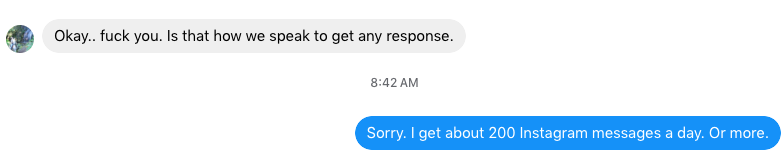
Electronic media has countless dark sides. Countless. One is the massive wave of stimuli that we are duty bound to respond to, from emails to TikTok comments. I spend a large chunk of each day deleting junk emails so I don’t have a panic attack every time I open my inbox. And a good percentage of those are emails I should read, but it’s just too much to process. And now that I have reached the status of “Influencer” on Instagram, I get hundreds of messages everyday, almost all incredibly supportive, or sharing a video I NEED TO WATCH. I try to respond to as many as I can, but I will occasionally get the indignant follower, offended that I was too whatever to respond. Where is my time?
And don’t get me started on the constant spam calls I get. Sometimes I’ll get a spammer calling while I’m on the phone with another spammer, all trying to separate me for my money. I’m getting better at not picking up but I do enjoy messing with them and seeing how long I can keep them on the line.” “Hello, my name is Michael and I’m calling about the new Medicaid benefits. How are you?” “Oh, I’m OK, Michael, but I’m suffering from a blocked colon. Do you think you’ll be able to help me? With my blocked colon?” Click.
All this has got me in the dreaded “Good ol’ days” funk that I typically warn against. Here we go. When was a kid, there was one phone in the house that was connected to the house by a chord. There was no call-waiting. If someone called while you were on a call, they got a busy signal and had to try later. That was it. No email. No texts. No DMs. If you didn’t have their phone number, you had to write a letter. On one side, we were more isolated from immediate conversations, but on the other side, we were more isolated from immediate conversations.
As a 20th century boy I can remember what it was like to be away from that landline and be unreachable. We knew when the street lights came on it was time to go home. We could be present in the moment. My daughter, born in 2014, will never know what it’s like to be unreachable. To be truly unconnected and on your own. I’m a sociologist, not a psychologist, so I can’t say if that’s a bad thing or not, but I do know there is great value of calmness and being present in the moment and that’s hard to do with all the pings and beeps and calls from “Michael.” I could unplug for a day but then I’d be stressed about all the DMs and emails that were piling up. Maybe a nice power outage would calm my nerves.
I remember staring at the telephone and wishing it would ring. Be careful what you wish for.
If we’re using history as our guide, we know it’s coming. The state sponsored violence against citizens. It’s already here at the hands of ICE and the violence against women’s body’s in the restriction of reproductive rights. But we can expect more waves of escalation. An ICE abduction that goes sideways when they try to kidnap an armed individual who does not want to be deported to some third country gulag. Protestors shot by National Guard who are unsure of their engagement orders, brains in fight or flight mode. The attempted arrest of Trump’s political prisoners who stand up to the weaponization of federal police. Critics of the regime who end up dead as is common in Putin’s Russia. We are a powder keg nation, one Kent State away from exploding. And that may be exactly what Trump wants.
Trump loves to cosplay strongman. He’s already sent the Marines to Los Angelos. He’s hellbent on turning America into one of those “shithole countries” he shit talks about. The slightest escalation could cause him to bring the hammer down so he can prove he’s an “alpha.” Then he has his pretext for suspending elections and cementing his police state rule. History has told this story before.
So how do we respond to the worst provocations of state violence?
The right has long argued for the need of a second American revolution against the multicultural liberal democracy that has sought to dethrone straight cis WASP men. (Can we start using SCWASPM, or is that too much?) The left is now quoting founding fathers like Thomas Jefferson. “The tree of liberty must be refreshed from time to time with the blood of patriots and tyrants.” Hidden among the peaceful protestors have been anarchists holstering side pieces. Is this the preamble to civil war?
I will admit the thought has crossed my mind. As someone who has had some weapons training, arming up for the coming shit show has been considered. But then I realize that’s a Hollywood fantasy of me protecting my family from Proud Boys and federal forces with an unlimited supply of ammo and slow mo John Rambo rage. It looks super cool in my head.
There will be blood. And there will be calls of retribution.
But, again, if history is our guide, we know that non-violence is the path. This isn’t the 18th century. For the last hundred years the model for the restoration of democracy has been built on mass uprisings that used peaceful means. They don’t always work. I’ll never forget watching the carnage in Tiananmen Square in 1989. But sometimes it has. (I also remember watching The Philippines and the People Power Revolution of 1986.) There will be casualties and it’s going to be heartbreaking. But the dictates of civil disobedience requires us to throw our bodies upon the wheel. Those deaths will be the seeds of a rebirth of democracy in the United States and their names will be cherished.
This moment, this terrifying moment in this terrifying history, could use a singular voice. We need an MLK or a Václav Havel to constantly remind us that the peaceful path is the most effective. To help us to channel our rage. An army of left-wing Timmothy McVeigh’s will not bring us the revolution we need. We can storm the ICE Bastille to liberate the prisoners of Trump’s race war. Or we can use our moral authority to transform those jailers to join us in the great experiment of democracy. In the absence of our Dr. King, we will have to be that singular voice.
We must hold the line and not become them. We’ve got the numbers and the moral arc.
I posted this piece on the paid part of The Blazak Report, my Substack, on May 24th. In wake of yesterday’s horrific attack in Boulder, Colorado, I thought it should be available to a wider audience.
May 24, 2025
Remember that song about the Vietnam War being the “big muddy”? (For you young ones, I’m referring to Pete Seeger’s 1967 “Waist Deep in the Big Muddy.”) Gaza feels the same way. The endless war where the locals are the casualties. It’s also the “big muddy” for the left. Since October 7, 2023, I’ve learned not to talk about Gaza, because if I do I will surely inflame somebody on my team. For example, does the word “Zionist” mean “a person who believes in the development and protection of a Jewish nation in what is now Israel” or a fascist who wants the genocide of Palestinians?
Even the basic facts are volatile. The October 7 Hamas attack killed 815 civilians, including 36 children, with another 251 Israelis taken hostage. The details are horrific. The worst attack on Jews since the Holocaust. But there are those who then argue that the attack was the penultimate response from Hamas after years of deadly violence against innocent civilians by Israel Defense Forces (IDF) and Jewish settlers in Gaza and the West Bank. Since IDF’s response to the attack, the Gaza Health Ministry has reported over 53,000 Palestinians have been killed, including over 17,000 children (as reported by Al Jazeera). And there are those who would argue that this is the cost of finally defeating Hamas and securing Israel’s safety.
Because I think it’s a bad idea to kill children in Ukraine or Yemen or Gaza, I attended some of the early protests to the attacks on Gaza. The local Palestinian/Arab/Muslim population were understandably outraged. Hospitals were being bombed. A year later Benjamin Netanyahu would be declared a war criminal by the International Criminal Court. But much of the protest was not about the Prime Minister of Israel, but Israel itself. When the chant turned to, “From the river to the sea, Palestine will be free!” I did some rudimentary geography in my head and figured out this was about more than stopping the bombing.
And I totally understand the need and the aching for a free Palestine. I also understand the need and the aching for a secure Israel. I have good friends and colleagues in both camps. What’s a human rights activist to do?
I was given some solace when I saw how many Jews, as well as Jews in Israel, were protesting Netanyahu’s war on civilians. I was also heartened to see Arabs and Muslims decry the October 7 attack. But then something weird happened.
The Trump administration started labeling the Gaza protestors as “antisemitic.” At the protests, I heard a lot of anger at Israel but I never once heard anything about “The Jews.” I have been studying anti-Semitism for a long time, including interviewing German neo-Nazis, so I think I have a pretty good handle on defining the term. Antisemitism sees a Jewish “race” as evil (some antisemites claim the Jews are the product of a union between Eve and Satan), and part of a global cabal to control banks, media, governments, and the world. There has been none of this in evidence at these protests. Trump’s Orwellian rewrite seemed more like performative “friend of Israel” strategizing.
It doesn’t mean that Jews haven’t felt unsafe or targeted by these protests. The murder of two Jewish employees of the Israeli embassy in DC this week, by a pro-Palestinian activist, certainly adds to that fear. However, antisemitism was on the rise before October 7 and has been a constant blight in American culture. But it is reasonable to believe that anger at Israel has morphed into anger at Jews as a group. It’s a rough time to be Jewish. Or Arab.
The pointless murder of Sarah Milgrim and Yaron Lischinsky this week reminded me of the pointless murder of six-year-old Wadea Al-Fayoume last year, killed by his landlord in Chicago because the landlord was angry about the October 7 attack. These names should be said together; Sarah Milgrim, Yaron Lischinsky, and Wadea Al-Fayoume, casualties of hate.
I have no solution to this conflict. It’s easy to say, “two state solution.” It’s easy to be angry at the rockets of Hezbollah and the Jewish settlers who drive Palestinians from their homes. I only have anger and the ability to alienate colleagues on both sides by not taking a side.
But I need to make two key points here.
I want to the right to stand in the discomfort of not taking a side while validating the hurt and anger that is felt on both sides. I believe in a free Palestine and a secure Israel. I believe that war is terrorism. And unlike Donald Trump, who one minute declares Qatar backers of Hamas, and the next minute is licking Qatari asses, I know this unwillingness to take a side is problematic. And I’m sorry to both causes.
The second thing is that I know in our struggle against the rise of authoritarianism in America we need all hands on deck. That means pro-Israel Americans and pro-Palestine Americans are going to have to lock arms. There’s going to be a lot of strange bedfellows in this fight. Wait until I tell you my plans for Reagan Republicans.
I don’t want to be afraid to talk about Israel/Gaza anymore. I want to acknowledge that it is hard and that I have faith in the people who are building bridges between the two people (and that included the two people who were murdered this week.) The violence must end. Shalom. Salam. Peace.
Ever since January 20th, when Trump pretended to take the oath of office, things in America have felt really dark. From people being grabbed off the street by ICE and disappearing from public view without due process to the rise and fake fall of Trump’s top campaign donor, Elon Musk, it’s felt very end of a nation-ish. This includes rumors about changes at the border.
Here in Portland, it’s about a four-and-a-half our drive to the Canadian border. I’ve made the crossing many times. Last time was in December when Cozy and I drove up to Vancouver for the Taylor Swift concert. The crossing was a blast with carloads of Swifties shouting to each other and Canadian border guards the recipients of countless friendship bracelets. It’s so nice having another country just up the road a piece.
So I decided to make a run for the border.
After Andi picked up Cozy yesterday, I hopped on I-5 to make that long journey north; Olympia, Seattle, Bellingham, to the Peace Arch crossing about 10 pm last night. Late on a Tuesday, the usual border traffic jam was gone, but there was something new this time.
On the American side of the Peace Arch, there was a red traffic light and a barricade pushing cars into one lane. Up ahead I saw two armed men talking to a driver. When they finished, I was waved me forward. Two men in black military gear and long rifles stopped me. I searched for any identifying organization; border patrol, ICE, HSI, FBI. Nothing. I could have asked. I could have said, “Hey fellas, I’m on a DHS CP3 project. Who are you with?” But the rifles just shut me up.
It was a brief interaction. One of the men asked me to role down all my windows so he could look in the car. It was clear they were looking for people, not contraband. I have no idea who they were. To tall white guys straight out of central casting. I assumed that if I wasn’t a white male, the stop would have been longer, but they sent me forward where I showed my passport to the border guard and headed into our great neighbor to the north.
I didn’t go all the way to Vancouver. I booked a “pod” just south of the city in Richmond because I saw a program about Japanese pod hotels and it seemed like a fun way to crash for the night before turning around and heading back the U.S.A. in the morning. If you ever wondered what sleeping in a coffin would be like, this was it. But the coffin had wifi, so I got an Instagram post up about the experience. Actually, it reminded me of sleeping on the tour bus back in my road manager days, so I slept well.
This morning, after breakfast at IHOP (it truly IS international!), I headed south. There had been a lot of talk that entering the US would be the real problem. That I would be made to swear loyalty to the Mango Mussolini or would they search my phone and look at my social media footprint where I daily proclaim the emperor has no clothes. One wrong thoughtcrime and I would go from Canada to El Salvador.
There were only two lanes open at Peace Arch so I had time to watch and get nervous. It was obvious that the guards were taking their time, especially with Canadian cars. When is was my turn, I got the 20 questions, about what I did in Canada, who I met in Canada, what I bought in Canada. I know that most of these questions are meaningless and just meant to give the guard a chance to evaluate your demeanor. He took my keys and opened up the back of my car. He said, “Where are all your clothes? Your backpack’s empty.” I wanted to say, “That’s my brother’s backpack. He’s dead.” But, for some reason, I said, “I left them in Seattle.” Again, my white maleness played a role, I’m sure. I was allowed to enter my country and head home to pick up my kid.
The whole thing was weird. Why are there armed guards before you get to the Canadian border guards? What are they asking Canadians coming into the U.S.? Last night, it felt like they are trying to stop people from escaping the United States, not escape into it, like a scene from The Handmaid’s Tale. I can’t change my skin tone to repeat the experiment, but the joy of international travel by car is now tense and scary. Part of me wonders if I should have just stayed in my pod.
As fifth grade starts to wind down and the complex reality of middle school looms, I’m reminded of how this blog began. November 2014, I was a stay at home dad, spending my days with Baby Cozy, wondering how I was going to raise a girl in a culture that still devalued half the population. The idea of a blog charting the challenges of “feminist fatherhood” seemed like a good way to share the struggle. Over ten years later, while the the world burns, protecting her gendered journey is still the priority.
The experience of elementary schools has seen the predicted emergence of pre-teen gender rolls. As discussed in Carol Gilligan’s pioneering 1982 study, In a Different Voice, the primary grades, 1 – 3, saw boys and girls as a fairly homogenous blob of “kids.” Half of Cozy’s friends were made of snips, snails and puppy-dogs’ tails. But by 4th, each team peeled off. In fourth grade, Cozy found her tribe of Swifties and boys became the object of much gossip and wonder. “Does he like me?”
Gilligan wrote about how 13 was the age of the great gender divide in which girls start to realize their value is based on how boys view them and their self-esteem plummets. But 2025 is not 1982, for better or for worse. For worse, kids are hitting puberty earlier now. In the 1970s, the average of the first menstruation was 13 and it’s down to 12 now. The beauty industry is targeting younger and younger girls. Cozy has been experimenting with make up but tells me it’s just for fun. On the better side, Gen Alpha kids have been raised by parents who mostly accept the basic tenants of feminism that girls and women are human beings. Boys seem less creepy and girls seem less concerned with their opinion.
We’ll see if that holds up in sixth grade.
This week I got a little tour of the middle school Cozy will attending in the fall. Parents had fun sharing their fond memories of middle school. I don’t know if it’s a “Deep South” thing, but we didn’t have middle schools where I grew up. Elementary went to seventh grade and eighth grade was high school, where you were a “sub-freshman,” the dreaded “Subbie.” Being in seventh meant you were the very big fish in the pond, but the year was also spent full of horror stories about what awaited the little subbies, destined to be terrorized by giant (and practically adult) high school kids. “They’ll force you to do heroin in the bathroom!”
I’ve gathered that middle school is the crucible of adolescent drama. Take 300 kids going through puberty and lock them in a building together for 5 days a week and see what happens. I’m guessing the gendered game of attracting boys is part of that. I’m hoping Cozy’s internal compass is rooted in enough self-efficacy that she won’t be knocked off track by that monstrous norm. But I’ll be on the look out for anything that looks like the surrendering of self that happens to girls in that patriarchal zone, including eating disorders. I think her girl squad will provide a buffer to that traditional pull.
When this blog started, my primary rants were about gendered baby toys and the lack of TV commercials that show men doing housework. Now we’re getting into the real stuff, from body image to sexual safety. This is where the feminist fatherhood business either pays dividends or goes into crisis mode. I have faith in my daughter. The rest of the world, populated by MAGA incels and Carl’s Jr. ads, I’m on guard against. What will happen?
My little brother didn’t have the best life. I wasn’t the kindest sibling but we seemed to be destined to be on two very different paths from the start. Instead of playing the role of nurturing mentor, I was the perpetual antagonist. So when it came time to help him through his stage four rectal cancer, I was gifted a chance to make up for some bad childhood mojo. But ultimately, it was too little too late.
I was on a work trip to DC when I got a late night call from my mom. I knew what the news was. Ron had finally succumbed to his cancer.
He had asked me to send his body back to be buried in Cartersville, Georgia, where he had been “living off the grid” for ten years. I looked into it and it would have cost over ten thousand dollars that neither of us had. We hit on a reasonable compromise. That I would take his ashes back to the hill in Cartersville that he lived on and spread them at his camp. He found great peace there, living among the owls and squirrels, so it made sense to bring him home.
So on March 23, on what would have been his 58th birthday, Cozy and I hopped a flight to Atlanta, with Ron riding in my suitcase. The next day, with my dad, we drove up to Cartersville. While they waited in the car, I hiked up the hill and found Ron’s campsite that we had broke down two years ago. I could see another tent further up the hill so I didn’t want to linger too long. I spread half of his ashes around he camp, said a few words, and headed down the hill, feeling I had fulfilled Ron’s last request.
But there was another spot that I wanted to take my brother before I said goodbye. Growing up in Stone Mountain, Georgia meant we spent half our childhood at Stone Mountain Park. One of our favorite spots was the gristmill, a 19th century mill whose water wheel was fed by a small creek. Summers were spent at the millpond. We’d swim in the pond, find crawfish, and then slide down the long wooden flume with the rushing water. Right before the water went over the wheel, we’d jump out and do it all over again. Then my mother would buy cornmeal at the mill and we’d walk up the hill to have corn on the cob and boiled peanuts. Summer in Georgia in the 1970s.
I booked a few nights at the new hotel in Stone Mountain Park so I could share some of the fun I had as a kid with Cozy. We climbed the mountain and said rude things to the Confederate “heroes” carved on its face. But mostly we hung out at the mill pond. Ignoring the “Stay out the water” signs, we waded in. Our project was to rebuild the dam they had torn down when they stopped sending water to the mill. We moved boulders in an attempt to revive the pond to its old swimming hole status. With each rock well placed, the water level inched up.
Then, when it felt like the place Ronnie I would splash around in, I poured his ashes into the pond. Some formed a cloud and moved through the dam, down the creek, and to Stone Mountain lake, where our parents would take us canoeing. The rest spread across the pond floor, to forever be a part of our sacred little spot in the woods.
With that, it felt like my brother was finally back home. Ashes to ashes.
This series is intended to evaluate each product of the James Bond film franchise through a feminist lens, and the relevance of the Bond archetype to shifting ideas of masculinity in the 2020s.
The Man with the Golden Gun (1974, directed by Guy Hamilton)
This is the first “meh” of the Bond series. Guy Hamilton is back in the director seat, for the last time, and he seems to have run out steam. If Live and Let Die was meant to crib from blaxploitiation films, 1974’s entry is meant to riff on Kung Fu flicks popular at the time. (Bruce Lee’s Enter the Dragon grossed over $400 million in 1973 dollars.) Richard Maibaum turned in a flaccid script then bailed. The Man with the Golden Gun was the last Bond film to be joint produced by Cubby Broccoli and Harry Saltzman for Eon Productions and their falling out would end the “Bond film a year” schedule. That’s probably a good thing.
The good news is TMWTGG gets away from the Bond in America motif of the last two films. We’re back in the “exotic” far east. There’s no army of henchmen, no sharks, not even any Q designed gadgets, but there is (thank God) an underground lair. In the middle of the 70s Energy crisis, there’s a convoluted plot about how a former circus performer with three nipples named Francisco Scaramanga plots to control the solar energy market, as if that is not just called “capitalism.”. Scaramanga is played wonderfully by Dracula icon Christopher Lee, who had just appeared on the cover of Band on the Run, the new album by Live and Let Die theme-singers Paul McCartney and Wings. The scenery in Hong Kong and Thailand is spectacular (even if the scene in Beirut was shot on a soundstage in London).
Roger Moore was back in his second 007 installment, already a bit weary. His quips fall flat (except for one at the end) and his mojo is dragging. TMWTGG was meant to be Moore’s entry into the Bond canon after You Only Live Twice. One wonders how 1967 Moore would have treated the role compared to 1974 Moore. As has become cliche, Scaramanga has a reluctant “lover,” played limply by Maud Adams (another Melania Trump clone). And, like the last film, there’s a bumbling but beautiful female MI-6 operative. This time it’s Mary Goodnight (Lord, these names) played by Swedish model/actress Britt Elkland, who was so great in 1971’s gangster classic, Get Carter. The great addition to the cast (and highlight of the film) is Hervé Villechaize as Scaramanga’s pint-sized right hand man, Nick Nack. Villechaize would go on to play Tattoo on TV’s Fantasy Island, cementing the words, “De plane!” into the English lexicon.
The Man with the Golden Gun was not well received upon its release in December 1974, the same week Nelson Rockefeller was sworn in as vice president, after Gerald Ford became president to replace “Tricky” Dick Nixon, who had resigned. A dozen years in, TMWTGG was seen as boilerplate Bond, dropped in for 1974’s chapter for fans of the franchise. There’s a super-70s car chase that ends with one car jumping over a river (with an Evel Knievel reference!) and a car literally flying away and a Swedish sex symbol in a bikini, but not much else to write home about.
Let’s plug it into our analysis.
Driver of Action – Again, this is all Bond all the time. We don’t even get Felix. There is a minor sidekick in Lieutenant Hip, the Hong Kong cop played by Soon-Taik Oh (who was a staple on 70s TV shows like MASH and Charlie’s Angels). In one scene, he and his teen nieces rescue James with some serious (and seriously dumb) Kill Bill Kung Fu action. But yeah, it’s the Live and Let Die formula with much less payoff. Maybe it’s Bond’s polyester suits.
Role of Violence – Surprise, surprise, Bond smacks Maud Adams’ character, Andrea Anders, hard in the face and threatens to do it again. Was Bond striking women in the face required in all 007 scripts? Didn’t someone say something? I mean, Helen Reddy’s “I am Woman” was #1 on radio while they made this. Someone could have said SOMETHING. Bond pulls out his little pistol a lot in this movie but only shoots Scaramanga in the climatic end scene, posing as a wax figure of himself (don’t ask). Bond also takes out a kung fu master, manly man that he is. His violence is balanced by Miss Goodnight, who throws Kra, Scaramanga’s only henchman, into a vat of liquid oxygen.
Vulnerability – Yeah, no. James loses his gun at one point. He seems a little annoyed that Goodnight wants to reconnect. This is Stepford Bond on autopilot.
Sexual Potency – We get glimpses of the Bond of old when James tries to suck a golden bullet out of a belly dancer’s navel and when he encounters a nude woman swimming in a Chinese crime lord’s pool. She introduces herself as Chew Mee, to which Bond replies, “Really?” The main sexual conquest is Bond’s bedding of Scaramanga’s lover, Andrea. In an über creepy scene he sneaks into her hotel room and watches her shower and then man handles her only to learn that (shock) she is a damsel in distress. Later, he’s decided that, why not, he’s going to have sex with Agent Goodnight, but Andrea shows up so he throws Goodnight in the closet and has sex with Andrea Anders instead. It’s pretty messed up. Bond can’t keep his work life and his sex life separate. He does end up back in bed with Goodnight at the end of the film, but it feels more obligatory than romantic.
Connection – 007 is even more isolated in this film. Even Moneypenny gets the brush off. Q and James seem annoyed by each other. James knocks a kid who fixes his boat into the river. When Andrea Anders is shot, he’s not phased. There are zero fucks given by this Bond. The film ends, are you ready for it, with Bond and Bond girl Britt Ekland in a boat! (This time it’s a Chinese junk.) James and Agent Goodnight are finally back in bed on a slow boat from China. But, as is now tradition, it’s a false ending. Tick Tack is waiting (for some reason) to kill 007. In an unnecessarily funny scene, there is a Bond vs. little person battle to expedite before James can get Mary back in the sack. When he does, in another moment of coitus interruptus, Q calls and asks to speak to Agent Goodnight. “She’s just coming, sir,” says James. Ah, there’s our man Bond. Then he sets the phone down so Q can listen them making the MI-6 agent with two backs. Really creepy.
Toxic Masculinity Scale: 6
SummaryThe Man with the Golden Gun does a little bit better on the race issue than Live and Let Die. We do get some cool street-level views of Thai culture, including some great moments of Thai boxing. The contrast of free Hong Kong (with casinos) and Red China is flirted with. But the martial arts bit is weak. There’s no way 007 bests a Kung Fu master so easily, let alone an army of them. We get the comedic return of the racist Sheriff J. W. Pepper (from Live and Let Die), here on vacation in Thailand. (That’s a hard sell.) And a scene where Kra, Scaramanga’s black henchman, gets a little rapey with Goodnight. The hope is that mainstream audiences might have used TMWTGG as a gateway drug into the explosion of brilliant martial arts films that were coming out of Asia in the 1970s.
There are some great moments in this film. Bond flying a seaplane through island outcrops in the China Sea must have looked brilliant on the big screen. The ahead-of-its-time concept about the power of controlling renewable energy sources is noteworthy. Hervé Villechaize is an absolutely brilliant foil and steals every scene. And (recognizing that this might not be the most feminist bit of analysis) Britt Ekland is completely loved by the camera, which, of course, in Bond-land represents the male gaze. But there’s just a lot of silliness here. How did Scaramanga build an underground lair in an outcropping? And why did he include a funhouse, like some Disneyland attraction gone horribly wrong? James is going save his kept woman, but not really. James fancies Agent Goodnight, but not really. There is a car spinning 360 through the air and another flying off into the sunset. It’s like the writers just threw every leftover idea at the wall without the energy to see them through.
Roger Moore’s Bond smokes a ton of cigars in this film (calling Dr. Freud), drives a 1974 AMC Hornet through the streets of Bangkok like a madman, and kills guy who might have prevented global warming. It’s a mess and partly so because Bond is stuck in a tired model of manhood that had already become a caricature.
This series is intended to evaluate each product of the James Bond film franchise through a feminist lens, and the relevance of the Bond archetype to shifting ideas of masculinity in the 2020s.
Live and Let Die (1973, directed by Guy Hamilton)
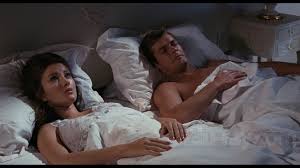
Now we’re into “my” Bond. The era of Roger Moore. And we’re still in America. Director Guy Hamilton and screenwriter Tom Mankiewicz are back to give us a Bond version of a seventies blaxploitation film. Producers couldn’t bribe Sean Connery (with $5.5 million) to put his white dinner jacket on one more time so the scramble for the next Bond began. Steve McQueen, Paul Newman, Anthony Hopkins, and (again) Burt Reynolds were considered but the license to kill went to Roger Moore (the first English actor to play the role), who had long been considered for the job. In the 1960s, Moore starred in The Saint, a British mystery thriller series, so he was 007 in training. Moore’s Bond comes off as more bourgeois than Connery’s, making his snarky quips much more funny. Maybe the comedic writing was just better in the seventies, but Live and Let Die has plenty of laugh out loud lines.
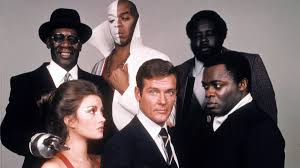
Live and Let Die is not a European film. The action takes place in New York (starting at the UN, then moving to Harlem), New Orleans, and the fictional island of San Monique. (Producers wanted to use Haiti, but the instability of Papa Doc Duvalier’s island forced filmmakers to move back to Jamaica and invent a tropical name.) There’s no Blofeld this time (but there is an underground lair!). Instead we get Mr. Big, a drug kingpin who has relationship with a Caribbean dictator named Kanaga (played by Yaphet Kotto, who had just played in the blaxploitation flick, Across 110th Street). The primary Bond “girl” this time is played by 21-year-old actress Jane Seymour. Since Pussy Galore (Goldfinger), the formula for the Bond girl has been a woman who is somehow in league with the bad guys who Bond peels away with his swarmy charm and Dudley Do-Right ethos. Here Solitaire (Seymour) is a psychic tarot card reader (as long as her virginity is intact) who belongs to the criminal Kanaga. Damsel in Distress Alert!!!
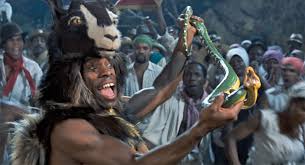
I didn’t see this movie when I came out the summer of 1973 (I was 9), but I knew all about it. The theme song was written and performed by Paul McCartney and Wings and was a radio staple that summer. I first saw it on TV a few years later and loved much of it, especially bayou boat chase that included a stunt that put the movie in the Guinness Book of World Records (which was like the Bible for kids in the 70s). As a boy in the Southern Klan town I was certainly challenged by the portrayals of black culture in the film that I found mostly frightening (especially the voodoo scenes). On its first TV screening the version that the Atlanta station showed removed the interracial kiss from the film. I missed out on that moment watching it age ll, but it was returned to the film by 1977 and, as a 13-year-old boy, I was already indoctrinated into the racist trope of black women as “sexual,” and was fixated on that scene. (The woman in question was CIA agent Rosie Carver, played by model Gloria Hendry.)
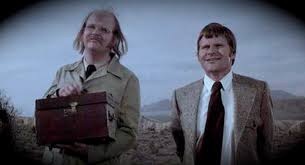
Live and Let Die was released at a time when “blaxploitation” films, made mostly by black filmmakers, started to find white audiences. Movies like Shaft (1971), Superfly (1972), and Cleopatra Jones (like Live and Let Die, in theaters the summer of ’73) were known for their gritty portrayals of black urban life, where black crime was often contrasted to the deeper crimes of racism. Live and Let Die contained many of these motifs and the images of James in Harlem capture a picture of urban decay that has long since gentrified. The film also finds great humor in the man out of place theme with Bond in his suit across 110th Street. “Can’t miss him. It’s like following a cue ball.” There’s a scene in a Harlem bar where Bond explains to a black waiter that ordering his whiskey “neat” means no ice, to which the waiter says, “Oh, we charge extra for that.” Brilliant.
Live and Let Die was hugely successful and worthy of our feminist analysis and probably a discussion about the portrayal of blackness as well.
Driver of Action – Maybe because there was (another) new Bond to introduce to the world, Roger Moore is the star of the show. We do get CIA agent Felix Leiter back in the fray (and a clever joke about a “Felix Lighter”). Felix (this time played by David Hedison) has, like in the last film, a team of unnamed CIA operatives, but this film is all about Bond in America, like a fish out of water. Everyone else is a bit player.
Role of Violence – One might make the case that the violence in LALD is ramped up because it’s Bond vs. black gangsters (This time Mr. Big smacks the Bond girl instead of James), but it’s a pretty standard body count, including four MI-6 and CIA agents. As has become tradition, the carnage is saved for the end of the film, including 007 opening fire on a voodoo gathering. The climax of the film has James and Solitaire dangling over a pool of sharks (lordy) that end with 007 literally blowing up Mr. Big (his guts raining down into the shark pool). And after that, Bond battles Tee Hee, Mr. Big’s metal clawed henchman, tossing him out of the window of a moving train. Moore is less physical than Connery and Lazenby’s Bonds (at 45, Moore was 16 years older than Lazenby). He’s also more likely to rely on wit than weapons.
Vulnerability – This one is less clear. Moore is stepping into an established caricature that is forged on a popular formula. James shaving while sitting in the bathtub is about as “naked” as we are privy to witnessing. We do get to see James’ kitchen, complete with art deco tiles and espresso machine (Paging Martha Stewart!), but we still know little about James when he’s not 007-ing. Even his relationship with Rosie, the bumbling CIA agent posing as “Mrs. Bond” is more predatory than empathetic. Moore’s more bougie Bond is still walled off.
Sexual Potency – Bond is back. James quota of bedding three women is achieved in Live and Let Die. Bond’s first scene is him in the sack with a beautiful Italian agent, Miss Caruso, who has to hide in the closet when M and Moneypenny arrive at his apartment to give him his next mission. After they leave, he uses his cool magnet watch to unzip her dress for another round of “bonding.” In San Monique, he makes its with (double) agent Rosie in another interracial romp. When he calls her out for working for Mr. Big, looking for answers, he says, “And I’ll kill you if you don’t.” Having just had sex with him, she says, “But you couldn’t. You wouldn’t. Not after what we just done.” And his uber-creepy retort is, “Well, I certainly wouldn’t have killed you before.” Just a bit rapey. Finally, he beds the virginal Solitaire by tricking her with a tarot deck stacked with “Lover” cards so he can hit his quota. Even though her impropriety with Bond spells her death, she wants more 007 and begs him to come back to bed. “There’s no sense in going off half cocked,” he says in the best line of the film.
Connection – This new Bond is supremely detached, even from Moneypenny. When Rosie is killed, there’s not even a pause. There’s a reference to an MI-6 agent who was killed, and Bond says, “I rather liked him. We had the same hat maker.” That’s it. Even Felix is just a resource at the other end of a phone line. We do get the Bond/Bond girl end scene, this time not on a boat but a train to New York, headed for perhaps for some more cocking, somewhere south of Harlem.
Toxic Masculinity Scale: 5
SummaryLive and Let Die has a racial subtext that is a bit rough in 2025. Let’s start with the good news. Producers hired a ton of black performers for this film. Scenes shot in Harlem, New Orleans, and Jamaica are populated with black bodies. Cabaret singer B. J. Arnau’s soulful version of McCartney’s theme song is a high point of the film. Having said that, the movie is rife with racial stereotypes, from “pimp mobiles” and black gangsters peddling heroin in hollowed-out Harlem, to “mystical blacks” dancing with snakes and chanting voodoo mumbo. As a dumb white kid in rural Georgia, the film didn’t make me want to advocate for black people, it made me afraid of them. It was a spin on that “mystical black” trope when Geoffrey Holder, who plays voodoo-practicing Baron Samedi, became the pitchman for 7-Up in the “Uncola” commercials a few years later.
Contemporary viewers are likely to pin LALD as both racist and sexist. You’ve got the southern white cop who calls black men “boy” and you’ve got Bond who calls every woman “darling.” You get the sense that all the movements toward equity that we starting to become institutionalized in society in the seventies are kept at arms length by the WASP male fantasy of Bond. It’s a fair start for Moore, who comes in as a more older “gentleman” than Connery, which might lead one to think we’d get a Bond with a little more introspection. (You learn things as you age!) Instead we get sardonic raised eyebrows and lies to get women’s underwear off. That’s not an evolved man.
The action scenes in this movie are absolutely spectacular. I could watch the boat chase a hundred times. The surprise appearance of an underground lair with sharks is a chef’s kiss gift to Bond fans. And the one liners, delivered like a Blofeld laser, are side splitting. (“Butterhook!”) The score by Beatles producer George Martin is epic. And the voodoo and alligator scenes are completely terrifying. There’s so much to love in this film, even if Bond is stuck in a world that has left him behind. As Sheriff J. W. Pepper says to Bond, “What are you? Some kinda doomsday machine, boy?” No, just a device to preserve the old order.
This series is intended to evaluate each product of the James Bond film franchise through a feminist lens, and the relevance of the Bond archetype to shifting ideas of masculinity in the 2020s.
Diamonds are Forever (1971, directed by Guy Hamilton)
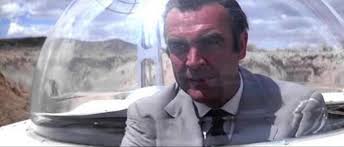
Sean Connery is back! This is probably the Bond film I saw the most on the 4 O’clock Movie in the seventies. Watching it five decades later, it pretty much sucks. Eon Productions was Bond-less after George Lazenby agreed to only make one film, On Her Majesty’s Secret Service. Numerous actors were considered, including Americans Clint Eastwood, Burt Reynolds, Robert Wagner, and Batman’s Adam West. Ultimately, Connery was lured back with a promised $1.5 million payday. To recapture the glory, Goldfinger director Guy Hamilton was brought back, as was theme song singer Shirley Bassey. Early 70s 007 looked a lot like early 60s 007.
Diamonds are Forever begins with Bond hunting down Blofeld, presumably because he killed his wife in On Her Majesty’s Secret Service. However, his wife is never mentioned and James shows zero signs of grief or even vengeance. He’s been trying to kill Blofeld since 1963 in From Russia With Love. One could assume that Lazenby’s Bond may have been married but Connery’s never was. Diamonds are Forever is much more of an American film than any previous Bond movie, with most of the action taking place in Las Vegas. (One of the reasons American Tom Mankiewicz was hired to work on the script.) I loved the scenes in Circus, Circus and Bond racing cops on Freemont. That Vegas is long gone (although you can still shoot water into balloons at Circus, Circus). Diamonds also gives us our first American Bond girl, Tiffany Case (played by 70s-80s TV fixture Jill St. James).
The attempt to recreate the magic gives us Bond staples, including Blofeld (and his darn cat), CIA agent Felix Leiter, James gambling in a casino (craps, this time) and, of course, an underground lair. Also space lasers and an elephant that plays slot machines. Added to Blofeld’s bad guy team are Mr. Wint and Mr. Kidd, a pair of sociopathic gay assassins. This might have fit a “homosexuals are deviants” narrative in 1971, but now it’s just horribly offensive. (I thought it was creepy when I was a kid, but now it just seems really, really dumb.) We do get a bit of globe trotting with a stop in South African diamond mine (no mention of racial apartheid, just black miners smuggling diamonds) and Amsterdam, where James meets a scantily clad Tiffany and says he likes her change of hair color, “provided the collars and cuffs match.”
Diamonds are Forever premiered in Munich, West Germany on December 14, 1971, three days before East and West Germany signed a historic agreement allowing for more open travel across the Berlin Wall. The film was a box office blockbuster but reviewers saw it as more silly than sexy. Maybe that was due to the fact the the special effects budget was sacrificed to pay Connery’s salary. The scene of Bond driving a moon buggy through the Nevada desert, being chased by henchmen on dirt trikes, is particularly goofy. But you do get Bond in his white dinner jacket scaling the Las Vegas Hilton (the “Whyte House” in the film) and Jimmy Dean (the sausage guy) playing a character based on billionaire Howard Hughes, who was friends with Bond producer Cubby Broccoli.
Seventies Bond may fair better. Let’s drop Diamonds into our matrix.
Driver of Action – Diamonds are Forever is classic Bond. We get brief cameos from M, Q, and Miss Moneypenny. Felix and his CIA team play a minor support role, especially when 007 encounters Bambi and Thumper, Blofeld’s bathing suit-clad guardians of Willard Whyte. Part of the story drifts into heist film with James and Tiffany as a team, but, rarely fully clothed, she seems to be just brought along for added sex appeal. Producers had Connery back and were going to make sure he was in nearly every frame.
Role of Violence – The film starts with Bond on a killing spree as he tries to find Blofeld. That includes finding a woman on a beach, ripping off her bikini top, and strangling her with it. Ultimately, after killing someone in Blofeld’s lab (with mud), Bond kills Blofeld. Or a Blofeld.(“Welcome to hell, Blofeld.”) There’s a scene where Bond kills a diamond smuggler after a pretty intense fight in a Dutch elevator and the now routine scene where Bond slaps his Bond girl. Most “fun” is when Bond realizes that Blofeld is alive (THE GUY THAT KILLED HIS WIFE – BUT NOT MENTIONED). In fact, there are apparently multiple “cloned” Blofelds and cats. He’s faced with two Blofelds (this time played by Brit Charles Gray, who played an MI-6 agent in You Only Live Twice). With a 50-50 chance, Bond shoots and kills the wrong Blofeld. “Right idea, Mr. Bond,” says Blofeld. “But wrong pussy,” says Bond. Oh yeah, there’s a climatic shoot out on an oil rig between the CIA and the Henchmen that kills a grip of dudes.
Vulnerability – Nope. Zero mention of Bond’s dead wife. Not even a hint that that’s why he’s after Blofeld. Older Bond is all business.
Sexual Potency – James might be losing his touch. He hooks up with a casino trollop named (ready?) Plenty O’Toole (played by Natalie Wood’s little sister, Lana). He gets her dress off but before he can get his pants off, some mobsters throw her out of a hotel window, into a pool. He tells the gun-toting goons, “Well, I’m afraid you’ve caught me with more than my hands up,” which, I assume, is a reference to the Bond Boner. Of course, Bond does bed Tiffany Case. (Her smoking in his bed the next morning is the clue.) At one point, while his body on hers, she asks, “What’s going to happen to me?” “I’m on top of the situation,” James says. Snort. But the required three sexual conquests is not achieved in Diamonds are Forever. Gee, maybe he was thinking about Tracy.
Connection – Maybe Connery was just tired of playing Bond, but 007 doesn’t really seem to care about anybody in this film, including M, Felix, Moneypenny, or Plenty (who gets tossed out of a tenth story window). There is some connection with Tiffany, who seems to want to be a spy as much as a diamond smuggler. The film ends with James and Tiffany, wait for it it, in a boat! This time it’s an ocean liner. But we’re not quite done. Here come Mr. Wint and Mr. Kidd, the homicidal homosexuals, posing as waiters with bomb souffle to kill Bond. They end up on fire and blown up, over the side as James and Tiffany sail away to short-term happiness.
Toxic Masculinity Scale: 4
Summary Seventies Bond still has a problem with race. The primary cast is lily white and we’re still stuck with “the sun never sets on the British Empire” ethos. (Did Richard Nixon have anything to say about British agents running amok in Vegas?) There’s a scene in Circus, Circus where a black woman is transformed into a gorilla for the amusement of children. And the mobsters of Slumber, Inc are caricatures of Italian mafiosos. Some of this will be both fixed and made worse in the next installment, Live and Let Die.
Aside from slapping Bond “girls” or throwing them out of windows, you get the sense that the most misogynist elements of the franchise were running on fumes by 1971. Diamonds are Forever is a cartoon version of a 007 film that tries to balance sexy or sexist Bond quips with more over the top diabolical plans. (There’s a comment from Blofeld that if his space laser destroys Kansas, nobody will know about it for four years.) It’s all just dumb. They should have made Gloria Steinem a Bond girl and had her repurpose MI-6 and the CIA to raid the underground lair of patriarchy. Ms. Bond, we need you.
I’m trying to stay away from my lizard brain today, unlike the rage I surrendered to on Election Day. I’m trying to not focus on how Donald Trump used his first address as our 47th president to crap on Native Americans (Denali will not be renamed Mt. McKinley) and further marginalize trans Americans (although I did say a small prayer that Barron Trump is transgender). I’m not focusing on how the CBP One app, created so asylum seekers can enter this country legally, has already been shut down by Trump officials. I’m not going to talk about how Trump’s inauguration, surrounded by, not the red hat MAGA supporters but his Billionaire Bros, is the dawn of a new Dark Ages.
This is Martin Luther King Jr. Day so the focus is on the work. We are entering an age of disinformation that will require extra effort from us to do what we have done successfully in the past, organize. Trump’s ultra-wealthy handlers, Musk, Bezos, Zuckerberg, and the rest, will work to divide us and deflate our hope. Trump will give more tax breaks to the gilded class while the people who voted for him continue to suffer with lack of adequate health care coverage. They may be the newest recruits to the much chided “woke left.”
The work will require radical honesty about how Democrats have failed working class people, including new immigrants and queer people. The work will require radical honesty about how the “mainstream media” is the corporate media. The work will require radical honesty about how Neo-liberal economic policies have torn apart the safety and security of unionized labor in this country. And the work will require that the opposition party put up candidates in 2026 that will fight, without capitulation, for the issues real Americans face, including health care for all.
Most importantly, this work is going to require us to get off our phones and organize. And some of that organizing is going to be uncomfortable. Farm owners, who rely on undocumented workers, should be at the table. So should law enforcement officers and other first responders, who are as much a part of the service economy as baristas and vegan restaurant servers. Evangelicals, who recognize Christ’s attention to the poor and marginalized, can also be reached out to as well. Instead of falling into our little gangs of angry Americans, it’s time to build a massive coalition to save America from the broligarchy that Trump welcomed into our nation’s Capitol. We are a people who, at our core, value diversity, equity, and inclusion of our neighbors. We can control the narrative not him.
To date, Americans have spent 10 trillion dollars on the War on Terror, that replaced the Taliban in Afghanistan with the Taliban and enriched a lot of companies doing business with the Pentagon. We can debate if that price tag is required to keep the nation safe from 9/11-type attacks, but I’m betting that $10 trillion could have made our nation safe in other ways, including free health care and affordable housing for all Americans. These are things that affect all of us, including the millions of Americans who voted for Trump. Before Americans are completely overwhelmed by the chaos of the pathological liar in the White House and drugged with disinformation, coming from Chinese apps, Musk, Meta, and elsewhere, let’s reach out with reason. We have one last window. There are 650 days until the mid-term elections. Breathe today and work tomorrow.

















 Watching the Wheels