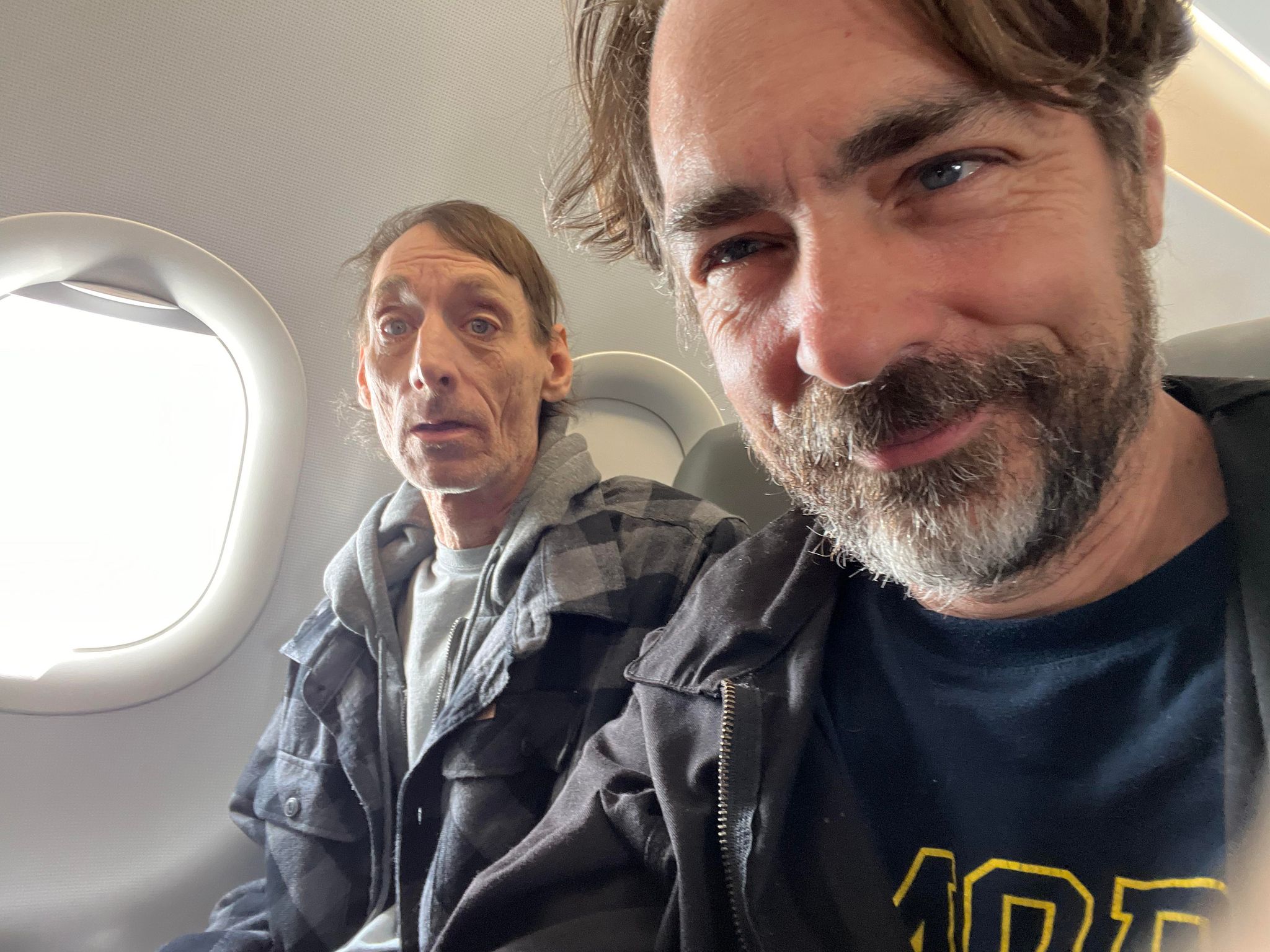
Remembering My Brother Who Lived in the Woods

December 14, 2024

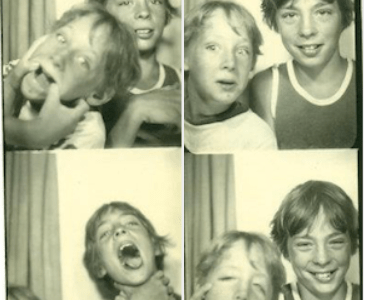
My little brother and I never got a long very well. One time when I was 12 or 13, and he was my daughter’s age, we got into a big fight at our house in Stone Mountain, Georgia. He threw a tennis ball can at me that sliced open my forehead (I still have the scar). With blood pouring out my face, I smashed through the flimsy suburban house door of his bedroom and Ronnie jumped out of the second story window, escaping into the woods behind our house where he spent the next two nights. I remember my mother saying, “Let him. We’ll have some peace and quiet for a few days.” I can’t imagine feeling good about Cozy, 10, living in the woods for a few days, but my childhood home was a firestorm of sibling chaos.

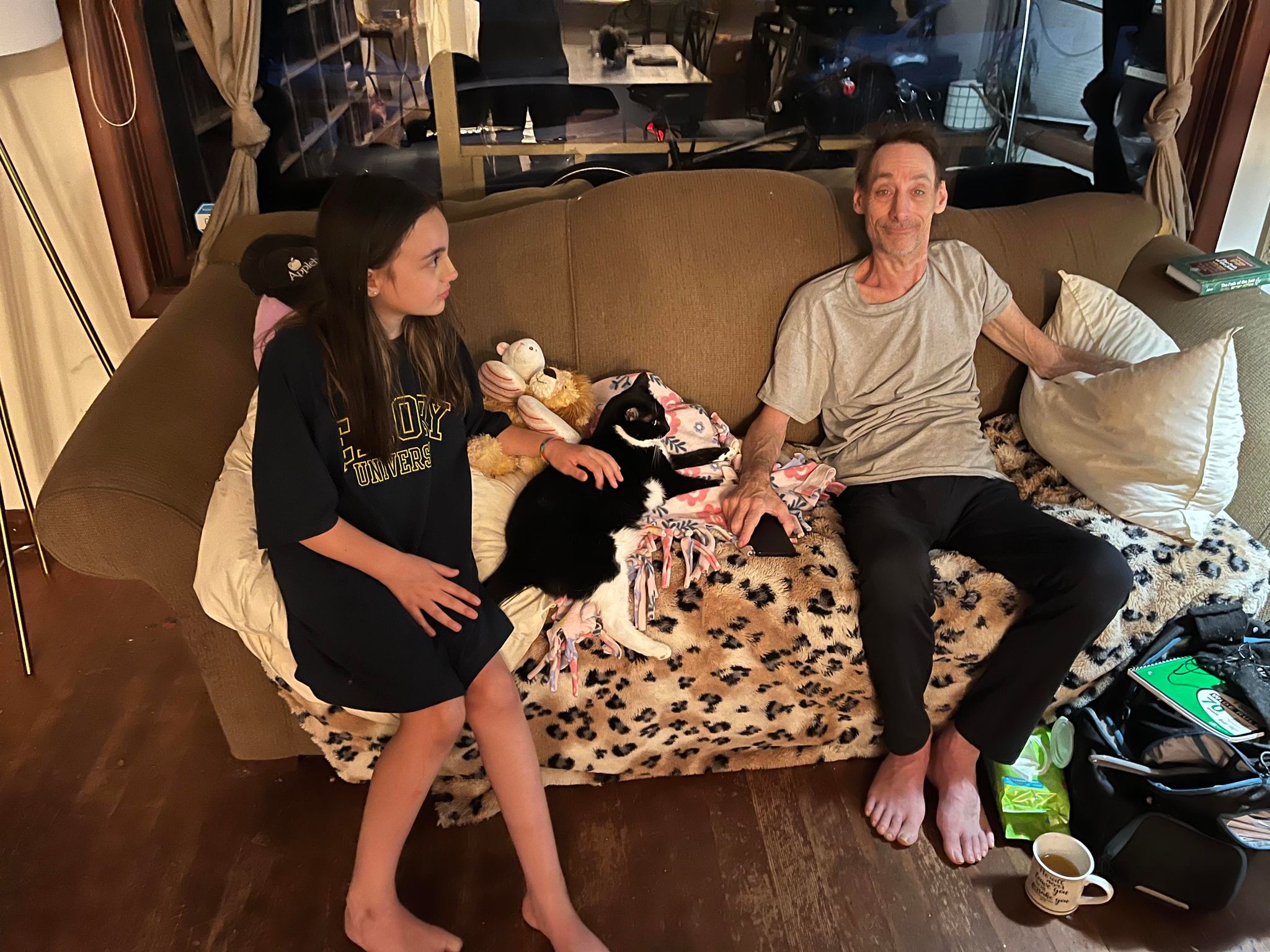
Last Sunday, Cozy and I went to spend some time with Ron in his room in the assisted living facility where he’s been in hospice care for the last year. We brought him snacks from Safeway, including requested chocolate covered pretzels. We told him about our trip to Vancouver to see Taylor Swift and I promised to bring him some eggnog on Friday when I got back from a short work trip to Washington, DC.

Yesterday, I sat on his empty bed in his empty room, eating those pretzels and thinking about his body in a funeral home down the street. When we were leaving Sunday, he had a look of terror on his face. I think he knew we’d never see each other again. I tried to reassure him. “You’re gonna be OK. I’ll see you on Friday.” Now I wish I would have stayed a little longer. He died in his sleep Tuesday night. Finally free of the pain of cancer and the nightmares of demons dragging him to hell.

It’s a strange experience, losing a sibling. He drove me crazy for 57 years. I remember the day he came home from the hospital to our little house in Parma Heights, Ohio. My mother tried to head off the inevitable sibling rivalry by giving me a box of building blocks and saying that they were from the baby. But our life was only conflict. That included a 17-year stretch that I didn’t speak to him after he went to prison for threatening to kill our mother. After that, I thought I’d never speak to him again. Now, I find myself missing him. It’s a weird, dream-like state. Is that the same kid who threw the tennis ball can at me?

About 12 years ago, Ron became homeless, moving into the woods in Cartersville, Georgia, about an hour north of Atlanta. He found comfort in the woods, where he told me he talked to owls and ghosts. He was never what you would call a “people person,” challenged by the requirements of modern living. He had a job washing dishes at the local Applebee’s restaurant and would call me to lament his exclusion from our family, including his estrangement from his son. We slowly began to reconnect. On one visit, I took Ron back to our old neighborhood in Stone Mountain, and stopped by our elementary school. I could start to interact with him without the weight of the past and focus on the good memories of our childhood.
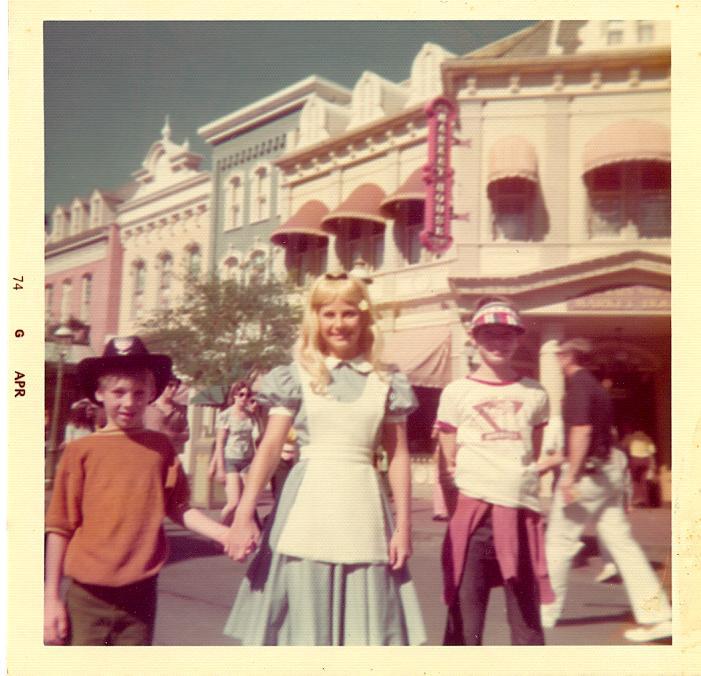
And there are good memories. We’d take family trips every summer, often to Florida or to Colorado, where my cousins lived. A favorite picture of us is at Disney World, 50 years ago. We’re on Mainstreet USA with Alice in Wonderland. I refused to hold her hand because, at 10, I thought girls had cooties. Ron, 7, had no hesitation. I use that picture to talk to my students about how straight people come out as well. Ron and I fought a lot but we also found great moments of joy on those road trips, so when I went to get him out of the Georgia woods last year to bring him to Portland, it was one more road trip for us.
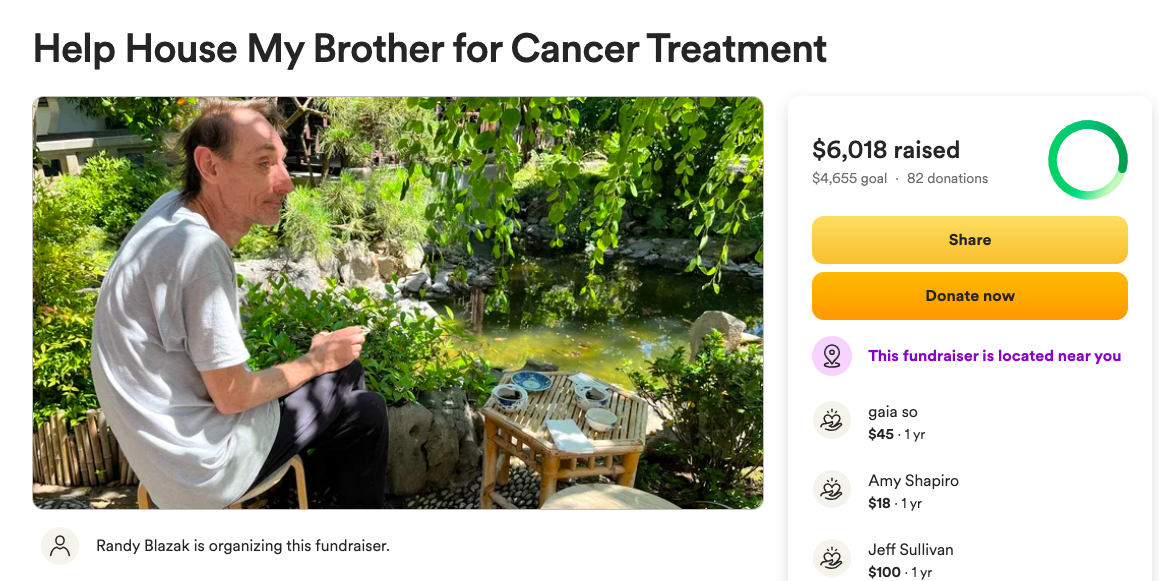
Getting my brother situated was a challenge, he was so used to being alone in nature. Finding him housing (after a few rough weeks on my couch) and getting him to chemo appointments were a struggle. Fortunately, there was a great amount of support from my friends in a fundraiser that got him into a care facility. Eventually, he recognized hospice care made more sense although he often talked about “getting better” and building a cabin in the woods outside Knoxville, Tennessee, where he had visited. Our road trips got shorter, the Oregon coast, the Japanese Gardens in the West Hills, until finally he was bed bound, with the trees of Forest Park barely visible out of his window.

It is of great comfort to know my brother isn’t suffering anymore. Anal cancer is the worst thing you can imagine. “Why does it have to be in my ass,” Ron would say as I’d deliver his opioids from the Safeway Pharmacy. It was excruciatingly miserable and he’d often wish he was back in his tent in Cartersville. “I’ll drive you to the airport if you want,” an older version of me would say, annoyed that he didn’t appreciate having a roof over his head and access to legal weed. But I knew Ron was doing me a favor by letting me play the caring older brother role I’d failed to as a kid.

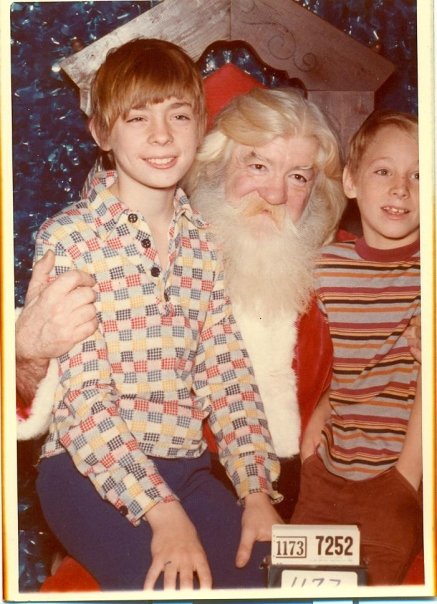
Today, I will deliver his prayer shawl to the funeral home for him to be cremated with and a note expressing gratitude for letting me take care of him. In the coming year I will take his ashes back to Georgia and spread them in the woods where he found his peace. Fittingly, there are no photographs of all the times we fought, just of us in times of happiness. I’ll let that record be the memory of my little brother.
Conversations About Death: Confronting End of Life Decisions

August 23, 2023

My brother delayed his cancer treatment for over a year. He was convinced his stomach problems were the work of parasites, the result of living in the Georgia woods. It was anal cancer. So it wasn’t much of a shock to either of us when his Portland oncologist said that his cancer was Stage 4, having metastasized into other parts of his body. Unfortunately, Ron still believes that it is possible to shrink his tumor and cut it out. His entire body is now the tumor.

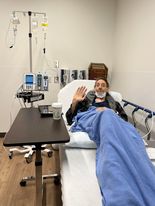
I’ve been split into multiple roles since bringing my brother back to Oregon. One is to help him get the medical care he needs to fight his cancer. But another is to try to get him to be realistic about the prognosis. The doctors get paid to treat so that’s what they want to do. His doctors want to fight the cancer to the bitter end, and this end is very bitter. Last week his palliative care nurse was finally honest with him. That, at best, he had “several weeks” before the cancer takes him. A hospice social worker told me yesterday that, because Ron is severely underweight, “he will live longer off the chemo than on it.” I write this while he is sitting in the OHSU Knight Cancer Institute receiving his second chemotherapy treatment, knowing this cure may kill him.

I 100% get where my brother is coming from. If someone in the medical field told me, “You’ll be dead by Halloween,” I’d say, “Well, we’ll just see about that!” And then I’d throw my spinach smoothie in their face. Ron wants to fight and that’s a good thing. But it’s also time to talk about the endgame and how going out on his own terms might, just might, be better than barfing up endless chemo treatments, praying for it all to end, on the outside chance that a few more months of misery is worth it. This has to be his choice, but my brother doesn’t have a very good track record for making good choices.

So we’ve begun talking about hospice care. The word “hospice” has a specific connotation for a lot of people. Images of terminally ill elderly people on deathwatch, being pumped full of so many narcotics that they don’t know who they are. Hospice care has evolved greatly over the last few decades and is now all about quality of life, not just managing pain. Ron’s already on Methadone and Oxycodine, so he’s got the narcotics covered. But the chemo is not adding any quality to his life. The poison is stealing it from him. Medicaid in Oregon gives you the choice – chemo or hospice. If you want to bail on the chemo, the state makes sure you are taken care of. But you can’t do both.

So this is my brother’s conundrum, to receive the full care that comes from hospice, he has to give up on the (extremely slim) chance that chemo will “cure” him. He tells me he thinks that chemo will get the tumor (again, the cancer is now in several parts of his body) to a size where his cancer will be “manageable,” and I ask him what manageable means to him. His response is that then he can treat it with good diet and live a long life in a cabin in Tennessee. He then accuses me of wanting to “kill him off” so he won’t be a burden anymore.

In the abstract, conversations about death are hard. In the practical, they are nearly impossible. We believe we will exist, in some form, for as long as time itself exists. But we also want to be here now for as long as possible. I’m not ready to die. Are you? But we all do. All of us. There will even be moments when Donald Trump, LeBron James, and Taylor Swift cease to exist. (I’ve got $100 bucks on Trump, massive coronary, DC courtroom, March 2024.) We’re all just sacks of meat with an expiration date. But when that date starts getting close, I get why people try to renegotiate their deadlines.

I want my brother to choose hospice care. I want him to get off the torture train of chemo. I want to take him to the Oregon coast. (He’s never seen the Pacific Ocean.) I want the next weeks to be spent listening to music and laughing about the stupid stuff we did when we were kids in Stone Mountain. But I come off as the Grim Reaper for suggesting this might be the best choice given the bad hand he’s been dealt. He just wants to fight and I’m glad he’s not ready to give up. Sometimes hope can win over science. It’s his choice, but the clock is ticking.

If you want to help with Ron’s care, we are still taking donations at his GoFundMe. Maybe we’ll get to take him to the Oregon coast.  CLICK HERE

From Big Brother to Cancer Care Giver

July 23, 2023

What’s the John Lennon line about how life is what happens when you’re busy making other plans? I had this vision of flying into Georgia (on my father’s dime), rescuing my brother from his shithole hobo camp, and delivering him to a Portland cancer treatment facility, then watching his recovery from a safe distance. It didn’t quite turn out like that. 

When I got to my dad’s after landing in Atlanta, my brother, Ronnie, was on the phone, telling me I had wasted my time and that he wasn’t going to leave his camp in Cartersville, Georgia. I could tell he was afraid of the incredible change he was facing. Instead of suffering from his rectal cancer in a hell he knew, he was looking at relocating in a place far away from the Georgia piedmont. And he had never even been on a plane. I told him I wasn’t going to force him to do anything, I was just headed to come hang out with him for a bit. He’d been held up in a Quality Inn for a few nights because his pain was so great. He was convinced he was on death’s doorstep and just wanted to be left alone. This would have to be his choice.

Finally seeing him after two years was a bit rough. I thought about the last days of Howard Hughes but without the billions. His hotel door was propped up open so the Georgia heat and flies could come in as he lay in the bed. I went into operational mode. Food, coffee, and whatever else he needed. Gradually he realized he would be better off in Portland. He wasn’t ready to die just yet. I got a room next to him and we made plans to strike his camp later in the day.

He had been living on a hill behind the Cartersville IHOP for seven years. How he survived, I’ll never fully understand. Another blistering summer in rapidly evaporating Georgia would have killed him. His camp was a tent, full of spiders, and a year of garbage hidden under tarps, and a dozen gallon jugs of urine that served as his bedpans when he was immobilized by pain. It wasn’t pleasant but that thought that there was something better waiting motivated us to clear the camp and head to Atlanta to catch a flight to the land of Obamacare. 

The journey home was a challenge. Whatever you do, don’t fly Frontier Airlines. It’s the nightmare airlines. Just getting a wheelchair to get Ronnie to the gate at Atlanta Jackson Hartsfield Airport was an ordeal. Then, because of cancelled flights, I had to race him to another gate on another concourse and hope that delayed flight would get us to our connecting flight in Las Vegas. The Las Vegas to Portland flight was cancelled and they told us they could get us on another flight home three days later. I told them he was a cancer patient who had an important oncology appointment the following day and Frontier Airlines ticketing agent just shrugged her shoulders. So we headed to another terminal (Ron still in a wheelchair) and bought a ticket for that night on Spirit Airlines. (I never thought I’d say this, but Frontier makes Spirit look like Delta.) We finally made it to Portland, but Ronnie’s backpack didn’t arrive until six days later, with all his electronic items stolen from the bag. Frontier sucks.

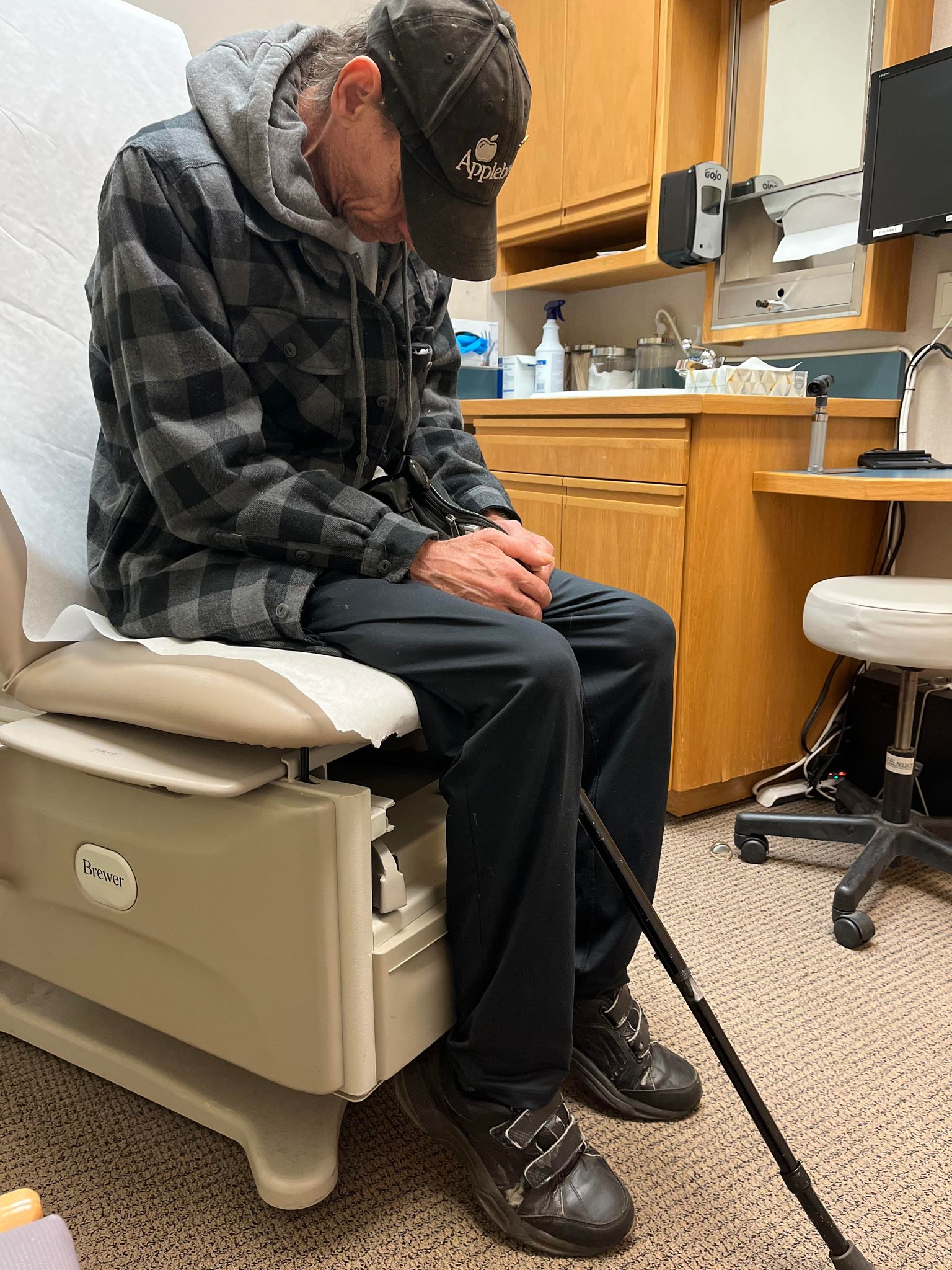
After a day of adjusting to West Coast time, my job driving my brother around began. First to an oncologist in Tualatin, south of Portland, where we found out his cancer was Stage 4. Then to a residential facility I was hoping to move him into, where they told us it would be a few weeks. This was happening the week I was driving Cozy to and from art camp, way out in the traffic hell of Beaverton. Endless calls to Medicaid to get his long term care interview moved up from late August, making CT scan appointments, preparing meals, and administering pain meds every two hours.

Suddenly, I’d become an in home care nurse.

It just seemed really clear that this was the obvious role to step into. What else should I do? My brother is battling anal cancer. He was doing it alone in the Georgia woods, and now he’s doing it on my couch in a state that has legal weed. 

The legal weed bit has blown his mind. It’s been hugely helpful with his pain and appetite (although it wasn’t helpful with the Taylor Swift video I tried to make after we got high and watched Yellow Submarine.) In the conservative state of Georgia, possession of less than an ounce of pot is an automatic year in prison, on the taxpayers’ dime. In the liberal state of Oregon, an ounce of weed just means you’re running low on weed.

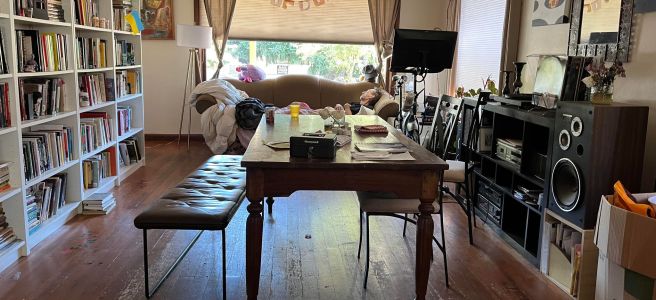
Once the pot and narcotic pain meds started to work, Ronnie started to feel human again. He’s got an amazing oncologist at OHSU’s Knight Cancer Center and wonderful palliative care coming. We’re still trying to find housing for him. Going through chemo on my couch is not an option. Keeping him in colostomy bags and diapers with an 8-year-old running around is a less than an ideal setting for him and my family, but he’s, literally, out of the woods. Sitting on our porch in the cool Portland night air (the opposite of Georgia), has allowed us to connect in a way we never did when we were kids. It started to feel like this experience was healing me as much as it was intended to heal him. 

It’s certainly a left turn from my normal summer, teaching on line and working on my side projects, but the support of Cozy, Andi, and Jaime makes it work. Watching Cozy and her uncle bond has been a thrill (Cozy is ferocious on the board games), and Andi has helped me remember how important this effort is. The moments I can escape with Jaime for a bit have kept my battery charged and her concern for my brother just fills my heart. And I’ve been able to show Ronnie some of the joys of my little town, like green tea at the Chinese Garden and way too much sugar at Voodoo Donuts.

Fifty years ago, everything was a constant fight between us. I never would have thought of trying to comfort him. Now my hand is on his back as the doctor tells him that his cancer has spread from his rectum to his lymph nodes and lungs. I don’t put him down for his assertion that he can “shred” his tumor with turmeric and sound waves. I just encourage him to listen to his doctors, who are among the best in America. This isn’t Georgia. Under Oregon’s expanded Medicaid, even the poorest among us have access to be best care.

Part of employing empathy is seeing this through my brother’s eyes. He has to be scarred shitless about this diagnosis, that is close to a death sentence, with a treatment option that will be a true test of his mettle. He’s lived as a hermit in the Georgia woods for ten years and now he’s in the hipster metropolis of Portland (Just the number of people walking around has shocked him. Nobody walks down the street in Cartersville, Georgia.), and, on top of all that, he has to trust a brother that has showed him more hostility than love in his life. I can’t imagine what’s going on in his brain. Thank God (Oregon voters) for legal weed.

Ronnie has been incredibly appreciative and acknowledges turning my living room into a cancer ward has been an imposition. But I thank him. This opportunity to help him has been good my for soul. If I can expunge a lifetime at anger towards him, I can deal with my anger issues for good. The other day he reminded of me when I knocked him out for calling me a “baby killer” in front of my girlfriend who had just had an abortion. He’s not the same person, and now I have a chance to be different.

Healing can take many forms. For my brother, it’s going to be regular radiation and chemo treatments, a bunch of pot, and hopefully a bed of his own. For me, just being here for him is the healing I needed.

Ron’s GoFundMe campaign: https://www.gofundme.com/f/help-house-my-brother-for-cancer-treatment?utm_campaign=p_cp+share-sheet&utm_medium=copy_link_all&utm_source=customer