I was born at the right time for punk rock. Fourteen-years-old in 1978, my teenage angst was perfectly positioned to hear the music of the Ramones and the Sex Pistols as a telegraph to my soul. The explosive anarchy was what I needed. I remember desperately wanting to go to the January 5, 1978 Sex Pistols show in Atlanta, but you had to be 18 to get in. Didn’t they know this was “my” music? My introduction to slam dancing gave me a direct route into the chaos. I was slamming at a Lords of the New Church show in London in 1982 and had my arm pulled out of the socket. Another punk, who was also an EMT, grabbed my arm and shoved it back into the socket and we kept moshing. Punk was life.
When Russian troops began their “training” on the eastern Ukrainian border last month, I got the impulse to be there, in the action. It’s not a new impulse. When I was 20, I went to Belfast, Northern Ireland and ended up (purposely) in a riot, where a kid my age was shot in the face by British soldiers. The experience became my senior honor’s thesis at Emory University. At 29, while I was in Eastern Europe working on my dissertation on right-wing extremism, I tried to get to Sarajevo during the siege of the city and couldn’t get past the Yugoslavian border. It was framed as “research,” but there was something the compelled me to be in a place that most people just wanted to escape from. During the summer of 2020, I couldn’t get enough of manning the BLM barricades in Portland, dodging rubber bullets and coming home smelling like tear gas. The chaos and flash bangs were intoxicating.
And now with a European trip less than a week away, I’m debating heading in.
I’m not exactly a wannabe mercenary who is obsessed with war and violence. A lot of the young men I study certainly are. In the timeless words of Michael Jackson, “I’m a lover not a fighter.” Do these conflicts ignite some toxic masculinity inside me? In the 2000’s, I received weapons training from the FBI as part of their Citizen Academy, and now I’m wondering if I remember how to unlock the safety on an MP5 machine gun. Who am I? I mean, it’s entirely possible that you will see me on Instagram two weeks from now, posing with my AK-74 (standard issue with the Ukrainian ground forces).
I discussed this need to dive into the geo-political mosh pit with my therapist. She had a valuable insight that it might be linked to the abuse I experienced as a child. That chaos became a normal state and my desire to fight it became deeply engrained. Putin is the molesting neighbor and I want to go save the children of Ukraine from him. I experienced pain then so I can experience pain now, acting out some masochistic savior complex. Hey, makes as much sense as anything else. I wouldn’t be surprised if the victims of childhood abuse are over-represented in the ranks of the law enforcement and military.
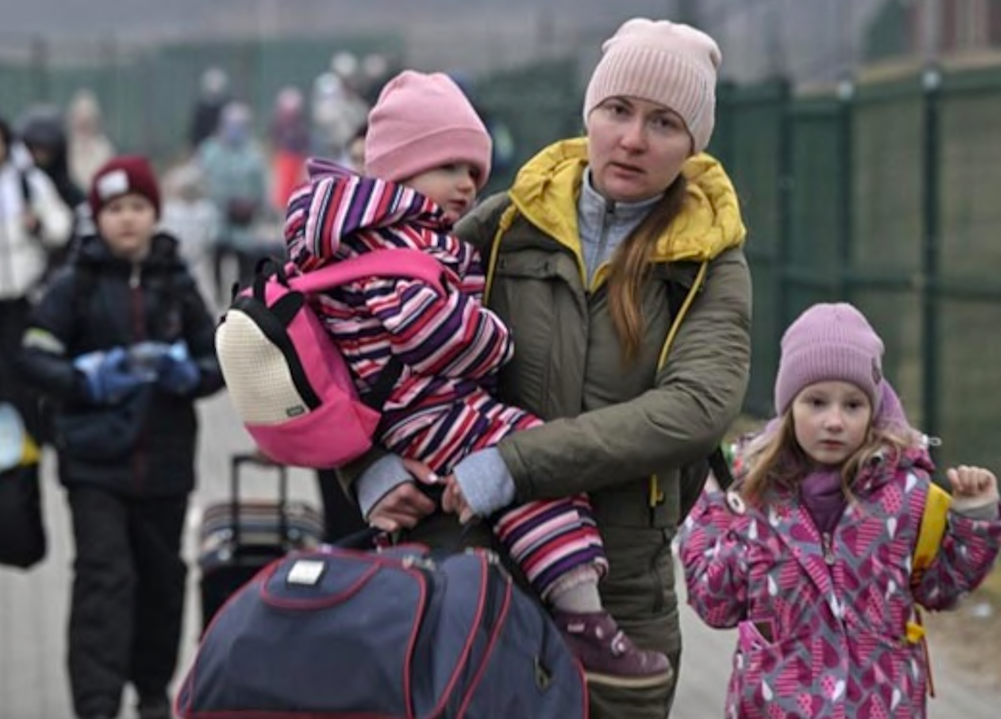
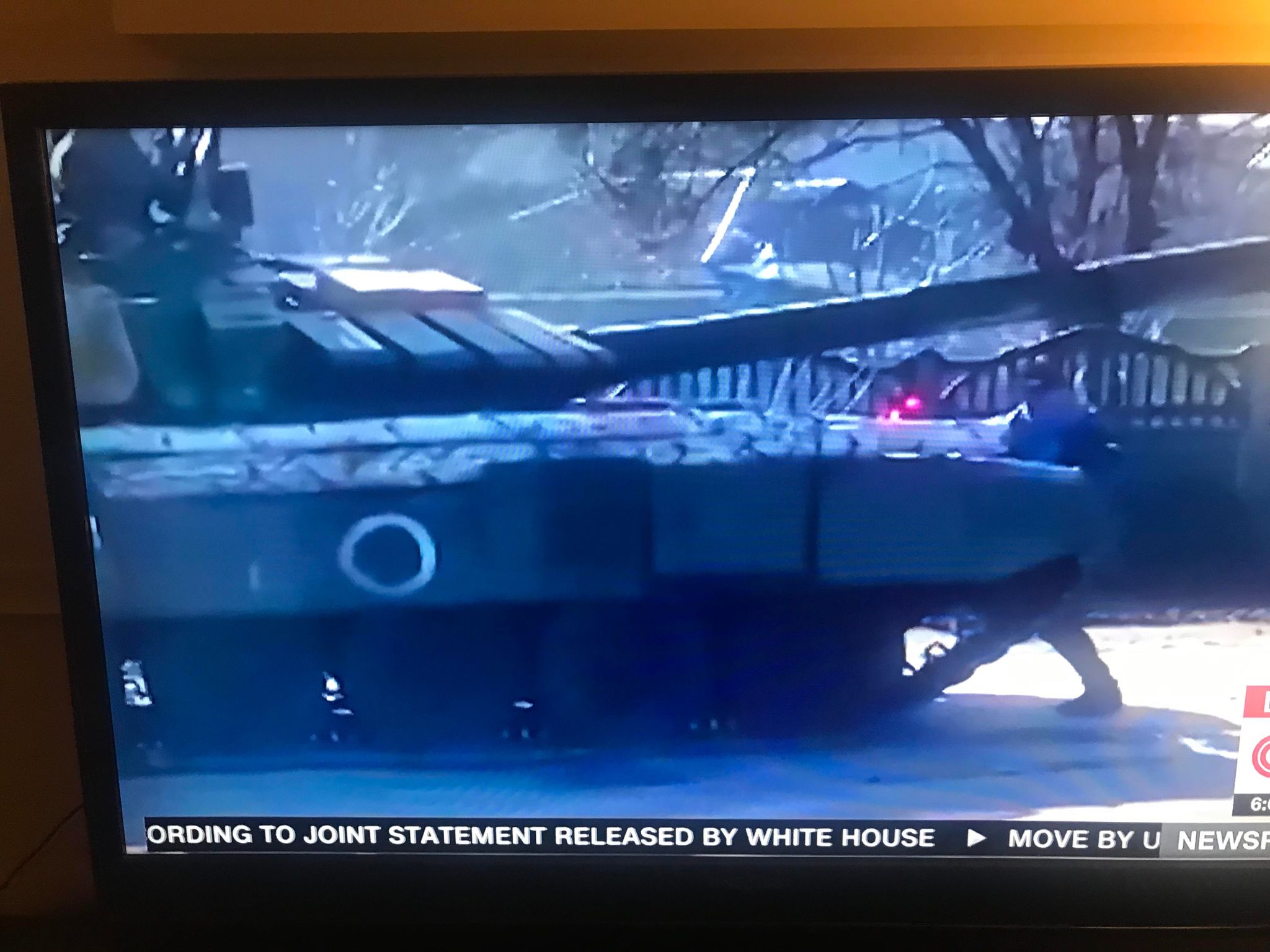
In front of this is my desire to help. I’m watching Russian tanks fire into civilian apartment buildings in Mariupol and I just want to leap through the TV. The kids streaming out of the country look so much like my daughter. I’m slavic and was born in a Cleveland suburb that was heavily Ukrainian (Parma). If I can just go to the border and serve meals with World Central Kitchen, that would be a lot. These people just seem stunned. The fact that Russia is now attacking close to the Polish border means there’s even more help needed with the refugees. I imagined rockets slamming into my neighborhood today and wondered if anyone would come to help us. How can I not go?
I felt so deflated last week I went to donate blood, even though I know that my blood is not going to Ukraine, or Syria, or Congo, or any of the other of Earth’s bloodbaths. But I have the privilege to travel and the freedom of “spring break,” as well as the ability to work remotely. Why not go? Flights from Paris to Warsaw are down to $94 and I have a new credit card. Can I go just help refugee families in Poland and resist the temptation to throw Molotov cocktails at Russian armored vehicles?
The plan now to fly to Paris on Saturday and then catch a flight to Warsaw, where I have one last Zoom class to teach. After grades are turned in, I’ll catch a train down to Przemysl to find opportunities to help with the flow of refugees. Even if it’s just giving hugs to traumatized kids who look like mine, I will feel that I’ve added to the healing in some small way. I’ve been shopping for both combat boots and children’s books to take with me. The only question is whether or not my childhood trauma will pull me across the border. For the sake of my own child, I will probably stay on the safe side of that line. Or maybe I could do this work from a sunny French café. Stay tuned.
We can all do something. I really want to encourage people to donate to UNICEF’s Ukraine relief. It’s for the kids! https://www.unicefusa.org
We’re all gerbils crawling through an endless toilet paper tube. Most of the time we don’t notice the tube, because we’re focused on our forward motion. But every once in a while, we realize that we’re stuck in a freaking cardboard tube and it’s controlling everything about what we can see and where we can go.
History is that toilet paper tube. I remember how on a Tuesday morning, September 11, 2001, I realized the events I was watching on my father’s television in Roswell, Georgia would impact every aspect of my world. There were two realities, pre-9/11 and post-9/11. The tube was tight, preventing me from getting on a flight back to Portland. And it’s touched our reality ever since.
I feel that way again, watching the Russian invasion of Ukraine. I was focused on the tasks at hand, getting my students through winter quarter, adjusting to life as a single parent, waiting for The Marvelous Mrs. Maisel to start a new season. And then on Wednesday night all that changed as Putin sent tanks and troops across the border in an unprovoked invasion of a sovereign nation. I had a similar feeling when I was 15-years-old on New Year’s Eve 1979, watching Soviet tanks roll into Afghanistan. It felt like the whole world shifted on its axis a bit.
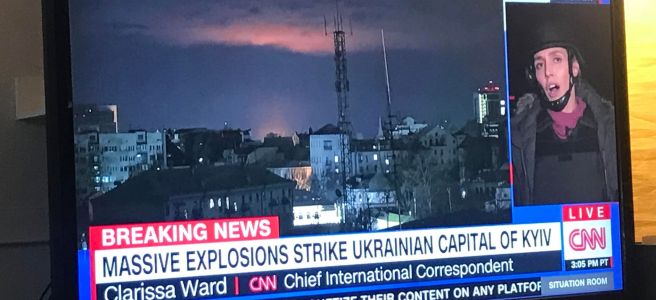
Now as Russian troops bomb Kyiv, it seems like the axis shift is massive. Thursday I took time to talk to my University of Oregon students and ask them to be present in this moment. They will likely talk to their grandchildren 50 years from now about the first days of the third world war. Rising gas prices, bread shortages, fear of conscription are surely weighing on their minds. But for these Generation Z students, most born after 9/11, this will all get very real when the Russian cyber hacks shut Instagram down.
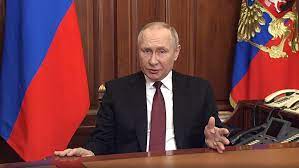
Historical parallels aside (Hitler pulled the same stunt in 1939), it’s clear that we have entered a geo-political order where Russia is not our friend. (Sarah Palin must be smirking.) We will divide modern history into before 02/23/2022 and after 02/23/2022. Will this end up in the similar global turmoil that followed Hitler’s invasion of Poland? It seems entirely possible. Vladimir Putin is this generation’s murderous madmen with designs on expanding his empire by any means necessary. Putin’s statement Wednesday that nations that come to Ukraine’s defense will face “consequences you have never seen” is chilling given the fact that Russia holds 45% of the world’s nuclear weapons.
Maybe this will be a limited conflict and, well, sorry freedom-loving Ukrainians. Yeah, it went sideways with Hitler, but Putin is an ethnic nationalist of a different stripe. It will be fine. Let’s get back to the other existential crises, like COVID and global warming. Why should Russian tanks rolling through Chernobyl be an issue in suburban America? It will be OK. Have you seen the price of milk? Let’s riot!
Of course, the good people of Ukraine didn’t think Russian bombs would be falling on their suburban neighborhoods either. A child Cozy’s age was killed today on the westside of Kyiv. Global conflicts have the tendency to spread. Quickly. Watching the children heading for the Polish border makes me wonder where I would send my daughter if the war spreads to this part of the world. Hopefully we can get her to Mexico if things get hot here. The United States is not guaranteed to exist forever. Four years of Trumpism weakened our democracy and greatly inflated Russia. That could create a cascade of crises that puts the USA in the rear view mirror. You may not be safe as you think.
The reason of this concern is rooted what I did in the first 12 hours of the invasion. I spent it on the dark corners of the web in the places where white supremacists, Qanon believers, and Trump nuts dwell. They, to the one, threw their support to Putin, seeing Biden’s policies as part of a liberal Jewish plot to push Putin and Trump’s buttons and cheered Putin’s fascistic ethnic nationalism. They want that wider war to launch their “boogaloo” race war in America. And they are armed. Heavily. Timothy McVeigh is their hero. The ethnic cleansing of Yugoslavia is their game plan. And Putin and Trump are their leaders.
Fortunately, like those Ukrainian soldiers on Snake Island who defiantly said, “Russian warship, go fuck yourself!” the majority of Americans have no tolerance for the anti-American “America First” con artists and their little boy soldiers. Yeah, 4.5 million viewers tune into white supremacist Tucker Carlson’s Fox News show each evening but that means that over 327 million Americans don’t. Hopefully, unlike Ukrainian citizens right now, we won’t all have to take crash courses in how to fire AR-15s. It’s going to take a lot of hard work and thoughtful mobilization. We’ll certainly have the time after Russian hackers take down Instagram. Maybe then we will see the toilet paper tube we are in.
Watching the Wheels began as a parenting blog but it’s turning into a policy blog. My broader social commentary started with the 2014 killing of Michael Brown in Ferguson, Missouri and exploded with the ascent of Donald J. Trump. I promise we’ll get back to the kid, but there is a pressing reason I’m spending some extra energy on right wing extremism: April 19.
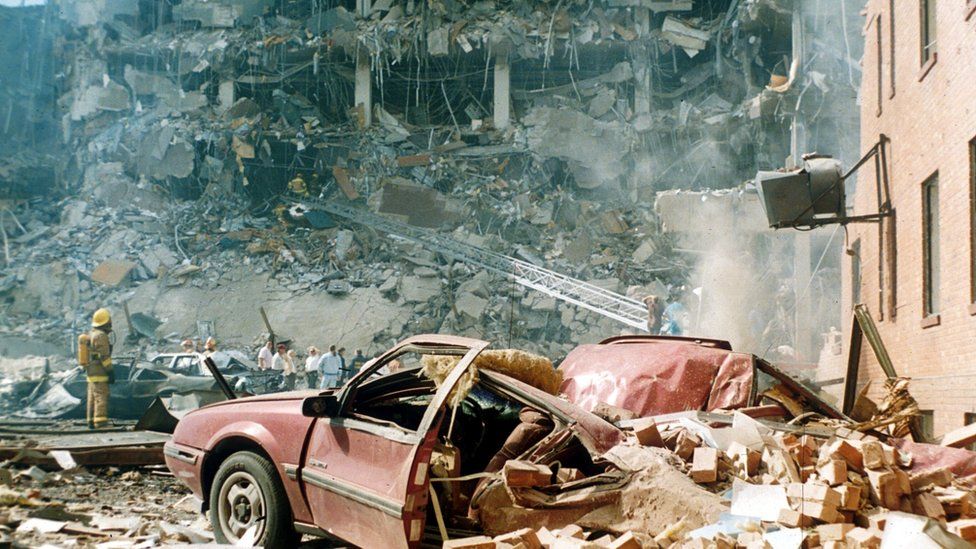
April 19th is the anniversary of the 1995 Oklahoma City bombing that killed 168 people, including 19 children, collapsing a federal office building, and has since been linked to “Patriots’ Day” by the right-wing underground. That underground is now very overground and the chatter in their world is that is that the January 6th Capitol attack was just the warm up. Fasten your seatbelts for April 19, 2021. We could see another wave of right-wing violence as they make their play for Civil War II.
It’s been encouraging to see the Biden Administration pivot to make the threat of domestic terrorism a priority, including ordering a nationwide assessment of the emerging threat, with the National Security Council responding in a way reminiscent of how the intelligence community responded after 9/11. The Biden team’s focus and the fact that capable experts like Rep. Elissa Slotkin (D-MI) will take the lead on the Counterterrorism Subcommittee are an encouraging start. There are plenty of challenges ahead, including our lack of a federal definition of “domestic terrorism” and the policing of such actions that also respects our first amendment protections.
But domestic terrorism is also an international issue.
I was having a conversation last week with a representative of a foreign consulate who was looking for ways that her government could navigate the post-January 6th world that the Biden Administration had inherited. (I won’t name her nation, but we’ve had a relationship with them since 1776.) As we spoke, it became clear that there are multiple international intersections in our efforts to confront right-wing extremism. The issues that came up revolved around three themes; intelligence, trade issues, and international relations. There are probably more but this is what came up in our hour-long talk.
White supremacy as a global movement
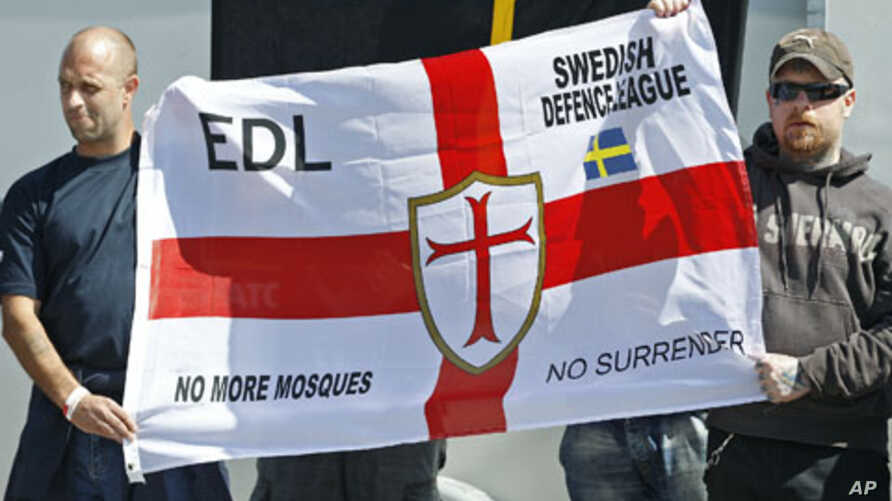
Over the last thirty years we’ve seen a decidedly internationalist trend in the nationalist responses to globalization. For me, this began in 1990s and charting how racist skinheads in America were looking to Serbian nationalism and the Balkanization of Yugoslavia as a roadmap to a race war in the United States. Notorious white supremacists like David Duke have cultivated large followings (and income flows) from Mother Russia. Any European nation that has struggled with an inflow of migrants has seen a surge in Neo-Nazi violence. In July 2018, I was in the UK to study British CVE (Countering Violent Extremism) programs and I worked my way into an English Defense League rally in London, under the shadow of Big Ben. Supporters of banned nationalist Tommy Robinson were laying out anti-immigrant tirades to a crowd of angry white men, many in Trump hats. In England. Two weeks ago, Germany handed a right-wing extremist a life sentence after he was found guilty of shooting a pro-immigration politician in the head at point-blank range, killing him. Racist nationalism is an international problem. The fact that mass casualty events in Oslo, Norway, lead to similar attacks in Christchurch, New Zealand, which lead to similar attacks in El Paso, Texas is proof.
The specter of a pan-Aryan movement has long been a reality. I discussed it in my search on Odinist prison gangs in the 2000s. An international network of racist pagans shared plans for their racial holy war from behind prison walls. Before that, research on white power rock bands traveling to Europe, revealed the trafficking of Neo-Nazi paraphernalia and ideology across the Atlantic. In 1991, I was interviewing a skinhead in (what had just been East) Berlin, Germany, and told me, in broken English, “We have many friends in your country.”
Last summer, the U.S. Senate introduced S. 4080 – the Countering Global White Supremacist Terrorism Act. It’s a great start (if it ever passes) to assess the nature of the global connections to the domestic white supremacist call for a racial revolution. In the wake of the “dry run” on January 6th, the intelligence part of this effort needs to include four key elements.
Foreign support for domestic extremists. While privacy rules make the work difficult, intrepid journalists have started following the money and unmasking the financial backers of the radical right, like the Mercer family. It is likely that money coming to back the Proud Boys, the Oath Keepers, and other groups hell bent on their “boogaloo” civil war is also coming from sources outside the United States, including Russia. The financial streams must be revealed and interrupted.
Foreign disruption and misinformation. If the 2016 election taught us anything, it’s that a little disinformation dropped into your cousin’s Facebook feed can turn a country upside down. In 2015, few people (including Republicans) thought Donald Trump had a snowball’s chance in hell of becoming president. In January, 2017 he was sworn in. We know that Russia played a role in that campaign. Foreign interference that repeats tropes like “Black Lives Matter is a communist organization” are a part of our digital realities and serve to push “I’m not racist, but..” Americans into white supremacist worldviews.
Encrypted communications. A lot of racist cross-national communication is right out there in the open, on Parler, Twitter, 4chan, and even Instagram. But white supremacists have long utilized encrypted communications. Whether they are sending messages on Telegram, Tox, through video game networks, or communicating in handmade codes on the deep deep web, the chat includes bomb making techniques, hit lists, and potential coordination on terrorist plots. They’ve looked to ISIS and other international terror groups for both mainstream recruitment techniques (ex. YouTube) as well as for tips on secretive channels of communication. We must work with our international partners to penetrate this information flow.
Pan-Aryan movements. More must be done to understand the international connections of white supremacist terror organizations, like Atomwaffen Division. We’ve tended to think of these groups as “home grown” and disregarded their international connections. The internet has linked racist organizations in South Africa to similar groups in South Carolina. The role that Facebook live-streaming played in the 2019 Christchurch shooting that left 51 dead demonstrated that these so-called nationalists are playing to an international audience.
How trade policy impacts white nationalism
During my discussion with the consulate’s office, the issue of trade policy came up. It wasn’t a topic I was expecting or felt qualified to talk about, but it was clear there were some issues that were relevant. Much of racial nationalism is fueled by globalization. Globalization diminishes national identity (There’s an infinite number of McDonalds and Starbucks in Paris) and increases immigration. This was an obvious driver in Britain’s 2016 Brexit vote, the rise of Trump (“America first!”), as well as racialized nationalist movements in Poland, Germany, and Greece. Trade policies designed to reduce pushes into white supremacist movements and their calls for violence must be mindful of the following two questions:
How does this policy impact agrarian or manufacturing labor segments? The very first of racist skinheads I studied in the late 1980s were racist skinheads because of deindustrialization. Their parents were being laid off of their manufacturing jobs which were being shipped to Mexico and China. And the only analysis they were getting was from the White Aryan Resistance who told them that it was a global Jewish cabal that was destroying their shot at the American dream. My 1990s skinheads added the giant sucking sound of NAFTA as the backdrop of their downward mobility. The Economic Policy Institute estimates that over 600,000 manufacturing jobs moved to Mexico after President Clinton signed NAFTA in 1994. Any trade policy must look at the impact on blue collar labor, whether in the factory or the field. An example of countering the trend, Samsung ovens are now made in Tennessee. The profits still flow to South Korea, but a lot of workers are getting to bank their money thanks to the push to revitalize our industrial labor force. This type of trade policy breaks the back of jingoism.
How does this policy impact labor migration? Environmental policies will impact migration patterns as the planet warms. Refugees leaving drought ravaged lands where farming and access to clean water are stressed will become a fact of life unless international policies tackle climate change. Similarly, trade policies (which now often have an environmental component) can be mindful on the impact of the migration of labor. If a policy is likely to increase the migration into the United States, the benefit to Americans must be made clear. Otherwise, the policy (and the earnest foreign workforce that emerges because of it) becomes a white supremacist weapon for scapegoating, xenophobia, and hate crimes.
To work with America you must understand America
There is also a conversation going on from Philadelphia to the Philippines about what kind of country America is in 2021. Especially after four years of Trump. Our standing on the world stage has plummeted as our national interests were supplanted by Donald’s personal interests. As the Biden diplomatic team repairs the damage done to our international relationships, our global partners need to be mindful of four factors that drive activism in the extreme right.
Because each of these is a complex issue, worthy of pages of analysis, I’ll be incredibly brief.
Understanding the split in the Republican Party. The symbolic division between the party of Representative Lynne Cheney (R-WY) and Representative Marjorie Taylor Greene (R-GA) reflects the split between the “Grand Ol’ Party,” with it’s core conservative values, and the nut-job wing that remains loyal to Trump, QAnon and the calls for an uprising to defeat the “communist” Democrats.
Understanding that nationalism is a response to globalization. Over one hundred years ago fervent calls to “(Your country here) first!” set the stage for the “war to end all wars” and paved the way for the rise of fascism. Without the strength of our international treaties (I’m looking at you, UK), we’re back to square one.
Understanding paths to radicalism and access to resources for deradicalization. There’s more than enough scholarship on why people become extremists. Programs in Sweden (Exit) and Britain (Prevent) have pioneered excellent methods to deradicalize extremists. It’s time to share the wisdom.
Confronting extremism in the military. We are not the only nation whose militaries contain Neo-Nazis who dream of bombing Israel, African and Arab countries, and liberal metropolitan areas. A global strategy to confront this issue should be the first step in an international effort to prevent large scale attacks.
And now the work begins
We talked about a great deal in one hour. I can really squeeze a lot in when I think there’s a ticking time bomb, like April 19th. That day may come and go without event, which I desperately hope will be the case. (April 20th is Hitler’s birthday, so wait to exhale.) America is starting from less than zero because of the hole Donald Trump dug. But, with the help of our friends around the world, we can put our shoulders to the wheel and ensure our common dream to live in a safe and stable nation.









 Watching the Wheels