2025: When America, Again, Said, “No Kings!”

December 31, 2025

This might be one of the more shitty years we’ve experienced, and many of those have been attributed to Trump, so the bar is low. But seeing American sprint towards authoritarianism has been soul crushing. And thanks to fragile Trumpsters (and an even more fragile dean), I got bounced from my teaching position in the fall. But that forced me to pivot my pedagogy of the oppressed to a more lucrative venue and put my antifascist sociology curriculum online. (And I’ve pledged any punitive awards this fight generates all go to pro-democracy causes.) So 2025 is the year I became an “influencer,” with over 180,000 followers, a role I take with great humility. Trips to Los Angeles and New York City allowed me to broaden my message that America is on the brink of collapse.

On a personal level, it was a year of more work. My daughter moving from elementary to middle school required my full attention. Seeing her turn into an independent young woman was both thrilling and terrifying. Our December trip to the Big Apple may have been a last chance to bond with my “little girl.” She seemed completely at ease on the subway, like she was headed off to her life as an artist in the East Village. My personal life took a bit of break as I focused on her and the work fighting fascism.

The bulk of my work in 2025 was through my project, Cure: PNW. Our federal funding was cut minutes after Trump was sworn in but we managed to secure some local funding so we could continue building productive relationships between Portland Police and local activists. Much of that energy went to de-escalating conflict down at the Portland ICE facility, where I got used to being teargassed by the feds and having “less than lethal” munitions shot at me. The heroism of the ICE protesters, who kept things peaceful in the face of the sociopathic MAGA agitators, continually inspired me. They became my family this year, frogs and all.

This blog has changed as well. I began Watching the Wheels on November 24, 2014 as a parenting blog. My wife, Andi, had gone back to work and I had begun my tenure as a John Lennon-inspired stay at home dad. Very quickly, the call of the Black Lives Matter had me doing double duty as a parent and sociologist. This year I moved my political content to my Substack blog, The Blazak Report. The subscription model has allowed me to replace some of the income I lost when I was kicked out of the college for talking shit about Trump. Watching the Wheels remained my place to talk about feminist fatherhood (and James Bond movies).

At the request of my daughter, who’s friends have been Googling her, Watching the Wheels will go dark in 2026. I will continue to post on Substack and I invite you to follow me there. It’s been a great 11 years sharing my thoughts and insights with you. We all shine on.

Here are the Watching the Wheels posts for 2025.

Laissez les mauvaise temps rouler?: The Terror of 2025 and How to Stop It (January 3, 2025)

“It’s not my job to make you comfortable”: Teaching in the Era of Trump 2.0 (January 6, 2025)

The James Bond Project #4: Thunderball (1965) (January 8, 2025)

The James Bond Project #5: Casino Royale (1967) (January 11, 2025)

The James Bond Project #6: You Only Live Twice (1967) (January 12, 2025)

The James Bond Project #7: On Her Majesty’s Secret Service (1969) (January 19, 2025)

Deep Breaths: Now the Work Ramps Up (January 20, 2025)

The James Bond Project #8: Diamonds are Forever (1971) (January 21, 2025)

With the J6 Pardons, President Trump Just Set Up His Coup (January 22, 2025) 

The James Bond Project #9: Live and Let Die (1973) (January 24, 2025)

DEI Makes America Great, or How Trump Ended the American Century (January 28, 2025)

The James Bond Project #10: The Man with the Golden Gun (1974) (February 1, 2025)

Trump’s Shock & Awe Plan to Collapse the American Economy (February 4, 2025)

The James Bond Project #11: The Spy Who Loved Me (1977) (February 5, 2025)

The James Bond Project #12: Moonraker (1979) (February 7, 2025)

The Myth of Merit (February 15, 2025)

The James Bond Project #13: For Your Eyes Only (February 23, 2025)

The James Bond Project #14: Octopussy (February 27, 2025)

America is No Longer the Leader of the Free World (March 4, 2025)

The James Bond Project #15: Never Say Never Again (March 16, 2025)

The James Bond Project #16: A View to a Kill (1985) (March 18, 2025)

Saying Goodbye to My Little Brother in the Pond (March 27, 2025)

Watching the Death of Nation in Real Time (April 1, 2025)

The James Bond Project #17: The Living Daylights (1987) (April 6, 2025)

The James Bond Project #18: License to Kill (1989) (April 8, 2025)

The James Bond Project #19: GoldenEye (1995) (April 15, 2025)

The James Bond Project #20:  Tomorrow Never Dies (1997) (April 17, 2025)

Save America – Adopt a Republican (April 18, 2025)

Cooling Off the Hot Air of the Manosphere (April 28, 2025)

The James Bond Project #21:  The World Is Not Enough (1999) (May 1, 2025)

Winding Down Elementary School: Gender Check-In (May 15, 2025)

Escaping Gilead – My experience crossing the border (May 22, 2025)

The James Bond Project #22:  Die Another Day (2002) (May 26, 2025)

The James Bond Project #23: Casino Royale (2006) (May 30, 2025)

The Gaza Question (June 3, 2025)

On the question of violence (June 21, 2025)

The James Bond Project #24: Quantum of Solace (2008) (July 1, 2025)

What Do We Do When the Violence Comes? (July 18, 2025)

Are Third Places Democracy’s Last Hope? (July 30, 2025)

The James Bond Project #25: Skyfall (2012) (August 1, 2025)

The James Bond Project #26: Spectre (2015) (August 7, 2025)

Raising a Daughter in Epstein’s America: Cozy Turns 11 (August 17, 2025)

The Real Trauma of Trump 2.0 (August 20, 2025)

The James Bond Project #27: No Time to Die (2021) (August 27,  2025)

Are We There Yet? On Dictatorship, Civil War, and Revolution (September 6, 2025)

Responding to the Murder of Charlie Kirk: How to find calm in an insane nation (September 11, 2025)

Foreshadowing the Clampdown on Academic Freedom (September 19, 2025)

Growing up with a K-Pop Kid (October 2, 2025)

Elegy for a Land Line (November 1, 2025)

Dad’s Top Discs: Favorite Albums of 2025 (December 17, 2025)

Standing, Again, at Ground Zero: Trying to capture the depth of 9/11 for my child (December 26, 2025)

The James Bond Project #27: No Time to Die (2021)

This series is intended to evaluate each product of the James Bond film franchise through a feminist lens, and the relevance of the Bond archetype to shifting ideas of masculinity in the 2020s.

No Time to Die (2021, directed by Cary Joji Fukunaga)

August 27, 2025

And in the end. Here we are at the final (for now) review. The final Daniel Craig performance as James Bond. The final 007 in the 59 year history to be produced by Eon Productions and anyone named Broccoli. And perhaps the last Bond film ever. Spoiler: James dies but rumors of another reboot abound. Last February, Amazon/MGM bought the franchise from Eon, so we may get another generation of 007, perhaps AI generated.

No Time to Die,  the 25th Eon Bond film, wraps up the Bond story in some interesting ways. Danny Boyle was to direct but backed out at the last minute so True Detective director Cary Joji Fukunaga took on the job. Daniel Craig, 51 at the time, who’s body had been battered by the role, reportedly said he’d rather slash his wrists than play Bond again. MGM reportedly offered him $100 for two more Bond films, which he turned down. He utilmateiy accepted a payday of $25 million for a film that would tie up the Bond story’s loose ends. We’d see some familiar faces for the last time, including Jeffrey Wright as Felix Leiter, Ralph Fiennes as M, Naomie Harris as Moneypenny, and Christoph Waltz as Blofeld.

NTTD doesn’t really have a Bond girl in the traditional franchise sense. For the first time, a female lead returns in a film. Léa Seydoux, who played James’ love interest, Dr. Madeleine Swann in Spectre, returns in NTTD and she has a surprise for 007. Ana de Armas, who racked up the awards as Marilyn Monroe in 2022’s Blonde, is CIA agent Paloma and she out-La Femme Nikita’s Nikita. Her action scenes are the highlight of the film.

The final installment gives us the expected Bond tropes, including our final underground lair, Bond in a tux, cool gadgets (including a glider submarine), exotic locations (Bond’s back in Jamaica!), and more than one Aston Martin. But this Bond is not the walled-off Lothario of the past six decades. Craig still plays him with smirky panache, but NTTD 007 is a family man.

For one last time, let’s plug the film into our evaluation matrix and see how the final Bond film ranks in our toxic masculinity scale.

Driver of Action – It makes sense that the final film centers on Bond himself. As Spectre ended, we have James leaving MI-6 to be with Madeline. The MI-6 crew, including Q, play small roles. There’s even a new 007, who, fittingly, is a black female, played by Lashana Lynch. Bond is reunited with CIA agent Felix Leiter, who is killed by a bad DOJ agent. The diversion from solo Bond is the scene with Ana de Armas in Cuba where they make an excellent team opening an epic can of whoop ass on Spectre.

The Role of Violence – Rogue Bond doesn’t need a license to kill, but when he’s reinstated to MI-6, his body count is off the charts. The Cuba scene with the Paloma has the highest kill rate in Bond history and in the Norway chase scene and the underground island lair of the assassin Safin (played by future Freddie Mercury Rami Malek) we see countless henchmen mowed down. Fan count is 27 killed but it felt like twice that. As usual, Bond dodges an endless hail of bullets, but one fired by Safin, finds him, leading to his death as British missiles destroy the island base.

Vulnerability – James Bond has never been more vulnerable in a James Bond film. The first part of the film, Bond is plagued by thoughts of Vesper Lynn, his previous love interest who died. Then he’s plagued by thoughts that Madeleine has betrayed him. Then he learns that that was a mind trick by Blofeld. Reunited with Madeleine, he learns that he has a child named named Mathilde. In the end he sacrifices himself to save Mathilde and Madeleine.

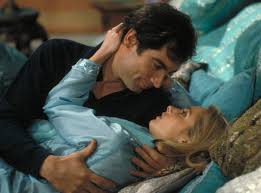
Sexual Potency – That’s not really the vibe in this film. The films opens with James and Madeleine, in love in Italy, including a scene in bed. He tries to make the moves on a woman in his room in Jamaica until he learns she is an MI-6 agent, the new 007 (in a scene that felt like an homage to Live and Let Die). He briefly flirts with Paloma until they get busy killing Spectre baddies. NTTD is a Dad Bond film.

Connection – Jame is fully connected to Madeline in this movie. Even in the scene where he puts her on the train after he believes she tried to kill him is full of pathos. Later in the film, he tells her, “I have loved you and I will love you.” Once he learns Mathilde is his daughter, the parent protection gene is unleashed and he is focused on saving his people. NTTD has no cute epilogue where we see he’s survived the missile strike and on a boat, drinking martinis with Madeleine. We see him blown up real good and the film ends with Madeleine telling their daughter about her heroic father.

Toxic Masculinity Scale: 1

Summary: NTTD might score higher because of the constant explosion of gun violence, but paternal Bond levels all that out. Even the title sequence steps back. Over a great Oscar-winning theme song by Billie Eilish, instead of the titles being projected on the bodies of nude women, it’s over Bond and his weapons. It should also mentioned that the credits included the names of many women, not just hair and make-up and casting. For reasons that might be sad (the end of Eon Bond films), we finally get a more human model of masculinity from Ian Flemming’s iconic character.

No Time to Die’s release was held up by the COVID pandemic. Principle photography wrapped in October 2019, but post-production was shuttered during the lockdown. The final Eon Bond film had its world premiere on September 28, 2021 at London’s Royal Albert Hall and landed in a market where most theaters were still closed. A month later, the global deaths from COVID-19 topped 5 million.

Because of the nature of corporate ownership of film franchises, nobody really lamented No Time to Die as the LAST JAMES BOND MOVIE EVER. In fact, “Bond 26” is currently being written by Peaky Blinders creator Steven Knight and Dune director Denis Villeneuve is tapped to direct. Who will play the new Bond? Rumors are floating about Kick Ass star, Aaron Taylor-Johnson. I’ve been routing for Idris Elba, but he might be a little old. Could it be a person of color? Or even a woman? I mean, why not? We can only hope the new Bond is a healthier versions of masculinity that is both vulnerable and lethal. He (or she) still has a license to kill, after all.

The James Bond Project #26: Spectre (2015)
The James Bond Project #25: Skyfall (2012)

The James Bond Project #24: Quantum of Solace (2008)

The James Bond Project #23: Casino Royale (2006)

The James Bond Project #22:  Die Another Day (2002)

The James Bond Project #21:  The World Is Not Enough (1999)

The James Bond Project #20:  Tomorrow Never Dies (1997)

The James Bond Project #19: GoldenEye (1995)

The James Bond Project #18: License to Kill (1989)

The James Bond Project #17: The Living Daylights (1987)

The James Bond Project #16: A View to a Kill (1985)

The James Bond Project #15: Never Say Never Again (1983)

The James Bond Project #14: Octopussy (1983)

The James Bond Project #13: For Your Eyes Only (1981)

The James Bond Project #12: Moonraker (1979)

The James Bond Project #11: The Spy Who Loved Me (1977)

The James Bond Project #10: The Man with the Golden Gun (1974)

The James Bond Project #9: Live and Let Die (1973)

The James Bond Project #8: Diamonds are Forever (1971)

The James Bond Project #7: On Her Majesty’s Secret Service (1969)

The James Bond Project #6: You Only Live Twice (1967)

The James Bond Project #5: Casino Royale (1967)

The James Bond Project #4: Thunderball (1965)

The James Bond Project #3: Goldfinger (1964)

The James Bond Project #2: From Russia With Love (1963)

The James Bond Project: #1: Dr. No (1962)

The James Bond Project #26: Spectre (2015)

This series is intended to evaluate each product of the James Bond film franchise through a feminist lens, and the relevance of the Bond archetype to shifting ideas of masculinity in the 2020s.

Spectre (2015, directed by Sam Mendes)

August 7, 2025

Yeah, it’s a formula, but when it works, you are in for a wild ride. There is not a scene or line in Spectre that one can not see coming from Sean Connery instead of Daniel Craig. The second half-century of Bond begins where we saw 007 50 years, locked in a death match with Ernst Stavro Blofeld. The long legal dispute between Eon Productions and screenwriter Kevin McClory finally resolved, we are gifted classic Bond that reunites these iconic arch rivals. Director Sam Mendes is back at the helm after Nicolas Winding Refn (Drive, 2011) backed out of the project. Here we go.

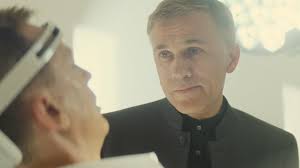
Ralph Fiennes (Lord Voldemort, himself) has replaced Judi Dench as M after Dench’s M was killed in Skyfall. Craig (46) is still doing his own stunts and tore his meniscus during filming. Brief love interest Lucia Sciarra, played by Italian actress Monica Bellucci, 50, would have been the first time a “Bond girl” was older than Bond himself. But the true “Bond girl” of the film is psychologist Madeleine Swann, played French actress Léa Seydoux, 30. The twenty-first century Blofeld is played by Christoph Waltz, the break-out star of Inglourious Basterds (2009), who completely owns the role.

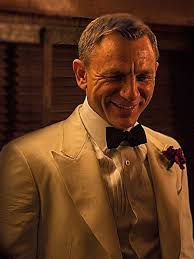
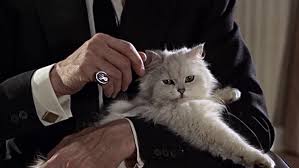
Spectre has all the staples you want in a Bond film; Bond in a white dinner jacket, Bond fighting inside a careening helicopter, Bond battling a mute assassin on a moving train, Bond going rogue, the classic Aston Martin, and Blofeld’s pussy cat. There are exotic locations that range from Mexico City’s Day of the Dead celebration (with 1500 extras) to a (not underground) lair in the Sahara desert. Shot on 35mm film but shown in IMAX theaters, Spectre makes the most of the Bond spy formula in a gift for 007 fans that also departs from the formula in some important ways.

The plot revolves around Blofeld’s SPECTRE (also back after legal wrangling) controlling the data flow from the first world’s intelligence agencies, making Blofeld the Big Brother for all intel on Earth. Ernst is watching you. Monneypenny is back behind the desk in M’s office but she and Q are secretly helping James. (We’ve seen this film before.) Bond has been left breadcrumb’s by Dench’s M and has bailed from MI-6 to find out about the conspiracy that threatens the global order. But on the way to beat Blofeld, something happens to Bond. Something we haven’t seen since 1969.

Let’s plug Spectre in to the matrix and see what happens.

Driver of Action – Unlike Skyfall that gave ample screen time to Dench, Spectre is back in the lone rogue spy narrative. M, Moneypenny, Q and MI-6’s Bill Tanner are the support team and Felix Leiter is mentioned but never shown. 007 has no female or male partner in this film. The center of the eye’s gaze.

The Role of Violence – Bond only kills a few dozen people in this film, including a bunch of Blofeld’s henchmen (it’s a dangerous job), assassin Marco Sciarra (by throwing him out of helicopter in Mexico City), and assassin Hinx (played by professional wrestler Dave Bautista), who he throws out of a train. Madeleine does press him on his chosen life as a killer, to which he replies, “It was that or the priesthood.”

Vulnerability – This is a tough one. We get the obligatory Bond being tortured scene and 007 keeps his wits. But we also get Blofeld claiming to have been behind the suffering of Bond’s losses, including M, Vesper Lynd, Bond’s love interest from Casino Royale (2006), and (unmentioned because Craig is leading a “reboot”), James’ wife Tracy, from On Her Majesty’s Secret Service (1969). “I am the author of all your pain, James.” Even so, Bond never breaks. It is not until he develops an emotional attachment to Madeleine, which magically creeps out at the end of the film, that we that 007 has a soft white underbelly.

Sexual Potency – Here’s our Lothario. The first scene of the film has a masked Bond ushering a beautiful woman into a hotel room in Mexico City, she removes her mask and we think Spectre is going to begin with a bang, but 007 escapes out the window to do some assassin work. Then, in Italy, he sleeps with the wife of the assassin he killed in Mexico. Finally, after an epic fight scene on a train, all juiced up on adrenaline, he beds Madeleine. It’s like the old song goes, “Fuckin’ and fightin’, it’s all the same.”

Connection – This is where the franchise takes a left turn. Bond, apparently, has fallen in love. It’s so slight, it’s barely noticeable until the final scene. When Blofeld is drilling into James’ skull Madeleine tells him that she loves him. That gives Bond the jolt to go apeshit and save the day (and the girl). Later, she says she doesn’t want any part of James’ action hero lifestyle (her father was an assassin, after all) and they calmly walk way from each other. But when Blofeld captures her and forces James to save one more damsel in distress, I guess he decides he loves her and, like James f’ing Bond, saves her and gets Blofeld. Instead of killing him, he says, “I’ve got something better to do.”  Then he throws away his gun and walks away with Madeline. The epilogue scene is not them in a boat, but James and Madeline driving away in the restored Aston Martin, presumably leaving MI-6 to be with the woman he loves.

Toxic Masculinity Scale: 2

Summary One does not expect James Bond to leave the life of a spy for love. Even when George Lazenby’s Bond got married in 1969, 007 was still 007-ing. But Madeline’s pressuring James’ being “always alone” created a crack in his iron wall, apparently. So we get Bond riding off into the sunset for a new life. No more killing and random hook ups, right? Right?

This installment has plenty of gifts for longtime 007 fans, including a modern Aston Martin DB10, Q’s exploding watch, finding out the Blofeld’s father raised an orphaned James, learning how Blofeld got the facial scar associated with Donald Pleasence’s performance of the character, and the return of Blofeld’s white Persian cat (“Hello, pussy,” says 007). While the plot is purely Bond by the numbers, the scope of Mendes production is as satisfying as it needs to be.

Spectre opened in London on October 26, 2015 the same day as a massive 7.5 earthquake struck the Himalayas. The film opened to mixed reviews but record-breaking box office receipts. The theme song, written and performed by Sam Smith, won both the Oscar and Golden Globe for best Theme song. The film’s ending had some asking if Spectre was the end of the 53-year-long 007 franchise, but Craig’s Bond had one more outing up his tuxedo sleeve.

Next: No Time to Die (2021)

The James Bond Project #25: Skyfall (2012)

The James Bond Project #24: Quantum of Solace (2008)

The James Bond Project #23: Casino Royale (2006)

The James Bond Project #22:  Die Another Day (2002)

The James Bond Project #21:  The World Is Not Enough (1999)

The James Bond Project #20:  Tomorrow Never Dies (1997)

The James Bond Project #19: GoldenEye (1995)

The James Bond Project #18: License to Kill (1989)

The James Bond Project #17: The Living Daylights (1987)

The James Bond Project #16: A View to a Kill (1985)

The James Bond Project #15: Never Say Never Again (1983)

The James Bond Project #14: Octopussy (1983)

The James Bond Project #13: For Your Eyes Only (1981)

The James Bond Project #12: Moonraker (1979)

The James Bond Project #11: The Spy Who Loved Me (1977)

The James Bond Project #10: The Man with the Golden Gun (1974)

The James Bond Project #9: Live and Let Die (1973)

The James Bond Project #8: Diamonds are Forever (1971)

The James Bond Project #7: On Her Majesty’s Secret Service (1969)

The James Bond Project #6: You Only Live Twice (1967)

The James Bond Project #5: Casino Royale (1967)

The James Bond Project #4: Thunderball (1965)

The James Bond Project #3: Goldfinger (1964)

The James Bond Project #2: From Russia With Love (1963)

The James Bond Project: #1: Dr. No (1962)

Winding Down Elementary School: Gender Check-In

May 15, 2025

As fifth grade starts to wind down and the complex reality of middle school looms, I’m reminded of how this blog began. November 2014, I was a stay at home dad, spending my days with Baby Cozy, wondering how I was going to raise a girl in a culture that still devalued half the population. The idea of a blog charting the challenges of “feminist fatherhood” seemed like a good way to share the struggle. Over ten years later, while the the world burns, protecting her gendered journey is still the priority.

The experience of elementary schools has seen the predicted emergence of pre-teen gender rolls. As discussed in Carol Gilligan’s pioneering 1982 study, In a Different Voice, the primary grades, 1 – 3, saw boys and girls as a fairly homogenous blob of “kids.” Half of Cozy’s friends were made of snips, snails and puppy-dogs’ tails. But by 4th, each team peeled off. In fourth grade, Cozy found her tribe of Swifties and boys became the object of much gossip and wonder. “Does he like me?”

Gilligan wrote about how 13 was the age of the great gender divide in which girls start to realize their value is based on how boys view them and their self-esteem plummets. But 2025 is not 1982, for better or for worse. For worse, kids are hitting puberty earlier now. In the 1970s, the average of the first menstruation was 13 and it’s down to 12 now. The beauty industry is targeting younger and younger girls. Cozy has been experimenting with make up but tells me it’s just for fun. On the better side, Gen Alpha kids have been raised by parents who mostly accept the basic tenants of feminism that girls and women are human beings. Boys seem less creepy and girls seem less concerned with their opinion.

We’ll see if that holds up in sixth grade.

This week I got a little tour of the middle school Cozy will attending in the fall. Parents had fun sharing their fond memories of middle school. I don’t know if it’s a “Deep South” thing, but we didn’t have middle schools where I grew up. Elementary went to seventh grade and eighth grade was high school, where you were a “sub-freshman,” the dreaded “Subbie.” Being in seventh meant you were the very big fish in the pond, but the year was also spent full of horror stories about what awaited the little subbies, destined to be terrorized by giant (and practically adult) high school kids. “They’ll force you to do heroin in the bathroom!”

I’ve gathered that middle school is the crucible of adolescent drama. Take 300 kids going through puberty and lock them in a building together for 5 days a week and see what happens. I’m guessing the gendered game of attracting boys is part of that. I’m hoping Cozy’s internal compass is rooted in enough self-efficacy that she won’t be knocked off track by that monstrous norm. But I’ll be on the look out for anything that looks like the surrendering of self that happens to girls in that patriarchal zone, including eating disorders. I think her girl squad will provide a buffer to that traditional pull.

When this blog started, my primary rants were about gendered baby toys and the lack of TV commercials that show men doing housework. Now we’re getting into the real stuff, from body image to sexual safety. This is where the feminist fatherhood business either pays dividends or goes into crisis mode. I have faith in my daughter. The rest of the world, populated by MAGA incels and Carl’s Jr. ads, I’m on guard against. What will happen?

The James Bond Project #17: The Living Daylights (1987)

April 6, 2025

This series is intended to evaluate each product of the James Bond film franchise through a feminist lens, and the relevance of the Bond archetype to shifting ideas of masculinity in the 2020s.

The Living Daylights (1987, directed by John Glen)

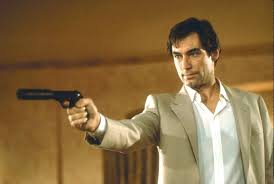
This new James Bond is quite new and old at the same time. Eon producer Cubby Broccoli had been after Timothy Dalton to play Bond since On Her Majesty’s Secret Service. In 1967, Dalton felt he was too young for the role. Now, at 41, he was the right age. With Roger Moore retired, there were several considerations for the new Bond, including Superman (and American) Christoper Reeve, Sam Neil, and Mel Gibson. Irishman Pierce Brosnan was offered the job but was under contract to the TV show Remington Steele. Broccoli’s wife, Dana, pushed to bring back Dalton to the role and she got her wish.

Besides being a “Bond-in-waiting” for 20 years, Dalton went back to the source material, Fleming’s 007 novels, to rediscover a less campy Bond, constantly living on the edge of death. His performance in The Living Daylights feels drastically different than Moore’s, less cartoonish. There are some over-the-top action scenes, like escaping Russians by sledding down a mountain, with his female accomplice, in a cello case, but the horniness and quips are dialed way back. (Although, the “He got the boot” line was classic Bond.)

The movie was the last Bond film to be scored by John Barry, with a Duran Duran-inspired theme song by A-Ha and, for the first time, a closing song by The Pretenders. TLD’s Bond “girl” was British actress Maryam d’Abo, cousin of Olivia d’Abo, from The Wonder Years. The film also introduced a new Moneypenny, played by Caroline Bliss. Desmond Llewelyn is still there as Q and, boy, does he have the gadgets in this installment.

Despite Dalton’s more toned down Bond, there are still plenty of franchise tropes, including the obligatory bikini-clad women by the pool scene, Russian assassins on skis chasing James down a mountain, Bond in his tux, and more rounds of ammunition fired at Bond than anyone could count. We have multiple locations in the eastern hemisphere, including Afghanistan after the 1979 Russian invasion. In 1987, the Mujahideen were still considered the good guys, before they birthed the Taliban and Osama bin Laden.

The Living Daylights, in many ways, feels very different. Let’s put it into our review machine.

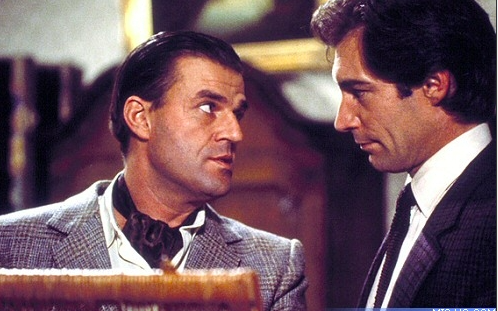
Driver of Action – It makes sense that when introducing a new Bond, you’d spend your screen time on the star. Some old friends show up, like M and CIA agent Felix Leiter, but they just pop in to move the story along. There is a fun subplot with renegade Russian General Georgi Koskov (played by Dutch actor Jeroen Krabbé, who was so good in The Prince of Tides) that feels like it could have been a great film on its own. But here we are getting to know this James, and he’s not the previous James.

Role of Violence – Dalton’s Bond is more serious than previous incarnations and so is his use of violence. He kills about 10 bad guys in the film, most notably Koskov’s henchman, Nekros, who he drops from a plane over Afghanistan by cutting his bootstraps. There’s a lot of gunfire and, while James never gets a nick, he blows away plenty (mostly Russian) dudes.

There is a scene where Bond rips a nightgown off a woman to distract a KGB agent. Seems like a gratuitous excuse to give the audience a brief boob shot.

Vulnerability – Is our James in love? His relationship with Kara (Maryam d’Abo) seems genuine. It begins when doesn’t kill her as she appears to attempt an assassination of a KGB asset and he get’s shit from another 00 agent. He also seems somewhat traumatized when that other 00 agent gets murdered with a sliding glass door.

Sexual Potency – This isn’t your father’s James Bond. It’s very possible that James doesn’t have sex with anybody in TLD. First of all, his banter with Moneypenny is chilled out. When she suggests he come over to listen to her “Manilow collection,” he looks at her like he wants to barf. 

The film centers around his partnership with Kara. He pretends to be a friend of Koskov, who is her boyfriend. When they check into a hotel in Vienna, the concierge, with a wink, says, “Your usual suite, Mr. Bond?” Instead, he asks for a suite with separate bedrooms. They end up kissing on a giant ferris wheel. (I rode that ride in Vienna in 1991!) She resists, and creepy Bond says, “Don’t think, just let it happen.” It might be implied that they hook up after that, but we never see it. Same thing when they are in Afghanistan. He tells her she is beautiful and they kiss. No morning after scenes, as we’ve come to expect.

Connection – There is some banter with Saunders, the 00 agent who gets killed helping him track Koskov. He’s detached from his other MI-6 colleagues, including the aging Q. But his affection for Kara seems genuine. “To us,” he toasts, after she makes him a martini (shaken, not stirred, and poisoned). The film doesn’t end with them having sex in a boat, but James surprising her backstage after her symphony performance, with a kiss. Will Kara Milovy return in the next film?

Toxic Masculinity Scale: 2

Summary

There are nods to Bond of old. In the opening action sequence, James after an epic battle on the Rock of Gibraltar, is parachuting over the Mediterranean. A bikini-clad woman on a yacht is on the phone complaining to a friend, “It’s all so boring here, Margo – there’s nothing but playboys and tennis pros. If only I could find a real man.” Then 007 crashes through the yacht canopy, right on cue. It’s implied that she’s found her man for a few hours. But after that, it’s all Bond, more grounded in his work than we’ve seen.

007 fans might have been disappointed by the absence of Lothario Bond (by 1987, AIDS was a full blown crisis), but they got more than they bargained for in gadgets (a ghetto “blaster”!), especially with the return of the Aston Martin. Q has loaded this car with more gadgets than Speed Racer’s Mach 5, including a jet engine. Q urges caution, “It’s just had a new coat of paint!” But we know James. The locations are also a real treat, including Czechoslovakia, Tangiers and Afghanistan (filmed in Morocco). There’s a scene of James riding across the desert on horseback with the Mujahideen that looks like a scene from Lawrence of Arabia. Glorious.

Dalton’s playing of Bond with more of an edge was well received. Maybe, by the late 80s it was time to tweak the formula. The Living Daylights premiered in London on June 29, 1987, two weeks after Ronald Reagan, standing in Berlin, said, “Mr. Gorbachev, tear down this wall.” The growing detente between the U.S. and U.S.S.R. is referenced the film as a motive for the renegade KGB agents. There’s also a goofy villain arms dealer in the movie, played by Joe Don Baker, that seems very Reagan-era. While retaining some James of old (“Forget the ladies for once, Bond,” Saunders tells him as he spots Kara through his opera glasses), we get a more serious, less flamboyant 007 in this film. Will this be the new Bond?


Next: License to Kill (1989)

The James Bond Project #16: A View to a Kill (1985)

The James Bond Project #15: Never Say Never Again (1983)

The James Bond Project #14: Octopussy (1983)

The James Bond Project #13: For Your Eyes Only (1981)

The James Bond Project #12: Moonraker (1979)

The James Bond Project #11: The Spy Who Loved Me (1977)

The James Bond Project #10: The Man with the Golden Gun (1974)

The James Bond Project #9: Live and Let Die (1973)

The James Bond Project #8: Diamonds are Forever (1971)

The James Bond Project #7: On Her Majesty’s Secret Service (1969)

The James Bond Project #6: You Only Live Twice (1967)

The James Bond Project #5: Casino Royale (1967)

The James Bond Project #4: Thunderball (1965)

The James Bond Project #3: Goldfinger (1964)

The James Bond Project #2: From Russia With Love (1963)

The James Bond Project: #1: Dr. No (1962)

The James Bond Project #5: Casino Royale (1967)

January 11, 2025

This series is intended to evaluate each product of the James Bond film franchise through a feminist lens, and the relevance of the Bond archetype to shifting ideas of masculinity in the 2020s.

Casino Royale (1967, directed by John Huston and others)

After four hugely successful Bond films, it’s time for the first Bond spoof. Casino Royale was the first of Ian Fleming’s Bond books (published in 1953). The John Huston directed film brings back many faces from the first four films from the the United Artists Bond canon, including Ursula Andress (who, as MI-6 agent Vesper Lynd, sounds way too much like Melania Trump). Casino Royale is a comedy meant to mock many of the Bond conventions, so it’s going to score differently than the films produced by Eon Productions, the home to “official” 007 movie franchise.

Here we get an older Bond, played by David Niven, who is 20 years retired after a sad end of a relationship with his beloved Mata Hari. He stutters and is known for his celibacy. This ain’t Sean Connery’s Bond. He’s brought back to MI-6 by M (played by Huston himself) to deal with evil SMERSH. (We don’t know what SMERSH stands for but there was a counter-intelligence group in the Soviet Union with the same name). M is comically killed so Bond takes the helm of MI-6, where he is reunited with Miss Moneypenny, or at least her daughter. (Strangely, Moneypenny now has an American accent, played by Barbara Bouchet, who was born in Nazi Germany.) He orders all the “Double O” agents to change their names to “James Bond” to confuse and trap SMERSH baccarat player Le Chiffre, played with gusto by Orson Welles. Two of those agents include Peter Sellers and a very young Woody Allen.

Casino Royale is a madcap farce that lampoons the cool image of 007. There’s even a yakety sax soundtrack during chase and fight scenes (some played by Herb Albert). The funny Bond quips are turned up to 11, jumping from wry to hilarious. (“James Bond doesn’t wear glasses.” Bond: “Yes, it’s just because I like to see who I’m shooting.”) The film is fully located in the mid-sixties. The first shot is graffiti that says, “Les Beatles.” The scene where the Peter Sellers’ Bond is drugged is straight psychedelia. And the movie introduces the Burt Bacharach song, “The Look of Love,” sung by Dusty Springfield (and sung by Bacharach himself in 1997’s Austin Powers: International Man of Mystery). The film was released in April 1967 and Sgt. Peppers Lonely Hearts Club Band was released shortly after setting up the iconic “Summer of Love.”

This may be an anti-Bond Bond film, piercing some of the tried and true tropes of the previous four films, but it’s worth dropping it into our feminist matrix if just for point of comparison.

Driver of Action – There are multiple drivers of the story here, including multiple Bonds. Sir James Bond (Niven) plays almost a support role. The majority of the story centers around Evelyn Tremble (Peter Sellers as a Bond surrogate) and Vesper Lynd (Andress). A section of the film follows Bond’s daughter with Mata Hari, Mata Bond (played by Joanna Pettet) in an adventure in Berlin (which features A Hard Day’s Night’s Anna Quayle and a hilarious scene where a hole is blown in the Berlin Wall and a wave of East Germans run out). This is an ensemble cast.

Role of Violence – It’s a Bond film so there a guns and explosions. But much of the violence is done for laughs, aided by a comedic soundtrack. But, other than an army of fembots with machine guns, there is no overt violence. I don’t think Niven’s or Seller’s Bonds kill anybody.

Vulnerability – The premise of this story is that Bond experienced heartbreak from his true love, Mata Hari, and looks for a connection to his daughter Mata Bond (who is abducted into a SMERSH flying saucer). He’s developed a stammer that he’s self-conscious of and his fighting style as become what might be describes as “effeminate.”

Sexual Potency – The joke of the movie is that Bond is celibate and that 00 agents are being killed because they can’t resist women. Bond creates a program to train agents to resist females in a scene where Agent Cooper rebuffs seductive women by throwing them to the mat. There is one scene where Sir Bond forcibly kisses Moneypenny (or her daughter). Ursula Andress plays seductress to Peter Sellers’ Bond, as does Miss Goodthighs (played by a young Jacqueline Bisset). Additionally, Dr. Noah (not Dr. No), played by Woody Allen, has a fourth quarter evil plot. He has a biological weapon that will make all women beautiful and kill all men over 4 foot 6, making him the tallest (and most sexually attractive?) man on earth.

Connection – There are few autonomous men in this film. The last quarter of the movie features Sir James, Moneypenny, Mata, and Agent Cooper working together to bring down Le Chiffre at the Casino Royale. And the Calvary (literally!) arrives to help save the day. Bond’s connection to his daughter seems sincere as is his desire to shepherd MI-6 in the post-M era. The film ends with the cast, having been blown up, floating in heaven, while Woody Allen’s character drops down to hell.

Toxic Masculinity Scale: 2

Summary Casino Royale is not a feminist critique of Bond. It’s a mid-sixties comedy so there are plenty of jokes rooted in sexism. For example, after M dies, Bond is sequestered in his house with his eleven seductive daughters (actually SMERSH agents) and his equally seductive widow (played with great hilarity by Deborah Kerr). But the film also completely mocks Bond’s Lothario reputation. (Woody Allen as James Bond should make the point.) There are plenty of nods to the Bond franchise, including an underground lair and even women in gold paint, but the ensemble nature of Casino Royale stands in stark contrast to Bond 1 to 4.

Unlike the previous film, Thunderball, whose cast is entirely gone, many cast members from Casino Royale are still with is, including Ursula Andress, Woody Allen, Joanna Pettet, Barbara Bouchet, and Jacqueline Bisset. I’d love to know how they see the film’s depiction of Bond and of women from a contemporary lens. The film is both hilarious and, at times, a complete mess, but also provided a break from the Bond formula. Sometimes stepping out of something allows us a fresh perspective on it. Two months later there would be another Sean Connery Bond flick headed to theaters. I wonder if viewers saw it differently after watching Casino Royale.

Next: You Only Live Twice (1967)


The James Bond Project #4: Thunderball (1965)

The James Bond Project #3: Goldfinger (1964)

The James Bond Project #2: From Russia With Love (1963)

The James Bond Project: #1: Dr. No (1962)

The James Bond Project #2: From Russia With Love (1963)

December 28, 2024

From Russia With Love (1963, directed by Terence Young)

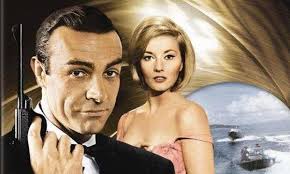
With the unexpected success of Dr. No, United Artists doubled the budget for the sequel and the bet paid off. (The $2 million film took in more than $78 million worldwide.) We are now firmly in a franchise of films made by men for men and their dates, starring manly man Sean Connery. Although it should be noted that Johanna Harwood, who had worked on the script for Dr. No, played a large role in the screenplay for From Russia With Love. Producers cast Italian beauty queen Daniela Bianchi as Bond Girl #2 Tatiana Romanova, after actress Elga Gimba Andersson refused to sleep with a United Artists executive. Bianchi, who could barely speak English, had her lines dubbed by a British actress.

The film starts the Bond tradition of the opening credits being projected on to the bodies of scantily clad or nude women, firmly establishing that these are stories for boys. Instead of Jamaica, most of the action takes place in Turkey, although there are obligatory scenes in London and wherever SPECTRE Island is. There we meet the Dr. Evil of the Bond cinematic universe, Blofeld (or at least his cute cat). Leaving the Caribbean means we leave any and all black actors, and the primary Turkish character, Ali Kerim Bey, is played by Mexican actor Pedro Armendáriz. (In a bizarre side note, Armendáriz contracted neck cancer after filming a Howard Hughes film near a nuclear test site in Utah, and before he finished shooting his parts for From Russia With Love, shot himself with a gun that he snuck into his hospital room.)

From Russia With Love was filmed as the Cold War intensified and SPECTRE agents replaced Russian agents (who were the villains in Ian Fleming’s original Bond novel) to not further inflame tensions. President Kennedy told Life Magazine that From Russia With Love was one of his favorite novels. The film version premiered on October 10, 1963, the same day U.S. Attorney General Robert Kennedy (crazy guy’s dad) approved J. Edgar Hoover’s wiretapping of Martin Luther King, Jr.. The film was screened at the White House for JFK before he left for Dallas, where he was assassinated. From Russia With Love received mixed reviews, some saying it was slower than Dr. No, but has gone on to be held up as one of the best of the Bond series.

Here’s how FRWL charts with our five evaluations.

Driver of Action – Director Terrence Young had established a formula and he’s not going to break it on the sophomore outing. This is Bond in all his glory, now supplied with cool gadgets by MI-6’s Agent Q (played by Desmond Llewelyn, who remained as Q to 1999’s The World is Not Enough). There is a great “buddy” feature between Bond and Bey (similar to Dr. No’s Quarrel role) and a fun subplot about SPECTRE operatives Rosa Klebb and Kronsteen, groveling before Blofeld as they attempt to kill Bond for offing Dr. No. (The “R” in SPECTRE is for “revenge”- Special Executive for Counter-intelligence, Terrorism, Revenge and Extortion. FYI.) But the story doesn’t happen without their dastardly plot to kill Bond and the delight of our man James foiling their fiendishness.

Role of Violence – There is considerably less violence in Dr. No’s sequel. There are some cool explosions after a helicopter attack and a boat chase, but 007 only kills one person, SPECTRE assassin Donald Grant (played by Robert Shaw, who will always be Captain Quint in Jaws to me). Grant’s death is the result of a beautifully choreographed fight scene in a train car on the Orient Express. (Fight scenes in train cars become something of a trope in the Bond franchise.) The most shocking violence in the film is Bond’s full-handed smack across Russian agent Tatiana’s face, after which she repeatedly tells him that she loves him. I bet that clip has showed up in a few “Sexism in Film” classes.

Vulnerability – Again, there’s no chink in James Bond’s armor. No glimpse inside. Even when Bond is literally on his knees prostrate before assassin Grant, we know he has a plan to quickly turn the tables.

Sexual Potency – The first shot of Bond in the film is him making out with Sylvia Trench (from Dr. No) in a floating punt, probably on the banks of the River Cam in Cambridge. He’s playing hooky from MI-6 to work his way around the bases with Trench. (Is there a cricket version of “third base”?). When Bond first meets Tatiana, she is naked in his Istanbul hotel bed. Later she asks him, “James, will you make love to me in London?” He answers, “Day and night.” There’s another strange segment where Bond must decide which of two young, attractive “gypsy” women will be awarded the man they both want. They arrive at his room to seductive music. “This might take some time,” he says. We see the women the next morning with broad smiles as James leaves. All these women are happy for a piece of 007’s sexual mojo, even when he slaps them.

Connection – The scenes with Pedro Armendáriz as Ali Kerim Bey sparkle. They have immense chemistry, enhanced by the knowledge of the great pain he was in from his cancer. Had he lived, one could see Armendáriz as Bond’s Morocco Mole sidekick in future Bond films. But both Armendáriz and his character are dead by the end of the film. His relationship with Tatiana is less mutual, even though they have to pretend to be a married couple while on the train, and she dreams of marrying him when they reach London. She even saves him from the venomous boots of Rosa Klebb in a hotel room in Venice and his heart is unmoved. Like the closing scene in Dr. No, we end with Bond and Bond Girl #2 romantically floating together in a boat, this time a gondola, with end credits urging viewers to get ready for Bond #3, Goldfinger, which will most certainly present us with Bond Girl #3.

Toxic Masculinity Scale: 7/10

Summary From Russia With Love really front loads the male gaze on women’s bodies thing. From the opening credits, to the (very) long shot of Ali Kerim Bey’s girlfriend’s cleavage, to a very oily masseuse on SPECTRE Island, to the camera endlessly hovering on a belly dancer’s torso, there’s plenty to ogle. Then there’s the weirdly placed “duel” between two scantily glad “gypsy girls” that has zip to do with the plot. If there’s any sense of balance, we do get Bond wrapped in a towel, which probably had some men wondering what they needed to do to grow crops of hair on their chests.

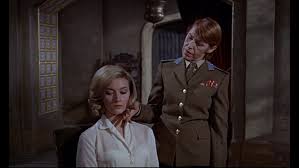
There’s also an odd lesbian subtext with Rosa Klebb. Props to having a female antagonist in the second Bond film. In 1963, there was a narrative that Russian (i.e. “communist”) women were more manly, so that tracks. But to make the point that women on the other side of the Iron Curtain are not bound by the same gender rules, they add a suggestion of sexual predation when Klebb is informing Tatiana of her mission to seduce Bond. And Romanova doesn’t seem to shirk as Klebb evaluates her body and places her hand on her leg. Russians, they not like us. (Or are they?)

From Russia With Love is rough film to place. It’s the most realistic of all the Bond films from the classic era. There’s a nice complexity to the plot but we know even less about the person of James Bond. It’s almost like Sean Connery is playing James Bond pretending to be a caricature of James Bond. A lot of people think this is one of the greatest British films ever made, but it felt flat to me. And the slapping scene seemed very un-Bond, even if it served as a reminder of how normalized violence against women is in film. Where is Wonder Woman when you need her?

Next: Goldfinger (1964)

The James Bond Project: #1: Dr. No

When Hate Wins

November 9, 2024

“Sometimes the fight takes a while. That doesn’t mean we won’t win.” – Kamala Harris, November 6, 2024

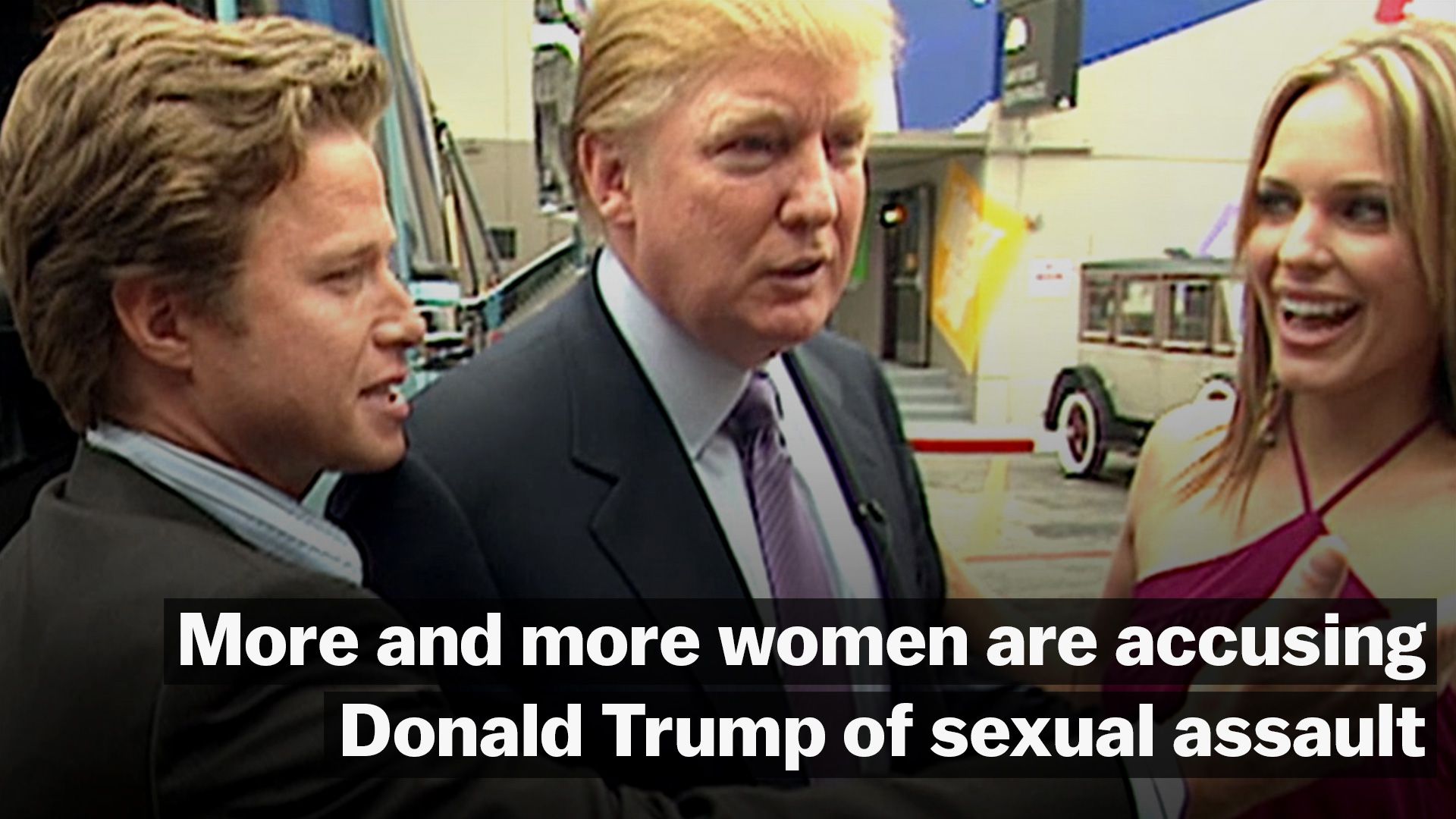
I went down a pretty deep rage hole after Trump the Rapist won Tuesday’s election. The list of things that made him unfit to be our president was as long as an Alaskan winter night, including being found liable for a sexual assault by a jury of his peers, which the judge described as rape. Remember when Mitt Romney was disqualified from the Presidency because he left the family dog on top of his car? That Trump the Rapist won the popular vote defied comprehension . I found myself quoting the line from Marilyn Manson’s “Irresponsible Hate Anthem,” that screams, “I wasn’t born with enough middle fingers.”

So I unplugged for a few days. I didn’t want to see the gloating MAGA memes or sit through MSNBC’s Monday morning quarterbacking. We know what happened. The Putin-Musk disinformation campaign pushed millions of gullible Americans into Trump’s cult of personality, while the Democratic Party sat around and got high on the smell of their own farts, clueless to the reality on the ground. The White House, the Senate, and probably the House, now the playthings of a sociopath and his self-enriching oligarchs.

We know it’s going to get bad. It already has. The day after the election, African-Americans of all ages started receiving texts stating that they would be enslaved to pick cotton. Many texts mentioned Trump, saying things like, “Our Executive Slaves will come get you … be prepared to be searched down once you’ve enter the plantation.” In the last few days, Trump’s misogyny has unleashed an army of male trolls who have been harassing women (and girls in school) with the chant, “Your body, my choice.” And this thing is less than a week old.

After a few days of screaming at the sky (and one night of poker and much whiskey), it may be time to lick my wounds and figure out how to prepare for what’s to come. And how to fight it. Step one is to let go of the hate. That’s their game. There was a news story today that Iran was working on a plot to assassinate Trump to avenge the death of Qassem Soleimani, but the FBI caught the three plotters. My immediate thought was, “I guess Iran didn’t have a Plan B.” But that doesn’t cure America of the sickness that is Trumpism. It would only elevate the calls for more blood.

Resisting the lizard brain mandate to blindly fight my supposed enemies is part of this. Who are these enemies? I can generalize them as “MAGA morons,” too dumb to see through Trump’s con act. But these “morons” are people I know. Some of them are my students and family members. They see us as “evil” and we see them as cognitively impaired. Neither is the reality. (Well, Trump is most certainly cognitively impaired, and if he makes it to January 2029, we’ll see the 82 year-old sitting with a drool bucket, staring at the sun, on Inauguration Day.) But falling into the us vs. them binary just turns a needed conversation into a mindless war and, again, that’s not our thing.

It doesn’t mean we shouldn’t be ready to fight. I’m already geared up for the 2026 midterms. Cozy and I will make pink pussy hats for the coming marches. I’m dusting off my civil disobedience skills and will be a 60-something monkey-wrench in Trump’s march to authoritarianism. Don’t think I’m making the case for resting on my white male privilege.

But I think we can do it without the vitriol. Yeah, millions of women voted for Trump the Rapist. Are they just bimbos and battered women suffering from Stockholm Syndrome? Or are they complex human beings with multiple motivations that, with love instead of hostility, can be cleaved away from the misogynistic cult of Trump the Rapist? And the men who love them may follow.

I had a publication in 2004 titled, “Getting It: Women and Desistance from Hate Groups.” It was based on my research on former racist skinheads. Their exit stories followed a similar path; a woman in their life, a girlfriend, a teacher, a step-mother, gave them the gift of empathy. They said, “Listen to what I have to endure as a female. That’s what you are doing to people of color.” Lightbulbs went off and the skinheads walked away from hate. There is no greater hate group than MAGA, so why wouldn’t that same strategy work again?

So it’s time to unclench the fist and open the hand and start rescuing people from this death cult. I didn’t know how to truly put women first until I became a father of girl. I wonder how many MAGA bros would vote for Trump the Rapist if Trump raped a women they loved. (Well, besides Ted Cruz.)

So here is my Three Point Strategy to get us out this nightmare. 1) Let go of the hate and the us vs. them narrative. It stops meaningful action in its tracks. 2) Circle the wagons. We need to let know those most vulnerable know that we have their backs. This includes members of immigrant and trans communities. Their fear-level is off the charts. (We’re locking down Andi’s citizenship before the Inauguration so we don’t have to worry about her being disappeared by the “Day 1” plan for mass deportations.) And 3) Reach out with soft hands to those that voted for Trump the Rapist, especially the women. Let’s be Pied Pipers of love. The alternative is a war of all against all and we’ve done that. We don’t want MAGA civil war re-enactors 150 years from now in red hats, screaming, “Your body, my choice!” at Gettysburg.

Deep breaths, America. And let’s get in there where we are needed. 

Beta Trump: The Day the King Fell Off the Hill

October 12, 2024

I was 18 or 19 when I first heard the line, “Real men don’t eat quiche.” I remember being so confused because I loved quiche! Eggs, pie, it’s the perfect meal! Was I not a real man? What if I ate quiche with one hand and bashed someone over the head with lead pipe with the other? Where was this guidebook for what was and wasn’t the permitted behavior for real men, so we wouldn’t become fake men?

Judith Butler, the philosopher who wrote Gender Trouble: Feminism and the Subversion of Identity (1990), took issue with any attempt to define “real men” or what makes a “natural woman.” These are human inventions, invented by humans who have no actual authority over such designations. Sociologists know that gender is fluid and changes across time and space. What was masculine in 1954 is quite different from what is masculine in 2024. My own research on racist skinheads found them largely motivated by this changing nature of masculinity, as their manly factory jobs were offshored and “their women” declared their independence and began bringing home bigger paychecks. For Butler, gender was a performance and, boy, did the skinheads perform.

So it’s with great amusement that I watch the buffoonish performance of masculinity by former President Trump. This child of privilege, who has never lifted anything heavier than a golf club, has routinely pretended to be a strongman. On his first run for president, he regularly told his supporters to “knock the hell out of” protestors. When, as president, he contracted COVID, he defiantly ripped his mask off on the White House balcony (and was then whisked off to be treated by the nation’s top doctors). When an assassins bullet barely grazed his ear, he raised his fist and chanted “Fight! Fight! Fight!” His endless admiration of dictators like Orban and Putin is all part of the act. Former Chief of Staff Gen. John Kelly had to beg Trump not to praise Adolf Hitler in public. Admiring Kim Jong Un is one thing, but Hitler, well, that might be a PR problem.

One of the themes of this election has been the 18 point gender gap between Trump and Harris supporters. And it’s not just uneducated white men that are breaking for Trump. It’s also a lot of uneducated brown and black men. Even Obama has been enlisted to try to convince black men to vote for the black woman. Is Kamala Harris this year’s quiche?

Patriarchy is the oldest power dynamic on earth. Older than capitalism. Older than racism. It doesn’t go all the way back, but as long as we’ve been defining God as “He,” men have enjoyed the privilege of being the king of the hill. Over the last 100 years, men have been slowly pushed off their throne, but they are not giving up without a fight. More women are fully employed than men. More women are graduating from college than men. And now a woman is favored to be Commander in Chief. What’s a fragile boy to do? Trump’s appeal to these broken men is as He-Man, the Master of the Universe. Ah, those were the days.

So it’s not surprising that men from every generation who still buy into 1950s myths of masculinity have glommed onto the the fake bravado of the Richie Rich from Queens (who wears a girdle). They want their UFC, their trad wives, and their unrestricted access to women’s bodies and paychecks. Trump is the incel icon. His conviction for sexual assault only endears him to the lost boys of the twenty-first century. He claims he will restore the moral authority to the days when manly men (like him?) ruled the roost. Masculinity in Harris’ America is under assault from DEI, illegal immigrants, and drag queens, according to Fox News/MAGA doctrine. Trump even referred to radio host Howard Stern as a “woke beta male” after Stern interviewed Harris this week.

Trump’s dive into the cesspool of the manosphere, doing interviews on bro podcasts and bumping chests with misogynists like Logan Paul, may be intended to stiffen his limp poll numbers, but they’re likely to have the opposite effect. Trump should have taken note of the response to his Mini-Me, JD Vance, who tried to define what was and wasn’t a “real woman.” (Spoiler alert: It wasn’t childless cat owners.) The quip rallied women from across the political spectrum who collectively said, “You don’t know me, Couch Boy!” Trump’s pathetic performance of toxic masculinity may endear him to a small number of women who have Stockholm syndrome after years of abuse, but female voters are the proverbial sleeping giant. Just look at the turnout anytime abortion restrictions have been on the ballot.

The vast the majority of these self-declared “alpha males” (pffft!) have women in their lives who have caught glimpses of life outside of patriarchy. It’s a world where they have control over their lives and are safe(r) from sexual harassment and violence. They don’t want to go back to being Mrs. John Doe. A lot of the “alphas” are materially supported by women, even if it’s just living in their mother’s basement. And these women who have their alpha ears are telling them that real men support women’s autonomy and that, if not respected, they could easily take their love to a man who sees women as human beings. My guess is that those men who are still falling for Trump’s macho con don’t have women available for honest conversations. Like Logan Paul, they are flailing in a world that sees alpha men as vestiges of the bad old days.

That’s why Harris running mate Governor Tim Walz is so refreshing. Like me and Kamala, Tim is Generation X (all three of us were born in 1964), and grew up in an era when women gained immense economic and social power. We saw our moms move from housewives to career havers. Walz has all the manly credentials (veteran, football coach, fried food eater). He’s also a girl-dad (of a Swiftie, just like me!) and a defender of queer kids and women’s reproductive rights. The sad incels can try to define him as “soft” (“Tampon Tim”), but Walz’s version of masculinity is something painfully out of reach to them. His 30-year-marriage, compared to Trump’s serial philandering, stands as a model of how men should be in the world. (If you think any of Trump’s marriages were happy, I’ve got some stocks in Trump Steaks I’d like to sell you.) If Alpha Boy thinks he’s going to have a 30-year marriage with a trad wife, he hasn’t spoken to an actual female off the internet.

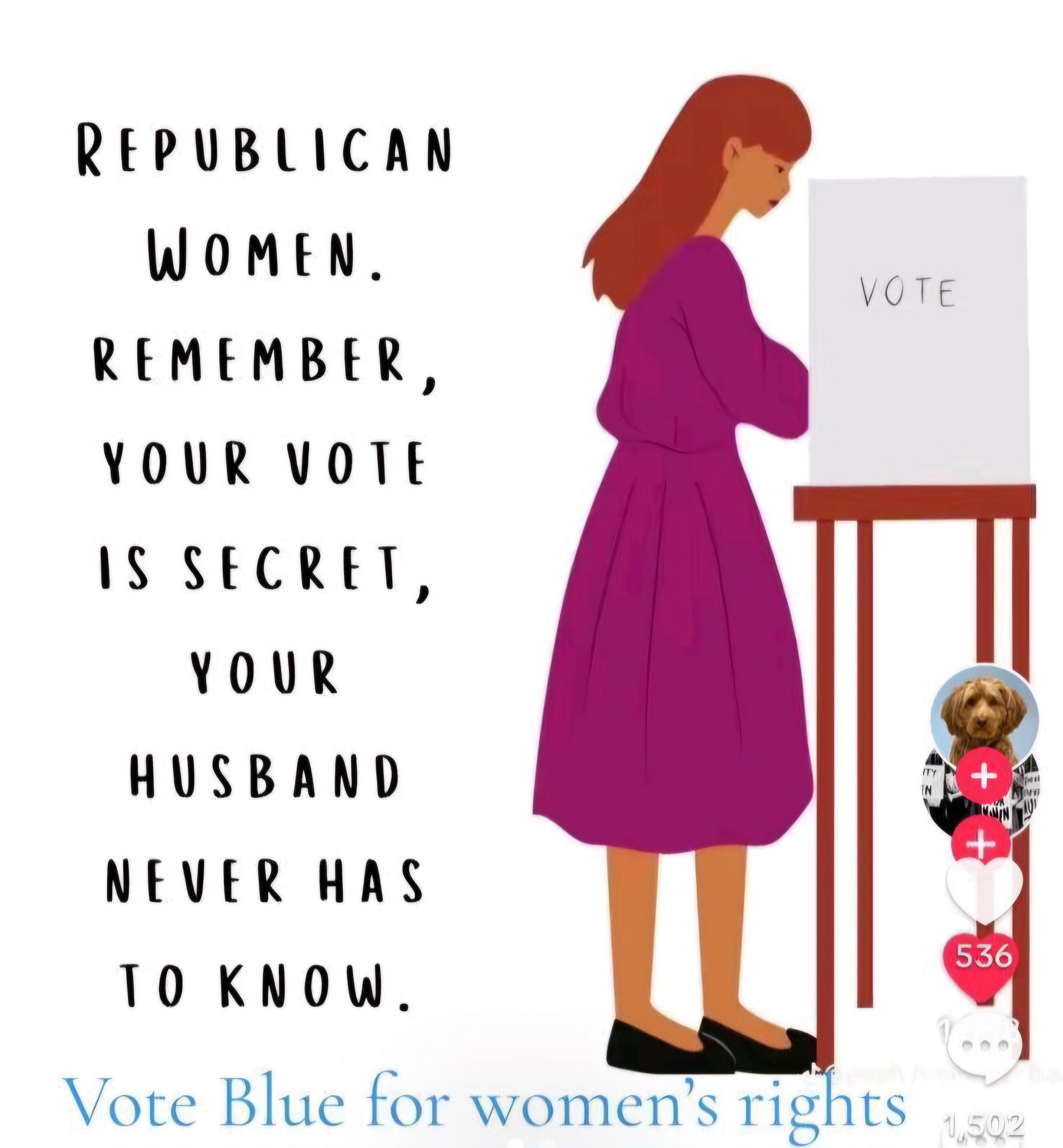
The conventional wisdom is that it will be female voters that save us from the strongman authoritarian trip of Trump and his Handmaid’s Tale Project 2025 vision of making America 1954 again. Many of those women will be telling their men they are voting for Trump and in the privacy of the voting booth pulling the lever for Harris. But I think a bunch of those alpha males will be voting for Harris, too. Because their girlfriends, wives, mothers, sisters, daughters told them that real men vote for women.

Watching Coach Walz and the Painfully Fragile Masculinity of MAGA