The James Bond Project #26: Spectre (2015)

This series is intended to evaluate each product of the James Bond film franchise through a feminist lens, and the relevance of the Bond archetype to shifting ideas of masculinity in the 2020s.

Spectre (2015, directed by Sam Mendes)

August 7, 2025

Yeah, it’s a formula, but when it works, you are in for a wild ride. There is not a scene or line in Spectre that one can not see coming from Sean Connery instead of Daniel Craig. The second half-century of Bond begins where we saw 007 50 years, locked in a death match with Ernst Stavro Blofeld. The long legal dispute between Eon Productions and screenwriter Kevin McClory finally resolved, we are gifted classic Bond that reunites these iconic arch rivals. Director Sam Mendes is back at the helm after Nicolas Winding Refn (Drive, 2011) backed out of the project. Here we go.

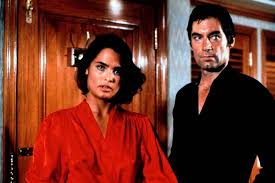
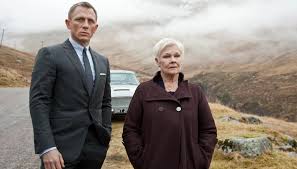
Ralph Fiennes (Lord Voldemort, himself) has replaced Judi Dench as M after Dench’s M was killed in Skyfall. Craig (46) is still doing his own stunts and tore his meniscus during filming. Brief love interest Lucia Sciarra, played by Italian actress Monica Bellucci, 50, would have been the first time a “Bond girl” was older than Bond himself. But the true “Bond girl” of the film is psychologist Madeleine Swann, played French actress Léa Seydoux, 30. The twenty-first century Blofeld is played by Christoph Waltz, the break-out star of Inglourious Basterds (2009), who completely owns the role.
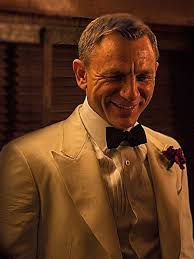
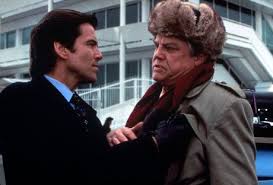
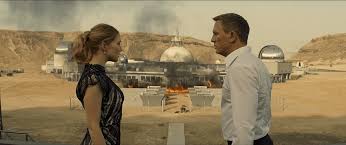
Spectre has all the staples you want in a Bond film; Bond in a white dinner jacket, Bond fighting inside a careening helicopter, Bond battling a mute assassin on a moving train, Bond going rogue, the classic Aston Martin, and Blofeld’s pussy cat. There are exotic locations that range from Mexico City’s Day of the Dead celebration (with 1500 extras) to a (not underground) lair in the Sahara desert. Shot on 35mm film but shown in IMAX theaters, Spectre makes the most of the Bond spy formula in a gift for 007 fans that also departs from the formula in some important ways.

The plot revolves around Blofeld’s SPECTRE (also back after legal wrangling) controlling the data flow from the first world’s intelligence agencies, making Blofeld the Big Brother for all intel on Earth. Ernst is watching you. Monneypenny is back behind the desk in M’s office but she and Q are secretly helping James. (We’ve seen this film before.) Bond has been left breadcrumb’s by Dench’s M and has bailed from MI-6 to find out about the conspiracy that threatens the global order. But on the way to beat Blofeld, something happens to Bond. Something we haven’t seen since 1969.

Let’s plug Spectre in to the matrix and see what happens.

Driver of Action – Unlike Skyfall that gave ample screen time to Dench, Spectre is back in the lone rogue spy narrative. M, Moneypenny, Q and MI-6’s Bill Tanner are the support team and Felix Leiter is mentioned but never shown. 007 has no female or male partner in this film. The center of the eye’s gaze.

The Role of Violence – Bond only kills a few dozen people in this film, including a bunch of Blofeld’s henchmen (it’s a dangerous job), assassin Marco Sciarra (by throwing him out of helicopter in Mexico City), and assassin Hinx (played by professional wrestler Dave Bautista), who he throws out of a train. Madeleine does press him on his chosen life as a killer, to which he replies, “It was that or the priesthood.”
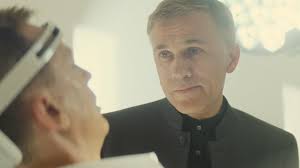
Vulnerability – This is a tough one. We get the obligatory Bond being tortured scene and 007 keeps his wits. But we also get Blofeld claiming to have been behind the suffering of Bond’s losses, including M, Vesper Lynd, Bond’s love interest from Casino Royale (2006), and (unmentioned because Craig is leading a “reboot”), James’ wife Tracy, from On Her Majesty’s Secret Service (1969). “I am the author of all your pain, James.” Even so, Bond never breaks. It is not until he develops an emotional attachment to Madeleine, which magically creeps out at the end of the film, that we that 007 has a soft white underbelly.

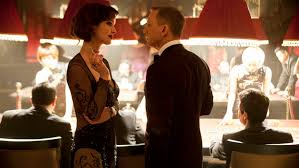
Sexual Potency – Here’s our Lothario. The first scene of the film has a masked Bond ushering a beautiful woman into a hotel room in Mexico City, she removes her mask and we think Spectre is going to begin with a bang, but 007 escapes out the window to do some assassin work. Then, in Italy, he sleeps with the wife of the assassin he killed in Mexico. Finally, after an epic fight scene on a train, all juiced up on adrenaline, he beds Madeleine. It’s like the old song goes, “Fuckin’ and fightin’, it’s all the same.”

Connection – This is where the franchise takes a left turn. Bond, apparently, has fallen in love. It’s so slight, it’s barely noticeable until the final scene. When Blofeld is drilling into James’ skull Madeleine tells him that she loves him. That gives Bond the jolt to go apeshit and save the day (and the girl). Later, she says she doesn’t want any part of James’ action hero lifestyle (her father was an assassin, after all) and they calmly walk way from each other. But when Blofeld captures her and forces James to save one more damsel in distress, I guess he decides he loves her and, like James f’ing Bond, saves her and gets Blofeld. Instead of killing him, he says, “I’ve got something better to do.”  Then he throws away his gun and walks away with Madeline. The epilogue scene is not them in a boat, but James and Madeline driving away in the restored Aston Martin, presumably leaving MI-6 to be with the woman he loves.

Toxic Masculinity Scale: 2

Summary One does not expect James Bond to leave the life of a spy for love. Even when George Lazenby’s Bond got married in 1969, 007 was still 007-ing. But Madeline’s pressuring James’ being “always alone” created a crack in his iron wall, apparently. So we get Bond riding off into the sunset for a new life. No more killing and random hook ups, right? Right?

This installment has plenty of gifts for longtime 007 fans, including a modern Aston Martin DB10, Q’s exploding watch, finding out the Blofeld’s father raised an orphaned James, learning how Blofeld got the facial scar associated with Donald Pleasence’s performance of the character, and the return of Blofeld’s white Persian cat (“Hello, pussy,” says 007). While the plot is purely Bond by the numbers, the scope of Mendes production is as satisfying as it needs to be.

Spectre opened in London on October 26, 2015 the same day as a massive 7.5 earthquake struck the Himalayas. The film opened to mixed reviews but record-breaking box office receipts. The theme song, written and performed by Sam Smith, won both the Oscar and Golden Globe for best Theme song. The film’s ending had some asking if Spectre was the end of the 53-year-long 007 franchise, but Craig’s Bond had one more outing up his tuxedo sleeve.

Next: No Time to Die (2021)
The James Bond Project #25: Skyfall (2012)

The James Bond Project #24: Quantum of Solace (2008)

The James Bond Project #23: Casino Royale (2006)

The James Bond Project #22:  Die Another Day (2002)

The James Bond Project #21:  The World Is Not Enough (1999)

The James Bond Project #20:  Tomorrow Never Dies (1997)

The James Bond Project #19: GoldenEye (1995)

The James Bond Project #18: License to Kill (1989)

The James Bond Project #17: The Living Daylights (1987)

The James Bond Project #16: A View to a Kill (1985)

The James Bond Project #15: Never Say Never Again (1983)

The James Bond Project #14: Octopussy (1983)

The James Bond Project #13: For Your Eyes Only (1981)

The James Bond Project #12: Moonraker (1979)

The James Bond Project #11: The Spy Who Loved Me (1977)

The James Bond Project #10: The Man with the Golden Gun (1974)

The James Bond Project #9: Live and Let Die (1973)

The James Bond Project #8: Diamonds are Forever (1971)

The James Bond Project #7: On Her Majesty’s Secret Service (1969)

The James Bond Project #6: You Only Live Twice (1967)

The James Bond Project #5: Casino Royale (1967)

The James Bond Project #4: Thunderball (1965)

The James Bond Project #3: Goldfinger (1964)
The James Bond Project #2: From Russia With Love (1963)

The James Bond Project: #1: Dr. No (1962)

The James Bond Project #25: Skyfall (2012)

This series is intended to evaluate each product of the James Bond film franchise through a feminist lens, and the relevance of the Bond archetype to shifting ideas of masculinity in the 2020s.

Skyfall  (2012, directed by Sam Mendes)

July 31, 2025

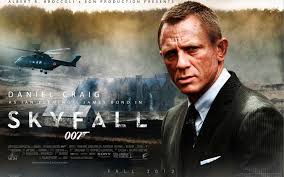
Daniel Craig is back for his third stint as Bond, a little older, a little more beat up in a film that further tweaks the 007 formula. There are some classic staples here, including James gambling in his tux, James under the ice, James fighting on top of a moving train, James in rooftop motorcycle chase, exotic locations, random hook ups, and the Aston Martin, but American Beauty (1999) director Sam Mendes brings enough innovation to Skyfall to bring a bolt of electricity to the franchise, marking its fiftieth anniversary.

The most obvious shift from the formula here is that Skyfall is as much a Judi Dench movie as a Daniel Craig movie. M’s outsized role is fitting as it would be her last in the franchise. (She dies.) Also different is the strange twist that there really is no “Bond Girl” in this film. There’s not even a leggy woman on the movie posters! French actress Bérénice Marlohe’s character, Sévérine, almost plays the part, but she’s only briefly in the film. (She dies.) The most exciting addition is the return of Miss Moneypenny and this time she has a first name (“Eve”), she’s an action hero, and she’s black. We also get a Millennial Q, who has no time for gadgets.

The cast of Skyfall is robust, with 28 Days Later’s Naomie Harris as Moneypenny, Ralph Fiennes as head of intelligence Gareth Mallory, and Albert Finney as the housekeeper at Skyfall (a part Sean Connery was considered for as a nod to the fiftieth anniversary of Dr. No). The role of Bond Bad Guy went to No Country for Old Men break-out star Javier Bardem. Bardem dyed his hair blonde for the role, drawing comparisons with Julian Assange. Bardem also plays his character, Raoul Silva, as “gay” against James’ straight man role, although when Silva is sexually suggestive with James, Bond replies, “What makes you think this is my first time?” I remember the internet chat asking if 007 has been bi all these decades.

The flimsy plot follows a former MI-6 agent who is revealing the identity of fellow agents because M sold him out after Hong Kong was returned to China. Skyfall is the first Bond film to actually be partially filmed in China with segments in Shanghai and Macau. (Other locations include Instabul and Scotland). What the film lack in sense it make up for in bombast, including seeing our man James finally get shot, twice. (Although he does get winged by a speargun in 1965’s Thunderball.) But being shot clean through, and falling off a massive train bridge can’t kill Bond. He plays dead for a few months and then comes back to save the day.

Twenty-first century Bond has been described as “cool, not camp.” Let’s plug Skyfall’s 007 into our evaluation matrix.

Driver of ActionSkyfall is as much about M and her past choices as it is about James Bond. We do get some Bond backstory (and even see his parents’ grave), but this film is built on M’s career as spymaster in a changing global political landscape. We even get Judi Dench shooting at henchmen! Moneypenny also takes on a sidekick role often reserved for Bond girls. Is Eve Moneypenny Skyfall’s Bond girl?

The Role of Violence – An A.I. source says Bond kills 23 people in the film. It’s hard to tell because Bardem (as bad guy Silva) has so many henchmen. (Why, we don’t know.) Bond kills all of them. He also drops an assassin from a Hong Kong skyscraper. It’s interesting that everyone Bond shoots dies, but he bounces back from being shot like a Phoenix on coke.

Vulnerability – We do get a bit more of Bond’s soft white underbelly in Skyfall. Besides the backstory of James the orphaned child (not much emotion shared here but M quips, “orphans make the best recruits), we get a window into “dead 007,” as James lets the world think he’s dead as a means of retirement. He’s in some Black Sea coastal village, doing shots on the bar with the boys and a scorpion on his hand, having drunken sex, and letting his rock hard body atrophy with self indulgence. It’s not very believable but it sets up his comeback. When M asks him where he’s been, he replies, “Enjoying death.” Later, he states that his hobby is, “resurrection.” But there are plenty of allusions to spycraft being a “young man’s game,” and James being past his prime. (Craig had two more 007 films on his contract.)

Sexual Potency – Is the Bond “rule of 3 back”? Old Bond is still Horny Bond. While he’s “dead” we see drunk James having sex a local (or maybe she’s a contractor for Halliburton, we don’t know). Later, he climbs in the shower with sex-trafficking victim Sévérine, which seems just a tad misogynistic. I mean, c’mon James. Then he watches as she’s murdered by Silva. The big question is if 007 sleeps with Moneypenny after she shaves his face, while he’s clad only in a towel. It’s implied that, after 50 years of sexy banter, he seals the deal. There is an implication that Moneypenny with a gun is closer to his equal, even if she does shoot him on accident. But the message is consistent, that Bond is sexually irresistible to beautiful young women. (James sleeping with M would’ve made for a better film.)

Connection – The connection Bond has to M drives the film. Not only does he come back from the dead to help her, but he takes her to his childhood hiding place to keep his “mum” safe. The job of protecting and vindicating M is the framework of this episode. The connection with Moneypenny is noteworthy as is his lack of connection with the new, younger Q. Dench’s M dies in Bond’s arms, saying, “I did get one thing right.” Her trust and faith him were justified and now death has ended that bond.

Toxic Masculinity Scale: 3

Summary Bond’s interaction with Sévérine is highly problematic. Maybe we’re more sensitive in a post-Epstein era, but it should be clear that you don’t show up naked in the shower of a woman who is clearly a traumatized sex trafficking victim. Maybe it’s business as usual in a Bond film, but the scene was more anger-inducing, than “sexy.” However, the fact that Skyfall is really an M-centered film, with 007 in a supporting role, elevates the film as portraying a gender dynamic unique in the 007 canon.

For the 50th anniversary of Eon’s Bond franchises, there are familiar friends, like a title sequence featuring female bodies (and an Oscar-winning theme song by Adele), sharp dry quips from James (“Only a certain kind of woman wears a strapless dress with a Beretta 37 strapped to her thigh.”), and the return of the Aston Martin, along with the Bond theme music. (When Silva’s men blow up the car, 007 goes Rambo.) There’s even a glimpse of the vintage of the Macallan scotch Silva pours for Bond, 1962. Easter eggs aside, Bond’s emotions are still restrained but M (Dench) reveals the truth behind James masculine stoicism.

Skyfall premiered at Royal Albert Hall on October 23, 2012, while Hurricane Sandy was lashing America’s east coast. The film, as articulated by M, shares that the cold war world that produced Dr. No in 1962 now exists “in the shadows,” without clear enemies but with a new climate of danger. Mendes as director was an inspired choice to frame the action in service to M instead of Bond. Mendes would direct the next Bond as well as the Oscar/Golden Globe winning 1917 (2019). Medes is now directing four biopics on the members of the Beatles. For the kick-off of the next half-century of 007, Mendes would soon bring back a familiar foe to Bond’s universe.

Next: Spectre (2015)

The James Bond Project #24: Quantum of Solace (2008)

The James Bond Project #23: Casino Royale (2006)

The James Bond Project #22:  Die Another Day (2002)

The James Bond Project #21:  The World Is Not Enough (1999)

The James Bond Project #20:  Tomorrow Never Dies (1997)

The James Bond Project #19: GoldenEye (1995)

The James Bond Project #18: License to Kill (1989)

The James Bond Project #17: The Living Daylights (1987)

The James Bond Project #16: A View to a Kill (1985)

The James Bond Project #15: Never Say Never Again (1983)

The James Bond Project #14: Octopussy (1983)

The James Bond Project #13: For Your Eyes Only (1981)

The James Bond Project #12: Moonraker (1979)

The James Bond Project #11: The Spy Who Loved Me (1977)

The James Bond Project #10: The Man with the Golden Gun (1974)

The James Bond Project #9: Live and Let Die (1973)

The James Bond Project #8: Diamonds are Forever (1971)

The James Bond Project #7: On Her Majesty’s Secret Service (1969)

The James Bond Project #6: You Only Live Twice (1967)

The James Bond Project #5: Casino Royale (1967)

The James Bond Project #4: Thunderball (1965)

The James Bond Project #3: Goldfinger (1964)
The James Bond Project #2: From Russia With Love (1963)

The James Bond Project: #1: Dr. No (1962)

The James Bond Project #22:  Die Another Day (2002)

May 26, 2025

This series is intended to evaluate each product of the James Bond film franchise through a feminist lens, and the relevance of the Bond archetype to shifting ideas of masculinity in the 2020s.

Die Another Day (2002, directed by Lee Tamahori)

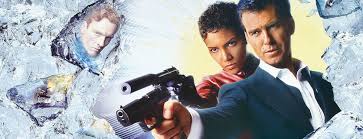
The first Bond film of the 21st century and the last Pierce Brosnan 007 role was also intended to be a celebration of 40 years of James Bond movies. Several directors were considered, including Ang Lee and Martin Scorsese, but producer Barbara Broccoli settled on New Zealander Lee Tamahori, who directed the brilliant When We Were Warriors (1994). The result is a sweeping adventure that pulls together North Korean torture chambers, conflict diamonds, and Halle Berry into a film that is often placed at the bottom of Bond lists but is also surprisingly satisfying. Die Another Day would mark the end of 40 year run and take Bond into a new era with the arrival of Daniel Craig.

Die Another Day is meant to pay homage to all the previous Eon Bond films. Halle Berry walks out onto a Cuban beach as a doppelgänger of Ursula Andress in Dr. No (1962). John Cleese has been promoted to Q and his laboratory is a museum of past 007 gadgets, including the jet pack from Thunderball (1965). I’m sure there’s a website that goes through the film’s nods. (Live and Let Die’s interracial love scene?) There was even talk of having Sean Connery make a cameo.

As is expected, we get James underwater and on snow. James in a tux, making plenty of sexual double entendres (“ I have been known to keep my tip up”), and James in exotic locales; North Korea, Cuba, and Iceland. But there are also some departures. The opening title sequence features a theme song sung by Madonna (who also has a small role in the film) with usual female bodies, but also a montage of Bond being tortured in a North Korean prison. Weird. Also, the film relies heavily on CGI, including a really dumb invisible Aston Martin. So dated now.

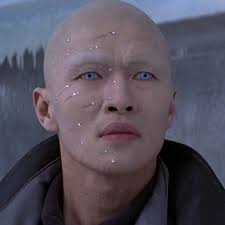
There are actually a lot of dumb things in this film. We’re to believe that 007 was tortured for 14 straight months in North Korea, allowing his hair to grow a few feet. There’s also a Korean terrorist named Zao, played by Rick Yune, who has diamonds embedded in his face from a blast and I kept thinking, “With a pair of tweezers, I could take care of that for you.” There’s also the classic dumb Bond trope of using “science” to change somebody’s face to look like somebody’s else face. And then there’s the thing of James running around Iceland without a parka on. Not only does a single bullet not strike Bond, neither does a chill.

Let’s plug Bond at 40 into our matrix, shall we?

Driver of Action – We do get a little bit of Halle Berry previewing her 2004 Catwoman role, but this is a Jame Bond revenge movie. Although he doesn’t seem that angry that he was tortured in a North Korean jail for 14 months. In Brosnan’s final jaunt as 007, all plot lines are on him. Even M is sidelined.

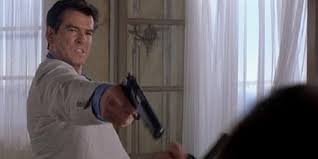
Role of Violence – 007 takes out a few dozen guards and henchmen in the film, including during an over-the top hovercraft chase scene. There’s a pretty awesome sword fight scene between Bond and bad guy Gustave Graves (played by Toby Stephens) that smashes up a fancy fencing hall that’s so old school film violence that I didn’t want it to end. And the Bond kills Graves by opening his parachute on a plane so he gets sucked through the jet engine, which is pretty gross. If 40 years, there hasn’t been shred of remorse for this body count.

Vulnerability – After Bond has been traded for Zao to get him out of North Korea, M takes away his “00” status on the belief that James revealed state secrets under torture. He could have taken his cyanide pill but chose not to. (“Threw it away years ago…” he tells M.) There’s a brief moment where James is confronted with the realization, “If I’m not 007, what am I?” But it’s just a split second. Then he goes ape shit and busts out on his rogue (again) vengeance mission.

Sexual Potency – The sex scene with Halle Berry’s character, Jinx, is pretty hot, with her on top. Woman power! I remember seeing this in the theater and slinking into my seat. (Remind me to tell you the story of meeting Berry at a Braves game.) He also beds MI-6 operative Miranda Frost (played by Rosamund Pike), which seems completely unbelievable and dumb. Shockingly, there is a scene of Bond nailing Miss Moneypenny on her desk, but it turns out just be a fantasy she’s having on Q’s virtual reality contraption. So, we don’t get the “3 conquests” quota, and that’s probably a good thing.

Connection – Bond is so alone. More alone than in any previous film. M, Q, and all the other letters are annoyances. Jinx is an NSA agent so there is some connection there and they do end up flying a helicopter to a Korean island to role around in a pile of conflict diamonds, but it’s more obligatory than romantic. Poor James.

Toxic Masculinity Scale: 5

Summary This isn’t a great Bond film, but it is a romp. There’s cool stuff that are like a series of chef’s kisses for loyal Bond fans. The opening scene of Bond and South Korean soldiers surfing massive waves to land behind the DMZ is cool. Bond driving a 50s convertible in Havana is cool. Bond escaping the hospital bed by stopping his own heart is cool. Dumb, but cool. And the Clash’s “London Calling” playing as he flies back to HQ is super cool.

The 40th Anniversary Bond also suffers from the trap of toxic masculinity. The man alone who kills without consequence and beds women without care or kindness because that’s what men do is just sad decade after decade after decade after decade. He’s morphed into a robot. I suppose that’s functional for the MI-6 mandate, but it’s not human. Ten years earlier, the cost of this life was explored in Clint Eastwood’s brilliant film, The Unforgiven. But for James Bond, the cartoon character in a new millennium, it’s just a fading shell of what men were supposed to be.

Die Another Day premiered on November 18, 2002 at Royal Albert Hall with Queen Elizabeth and Prince Phillip in attendance. It was the week the SARS pandemic was causing panic and the week President Bush created the Department of Homeland Security. The world was changing and the relevance of a 007 was, again, in doubt. Or maybe needed more than ever. It would be up to Daniel Craig to tell us.

Next: Casino Royale (2006)

The James Bond Project #21:  The World Is Not Enough (1999)

The James Bond Project #20:  Tomorrow Never Dies (1997)

The James Bond Project #19: GoldenEye (1995)

The James Bond Project #18: License to Kill (1989)

The James Bond Project #17: The Living Daylights (1987)

The James Bond Project #16: A View to a Kill (1985)

The James Bond Project #15: Never Say Never Again (1983)

The James Bond Project #14: Octopussy (1983)

The James Bond Project #13: For Your Eyes Only (1981)

The James Bond Project #12: Moonraker (1979)

The James Bond Project #11: The Spy Who Loved Me (1977)

The James Bond Project #10: The Man with the Golden Gun (1974)

The James Bond Project #9: Live and Let Die (1973)

The James Bond Project #8: Diamonds are Forever (1971)

The James Bond Project #7: On Her Majesty’s Secret Service (1969)

The James Bond Project #6: You Only Live Twice (1967)

The James Bond Project #5: Casino Royale (1967)

The James Bond Project #4: Thunderball (1965)

The James Bond Project #3: Goldfinger (1964)

The James Bond Project #2: From Russia With Love (1963)

The James Bond Project: #1: Dr. No (1962)

The James Bond Project #21:  The World Is Not Enough (1999)

May 1, 2025

This series is intended to evaluate each product of the James Bond film franchise through a feminist lens, and the relevance of the Bond archetype to shifting ideas of masculinity in the 2020s.

The World Is Not Enough (1999, directed by Michael Apted)

Four decades of 007 movies and so many bullets fired at Bond. Not that I want to see James get shot, but couldn’t one bullet at least graze his perfect temple? The World Is Not Enough, Pierce Brosnan’s third go at 007, finds Brosnan comfortably coasting as Bond in a film with epic stunts but not much else. Eon Productions still seems unsure of Bond’s role in a post-Cold War world, so they rely on the time-tested (over 37 years! That’s 4 years older than Jesus Christ!!) conventions. James in a tux in a casino. James wrestling a nuclear submarine. James and his obligatory three sexual conquests. Yawn.

Barbara Broccoli wanted to find a director who could bring out strong female performances. (Peter Jackson, pre-LOTR, had been considered.) She settled on Michael Apted because of his work with Sigourney Weaver (Gorillas in the Mist), Jodie Foster (Nell) and Sissy Spacek (Coal Miner’s Daughter). All three women were nominated for Oscars (with Spacek winning). One would think that would lead to a more woman-centered film, especially after the heavy reliance on Michelle Yeoh in Tomorrow Never Dies. Nope. TWINE is about as boilerplate Bond as we get.

Side note, as a viewer who has been keeping an eye on the credits of these films, the one filmmaking role that is most constantly populated by women (besides costumes, and hair & makeup) is the casting director. According to 2025 data, 74% of casting directors in the United States are women. So one wonders what casting director Debbie McWilliams was thinking when she cast Denise Richards as nuclear physicist Dr. Christmas Jones. Richards was an “it” girl in the late 90s, starring in two of my favorite fluff films of the era, Starship Troopers and Wild Things. She might be believable cast as a substitute high school science teacher (maybe), but as a nuclear physicist dressed as Lara Croft, completely laughable. Maybe Barbara Broccoli was trying to hold on to the horny teenage boy demographic (who, in 1999, were heavily breaking for Natalie Portman in Star Wars: Episode I – The Phantom Menace).

There were some casting coups in TWINE. Robert Carlylem, who had been so great in Trainspotting, was cast as the psychotic terrorist, Renard. And Sophie Marceau, the French actress who stared in Braveheart and Anna Karenina, played the erotically complex role of Electra. But most notable was the final performance of Desmond Llewelyn as Q. The one consistent thread through the Bond franchise was Llewelyn’s Q, starting with From Russia with Love in 1963, through 17 films. TWINE had Q training his replacement, R (played by Monty Python’s John Cleese) and joking about retirement, but his fate in the series was sealed. Three weeks after the premiere of TWINE, Llewelyn, 85, was driving home in his Renault Mégane, when he was hit head on by 35-year-old man in a Fiat. To die a young man’s death.

The World Is Not Enough, as expected, has plenty of exotic locations, including Spain, Azerbaijan, and an UNDERGROUND LAIR in Kazakhstan. We even get the Bond staple of 007 on skis being chased by Russian assassins. (Don’t fix it if it ain’t broke.) But this film finally gives us an action sequence in London with an epic boat chase on the Thames that climaxes with Bond flying off his rocket boat and grabbing a dangling rope of hot air balloon that the beautiful assassin is getting away in. (Assassin played by Maria Grazia Cucinotta. I had to look her up.) Cinema!

The 20th century of Bond ended, not with a bang, but with a meh. Let’s analyze it.

Driver of Action – Unlike the previous film, TWINE is a Bond solo vehicle. There’s a subplot about a relationship between Renard and Electra but it’s barely dealt with. M has more of a role but she’s mostly another damsel in distress for 007 to rescue. The world is not enough for the black hole that is James Bond.

Role of Violence – The body count is significantly less than the last two Brosnan films. About 19, if you don’t count all the henchmen that drown in the nuclear submarine. He kills Renard with a nuclear fuel rod to the chest. More dramatic is when he confronts Elektra for planning mass murder. “You wouldn’t kill me. You’d miss me,” she says. “I never miss,” he says then shoots her in the chest. She dies in her bed and Bond lays on top of her in one of the creepiest moments in the franchise.

Vulnerability – Early in the film we see James wearing glasses, but they may be a disguise, not a sign of aging. Later, when the beautiful assassin blows up her hot air ballon, he falls, crashing on a roof and dislocating his shoulder. It’s not getting shot, but it’s something. Later, Elektra talks about the death of her mother and asks James, “Have you ever lost someone?” but the scene moves on before we can get a glimpse of James recalling the death of his wife. That inference is left for longtime Bond fans.

Sexual Potency – The formula is in play. First Bond sleeps an MI-6 doctor, Dr. Molly Warmflash (I shit you not) so he can get her to forge a doctors note so James can get back to work. Then he sleeps with Elektra, who turns out to be a bad girl. At the end of the film, he sleeps with Dr. Christmas Jones as M, R, and the rest of the MI-6 brass watch their humping heat signatures. Bond quips, “And I thought Christmas only came once a year.” Check, please!  And, just to check it off the list, there is the prerequisite sex banter between James and Moneypenny. “Close, but no cigar.”

Connection – Yeah, no. Brosnan has mastered Moore’s detached Bond. There’s no sense of connection, not even with the fading Q or captured M. There are no CIA friends to lean on. We’re not sure why he sleeps with Elektra. It’s just expected. And his relationship with Denise Richards’ nuclear-physicist-damsel-in-distress-in-wet-clothes is more than flimsy. They don’t end up in a screwing in a boat. They do it on a rooftop in Istanbul while fireworks explode overhead. But for a Bond climax, it’s pretty flaccid.

Toxic Masculinity Scale – 6

Summary Bond 1999 is a disappointment. The previous film, Tomorrow Never Dies, offered so much promise. TWINE feels like a big back slide. Brosnan is playing a cartoon character version of James Bond, swimming up from the floor of the Black Sea, with his damsel in distress, holding his breath. (If ever a scene needed a man-eating shark.) We expect the sexy one-liners. When future beautiful assassin is just the beautiful cigar girl, she asks James, “Would you like to check my figures? Bond replies, “Oh, I’m sure they’re perfectly rounded.” Low hanging fruit. The action scenes redeem somewhat but, otherwise, this is 007 the two-dimensional prick.

The film was originally going to be called James Bond 2000, but they moved up the release to cash in on the holiday season and the film did quite well. (It was the first film I saw as a new homeowner on Thanksgiving night 1999.) The World Is Not Enough premiered in LA on November 8, 1999, as a MGM film (not United Artists). Four days later a massive earthquake struck Turkey, destroying some of the locations used in the film. The theme  song, performed by Garbage, attempted to make the film contemporary, but the TWINE made Bond feel like an artifact of the 20th century. Brosnan would have one more chance to update Bond for the new millennium.

Next: Die Another Day (2002)

The James Bond Project #20:  Tomorrow Never Dies (1997)

The James Bond Project #19: GoldenEye (1995)

The James Bond Project #18: License to Kill (1989)

The James Bond Project #17: The Living Daylights (1987)

The James Bond Project #16: A View to a Kill (1985)

The James Bond Project #15: Never Say Never Again (1983)

The James Bond Project #14: Octopussy (1983)

The James Bond Project #13: For Your Eyes Only (1981)

The James Bond Project #12: Moonraker (1979)

The James Bond Project #11: The Spy Who Loved Me (1977)

The James Bond Project #10: The Man with the Golden Gun (1974)

The James Bond Project #9: Live and Let Die (1973)

The James Bond Project #8: Diamonds are Forever (1971)

The James Bond Project #7: On Her Majesty’s Secret Service (1969)

The James Bond Project #6: You Only Live Twice (1967)

The James Bond Project #5: Casino Royale (1967)

The James Bond Project #4: Thunderball (1965)

The James Bond Project #3: Goldfinger (1964)
The James Bond Project #2: From Russia With Love (1963)

The James Bond Project: #1: Dr. No (1962)

The James Bond Project #20:  Tomorrow Never Dies (1997)

April 17, 2025

This series is intended to evaluate each product of the James Bond film franchise through a feminist lens, and the relevance of the Bond archetype to shifting ideas of masculinity in the 2020s.

Tomorrow Never Dies (1997, directed by Roger Spottiswoode)

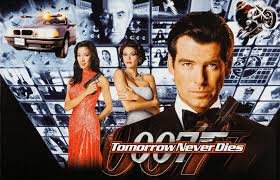
OK, who wouldn’t be excited for a film that paired James Bond and Michelle Yeoh? I mean seriously. Yeoh was still more known as a Hong Kong action star and was three years from 2000’s Crouching Tiger, Hidden Dragon, but this pairing was inspired. Tomorrow Never Dies, Pierce Brosnan’s second 007 film (and the first after producer Cubby Broccoli’s death) is another post-Cold War blockbuster that ramps up the violence and pits James against a megalomaniac media mogul who is probably supposed to be Rupert Murdock, if Rupert Murdock thought nuking Beijing could improve ratings.

The casting of TND (the title inspired by the Beatles’ “Tomorrow Never Knows”) is mostly spot on. Bond “girl” Michelle Yeoh, as ass-kicking Chinese agent Wai Lin, is genius. Terri Hatcher, hot off Lois & Clark, as a past “love” interest of James, grabs the screen. Judi Dench is in full command as M. Joe Don Baker is back as CIA agent Jack Wade. Desmond Llewelyn is hilarious as Q (“Grow up, 007”). There’s a funny bit with Vincent Schiavelli (Mr. Vargas in Fast Times at Ridgemont High) as a professor/assassin. But Jonathan Pryce’s portrayal of evil media magnet Elliot Carver is so cartoonish, it kills the good versus evil paradigm. More like, good versus goofy. (Anthony Hopkins was offered the role but declined in favor of making The Mask of Zorro.)

The writing is much sharper than GoldenEye, including James’ quips. Even Miss Moneypenny gets in the action. “You always were a cunning linguist, James.” And the action is bigger. There are a lot of explosions in this film. A lot. The direction by Roger Spottiswoode (Turner & Hooch, 1989) is meant to fill the wide screen with non-stop action. Apparently, Michelle Yeoh wanted to do all her own stunts but Spottiswoode had to hold her back for liability concerns. 

Tomorrow Never Dies has lots of Bond staples; 007 in a tux, 007 scuba diving, 007 flying a plane that’s not his, 007 not being struck by any of the thousands of bullets being fired at him. And he’s got a woman in every port. Most of the film takes place in Hamburg, Germany, Saigon, Vietnam, and the South China Sea. Bookended with theme songs by Sheryl Crow and k.d. lang, it’s Bond carving out space in a woman’s world. “Never argue with a woman,” he says in the film.

Let’s plug Tomorrow Never Dies into our matrix.

Driver of Action – The second half of this film actually feels like a buddy film. Once Michelle Yeoh drops into the plot, there are two action stars on the screen. I don’t know if Eon Productions magically knew that Yeoh would become one of the biggest movie stars of the 21st century, but she’s driving a lot of the action at the end of the film. She has to do a bit of time as a damsel in distress to justify the sexual chemistry (Bond still can’t have a woman who is an equal), but, so far in the franchise, this is close to a screen share as we’ve seen.

Role of Violence – Bond with a machine gun and hand grenades is a killing machine. It’s another bloodbath. It’s so far removed from Connery’s Bond, it’s hard to believe it’s the same character. The climatic finale, where he kills Carver with a giant drill, used to sink battle ships, is particularly gruesome. But Wai Lin is wailing away as well, mostly using marital arts, so there’s a female balance to 007’s orgy of violence.

Vulnerability – Brosnan’s Bond is zipped up like Moore’s but there is the tiniest glimpse of humanity this episode. It’s established that he has a history with Carver’s wife, Paris (Terri Hatcher). When she appears in his Hamburg hotel room, he’s drawn to her but expresses some guilt over abandoning her. “What happened, James? Did I get too close?” He says yes and they “reconnect.” Carver finds out and has her killed and then Bond confronts the man who killed her and shoots him in the head at point blank range.

Sexual Potency – We’re back to the criteria of 3. After the opening titles, we find James in bed with a beautiful Oxford University professor (yeah, right) “brushing up on a little Danish” after sex. Then, after reconnecting with Paris, he slips her dress off that they have sex (which gets her killed). And then he ends up with Wai Lin. Despite changing social norms, you get the feeling the Eon just gave up and let Bond be Bond.

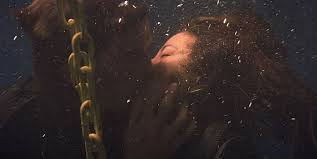
Connection – Until Wai Lin shows up, we don’t get much connection. James has no scenes with M and only briefly with Moneypenny. He softens up around Paris but she is killed before he has a chance to rescue her. Wai Lin falls back into the Damsel in Distress mode when Carver throws her into the water tied to a massive chain and she appears to drowned. James saves her with a long underwater kiss, blowing air into her lungs. But the connection between James and Wai seems more about a celebration of having just saved the world from Rupert Murdoch than anything romantic. Although they do end the film KISSING IN A RAFT in the South China Sea while the British Navy looks for them. Traditions matter!

Toxic Masculinity Scale: 5

Summary Scarface Sex Fiend Bond is somewhat balanced out by a strong female M (although Dench as a maternal concern for our man James) and a scene-stealing action star doubling as this episode’s Bond girl. Q’s tech plays an outsized role with a remote controlled BMW 750 that has a scene all to itself, and a fully-loaded cell phone (meh). Both Bond and Carver play their sexism cards. When Carver catches Wai on his stealth ship, he dangles her in front of 007 and says, “And it seems you can’t resist any woman in my possession.”

Something that stands out are the henchmen in TND. They have really cool outfits and a loaded armory, but I was left with two questions. Where are all the henchwomen? And how does one go about acquiring the job henchman? I’m assuming Carver paid top salary. Regardless, his massive stealth ship made a great stand-in for an underground lair, especially when it got blown up.

Tomorrow Never Knows premiered December 9, 1997, the same week as the Kyoto Protocol, the first global attempt to address climate change. The film was a massive success, earning a Golden Globe nomination, but kept out of the #1 spot by the behemoth that was Titanic. Its release was also timed to coincide with United Artist’s parent company, MGM, becoming a publicly traded corporation, making James Bond a massive cash cow at the end of the century.

Next: The World Is Not Enough (1999)

The James Bond Project #19: GoldenEye (1995)

The James Bond Project #18: License to Kill (1989)

The James Bond Project #17: The Living Daylights (1987)

The James Bond Project #16: A View to a Kill (1985)

The James Bond Project #15: Never Say Never Again (1983)

The James Bond Project #14: Octopussy (1983)

The James Bond Project #13: For Your Eyes Only (1981)

The James Bond Project #12: Moonraker (1979)

The James Bond Project #11: The Spy Who Loved Me (1977)

The James Bond Project #10: The Man with the Golden Gun (1974)

The James Bond Project #9: Live and Let Die (1973)

The James Bond Project #8: Diamonds are Forever (1971)

The James Bond Project #7: On Her Majesty’s Secret Service (1969)

The James Bond Project #6: You Only Live Twice (1967)

The James Bond Project #5: Casino Royale (1967)

The James Bond Project #4: Thunderball (1965)

The James Bond Project #3: Goldfinger (1964)

The James Bond Project #2: From Russia With Love (1963)

The James Bond Project: #1: Dr. No (1962)

The James Bond Project #19: GoldenEye (1995)

April 15, 2025

This series is intended to evaluate each product of the James Bond film franchise through a feminist lens, and the relevance of the Bond archetype to shifting ideas of masculinity in the 2020s.

GoldenEye (1995, directed by Martin Campbell)

The first Bond film in the fourth decade of the 007 franchise is something of a synthesis of all the previous EON Production films and a fair send-off for EON producer Cubby Broccoli, who died five months after its release. After a long six year gap, while Eon dragged Timothy Dalton into development hell, Bond was back with Pierce Brosnan as the new British MI-6 commander. GoldenEye fused License to Kill’s vengeful 007 with the smarmy, Casanova Bond of the past. The first Bond film not to be based on an Ian Fleming story is a sweeping tale that presents Bond with his first post-Cold War conflict and was tailor-made for 90s audiences who were getting used to the widescreen violence in films like Natural Born Killers.

Brosnan, who had been offered the role before Dalton, comes in a more upper crust English, but also more boyish, Bond who has parachuted into a third-wave feminist world. This disconnect is magnified by the new M, now played by Dame Judi Dench. The new M states a clear opinion on the archetype that is Bond, James Bond. “I think you’re a sexist, misogynist dinosaur, a relic of the Cold War, whose boyish charms are wasted on me,” she tells him. Welcome to the 90s, James. We still have Desmond Llewelyn as Q to link us to the Bond cannon. This installment’s Bond “girl” is Swedish model and actress Izabella Scorupco, who forces a rough Russian accent. Also trying to be Russian (or Georgian) is “sadistic lust murderer” Xenia Onatopp (There’s the names we love in these films), played by Famke Janssen (soon to be Jean Grey in the X-Men films).

GoldenEye starts with a flashback to the Cold War days with 007 and 006 on a mission in the Soviet Union where 006 (played by the great Sean Bean) is killed. Bond blames himself, setting up the revenge redux. After an epic scene where James dives into a falling plane (This is the first Bond film to use CGI), we flash forward to the present where new Russia is losing track of its shit and we’re off. The scene where James is chasing the rogue Russian general through the streets in St. Petersburg in a giant Russian tank was classic 007 thrills on the big screen. I remember watching it in the Lloyd Center Cinema and thinking it was the wildest thing filmmakers could cock up for a James Bond movie.

This installment gives us plenty of Bond staples fans crave. There’s Bond in a tux, playing baccarat, there’s Bond in the Caribbean, there’s the double entendre quips (none very clever), and thousands of bullets fired at our James with nary a scratch. The film also features some epic stunts, including a record setting bungee jump off a Russian (actually Swiss) dam that has to be seen to believed. Brosnan plays Bond closer to Moore than Connery and his bourgeois demeanor adds to the “Man out of place” element that makes this film kinda fun. Cubby Broccoli’s daughter, Barbara, took over the production as her father’s health failed, so some of the gender commentary may have been here doing.

Let’s see how GoldenEye fares in our feminist matrix.

Driver of Action – New Bond, new star. Q and his lab techs show up for comedic effect. There’s a new CIA agent, Jack Wade, to help out (Joe Don Baker is back!) because Felix is still legless from the shark. The new post-communist Russia really plays the support role. In the gap between Yeltsin and Putin, it presented a blank slate to the world, where the need for secret agents might be a thing of the past. But this film rests purely on the shoulders of Remington Steele star Pierce Brosnan.

Role of Violence – There’s a lot of slaughter in GoldenEye, largely due to Bond’s use of machine guns. I had to ask ChatGBT the body count because I lost track. AI reports James killed 47 people in the film, mostly Russian soldiers. (Wasn’t the Cold War over?) There’s also some weird violent sexual scenes with Xenia Onatopp (we’re to believe that violence is her kink) and a scene where 007 knocks her unconscious.

Vulnerability – For the first time in a Bond film, we learn that James’ parents were killed in a mountain climbing accident when he was a boy. But there’s no sense that this plays a role in his present psyche. It’s just presented as a factoid to contrast the story that 006’s parents were killed by Stalin.  There’s no James in love and only a mild sense of guilt that 006’s death might be his fault.

Sexual Potency – Here’s the James Bond rule of three. 1) Caroline – An MI-6 psychologist, sent to evaluate James, gets seduced by our agent who has a bottle of bubbly in the glovebox. He’s going to let her give him, “a very thorough evaluation.” Wink. 2) Xenia Onatopp – It’s more fighting than sex. James is taken aback by her biting his lip and drawing blood. Her death (pulled into a tree by a helicopter) is also played as sexual but in 2025 seems just weird. 3) Natalya Simonova (played by Izabella Scorupco), a Russian computer programmer, is Bond’s “love” interest/damsel in distress in the film. He forcibly kisses her and then suddenly they’re a romantic couple. (This quasi-rape trope seems all too common in 007 flicks.)

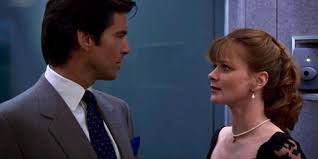
It should be mentioned that Bond’s relationship with Moneypenny (now played by Samantha Bond) is firmly located in 90s feminist positions. She’s not having any of James’ “charm” offensive. Bond: “What would I do without you?” Moneypenny : “As far as I can remember James, you’ve never had me.” Bond: “Hope springs eternal.” Moneypenny: “This sort of behavior could qualify as sexual harassment.” Finally.

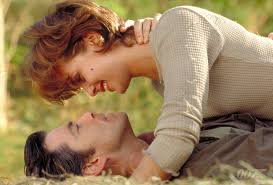
Connection – Brosnan plays Bond detached, as we have come to expect. There’s a hint of a back story between 006 and 007 that might have been nice to know about. As is expected, he and Natalya end the film together, not in a boat but in a Cuban meadow. They think they’re alone, but there is some coitus interruptus from the United States Marines, so they’ll have to save their victory sex for another day, or never. There’s no real chemistry between these two so the door is open for Bond’s next “girl.”

Toxic Masculinity Scale: 5

Summary The opening title sequence of GoldenEye, with women smashing hammers and sickles to a song written by U2 (and sung by Tina Turner) locates the film in a new era. The Cold War was the golden era of the Flemming novels and the platform for Bond’s good vs. evil adventures. Now New Bond is forced (again?) to find his relevance. Is he a 90s-action hero, right up there with Arnold Schwarzenegger, or a washed-up antique who has lost his cultural relevance? His elevated violence and philandering may be intended as a middle finger to the politically correct shifts in cinema.

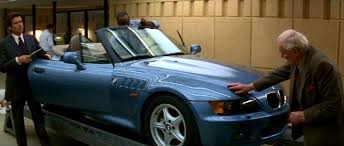
The tech in GoldenEye is a co-star along with lots of product placement. (Welcome to the new global market place.) IBM is featured front and center (and a great scene where a young Alan Cumming gets an “email”). The Aston Martin is replaced with a BMW, fully loaded with Q’s gadgets. “You have a license to kill, not to break the traffic laws,” Q tells an impish Bond. GoldenEye also gives us that most central staple of Bond Baddie accessories, the underground lair, hidden below a lake, from where a deadly satellite is controlled. Its explosive destruction is everything that Bond fans buy movie tickets to see.

GoldenEye premiered on November 13, 1995 at Radio City Music Hall, as the war in Yugoslavia, the largest hot war resulting from the end of the Cold War, was reaching its peak. The direction of Martin Campbell and the production of Barbara Broccoli (with Judi Dench’s M) represented a chance to reboot the franchise in a world without the Soviet Union. What issues would MI-6 confront as the 20th century closed? With the help of CGI, the promise of epic stunts and a horny agents would be a part of it.

Next: Tomorrow Never Dies (1997)

The James Bond Project #18: License to Kill (1989)

The James Bond Project #17: The Living Daylights (1987)

The James Bond Project #16: A View to a Kill (1985)

The James Bond Project #15: Never Say Never Again (1983)

The James Bond Project #14: Octopussy (1983)

The James Bond Project #13: For Your Eyes Only (1981)

The James Bond Project #12: Moonraker (1979)

The James Bond Project #11: The Spy Who Loved Me (1977)

The James Bond Project #10: The Man with the Golden Gun (1974)

The James Bond Project #9: Live and Let Die (1973)

The James Bond Project #8: Diamonds are Forever (1971)

The James Bond Project #7: On Her Majesty’s Secret Service (1969)

The James Bond Project #6: You Only Live Twice (1967)

The James Bond Project #5: Casino Royale (1967)

The James Bond Project #4: Thunderball (1965)

The James Bond Project #3: Goldfinger (1964)

The James Bond Project #2: From Russia With Love (1963)

The James Bond Project: #1: Dr. No (1962)

The James Bond Project #18: License to Kill (1989)

April 8, 2025

This series is intended to evaluate each product of the James Bond film franchise through a feminist lens, and the relevance of the Bond archetype to shifting ideas of masculinity in the 2020s.

License to Kill (1989, directed by John Glen)

Timothy Dalton’s Dark Bond is back for the second and final time in this revenge film that calls itself a James Bond movie. Maybe Eon Productions thought gangsta rap fans in 1989 wanted a 007 who was closer to Scarface than the guy in Goldfinger. License to Kill sees Bond go rogue from MI-6 as he goes after the guy who kidnapped his friend, CIA agent Felix Leiter, and fed him to a shark (after killing his wife). There’s no time for snarky quips here. James is out for blood.

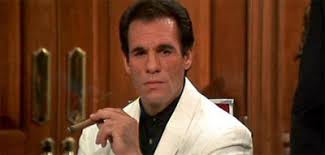
License To Kill brings the action closer to home, primarily Key West, Florida, a bit of Bahamas, and a fictional country called the Republic of Isthmus (that’s actually Mexico). Even M and Moneypenny’s London scene was shot in Mexico to save money. David Hedison, who played Felix Leiter in Live and Let Die, is back in the role 16 years later. Carey Lowell, who went on to fame on TV’s Law & Order, was this installment’s Bond “girl.” The object of Bond’s obsession is drug lord Franz Sanchez, expertly played by Robert Davi, who will always be Jake Fratelli from The Goonies, to me. His sidekick is played by a very young Benicio del Toro. The score was by the brilliant Michael Kamen, who had just done the music for Die Hard.

The last of Bond film of the 1980s was also a fond farewell of sorts. It was the final film produced by Albert “Cubby” Broccoli, who had produced every Eon Bond film since Dr. No in 1962. It was the last Bond directed by John Glen, who had filmed all five 007 films of the eighties. It was the last Bond project of screenwriter Richard Maibaum, whose work goes back to Dr. No. It was also the last film appearance of Robert Brown (M since Octopussy) and the final film of Maurice Binder, who had designed the iconic opening title sequences of every Bond film since 1962.

Even though License to Kill may have been an end of era, there will still plenty of reminders of the staples of the franchise, primarily sharks and Q. Desmond Llewelyn’s Q gets more screen time than in any Bond film to date. Like James, Q goes rogue and arrives in Isthmus to help 007 with his revenge fantasy. Like Batman’s butler Albert, he’s not afraid to be right in the action. And because the action returns to America, we see more African-American actors, including DEA Agent Hawkins (played by Die Hard’s Grand L. Bush) and CIA aid Sharkey (played by pro football player Frank McRae).

The Dark Bond of License to Kill is a bit more unhinged than in The Living Daylights, so let’s do the analysis.

Driver of Action – While LTK is formed around Bond’s revenge plot, he does share the screen. Pam Bouvier (Carey Lowell), his femme fatale is less fem and more fatal. She’s a shotgun toting ex-Army pilot who never plays the damsel in distress. In fact, she saves James more than once. Bond even says, “Yes, sir!” to her at one point because she’s clearly in charge.

Role of ViolenceLicense to Kill takes the title literally. This film is a blood bath. Bond kills at least a dozen people, some in gruesome ways. He throws a renegade DEA agent into a shark tank and watches him get gobbled up by a Great White. He rigs a diving pressure chamber on boat and watches as a drug trafficker explodes inside it, his head inflating like a balloon. In the final act of revenge, he sets Sanchez on fire with the lighter Felix gave him at the wedding. It’s supposed to feel cathartic, but it just feels sadistic.

Vulnerability – We don’t get the “Is Bond in love?” question from the last installment. More like, “Has Bond lost his mind?” as he resigns from MI-6 to go after Sanchez. There is a scene at the wedding where Felix mentions to his bride that Bond was briefly married where we get a glimpse into James’ trauma, but this 007 is hard as nails.

Sexual Potency – Dalton’s Bond is still low key swinging through the AIDS epidemic, but he’s a bit more Id-drivien than The Living Daylights. First of all, there is no scene with 007 and Moneypenny in LTK, so that banter is left on the table. His relationship with Pam is more equal than previous films. (She demands to be called “Ms.” Kennedy, while playing his accomplice). They share there first kiss on a small boat (!) in the Bahamas and the scene fades as the go below deck, implying some seafaring hanky panky. He also has a fling with Sanchez’s girlfriend, Lupe Lamora (played by model Talisa Soto, who went to be Johnny Depp’s love interest in Don Juan DeMarco). Pam’s jealousy about the James-Lupe link is played for laughs, because, you know, he’s James Bond. (When Lupe tells Q, “I love James so much,” Q’s eye roll tells the whole 27-year story.)

Connection – The fact that 007 is attending Felix’s wedding as the best man is a solid implication that these men have formed a tight bond over the many years. And the fact that he throws his career out the window to go after Leiter’s attacker is evidence of his loyalty to his CIA friend (or maybe a reflection of the trauma Bond suffered when Blofeld killed his own wife shortly after their wedding). James’ connection to Pam seems more transactional (unlike his tie to Kara Milovy in the previous film). At the end of the film, he does choose her over Lupe and they end the film, fully clothed, in a pool, kissing (They’ve already checked boat sex off the Bond to-do list), but there is no sense this relationship is going anywhere.

Toxic Masculinity Scale: 5

Summary

While the hyper-violent vengeance theme doesn’t feel very “Bond,” there are plenty of 007 hallmarks here, including underwater battles with frogmen, Bond hanging off of planes, Bond gambling in his tux, and even a completely random attack by ninjas (in Mexico). We even get a nod to Blofeld when an obscured man is holding a cat at Hemingway’s house in Key West. (It’s just M.)  And there is a great theme song by the fabulous Gladys Knight. The stunts are epic with plenty of massive explosions, and a comedic appearance from Wayne Newton as a televangelist fronting for the cocaine traffickers. (You know this was a comment on the PTL scandal that dominated the media in the 1980s.)

Dark Bond pays lip service to the changing gender rolls. When Pam asks why she has to play the roll of James’ “administrative assistant” when the arrive in Isthmus, and not the other way around, James says, “We’re south of the border. It’s a man’s world.” Carey Lowell is certainly a more masculine Bond girl than we’ve seen in the past (still with plunging necklines), but this isn’t exactly a feminist film. And Bond’s sadistic use of violence erases any enlightenment our James may have experienced over the decades.

License to Kill premiered on June 13, 1989, a month after Panamanian President Manuel Noriega staged a coup to retain power in his banana republic. Similarities between Noriega and Robert Davi’s Franz Sanchez, with regard to both physical looks and cocaine connections, were commented on when the film was released. The film generated less income than previous films, perhaps reflecting its divergence from the Eon Productions formula. There was to be a third Dalton Bond film called Property of a Lady, to be released in 1991, but studio contract conflicts got in the way and we would not see a new Bond film, and a new Bond, until the mid-1990s.

Next: GoldenEye (1995)

The James Bond Project #17: The Living Daylights (1987)

The James Bond Project #16: A View to a Kill (1985)

The James Bond Project #15: Never Say Never Again (1983)

The James Bond Project #14: Octopussy (1983)

The James Bond Project #13: For Your Eyes Only (1981)

The James Bond Project #12: Moonraker (1979)

The James Bond Project #11: The Spy Who Loved Me (1977)

The James Bond Project #10: The Man with the Golden Gun (1974)

The James Bond Project #9: Live and Let Die (1973)

The James Bond Project #8: Diamonds are Forever (1971)

The James Bond Project #7: On Her Majesty’s Secret Service (1969)

The James Bond Project #6: You Only Live Twice (1967)

The James Bond Project #5: Casino Royale (1967)

The James Bond Project #4: Thunderball (1965)

The James Bond Project #3: Goldfinger (1964)
The James Bond Project #2: From Russia With Love (1963)

The James Bond Project: #1: Dr. No (1962)

The James Bond Project #14: Octopussy

February 27, 2025

This series is intended to evaluate each product of the James Bond film franchise through a feminist lens, and the relevance of the Bond archetype to shifting ideas of masculinity in the 2020s.

Octopussy (1983, directed by John Glen)

Fifteen years after the Beatles went to India, Britain’s second biggest export headed to the Asian subcontinent. It wasn’t to study meditation, but to fight the Cold War with an army of fembots. Octopussy sees our man Bond caught up in a conspiracy that includes fake Faberge eggs and loose nukes. Star Roger Moore had wanted to retire after For Your Eyes Only, feeling he was to old to play Bond, but word that Sean Connery was returning to play Bond in a non-Eon Productions film had worried producers that Bond-in-Waiting Timothy Dalton (and a few other potential contenders) would not be ready to compete with the O.G. 007.

The result is a film that tries to capture the Bond magic with a middle-age spy who has more lines on his face than stinging lines of dialogue. There are challenging scenes of Bond swinging from vine to vine with a dubbed in Tarzan yell, Bond fighting a henchman on top of a flying airplane, and Bond fighting two henchmen on top of a moving train (a scene that almost killed another stuntman). Watching this film made me wonder if they had Ibuprofen in the 1980s. Producers brought back Maud Adams, who had played Andrea Anders The Man with the Golden Gun. It made sense to have a slightly older Bond “girl” in the title role. This was Bond for aging Baby Boomers.

The film primarily takes place in India and East Germany, with a fun intro scene in some random Latin America country that has Bond flying a cool one-man plane out of the back of truck being chased by some banana republic types. We have a new M, played by Robert Brown. Desmond Llewelyn is back as Q and this time he’s got tons of gadgets for James to play with (including one Bond uses to zoom in on an MI-6 worker’s cleavage). James is back in his white dinner jacket and tux and there he is riding a horse through the jungle and crossing a river inside an alligator submarine. (Someone should have told filmmakers that India has crocodiles, not alligators.)

Octopussy is Bond in a holding pattern but let’s discuss it anyway.

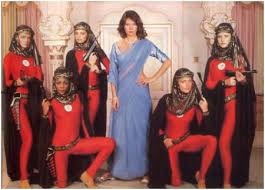
Driver of Action – Bond is back on his own. We do get a lot of Q. There’s a local agent named Vijay, but he’s not long for this world. There’s a real missed opportunity to tell the story of Octopussy (Maud Adams) who has created an island of misfit women in India who are also (how?) circus performers in East Germany. I’d love some Octopussy fan fiction because that would be a great story. But later in the film, James raids the bad guy’s compound with Octopussy’s all female army of circus warriors in their Electra Woman costumes and it’s glorious.  Why did it take 21 years to get Bond to lead an army of fembots in an invasion of an evil-doers lair??? Oh, and Bond arrives in a Union Jack hot air balloon! I’m serious!

Role of Violence – Old Bond is pretty good at killing henchmen, including some rogue Soviet soldiers. That’s about it.

Vulnerability – Bond’s wall is way up with a few weird exceptions. There’s a moment that he laments that thousands of innocent people will be killed if the renegade Russian General Orlav detonates an A-bomb in Berlin. There’s a scene where James, desperate to save the world, can’t get a ride to the circus to defuse the bomb. Cars full of young people laugh at the old man desperately trying to hitchhike. 007 seems supremely uncool in his manic state. There’s also a bizarre sequence of James dressed as a clown trying to tell everyone there’s a nuclear bomb about to go off and they just laugh at him. Sad clown Bond must have been hard on 007’s ego. 

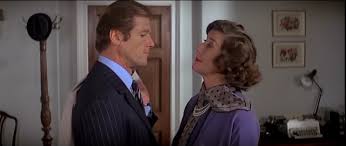
Sexual Potency – It’s interesting watching this Bond age. There’s a scene in Moneypenny’s office where he perks up at seeing her new assistant, Miss Penelope Smallbone. (These names are such a crack.) There’s a great interchange where Moneypenny calls him on the carpet for his leering:

Bond: What can I say, Miss Moneypenny, except to say that she is – as attractive and, eh – as charming…

Moneypenny: As I used to be?

Bond: I didn’t say that.

Moneypenny: You’re such a flatterer, James.

Bond: Oh, Moneypenny, you know there never has been and, there never will be, anybody but you.

Moneypenny: So, you’ve told me.

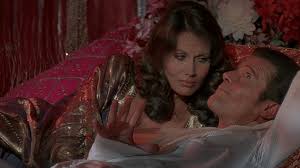
The bedding three women per film quota is waning by 1983. James does sleep with Magda, who is kind of a double henchwoman to two bosses (played by Kristina Wayborn, Miss Sweden 1970). And, of course, he sleeps with Octopussy, after forcibly grabbing her. She resists and then relents as all women do. “Oh, James,” she says, falling into her bed in a scene that seems like a mirror of the same encounter between the two in The Man with the Golden Gun.

Connection – Bond’s connection to Octopussy is uber-flimsy. Even though the actors have a previous relationship, there is zero chemistry. Regardless, as is required by international law they end the film in a bed in a boat. (I literally laughed out loud.) This time the boat is a slave galley rowed by Octopussy’s army of circus ladies. Where they are rowing to, we don’t know. James is in her bed and has been injured in a crazy stunt (dem bones) and she says, “I wish you weren’t in such a weakened condition.” Then he breaks loose of his leg brace and amorously grabs her. “James!” The end and yawn.

Toxic Masculinity Scale: 3

Octopussy gets points for having an army of bad ass women fighting evil henchmen and having a Bond “girl” that’s only 18 years younger than our James. But there are some tired tropes. James sleeping with Magda seems pro forma. There’s a scene where Octopussy gets slapped by the bad guy that could be cut and pasted from a half dozen other Bond films. And there’s a hotel pool populated by bikini-clad babes that seems like a now required sequence. But we do get 007 in the casino, this time playing backgammon. (OK, grandpa.)

India looks great in this film. There’s an exciting Tuk Tuk chase scene in the streets of Udaipur and plenty of elephants, tigers, cobras, and spiders to let you know we’re not in London anymore. The Berlin scenes were shot in Britain and look it. It was great having John Barry back to do the film score after the super cheesy CHIPs music Bill Conti provided for For Your Eyes Only. But Octopussy never really gets off the ground with much peril or charm.

Octopussy premiered in London June 6, 1983, the week that the UK’s Conservative party, led by Maggie Thatcher, was re-elected in a landslide. At the time, I was living in a part of London called Brixton, famous for its riots against Thatcher and the very conservative world of Commander Bond. Prince Charles and Lady Diana were at the premiere while I was probably at some little punk rock club nearby. Moore’s Bond in this film seemed to be even more removed from the world he inhabited. Roger would have one more chance to make James Bond relevant. But first he’d have to contend with the return of a certain Scotsman to the role.

Next: Never Say Never Again (1983)

The James Bond Project #13: For Your Eyes Only

The James Bond Project #12: Moonraker (1979)

The James Bond Project #11: The Spy Who Loved Me (1977)

The James Bond Project #10: The Man with the Golden Gun (1974)

The James Bond Project #9: Live and Let Die (1973)

The James Bond Project #8: Diamonds are Forever (1971)

The James Bond Project #7: On Her Majesty’s Secret Service (1969)

The James Bond Project #6: You Only Live Twice (1967)

The James Bond Project #5: Casino Royale (1967)

The James Bond Project #4: Thunderball (1965)

The James Bond Project #3: Goldfinger (1964)
The James Bond Project #2: From Russia With Love (1963)

The James Bond Project: #1: Dr. No (1962)

The James Bond Project #13: For Your Eyes Only

February 23, 2025

This series is intended to evaluate each product of the James Bond film franchise through a feminist lens, and the relevance of the Bond archetype to shifting ideas of masculinity in the 2020s.

For Your Eyes Only (1981, directed by John Glen)

The third decade of Bond! After the silly sci-fi spectacle of Moonraker, producer Cubby Broccoli wanted to get 007 back to basics for the first Bond of the 1980s. While there is no underground lair, there’s plenty of other Bond staples, like assassins on skis, James in his tux at the baccarat table, underwater battles, and sharks. First time director John Glen, who had edited several Bond films before this, was brought in to bring James back to earth with a plot that was back to spy vs. spy and less reliant on tech (much to the chagrin of Q who seems at his limit with 007 snark).

A 54-year-old Roger Moore (who seems a bit out of breath in a few scenes) is paired with this round’s Bond “girl,” 25-year old French actress Carole Bouquet. Her character, Melina Havelock, is the daughter of marine archeologists who are killed because the KGB is trying to retrieve some British spy technology from the bottom of the Mediterranean. This launches her into the role of sidekick as she tells Bond,  “I don’t expect you to understand, you’re English, but I’m half Greek, and Greek women like Elektra always avenge their loved ones!”

By 1981, we have established the tradition of the opening action scene being completely over the top. This one starts James at the grave of his wife, Tracy and ends with Bond captured in a remote controlled helicopter controlled by none other than Blofeld! (and his white pussy cat, presumably not the same one from Diamonds Are Forever). The scenes with the helicopter (with 007 hanging on for dear life) careening over London are eighties epic. The comic death of Blofeld was a long time coming and apparently meant as an FU to the producer of Thunderball, who claimed ownership of the Blofeld name.

For Your Eyes Only gives 007 fans the tropes they crave and, unlike Moonraker, has aged well. Moore’s Bond flirts with the problematic nature of his Lothario reputation while still throwing a solid punch. The quips are dialed back and much of the action is movie candy for the widescreen. For the first time the opening credits reveal females in roles like “production manager” and “continuity,” where previously women were relegated to costumes and make-up. Maybe some of these women whispered in filmmakers’ ears not to make Bond such a dick.

Let’s plug FYEO into our analysis.

Driver of Action – This is Moore’s Bond, but early in the film he is rescued by Melina and her crossbow, although in the mad escape car chase he does ask, “Mind if I drive?” Later in the film he is assisted by Milos Columbo, a pistachio-eating smuggler, and his band of thieves. No CIA help here, M (Bernard Lee) died of cancer before his scenes could be filmed, and Q was inserted merely for comic value. This James Bond is completely capable of solving all problems and escaping all sticky situations.

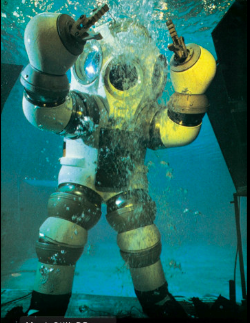
Role of Violence – There is a great relief of seeing 007 finally kill Blofeld, the man who had his wife killed, by dumping him and his electric wheelchair down an industrial smokestack on the Southside of the Thames. (We don’t know who got custody of the cat.) There are a bunch of henchmen killed, connected to various parts of the plot to get the spyware to the KGB. The most spectacular death is a henchmen in a deep diving suit, looking very robotic, who is blown up inside a sunken English trawler. Boom.

Vulnerability – Credit is given for reminding Bond fans that he was (briefly) married and she died in his arms. It was the only real glimpse we ever got into James the man. The epitaph on her tombstone is, “We have all the time in the world,” his last words to her in On Her Majesty’s Secret Service. Early in the film, Bond is captured by Cuban hitman Hector Gonzales and rescued by Melina. He seems a bit confused that he suddenly is the damsel in distress, but, like Jesus, he ultimately takes the wheel.

Sexual Potency – Here’s where we start to get a bit of a shift. Bond does not seem to be leering or sexually flirtatious with Melina, 29 years his junior. And between Bond and Moneypenny, the old spark is back, perhaps because they actors are now close in age (both were born in 1927!). Moneypenny, knowing Bond is about to arrive at MI-6 HQ, applies her makeup as James’ hat flies to the hatrack. “Moneypenny, a feast for my eyes,” James says, kissing her on the lips. “What about the rest of you?” she asks. “Well, I was going to get around to that.” There’s the old James Bond we love.

Another character is figure skater Bibi Dahl, played real life figure skater Lynn-Holly Johnson. She has a girl-like crush on Bond and climbs, naked, into his bed. In a shocking turn of events, he rejects her. “You get your clothes on and I’ll buy you an ice cream,” he says trying to kick her out of his room as she plants a kiss on him. Bond does sleep with the Countess Von Schlaf (played by Cassandra Harris, wife of future Bond Pierce Brosnan). The scene feels a bit like, “Oh, this is a Bond film, he needs to bed SOMEBODY.” But like a lot of James’ one night stands, she is killed by some bad guys shortly after bed with Bond. (Death by dune buggy.) And, as if a contractual obligation, James sleeps with Milena at the end of the film. (Can’t let the fans down.) But Bond ’81 seems noticeably less horny. Maybe he was worried about Blofeld’s cat.

Connection – Even though the the plot is pleasingly complex (for a Bond film), 007 is just here to get the job done. There is zero emotional connection. Even Q seems to get on his wick. Milena is strikingly beautiful but she seems to be just a pawn in his plan to stop the KGB from getting this thing (that looks like cheap lighting board). That’s why it’s a bit of a shock that the film ends with them in bed together (ON A BOAT!). Her neglige slides off and she tells James, “For your eyes only.” Roll credits.

Toxic Masculinity Scale: 2

FYEO has some boffo Bond moments. James and Milena in a mini-sub battling another mini-sub under the Mediterranean is pretty damn cool. The scene where 54-year-old Bond is scaling an Alpine cliff in Northern Italy while a henchmen is trying to dislodge the pitons holding his rope is pretty edge of the seat. And there’s a wild ski chase sequence in a bobsled track (that led to the actual death of a stuntman). There’s also some light comedy regarding Britain’s first female prime minister, Margaret Thatcher. “She’ll have our guts for garters,” the Minister of Defense says. The film ends with Thatcher (perfectly played by Scottish comedian Janet Brown) trying to congratulate Bond over the phone but actually talking to Milena’s parrot, who repeatedly says, “Give us a kiss.”

The misogyny in this 007 chapter seems to be dialed back a little. Bibi, the pigtailed ice skater, gets slapped by two men, but not by our hero. Gonzales’ Spanish villa is basically a swimming pool surrounded by bikini-clad women and KGB boss, General Gogal, has a secretary who appears to also be his young mistress. Posters for the movie featured Bond framed by woman’s bare legs, meant to attract male eyeballs. But for 1981, the year Porky’s came out, that all seems rather tame. It offers promise that 80s Bond can deliver the action that fans love with out the adjacent sexism.

For Your Eyes Only Premiered June 24, 1981 putting in direct competition with the Bill Murray film, Stripes. Aided by the popular theme song, sung by Sheena Easton, the film was second highest grossing Bond film (after Moonraker). Long, at 127 minutes, the film attempted to bring the grit back to 007 and find a place for the British spy in the new decade after 20 years of carving out the formula. Can Moore’s Bond age gracefully?

Next: Octopussy (1983)

The James Bond Project #12: Moonraker (1979)

The James Bond Project #11: The Spy Who Loved Me (1977)

The James Bond Project #10: The Man with the Golden Gun (1974)

The James Bond Project #9: Live and Let Die (1973)

The James Bond Project #8: Diamonds are Forever (1971)

The James Bond Project #7: On Her Majesty’s Secret Service (1969)

The James Bond Project #6: You Only Live Twice (1967)

The James Bond Project #5: Casino Royale (1967)

The James Bond Project #4: Thunderball (1965)

The James Bond Project #3: Goldfinger (1964)

The James Bond Project #2: From Russia With Love (1963)

The James Bond Project: #1: Dr. No (1962)

The James Bond Project #12: Moonraker (1979)

February 7, 2025

This series is intended to evaluate each product of the James Bond film franchise through a feminist lens, and the relevance of the Bond archetype to shifting ideas of masculinity in the 2020s.

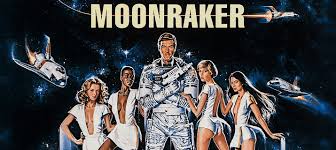
Moonraker (1979, directed by Lewis Gilbert)

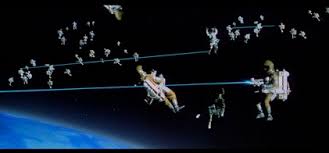
Bond in space! For Your Eyes Only was supposed to be the last 007 of the ‘70s, but due to the popularity of Star Wars, Close Encounters of the Third Kind, and the sci fi genre, Eon Productions decided to launch James into orbit. For the last time, Lewis Gilbert directed an expansive epic action adventure that starts with Bond falling through the sky without a parachute and ends with him floating in space with this episode’s Bond “girl.” The story is that Steven Spielberg offered to direct Moonraker after he wrapped up Close Encounters, but producer Cubby Broccoli wanted to stick with Gilbert. One can only imagine what THAT film would have looked like. Instead we get a camp romp that pleased Bond fans but looks pretty silly now.

Moonraker sees Roger Moore closing in on 50 but bringing some svelte bona fides to an older Bond. Hair and makeup prop him up nicely. Bond is up against another evil industrialist, this time its rocket designer Hugo Drax (played by Michael Lonsdale, who looks way too much like Peter Dinklage in this movie). Drax, like the megalomaniac in the last movie, wants to kill all the people on earth and then repopulate the planet with his master race of humans who are hanging out in his space ark. Bernard Lee makes his final appearance as M, the role he played since the first Bond film in 1962. Bond is aided by CIA agent/astronaut Dr. Holly Goodhead (Woot! There it is!). Goodhead is played by Lois Chiles, who delivers every line like she’s loaded on valium. Even when everyone on Earth is about to die, her voice remains in the “Gee, what should I wear to work?” range. Maybe Chiles was trying to play against the sexist “hysterical female” archetype, but women are allowed to have emotions. Oh, and Jaws (Richard Kiel) is back and he’s in love.

As we’ve come to expect, Bond does some globetrotting before he leaves the globe. Moonraker takes him to California, Venice, Italy, and Brazil. There’s a boat chase in the canals of Venice, that’s played for comedy (and is really dumb) and there’s a boat chase on the Amazon (that’s pretty cool). In the film, Drax has built a fleet of space shuttles to launch from his underground lair (Yes!) in the Amazon. The real space shuttle wouldn’t be launched by NASA for another two years, on April 12, 1981. That gave movie goers in 1979 a glimpse into what the 80s might look like.

Moonraker premiered in London on June 26, 1979, a week after President Jimmy Carter and Soviet Premier Leonid Brezhnev signed the SALT II agreement in Vienna, bringing cold war tensions down a few notches. The film was United Artists widest opening picture and highest grossing of the Bond franchise to that point. There was no hit theme song this time. Shirley Bassey was brought back in after Frank Sinatra, Johnny Mathis, and Kate Bush (!) passed. At the end of the seventies, Bond’s philandering was becoming tired, leaving audiences wondering if the franchise would survive into the 1980s.

Let’s drop Moonraker into our analysis matrix.

Driver of Action – As we’ve established, the Moore Bond films firmly place James in the driver seat, typically with the female spy sidekick who he can also sleep with. Dr. Goodhead doesn’t drive much of the story in Moonraker, and, like, the last film, needs to be rescued from the bad guy. Even though she’s a CIA agent AND an astronaut, James is still running the operation. We do get the team of M, Q, Moneypenny, and (now) the Defense Minister wedged in to help the ludicrous plot move along.

Role of Violence – 007 has a pretty low bodycount in this film. He shoots a would-be assassin out of a tree while pheasant hunting and, other than killing Drax at the end, that’s about it. There is a crazy climactic space battle with lasers when, somehow, a battalion of U.S. soldiers are crammed into the cargo bay of a space shuttle and then attack Drax’s space station. (I’m guessing this is where Trump got his idea for a U.S. Space Force.) Not sure where all the laser guns were in 1979, but Bond doesn’t really engage in any of the violence (like in the last film when he was mowing suckers down). Maybe older Bond has lost his taste for blood.

Vulnerability – Moore’s Bond is a robot. When he discovers Goodhead alive in Drax’s underground lair (beneath a shuttle that’s about to lift off), he says “Thank God you’re safe.” That’s it.

Sexual Potency – I could write a dissertation on this one. The FDA wouldn’t introduce Viagra until 1998 and one wonders if the mad scientists at Pfizer dreamed of a drug that would give men Bond boners. 007 is MI-6’s heat seeking missile. He’s rapacious. There isn’t a skirt he won’t chase, except for Miss Moneypenny, who is now matronly and completely off Bond’s radar. (How I miss their banter.) Speaking of Moneypenny, at the start of the film M asks her if 007 is back from his mission. “He’s on his last leg, sir,” she replies. The next shot is Bond’s hand on a flight attendants bare leg. “Any higher Mr. Bond and my ears will pop,” she says. (Of course she’s a double agent and Bond is sent flying out of the plane without a parachute, leading to one of the greatest action stunts in movie history.)

Bond may have failed at getting her knickers down, but you can’t keep a good Double O down. He makes passes at every woman under 40 that passes his field of vision. He would have made the moves on Drax’s hench-women, but he had to wrestle a giant anaconda. Shit happens. He does end up in bed with Corinne Dufour, Drax’s personal pilot, played by The Story of O’s Corinne Cléry. (She is killed by dogs for her transgression.) He also beds his MI-6 contact in Rio, Manuela. In his hotel room, she bares her leg and James asks, “How do you kill 5 hours in Rio if you don’t Samba?” Then he unties her frock. James meets Dr. Goodhead in California at Drax’s compound, but then again in Venice where he realizes she is CIA. He seduces her into bed and makes the case that she should team up, but she slips away in the morning. The film ends with Bond and Goodhead having sex in zero gravity onboard a Space Shuttle. As is the gag now, the MI-6 brass is watching and M asks what Bond is doing. Q replies, “I believe he is attempting re-entry, sir.” Thank you and goodnight.

There also a side story worth commenting on. The monstrous Jaws is “redeemed” by falling in love in Rio. He’s a giant and she’s tiny with braided pigtails and glasses, dressed like a farm girl with heaving cleavage. Next to him, she looks like a child and I think that’s the point. She doesn’t speak, only stares lovingly her 7 foot 2 man. When Jaws realizes there’s no room for him and “Dolly” in Drax’s fascist utopia, he helps Bond to thwart the evil plot. The odd pair then open a bottle of champaign as the space lair is destroyed. The whole thing is icky.

Connection – Again, Moore’s Bond is a man untethered to anyone. There’s a scene where he’s riding a horse in Brazil looking like a gaucho. It’s an obvious nod to Clint Eastwood, the penultimate seventies model of masculinity, the high plains drifter. His connection to Goodhead is wafer thin. In the obligatory coitus end scene, James and Holly are having space sex and she says, “Take me ’round the world one more time.” He drolly replies, “Why not?” Boring sex is boring.

Summary Moonraker is so broad and silly it’s just a romp at this point. The countless henchmen scientists in their yellow jumpsuits, the martial arts attack by Drax’s Asian manservant in a glass museum that destroys dozens of priceless artifacts, escaping the bad guy in a Carnival celebration (Thunderball redux), pretending to be weightless by moving slowly, it’s all in good fun. But the fact that Moore and Chiles seem so completely bored by the script drags down the campiness of Bond ’79. And Jaws and his child bride may have delighted young fans in the Carter era, but it just seems kind of sad now.

These seventies 007 movies have consistently missed an easy opportunity to be a part of the decade where feminism went mainstream. Most of them attempted to pair James up with a female spy that could have been his equal or even taught him a few things. Instead they played the role to attract the male gaze and be yet another notch on James’ bedpost. Yawn. Will things be different in the third decade of our hero?

Next: For Your Eyes Only (1981)

The James Bond Project #11: The Spy Who Loved Me (1977)

The James Bond Project #10: The Man with the Golden Gun (1974)

The James Bond Project #9: Live and Let Die (1973)

The James Bond Project #8: Diamonds are Forever (1971)

The James Bond Project #7: On Her Majesty’s Secret Service (1969)

The James Bond Project #6: You Only Live Twice (1967)

The James Bond Project #5: Casino Royale (1967)

The James Bond Project #4: Thunderball (1965)

The James Bond Project #3: Goldfinger (1964)

The James Bond Project #2: From Russia With Love (1963)

The James Bond Project: #1: Dr. No (1962)