It’s Not Black and White: Addressing the Binary on the Left Side

I Don’t Know How to Talk about the War in Israel

Not Woke:  Mauritania, where slavery exists and gay people get the death penalty

Curiosity Saved the Cat, or How I Stopped Fighting and Started Asking Questions

May 21, 2023

I spent most of my life in a narcissistic head cloud. I put it off to being a Pisces, but the fact of the matter is that I was habitually more interested in myself than other people. After all, both Mr. Rogers and my mother had told me, “You are special.” When my first wife was on her way out the door, I remember her saying, “You suck all the air out of a room, Randy.” I thought that was meant as a compliment. I would think that. Turns out Mr. Rogers (and Mom) were wrong. I wasn’t special. I was an asshole.

This “COVID-era” life change I’ve been going through has forced me to stop. Stop my awesome rocket ride through “Randyland.” I’d had plenty of clues along the way. As an ethnographer, my job was to skillfully interview subjects without them knowing it. I’d come out of the field after months of hanging out with white supremacists realizing I was missing data because I’d spent more time talking than listening. I realized my biggest grammar mistake was forgetting to end queries with question marks. One student’s review of a sociology class at Portland State was one sentence long: “Nobody loves Randy Blazak more than Randy Blazak.”

This lack of curiosity became an issue between Andi and I. She didn’t need another story. She need someone who was interested in her thoughts and observations. Someone who talked with her not at her. I needed to figure this curiosity thing out.

Even though it might be too late for Andi, I finally cracked this curious nut. I’ve mentioned in this blog how lucky I’ve been to find a somatic therapist who could help be corral my unwieldy lizard brain and help find methods to get my parasympathetic nervous system to help my behavior be in line with my “I’m a feminist!” values. She recently suggested a book by Buddhist Oren Jay Sofer called Say What You Mean: A Mindful Approach to Nonviolent Communication and it’s been a game changer. I’ve really relied a lot on mindfulness practices to get away from to my bad habits. Ruth King’s Mindful of Race and her emphasis on “Impact not intent” has been vital in deflating some of my patterns of harm. These books are sacred.

I’m currently working on a federally-funded project to interrupt violent extremism so I figured out I could read Sofer’s book for work. Turns it’s more about people like me than the Proud Boys. (Does that sound narcissistic?) While I was focused on the eminent fist fight between Marjorie Taylor Greene and Joe Biden, the conflict here was less domestic terrorism and more just domestic. Our interpersonal conflicts certainly can escalate into some ugly areas, of which, violence is only one stupid scenario, but fighting over someone not doing the kid’s laundry is enough.

The book follows three main strategies to get us out of the combative way we communicate; 1) Being present in the moment, 2) Bringing in curiosity and care, and 3) Focusing on what matters. Sounds simple but there’s a lot of detail in the process. The bottom line is we are really good at reacting and getting pulled into a fight to prove the validity of our position. But more often than not, that just ends in a pointless stalemate. My Facebook page is an endless battle between my blue state Portland friends and my red state Georgia homies and the line of scrimmage hasn’t moved an inch.

A key part of the middle of Say What You Mean is developing empathetic listening skills by practicing curiosity. Let’s be honest – for most of us – when other people are speaking, we’re just listening for a gap to say whatever we were going to say anyway. That’s what we’re listening for, not what that person is saying, but for a chance to hear our own voice. That’s why modern speech is full of  linguistic space holders, like “like,” “um,” “you know,” “well,” “literally,” and my least favorite word on Earth, “actually.” All those linguistic cock blockers serve to keep the stream of sound coming out of our gobs and preventing anyone else from actually getting a word in edgewise. Literally.

I started trying empathetic listening out on my students. I broke my diversity class up into random pairs and gave them five minutes. Student A had to ask Student B, “What’s the most challenging thing about being your primary identity?” (For example, their race or their gender identity.) Then Student A had to SHUT UP AND JUST LISTEN FOR FOUR MINUTES. On the fourth minute Student A was to say, “It sounds like the hardest thing is…. Did I get that right?” At the end of the five minutes they’d switch roles and Student B would ask same question. Afterwards, the students reflected how validating it felt to be actually listened to and how they created a new bond with someone who seemed, at first, very different from them.

Was there something to his power of asking questions? I was soon to put it to the test myself.

My last blog post was about transphobia and the hellnado that was unleashed by Kid Rock going Columbine on a case of Bud Light. Being the king mixer that I am I posted it on the Boycott Bud Light Facebook page. Very quickly I got a DM from some dude named Jamie that read, “Fuck trannies faggit You look like a fucking freak from Portland.” I went into my standard battle mode, trying to convince Jamie that he was in the closet. And the fight was on. Then I stopped and thought, WWOJSD? What would Oren Jay Sofer do?

So I switched gears and started asking Jamie questions. Were transgender people an actual problem in his life? (No.) Did he know any transgender people? (No.) What did he think WAS the biggest problem in America? He went off on a vector about the war on drugs and pharmaceutical companies and I said, “Hey, man, I agree 100%!” All of a sudden we were on the same page and talking about a bunch of stuff we agreed on. Jamie texted, “Sorry for calling you names, that’s pretty immature of me. I shouldn’t be like that. You take care. I’ll be more open minded.” Wow. It was all I could do to not ask Jamie if we could be Facebook friends and maybe go grab a Bud Light. Just being curious changed everything. I talked to him like human being and not a sparing partner and we both benefited from it.

So if this approach worked with transphobe like Jamie could it work with my estranged wife? I started trying the technique out with Andi. “How did that make you feel?” “Can you tell me more about that?” “It sounds like that was really hard. Am I hearing you correctly?” And it wasn’t an act. The more I asked the more I wanted to know. She asked me to stick around so we could continue the conversation. I didn’t tell a single anecdote. Each one of her sentences left me wanting more and we talked for hours.

Curiosity won’t solve all our problems. I still have a lot of work to do to de-program my asshole tendencies. But it’s a start. And what if there’s something bigger at stake here. What if Congressman Jamie Raskin got curious about Lauren Boebert? What if Antifa Annie asked Proud Boy Billy about his childhood? Or what if Road Rage Rob asked Road Rage Roy, “Do you need a hug?” So whether it’s political incivility or fractured marriages there is great value in the advice of Vanilla Ice; stop, collaborate and listen. Let’s get curious. Stop talking and start asking questions. People just want to be heard. And then they’ll listen.

The Lynching of Transgender Americans (or What’s Wrong with Kid Rock’s Brain?)

April 24, 2023

Another day, another story about how much Republicans hate trans people. Opportunistic MAGA bigot Kid Rock aside, how did transgender Americans become the primary target of hate mongers? Did the Ku Klux Klan run out of objects of derision? “It ain’t ‘cool’ to hate black people no more. Let’s go after them non-binary kids!”

We have seen a dramatic spike in hate crimes against transgender people. The numbers of anti-trans attacks jumped 29 percent in 2021 over the numbers in 2020. There has been a corresponding increase in anti-trans murders, with black trans women being the primary target. Fueling this wave of hate is a bizarre obsession from many Republican politicians who delight in finding ways to make the lives of transgender Americans hell, especially if they are kids. According to translegislation.com, 2023 has already seen 499 anti-trans bills in 49 states (thank you, Delaware), and 43 that have passed.

How did transgender people suddenly become the demographic that it was politically expedient to hate?

If I’ve leaned anything in my 30+ years of studying hate groups, hate mongers never miss a passing bandwagon. In the 1920s, the “America First” Ku Klux Klan pivoted from anti-black hate to anti-immigrant hate as immigration patterns shifted to bring waves of Catholics and Jews to our shores. In the 1980’s, the KKK got in on the anti-gay hysteria as the AIDS epidemic gripped the country. A few years ago, hate groups leveled up their anti-Semitism as a means of going after Anthony Fauci and any Jewish doctor who thought it might be a good idea to wear a mask. Now that COVID has subsided, it seems to be transgender folks who are in the crosshairs of those that are perpetually angry about something that doesn’t actually affect them.

Let me put an underline on that point. If you are not transgender, another person being transgender has absolutely no impact on you one way or another. There are probably about 1.6 million trans people in the United States (according to a recent UCLA study). You don’t have to do anything or not do anything. Just let them exist. Just like we do with left-handed people (who right-handed people used to think were evil). Fox News would have you believe there is an army of transgender backstrokers competing on girls swim teams. These are the same people who previously wouldn’t shut up about “black rapists” and “Jewish pedophiles.” There’s not. And if there is one or two trans athletes raising the bar, it doesn’t effect you or Travis Tritt.

So why are rednecks across America pouring Bud Light down the drain and trying to find a “less gay” shitty beer? (Good luck on that one, Cleatus.)

Here’s two explanations.

First is the obvious one. Right-wing politicians, like Florida Nazi-wannabe Ron DeSantis, are using transphobia to gin up their white evangelical base. Let’s not forget the previously mentioned white-evangelical outfit known as the Ku Klux Klan. There’s a grip of white Christians that don’t know that Jesus was a brown-skinned socialist and think the Lord approved on shitting on marginalized people instead of gifting them loaves and fishes. This group is easier to manipulate than a prom full of horny teenagers. All you have to do is mention “sex” and “children” and the pitchfork and torch-carrying villagers are officially triggered. 

Let’s be clear. Kids are more at risk from child molesting preachers than drag queens or anybody in the entire LGBTQ community. The religious right thinks transgender people are “sexualizing” kids. Not anymore than sex crazed cis-gender heterosexual people are. Everywhere I look I see those folks sucking face. I’ve already written about how not-kid friendly TV shows like Family Feud are. Trying to protect my 8-year-old from the nonstop sexuality coming from the non-queer folks is a losing battle. Someone expressing their gender is not “sexuality,” it’s life. And trans kids are dying by not being allowed to do it by an opportunistic political movement that sacrifices them at the alter of MAGA votes.

Second is a cognitive reason and has to do with our less-evolved friends who are firing on their knee jerk lizard brains. Research shows that these limbic brain creatures cannot handle complexity. Everything has to be in a very black or white binary. These are the same folks who feared “mulattos” and “quadroons” a hundred and fifty years ago. You had to fit into a nice racial category so they knew where to put you. Now that over 9 million Americans (including my daughter) are biracial they’ve moved onto to another anal retentive need to put people in a box.

To be fair, the last few decades America has been on a public education project to learn that sex and gender are two completely different concepts. We’ve spent so long conflating biological sex with sociological expressions of gender, you can’t fault folks for having trouble disentangling them. (“Gender reveal parties” are not. Genital reveal but not gender.) But we’re fully past that point now. Anyone who has a brain developed enough to understand the complexity of reality (“One person’s terrorist is another person’s freedom fighter”) gets that gender can be extremely fluid and doesn’t exist in a neat either/or binary. So we’re left with troglodytes, like Kid Rock, who flip out when “dude looks like a lady.” Their brains just cannot manage boundary bending. Take the Bud Light banning morons back to 1883 and they would have coming for biracial people with ropes. Have you ever seen Birth of a Nation (1915)? “Those mulattoes are sexualizing our children!!”

The saddest part of this political fad is that there is already a body count. Trans kids who can’t get gender affirming care have an elevated suicided rate. Trans people suffer from all kinds of health problems because of inequities in our health care system (just ask a trans man with ovarian cancer). Physical attacks on trans people has now taken on a sport-like aspect. There was a brutal murder here in suburban Portland in 2001. The killing of a trans woman named Lani Kai became a focal point of my early hate crime work here in Oregon. The good news is her murder would now be classified as a bias crime in Oregon, but the bad news is her murder is still unsolved 22 years later and joins the increasing number of case files that end up with trans women of color (and other queer folks) chilling in the morgue.
There is a historical parallel the maps the current anti-trans hysteria to the hundred and sixteen years of lynching African-Americans after slavery ended in 1865. The thousands of racial lynchings were driven by an irrational fear, that somehow black people were an existential (and sexual) threat to white people. The modern irrational fear, bubbling over in bastions of hate like Texas, Tennessee, and Florida, is that transgender people are a threat to cisgender people. They’re not. They are human beings. The rest is convenient hysteria and it’s fueling the Republican death cult. Where southern Democrats championed the dehumanization of black people a hundred years ago, MAGA Republicans are now dehumanizing transgender people and it has to stop.

Now, I’m all for donating Kid Rock’s brain to science or sending thoughts and prayers into the void that one of Ron DeSantis’s three kids comes out as non-binary, but what I want to do is just beg the MAGA base to chill the fuck out and find a social problem that actually impacts them, like full access to healthcare or full access to lite beer. Whatever. Just leave trans kids alone.

I Was Jimmy Carter’s Most Annoying Student

February 19, 2023

As a Georgia boy, it was a big deal when the peanut farmer from Plains was elected as President of the United States in 1976. I was 12-years-old and remember my mother showing off her drivers license that was signed by “Governor Jimmy Carter.” His election was a rejection of all the Watergate era corruption that had tanked America’s faith in government. It was meant to be a return to normal, with an ethical Southerner who had admitted to Playboy Magazine that he had lusted in his heart. Seemed better than Gerald Ford falling down the stairs again.

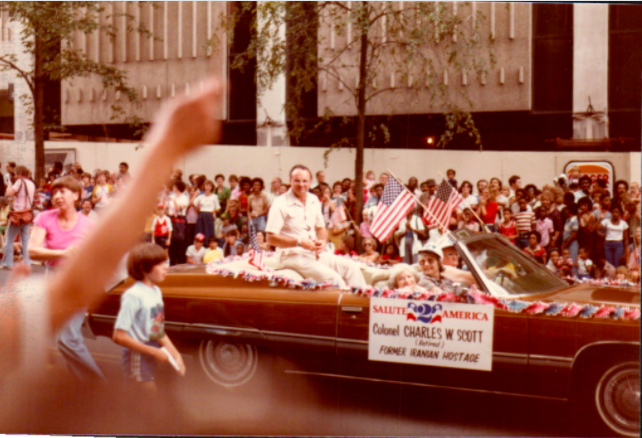
I could write pages on how history will kindly remember the 1977-1981 term that Carter had in the White House. Having a human rights advocate who loved Willie Nelson and the Allman Brothers stood in stark contrast to what was to come. Sadly, much of my high school experience was to be marked by the Iranian hostage crisis. One of the 52 Americans held in Teheran was Col. Charles Scott, of Stone Mountain, Georgia and his daughters went to my school. When they were finally released on January 20, 1981, we covered our town in yellow ribbons. 

Fast forward to my 1984-1985 senior year at Emory University, in Atlanta. I had become a sociology major and dedicated a large percentage of my waking hours to protesting whatever Ronald Reagan was doing that week. By my senior year, I had pretty much taken every sociology class Emory offered and added Political Science as a second major. I needed the scholarship to inform my activism. I would wear my Sandinista t-shirt to Professor Juan del Aguila’s Latin American Politics class and spar with him over the CIA’s role in the 1954 overthrow of Guatemala’s democracy for the benefit of the United Fruit Company. Good times.

My favorite classes were Professor Thomas Remington’s Soviet politics class. This was at the peak of the cold war when the U.S. and USSR were positioned, like two tribes, to wipe each other off the face of the map. On the first Wednesday of each month, at noon, the air raid sirens on campus would wail to remind us that Emory’s CDC (and all of us college kids) were the likely target of a nuclear strike. Remington’s classes seemed vital to understanding the Russian bear.

So it was great excitement that Professor Remington told us that President Carter would be doing a series of guest lectures in our Soviet Foreign Policy class. Carter had accepted a professorship in 1982, during my freshman year, and we would occasionally catch sitings of him on campus, but to sit in a classroom listening to a former U.S. president, instead of reading about him, was a privilege beyond belief.

It might not surprise you that I was the kid in the front row with his hand constantly darting up in the air. While Carter had an unrestricted forum at Emory, I was suddenly a 20-year-old with unrestricted access to the President of the United States. I took scrupulous notes and channelled my inner Arnold Horshack to pepper him with endless questions. Like this classic; “President Carter, why did you authorize Presidential Directive 59, authorizing the use of nuclear weapons if the Soviets advanced past Afghanistan?”

At times it seemed like it was just Jimmy and I in the room. He kindly addressed each of my questions with clarity and as much declassified intel as he could share with an overly earnest college kid. I imagined that the eyes of my fellow students were rolling as I continued the one-on-one but I was eternally grateful to Dr. Remington for creating this space that revealed the real world complexity of governing that was dramatically different from my Marxist-wannabe dogmatism.

The pay off was on a spring day in 1985 when I was sitting on the steps of Cox Hall with my gang of misfit Emoroids. We’d have our lunch there to talk about upcoming punk shows and make fun of frat boys. Suddenly, President Carter came out of Cox Hall with a small group, and stopped to say, “Hi Randy! How are your classes going?” As he walked away, my friends were just silent.

The following year Carter hosted a summit with Gerald Ford at Emory on foreign policy. I attended every session (and remember Ford falling asleep at the dais). After that, Carter opened his Carter Presidential Library across the street from my apartment in Little 5 Points. President Reagan came to speak at the opening and Carter (much to Reagan’s chagrin) allowed the event to be open to the public so we arrived to shout rude things at Ronnie. While I was in graduate school at Emory, I would have my Social Problems class work on pressing issues with the Carter Center, submitting my students work to the newly empowered Clinton Administration. Living across the street from his library I would occasionally see Jimmy walking the grounds and picking up trash (can you imagine Donald Trump doing that?) and thank him for those lectures in our Soviet politics classes. “I hope I wasn’t too obnoxious,” I said to him one fall day. “Not at all, Randy. You always asked the questions I wanted to talk about,” he said.

The four-year presidency of James Earl Carter was a tiny fraction of the nearly century long life of this man. Everyone that met him following his tenure in the Oval Office tells a similar version to this little story. A journey of a man guided by intention, service, and humility. It seems like the polar opposite of our current generation of political “leaders.” I was glad to know him and we were lucky to have him.

The First Two Days on the Polish-Ukraine Border, as Bombs Fall on Lviv

March 26, 2022

Note: There is no information in this post about border crossings, NATO troop movement, or Ukrainian military support.

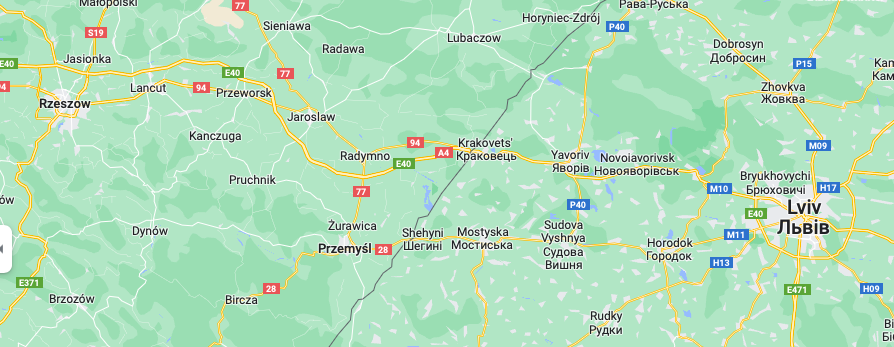
I don’t have much to complain about in life. My child is safe in Portland. I have a cute little hotel room in Rzeszów, Poland. And, as I write this, Russian rockets are slamming into Lviv, Ukraine, just across the border. I’m worn out from the last two days work, fixing up a safe house in Jaroslaw, and ferrying refugees up from the border, but I’m well-fed, wifi-ed, and out of harms way. Unlike so many. Tomorrow, I was to help deliver aid to Kyiv via Lviv. We’re re-thinking that plan.

I arrived Rzeszów Thursday evening to plug into my circle of helpers and went right to work packing up medical supplies (and “gear”) to get across the border. Friday morning we went to the house, ready to work. Our team leader, Sally, who is a human dynamo, got us on the road. There was a film crew from New York documenting her story, so the van ride felt a little like being in a reality TV show. The first stop was a hair salon to pick our Ukrainian contacts, Zenia and his very pregnant wife, Valentina. Then to the “Yellow House” (Żółty Dom) to get to work on the Polish HGTV version of Home Town.

The Yellow House was a wreck. It had been empty of years and smelled like it. So we got to work pulling weeds, hauling trash, storing random office furniture, and removing a ton of broken vodka bottles so the Ukrainian kids could play in the yard. Sally bought $550 worth of gardening and cleaning supplies and we started the transformation. The back-breaking labor was made easier by our amazing hosts. The Ukrainian women, whose husbands are across the border fighting the mighty Russian army, made us snacks, and the owner of the house gave me a bottle of whiskey and called anybody who refused to do shots with us a communist.

As I toiled away, I interacted with the kids, so much like my own daughter, and felt their trauma. They were in an unfamiliar country where they couldn’t read the words or understand the language. They were the new war refugee children. Many would never return home or see their fathers again. The weight was unbearable at times. All I had and all they were losing. But both Ukrainians and Poles kept smiling and remained full of love and hope. When you find yourself in hell, keep going. I bought sunflower seeds so they could turn that hope into a garden in their new home.

By the time we got back to our hotel in Rzeszow, I just passed out. Maybe it was the whiskey. I had time for a video chat with Cozy and wanted to climb through the screen to hug her. My knees shook. Then I drifted off and had a dream about Auschwitz.

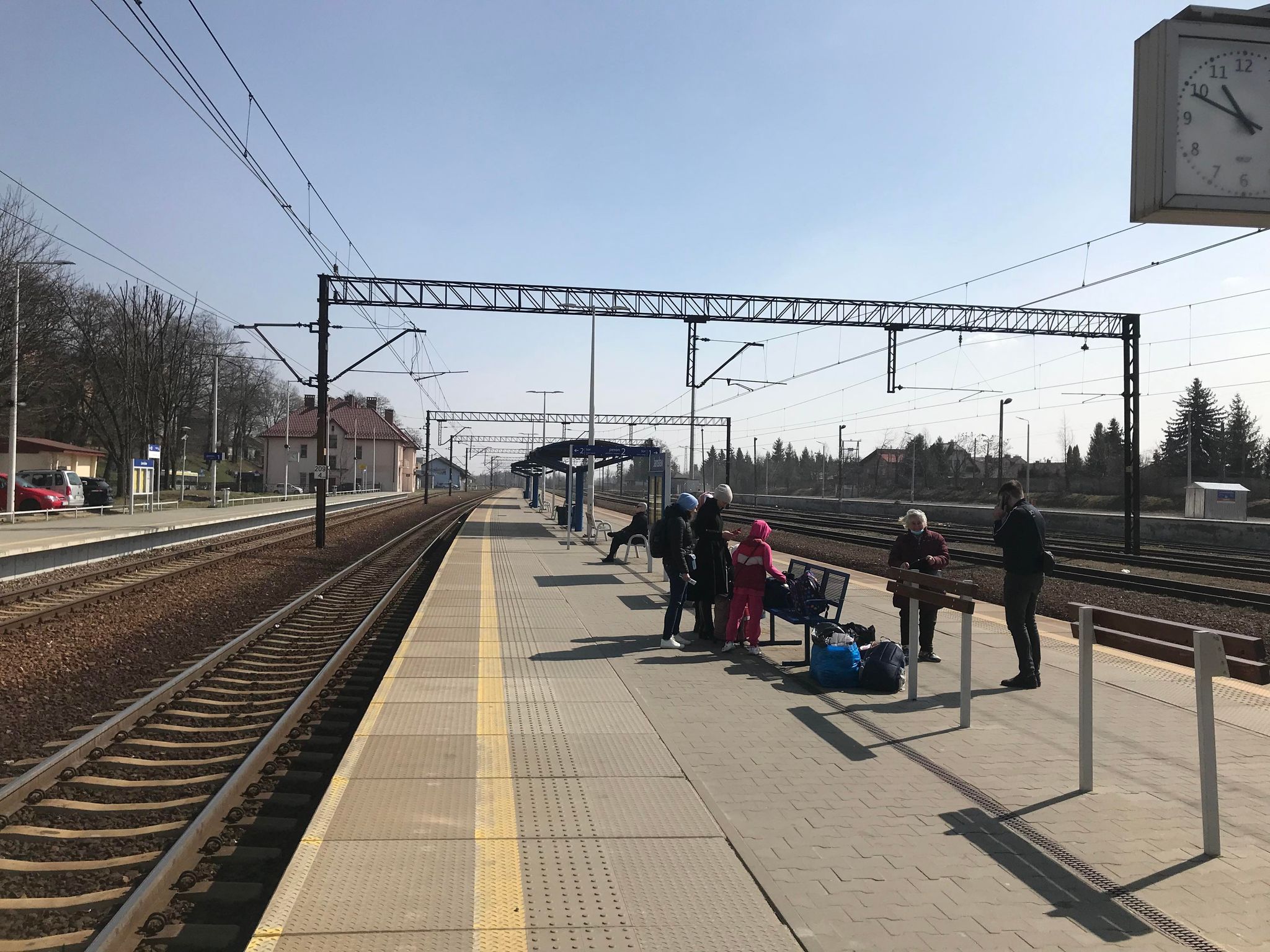
This morning, I overslept because I forgot what day it was and set my alarm clock to Friday. After a quick breakfast, it was off the Yellow House to do more work. But after a few minutes of raking, Sally and Zenia let me know there was a family from eastern Ukraine at the border and I should come to help collect them. So we headed in the van down the road towards Lviv, Ukraine. But first we picked up an elderly Ukrainian woman who was staying in a youth hostel that had been converted into a refugee shelter. She missed her home in Lviv, which hadn’t been shelled in two weeks and seemed relatively safe. When we got to the Jaroslaw train station, I walked her to her platform for her train to Lviv, held her hand and wished her luck. I now regret that decision.

We didn’t have to cross the border because the family made it to Korzowa, where there is a massive shopping mall, called Centrum Handlu, that has become a refugee resettlement center. Thousands of lost souls. Some asleep on cots at noon. Others staring into space, wondering what their new reality had in store for them. Our family, one mother and six girls (and one Pekingese) seemed relieved to be going somewhere, anywhere. We loaded them into the van and headed away from the border. One girl, maybe 2, and I made faces and, as is now tradition, I showed her a picture of “moya dochka,” Cozy. Ukrainian children seem very frighted of strange men because of the carnage Russian soldiers have caused, so I try to lessen the trauma if I can.

The family seemed to adjust to their new digs at the Yellow House and I got back to work, aided by four incredible Amish volunteers from Montana. As we worked, word started to come in that Lviv was under attack. My mother, watching CNN back in the States, was texting me info. First a fuel station, then a communication tower, then a school. About 40 miles from where we had been. We headed back to Zreszow to adjust our plans to the news, including for tomorrow.

In time, I will be able to give a full accounting of what happened today. As crazy as it sounds, we got a very real lesson on the presence of Russian spies in our midst. I’m just trying to process the savagery of war on these people and the impact on the children of Ukraine. But I am glad I’m here. We’re about to be joined by a lot of people with no place to go. I can’t imagine I will be the same person after this. I can’t imagine any of us will.

In the Toilet Paper Tube of History: Watching the Battle for Ukraine in Real Time

February 27, 2022

We’re all gerbils crawling through an endless toilet paper tube. Most of the time we don’t notice the tube, because we’re focused on our forward motion. But every once in a while, we realize that we’re stuck in a freaking cardboard tube and it’s controlling everything about what we can see and where we can go.

History is that toilet paper tube. I remember how on a Tuesday morning, September 11, 2001, I realized the events I was watching on my father’s television in Roswell, Georgia would impact every aspect of my world.  There were two realities, pre-9/11 and post-9/11. The tube was tight, preventing me from getting on a flight back to Portland. And it’s touched our reality ever since.

I feel that way again, watching the Russian invasion of Ukraine. I was focused on the tasks at hand, getting my students through winter quarter, adjusting to life as a single parent, waiting for The Marvelous Mrs. Maisel to start a new season. And then on Wednesday night all that changed as Putin sent tanks and troops across the border in an unprovoked invasion of a sovereign nation. I had a similar feeling when I was 15-years-old on New Year’s Eve 1979, watching Soviet tanks roll into Afghanistan. It felt like the whole world shifted on its axis a bit.

Now as Russian troops bomb Kyiv, it seems like the axis shift is massive. Thursday I took time to talk to my University of Oregon students and ask them to be present in this moment. They will likely talk to their grandchildren 50 years from now about the first days of the third world war. Rising gas prices, bread shortages, fear of conscription are surely weighing on their minds. But for these Generation Z students, most born after 9/11, this will all get very real when the Russian cyber hacks shut Instagram down.

Historical parallels aside (Hitler pulled the same stunt in 1939), it’s clear that we have entered a geo-political order where Russia is not our friend. (Sarah Palin must be smirking.) We will divide modern history into before 02/23/2022 and after 02/23/2022. Will this end up in the similar global turmoil that followed Hitler’s invasion of Poland? It seems entirely possible. Vladimir Putin is this generation’s murderous madmen with designs on expanding his empire by any means necessary. Putin’s statement Wednesday that nations that come to Ukraine’s defense will face “consequences you have never seen” is chilling given the fact that Russia holds 45% of the world’s nuclear weapons.

Maybe this will be a limited conflict and, well, sorry freedom-loving Ukrainians. Yeah, it went sideways with Hitler, but Putin is an ethnic nationalist of a different stripe. It will be fine. Let’s get back to the other existential crises, like COVID and global warming. Why should Russian tanks rolling through Chernobyl be an issue in suburban America? It will be OK. Have you seen the price of milk? Let’s riot!

Of course, the good people of Ukraine didn’t think Russian bombs would be falling on their suburban neighborhoods either. A child Cozy’s age was killed today on the westside of Kyiv. Global conflicts have the tendency to spread. Quickly. Watching the children heading for the Polish border makes me wonder where I would send my daughter if the war spreads to this part of the world. Hopefully we can get her to Mexico if things get hot here. The United States is not guaranteed to exist forever. Four years of Trumpism weakened our democracy and greatly inflated Russia. That could create a cascade of crises that puts the USA in the rear view mirror. You may not be safe as you think.

The reason of this concern is rooted what I did in the first 12 hours of the invasion. I spent it on the dark corners of the web in the places where white supremacists, Qanon believers, and Trump nuts dwell. They, to the one, threw their support to Putin, seeing Biden’s policies as part of a liberal Jewish plot to push Putin and Trump’s buttons and cheered Putin’s fascistic ethnic nationalism. They want that wider war to launch their “boogaloo” race war in America. And they are armed. Heavily. Timothy McVeigh is their hero. The ethnic cleansing of Yugoslavia is their game plan. And Putin and Trump are their leaders.

Fortunately, like those Ukrainian soldiers on Snake Island who defiantly said, “Russian warship, go fuck yourself!” the majority of Americans have no tolerance for the anti-American “America First” con artists and their little boy soldiers. Yeah, 4.5 million viewers tune into white supremacist Tucker Carlson’s Fox News show each evening but that means that over 327 million Americans don’t. Hopefully, unlike Ukrainian citizens right now, we won’t all have to take crash courses in how to fire AR-15s. It’s going to take a lot of hard work and thoughtful mobilization. We’ll certainly have the time after Russian hackers take down Instagram. Maybe then we will see the toilet paper tube we are in.

Preparing for April 19th, 2021: Why We Need an International Approach to Domestic Terrorism

February 7, 2021

Watching the Wheels began as a parenting blog but it’s turning into a policy blog. My broader social commentary started with the 2014 killing of Michael Brown in Ferguson, Missouri and exploded with the ascent of Donald J. Trump. I promise we’ll get back to the kid, but there is a pressing reason I’m spending some extra energy on right wing extremism: April 19.

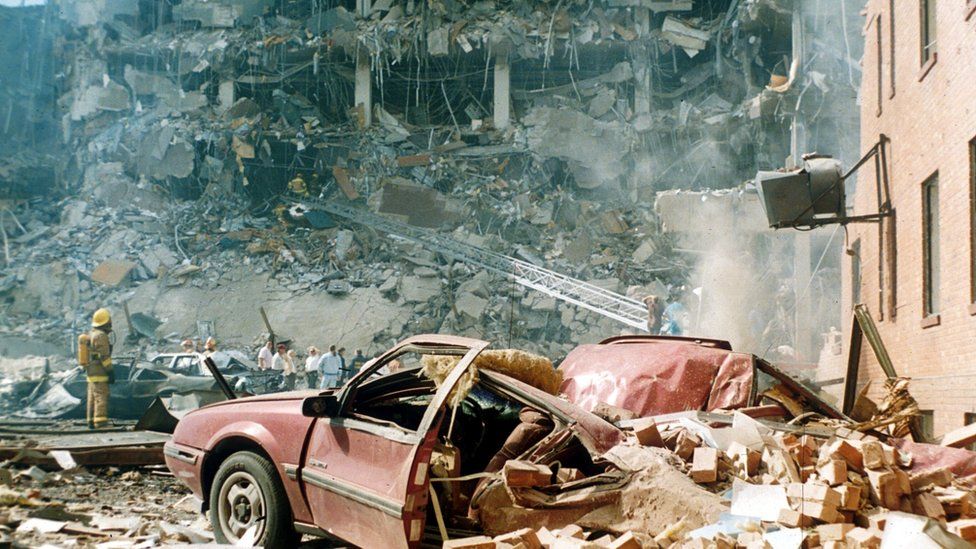
April 19th is the anniversary of the 1995 Oklahoma City bombing that killed 168 people, including 19 children, collapsing a federal office building, and has since been linked to “Patriots’ Day” by the right-wing underground. That underground is now very overground and the chatter in their world is that is that the January 6th Capitol attack was just the warm up. Fasten your seatbelts for April 19, 2021. We could see another wave of right-wing violence as they make their play for Civil War II.

It’s been encouraging to see the Biden Administration pivot to make the threat of domestic terrorism a priority, including ordering a nationwide assessment of the emerging threat, with the National Security Council responding in a way reminiscent of how the intelligence community responded after 9/11. The Biden team’s focus and the fact that capable experts like Rep. Elissa Slotkin (D-MI) will take the lead on the Counterterrorism Subcommittee are an encouraging start. There are plenty of challenges ahead, including our lack of a federal definition of “domestic terrorism” and the policing of such actions that also respects our first amendment protections.

But domestic terrorism is also an international issue.

I was having a conversation last week with a representative of a foreign consulate who was looking for ways that her government could navigate the post-January 6th world that the Biden Administration had inherited. (I won’t name her nation, but we’ve had a relationship with them since 1776.) As we spoke, it became clear that there are multiple international intersections in our efforts to confront right-wing extremism. The issues that came up revolved around three themes; intelligence, trade issues, and international relations. There are probably more but this is what came up in our hour-long talk.

White supremacy as a global movement

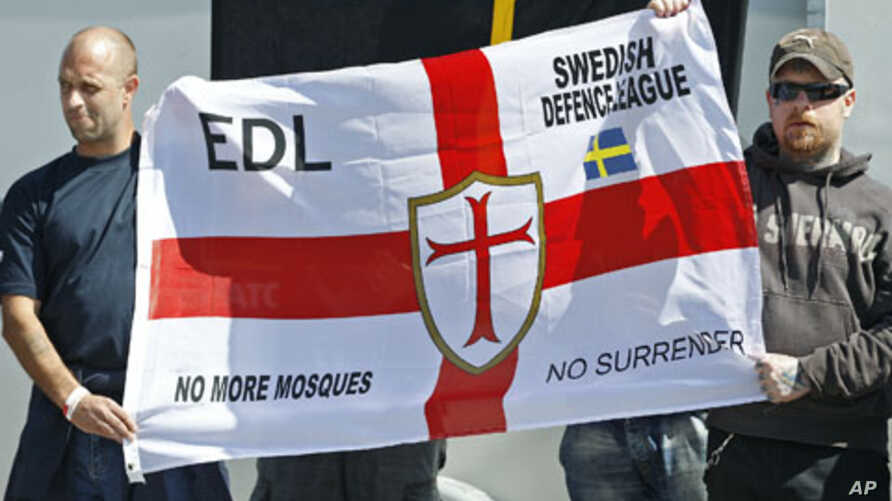
Over the last thirty years we’ve seen a decidedly internationalist trend in the nationalist responses to globalization. For me, this began in 1990s and charting how racist skinheads in America were looking to Serbian nationalism and the Balkanization of Yugoslavia as a roadmap to a race war in the United States. Notorious white supremacists like David Duke have cultivated large followings (and income flows) from Mother Russia. Any European nation that has struggled with an inflow of migrants has seen a surge in Neo-Nazi violence. In July 2018, I was in the UK to study British CVE (Countering Violent Extremism) programs and I worked my way into an English Defense League rally in London, under the shadow of Big Ben. Supporters of banned nationalist Tommy Robinson were laying out anti-immigrant tirades to a crowd of angry white men, many in Trump hats. In England. Two weeks ago, Germany handed a right-wing extremist a life sentence after he was found guilty of shooting a pro-immigration politician in the head at point-blank range, killing him. Racist nationalism is an international problem. The fact that mass casualty events in Oslo, Norway, lead to similar attacks in Christchurch, New Zealand, which lead to similar attacks in El Paso, Texas is proof.

The specter of a pan-Aryan movement has long been a reality. I discussed it in my search on Odinist prison gangs in the 2000s. An international network of racist pagans shared plans for their racial holy war from behind prison walls. Before that, research on white power rock bands traveling to Europe, revealed the trafficking of Neo-Nazi paraphernalia and ideology across the Atlantic. In 1991, I was interviewing a skinhead in (what had just been East) Berlin, Germany, and told me, in broken English, “We have many friends in your country.”

Last summer, the U.S. Senate introduced S. 4080 – the Countering Global White Supremacist Terrorism Act. It’s a great start (if it ever passes) to assess the nature of the global connections to the domestic white supremacist call for a racial revolution. In the wake of the “dry run” on January 6th, the intelligence part of this effort needs to include four key elements.

  1. Foreign support for domestic extremists. While privacy rules make the work difficult, intrepid journalists have started following the money and unmasking the financial backers of the radical right, like the Mercer family. It is likely that money coming to back the Proud Boys, the Oath Keepers, and other groups hell bent on their “boogaloo” civil war is also coming from sources outside the United States, including Russia. The financial streams must be revealed and interrupted.
  2. Foreign disruption and misinformation. If the 2016 election taught us anything, it’s that a little disinformation dropped into your cousin’s Facebook feed can turn a country upside down. In 2015, few people (including Republicans)  thought Donald Trump had a snowball’s chance in hell of becoming president. In January, 2017 he was sworn in. We know that Russia played a role in that campaign. Foreign interference that repeats tropes like “Black Lives Matter is a communist organization” are a part of our digital realities and serve to push “I’m not racist, but..” Americans into white supremacist worldviews.
  3. Encrypted communications. A lot of racist cross-national communication is right out there in the open, on Parler, Twitter, 4chan, and even Instagram. But white supremacists have long utilized encrypted communications. Whether they are sending messages on Telegram, Tox, through video game networks, or communicating in handmade codes on the deep deep web, the chat includes bomb making techniques, hit lists, and potential coordination on terrorist plots. They’ve looked to ISIS and other international terror groups for both mainstream recruitment techniques (ex. YouTube) as well as for tips on secretive channels of communication. We must work with our international partners to penetrate this information flow.
  4. Pan-Aryan movements. More must be done to understand the international connections of white supremacist terror organizations, like Atomwaffen Division. We’ve tended to think of these groups as “home grown” and disregarded their international connections. The internet has linked racist organizations in South Africa to similar groups in South Carolina. The role that Facebook live-streaming played in the 2019 Christchurch shooting that left 51 dead demonstrated that these so-called nationalists are playing to an international audience.

How trade policy impacts white nationalism

During my discussion with the consulate’s office, the issue of trade policy came up. It wasn’t a topic I was expecting or felt qualified to talk about, but it was clear there were some issues that were relevant. Much of racial nationalism is fueled by globalization. Globalization diminishes national identity (There’s an infinite number of McDonalds and Starbucks in Paris) and increases immigration. This was an obvious driver in Britain’s 2016 Brexit vote, the rise of Trump (“America first!”), as well as racialized nationalist movements in Poland, Germany, and Greece. Trade policies designed to reduce pushes into white supremacist movements and their calls for violence must be mindful of the following two questions:

  1. How does this policy impact agrarian or manufacturing labor segments? The very first of racist skinheads I studied in the late 1980s were racist skinheads because of deindustrialization. Their parents were being laid off of their manufacturing jobs which were being shipped to Mexico and China. And the only analysis they were getting was from the White Aryan Resistance who told them that it was a global Jewish cabal that was destroying their shot at the American dream. My 1990s skinheads added the giant sucking sound of NAFTA as the backdrop of their downward mobility. The Economic Policy Institute estimates that over 600,000 manufacturing jobs moved to Mexico after President Clinton signed NAFTA in 1994. Any trade policy must look at the impact on blue collar labor, whether in the factory or the field. An example of countering the trend, Samsung ovens are now made in Tennessee. The profits still flow to South Korea, but a lot of workers are getting to bank their money thanks to the push to revitalize our industrial labor force. This type of trade policy breaks the back of jingoism.
  2. How does this policy impact labor migration? Environmental policies will impact migration patterns as the planet warms. Refugees leaving drought ravaged lands where farming and access to clean water are stressed will become a fact of life unless international policies tackle climate change. Similarly, trade policies (which now often have an environmental component) can be mindful on the impact of the migration of labor. If a policy is likely to increase the migration into the United States, the benefit to Americans must be made clear. Otherwise, the policy (and the earnest foreign workforce that emerges because of it) becomes a white supremacist weapon for scapegoating, xenophobia, and hate crimes.

To work with America you must understand America

There is also a conversation going on from Philadelphia to the Philippines about what kind of country America is in 2021. Especially after four years of Trump. Our standing on the world stage has plummeted as our national interests were supplanted by Donald’s personal interests. As the Biden diplomatic team repairs the damage done to our international relationships, our global partners need to be mindful of four factors that drive activism in the extreme right.

Because each of these is a complex issue, worthy of pages of analysis, I’ll be incredibly brief.

  1. Understanding the split in the Republican Party. The symbolic division between the party of Representative Lynne Cheney (R-WY) and Representative Marjorie Taylor Greene (R-GA) reflects the split between the “Grand Ol’ Party,” with it’s core conservative values, and the nut-job wing that remains loyal to Trump, QAnon and the calls for an uprising to defeat the “communist” Democrats.
  2. Understanding that nationalism is a response to globalization. Over one hundred years ago fervent calls to “(Your country here) first!” set the stage for the “war to end all wars” and paved the way for the rise of fascism. Without the strength of our international treaties (I’m looking at you, UK), we’re back to square one.
  3. Understanding paths to radicalism and access to resources for deradicalization. There’s more than enough scholarship on why people become extremists. Programs in Sweden (Exit) and Britain (Prevent) have pioneered excellent methods to deradicalize extremists. It’s time to share the wisdom. 
  4. Confronting extremism in the military. We are not the only nation whose militaries contain Neo-Nazis who dream of bombing Israel, African and Arab countries, and liberal metropolitan areas. A global strategy to confront this issue should be the first step in an international effort to prevent large scale attacks.

And now the work begins

We talked about a great deal in one hour. I can really squeeze a lot in when I think there’s a ticking time bomb, like April 19th. That day may come and go without event, which I desperately hope will be the case. (April 20th is Hitler’s birthday, so wait to exhale.) America is starting from less than zero because of the hole Donald Trump dug. But, with the help of our friends around the world, we can put our shoulders to the wheel and ensure our common dream to live in a safe and stable nation.

Bridging the Great American Divide: Stepping back from the cliff that is Civil War II

February 1, 2021

I haven’t spoken to my father in six months. At the peak of the Black Lives Matter protests last summer, he posted on my Facebook page, “You can either support Antifa or be my son.” I replied, “You know I’ve worked to oppose fascism my entire adult life. I am, by definition Antifa – anti-fascist.” His response was to unfriend me on Facebook. Unfriended by my Trump-loving father.

I know this scenario has played out in thousands of ways in American families as the lines of division have been drawn up. “Trump cult” brother against “libtard” brother, QAnon daughter against “communist mother,” or in my case, Antifa son against “Anyone who listens to the mainstream media has drank the Kool Aid” father. I was going to call my dad after election day, and then after inauguration day. I keep putting it off because I don’t want to hear his fragile old white man “sky is falling/Joe Biden is too old” blather.  (For the record, Joe is eight months younger than my father.) If I can’t heal my relationship with my old man, how can America heal this chasm that separates us? And is this how families felt before that last civil war?

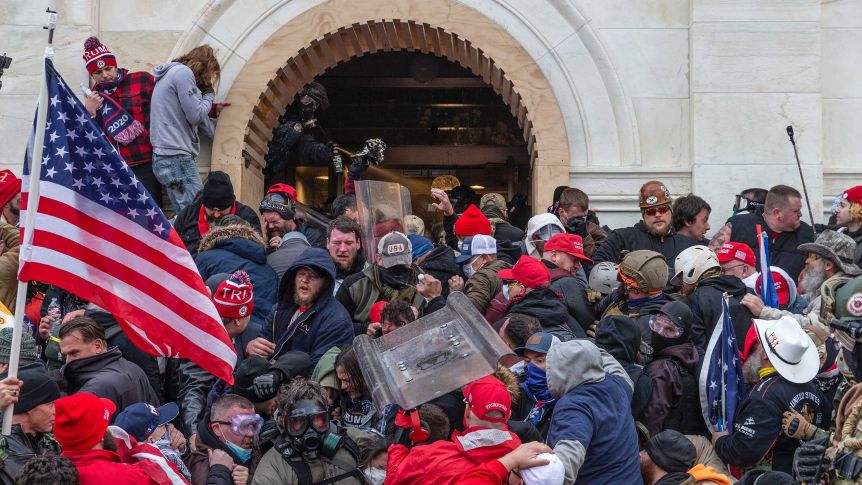
Like a lot of Americans, while watching the January 6 storming of the capitol (It’s its own Wikipedia entry now) unfold on TV, I more than half-expected to see someone I knew (including my older-than-Biden father). We might have heard some great calls for unity on Inauguration Day but it feels like we’re more divided than ever. Trump still holds the reigns of the GOP from his gilded palace in Florida. A large percentage of the 74 million people who voted for Trump think that a large percentage of the 81 million people who voted for Biden were dead people. And complete nut jobs like Rep. Marjorie Taylor Green are either seen as prophets or complete nut jobs.

It seems so hard to cross this divide. The mother of one of my childhood friends (who I had a mad crush on when I was 12) just posted something about Biden letting in “illegal immigrants who carry diseases.” My first response was to call out her racism. That’s what we’re supposed to do, right? But am I just driving her back into her fragile white castle? I’m good on a Facebook smackdown. I’ve got links to New York Times articles, persuasive statistics, hilarious memes, and, if all else fails, a facepalm gif.

Then I remember what I’ve been doing for the last 25 years, helping people leave the white supremacist movement (WSM). There are two ways to think of the WSM. The first is a fractured subculture of hate groups, white nationalists, and anti-immigrant organizations. The second way is to see the white supremacist movement is as America writ large. The real advocates of making America white again are not Klansmen and Proud Boys, they are people like my friend’s mom who would never own her own racism. “I’m not racist, but…” So maybe the things I learned about extracting Neo-Nazi skinheads could be helpful to talking to people stuck Trump’s in narrow nationalist vision of “patriotism.”

How has this improved your life?

One of the questions that has helped to get racist to rethink their commitment to racist activism is, “Has anything about this choice you’ve made made your life better?” They’ll sputter a bit and maybe parrot some line about finding “pride.” But then you push them with questions about their family relations, their economic prospects, their legal problems, their love lives and they’ll start to see they’ve painted themselves into a corner. The silly “white utopia” that they are physically fighting for isn’t coming and they are increasing socially isolated. I had one troubled young skinhead tell me, “It’s so hard to be racially pure and know what to eat. I love Mexican food but I can’t eat it anymore.” He left the movement shortly after that.

I wonder how my father’s life has changed with his devotion to this failed businessman from Queens. He chose that over a relationship with his son. It must be hard to be a Trump loyalist, having to believe so many things that are obviously untrue; that COVID-19 is “just the flu,” that the January 6 insurgence was a false flag plot by Antifa, that Trump won the election. The emotional labor it must take to ride the wave of disinformation while everyone around you watches you fall down the rabbit hole must be taxing. Just like the QAnon cult that saw their prophecy fail when the “Storm” failed to materialized to prevent Biden’s swearing in, Trumpists must have to expend a lot of energy to just not look crazy. 

We’re always telling racists that life is better on the other side, with our wide open cuisine and limitless playlist. Maybe an open invitation to Trumpists to break bread at the mosque and talk about Jesus in a black church would work. When you take off your Giuliani-stained blinders, so much great comedy, music, and NPR is there to enjoy. All that Ted Nugent and Scott Baio must get old. There’s so much celebration of life over here. Invite a Proud Boy to a Gay Pride parade. They kinda seem like overlapping circles anyway.

The power of the open hand instead of the clenched fist

I get it. It’s fun to fight. I’m always up for a few rounds with my high school posse, most of whom have become pot-bellied Trumpies. Sarcastic insults worked in high school so let them fly. I have a 50-something classmate who still calls me “Ballsack.” I won’t say he’s been emboldened by Trump’s bullying. This guy was always a prick. The political banter can take on a sport-like quality. Who gets the best jibe and obscure historical fact in last? I have dialed down my social media time (at the request of my wife and humanity), so I get a lot of “He stopped responding. I won.” Cheerio, desktop gladiator.

But the stories of haters leaving their racist lives have a similar element. Most had someone who they were supposed to hate reach out to them. A Muslim, a gay bashing victim, a black man harassed by Klansmen. In The Autobiography of a Recovering Skinhead, former skinhead Frankie Meeink tells the story of a Jewish boss who helped him out of a tight jam and how he never wore another swastika after that act of undeserved act of kindness. I published a book chapter in 2004 after numerous interviews with former Neo-Nazis remarking on the pattern that females in their lives (girlfriends, teachers, daughters) had helped them out by showing the hate that they experienced as females was no different than the hurtful hate their men expressed as racists, opening the door to empathy.

I’m currently reading The Opposite of Hate: A Field Guide to Repairing Our Humanity by Sally Kohn. She describes how both sides of the political divide are pretty good at dehumanizing each other. Internet trolls can lay some pretty hateful rhetoric on their victims, but referring to them as trolls makes them less human as well. Hillary Clinton’s 2016 “basket of deplorables” comment dehumanized Trump supporters who she accused of dehumanizing others. (We don’t put people in baskets, Hill.) 

Remember when Barack Obama said in 2004 that. “The pundits like to slice and dice our country into red states and blue states”? In fact we’re all shades of purple. We’re not so divided as we pretend to be and there’s more that unites us. As a life-long anti-racist, I can have a pretty good conversation with a racist skinhead about our common love of Slayer albums or classic WWF wrestling stars. Then, if we have time, we can get to the deeper stuff. I promise you this; no Nazi has ever stopped being a Nazi because they were told they were wrong just the right amount of times. You’ve got to win hearts and minds. I have to remind myself of this fact when I’m armoring up for a Facebook battle with my Georgia homies.

Being a part of something that matters

The teenage skinheads and the old white men who stormed the Capitol have one thing in common. They all want to belong to something that matters. The skinheads I studied wanted to save American from Jewish communists and the Trump loyalists want to save America from, well, Jewish communists. The both see a country that is about to “cease to exist” because of perceived enemies of “real Americans” and feel the rush of engaging in a great historic cause to the “save the country.”

The left has a similar raison d’etre, as we call others to, “Man the barricades!” and burst into lyrics from Les Miserables and Hamilton. “We’ll tell the story of tonight. Let’s have another round!” When I was getting teargassed by the police last summer at the George Floyd protests, I had a feeling that I was a part of something that really mattered, a page in American history. A younger version of me might have seen fit to hurl a projectile at the symbols of oppression. (Older me has several friends who are cops.) We want to feel like we are bigger than just our small one man/women shows. That we can change the world for the better.

The Trump loyalists and Nazi skinheads feel the same way. They see an injustice, however upside down or lie-based it might be, and they want to set it right. “Raise a glass to freedom. Something you will never see again!’ as they sing in Hamilton. What if they were brought into our great cause, the cause that expands the rights millions of Americans, not one that expands the right of one bloated con-artist to become America’s first dictator?

One of the best weapons against hate is an organization called Life After Hate, made up of former extremists, like Frankie Meeink. They use their time in the rabbit hole of racist violence to pull others out and advertise the waste of the dead-end world of hate. There are plenty of former Trumpies, Proud Boys, and QAnon cultists who can serve a similar function. I’ve interviewed militia members and former militia members, and the formers have all said the same thing, “I wish I could meet my younger self and talk some sense into him.” The Life After Hate members are a part of something that matters. Former racists make the best anti-racists, because they understand the humanity of the racist.

Adapting to these times

We’re in strange times. The uncertainty of life makes the comfort of a perfect conspiracy theory seem all that more appealing. It creates a world that is easily understandable. But unfortunately it also creates a world where half of the country thinks the other half is brainwashed, and vice versa. This may be the time to reach out. 

My friend’s mom felt like I was picking on her on Facebook and I responded that I loved her and that her ignorant comments broke my heart. I forgot that calling a white person in the South “ignorant” is essentially calling them “black.” (The phrase “ignorant black” has long been a part of the racist Southern lexicon.) She immediately shut down and ended the conversation. I forgot how to talk to fragile white people. I should have said, “I don’t think YOU are ignorant, but I find some of your racial comments not based in fact.” I apologized for my poor approach hoping to have another opportunity to reach out to her. Nobody said this would be easy. Part of me wonders why I should waste any time with people whose thinking is so entrenched in fear and hate and conspiracy theories and just incorrect information. But another part of me thinks that nothing is ever going to change unless we try. As Axl Rose once sang, “I don’t want a civil war.”

I understand this approach centers the haters and doesn’t address the trauma caused by the hate itself. But one way to allow the victims of hate to heal is to stop the wounding done by the haters.

OK, I’ll call my dad.