New York is like a giant magnet. I’ve been making pilgrimages to the city for over 40 years now for many different reasons. I had a speaking engagement there in 2018 and took my four-year old daughter and delighted at her constant wide eyes. (Although I had to tell her the bad news that if the Elmo in Times Square asked for a hug, we’d have to call the police.) So when Cozy, now 11, said what she wanted for Christmas was a trip to the Big Apple, I knew what we had to do.
There were some obligatory stops on the four-day stay in Manhattan, including shopping at Macy’s, the top of the Empire State Building, and the Christmas Tree at Rockefeller Center. But we were staying downtown, just a few blocks from the New York Stock Exchange, so I mustarded up the courage to suggest that we visit the 9/11 memorial. Born in 2014, my sixth-grader had limited knowledge about the event, other than it was a terrorist attack. When I was 11, I didn’t know much about the events of 1951, 13 years before my birth. The Korean War, that was it. I didn’t want to give her a history lesson, I just wanted to convey to her the weight of that day.
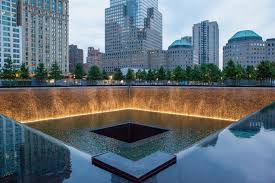
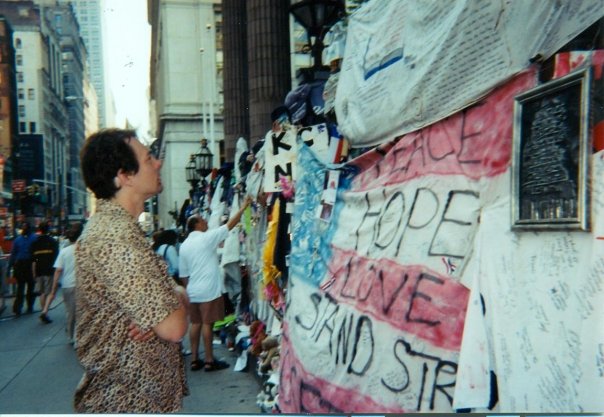
So on Tuesday morning, we walked over to the sacred ground as the rain mixed with snow. My first trip to Ground Zero was the summer of 2002, when the dust of the fallen was still drifting in the downtown air. Now, almost a decade and half later, the area has been completely transformed. “FiDi” is bustling under the new World Trade Center, opened the year Cozy was born. I had been to the memorial before, and it features in my 2015 novel, The Dream Police. But now it was all integrated into life in the city, a tourist destination.
I guided her to the places where the twin towers stood, now two deep fountains, ringed by the names of the thousands of people who died on another Tuesday morning. I told Cozy how, in 1987, when I was managing a band on Island Records, I would sit between the two towers and watch the commuters come out of the WTC subway station, work shoes in hand, and go up into the skyscrapers I first saw in the 1976 version of King Kong. Then I started to choke up and had to step back for a second to collect myself.
There’s no way to convey the horror of that day so I just told her a few details. I told her about the people who chose to jump to their death rather than burn to death and the sound of bodies crashing to the ground. I told her about Fight 93 and the passengers who crashed their own plane to stop it from being used as a missile into the Capitol Building. I told her about the hundreds of firefighters who were buried alive trying to rescue those trapped in the towers. And I sobbed. I’m sobbing as I’m writing this.
Since September 11, 2001, two billion people have been born on this planet. To them, 9/11 is a story from history, like Pearl Harbor is to me. Cozy will study in greater detail. I was 37 on that day. Maybe when she’s 37, in 2051, she’ll have something worse than 9/11 to weld her to history. I hope not. But when she does learn more about it, I want her to picture herself in that spot in Manhattan, filled with real people and two holes in the ground. I want her to remember the sound of my voice as it cracked.
I wonder what her perspective on that day will be in 2051. Will she remember the pointless wars it produced that took so many more lives? Will she remember the hate crimes that spiked after the attack and the Patriot Act that started to roll back our liberties. Or will she tell a story about how a divided nation found something to bring people together? Both can be true but I think the latter is more of the myth we tell ourselves about 9/11.
After the attacks, I had a recurring nightmare about being in the WTC subway station during the attack. The station begins to fill with water from all the broken water mains above and dead bodies float by me as I try to escape. That area is now the futuristic shopping mall called “Oculus.” We both were amazed at the open design with the subway stops adjacent to the shopping area. Cozy and I stopped by the Apple store where I bought a phone case, replacing my nightmare with some well-lit retail therapy. It felt strangely healing.
She will learn more about that day; the ugly, the bad, and the good. Maybe, at some point, I’ll be ready to visit the museum and I can tell her more stories of that time, again through tears. I have so many memories, but it’s her story to discover now. I’ll tell her how I flew on 9/10 (with a camping knife in my bag) and, after the attacks, how silent the sky was with no planes above. And she can fold the tenor of my voice in with her own role in witnessing the history she’ll live through.
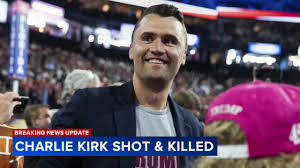
It was a call from a reporter. That’s how I found out that right-wing activist Charlie Kirk had been shot. I didn’t know enough to make a comment to the media. My brain started making a list who could have been responsible:
Far right groups who think that Kirk’s Turning Point USA is not extreme enough.
Right-wing groups who think Turning Point USA is too extreme.
Someone having a mental health crisis.
Someone personally connected to Kirk, like a spurned lover or someone he financially ripped off.
Someone from the Trump camp, hoping to knock the Epstein files out of the news cycle and/or angry with Kirk’s demand that Trump release the files.
A Russian plot to create political instability in the U.S.
An incel frustrated over Kirk’s success as a family man.
A nihilist who worships death and chaos.
A suicidal individual seeking fame on their way out.
An accelerationist who wants to hasten societal collapse.
A right-wing “patriot” hoping to spark a civil war.
A student hoping to harm the school where it happened.
Someone from the left who opposed Kirk’s right-wing positions.
The immediate response to the shooting said everything about America. Some on the right (assuming they knew who the shooter was) called for violence on the left. Some on the left responded with the quip, “the only good Nazi is a dead Nazi.” Most expressed regret that we’ve gotten to this point. My social media feed was filled with hysterical MAGAs screaming about the “violent left,” while the left filled the feed with quotes from Kirk himself about the cost of gun violence in the protection of the second amendment. What a shit show.
This needs to be said. Charlie Kirk was a racist, homophobic, transphobic misogynist. He profited from spreading his brand of “free speech” hate. But he also encouraged public debate on these issues, not violent conflict. And he didn’t deserve to be slaughtered in front of his wife and children. He deserved to be ridiculed for his toxic beliefs. One day, he could have seen the light and become an advocate for tolerance. Now he’s just dead.
So on this 9/11, where does are nation go from here?
The United States is on the proverbial ledge. Hours after he announced the death, from the Oval Office, Trump blamed the “radical left” without even a suspect in custody. Activists in Portland are on high alert for retribution. In 2020, we saw right-wing actors outside Portland create “Pro-America” caravans to attack local Black Lives Matter protestors. The rhetoric in extremist forums, like 4chan, state the Kirk killing has green lit an open season on leftists. Could our Fort Sumpter be Utah Valley University? Has the civil war begun? Do I need to arm up to protect my family from gangs of Proud Boys attacking Portland? America is a powder keg, with troops on the street and endless chatter about right and left.
The good news is, America is not divided as Fox News would have you believe. Watching MSNBC whitewash Kirk’s hate mongering might be evidence. While the media (including MSNBC) leans right, the vast majority of Americans are happily in the middle. Surveys find a general consensus on “divisive” issues like gun control, abortion, gay rights, vaccines and even tariffs. That’s because, while we might debate an issue (Transgender swimmers, go!), our core values across the political spectrum are relatively stable. Conservatives and liberals, MAGA and Bernie Sanders fans, we generally value education, public safety, privacy, equality, fairness, and justice. Research shows when people from different political positions first share common values, political civility returns to the discussion. We can heal this divide.
Every 9/11, I like to focus, instead, on 9/12 – that incredible feeling of national unity we felt following the attacks. We have a choice this 9/11. We can push our peers farther to the extremes and tip the nation into an unwinnable civil war that will plunge our beautiful nation into years of traumatic violence. Or we can find that common ground and create a rebirth of our vibrant multicultural democracy. We can put down our doom scrolls and meet out neighbors, rebuilding community. Charlie Kirk’s life was dedicated to dividing us. Perhaps his horrible death can motivate us to reject violence and incivility and find what binds us. The attacks of 9/11 still tear at my heart, but the resilience of 9/12 gives me great hope.
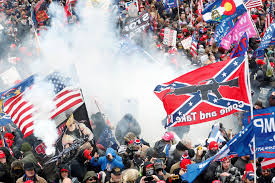
He said he was going to do it, so we shouldn’t be shocked. We hoped there would be some rhyme or reason, some forethought, some restraint. But there was none of that. President Trump blanket pardoned approximately 1500 of the terrorists who attacked the U.S. Capitol on January 6, 2021 in an attempt to overthrow our democratically elected government. This includes the most violent attackers who beat Capitol police, causing injury, trauma, and death. Today the leaders of violent extremist groups like the Oath Keepers and the Proud Boys walk free and our nation is much less safe. Trump did this in his first 24-hours as president.
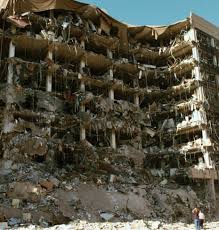
Almost 30 years ago, I had just completed my PhD when Timothy McVeigh drove a Ryder Truck full of ammonium nitrate fertilizer up to the federal building in Oklahoma City, lit the fuse and ran. The explosion killed 168 people, including 19 children in the building’s daycare center. On that spring day in 1995, my research went from focusing on racist skinheads to the even darker corners of the far right. This included interviews with militia members in western Montana in 1998, who told me in very clear terms that the only salvation America would be born from a violent civil war.
The patriot militia movement that birthed McVeigh and his fellow anti-government extremists would die, not with a bang, but with a whimper at the turn of the century. Janet Reno’s Department of Justice broke up numerous plots, aided by many community members reporting bomb-making neighbors. The 2000 election of George W. Bush took the wind out of their sails as many of their core issues, like guns and land rights, had gone mainstream. On June 11, 2001, McVeigh was executed and exactly three months later, the nation would launch a new war on terror.
But the racist reaction to the 2008 election of Barrack Obama, the Tea Party, and the advent of social media, brought the militia movement back. The election of Donald Trump and the COVID pandemic took it from survivalist bunkers to the laptops of soccer moms. And the end result was the violent assault on our Capitol sparked by conspiracy theories that used to be the domain of tinfoil hat kooks, now spread by the President of the United States.
Many of those that attacked the Capitol were members of violent extremist groups, like the Oath Keepers, the 3 Percenters, and the Proud Boys. Over 75 of those arrested for entering the building were carrying weapons, including guns. They had been told by Trump to “fight like hell,” and they did. When the dust cleared the besieged members of Congress, both Democrat and Republican, called for the rioters to be arrested and charged to the fullest extent of the law. After encouraging them on January 6th, on January 7th, Trump said, “The demonstrators who infiltrated the Capitol have defiled the seat of American democracy. To those who engaged in the acts of violence and destruction, you do not represent our country. And to those who broke the law, you will pay.”
Thanks to vigilant work of community members, dubbed “sedition hunters,” and the diligence of the Department of Justice, over 1,500 rioters were arrested and charged with federal crimes and over a thousand plead guilty (with 64% receiving jail sentences). This included leaders of well-known extremists groups who were charged with sedition. Enrique Tarrio, the leader of the Proud Boys, received a 22-year prison sentence. Oath Keepers leader Stewart Rhodes received 18 years. The January 6th attack was the most violent assault on our Capital since the War of 1812.
And Donald Trump freed all of these terrorists. Every single one. They were not hostages, as he called them. Hostages are bound in the tunnels of Gaza. They were convicted criminals. But criminals who committed their crimes for Trump, so he let them loose, back into society.
Much of my work over the past four years has been in response to January 6. This includes my academic work as well as my ongoing work on a project, funded by the Department of Homeland Security, to reduce political violence. One of the things I can say for certain is the prosecution and sentencing of the J6 rioters has served to greatly suppress anti-government violence. Proud Boy-wannabes and militia members who missed the bus to DC saw the long sentences of Tarrio and Rhodes and hundreds of others and cooled their jets about the “boogaloo” and dreams of civil war.
Trump just erased that powerful deterrent with the stroke of a pen.
Where Timothy McVeigh’s story ended with a lethal ejection, the January 6 terrorists have been made into folk heroes by Trump and the far right. He has routinely sung their praises as lovers of the country. “These people have been destroyed,” Trump, said shortly after returning to the Oval Office. ”What they’ve done to these people is outrageous.” They are now living martyrs, rock stars of the anti-government movement, and will use their celebrity to bring more into the rabbit hole of paranoid conspiracy theories of the “deep state” and into the rhetoric of violent retribution for the agents of justice who dared imprison them. Tarrio has already promised revenge on those that jailed him. His Proud Boys marched in Washington DC, while Trump was being sworn in Monday. Rhodes and other militia members are free to reinvigorate the violent anti-government patriot movement that sees bloody revolution and a “Day of Ropes’ as required to wrestle America from the “deep state.”
Donald Trump, with the support of stiff armed ally Elon Musk, has opened Pandora’s Box. The core of the J6 terrorists see the Oklahoma City Bombing as the model for accelerating mass chaos to collapse society. Their anti-DEI policy ends with bodies hanging from lampposts. And don’t expect a Defense Department headed by fellow nationalist Pete Hegseth to get in their way. Where Reno shut plots down, Hegseth will enable a reign of terror.
We have seen versions of this in other countries. January 6, 2021 was the rehearsal for the coup. Trump and his corporate-fascist “patriots” have played the long game. In other countries, it has been the military that has quashed the coup. (It won’t be Hegseth’s military here, perhaps the rank and file.) We are heading towards that showdown and I wish I wasn’t so certain of that fact. What we do know is that with these pardons, Donald Trump has normalized political violence and ensured the loyalty of militia groups who will violently fight to keep him power. Welcome to the new Civil War.
Well, 2025 is off with a bang. My New’s Eve hangover didn’t have time to kick in before the news from New Orleans rolled in. And then Las Vegas. Welcome to the worst year of our lives.
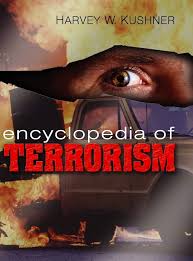
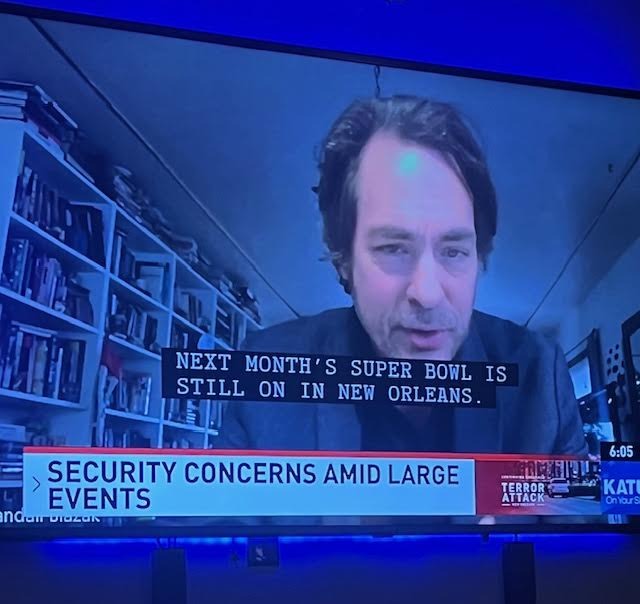
Forty years ago, my study of fascism was the focus of my second undergrad major of political science. That then moved headlong into the field of criminology. As a graduate student, my research on teenage skinheads evolved into a study of right-wing extremists groups. Once I had my PhD in my pocket, that work became a scholarship on domestic terrorism. When I was asked to contribute to the 2003 edition of the Encyclopedia of Terrorism, I knew had achieved the title of “terrorism expert.” And that meant I would spend a chunk of New Year’s Day talking to reporters.
The study terrorism is not exactly an exact science. And those coming from academia and those coming from law enforcement are going to have different focuses (root causes vs. threat assessments, for example). But where we come together is in vague intention to create terrorist profiles (which I jokingly refer to as terrorist stereotypes). The good news is that we have a massive amount of data from previous bombings, mass shootings, car rammings, and the like to have a pretty good picture of who commits these crimes, with a handful of relevant variables. The bad news is that we have all this data because of the success of these people in carrying out their deadly plots.
So with minimal facts available, I had a pretty clear picture of who Shamsud-Din Jabbar, the New Orleans attacker who killed 15, was and wasn’t. For example, despite the unhelpful grandstanding at Wednesday’s press conference, I was pretty certain Jabbar worked alone. The blather that Jabbar was a part of an “ISIS cell” fit conservative fear-mongering (since the “immigrant” narrative crashed), but did’t fit the typical profile. This was not the Oklahoma City Bombing. It was the Big Easy’s version of the 2016 truck attack in Nice, France. While Donald Trump decried “open borders,” I talked to local media about how we have seen this movie before.
You’ve got a guy with a military background who served in Afghanistan who probably saw the heavy hand of Uncle Sam in a Muslim land. That was enough for Army psychiatrist Nidal Hassan who went on a shooting spree at Fort Hood in 2009, killing 13 and injuring dozens. Jabbar also had a host of economic crises, including massive debt, and a dramatic divorce involving conflict over children. Most men who go on workplace mass shootings are in the same situation. Exactly. The insanity of ISIS gave him a place to put his anger. Their binary world of believers vs. non-believers is like a warm blanket to someone whose life in a complete spiral. Like the workplace shooter, Jabbar was ready to check-out (AKA die) but he was going to go out in a blaze of glory, spreading his pain to others as he barreled down Bourbon Street.
The case of Matthew Alan Livelsberger is a little less obvious. Livelsberger was the Army Special Forces operations master sergeant who drove a rented Tesla Cybertruck up to the front door of the Las Vegas Trump Hotel, shot himself in the head and set off a bomb in the truck. Again, the nattering nabobs of disinformation over at Fox News claimed this was an attack on the incoming president and his boss, Elon Musk. But, there were facts that didn’t add up to that claim, including the fact that Livelsberger was a green beret (not known for their liberal anything) and that the bomb was so poorly constructed it didn’t injure anybody. (He could have driven straight into the hotel lobby if he was after casualties.) There are clues to motive that have nothing to do with Trump or Musk.
We’ve seen a steady increase in the suicide rate of active military (523 cases in 2023, up 9% from 2022). We still know so little about the PTSD-suicide link, but we know it exists. Livelsberger was a new father, so that should have been a mediating factor. (When Cozy was born, I didn’t want to miss a single second, staring at her while she slept.) But we don’t know much about the sergeant’s internal and external life yet. We do know that soldiers who suffer trauma from combat who also experienced trauma as young children are significantly more likely to spin off the rails. Musk and Trump have been a constant presence in the news. It’s likely that he chose the car and hotel as part of a strategy to make his suicide more newsworthy. After all, how many of the over 500 military suicides last year hit the news cycle? (And the suicide rate for veterans is almost twice the non-veteran rate, so maybe both Livelsbergerm and Jabbar were demanding attention on the matter.)
If there’s any good news in all this carnage it’s that we know these profiles inside and out. Which means we know the antecedents to the terror, the proverbial red flags. And the red flags provide intervention points to head off calamity. As we dissect these two New Year’s Day attacks, we’ll find points where “somebody could have done something.” The Cure-PNW project I work on, funded by the Department of Homeland Security, has been finding angles to de-escalate political violence by strengthening communities and empowering people to intervene when they see a Livelsberger or Jabbar moving toward criminal action. (We refer to these interveners as “credible messengers.”) This is the work that needs to be upscaled on a national level as 2025 promises many more January firsts. (Unfortunately, our grant runs out with the new administration.)
After Election Day there was a lot of “the sky is falling” hysterics on my side of the aisle. Yeah, decency and democratic guardrails took a major hit. But the 2026 midterm election is only 96 weeks away and there is already dissent in the Trump-Musk-GOP ranks. Maybe the sky won’t fall, but what we can count on remaining constant are the factors that drive (almost exclusively) men into choices to commit acts of terror. Better understanding how to utilize that knowledge gives that “something” that we can do.
I remember my first presidential candidate assassination attempt. I was a second grader in Boca Raton, Florida in May 1972, when we heard that Alabama governor George Wallace, a Democratic candidate for president, had been shot by a 21-year-old man dressed in red, white, and blue. I remember that Wallace was known to be a white supremacist. At 8, based on my Sesame Street education, and love of the Mod Squad, I knew that was a bad thing. Wallace, survived, although paralyzed, and George McGovern went on the be the Democratic nominee, only to lose to Tricky Dick Nixon.
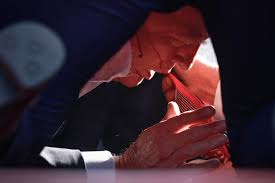
The Wallace shooting has been on my mind as I watch the coverage of Saturday’s attempt on Donald Trump’s life with my 9-year-old daughter. “This is your first political assassination attempt, Cozy,” I told her. “I’m sure it won’t be my last,” she replied. She already knows how America works.
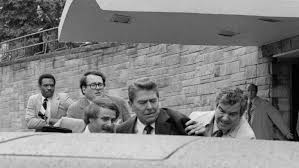
I remember where I was when I first heard that John Hinckley had shot Ronald Reagan in 1981 (in my Gran Torino in the parking lot of Redan High School) and when I heard that Charles Manson acolyte Squeaky Fromm (and another woman 17 days later) tried to shoot Gerald Ford in 1975 (in my rec room in Stone Mountain, Georgia). I was only 4 when Sirhan Sirhan shot Democratic candidate Robert Kennedy in 1968 and in utero when his brother, President John Kennedy, was assassinated in Dallas in 1963. The shooting of American politicians will mark my life, from womb to tomb.
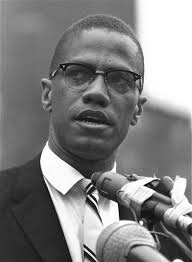
When JFK was killed in 1963 by a gunman from an elevated position 266 feet away, it shocked a nation that thought it was beyond political violence, even though three previous presidents had been assassinated (Lincoln, 1865, Garfield, 1881, and McKinley, 1901). Black nationalist civil rights icon Malcolm X created a firestorm when asked to comment on the murder of Kennedy. “Being an old farm boy myself, chickens coming home to roost never did make me sad; they’ve always made me glad.” The response was fierce and the Nation of Islam, the group X spoke for, sanctioned him for speaking ill of the president loved by so many black Americans.
But Malcom X’s sentiment is worth considering. In The Autobiography of Malcolm X, Minister X explained his comment as a form of social karma. That an administration, and a society, that had foist so much violence on its citizens, especially on black people, should not be shocked when that violence bounces back on them. You reap what you sow. And America has a long history of launching violence into the world, and defending the violent. Live by the gun, die by the gun.
So when Trump was shot by a white kid, a registered Republican, and a gun club member, with his dad’s AR-15, I heard those words. The chickens have come home to roost.
America loves violence and nobody loves the language of violence more than Donald J. Trump. We don’t have to go down the sizable list of offenses (but him asking if the BLM protesters could be shot in the legs in 2020 is a favorite). Trump Saturday, with a barely winged ear, chanting “Fight! Fight! Fight!” with clenched fist, was part of his faux macho man performance. Ever the showman, under the dog pile of Secret Service agents, he was probably thinking, “I need a fundraising meme!” Fifteen minutes later, the image was everywhere. Trump looking like 50 Cent. “My body eats bullets.”
The shooting of Trump is a horrible event for so many reasons. While this nation was founded in bloody revolution, we solve our disputes with ballots not bullets. The worst liberals (including some friends) publicly wished the kid was a better shot. The worst conservatives saw the hand of nutzo conspiracies that blamed Biden, antifa, the “deep state,” and (surprise) the Jews. The shooting was seen as “evidence” of whatever your binary us vs. them political position. Many, on both the left and the right, we were convinced that attempt, that killed a father in the crowd, would guarantee a Trump victory and whatever glory/hell that creates. “America is saved/doomed!”
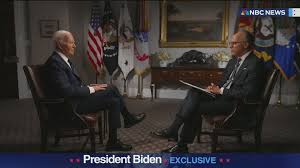
The violent rhetoric of Trump (much of which I’ve written about here) is not exactly balanced out by peace and love vibes from Democrats. On Monday, when NBC’s Lester Holt interviewed President Biden, Holt asked the President about his rhetoric toward Trump. ““It’s time to put Trump in the bull’s-eye.” Biden, instead of apologizing or engaging in a heartfelt conversation about the overly violent nature of political speech, played a moronic game of what-about-ism. “Look, I’m not the guy that said I want to be a dictator on day one.” You’re not helping, Joe. Take a nap.
After the Trump shooting, “Civil War” was trending on X (Twitter) and the dark web I monitored over the weekend was full of “keep your powder dry” posts. But the ray of hope may come from Trump himself. After his brush with death (and we were millimeters from his head exploding in that Pennsylvania field), the former president allegedly tore up his original fiery speech for his crowning Thursday at the Republican National Convention in Milwaukee. He could return to his “Crooked Joe and Them Evil Democrats” stump speech template, full of rambling stories about sharks and Hannibal Lector. But maybe, just maybe, Donald has had a come to Jesus moment (the real Jesus, not White Republican Jesus). Perhaps this Thursday’s speech will be his version of Obama’s brilliant 2004 Democratic Convention oratory, when Obama said, “There’s not a liberal America and a conservative America — there’s the United States of America.” After naming misogynist MAGA sycophant J.D. Vance as his running mate, I don’t hold out much hope, but you never know. A new Trump could urge calm amid Terrordome-like political chaos.
We desperately need leadership that says, we are not red or blue, just beautiful and varying shades of purple. We need a chorus of voices that says all this political violence is endlessly counter productive. We need credible messengers to tell us there is a better way and show us how to do it. If not, we’re done.
I just walked out of the new Alex Garland (Ex Machina) film Civil War and am wondering if I need to arm up. The dystopian film, starring Kirsten Dunst and Wagner Moura as war journalists, feels a little like a flash forward to America after the fallout of the upcoming election. The film is clear not identify who the bad guys are, but America is under the leadership of a “third term president” who sure sounds like a certain authoritarian-wannabe we all know, currently on trial in a criminal court in New York City. The “Western Forces” of Texas and California (I about choked on my popcorn at that thought) are trying to retake Washington DC. I don’t want spoil any of the fun, but firefight between the Western Forces and the Secret Service on Pennsylvania Avenue is pretty lit.
The movie is more of a meditation on the need for emotional detachment required to document wars than a treatise on the polarized nature of the our uncivil society. There’s a scene where Dunst’s character, reflecting on her coverage of brutal foreign wars, states that the subconscious message of her war photos was, “Don’t do this here at home.” Oh, the irony. But my work has me highly focused on the “the don’t think it can’t happen here” scenarios. So my heart is racing.
I’ve written plenty in this blog about the looming fantasies of a second civil war from the far right, who made their first attempt in 1995 in Oklahoma City. This project I’m working on, funded by Homeland Security, has me spending an inordinate amount of time in spaces where the far right fantasizes about launching a second American revolution if Trump wins or loses. If he wins, they’ll see it as a green light to string up woke traitors from lampposts and if he loses, they’ll see it as proof that democracy has been hijacked by “communist libtards,” only to be restored by the blood of patriots. Either way, there will be blood.
Not long ago I was in the parking lot of Home Depot near the Portland airport. I was parked next to a pickup truck with a ton of anti-Biden stickers. The truck had a very small “III %” sticker in the window. The Three Percenters are a local militia group that were heavily present at the January 6th attack on the U.S. Capitol. I waited to talk to him (after moving my car). When he came out, I struck up a conversation with him. (He also had a University of Oregon sticker, so that was my in.) “Hey, I noticed your Three Percenter sticker and I have to ask your position about armed violence.” He seemed surprised and a little leery I knew that deeply underground imagery. “We’re locked in loaded,” he calmly said. “When we get the call from above, we’re ready to go. Locked and loaded.” Stand back and stand by, someone said.
Whether or not the Bubba Militia would be able to defeat the U.S. military is another discussion, but if the Commander in Chief was also their commander, it might not be that hard. Even if they couldn’t, as Timmothy McVeigh demonstrated in 1995, they’re willing to take out a lot of innocent civilians in their long game to make America that again. That America, where kids were safe to play “Smear the Queer” in the street and you know who better be off the street when the sun goes down.
Civil War is just a movie. I was pretty freaked out the first time I saw Night of the Living Dead and I’m not too concerned about a zombie apocalypse (although HBO’s The Last of Us has me thinking about it). But we know the Trump harbors fantasies of a regime of retribution if he is elected, democracy be damned. And we know the heavily armed MAGA minions are fueled by the politics of grievance and entitlement. There’s a reference in Civil War to “Portland Maoists” and the “antifa massacre” that reminded me of the summer of 2020 when caravans of armed Trump supporters drove into Portland from the exurbs to attack BLM protestors. It just feels close, and that I should have a plan to protect my family.
In the meantime, while either side stockpiles supplies, I’m going to continue to find ways to bridge the divide. It does’t have to be like this. We have so much the unites us. Red state and blue states share some deep connections that can bring us back from the edge. Our movie can have a different ending.
As a “subject matter expert” on right-wing extremism, I often get asked, “What about the left?” There are obviously some stark differences between the two political wings (I would offer bodycount as one measure), but there also might be some parallels worth considering as we look for ways to reduce political violence.
I’ve spent a lot of time in this blog discussing the “militia funnel” that became a useful tool in explaining anti-government violence in the wake of the 1995 bombing of a federal building in Oklahoma City. I even got to sit down and explain it with W. Kamau Bell on CNN’s United Shades of America in 2021 (and CNN turned it into a cool animation). There was a great need after the bombing in Oklahoma City, that included 19 children among the 168 casualties, to explain how “average people” were falling into the world of domestic terrorism.
In April 1995, I was just finishing up my dissertation on right wing extremism, when the news of a massive bombing in the “nation’s heartland” blasted across the news. It was devastating, and the images of dead children in the building’s daycare center brought the country to its knees. I stayed up that night, listening to talk radio from my Atlanta apartment. The talking heads were sure the carnage was the work of the usual suspects, Muslim terrorists. It wasn’t a crazy hunch. Two years earlier, Ramzi Yousef and a small band of jihadists tried to blow up the World Trade Center in New York City, killing 6 people. But Oklahoma was on April 19th, so I knew it was probably one of my guys.
April 19, 1993 was the culmination of the standoff in Waco, Texas that had become a rallying cry for the far-right. That carnage (that included the death of 28 children) was being framed as the result of an out-of-control federal government that was no longer by and for the people. So when on April 20, 1995, a white guy named Timothy McVeigh, who had been at Waco, was arrested for the Oklahoma bombing, I got a chill. These were the anti-government white supremacists I had spent the last seven years studying. The radio hosts who had been quick to blame “Muslim terrorists,” pivoted to the “Wacko from Waco” narrative. It was the act of a crazy person. It certainly couldn’t have anything to do with their aggrieved white male hatred of the government.
The structure of the militia funnel
I learned about the militia funnel from Kenneth Stern’s excellent 1996 book, A Force Upon the Plain: The American Militia Movement and the Politics of Hate. He got it from Ken Toole, at the Montana Human Rights Network. The funnel model explains how people can enter a world that sees violent revolution as the only solution from very mundane starting points that have nothing to do with violence or terrorism. For decades, my work has focused on the movement of people through a ‘right-wing funnel.’ I have written and spoken extensively about this dynamic. At the bottom of this article, I set forth how the funnel analysis applies to current willingness to use political extremist violence among some people in the left wing of politics. First, let’s address how the funnel has been used for the last nearly 30 years to frame pathways to right wing extremism.
At the top of the funnel are just a lot of people who are activated by fairly mainstream conservative issues. They are second amendment gun activists, tax protestors, or think the federal government shouldn’t be taking perfectly good timber land to save spotted owls. They come from a wide variety of backgrounds, including black and Jewish conservative spaces.
Some (importantly, not all) fall into the next level, based in a deep hatred for the federal government. Instead of “we the people,” the feds have too much power and have superseded their Constitutional mandate. Some of these folks are part of the Posse Comitatus movement who believe the highest legal authority is the county sheriff and any constitutional amendment after the first ten is hokum. But the bottom line is the federal government is the bad guy. Growing up in the rural South, the term we’d hear for this was “revenuer.”
At the third level down the funnel, some of these folks start buying into some pretty pervasive conspiracy theories. We are now into the world of Freemasons and the Illuminati and who REALLY killed JFK. Just watch those Nicholas Cage National Treasure movies for a dose of this world. Here the Republican and Democratic parties are both controlled by the same puppet master, leveraging the federal government against hard-working (white) Americans for their own benefit.
Some of those conspiracy believers make it down to the next level, where the conspiracy takes a familiar turn. The elite Bilderbergers are rebranded as simply “the Jews.” In a same way Hitler used anti-Semitic tropes to explain Germany’s downfall, anti-government conspiracy theorists here see a global Jewish cabal behind everything from immigration to gay rights to why their kids are listening to rap music instead of Lee Greenwood.
Again, this is a funnel, so each level has fewer people than the one above it. In the final stage of the model are the revolutionaries. It’s one thing to have analysis, but here is the belief you have to act on it. The people who make it to the bottom of the funnel are consumed with language about a second American Revolution, and a second Civil War, and “Rahowa” (short for Racial Holy War) and a whole bunch of stuff concerning the “blood of patriots.” The funnel starts wide and ends very small, but as we saw in 1995, it only takes a small band of self-proclaimed patriots to change the face of a nation. And McVeigh’s intent was to inspire other like-minded Americans to commit similar acts of terrorism.
The militia funnel in the MAGA-era
The militia model became useful again in the Obama era when anti-government militias roared back into action. Here in Oregon, a militia group occupied a federal wildlife refuge for 40 days in 2016, resulting in one death. Then the surge of militia activists, like the Oath Keepers and the 3 Percenters, under Donald Trump’s MAGA movement made the militia model even more applicable, especially after the January 6, 2021 storming of the U.S. Capitol.
In the Trump years, I regularly updated the 1990s militia model when explaining the “new” right-wing activism. Because of social media and reach of the Trump message, the mouth of the funnel was much wider than it was in the 1990s. It included some of those same conservative issues, like gun rights, but now included “culture war issues,” like opposition to rights for transgender people and hostility to Critical Race Theory, but also a rejection of lockdown mandates to prevent the spread of COVID-19. This wider funnel served to attract not just rural white men who were the 90s candidates for patriot militia groups, but suburban moms, aging incels, and others who thought America was last great before the civil rights movements made “inclusion” a weapon against white privilege.
The rest of the funnel, took an updated sheen. The anti-federal government level was rebranded as “the swamp,” full of libtards and RINOs (Republicans in Name Only). The conspiracy theory level was now the domain of QAnon adherents and beliefs in the “deep state.” Below that were the anti-Semitic theories about “global Jews,” including George Soros, Anthony Fauci, and a belief (spread by Robert Kennedy, Jr.) that COVID was created to kill non-Jews. At the bottom of the funnel, the revolutionaries renamed their call to arms the “Boogaloo,” and began stockpiling weapons. In 2020, I had a chat with a 3 Percenter in a Home Depot parking lot and asked him what he thought about the escalation of violent rhetoric. His only reply was, “We’re locked and loaded.”
That this funnel was exponentially wider at the top meant more Americans were ending up at the violent bottom level. This was evident in the massive turnout for Trump’s “Stop the Steal” rally on January 6th, motivated by the President of the United States, not a fringe website, spreading a fully debunked conspiracy theory that the “deep state” stole the 2020 election. While organized militia groups, like the Oath Keepers, were key players in the attack, many of the over 1,2000 people arrested have claimed they just got “swept up” in the moment. They had fallen down the funnel into the land of Timothy McVeighs and Stewart Rhodes. I half expected to see my Trump-loving father there that day (but his feet are bad).
The value of the militia funnel in this work is that there are multiple points along the pathway down to violence where intervention can take place. Someone who angry about public school dollars going to a student Gay Straight Alliance isn’t automatically destined to become a domestic terrorist, but if they are, there are places where that path can be diverted. Could there be a similar trajectory for activists on the left?
Constructing a left-wing funnel
The origin of the right-left political spectrum, that has its roots in the French Revolution, is all about who should have power. On the right, power should be concentrated and on the left, power should be dispersed. That’s why the far right values fascism and the far left values communism. But all along that spectrum there are values concerning fairness. The liberal is concerned teachers’ low pay is unfair and the conservative thinks their tax dollars supporting a curriculum they think opposes their values is unfair. Oh, yeah, and plenty of people on both sides think the government sucks.
The structure of the militia funnel offers a guide to what a left-wing militia funnel might look like.
At the top level are widely popular liberal issues related to social justice-based matters of equity, including Black Lives Matters, abortion access, and LGBTQ+ rights, along with other stalwart liberal causes. The next level finds strong distrust of the federal government as the historic defender of status quo power dynamics. The feds are “the Man,” who surveilled MLK and protected alleged sex-offenders, like Bill Clinton and Donald Trump. And also, all cops are “bastards.” Further down the funnel, we see the appearance of all-encompassing conspiracy theories that see Republicans and Democrats as puppets of corporations, the monied class (Google “Bohemian Grove”), and the World Trade Organization. Like on the right, there is a darker level that introduces anti-Semitism to the conspiracy theories. This is where Robert Kennedy, Jr. lives and where anti-Zionism slides into a broader anti-Jewish narrative, most recently seen as an element of some pro-Gaza rallies. (It should be pointed out is that anti-Semitism is less visible on the left than it is on the right, but it does rear its ugly head in places.) At the bottom of this funnel is the rhetoric of Marxist revolution, which sees the entire capitalist system, and all its institutions, as corrupt and in need of overthrow.
Those of us who are older than millennials and Gen Z kids will remember that in the 1970s there were hundreds of terrorist bombings in the United States. They weren’t from patriot or neo-Nazi groups. They were committed by radical leftist groups like the Weather Underground, the New World Liberation Front, and the Symbionese Liberation Army. And there were casualties. In 1970, a group of leftists angry about the University of Wisconsin-Madison’s participation in military work related to the Vietnam War, detonated a massive bomb in Sterling Hall, killing one researcher and injuring several others. The FBI has counted 2500 bombings connected to the Weather Underground, including one that killed four people in a Wall Street restaurant in 1975.
When the Right-Left political spectrum becomes a circle
There is also a weird space where the extremes at the end of the left side and right side meet to form a circle. In the 1990s, some neo-Nazi groups began publicly (and financially) supporting the PLO’s campaign against Israel under the guise of “the enemy of my enemy is my friend.” The Seattle WTO protests in 1999 that brought labor union members, environmentalists, and other liberal activists to the streets also saw participation far-right activists, who saw the “global bankers” behind the World Trade Organization as the hand of Jewish control. In the 2000s, the right also joined the left on issues related to climate change. Their angle was the climate crisis was the result of immigration, non-white population growth, and (again) Jewish monied interests.
More recently, the language of “accelerationism” has pervaded extremists on bother the far-right and far-left. The philosophy states that standard democratic forms of social change, like voting, are too hopelessly glued to institutions of power to ever affect real change. Each November we vote for a Tweedle Dum or a Tweedle Dee and hope things will be different. Accelerationists believe the only way to achieve their desired society is to bring the current one crashing down and rebuild the new one out of the ashes. The right and left have radically different visions of what those societies look like. (I know the right has no place for progressive academics like me, but they left would probably see me as a “collaborator” with “the Man” and exclude me from their Utopia, so I’m likely SOL whoever wins fantasy league fanaticism.) We have seen extremists on the right, like Proud Boys and active clubs look at their counterparts on the left in anarchist and Antifa circles, not as enemies, but as allies in bringing the system down. In 2021 a Boogaloo activist said, “Right now it’s about provoking BLM, antifa and militias or 3 Percenters into engaging in violence that will provoke disproportionate police response, which can be used to fuel further unrest.”
If the value of understanding the militia funnel is to interrupt well-meaning conservatives’ slide down the rabbit hole of violent extremism, there should be a similar opportunity for those escalating towards left wing violence. Again, the intent is not to “de-radicalize” anyone one either side, just to prevent the violence that might emerge at the bottom of those funnels. Working on constructive engagement with the government as, not an oppressive entity, but a reflection of our collective will can slow the roll down the funnel. Also, the work on critical thinking skills that disrupt simplistic conspiracy theories can be hugely helpful in dismantling the binary thinking that characterizes extremist ideologies.
The vast majority of activists are doing the important work of putting democracy to the test and advancing their shared values. A small fraction fall into the black hole of political violence. Understanding these paths across the political spectrum allows to us design strategies to reroute those who may see terrorism as a legitimate expression of their political agendas.
I’m at a complete loss. Tomorrow, it will have been one week since Hamas’ barbaric invasion of Israel that left so many people, especially those beautiful young people at a music festival, dead or kidnapped. Since then, those images and the images of Gaza, the most densely populated place on earth, being bombed into dust have kept me in a constant state of nausea.
I’m at a complete loss on how to talk about Israel and Palestine, in general. I have so many friends on both sides of the issue. Being an undergraduate at Emory (a Methodist university) was a crash course on the Jewish diaspora and how important Israel is to the stability of the Jewish people in the wake of the Holocaust. I read Leon Uris’ 1958 novel, Exodus, like it was first-person history. I’ve also met so many Palestinians, including students of mine, who describe the apartheid they now live in since the state of Israel was created in 1948. They both present the need for their states with such complete legitimacy, it seems insane to even think one side has the most airtight claim on the land.
Since the 1990s, we’ve been able to put our faith in the “two state solution,” that the Gaza Strip in the south and the West Bank in the north will be the nation of Palestine. As a teenager, I watched Jimmy Carter broker a peace deal between Israel and Egypt, so maybe this would work. The deal, which turned the two territories over to the Palestinian National Authority, allowed me to not think as much about Israel and Palestine. The problem was solved, right? But when the terrorist group Hamas, took over Gaza in 2007 and the Gaza Strip became a walled-off prison of 2 million people, I probably should have paid more attention.
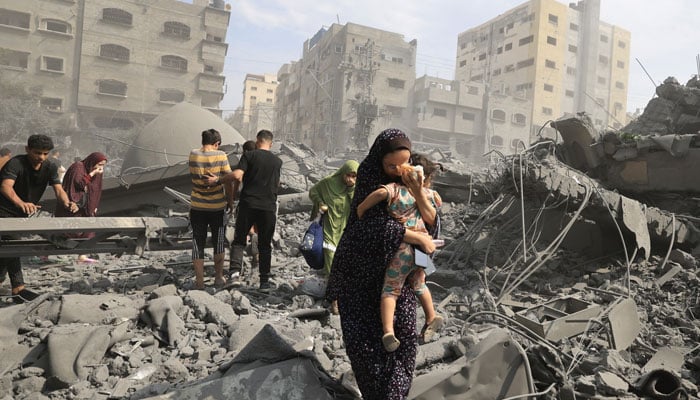
I don’t know if this war, which is now almost a week old, ends the idea of a two-state solution. There are already reports of Jewish settlers and Hezbollah militants clashing in the West Bank and media and politicians seem fixated on the war spilling over into a “wider conflict.” Like on 9/11, it does feel like the Earth forever shifted on its axis on 10/7. I saw the image of a child’s bedroom in Ashkelon, Portland’s sister city in Israel. The blood of that child, similar in age to my child, was spattered across the wall by Hamas raiders. I couldn’t hold back the tears. The next image was an apartment block in Gaza City flatted by Israeli rockets, a child, again like my own, covered in dust was searching for her family in the rubble. And again, I cry.
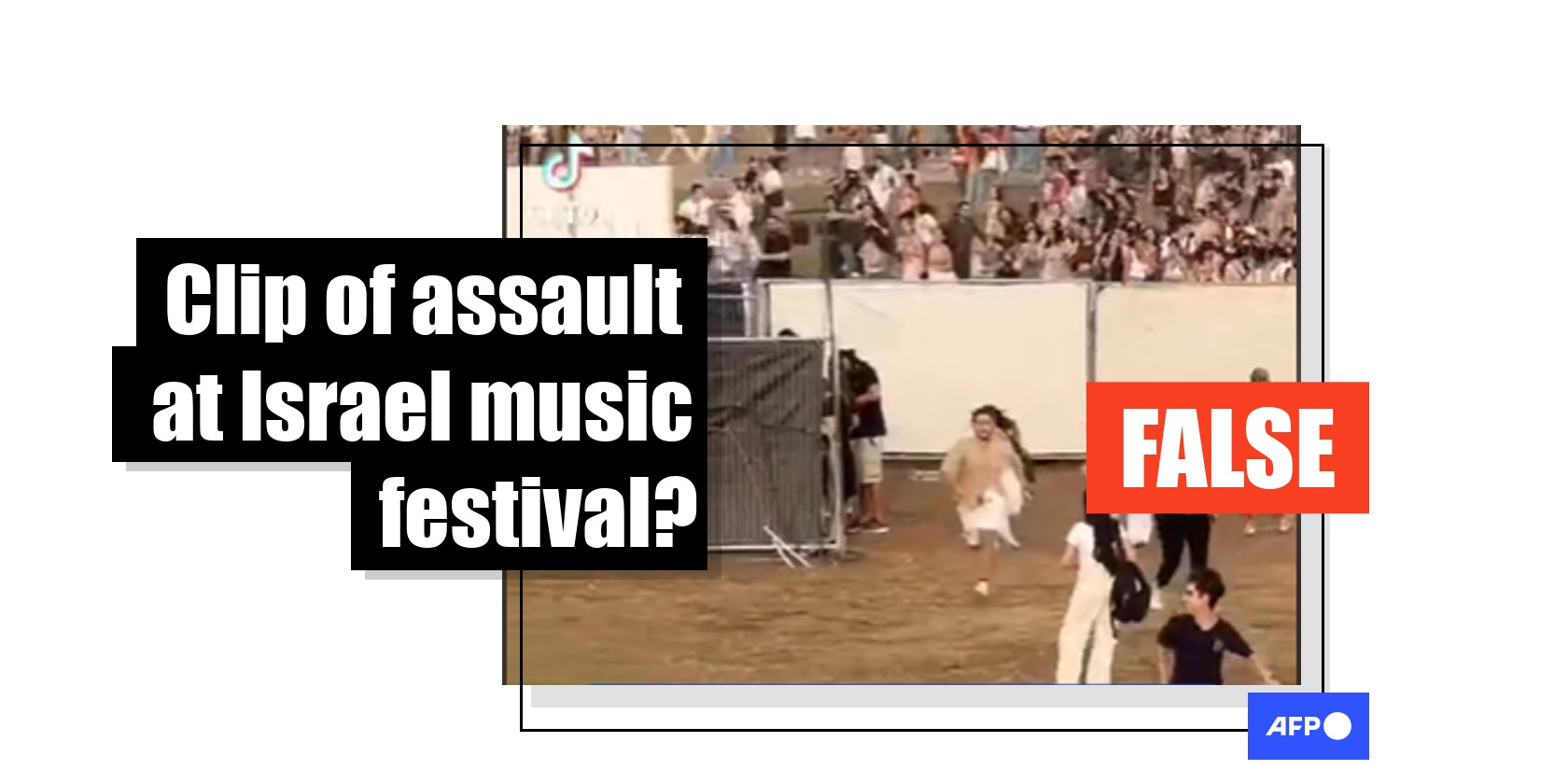
There is a tidal wave of false information already flooding social media about this conflict. Some of it is misinformation that is just wrong on the facts. But much of it is disinformation, purposely shared misinformation to inflame one side or the other, or malinformation, which is true but is shared to cause harm, like the showing of child casualties to enrage viewers to violence. It’s so hard to know what is real. I have to start out with the assumption that most of what I see on social media (and all of what I see on “X/Twitter”) is false. If people are getting their primary information from TikTok, we have a huge problem.
There is also a weird false narrative at work. People (especially non-Jewish Americans) often conflate “Israel” and “Jews,” making anti-Zionism and anti-Semitism fast friends. The opinions among Jews about the policies of Israel are probably as varied as the opinions among non-Jews about the policies of Israel. But there is a parallel line that conflates “Palestinian” with “Hamas.” One could easily argue that the vast amount of suffering in Gaza is because of Hamas. But then this conflation then equates “Hamas” with “Israel,” and that is madness. Israel, like all nations, has all kinds of problems. As in the United States, Israel has human rights issues to answer for. But, unlike Hamas, Israel is a democratic state that submits itself to the scrutiny of its global neighbors. The recent peace talks between Israel and Saudi Arabia are evidence of that. Hamas, harbors genocidal fantasies akin to Hitler’s, and has no desire for “peace.”
So much of my work on violent extremism highlights the role of trauma. And yes, there is a story to be told of generations of Palestinian trauma that would produce the type of mind that could have been capable of slaughtering kids at the “Supernova Sukkot Gathering” music festival last Saturday. But one could argue the history of Jewish trauma is much longer and deeper and doesn’t lead Israelis to rape, murder, and torture anyone in the manner we’ve seen this week. Again, I don’t know how to talk about this because it all defies the limitations of words. I just want to understand how humans are capable of this.
This conversation could go into all kinds of directions. How Putin, neo-Nazis, Iran, arms dealers, and evangelicals who believe Israel will soon be delivered to Christians are the likely beneficiaries of this mess. About how we have already seen a spike in anti-Semitic and Islamophobic hate crimes in the United States in response to the war. About how dare we enjoy our pumpkin spice latte’s and post-season baseball while hundreds are being held hostage in Gaza. I’m just here to say, as a human being, I don’t know how to talk about this.
As a college professor, I find my young students tend to fall into two categories. The first are emphatic and righteous. They firmly believe that “Israel is a terrorist state” or that “Hamas are subhuman aberrations that must wiped from the face off the earth.” The other, larger group are just completely checked out, endlessly watching reels on their phones. They couldn’t find the “Middle East” on a map, let alone the Gaza Strip. I was trying to engage them in class yesterday and they looked me like, “What does this have to do with me?” I don’t know what’s worse, their indifference or the students who are actively cheering for Hamas.
It’s clear that Hamas wants to escalate the violence and kidnapping Israeli babies is a good way to do it. If rockets and a ground assault from Israel leads to the death of thousands of Palestinians, it furthers their dream of a “holy war” in the region. But I don’t know what the alternative is. A zombie apocalypse (a la World War Z)? An alien invasion? A faster, deadlier version of COVID? I told you I don’t know how to talk about this.
I’m at such a loss for words. The trauma being levied on the children of Israel and the children of Gaza will forever shape their brains. Unlike my emphatic students, I have no idea what the solution is. I can urge for de-escalation, but I also understand the impulse to take up arms and fire rockets. Inaction is off the table but what is the action? We must respond immediately but also wait to better assess the situation.
So I’m here to say I have no answers to this. I’m angry and I’m heartbroken and I know this is so much bigger than me. It seems like the international community, especially Muslim nations in the Middle East, need to defend Israel’s right to exist while fully enfranchising the citizens of Gaza and the West Bank. I don’t know. And I’m going to have to be OK without knowing. As a citizen of nation founded in violence, I can’t tell others not to use violence to form their nations. I can only bear witness to this moment of fire and pain.
You hate to say it’s textbook, but Saturday’s mass shooting in Jacksonville, Florida, that killed three innocent African-American people at a Dollar General store, fits a now familiar pattern. A young white man, living at home, with swastikas drawn on legally purchased guns, travels to an area associated with a minority community with the specific intent to kill non-white people. Terrorism experts, like Tim Clancy, refer to his method as a template.
The shooter, Ryan Palmeter, 21, penned lengthy a racist manifesto, alerting the authorities (and his parents) to his murderous intentions, and scrawled racist messages in white on his weapons. This is now the template, seen in Christchurch, New Zealand (2019, 51 killed), El Paso, Texas (2019, 23 killed), Buffalo, New York (2022, 10 killed), and other racist attacks. Brenton Tarrant, the New Zealand gunman, has become a role model for disaffected white males in America who see “their” country being “stolen” by the “woke mob” and their only recourse is mass violence.
But is it?
Much of will be made that this attack happened in Florida, a state framed by policies hostile to civil rights, critical race theory, DEI (diversity, equity, and inclusion) efforts, black history, and a particular practice of disproportionately incarcerating its black population. African-Americans make up 14 percent of Florida’s population but 48 percent of its prison population. (African-Americans represent 12 percent of the U.S. population and about a third of the prison population.) Black Floridians are five times more likely to be locked up than white Floridians but offending is relatively equal across races. Florida is not a good place to be black.
On May 20, 2023 the NAACP issued a rare “travel advisory” for black people thinking of visiting the Sunshine State: “Florida is openly hostile toward African Americans, people of color and LGBTQ+ individuals. Before traveling to Florida, please understand that the state of Florida devalues and marginalizes the contributions of, and the challenges faced by African Americans and other communities of color.”
But the assertions made about the imbedded nature of racism in Florida could be made in every state in this country, included here in the “woke” (whatever that means) Pacific Northwest. This happened in Florida but it could just have easily happened here in Oregon. As someone who is wrestling with a family a member with cancer, I recognize that denial is the first obstacle in solving deeply systemic problems. My brother is in denial that his Stage 4 rectal cancer is in multiple parts of his body and will likely be the cause of his death. Similarly, America in denial that white supremacy has metastasized and is present throughout our society.
It’s 2023 and America has a serious white supremacy problem. In 1992, during the Rodney King riots, a white student raised his hand to tell me, “Racism ended in the sixties. Black people are just complaining now.” I responded, “What day? What day racism end? Shouldn’t we mark such an important day with a holiday, or at least a comparative plate that says, ‘The Day Racism Ended and Black People Just Started Complaining’?” He had no response because racism never ended. It evolved.
Diagnosis
So dealing with the denial allows us to get to the diagnosis; America has a white supremacy problem in 2023 and it’s not just the criminal justice system. Like a cancer run wild, it is in every aspect of our society. Every system in this county, from schools to health care, is infected with white supremacist norms. There is still a “death gap” between black and white life expectancies in America. The extra 4 years that whites get has nothing to do with gun violence and everything to do with access to health care. But it’s also in all of us. The most progressive liberal Barbie-loving, Bud Light-drinking American, white, black, or otherwise, internalizes white supremacist ideas. I’ve seen it in my young daughter and in myself. Racism is a cancer.
The good news is many of us are treating it. We’re reading, learning, and talking, and acknowledging our mistakes, and building our resistance with healthy doses of antiracist ideologies. We’re exercising our antiracist muscles in hopes of exorcising the racist demons inside us. But a whole bunch of people aren’t. And they are ripe for body crushing tumors.
The treatment
I don’t know if there will ever be a cure for cancer. It’s a slippery thing. There are a bunch of treatments, including surgery, radiation, and chemotherapy. My brother is in chemo but he thinks buying pills advertised on InfoWars will save him. Who knows? He might be right. Racism is much the same. We know education and interaction with different populations can serve as a good inoculation, like sticking to a solid Mediterranean diet (olives!), but it’s not perfect. Greeks die of cancer and white people in diverse Florida get infected with Stage 4 racism.
So, like investments, you want to diversify your treatment options (to mix metaphors). My brother can stick with chemo and put his hopes in turmeric. When treating (not curing) racism we need a number of options for different stages of sickness.
So let’s come back to Jacksonville. We should not go any farther in this discussion without acknowledging the incredible trauma that the August 26 attack inflicted on black people across the country. To be black in America is to be constantly reminded that there are people who want to kill you for being black in America. I am writing this in a bar in Northeast Portland and I happened to open my laptop next to a young African-American man who noticed me writing.
Him: What are you working on?
Me: I’m writing a piece about what happened in Jacksonville on Saturday.
Him: They will never stop killing us just for existing.
I didn’t have to tell him what happened in Jacksonville. He’s black. He knew. And he didn’t say “They will never stop trying to kill us,” because we white people are killing them, and not just in discount stores.
So doctors who view black pain differently than white pain (and recent research shows they do), might need a different treatment plan than neo-Nazis who draw swastikas on their AR-15s.
Could Ryan Palmeter have been treated?
Ryan Palmeter, the Jacksonville shooter, is dead. His racism killed him, along with three innocent people who he took out on the way. He initially wanted his killing field to be the halls of Edward Waters University, a historically black college, but he was turned away at the gate. He is not here to answer for his crime. He has ceased to exist. But we are left wondering what could have been done to prevent this wounding of America.
According to the FBI, 80 percent of terrorist plots that are thwarted are stopped because someone close to terrorist came forward. They contacted law enforcement with concerns or talked the potential terrorist into turning themselves in. That’s a lot of carnage that didn’t happen because someone acted. Palmeter lived with his parents and in the days to come we might learn why his parents did not intervene. (Palmeter had come to the attention of authorities in the past.) But what if others had done so?
We will likely get a glimpse of Palmeter’s manifesto, what Jacksonville Sheriff TK Waters called a “diary of a madmen.” And we will learn that Palmeter had been building to this attack over a long period of time. He didn’t suddenly become angry at blacks on Friday and go on a killing spree on Saturday. There will be a long trail of red flags that pointed to his escalation towards terrorism. Obviously, he had been studying previous attacks, including Christchurch, Buffalo, and others. What if someone had seen this young man’s obsession with violent racism and stepped in to divert his path to death?
All of us are credible messengers to someone. There is at least one person on this planet who cares about what we have to say. What if some of those people in Ryan Palmeter’s circle had said, “Dude, what’s going on? I’m worried you’re going down some black hole that you’re not going to come out of.” And if had replied, “Well, black people blah, blah, blah….” And then his credible messengers could have said, “Are you 100% sure that’s true? Where did you learn that? And if it is 100% true, what’s the most effective way to do something about it? It’s probably not violence. Let’s look at other options.”
Violence has become an unacceptable norm in this country. It’s too easy to utilize gun violence as a form of expression. “I’m angry at the world, so I want the world to suffer.” But we’re all angry about something. I’m angry that CenturyLink charged me for three months of wifi after I had their router unplugged. I could go shoot up a CenturyLink kiosk at the mall or I could try to be better about keeping track of my bills. Grievances can be incredibly emotional but we have choices about what to do about them. Sometimes we need a little help figuring that out, especially if we are young men with access to high powered weapons.
Treating Stage 4 racism
In my line of work I encounter a lot of angry white men. They have been told that all of their problems are because of “them.” And the scapegoating comes from the hills to the ivory halls. They haven’t learned that for every problem they’ve got, people of color have 99. They think “their” country is being stolen. But it’s never been their country. It’s only ever been our country. If we can empower the credible messengers among us to have those hard conversations, things may sink in with those angry people. That includes some kid who has been hanging out on fringe websites, like 4chan, and drafting his manifesto. “Yeah, I never thought of it that way. Killing people is probably a stupid idea.”
We’re not going to “cure” every racist mass murderer, like the one who put Jacksonville in the news on Saturday, but there is a chance that this treatment changes the culture, making it more resistant to racism, like getting Americans to eat more Mediterranean food. And that these intervening conversations may help to de-escalate situations that might otherwise add to America’s long national nightmare of hate crime. For those who suffer from the trauma of our past inaction, it’s worth the effort.
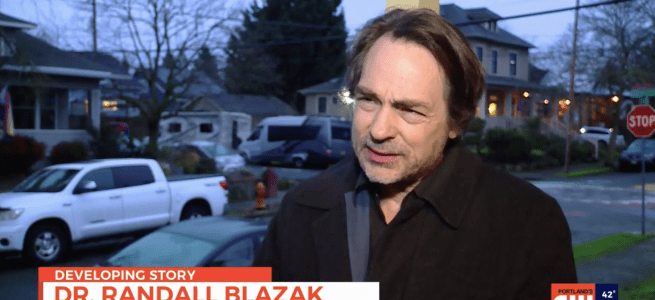
My name is Dr. Randall Blazak. I am a sociology professor and I serve as the chair of the Oregon Coalition Against Hate Crimes and the vice chair of the Oregon Department of Justice Steering Committee on Bias Crimes and Incidents. I grew up in a Georgia Klan town and earned my PhD from Emory University in Atlanta after completing a study of right-wing extremism that included several years spent undercover in the white supremacist movement. I moved to the Pacific Northwest in 1995 because this area, not the deep south, was the growing hotbed of domestic violent extremism.
The Pacific Northwest has a long history of cultivating fringe political movements, especially those in the racist right. The 1980s, saw a wave of terror from a neo-Nazi group called The Order, that fueled their call for a race war in America with a campaign of armed robbery and murder, which ended with a FBI shootout on Whidbey Island in 1984 that made the group’s leader, Robert Matthews, a martyr for many domestic terrorists to come.
More recently, we’ve seen patriot militia groups repopulate the region. Inspired by Timothy McVeigh’s deadly attack on Oklahoma City in 1995, they have rebranded their call for a race war as the Boogaloo. Militia groups like the Oath Keepers and the 3 Percenters were heavily present at the January 6th Capitol insurrection in 2021. Just yesterday three Oath Keepers and one compatriot were convicted of seditious conspiracy because of their role in the January 6th attack.
Beginning in the early 1980s, these groups began formulating a vision they labeled the Northwest Imperative. Since the white supremacist dream of making America “white again,” seemed increasingly unlikely in the face of demographic trends, racists felt they still had a shot at carving out a racial homeland in the Pacific Northwest. They began encouraging fellow racist patriots to move to Washington, Idaho, and Oregon, with the fantasy of driving out racial and religious minorities, LGBTQ people, liberals, and anyone they deemed to be a “race traitor.” This plan included sending members into the military, police, and local government to facilitate the revolution from within.
In 2004 I was interviewing the leader of Volksfront, one of the largest neo-Nazi skinhead groups in the world and I asked him how this racist fantasy was, in anyway, possible in the United States of America. He answered with one word and it still chills me to this day; Yugoslavia. In 2002 Yugoslavia ceased to exist as a nation. Because of racist hatred and fascist political movements, it had been balkanized into several more ethnically homogenous countries. That is the racist right’s dream of the Pacific Northwest in the near future.
The anti-government underground that waged a low grade terror campaign in the 1990s has exploded in the last six years. All the sociological factors have lined up in their favor. Massive demographic shifts that have undermined the long held authority of straight white men, the de-industrialization of the American work force that has replaced the job at the auto factory with a gig driving for Uber and evaporated the American dream, a technological explosion that has injected the most toxic conspiracy theories into everyone’s news feeds, and last, but hardly least, charismatic political leaders that fuel the anger for their own personal gain. This is not your father’s terrorist movement. There is now a massive inflow of everyday Americans who are being sucked into the rabbit hole of extremism and the calls for political violence from formerly mainstream Americans are getting louder by the day. They will use accelerationist tactics, like attacks on infrastructure, including the power grid, to create the chaos they hope to capitalize on.
The good news is we know not only how to break up domestic terrorist plots, but how to prevent people from falling into that rabbit hole in the first place. In the nearly 35 years I have been doing this work, I’ve found that the most effective agents in preventing right-wing extremist violence are former right-wing extremists themselves. Groups like Parallel Networks and Life After Hate have worked tirelessly to prevent Oklahoma City inspired attacks. The collection of real-time data by academics and civil rights groups, like the ADL, helps us to monitor trends and target hotspots for intervention. And federally funded projects like mine, Cure-PDX, develop tools for community members to become credible messengers to extremists and serve to de-escalate political violence, utilizing a public health approach.
The formation of this state commission on domestic terrorism could serve to pull all these resources together. To the growing chorus of anti-government extremists, the Boogaloo is not just a racist fantasy to re-create Washington, the Pacific Northwest, and the nation. It is a well armed movement, with members in law enforcement and the military, with a very strategic plan to ethnically cleanse this land. This commission is vital to not only preserve the inclusive culture of Washington, but to keep its population safe from traumatizing terror.












 Watching the Wheels