“It’s not my job to make you comfortable”: Teaching in the Era of Trump 2.0

January 6, 2024

As a student of the history of fascism and a teacher of that history, I’m well aware of the echoes of the past. When Hitler came to power in Germany in 1933, the first targets of the Third Reich were not Jewish shop owners, but college professors. Germany’s universities were purged of faculty that were Jewish or branded to be communist, socialist, or liberal. Albert Einstein, among other intellectuals, wisely fled his home country. The main work of the Nazi purge was not done by the SS, but by fascist students who were part of the Hitler Youth movement.

One the reasons Einstein and others, including the brilliant social theorists of the Frankfurt School, came to America is because of our value of academic freedom. Academic freedom creates a space for faculty and students to have the right to the free exchange of ideas. One core tenet states, “Academic freedom gives both students and faculty the right to express their views — in speech, writing, and through electronic communication, both on and off campus — without fear of sanction, unless the manner of expression substantially impairs the rights of others or, in the case of faculty members, those views demonstrate that they are professionally ignorant, incompetent, or dishonest with regard to their discipline or fields of expertise.” (Source: Inside Higher Ed)

I highlight this passage because it is clear that Donald Trump plans to go after universities in his second term, which is also laid out in Project 2025, authored by his former and current advisors. Trump has derided universities as engaging in “radical left indoctrination” and promised using federal levers to turn higher ed into centers of ideological loyalism. This includes making it harder for non-wealthy students to attend college, deporting student protestors, and firing accreditors. American universities are encouraging international students to return before Trump reinstates his Muslim travel ban and other draconian travel restrictions. His vow to reclaim universities from the “radical left” is a page torn from 1933.

Trump is not even sworn in and academics are already feeling the pressure as emboldened MAGA students try to out their liberal professors at colleges and on social media. I remember the last version of this in the 1980s when the group, Students for America, tried to publicly ostracize professors they deemed to be leftists. It was chilling. This time those students will have POTUS and the repurposed Department of Education on their side. Teachers and professors, especially those who are un-tenured, may censor their lessons out of fear of being dragged before institutional review boards or disciplinary hearings for making MAGA students feel uncomfortable.
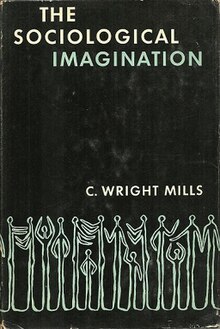
My job as an educator is to make students feel uncomfortable so I am not looking forward to the Trump Reich. As a sociologist, my entire pedagogy is based on C. Wright Mills concept of the sociological imagination, popularized in his 1959 book of the same name. Mills, writing at a peak moment in the Cold War, wanted Americans to be focused, not just on their (micro) personal lives, but the larger (macro) social structures that affect their personal lives. Mills argued that that happens with two conditions. First people have to be aware of their values and second is some sort of threat to those values. Mills argued that the threat puts people in a “crisis” where they begin to see things in a more sociological way.

I’m here to present the threat.

Don’t get me wrong. College classes are intended to be safe spaces, free from harassment. The threat is presented as challenges based on the Mills model. For example if your values say that women should have autonomy over their bodies, I will present how that right is threatened by politicians (including Trump) who have actively limited access to legal abortion procedures. That news should put you in a state of crisis, where you start thinking about social systems that allowed this to happen.

In my classes, we talk about race, gender, God, class, sex, and a bunch of other “uncomfortable” topics and my goal is to never make students feel more comfortable. (We called my own college Sociology 101 course, taken in 1981, the “everything you know is wrong class,” and I’m better for it.) I’m here to push buttons, but I’m guessing educators like me are concerned that some MAGA snowflakes are not going to respond well to intellectual challenges. They will be encouraged by a president who has positioned himself as the enemy of truth and science and the core values of The Enlightenment that brought us here.

When Trump is sworn in on the 20th, there will be numerous battlefields across the country, including the places where immigrants work and live, where women and girls get health care, and where trans people simply exist. I fear the classroom will also become a battleground. But instead of falling into the us vs. them narrative the fosters more conflict, my work will be to bring those students in, valuing their different views, and engaging them in the magic of academic freedom. I am not afraid.

Laissez les mauvaise temps rouler?: The Terror of 2025 and How to Stop It

January 3, 2025

Well, 2025 is off with a bang. My New’s Eve hangover didn’t have time to kick in before the news from New Orleans rolled in. And then Las Vegas. Welcome to the worst year of our lives.

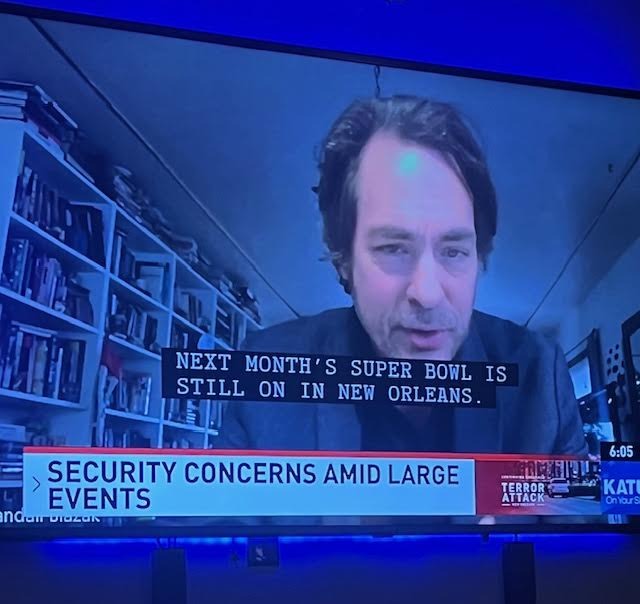
Forty years ago, my study of fascism was the focus of my second undergrad major of political science. That then moved headlong into the field of criminology. As a graduate student, my research on teenage skinheads evolved into a study of right-wing extremists groups. Once I had my PhD in my pocket, that work became a scholarship on domestic terrorism. When I was asked to contribute to the 2003 edition of the Encyclopedia of Terrorism, I knew had achieved the title of “terrorism expert.” And that meant I would spend a chunk of New Year’s Day talking to reporters.

The study terrorism is not exactly an exact science. And those coming from academia and those coming from law enforcement are going to have different focuses (root causes vs. threat assessments, for example). But where we come together is in vague intention to create terrorist profiles (which I jokingly refer to as terrorist stereotypes). The good news is that we have a massive amount of data from previous bombings, mass shootings, car rammings, and the like to have a pretty good picture of who commits these crimes, with a handful of relevant variables. The bad news is that we have all this data because of the success of these people in carrying out their deadly plots.

So with minimal facts available, I had a pretty clear picture of who Shamsud-Din Jabbar, the New Orleans attacker who killed 15, was and wasn’t. For example, despite the unhelpful grandstanding at Wednesday’s press conference, I was pretty certain Jabbar worked alone. The blather that Jabbar was a part of an “ISIS cell” fit conservative fear-mongering (since the “immigrant” narrative crashed), but did’t fit the typical profile. This was not the Oklahoma City Bombing. It was the Big Easy’s version of the 2016 truck attack in Nice, France. While Donald Trump decried “open borders,” I talked to local media about how we have seen this movie before.

You’ve got a guy with a military background who served in Afghanistan who probably saw the heavy hand of Uncle Sam in a Muslim land. That was enough for Army psychiatrist Nidal Hassan who went on a shooting spree at Fort Hood in 2009, killing 13 and injuring dozens. Jabbar also had a host of economic crises, including massive debt, and a dramatic divorce involving conflict over children. Most men who go on workplace mass shootings are in the same situation. Exactly. The insanity of ISIS gave him a place to put his anger. Their binary world of believers vs. non-believers is like a warm blanket to someone whose life in a complete spiral. Like the workplace shooter, Jabbar was ready to check-out (AKA die) but he was going to go out in a blaze of glory, spreading his pain to others as he barreled down Bourbon Street.

The case of Matthew Alan Livelsberger is a little less obvious. Livelsberger was the Army Special Forces operations master sergeant who drove a rented Tesla Cybertruck up to the front door of the Las Vegas Trump Hotel, shot himself in the head and set off a bomb in the truck. Again, the nattering nabobs of disinformation over at Fox News claimed this was an attack on the incoming president and his boss, Elon Musk. But, there were facts that didn’t add up to that claim, including the fact that Livelsberger was a green beret (not known for their liberal anything) and that the bomb was so poorly constructed it didn’t injure anybody. (He could have driven straight into the hotel lobby if he was after casualties.) There are clues to motive that have nothing to do with Trump or Musk.

We’ve seen a steady increase in the suicide rate of active military (523 cases in 2023, up 9% from 2022). We still know so little about the PTSD-suicide link, but we know it exists. Livelsberger was a new father, so that should have been a mediating factor. (When Cozy was born, I didn’t want to miss a single second, staring at her while she slept.) But we don’t know much about the sergeant’s internal and external life yet. We do know that soldiers who suffer trauma from combat who also experienced trauma as young children are significantly more likely to spin off the rails. Musk and Trump have been a constant presence in the news. It’s likely that he chose the car and hotel as part of a strategy to make his suicide more newsworthy. After all, how many of the over 500 military suicides last year hit the news cycle? (And the suicide rate for veterans is almost twice the non-veteran rate, so maybe both Livelsbergerm and Jabbar were demanding attention on the matter.)

If there’s any good news in all this carnage it’s that we know these profiles inside and out. Which means we know the antecedents to the terror, the proverbial red flags. And the red flags provide intervention points to head off calamity. As we dissect these two New Year’s Day attacks, we’ll find points where “somebody could have done something.” The Cure-PNW project I work on, funded by the Department of Homeland Security, has been finding angles to de-escalate political violence by strengthening communities and empowering people to intervene when they see a Livelsberger or Jabbar moving toward criminal action. (We refer to these interveners as “credible messengers.”) This is the work that needs to be upscaled on a national level as 2025 promises many more January firsts. (Unfortunately, our grant runs out with the new administration.)

After Election Day there was a lot of “the sky is falling” hysterics on my side of the aisle. Yeah, decency and democratic guardrails took a major hit. But the 2026 midterm election is only 96 weeks away and there is already dissent in the Trump-Musk-GOP ranks. Maybe the sky won’t fall, but what we can count on remaining constant are the factors that drive (almost exclusively) men into choices to commit acts of terror. Better understanding how to utilize that knowledge gives that “something” that we can do.

2024: WTF


Lessons from Joan of Arc – Courage for the Coming Battle (January 6, 2024)


The Moral Arc: Did MLK Get This One Wrong? (January 15, 2024)


What Taylor Swift Tells Us About the Fragility of Men: Welcome to the Backlash (February 1, 2024)


On Turning 60 in an Ageist Culture (February 19, 2024)


Make America Classic Rock Again? The Political Danger of Nostalgia (March 5, 2024)


The End of Democracy and the New Dark Age (March 28, 2024)


Is “Civil War” a Preview of 2025? (April 22, 2024)


Supporting the Right of Palestinians Not to Be Murdered is Not Anti-Semitic, And We Must Confront the Rise in Anti-Semitism (April 27, 2024)


I Would Have Hated the Beatles in 1964, or How My Daughter Made Me a Taylor Swift Fan in 2024 (May 4, 2024)


We Defeated Fascism 80 Years Ago, We Must Defeat Trump Now. It’s Go Time! (May 27, 2024)


The Secret Life of Fourth Grade Girls (June 7, 2024)


June is the Cruelest Month (June 21, 2024)


I Remember America: It Was a Good 248 Years (July 4, 2024)


The Chickens Have Come to Roost: The Assassination of Donald Trump (July 16, 2024)


Will Republican Misogyny Drive White Women to Harris and Can Taylor Swift Help? (July 23, 2024)


The Mulatto Panic: MAGA’s Racial Confusion (August 7, 2024)


Watching Coach Walz and the Painfully Fragile Masculinity of MAGA (August 24, 2024)


Fascism on America’s Doorstep (and are your pets safe?) (September 14, 2024)


Guilty Jews, Black Nazis, and Pet-eating Immigrants: Donald Trump’s Not So New Brand of Racism (September 21, 2024)


Beta Trump: The Day the King Fell Off the Hill (October 12, 2024)


Will America Elect Hitler on Tuesday? (October 29, 2024)


America, I Quit (November 6, 2024)


When Hate Wins (November 9, 2024)


Coming Back from the Ledge of Election Day (November 21, 2024)


The end of the Eras Tour and how Taylor Swift stopped time for my daughter (December 8, 2024)


Remembering My Brother Who Lived in the Woods (December 14, 2024)


Dad’s Top Discs of 2024 (December 18, 2024)


The James Bond Project: #1 – Dr. No (1962) (December 27, 2024)


The James Bond Project: #1 – Dr. No (1962) (December 28, 2024)


The James Bond Project #2: From Russia With Love (1963) (December 30, 2024)

2024: WTF (December 31, 2024)

The James Bond Project #3: Goldfinger (1964)

December 30, 2024

Goldfinger (1964, directed by Guy Hamilton)

“That’s my James!” Welcome to the James Bond blockbuster. With the massive success of From Russia With Love came an even bigger budget (and a new director). Goldfinger gave us franchise staples, like the pre-credits action scene, the bouncy Bond quips, infinite gadgets (including the loaded Aston Martin), the epic theme song, and multiple exotic locations (including rural Kentucky). And of course there are multiple women who are branded as Bond “girls” in the film who find their way into 007’s beefy arms.

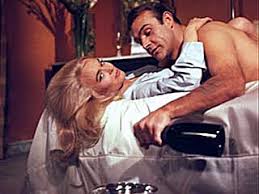
The box office smash surely benefited from the 1964 British Invasion and the American obsession with all things English. Bond even has a snarky line about the Fab Four after he beds Goldfinger’s girl Jill Masterson, chiding her not understanding his standards for chilled Champaign. “My dear girl, there are some things that just aren’t done, such as drinking Dom Pérignon ’53 above 38 degrees Fahrenheit. That’s as bad as listening to the Beatles without earmuffs.” (It should be noted that two of the actors in Goldfinger, Richard Vernon (Colonel Smithers) and Margaret Nolán (Dink), had just appeared in the Beatles’ film A Hard Days Night and the Beatles 1965 film, Help!, would be a send up of Goldfinger.)

Goldfinger cemented the formula for what a Bond film would be for decades to come. It was released in September of 1964, in a world that was increasingly surrendering to the ennui of the East-West Cold War, the same month as Lyndon Johnson’s apocalyptic “Daisy” campaign ad that ended with a mushroom cloud. I had been born 7 months earlier and would be socialized into a world that saw Bond as the modern model of masculinity. Let’s check Goldfinger with our five reference criteria.

Driver of Action – Goldfinger is the archetypical Bond film, the begins with him blowing some shit up in Mexico and ends with him making sweet love to Bond Girl #3 Pussy Galore on a desert island, telling her “This is no time to be rescued.” There is no “buddy,” as in the previous two films, just Bond, and his MI-6 and CIA supporters (who play minimal roles). Even the nefarious plotting by Goldfinger (played by former Nazi Gert Fröbe after Orson Welles proved to be too expensive) to irradiate all the gold in Fort Knox is a minor subplot. Goldfinger is all about watching Sean Connery as Bond move from scene to scene; Mexico, Miami, London, Switzerland, Kentucky. In the opening scene, he steps out of his wetsuit dressed in a white dinner jacket and you know this going to be 110 minutes of pure Connery.

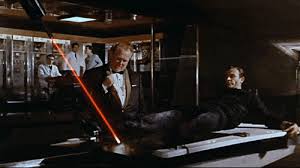
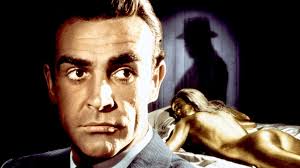
Role of Violence – Again, Bond has a relatively low bodycount in this film. People do die, especially women, including Jill Masterson. For her flirtation with Bond, she is painted gold and dies of “skin suffocation.” Her sister Tilly is killed by Oddjob, Goldfinger’s Korean henchman. But Mr. License-to-Kill is mostly restrained. A Mexican assassin gets an electric fan tossed into his bathtub. Some henchmen go over a cliff in a fiery crash after Bond shoots slick oil out of his Aston Martin. In the climatic scene in Fort Knox, Bond throws a henchman off a ledge and electrocutes Oddjob. (Apparently actor Harold Sakata was severely burned in the stunt.) Mostly Bond is the recipient of violence, including a laser beam aimed at his most manly parts while he is strapped to a table.

Vulnerability – Yeah, no. You wonder if we have to wait until the ‘90s to get new age sensitive James Bond. Whether strapped to a table with a laser heading toward his junk or locked in a Kentucky holding cell, or in a plane plummeting to the earth, we never see James break a sweat. 

Sexual PotencyGoldfinger is balls out on the message that Bond is the conquerer of women. In the opening sequence, he goes after a Mexican dancer and then uses her body to deflect an assassin. In Miami, he’s getting a poolside massage from his Florida fling, Dink (who’s cleavage was also featured in A Hard Days Night). Then there’s the romp with Jill who gets painted gold. In Switzerland, when a blonde passes him by in a ’64 Mustang convertible, he resists the urge to chase after her. “Discipline, 007, discipline,” he says to himself. She turns out to be Jill’s sister and they have a moment before Oddball kills her with his killer hat.

That brings us to Pussy Galore (the character, not the male fantasy). The Bond double entendres hit a new level here and Pussy’s name is mentioned constantly in the second half of the film. Galore is played by Honor Blackman, who was Diana Rigg’s predecessor on the highly popular British spy show, The Avengers. So she was coming in to Bondland a Judo-flipping badass, not a submissive DID (Damsel In Distress). In Goldfinger, she’s the leader of Goldfinger’s team of female pilots, playing a role in his grand slam plan. But there’s a scene in Goldfinger’s barn where James manhandles Pussy and the subsequent judo fight ends up with the two literally rolling in the hay. Galore tries to push Bond off her, but no woman can resist 007 and his assault ends in a passionate kiss. Woot, there it is.

Connection – Unbeknownst to the viewer, Pussy Galore’s Stockholm Syndrome turns her into an ally of Bond’s and Goldfinger’s evil plot is thwarted. As has already become an uber-cliche in Bond films, their end scene, making out under the parachute, casts no allusion that it’s the beginning of a beautiful relationship between James and Pussy. We know how this works. Women are transitory and co-workers are support players. Does Bond have any friends? A love that got away? He is supremely untethered. A man alone.

Toxic Masculinity Scale: 7

Summary –  Like an explosion of everything that was 1960s before LSD, Goldfinger is a magnum opus of a spy action film. The clever crime attempted (to irradiate the gold in Fort Knox to drive up the value of personal stocks of the metal) takes a back seat to watching Connery leap frog from woman to woman, often with his suped-up Bondmobile (Oh, to have stock in Aston Martin in 1964). Connery’s Bond is the Id unrestrained. One wonders what MI-6’s HR department would say about the workplace flirtations between Bond and Miss Moneypenny in the post #metoo era. But it’s the scene between Bond and Galore in the barn that reminds us that the debonair spy is not immune from the misogynistic value of male entitlement. A generation of boys learned women are to be taken by men, even if they resist. Pussy galore, indeed.

While contemporary audiences my get a bit of a creepy vibe from Goldfinger’s Bond, there’s a creeping trend that may be less noticed today. The third Bond film sees 007 more dependent on the technology provided by his employer. It may be a homing device in his shoe or an ejection seat in his car, but 1964 Bond is becoming less a man left to his own devices and more to the devices Q builds for him. Bond is the halfway point between the archetypical cowboy, fending for himself on the frontier, and Modern Man, juggling apps and monitoring social media, never not wired to the electronic collective. Where would Bond be without Q? Where would we be if the internet went down? One imagines that Bond would be better off, but not by much.

Next: Thunderball (1965)


The James Bond Project: #1 – Dr. No (1962)
The James Bond Project #2: From Russia With Love (1963)

The James Bond Project #2: From Russia With Love (1963)

December 28, 2024

From Russia With Love (1963, directed by Terence Young)

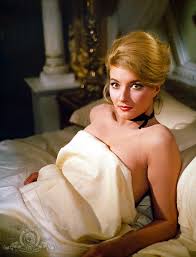
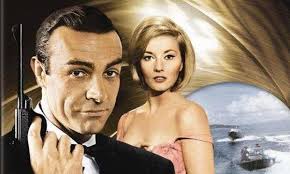
With the unexpected success of Dr. No, United Artists doubled the budget for the sequel and the bet paid off. (The $2 million film took in more than $78 million worldwide.) We are now firmly in a franchise of films made by men for men and their dates, starring manly man Sean Connery. Although it should be noted that Johanna Harwood, who had worked on the script for Dr. No, played a large role in the screenplay for From Russia With Love. Producers cast Italian beauty queen Daniela Bianchi as Bond Girl #2 Tatiana Romanova, after actress Elga Gimba Andersson refused to sleep with a United Artists executive. Bianchi, who could barely speak English, had her lines dubbed by a British actress.

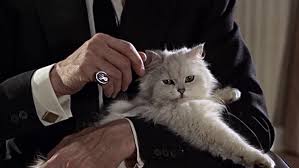
The film starts the Bond tradition of the opening credits being projected on to the bodies of scantily clad or nude women, firmly establishing that these are stories for boys. Instead of Jamaica, most of the action takes place in Turkey, although there are obligatory scenes in London and wherever SPECTRE Island is. There we meet the Dr. Evil of the Bond cinematic universe, Blofeld (or at least his cute cat). Leaving the Caribbean means we leave any and all black actors, and the primary Turkish character, Ali Kerim Bey, is played by Mexican actor Pedro Armendáriz. (In a bizarre side note, Armendáriz contracted neck cancer after filming a Howard Hughes film near a nuclear test site in Utah, and before he finished shooting his parts for From Russia With Love, shot himself with a gun that he snuck into his hospital room.)

From Russia With Love was filmed as the Cold War intensified and SPECTRE agents replaced Russian agents (who were the villains in Ian Fleming’s original Bond novel) to not further inflame tensions. President Kennedy told Life Magazine that From Russia With Love was one of his favorite novels. The film version premiered on October 10, 1963, the same day U.S. Attorney General Robert Kennedy (crazy guy’s dad) approved J. Edgar Hoover’s wiretapping of Martin Luther King, Jr.. The film was screened at the White House for JFK before he left for Dallas, where he was assassinated. From Russia With Love received mixed reviews, some saying it was slower than Dr. No, but has gone on to be held up as one of the best of the Bond series.

Here’s how FRWL charts with our five evaluations.

Driver of Action – Director Terrence Young had established a formula and he’s not going to break it on the sophomore outing. This is Bond in all his glory, now supplied with cool gadgets by MI-6’s Agent Q (played by Desmond Llewelyn, who remained as Q to 1999’s The World is Not Enough). There is a great “buddy” feature between Bond and Bey (similar to Dr. No’s Quarrel role) and a fun subplot about SPECTRE operatives Rosa Klebb and Kronsteen, groveling before Blofeld as they attempt to kill Bond for offing Dr. No. (The “R” in SPECTRE is for “revenge”- Special Executive for Counter-intelligence, Terrorism, Revenge and Extortion. FYI.) But the story doesn’t happen without their dastardly plot to kill Bond and the delight of our man James foiling their fiendishness.

Role of Violence – There is considerably less violence in Dr. No’s sequel. There are some cool explosions after a helicopter attack and a boat chase, but 007 only kills one person, SPECTRE assassin Donald Grant (played by Robert Shaw, who will always be Captain Quint in Jaws to me). Grant’s death is the result of a beautifully choreographed fight scene in a train car on the Orient Express. (Fight scenes in train cars become something of a trope in the Bond franchise.) The most shocking violence in the film is Bond’s full-handed smack across Russian agent Tatiana’s face, after which she repeatedly tells him that she loves him. I bet that clip has showed up in a few “Sexism in Film” classes.

Vulnerability – Again, there’s no chink in James Bond’s armor. No glimpse inside. Even when Bond is literally on his knees prostrate before assassin Grant, we know he has a plan to quickly turn the tables.

Sexual Potency – The first shot of Bond in the film is him making out with Sylvia Trench (from Dr. No) in a floating punt, probably on the banks of the River Cam in Cambridge. He’s playing hooky from MI-6 to work his way around the bases with Trench. (Is there a cricket version of “third base”?). When Bond first meets Tatiana, she is naked in his Istanbul hotel bed. Later she asks him, “James, will you make love to me in London?” He answers, “Day and night.” There’s another strange segment where Bond must decide which of two young, attractive “gypsy” women will be awarded the man they both want. They arrive at his room to seductive music. “This might take some time,” he says. We see the women the next morning with broad smiles as James leaves. All these women are happy for a piece of 007’s sexual mojo, even when he slaps them.

Connection – The scenes with Pedro Armendáriz as Ali Kerim Bey sparkle. They have immense chemistry, enhanced by the knowledge of the great pain he was in from his cancer. Had he lived, one could see Armendáriz as Bond’s Morocco Mole sidekick in future Bond films. But both Armendáriz and his character are dead by the end of the film. His relationship with Tatiana is less mutual, even though they have to pretend to be a married couple while on the train, and she dreams of marrying him when they reach London. She even saves him from the venomous boots of Rosa Klebb in a hotel room in Venice and his heart is unmoved. Like the closing scene in Dr. No, we end with Bond and Bond Girl #2 romantically floating together in a boat, this time a gondola, with end credits urging viewers to get ready for Bond #3, Goldfinger, which will most certainly present us with Bond Girl #3.

Toxic Masculinity Scale: 7/10

Summary From Russia With Love really front loads the male gaze on women’s bodies thing. From the opening credits, to the (very) long shot of Ali Kerim Bey’s girlfriend’s cleavage, to a very oily masseuse on SPECTRE Island, to the camera endlessly hovering on a belly dancer’s torso, there’s plenty to ogle. Then there’s the weirdly placed “duel” between two scantily glad “gypsy girls” that has zip to do with the plot. If there’s any sense of balance, we do get Bond wrapped in a towel, which probably had some men wondering what they needed to do to grow crops of hair on their chests.

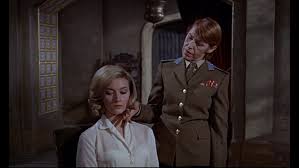
There’s also an odd lesbian subtext with Rosa Klebb. Props to having a female antagonist in the second Bond film. In 1963, there was a narrative that Russian (i.e. “communist”) women were more manly, so that tracks. But to make the point that women on the other side of the Iron Curtain are not bound by the same gender rules, they add a suggestion of sexual predation when Klebb is informing Tatiana of her mission to seduce Bond. And Romanova doesn’t seem to shirk as Klebb evaluates her body and places her hand on her leg. Russians, they not like us. (Or are they?)

From Russia With Love is rough film to place. It’s the most realistic of all the Bond films from the classic era. There’s a nice complexity to the plot but we know even less about the person of James Bond. It’s almost like Sean Connery is playing James Bond pretending to be a caricature of James Bond. A lot of people think this is one of the greatest British films ever made, but it felt flat to me. And the slapping scene seemed very un-Bond, even if it served as a reminder of how normalized violence against women is in film. Where is Wonder Woman when you need her?

Next: Goldfinger (1964)

The James Bond Project: #1: Dr. No

The James Bond Project: #1 – Dr. No (1962)

December 27, 2024

As a latchkey kid who grew up on the 4 O’Clock movie (with a father often away on sales trips), most of my young models of masculinity came through the family color TV. Those films offered me the standard trinity of white manhood: John Wayne, Elvis Presley, and James Bond. All three were good with their fists and spared few words for the ladies. John Wayne was the iconic “strong silent” man who solved problems with a gun. In the 2000s, I taught a summer class at Portland State University called, “Hollywood Elvis and Post-War Masculinity” that used Presley films to explore changes in parameters of male roles. But it was Bond that I most wrestled with as a feminist man. Was he a patriarchal archetype or a subversion of it?

After the 1996 film Swingers brought back lounge culture, I found myself fantasizing about the Sinatra swagger and the Bond confidence. I’d sit at the roulette wheel in casinos in Old Las Vegas, on Fremont Street, dressed in a vintage suit, surrounded by frat boys in khaki shorts and backwards baseball hats. Was I an agent of the backlash or mocking gender, the same way drag queens deconstruct femininity? And now, what is the relevance of Bond’s manly schtick in MAGA America, where sex offenders are running the show?

So I decided I need a winter binge to address the question. The James Bond Project is intended review every Bond film, from 1962 to the present, to glean insight into the gendered appeal of 007, genital warts and all. And here’s the matrix for our evaluation:

  1. Driver of Action – Team player or rugged individual?
  2. Role of Violence – Body count
  3. Vulnerability – Behind the mask
  4. Sexual Potency – Lady “killer”
  5. Connection – Autonomous into the sunset

Toxic Masculinity Scale  (1 to 10)

Dr. No (1962, directed by Terence Young)

The first Bond film is based on the sixth novel in Ian Fleming’s famous series on the British spy and is set against the backdrop of Kennedy’s Space Race. Producers cast Sean Connery, 31, after Carey Grant said he wasn’t interested in playing Bond more than once. Dr. No, released October 5, 1962 (less that two weeks before the Cuban Missile Crisis), introduces all the series staples; “Bond, James Bond,” “Shaken, not stirred,” a license to kill, SPECTRE and the underground lair, creative ways to kill the heroes, and Bond hitting on Miss Moneypenny.

My first thought watching it was that it was nice to see so many black people in a movie from 1962. I’m used to any film made before 1968 being made by, for, and about white people. Dr. No is set in Jamaica, so the cast diversity makes sense. The Caribbean was a common Bond locale (and where I saw my first big screen inter-racial kiss – more on that later). Jamaica was granted its independence in 1962, but in the film it still feels like a British colony. No reggae yet, just limp calypso and CIA officers hanging around airports. But it gave the world its introduction to 007 James Bond, the suave spy with a license to kill.

Driver of Action – There is no doubt that Bond is his own man. His boss, M, tries to replace his Beretta handgun with a new model, which James (unsuccessfully) tries to sneak out of the office. Other than that and a scene where Bond and Honey Ryder (played by Bond “Girl” #1 Ursula Andress) pass out after drinking Dr. No’s drugged coffee, there is never a moment where Sean Connery’s Bond isn’t in complete control. There are car chases, jungle chases, and scenes where Bond outsmarts would-be assassins (including smashing a tarantula to an epic musical score). Even though, for part of the film, he has a black sidekick named Quarrel and female accomplice (Honey Ryder), Bond drives the story and camera lens.

Role of Violence – 007 takes out a handful of baddies, including a corrupt geology professor and some blokes who go over a cliff in a fiery crash. “I think they were on their way to a funeral,” he quips. Compared to the massive body count of your average John Wick movie, there is surprisingly little violence in Dr. No. I found myself wishing 007 had watched a few of my favorite Kung Fu self defense reels on Instagram to better defend himself from henchmen and CIA operatives. Dr. No doesn’t even try to kill Bond, although he does strap Honey Ryder down to be drowned by a rising tide. Spoiler alert: Bond kills Dr. No in a radioactive pool.

Vulnerability – There is no moment when James shows any weakness or gives us any backstory. Was there (ever) a Mrs. Bond? Does he have a panic attack if his martini is stirred? Does he ever suffer from erectile dysfunction when bedding double agents? This may be the feature that resonates with men so much. Bond is a cartoon character of a man with no internal monologue, just commanding action.

Sexual Potency – This isn’t a Doris Day movie. Bond gets plenty of play. At the start of the film he beds a woman he meets playing baccarat in a casino. Her name is Sylvia Trench, and we’re off to the races for how women are named in Bond films. Then he spends a night between the sheets with MI-6 secretary Miss Taro, who is (of course known to James) working for the bad guys. Surprising to no-one, he ends the film in the arms of blonde bombshell Ursula Andress, bobbing in a dingy in the Caribbean. In the scene with Miss Taro, unprompted, he grabs her and kisses her, reminding me of Trump’s comments in the Access Hollywood tape. “You know I’m automatically attracted to beautiful… I just start kissing them. It’s like a magnet. Just kiss. I don’t even wait. And when you’re a star they let you do it. You can do anything.”

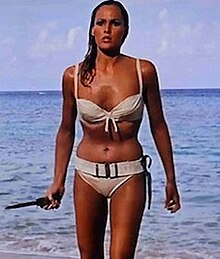
Connection – Bond has passing connections with Quarrel (played by John Kitzmiller) and American CIA agent Felix Leiter (played by Hawaii Five-O’s Jack Lord), but they’re just vehicles for Bond to complete his mission. Bond even seems briefly sad when Quarrel is burned alive by the bad guys. But James Bond is the model of the autonomous male. He is a self-contained unit who doesn’t “need” anyone. Sex is transactional, not romantic. Even the end scene with Honey Ryder is not a “and they lived happily ever after” moment. You get the feeling that Ryder, in her iconic white bikini, will be dropped off at the next beach as 007 jets off on his next mission.

Toxic Masculinity Scale: 5/10

Summary – Watching a young Sean Connery chew up every frame he’s in is infinitely entertaining. Yeah, Ursula Andres on the beach (knife in hand) is a classic male gaze moment where even Bond says, “I’m just looking,” but the gaze is all on 007. There’s even a scene where a female concierge in a Kingston hotel stares at Bond’s ass. James Bond is the spectacle. All eyes are on him. It’s man’s world. Dr. No is 55 years before Patty Jenkins ground-breaking Wonder Woman movie. Action is man’s work, with bikini-clad damsels in distress.

Fortunately, there is no homophobia or overt misogyny in Dr. No. Women are beautiful and disposable but also strong, with agency. No bimbos in Bondland and toxicity is toned down in the Kennedy era. The film establishes the archetype of the autonomous “love ‘em, and leave ‘em” hero franchise to be mimicked by countless others, from Matt Helm to Austin Powers. At his core, Bond is always cool and always in control. Men want to be him and women want to be with him. But we all want to know, its that all there is?

Next: From Russia with Love (1963)

Dad’s Top Discs of 2024

December 18, 2024

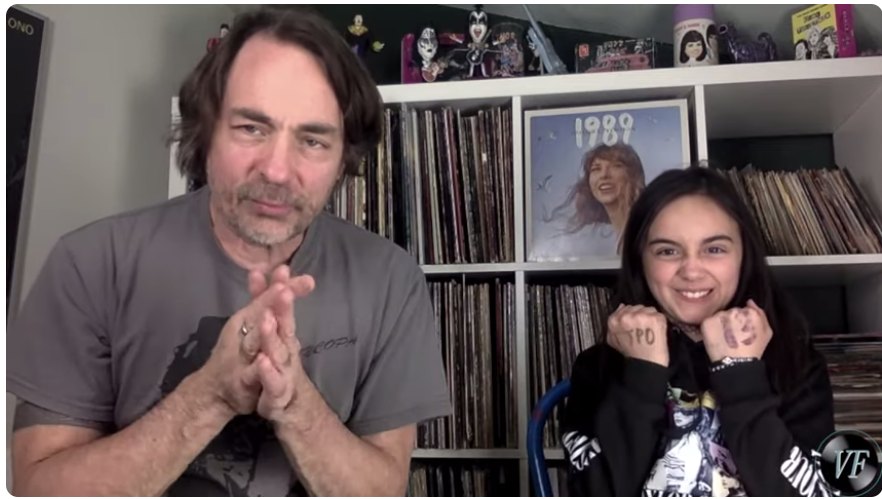
This year has definitely had a musical theme. It was the year when Cozy and I became consumed with all things Taylor Swift. I dove into her back catalog and Cozy bonded with her 5th grade Swiftie crew, and begged me to buy every Taylor magazine on the newsstand (I didn’t). There were plenty of highlights, including April 19, when Taylor’s new album, The Tortured Poets Department, dropped. Cozy and I listened to the stream (Well, streams. Turns out it was a surprise double album.) And then went to the record store to get a vinyl copy, quickly reviewing it on my YouTube channel. The peak was December 6, when we got to see Taylor herself at one of her final Eras Tour concerts in Vancouver, BC. We’re both still buzzing from that one.

Other than Tay Tay, I didn’t go to many concerts in 2024 as my social life was mostly homebound. I did see lots of jazz and funk shows in great Portland bars like the Goodfoot, the Alberta Street Pub, and the Keys Lounge. Two of my favorite concerts were seeing old friend Billy Bragg and old boss Kevn Kinney, both at the Revolution Hall (and I got to perform with Kevn). I have tickets to see Nick Cave & the Bad Seeds in May, so maybe there will be more live music in 2025, if we’re allowed out past the Trump curfews.

It was a really a year of Top 40 radio as Cozy and I kept Z100 on in the car, listening to Taylor, Sabrina Carpenter, and Chappell Roan (and that damn Hozier song). My mom did the same thing when I was 10, burning the Hits of ’74 into my forever brain. But when a song came on the Cozy didn’t like, she’d change the station to KMHD, the jazz channel. Because she’s my kid.

There was so much great music to listen to in 2024, including some great old stuff. I got a lot better about posting videos on Vinyl Fetish, my YouTube channel, especially my running feature, 100 Albums that Matter. That got me diving into some old favorites for repeat listens. Working through Rolling Stones500 Greatest Albums of all Time list also provided great listens to old and new favorites (and endless opportunities to explain to my students what life was like before Spotify).  

There was plenty of vinyl, mostly bought in second hand shops. My favorite re-issue was the newly remixed release of John Lennon’s 1973 album Mind Games, which I’ve always thought was poorly mastered. 
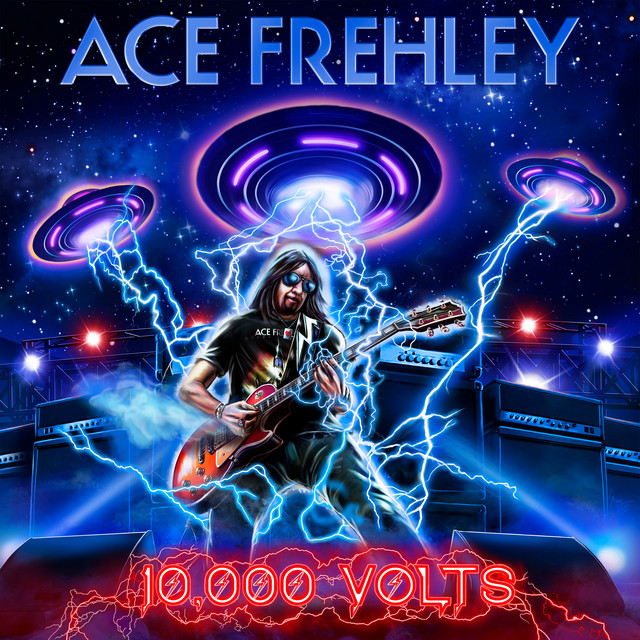
Deciding the ranking of my favorite albums was not easy. I played the new Ace Frehley album way too much (until he came out for Trump). The expansive Transa collection brought attention to the joy and pain of the trans community and gave us a glorious new Sade song. I could not stop playing new albums by the Cure, Father John Misty, and Nick Cave. It was a great year to be a Radiohead fan with a Thom Yorke solo album and two releases from The Smile (Wall of Eyes being the better). Waxahatchee’s Tigers Blood and Jack White’s No Name shocked me, they were so good and St. Vincent released the PJ Harvey album I’ve been waiting for.
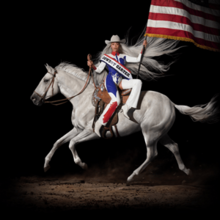
But one album grabbed me out of the gate and would not let go: Country Carter by Beyoncé. I don’t know if it’s a country album or not (but I got a kick out of white people proclaiming it most certainly wasn’t). That debate paled in comparison to draw of the music itself, touched by Willie, Dolly, Beatle magic, and the brilliant Rhiannon Giddens (who has firmly planted the BLM flag in country music). “Texas Hold ‘Em” was classic Bay but also completely new, but my favorite track was “Bodyguard,” where Mrs. Carter also lays claim to 90’s alt rock. Every time I listen to it, I discover something new. It might end up being my favorite album of 2025 as well.

So here’s my 20 favorite albums of a year that went to shit. Let’s hope 2025 produces the angriest punk rock since Thatcher and Reagan were elected.

  1. Beyonce – Cowboy Carter
  2. Father John Misty – Mahashmashana
  3. Nick Cave – Wild God 
  4. Waxahatchee – Tigers Blood
  5. Various Artists – Transa
  6. The Cure – Songs of a Lost World
  7. Taylor Swift – The Tortured Poets Society
  8. Jack White – No Name
  9. John Lennon – Mind Games (The Ultimate Collection)
  10. The Smile – Wall of Eyes
  11. Kim Deal – Nobody Loves You More
  12. Charles Lloyd – The Sky Will Still Be There Tomorrow
  13. Pylon Reenactment Society – Magnet Factory
  14. Dandy Warhols – Rockmaker 
  15. Paul Weller – 66
  16. Rosie Tucker – Utopia Now!
  17. St. Vincent – All Born Screaming
  18. Ace Frehley – 10,000 Volts
  19. Miranda Lambert – Postcards from Texas
  20. Gary Clark, Jr.  – JPEG Raw

Spotify playlist of songs from the Top 20 albums: CLICK HERE

Remembering My Brother Who Lived in the Woods

December 14, 2024

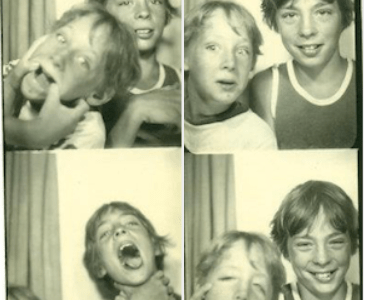
My little brother and I never got a long very well. One time when I was 12 or 13, and he was my daughter’s age, we got into a big fight at our house in Stone Mountain, Georgia. He threw a tennis ball can at me that sliced open my forehead (I still have the scar). With blood pouring out my face, I smashed through the flimsy suburban house door of his bedroom and Ronnie jumped out of the second story window, escaping into the woods behind our house where he spent the next two nights. I remember my mother saying, “Let him. We’ll have some peace and quiet for a few days.” I can’t imagine feeling good about Cozy, 10, living in the woods for a few days, but my childhood home was a firestorm of sibling chaos.

Last Sunday, Cozy and I went to spend some time with Ron in his room in the assisted living facility where he’s been in hospice care for the last year. We brought him snacks from Safeway, including requested chocolate covered pretzels. We told him about our trip to Vancouver to see Taylor Swift and I promised to bring him some eggnog on Friday when I got back from a short work trip to Washington, DC.

Yesterday, I sat on his empty bed in his empty room, eating those pretzels and thinking about his body in a funeral home down the street. When we were leaving Sunday, he had a look of terror on his face. I think he knew we’d never see each other again. I tried to reassure him. “You’re gonna be OK. I’ll see you on Friday.” Now I wish I would have stayed a little longer. He died in his sleep Tuesday night. Finally free of the pain of cancer and the nightmares of demons dragging him to hell.

It’s a strange experience, losing a sibling. He drove me crazy for 57 years. I remember the day he came home from the hospital to our little house in Parma Heights, Ohio. My mother tried to head off the inevitable sibling rivalry by giving me a box of building blocks and saying that they were from the baby. But our life was only conflict. That included a 17-year stretch that I didn’t speak to him after he went to prison for threatening to kill our mother. After that, I thought I’d never speak to him again. Now, I find myself missing him. It’s a weird, dream-like state. Is that the same kid who threw the tennis ball can at me?

About 12 years ago, Ron became homeless, moving into the woods in Cartersville, Georgia, about an hour north of Atlanta. He found comfort in the woods, where he told me he talked to owls and ghosts. He was never what you would call a “people person,” challenged by the requirements of modern living. He had a job washing dishes at the local Applebee’s restaurant and would call me to lament his exclusion from our family, including his estrangement from his son. We slowly began to reconnect. On one visit, I took Ron back to our old neighborhood in Stone Mountain, and stopped by our elementary school. I could start to interact with him without the weight of the past and focus on the good memories of our childhood.

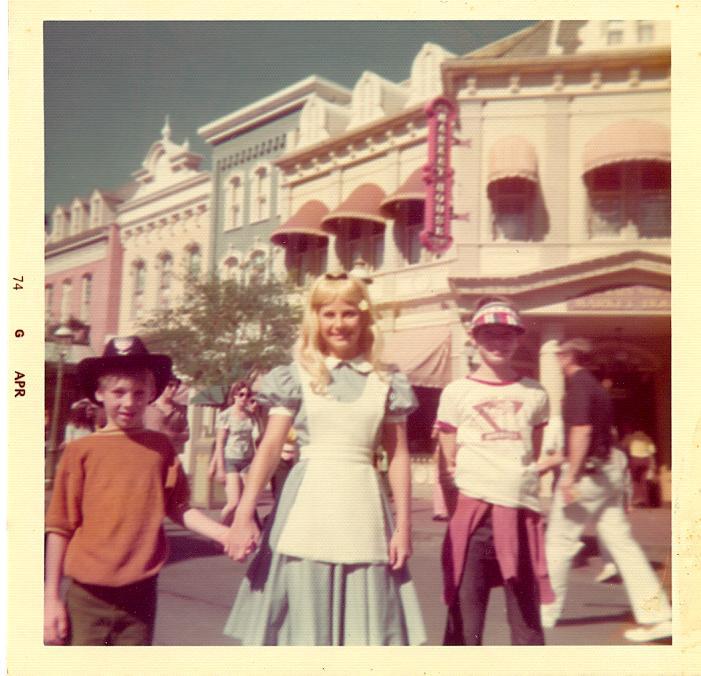
And there are good memories. We’d take family trips every summer, often to Florida or to Colorado, where my cousins lived. A favorite picture of us is at Disney World, 50 years ago. We’re on Mainstreet USA with Alice in Wonderland. I refused to hold her hand because, at 10, I thought girls had cooties. Ron, 7, had no hesitation. I use that picture to talk to my students about how straight people come out as well. Ron and I fought a lot but we also found great moments of joy on those road trips, so when I went to get him out of the Georgia woods last year to bring him to Portland, it was one more road trip for us.

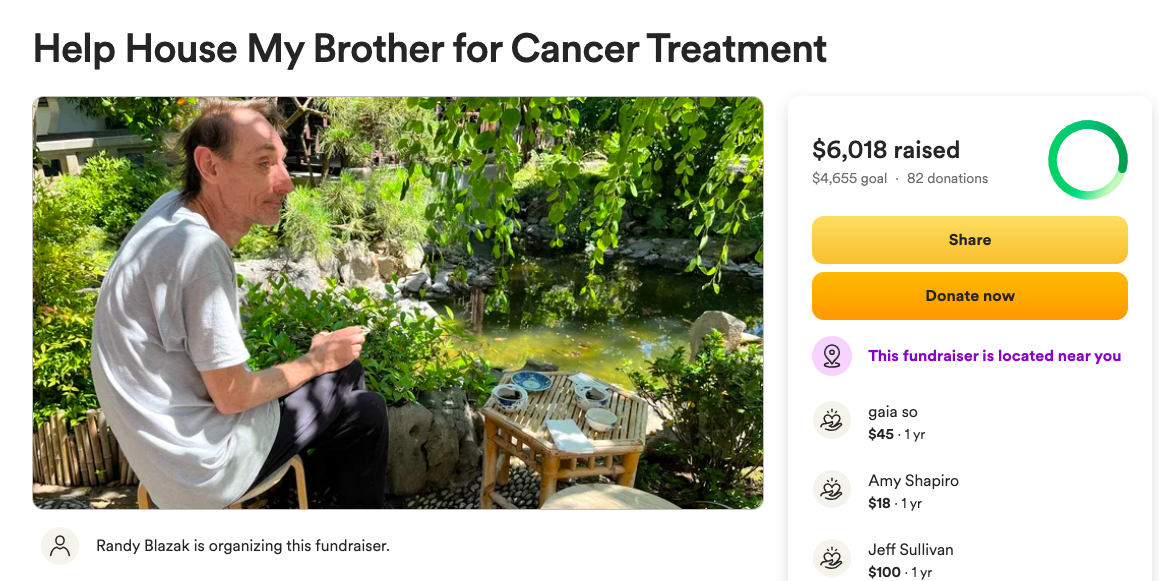
Getting my brother situated was a challenge, he was so used to being alone in nature. Finding him housing (after a few rough weeks on my couch) and getting him to chemo appointments were a struggle. Fortunately, there was a great amount of support from my friends in a fundraiser that got him into a care facility. Eventually, he recognized hospice care made more sense although he often talked about “getting better” and building a cabin in the woods outside Knoxville, Tennessee, where he had visited. Our road trips got shorter, the Oregon coast, the Japanese Gardens in the West Hills, until finally he was bed bound, with the trees of Forest Park barely visible out of his window.

It is of great comfort to know my brother isn’t suffering anymore. Anal cancer is the worst thing you can imagine. “Why does it have to be in my ass,” Ron would say as I’d deliver his opioids from the Safeway Pharmacy. It was excruciatingly miserable and he’d often wish he was back in his tent in Cartersville. “I’ll drive you to the airport if you want,” an older version of me would say, annoyed that he didn’t appreciate having a roof over his head and access to legal weed. But I knew Ron was doing me a favor by letting me play the caring older brother role I’d failed to as a kid.

Today, I will deliver his prayer shawl to the funeral home for him to be cremated with and a note expressing gratitude for letting me take care of him. In the coming year I will take his ashes back to Georgia and spread them in the woods where he found his peace. Fittingly, there are no photographs of all the times we fought, just of us in times of happiness. I’ll let that record be the memory of my little brother.

The end of the Eras Tour and how Taylor Swift stopped time for my daughter

December 8, 2024

There are a lot of responsibilities of a parent. We need to keep our kids safe and provide the skills so they’ll be successful as adults. We need to wrap them in love and make sure they have three meals a day. But sometimes, we gotta make a dream or two come true to show there is still magic in the world.

At some point in the last year, Cozy’s obsession switched from the Animal Crossing video game to Taylor Swift. It corresponded with me also becoming a fan as I started talking about her music on my YouTube channel. We got to develop this thing together. When the concert film, Taylor Swift: The Eras Tour, came out October of 2023, neither of us were that interested in seeing it. Then, seeing the actual Eras Tour became the mandate. Swiftmania had come to our home.

For me, as a music fan, it was coming to appreciate the incredible talent of her songwriting and the unique production of each album. For Cozy, it’s also about her connection to her friends, the fifth grade Swiftie crew. The old teeny-bopper culture of the bedroom has gone from the days of dreams of male stars, and the dream to marry them, to a 21st century connection to a female artist who empowers girls and women with empathy and strength. No wonder fragile men hate Taylor Swift.

So the hunt for tickets was on. We had a place to stay if I could score some tickets to one of the London shows. The tickets for the Warsaw show were the cheapest. I entered every contest I could, including buying lots of raffle tickets. I’m from the days of $12.00 concert tickets so the thought of paying more than a hundred times that for a show was beyond me, but the kid wanted to go. And so did I. We renewed Cozy’s passport just in case we got tickets to one of the more affordable shows in Europe. We didn’t.

The tour, that began in Glendale, Arizona, on March 17, 2023, was set to end not too far up the road from us in Vancouver, BC. A few weeks ago, Cozy was in tears realizing her dream to see Taylor was winding down. Then she woke up one day and said, “Can we try a fundraiser?” So we recorded a video and sent it in to Kickstarter right before Thanksgiving but it never got approved to launch. So, in a last minute appeal, I asked fans of Cozy to Venmo support for this mission to get the kid to the Eras tour. We scored a couple of semi-obstructed view tickets on StubHub for the Friday show for only $999 each with a $700 service charge. (I hope the CEO of StubHub is laying low.)

With the tickets on my phone (and some sustaining donations from Cozy’s mom and some great friends), we headed north to Canada. The highway was jammed up with Swifties. At one point, north of Seattle, Cozy and a car full of girls tossed friendship bracelets to each other as we headed for the border. I’m guessing there are a ton of the famous bracelets on I-5 that didn’t make their target. The Canadian customs guy laughed when he saw our car, covered in graffiti, including writing on the driver’s side that said, “Broke Swiftie Dad” with my Venmo handle.

Once inside the BC Place Arena in Vancouver, the excitement was leaping off the walls. I was a year younger than Cozy when my parents took me to see Elvis Presley, so I wanted her to remember every second and just breathe the whole thing in. She was busy trading bracelets while I checked out all the subcultural fashion. (My favorite was a T-shirt with a picture of Jake Gyllenhaal’s face, the inspiration for the epic “All Too Well” song, with a red cross over it.). Cozy was in her “22” outfit, hoping she would be selected out of the 60,000 in attendance to receive the coveted “22 hat” from Taylor herself. But there we no mistaking that we were in the middle of a cultural phenomenon, about to be in the room with the biggest pop star on the planet.

After a pleasant set from Taylor’s buddy Gracie Abrams (daughter of JJ Abrams), the countdown clock struck zero, the lights dropped and our special concert wristbands started flashing. Happy Eras! It was wonderfully deafening. Like the Beatles times a thousand (dollars). I recorded Cozy as Taylor appeared mid-stage to launch into the Lover Era portion of the show. She screamed and didn’t stop screaming for three hours. It was blissful. Dad mission accomplished.

The show itself was incredible. I got to hear all my favorite songs, including “Cardigan” and “Midnight Rain.” Her acoustic set, different each night, included “Never Grow Up,” which always reminds me of Cozy. But the zeitgeist of the night was the first bridge to “Cruel Summer,” where we all sang at the top of lungs with the women herself. “I’m drunk in the back of the car…” They were filming the concert so if there’s an Eras Tour 2 movie coming out, you may see Cozy and I singing our hearts out.

Cozy didn’t get the 22 hat but during that song she’s convinced that Taylor waved at her up on row XX in the upper level of the arena. I’m sure she did. Every moment of the concert was brilliant, from “Miss Americana” to “Karma.” After three and half hours, I didn’t want it to end. Swift put on a brilliant show, singing a thousand songs, dancing her ass off, and making everyone of the 60,000 in attendance feel like they were sharing a personal moment with her. I’ve got a pretty good resume of concerts over the years (I was at Live Aid, for godssake), and this was one of the most incredible things I’ve ever experienced, both musically and culturally.

We made are way back across the border after the show and got a hotel in Bellingham, Washington, and drove home yesterday in the pouring rain. We made it back to Portland in time for Cozy to get to the birthday party of her Swiftie bestie who had a house full of girls waiting to hear from a friend who had actually been to the Eras Tour. When Cozy knocked on the door, you could hear the screaming down the block. She came bearing friendship bracelets for everyone.

Taylor Swift’s Eras Tour ends tonight in Vancouver, after 149 shows on five continents. It is the largest grossing tour of all time and has shaped culture and economies around the globe. Astronauts have reported being able to see the concerts from space and geologists have claimed the crowds have caused the earth to vibrate. All that is true but I know for one 10-year-old girl it was simply about the moment Taylor Swift waved at her that caused time itself to stop. And (with a little help from my friends) I got to be the one who made that moment happen.

To you, everything’s funny

You got nothing to regret

I’d give all I have honey

If you could stay like that

– Taylor Swift, “Never Grow Up”

Coming Back from the Ledge of Election Day