The James Bond Project #22:  Die Another Day (2002)

May 26, 2025

This series is intended to evaluate each product of the James Bond film franchise through a feminist lens, and the relevance of the Bond archetype to shifting ideas of masculinity in the 2020s.

Die Another Day (2002, directed by Lee Tamahori)

The first Bond film of the 21st century and the last Pierce Brosnan 007 role was also intended to be a celebration of 40 years of James Bond movies. Several directors were considered, including Ang Lee and Martin Scorsese, but producer Barbara Broccoli settled on New Zealander Lee Tamahori, who directed the brilliant When We Were Warriors (1994). The result is a sweeping adventure that pulls together North Korean torture chambers, conflict diamonds, and Halle Berry into a film that is often placed at the bottom of Bond lists but is also surprisingly satisfying. Die Another Day would mark the end of 40 year run and take Bond into a new era with the arrival of Daniel Craig.

Die Another Day is meant to pay homage to all the previous Eon Bond films. Halle Berry walks out onto a Cuban beach as a doppelgänger of Ursula Andress in Dr. No (1962). John Cleese has been promoted to Q and his laboratory is a museum of past 007 gadgets, including the jet pack from Thunderball (1965). I’m sure there’s a website that goes through the film’s nods. (Live and Let Die’s interracial love scene?) There was even talk of having Sean Connery make a cameo.

As is expected, we get James underwater and on snow. James in a tux, making plenty of sexual double entendres (“ I have been known to keep my tip up”), and James in exotic locales; North Korea, Cuba, and Iceland. But there are also some departures. The opening title sequence features a theme song sung by Madonna (who also has a small role in the film) with usual female bodies, but also a montage of Bond being tortured in a North Korean prison. Weird. Also, the film relies heavily on CGI, including a really dumb invisible Aston Martin. So dated now.
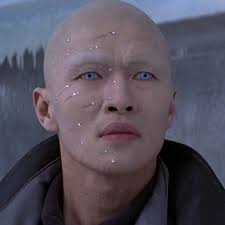
There are actually a lot of dumb things in this film. We’re to believe that 007 was tortured for 14 straight months in North Korea, allowing his hair to grow a few feet. There’s also a Korean terrorist named Zao, played by Rick Yune, who has diamonds embedded in his face from a blast and I kept thinking, “With a pair of tweezers, I could take care of that for you.” There’s also the classic dumb Bond trope of using “science” to change somebody’s face to look like somebody’s else face. And then there’s the thing of James running around Iceland without a parka on. Not only does a single bullet not strike Bond, neither does a chill.

Let’s plug Bond at 40 into our matrix, shall we?

Driver of Action – We do get a little bit of Halle Berry previewing her 2004 Catwoman role, but this is a Jame Bond revenge movie. Although he doesn’t seem that angry that he was tortured in a North Korean jail for 14 months. In Brosnan’s final jaunt as 007, all plot lines are on him. Even M is sidelined.

Role of Violence – 007 takes out a few dozen guards and henchmen in the film, including during an over-the top hovercraft chase scene. There’s a pretty awesome sword fight scene between Bond and bad guy Gustave Graves (played by Toby Stephens) that smashes up a fancy fencing hall that’s so old school film violence that I didn’t want it to end. And the Bond kills Graves by opening his parachute on a plane so he gets sucked through the jet engine, which is pretty gross. If 40 years, there hasn’t been shred of remorse for this body count.

Vulnerability – After Bond has been traded for Zao to get him out of North Korea, M takes away his “00” status on the belief that James revealed state secrets under torture. He could have taken his cyanide pill but chose not to. (“Threw it away years ago…” he tells M.) There’s a brief moment where James is confronted with the realization, “If I’m not 007, what am I?” But it’s just a split second. Then he goes ape shit and busts out on his rogue (again) vengeance mission.

Sexual Potency – The sex scene with Halle Berry’s character, Jinx, is pretty hot, with her on top. Woman power! I remember seeing this in the theater and slinking into my seat. (Remind me to tell you the story of meeting Berry at a Braves game.) He also beds MI-6 operative Miranda Frost (played by Rosamund Pike), which seems completely unbelievable and dumb. Shockingly, there is a scene of Bond nailing Miss Moneypenny on her desk, but it turns out just be a fantasy she’s having on Q’s virtual reality contraption. So, we don’t get the “3 conquests” quota, and that’s probably a good thing.

Connection – Bond is so alone. More alone than in any previous film. M, Q, and all the other letters are annoyances. Jinx is an NSA agent so there is some connection there and they do end up flying a helicopter to a Korean island to role around in a pile of conflict diamonds, but it’s more obligatory than romantic. Poor James.

Toxic Masculinity Scale: 5

Summary This isn’t a great Bond film, but it is a romp. There’s cool stuff that are like a series of chef’s kisses for loyal Bond fans. The opening scene of Bond and South Korean soldiers surfing massive waves to land behind the DMZ is cool. Bond driving a 50s convertible in Havana is cool. Bond escaping the hospital bed by stopping his own heart is cool. Dumb, but cool. And the Clash’s “London Calling” playing as he flies back to HQ is super cool.

The 40th Anniversary Bond also suffers from the trap of toxic masculinity. The man alone who kills without consequence and beds women without care or kindness because that’s what men do is just sad decade after decade after decade after decade. He’s morphed into a robot. I suppose that’s functional for the MI-6 mandate, but it’s not human. Ten years earlier, the cost of this life was explored in Clint Eastwood’s brilliant film, The Unforgiven. But for James Bond, the cartoon character in a new millennium, it’s just a fading shell of what men were supposed to be.

Die Another Day premiered on November 18, 2002 at Royal Albert Hall with Queen Elizabeth and Prince Phillip in attendance. It was the week the SARS pandemic was causing panic and the week President Bush created the Department of Homeland Security. The world was changing and the relevance of a 007 was, again, in doubt. Or maybe needed more than ever. It would be up to Daniel Craig to tell us.

Next: Casino Royale (2006)
The James Bond Project #21:  The World Is Not Enough (1999)

The James Bond Project #20:  Tomorrow Never Dies (1997)

The James Bond Project #19: GoldenEye (1995)

The James Bond Project #18: License to Kill (1989)

The James Bond Project #17: The Living Daylights (1987)

The James Bond Project #16: A View to a Kill (1985)

The James Bond Project #15: Never Say Never Again (1983)

The James Bond Project #14: Octopussy (1983)

The James Bond Project #13: For Your Eyes Only (1981)

The James Bond Project #12: Moonraker (1979)

The James Bond Project #11: The Spy Who Loved Me (1977)

The James Bond Project #10: The Man with the Golden Gun (1974)

The James Bond Project #9: Live and Let Die (1973)

The James Bond Project #8: Diamonds are Forever (1971)

The James Bond Project #7: On Her Majesty’s Secret Service (1969)

The James Bond Project #6: You Only Live Twice (1967)

The James Bond Project #5: Casino Royale (1967)

The James Bond Project #4: Thunderball (1965)

The James Bond Project #3: Goldfinger (1964)

The James Bond Project #2: From Russia With Love (1963)

The James Bond Project: #1: Dr. No (1962)

The James Bond Project #21:  The World Is Not Enough (1999)

May 1, 2025

This series is intended to evaluate each product of the James Bond film franchise through a feminist lens, and the relevance of the Bond archetype to shifting ideas of masculinity in the 2020s.

The World Is Not Enough (1999, directed by Michael Apted)

Four decades of 007 movies and so many bullets fired at Bond. Not that I want to see James get shot, but couldn’t one bullet at least graze his perfect temple? The World Is Not Enough, Pierce Brosnan’s third go at 007, finds Brosnan comfortably coasting as Bond in a film with epic stunts but not much else. Eon Productions still seems unsure of Bond’s role in a post-Cold War world, so they rely on the time-tested (over 37 years! That’s 4 years older than Jesus Christ!!) conventions. James in a tux in a casino. James wrestling a nuclear submarine. James and his obligatory three sexual conquests. Yawn.

Barbara Broccoli wanted to find a director who could bring out strong female performances. (Peter Jackson, pre-LOTR, had been considered.) She settled on Michael Apted because of his work with Sigourney Weaver (Gorillas in the Mist), Jodie Foster (Nell) and Sissy Spacek (Coal Miner’s Daughter). All three women were nominated for Oscars (with Spacek winning). One would think that would lead to a more woman-centered film, especially after the heavy reliance on Michelle Yeoh in Tomorrow Never Dies. Nope. TWINE is about as boilerplate Bond as we get.

Side note, as a viewer who has been keeping an eye on the credits of these films, the one filmmaking role that is most constantly populated by women (besides costumes, and hair & makeup) is the casting director. According to 2025 data, 74% of casting directors in the United States are women. So one wonders what casting director Debbie McWilliams was thinking when she cast Denise Richards as nuclear physicist Dr. Christmas Jones. Richards was an “it” girl in the late 90s, starring in two of my favorite fluff films of the era, Starship Troopers and Wild Things. She might be believable cast as a substitute high school science teacher (maybe), but as a nuclear physicist dressed as Lara Croft, completely laughable. Maybe Barbara Broccoli was trying to hold on to the horny teenage boy demographic (who, in 1999, were heavily breaking for Natalie Portman in Star Wars: Episode I – The Phantom Menace).

There were some casting coups in TWINE. Robert Carlylem, who had been so great in Trainspotting, was cast as the psychotic terrorist, Renard. And Sophie Marceau, the French actress who stared in Braveheart and Anna Karenina, played the erotically complex role of Electra. But most notable was the final performance of Desmond Llewelyn as Q. The one consistent thread through the Bond franchise was Llewelyn’s Q, starting with From Russia with Love in 1963, through 17 films. TWINE had Q training his replacement, R (played by Monty Python’s John Cleese) and joking about retirement, but his fate in the series was sealed. Three weeks after the premiere of TWINE, Llewelyn, 85, was driving home in his Renault Mégane, when he was hit head on by 35-year-old man in a Fiat. To die a young man’s death.

The World Is Not Enough, as expected, has plenty of exotic locations, including Spain, Azerbaijan, and an UNDERGROUND LAIR in Kazakhstan. We even get the Bond staple of 007 on skis being chased by Russian assassins. (Don’t fix it if it ain’t broke.) But this film finally gives us an action sequence in London with an epic boat chase on the Thames that climaxes with Bond flying off his rocket boat and grabbing a dangling rope of hot air balloon that the beautiful assassin is getting away in. (Assassin played by Maria Grazia Cucinotta. I had to look her up.) Cinema!

The 20th century of Bond ended, not with a bang, but with a meh. Let’s analyze it.

Driver of Action – Unlike the previous film, TWINE is a Bond solo vehicle. There’s a subplot about a relationship between Renard and Electra but it’s barely dealt with. M has more of a role but she’s mostly another damsel in distress for 007 to rescue. The world is not enough for the black hole that is James Bond.

Role of Violence – The body count is significantly less than the last two Brosnan films. About 19, if you don’t count all the henchmen that drown in the nuclear submarine. He kills Renard with a nuclear fuel rod to the chest. More dramatic is when he confronts Elektra for planning mass murder. “You wouldn’t kill me. You’d miss me,” she says. “I never miss,” he says then shoots her in the chest. She dies in her bed and Bond lays on top of her in one of the creepiest moments in the franchise.

Vulnerability – Early in the film we see James wearing glasses, but they may be a disguise, not a sign of aging. Later, when the beautiful assassin blows up her hot air ballon, he falls, crashing on a roof and dislocating his shoulder. It’s not getting shot, but it’s something. Later, Elektra talks about the death of her mother and asks James, “Have you ever lost someone?” but the scene moves on before we can get a glimpse of James recalling the death of his wife. That inference is left for longtime Bond fans.

Sexual Potency – The formula is in play. First Bond sleeps an MI-6 doctor, Dr. Molly Warmflash (I shit you not) so he can get her to forge a doctors note so James can get back to work. Then he sleeps with Elektra, who turns out to be a bad girl. At the end of the film, he sleeps with Dr. Christmas Jones as M, R, and the rest of the MI-6 brass watch their humping heat signatures. Bond quips, “And I thought Christmas only came once a year.” Check, please!  And, just to check it off the list, there is the prerequisite sex banter between James and Moneypenny. “Close, but no cigar.”

Connection – Yeah, no. Brosnan has mastered Moore’s detached Bond. There’s no sense of connection, not even with the fading Q or captured M. There are no CIA friends to lean on. We’re not sure why he sleeps with Elektra. It’s just expected. And his relationship with Denise Richards’ nuclear-physicist-damsel-in-distress-in-wet-clothes is more than flimsy. They don’t end up in a screwing in a boat. They do it on a rooftop in Istanbul while fireworks explode overhead. But for a Bond climax, it’s pretty flaccid.

Toxic Masculinity Scale – 6

Summary Bond 1999 is a disappointment. The previous film, Tomorrow Never Dies, offered so much promise. TWINE feels like a big back slide. Brosnan is playing a cartoon character version of James Bond, swimming up from the floor of the Black Sea, with his damsel in distress, holding his breath. (If ever a scene needed a man-eating shark.) We expect the sexy one-liners. When future beautiful assassin is just the beautiful cigar girl, she asks James, “Would you like to check my figures? Bond replies, “Oh, I’m sure they’re perfectly rounded.” Low hanging fruit. The action scenes redeem somewhat but, otherwise, this is 007 the two-dimensional prick.

The film was originally going to be called James Bond 2000, but they moved up the release to cash in on the holiday season and the film did quite well. (It was the first film I saw as a new homeowner on Thanksgiving night 1999.) The World Is Not Enough premiered in LA on November 8, 1999, as a MGM film (not United Artists). Four days later a massive earthquake struck Turkey, destroying some of the locations used in the film. The theme  song, performed by Garbage, attempted to make the film contemporary, but the TWINE made Bond feel like an artifact of the 20th century. Brosnan would have one more chance to update Bond for the new millennium.

Next: Die Another Day (2002)

The James Bond Project #20:  Tomorrow Never Dies (1997)

The James Bond Project #19: GoldenEye (1995)

The James Bond Project #18: License to Kill (1989)

The James Bond Project #17: The Living Daylights (1987)

The James Bond Project #16: A View to a Kill (1985)

The James Bond Project #15: Never Say Never Again (1983)

The James Bond Project #14: Octopussy (1983)

The James Bond Project #13: For Your Eyes Only (1981)

The James Bond Project #12: Moonraker (1979)

The James Bond Project #11: The Spy Who Loved Me (1977)

The James Bond Project #10: The Man with the Golden Gun (1974)

The James Bond Project #9: Live and Let Die (1973)

The James Bond Project #8: Diamonds are Forever (1971)

The James Bond Project #7: On Her Majesty’s Secret Service (1969)

The James Bond Project #6: You Only Live Twice (1967)

The James Bond Project #5: Casino Royale (1967)

The James Bond Project #4: Thunderball (1965)

The James Bond Project #3: Goldfinger (1964)

The James Bond Project #2: From Russia With Love (1963)

The James Bond Project: #1: Dr. No (1962)