The James Bond Project #20:  Tomorrow Never Dies (1997)

April 17, 2025

This series is intended to evaluate each product of the James Bond film franchise through a feminist lens, and the relevance of the Bond archetype to shifting ideas of masculinity in the 2020s.

Tomorrow Never Dies (1997, directed by Roger Spottiswoode)

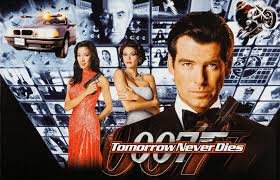
OK, who wouldn’t be excited for a film that paired James Bond and Michelle Yeoh? I mean seriously. Yeoh was still more known as a Hong Kong action star and was three years from 2000’s Crouching Tiger, Hidden Dragon, but this pairing was inspired. Tomorrow Never Dies, Pierce Brosnan’s second 007 film (and the first after producer Cubby Broccoli’s death) is another post-Cold War blockbuster that ramps up the violence and pits James against a megalomaniac media mogul who is probably supposed to be Rupert Murdock, if Rupert Murdock thought nuking Beijing could improve ratings.

The casting of TND (the title inspired by the Beatles’ “Tomorrow Never Knows”) is mostly spot on. Bond “girl” Michelle Yeoh, as ass-kicking Chinese agent Wai Lin, is genius. Terri Hatcher, hot off Lois & Clark, as a past “love” interest of James, grabs the screen. Judi Dench is in full command as M. Joe Don Baker is back as CIA agent Jack Wade. Desmond Llewelyn is hilarious as Q (“Grow up, 007”). There’s a funny bit with Vincent Schiavelli (Mr. Vargas in Fast Times at Ridgemont High) as a professor/assassin. But Jonathan Pryce’s portrayal of evil media magnet Elliot Carver is so cartoonish, it kills the good versus evil paradigm. More like, good versus goofy. (Anthony Hopkins was offered the role but declined in favor of making The Mask of Zorro.)

The writing is much sharper than GoldenEye, including James’ quips. Even Miss Moneypenny gets in the action. “You always were a cunning linguist, James.” And the action is bigger. There are a lot of explosions in this film. A lot. The direction by Roger Spottiswoode (Turner & Hooch, 1989) is meant to fill the wide screen with non-stop action. Apparently, Michelle Yeoh wanted to do all her own stunts but Spottiswoode had to hold her back for liability concerns. 

Tomorrow Never Dies has lots of Bond staples; 007 in a tux, 007 scuba diving, 007 flying a plane that’s not his, 007 not being struck by any of the thousands of bullets being fired at him. And he’s got a woman in every port. Most of the film takes place in Hamburg, Germany, Saigon, Vietnam, and the South China Sea. Bookended with theme songs by Sheryl Crow and k.d. lang, it’s Bond carving out space in a woman’s world. “Never argue with a woman,” he says in the film.

Let’s plug Tomorrow Never Dies into our matrix.

Driver of Action – The second half of this film actually feels like a buddy film. Once Michelle Yeoh drops into the plot, there are two action stars on the screen. I don’t know if Eon Productions magically knew that Yeoh would become one of the biggest movie stars of the 21st century, but she’s driving a lot of the action at the end of the film. She has to do a bit of time as a damsel in distress to justify the sexual chemistry (Bond still can’t have a woman who is an equal), but, so far in the franchise, this is close to a screen share as we’ve seen.

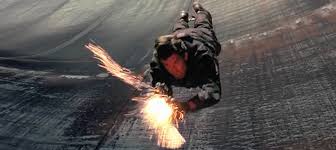
Role of Violence – Bond with a machine gun and hand grenades is a killing machine. It’s another bloodbath. It’s so far removed from Connery’s Bond, it’s hard to believe it’s the same character. The climatic finale, where he kills Carver with a giant drill, used to sink battle ships, is particularly gruesome. But Wai Lin is wailing away as well, mostly using marital arts, so there’s a female balance to 007’s orgy of violence.

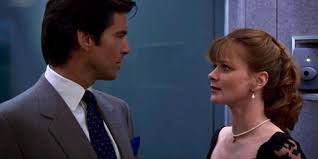
Vulnerability – Brosnan’s Bond is zipped up like Moore’s but there is the tiniest glimpse of humanity this episode. It’s established that he has a history with Carver’s wife, Paris (Terri Hatcher). When she appears in his Hamburg hotel room, he’s drawn to her but expresses some guilt over abandoning her. “What happened, James? Did I get too close?” He says yes and they “reconnect.” Carver finds out and has her killed and then Bond confronts the man who killed her and shoots him in the head at point blank range.

Sexual Potency – We’re back to the criteria of 3. After the opening titles, we find James in bed with a beautiful Oxford University professor (yeah, right) “brushing up on a little Danish” after sex. Then, after reconnecting with Paris, he slips her dress off that they have sex (which gets her killed). And then he ends up with Wai Lin. Despite changing social norms, you get the feeling the Eon just gave up and let Bond be Bond.
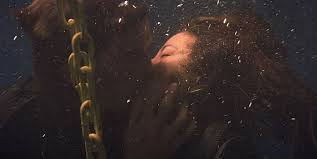
Connection – Until Wai Lin shows up, we don’t get much connection. James has no scenes with M and only briefly with Moneypenny. He softens up around Paris but she is killed before he has a chance to rescue her. Wai Lin falls back into the Damsel in Distress mode when Carver throws her into the water tied to a massive chain and she appears to drowned. James saves her with a long underwater kiss, blowing air into her lungs. But the connection between James and Wai seems more about a celebration of having just saved the world from Rupert Murdoch than anything romantic. Although they do end the film KISSING IN A RAFT in the South China Sea while the British Navy looks for them. Traditions matter!

Toxic Masculinity Scale: 5

Summary Scarface Sex Fiend Bond is somewhat balanced out by a strong female M (although Dench as a maternal concern for our man James) and a scene-stealing action star doubling as this episode’s Bond girl. Q’s tech plays an outsized role with a remote controlled BMW 750 that has a scene all to itself, and a fully-loaded cell phone (meh). Both Bond and Carver play their sexism cards. When Carver catches Wai on his stealth ship, he dangles her in front of 007 and says, “And it seems you can’t resist any woman in my possession.”

Something that stands out are the henchmen in TND. They have really cool outfits and a loaded armory, but I was left with two questions. Where are all the henchwomen? And how does one go about acquiring the job henchman? I’m assuming Carver paid top salary. Regardless, his massive stealth ship made a great stand-in for an underground lair, especially when it got blown up.

Tomorrow Never Knows premiered December 9, 1997, the same week as the Kyoto Protocol, the first global attempt to address climate change. The film was a massive success, earning a Golden Globe nomination, but kept out of the #1 spot by the behemoth that was Titanic. Its release was also timed to coincide with United Artist’s parent company, MGM, becoming a publicly traded corporation, making James Bond a massive cash cow at the end of the century.

Next: The World Is Not Enough (1999)
The James Bond Project #19: GoldenEye (1995)

The James Bond Project #18: License to Kill (1989)

The James Bond Project #17: The Living Daylights (1987)

The James Bond Project #16: A View to a Kill (1985)

The James Bond Project #15: Never Say Never Again (1983)

The James Bond Project #14: Octopussy (1983)

The James Bond Project #13: For Your Eyes Only (1981)

The James Bond Project #12: Moonraker (1979)

The James Bond Project #11: The Spy Who Loved Me (1977)

The James Bond Project #10: The Man with the Golden Gun (1974)

The James Bond Project #9: Live and Let Die (1973)

The James Bond Project #8: Diamonds are Forever (1971)

The James Bond Project #7: On Her Majesty’s Secret Service (1969)

The James Bond Project #6: You Only Live Twice (1967)

The James Bond Project #5: Casino Royale (1967)

The James Bond Project #4: Thunderball (1965)

The James Bond Project #3: Goldfinger (1964)

The James Bond Project #2: From Russia With Love (1963)

The James Bond Project: #1: Dr. No (1962)

The James Bond Project #19: GoldenEye (1995)

April 15, 2025

This series is intended to evaluate each product of the James Bond film franchise through a feminist lens, and the relevance of the Bond archetype to shifting ideas of masculinity in the 2020s.

GoldenEye (1995, directed by Martin Campbell)

The first Bond film in the fourth decade of the 007 franchise is something of a synthesis of all the previous EON Production films and a fair send-off for EON producer Cubby Broccoli, who died five months after its release. After a long six year gap, while Eon dragged Timothy Dalton into development hell, Bond was back with Pierce Brosnan as the new British MI-6 commander. GoldenEye fused License to Kill’s vengeful 007 with the smarmy, Casanova Bond of the past. The first Bond film not to be based on an Ian Fleming story is a sweeping tale that presents Bond with his first post-Cold War conflict and was tailor-made for 90s audiences who were getting used to the widescreen violence in films like Natural Born Killers.

Brosnan, who had been offered the role before Dalton, comes in a more upper crust English, but also more boyish, Bond who has parachuted into a third-wave feminist world. This disconnect is magnified by the new M, now played by Dame Judi Dench. The new M states a clear opinion on the archetype that is Bond, James Bond. “I think you’re a sexist, misogynist dinosaur, a relic of the Cold War, whose boyish charms are wasted on me,” she tells him. Welcome to the 90s, James. We still have Desmond Llewelyn as Q to link us to the Bond cannon. This installment’s Bond “girl” is Swedish model and actress Izabella Scorupco, who forces a rough Russian accent. Also trying to be Russian (or Georgian) is “sadistic lust murderer” Xenia Onatopp (There’s the names we love in these films), played by Famke Janssen (soon to be Jean Grey in the X-Men films).

GoldenEye starts with a flashback to the Cold War days with 007 and 006 on a mission in the Soviet Union where 006 (played by the great Sean Bean) is killed. Bond blames himself, setting up the revenge redux. After an epic scene where James dives into a falling plane (This is the first Bond film to use CGI), we flash forward to the present where new Russia is losing track of its shit and we’re off. The scene where James is chasing the rogue Russian general through the streets in St. Petersburg in a giant Russian tank was classic 007 thrills on the big screen. I remember watching it in the Lloyd Center Cinema and thinking it was the wildest thing filmmakers could cock up for a James Bond movie.

This installment gives us plenty of Bond staples fans crave. There’s Bond in a tux, playing baccarat, there’s Bond in the Caribbean, there’s the double entendre quips (none very clever), and thousands of bullets fired at our James with nary a scratch. The film also features some epic stunts, including a record setting bungee jump off a Russian (actually Swiss) dam that has to be seen to believed. Brosnan plays Bond closer to Moore than Connery and his bourgeois demeanor adds to the “Man out of place” element that makes this film kinda fun. Cubby Broccoli’s daughter, Barbara, took over the production as her father’s health failed, so some of the gender commentary may have been here doing.

Let’s see how GoldenEye fares in our feminist matrix.

Driver of Action – New Bond, new star. Q and his lab techs show up for comedic effect. There’s a new CIA agent, Jack Wade, to help out (Joe Don Baker is back!) because Felix is still legless from the shark. The new post-communist Russia really plays the support role. In the gap between Yeltsin and Putin, it presented a blank slate to the world, where the need for secret agents might be a thing of the past. But this film rests purely on the shoulders of Remington Steele star Pierce Brosnan.

Role of Violence – There’s a lot of slaughter in GoldenEye, largely due to Bond’s use of machine guns. I had to ask ChatGBT the body count because I lost track. AI reports James killed 47 people in the film, mostly Russian soldiers. (Wasn’t the Cold War over?) There’s also some weird violent sexual scenes with Xenia Onatopp (we’re to believe that violence is her kink) and a scene where 007 knocks her unconscious.

Vulnerability – For the first time in a Bond film, we learn that James’ parents were killed in a mountain climbing accident when he was a boy. But there’s no sense that this plays a role in his present psyche. It’s just presented as a factoid to contrast the story that 006’s parents were killed by Stalin.  There’s no James in love and only a mild sense of guilt that 006’s death might be his fault.

Sexual Potency – Here’s the James Bond rule of three. 1) Caroline – An MI-6 psychologist, sent to evaluate James, gets seduced by our agent who has a bottle of bubbly in the glovebox. He’s going to let her give him, “a very thorough evaluation.” Wink. 2) Xenia Onatopp – It’s more fighting than sex. James is taken aback by her biting his lip and drawing blood. Her death (pulled into a tree by a helicopter) is also played as sexual but in 2025 seems just weird. 3) Natalya Simonova (played by Izabella Scorupco), a Russian computer programmer, is Bond’s “love” interest/damsel in distress in the film. He forcibly kisses her and then suddenly they’re a romantic couple. (This quasi-rape trope seems all too common in 007 flicks.)

It should be mentioned that Bond’s relationship with Moneypenny (now played by Samantha Bond) is firmly located in 90s feminist positions. She’s not having any of James’ “charm” offensive. Bond: “What would I do without you?” Moneypenny : “As far as I can remember James, you’ve never had me.” Bond: “Hope springs eternal.” Moneypenny: “This sort of behavior could qualify as sexual harassment.” Finally.

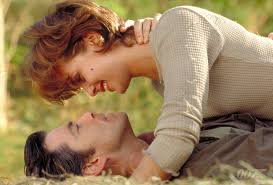
Connection – Brosnan plays Bond detached, as we have come to expect. There’s a hint of a back story between 006 and 007 that might have been nice to know about. As is expected, he and Natalya end the film together, not in a boat but in a Cuban meadow. They think they’re alone, but there is some coitus interruptus from the United States Marines, so they’ll have to save their victory sex for another day, or never. There’s no real chemistry between these two so the door is open for Bond’s next “girl.”

Toxic Masculinity Scale: 5

Summary The opening title sequence of GoldenEye, with women smashing hammers and sickles to a song written by U2 (and sung by Tina Turner) locates the film in a new era. The Cold War was the golden era of the Flemming novels and the platform for Bond’s good vs. evil adventures. Now New Bond is forced (again?) to find his relevance. Is he a 90s-action hero, right up there with Arnold Schwarzenegger, or a washed-up antique who has lost his cultural relevance? His elevated violence and philandering may be intended as a middle finger to the politically correct shifts in cinema.

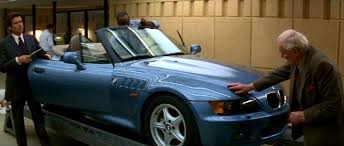
The tech in GoldenEye is a co-star along with lots of product placement. (Welcome to the new global market place.) IBM is featured front and center (and a great scene where a young Alan Cumming gets an “email”). The Aston Martin is replaced with a BMW, fully loaded with Q’s gadgets. “You have a license to kill, not to break the traffic laws,” Q tells an impish Bond. GoldenEye also gives us that most central staple of Bond Baddie accessories, the underground lair, hidden below a lake, from where a deadly satellite is controlled. Its explosive destruction is everything that Bond fans buy movie tickets to see.

GoldenEye premiered on November 13, 1995 at Radio City Music Hall, as the war in Yugoslavia, the largest hot war resulting from the end of the Cold War, was reaching its peak. The direction of Martin Campbell and the production of Barbara Broccoli (with Judi Dench’s M) represented a chance to reboot the franchise in a world without the Soviet Union. What issues would MI-6 confront as the 20th century closed? With the help of CGI, the promise of epic stunts and a horny agents would be a part of it.

Next: Tomorrow Never Dies (1997)

The James Bond Project #18: License to Kill (1989)

The James Bond Project #17: The Living Daylights (1987)

The James Bond Project #16: A View to a Kill (1985)

The James Bond Project #15: Never Say Never Again (1983)

The James Bond Project #14: Octopussy (1983)

The James Bond Project #13: For Your Eyes Only (1981)

The James Bond Project #12: Moonraker (1979)

The James Bond Project #11: The Spy Who Loved Me (1977)

The James Bond Project #10: The Man with the Golden Gun (1974)

The James Bond Project #9: Live and Let Die (1973)

The James Bond Project #8: Diamonds are Forever (1971)

The James Bond Project #7: On Her Majesty’s Secret Service (1969)

The James Bond Project #6: You Only Live Twice (1967)

The James Bond Project #5: Casino Royale (1967)

The James Bond Project #4: Thunderball (1965)

The James Bond Project #3: Goldfinger (1964)

The James Bond Project #2: From Russia With Love (1963)

The James Bond Project: #1: Dr. No (1962)

The James Bond Project #13: For Your Eyes Only

February 23, 2025

This series is intended to evaluate each product of the James Bond film franchise through a feminist lens, and the relevance of the Bond archetype to shifting ideas of masculinity in the 2020s.

For Your Eyes Only (1981, directed by John Glen)

The third decade of Bond! After the silly sci-fi spectacle of Moonraker, producer Cubby Broccoli wanted to get 007 back to basics for the first Bond of the 1980s. While there is no underground lair, there’s plenty of other Bond staples, like assassins on skis, James in his tux at the baccarat table, underwater battles, and sharks. First time director John Glen, who had edited several Bond films before this, was brought in to bring James back to earth with a plot that was back to spy vs. spy and less reliant on tech (much to the chagrin of Q who seems at his limit with 007 snark).

A 54-year-old Roger Moore (who seems a bit out of breath in a few scenes) is paired with this round’s Bond “girl,” 25-year old French actress Carole Bouquet. Her character, Melina Havelock, is the daughter of marine archeologists who are killed because the KGB is trying to retrieve some British spy technology from the bottom of the Mediterranean. This launches her into the role of sidekick as she tells Bond,  “I don’t expect you to understand, you’re English, but I’m half Greek, and Greek women like Elektra always avenge their loved ones!”

By 1981, we have established the tradition of the opening action scene being completely over the top. This one starts James at the grave of his wife, Tracy and ends with Bond captured in a remote controlled helicopter controlled by none other than Blofeld! (and his white pussy cat, presumably not the same one from Diamonds Are Forever). The scenes with the helicopter (with 007 hanging on for dear life) careening over London are eighties epic. The comic death of Blofeld was a long time coming and apparently meant as an FU to the producer of Thunderball, who claimed ownership of the Blofeld name.

For Your Eyes Only gives 007 fans the tropes they crave and, unlike Moonraker, has aged well. Moore’s Bond flirts with the problematic nature of his Lothario reputation while still throwing a solid punch. The quips are dialed back and much of the action is movie candy for the widescreen. For the first time the opening credits reveal females in roles like “production manager” and “continuity,” where previously women were relegated to costumes and make-up. Maybe some of these women whispered in filmmakers’ ears not to make Bond such a dick.

Let’s plug FYEO into our analysis.

Driver of Action – This is Moore’s Bond, but early in the film he is rescued by Melina and her crossbow, although in the mad escape car chase he does ask, “Mind if I drive?” Later in the film he is assisted by Milos Columbo, a pistachio-eating smuggler, and his band of thieves. No CIA help here, M (Bernard Lee) died of cancer before his scenes could be filmed, and Q was inserted merely for comic value. This James Bond is completely capable of solving all problems and escaping all sticky situations.

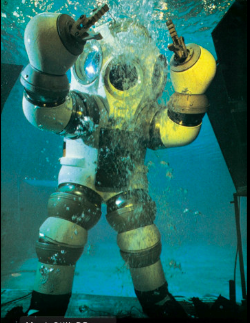
Role of Violence – There is a great relief of seeing 007 finally kill Blofeld, the man who had his wife killed, by dumping him and his electric wheelchair down an industrial smokestack on the Southside of the Thames. (We don’t know who got custody of the cat.) There are a bunch of henchmen killed, connected to various parts of the plot to get the spyware to the KGB. The most spectacular death is a henchmen in a deep diving suit, looking very robotic, who is blown up inside a sunken English trawler. Boom.

Vulnerability – Credit is given for reminding Bond fans that he was (briefly) married and she died in his arms. It was the only real glimpse we ever got into James the man. The epitaph on her tombstone is, “We have all the time in the world,” his last words to her in On Her Majesty’s Secret Service. Early in the film, Bond is captured by Cuban hitman Hector Gonzales and rescued by Melina. He seems a bit confused that he suddenly is the damsel in distress, but, like Jesus, he ultimately takes the wheel.

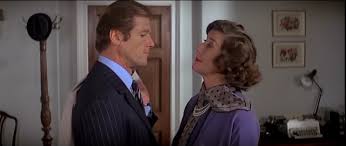
Sexual Potency – Here’s where we start to get a bit of a shift. Bond does not seem to be leering or sexually flirtatious with Melina, 29 years his junior. And between Bond and Moneypenny, the old spark is back, perhaps because they actors are now close in age (both were born in 1927!). Moneypenny, knowing Bond is about to arrive at MI-6 HQ, applies her makeup as James’ hat flies to the hatrack. “Moneypenny, a feast for my eyes,” James says, kissing her on the lips. “What about the rest of you?” she asks. “Well, I was going to get around to that.” There’s the old James Bond we love.

Another character is figure skater Bibi Dahl, played real life figure skater Lynn-Holly Johnson. She has a girl-like crush on Bond and climbs, naked, into his bed. In a shocking turn of events, he rejects her. “You get your clothes on and I’ll buy you an ice cream,” he says trying to kick her out of his room as she plants a kiss on him. Bond does sleep with the Countess Von Schlaf (played by Cassandra Harris, wife of future Bond Pierce Brosnan). The scene feels a bit like, “Oh, this is a Bond film, he needs to bed SOMEBODY.” But like a lot of James’ one night stands, she is killed by some bad guys shortly after bed with Bond. (Death by dune buggy.) And, as if a contractual obligation, James sleeps with Milena at the end of the film. (Can’t let the fans down.) But Bond ’81 seems noticeably less horny. Maybe he was worried about Blofeld’s cat.

Connection – Even though the the plot is pleasingly complex (for a Bond film), 007 is just here to get the job done. There is zero emotional connection. Even Q seems to get on his wick. Milena is strikingly beautiful but she seems to be just a pawn in his plan to stop the KGB from getting this thing (that looks like cheap lighting board). That’s why it’s a bit of a shock that the film ends with them in bed together (ON A BOAT!). Her neglige slides off and she tells James, “For your eyes only.” Roll credits.

Toxic Masculinity Scale: 2

FYEO has some boffo Bond moments. James and Milena in a mini-sub battling another mini-sub under the Mediterranean is pretty damn cool. The scene where 54-year-old Bond is scaling an Alpine cliff in Northern Italy while a henchmen is trying to dislodge the pitons holding his rope is pretty edge of the seat. And there’s a wild ski chase sequence in a bobsled track (that led to the actual death of a stuntman). There’s also some light comedy regarding Britain’s first female prime minister, Margaret Thatcher. “She’ll have our guts for garters,” the Minister of Defense says. The film ends with Thatcher (perfectly played by Scottish comedian Janet Brown) trying to congratulate Bond over the phone but actually talking to Milena’s parrot, who repeatedly says, “Give us a kiss.”

The misogyny in this 007 chapter seems to be dialed back a little. Bibi, the pigtailed ice skater, gets slapped by two men, but not by our hero. Gonzales’ Spanish villa is basically a swimming pool surrounded by bikini-clad women and KGB boss, General Gogal, has a secretary who appears to also be his young mistress. Posters for the movie featured Bond framed by woman’s bare legs, meant to attract male eyeballs. But for 1981, the year Porky’s came out, that all seems rather tame. It offers promise that 80s Bond can deliver the action that fans love with out the adjacent sexism.

For Your Eyes Only Premiered June 24, 1981 putting in direct competition with the Bill Murray film, Stripes. Aided by the popular theme song, sung by Sheena Easton, the film was second highest grossing Bond film (after Moonraker). Long, at 127 minutes, the film attempted to bring the grit back to 007 and find a place for the British spy in the new decade after 20 years of carving out the formula. Can Moore’s Bond age gracefully?

Next: Octopussy (1983)

The James Bond Project #12: Moonraker (1979)

The James Bond Project #11: The Spy Who Loved Me (1977)

The James Bond Project #10: The Man with the Golden Gun (1974)

The James Bond Project #9: Live and Let Die (1973)

The James Bond Project #8: Diamonds are Forever (1971)

The James Bond Project #7: On Her Majesty’s Secret Service (1969)

The James Bond Project #6: You Only Live Twice (1967)

The James Bond Project #5: Casino Royale (1967)

The James Bond Project #4: Thunderball (1965)

The James Bond Project #3: Goldfinger (1964)
The James Bond Project #2: From Russia With Love (1963)

The James Bond Project: #1: Dr. No (1962)

The James Bond Project #12: Moonraker (1979)

February 7, 2025

This series is intended to evaluate each product of the James Bond film franchise through a feminist lens, and the relevance of the Bond archetype to shifting ideas of masculinity in the 2020s.

Moonraker (1979, directed by Lewis Gilbert)

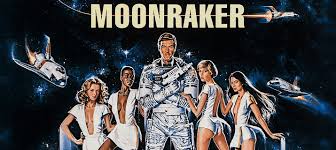
Bond in space! For Your Eyes Only was supposed to be the last 007 of the ‘70s, but due to the popularity of Star Wars, Close Encounters of the Third Kind, and the sci fi genre, Eon Productions decided to launch James into orbit. For the last time, Lewis Gilbert directed an expansive epic action adventure that starts with Bond falling through the sky without a parachute and ends with him floating in space with this episode’s Bond “girl.” The story is that Steven Spielberg offered to direct Moonraker after he wrapped up Close Encounters, but producer Cubby Broccoli wanted to stick with Gilbert. One can only imagine what THAT film would have looked like. Instead we get a camp romp that pleased Bond fans but looks pretty silly now.

Moonraker sees Roger Moore closing in on 50 but bringing some svelte bona fides to an older Bond. Hair and makeup prop him up nicely. Bond is up against another evil industrialist, this time its rocket designer Hugo Drax (played by Michael Lonsdale, who looks way too much like Peter Dinklage in this movie). Drax, like the megalomaniac in the last movie, wants to kill all the people on earth and then repopulate the planet with his master race of humans who are hanging out in his space ark. Bernard Lee makes his final appearance as M, the role he played since the first Bond film in 1962. Bond is aided by CIA agent/astronaut Dr. Holly Goodhead (Woot! There it is!). Goodhead is played by Lois Chiles, who delivers every line like she’s loaded on valium. Even when everyone on Earth is about to die, her voice remains in the “Gee, what should I wear to work?” range. Maybe Chiles was trying to play against the sexist “hysterical female” archetype, but women are allowed to have emotions. Oh, and Jaws (Richard Kiel) is back and he’s in love.

As we’ve come to expect, Bond does some globetrotting before he leaves the globe. Moonraker takes him to California, Venice, Italy, and Brazil. There’s a boat chase in the canals of Venice, that’s played for comedy (and is really dumb) and there’s a boat chase on the Amazon (that’s pretty cool). In the film, Drax has built a fleet of space shuttles to launch from his underground lair (Yes!) in the Amazon. The real space shuttle wouldn’t be launched by NASA for another two years, on April 12, 1981. That gave movie goers in 1979 a glimpse into what the 80s might look like.

Moonraker premiered in London on June 26, 1979, a week after President Jimmy Carter and Soviet Premier Leonid Brezhnev signed the SALT II agreement in Vienna, bringing cold war tensions down a few notches. The film was United Artists widest opening picture and highest grossing of the Bond franchise to that point. There was no hit theme song this time. Shirley Bassey was brought back in after Frank Sinatra, Johnny Mathis, and Kate Bush (!) passed. At the end of the seventies, Bond’s philandering was becoming tired, leaving audiences wondering if the franchise would survive into the 1980s.

Let’s drop Moonraker into our analysis matrix.

Driver of Action – As we’ve established, the Moore Bond films firmly place James in the driver seat, typically with the female spy sidekick who he can also sleep with. Dr. Goodhead doesn’t drive much of the story in Moonraker, and, like, the last film, needs to be rescued from the bad guy. Even though she’s a CIA agent AND an astronaut, James is still running the operation. We do get the team of M, Q, Moneypenny, and (now) the Defense Minister wedged in to help the ludicrous plot move along.

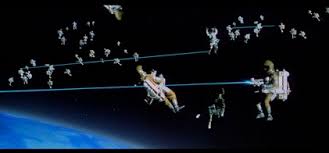
Role of Violence – 007 has a pretty low bodycount in this film. He shoots a would-be assassin out of a tree while pheasant hunting and, other than killing Drax at the end, that’s about it. There is a crazy climactic space battle with lasers when, somehow, a battalion of U.S. soldiers are crammed into the cargo bay of a space shuttle and then attack Drax’s space station. (I’m guessing this is where Trump got his idea for a U.S. Space Force.) Not sure where all the laser guns were in 1979, but Bond doesn’t really engage in any of the violence (like in the last film when he was mowing suckers down). Maybe older Bond has lost his taste for blood.

Vulnerability – Moore’s Bond is a robot. When he discovers Goodhead alive in Drax’s underground lair (beneath a shuttle that’s about to lift off), he says “Thank God you’re safe.” That’s it.

Sexual Potency – I could write a dissertation on this one. The FDA wouldn’t introduce Viagra until 1998 and one wonders if the mad scientists at Pfizer dreamed of a drug that would give men Bond boners. 007 is MI-6’s heat seeking missile. He’s rapacious. There isn’t a skirt he won’t chase, except for Miss Moneypenny, who is now matronly and completely off Bond’s radar. (How I miss their banter.) Speaking of Moneypenny, at the start of the film M asks her if 007 is back from his mission. “He’s on his last leg, sir,” she replies. The next shot is Bond’s hand on a flight attendants bare leg. “Any higher Mr. Bond and my ears will pop,” she says. (Of course she’s a double agent and Bond is sent flying out of the plane without a parachute, leading to one of the greatest action stunts in movie history.)

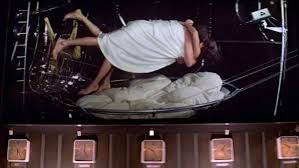
Bond may have failed at getting her knickers down, but you can’t keep a good Double O down. He makes passes at every woman under 40 that passes his field of vision. He would have made the moves on Drax’s hench-women, but he had to wrestle a giant anaconda. Shit happens. He does end up in bed with Corinne Dufour, Drax’s personal pilot, played by The Story of O’s Corinne Cléry. (She is killed by dogs for her transgression.) He also beds his MI-6 contact in Rio, Manuela. In his hotel room, she bares her leg and James asks, “How do you kill 5 hours in Rio if you don’t Samba?” Then he unties her frock. James meets Dr. Goodhead in California at Drax’s compound, but then again in Venice where he realizes she is CIA. He seduces her into bed and makes the case that she should team up, but she slips away in the morning. The film ends with Bond and Goodhead having sex in zero gravity onboard a Space Shuttle. As is the gag now, the MI-6 brass is watching and M asks what Bond is doing. Q replies, “I believe he is attempting re-entry, sir.” Thank you and goodnight.

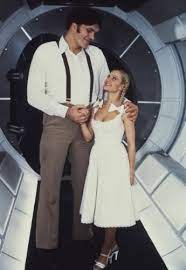
There also a side story worth commenting on. The monstrous Jaws is “redeemed” by falling in love in Rio. He’s a giant and she’s tiny with braided pigtails and glasses, dressed like a farm girl with heaving cleavage. Next to him, she looks like a child and I think that’s the point. She doesn’t speak, only stares lovingly her 7 foot 2 man. When Jaws realizes there’s no room for him and “Dolly” in Drax’s fascist utopia, he helps Bond to thwart the evil plot. The odd pair then open a bottle of champaign as the space lair is destroyed. The whole thing is icky.

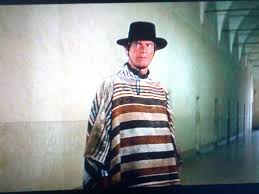
Connection – Again, Moore’s Bond is a man untethered to anyone. There’s a scene where he’s riding a horse in Brazil looking like a gaucho. It’s an obvious nod to Clint Eastwood, the penultimate seventies model of masculinity, the high plains drifter. His connection to Goodhead is wafer thin. In the obligatory coitus end scene, James and Holly are having space sex and she says, “Take me ’round the world one more time.” He drolly replies, “Why not?” Boring sex is boring.

Summary Moonraker is so broad and silly it’s just a romp at this point. The countless henchmen scientists in their yellow jumpsuits, the martial arts attack by Drax’s Asian manservant in a glass museum that destroys dozens of priceless artifacts, escaping the bad guy in a Carnival celebration (Thunderball redux), pretending to be weightless by moving slowly, it’s all in good fun. But the fact that Moore and Chiles seem so completely bored by the script drags down the campiness of Bond ’79. And Jaws and his child bride may have delighted young fans in the Carter era, but it just seems kind of sad now.

These seventies 007 movies have consistently missed an easy opportunity to be a part of the decade where feminism went mainstream. Most of them attempted to pair James up with a female spy that could have been his equal or even taught him a few things. Instead they played the role to attract the male gaze and be yet another notch on James’ bedpost. Yawn. Will things be different in the third decade of our hero?

Next: For Your Eyes Only (1981)

The James Bond Project #11: The Spy Who Loved Me (1977)

The James Bond Project #10: The Man with the Golden Gun (1974)

The James Bond Project #9: Live and Let Die (1973)

The James Bond Project #8: Diamonds are Forever (1971)

The James Bond Project #7: On Her Majesty’s Secret Service (1969)

The James Bond Project #6: You Only Live Twice (1967)

The James Bond Project #5: Casino Royale (1967)

The James Bond Project #4: Thunderball (1965)

The James Bond Project #3: Goldfinger (1964)
The James Bond Project #2: From Russia With Love (1963)

The James Bond Project: #1: Dr. No (1962)