The James Bond Project: #1 – Dr. No (1962)

December 27, 2024

As a latchkey kid who grew up on the 4 O’Clock movie (with a father often away on sales trips), most of my young models of masculinity came through the family color TV. Those films offered me the standard trinity of white manhood: John Wayne, Elvis Presley, and James Bond. All three were good with their fists and spared few words for the ladies. John Wayne was the iconic “strong silent” man who solved problems with a gun. In the 2000s, I taught a summer class at Portland State University called, “Hollywood Elvis and Post-War Masculinity” that used Presley films to explore changes in parameters of male roles. But it was Bond that I most wrestled with as a feminist man. Was he a patriarchal archetype or a subversion of it?

After the 1996 film Swingers brought back lounge culture, I found myself fantasizing about the Sinatra swagger and the Bond confidence. I’d sit at the roulette wheel in casinos in Old Las Vegas, on Fremont Street, dressed in a vintage suit, surrounded by frat boys in khaki shorts and backwards baseball hats. Was I an agent of the backlash or mocking gender, the same way drag queens deconstruct femininity? And now, what is the relevance of Bond’s manly schtick in MAGA America, where sex offenders are running the show?

So I decided I need a winter binge to address the question. The James Bond Project is intended review every Bond film, from 1962 to the present, to glean insight into the gendered appeal of 007, genital warts and all. And here’s the matrix for our evaluation:

  1. Driver of Action – Team player or rugged individual?
  2. Role of Violence – Body count
  3. Vulnerability – Behind the mask
  4. Sexual Potency – Lady “killer”
  5. Connection – Autonomous into the sunset

Toxic Masculinity Scale  (1 to 10)

Dr. No (1962, directed by Terence Young)

The first Bond film is based on the sixth novel in Ian Fleming’s famous series on the British spy and is set against the backdrop of Kennedy’s Space Race. Producers cast Sean Connery, 31, after Carey Grant said he wasn’t interested in playing Bond more than once. Dr. No, released October 5, 1962 (less that two weeks before the Cuban Missile Crisis), introduces all the series staples; “Bond, James Bond,” “Shaken, not stirred,” a license to kill, SPECTRE and the underground lair, creative ways to kill the heroes, and Bond hitting on Miss Moneypenny.

My first thought watching it was that it was nice to see so many black people in a movie from 1962. I’m used to any film made before 1968 being made by, for, and about white people. Dr. No is set in Jamaica, so the cast diversity makes sense. The Caribbean was a common Bond locale (and where I saw my first big screen inter-racial kiss – more on that later). Jamaica was granted its independence in 1962, but in the film it still feels like a British colony. No reggae yet, just limp calypso and CIA officers hanging around airports. But it gave the world its introduction to 007 James Bond, the suave spy with a license to kill.

Driver of Action – There is no doubt that Bond is his own man. His boss, M, tries to replace his Beretta handgun with a new model, which James (unsuccessfully) tries to sneak out of the office. Other than that and a scene where Bond and Honey Ryder (played by Bond “Girl” #1 Ursula Andress) pass out after drinking Dr. No’s drugged coffee, there is never a moment where Sean Connery’s Bond isn’t in complete control. There are car chases, jungle chases, and scenes where Bond outsmarts would-be assassins (including smashing a tarantula to an epic musical score). Even though, for part of the film, he has a black sidekick named Quarrel and female accomplice (Honey Ryder), Bond drives the story and camera lens.

Role of Violence – 007 takes out a handful of baddies, including a corrupt geology professor and some blokes who go over a cliff in a fiery crash. “I think they were on their way to a funeral,” he quips. Compared to the massive body count of your average John Wick movie, there is surprisingly little violence in Dr. No. I found myself wishing 007 had watched a few of my favorite Kung Fu self defense reels on Instagram to better defend himself from henchmen and CIA operatives. Dr. No doesn’t even try to kill Bond, although he does strap Honey Ryder down to be drowned by a rising tide. Spoiler alert: Bond kills Dr. No in a radioactive pool.

Vulnerability – There is no moment when James shows any weakness or gives us any backstory. Was there (ever) a Mrs. Bond? Does he have a panic attack if his martini is stirred? Does he ever suffer from erectile dysfunction when bedding double agents? This may be the feature that resonates with men so much. Bond is a cartoon character of a man with no internal monologue, just commanding action.

Sexual Potency – This isn’t a Doris Day movie. Bond gets plenty of play. At the start of the film he beds a woman he meets playing baccarat in a casino. Her name is Sylvia Trench, and we’re off to the races for how women are named in Bond films. Then he spends a night between the sheets with MI-6 secretary Miss Taro, who is (of course known to James) working for the bad guys. Surprising to no-one, he ends the film in the arms of blonde bombshell Ursula Andress, bobbing in a dingy in the Caribbean. In the scene with Miss Taro, unprompted, he grabs her and kisses her, reminding me of Trump’s comments in the Access Hollywood tape. “You know I’m automatically attracted to beautiful… I just start kissing them. It’s like a magnet. Just kiss. I don’t even wait. And when you’re a star they let you do it. You can do anything.”

Connection – Bond has passing connections with Quarrel (played by John Kitzmiller) and American CIA agent Felix Leiter (played by Hawaii Five-O’s Jack Lord), but they’re just vehicles for Bond to complete his mission. Bond even seems briefly sad when Quarrel is burned alive by the bad guys. But James Bond is the model of the autonomous male. He is a self-contained unit who doesn’t “need” anyone. Sex is transactional, not romantic. Even the end scene with Honey Ryder is not a “and they lived happily ever after” moment. You get the feeling that Ryder, in her iconic white bikini, will be dropped off at the next beach as 007 jets off on his next mission.

Toxic Masculinity Scale: 5/10
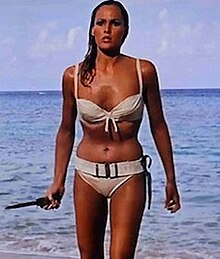
Summary – Watching a young Sean Connery chew up every frame he’s in is infinitely entertaining. Yeah, Ursula Andres on the beach (knife in hand) is a classic male gaze moment where even Bond says, “I’m just looking,” but the gaze is all on 007. There’s even a scene where a female concierge in a Kingston hotel stares at Bond’s ass. James Bond is the spectacle. All eyes are on him. It’s man’s world. Dr. No is 55 years before Patty Jenkins ground-breaking Wonder Woman movie. Action is man’s work, with bikini-clad damsels in distress.

Fortunately, there is no homophobia or overt misogyny in Dr. No. Women are beautiful and disposable but also strong, with agency. No bimbos in Bondland and toxicity is toned down in the Kennedy era. The film establishes the archetype of the autonomous “love ‘em, and leave ‘em” hero franchise to be mimicked by countless others, from Matt Helm to Austin Powers. At his core, Bond is always cool and always in control. Men want to be him and women want to be with him. But we all want to know, its that all there is?

Next: From Russia with Love (1963)

I Would Have Hated the Beatles in 1964, or How My Daughter Made Me a Taylor Swift Fan in 2024

May 4, 2024

If I was my current age in 1964, as Beatlemania swept America, I would have absolutely hated the Fab Four. I would have been a 60-year-old jazz purist, dedicated to be-bop, hard-bop, and post-pop. I wouldn’t have had time for West Coast bop (sorry Brubeck), let alone mop top non-bop. I would have taken one look at the grinning lads from Liverpool, surrounded by millions of screaming girls, while they did their white people version of the Isley Brothers’ “Twist and Shout,” and turned up my nose. “That’s pre-packaged bubblegum. I listen to serious music, like Miles and Trane,” I would have said.

Turns out those millions of teenage girls were right.

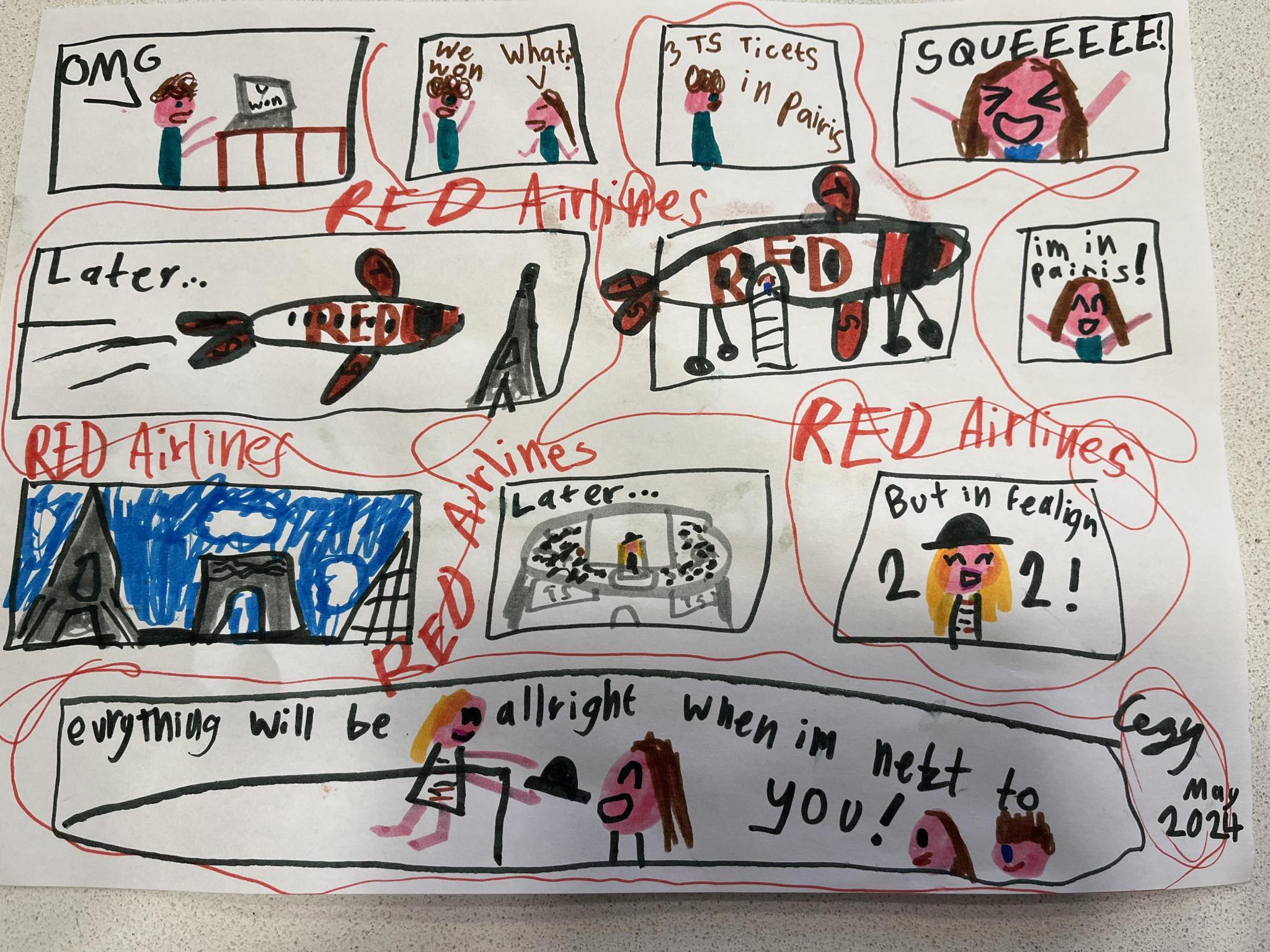
I’m not making that mistake 60 years later. I am fully in the grip of Swiftmania and I have my 9-year-old daughter to thank for it.

I’m deep in the bag for TS. The haters are the people who knee-jerk react to the trope that “Popular = Bad.” After all, the masses are asses, as L7 sang. Anything as massive as Taylor Swift must suck. That’s the same thing they said about the Beatles in 1964, who clogged up the pop charts with their “Yeah, yeah, yeahs!” But here’s the thing. You can dig L7 (and the Yeah! Yeah! Yeahs! and Miles and Coltrane) AND Taylor Swift. Tay is on my playlists next to punk bands like Destiny Bond and jazz freaks like Sun Ra. I’m not going to let your hipster elitism deny me the appreciation of this crazy trip, especially when it is being led by my Swiftie 4th grader.

Like a lot of people, I drug my heals on the Taylor Train. I prefer Tuareg music from Mali over the American Top 40. But her 2022 lofi dream pop album, Midnights, caught my attention. It took me to some unexpected places that I missed from my youth (like the sound of the wind down at 3 am). But it was when Cozy, my always enthusiastic about something daughter, switched her attention from the Animal Crossing video game to Taylor Swift that I bought my ticket onboard the Swift Express.

Cozy’s cohort followed mine in many ways. In third grade, it was all about the songs. “Cruel Summer,” always got a, “Turn it up, Dad” in the car. (For me it was “Burning Love,” by Elvis Presley.) Fourth grade is more about the artist. Cozy’s girl gang has lots of Taylor Talk before, during, and after school. (By the end of 4th grade, I’d seen most of Elvis’ 33 movies.) The Eras tour sweatshirts are like their team jerseys. Cozy makes song bracelets in hopes that one day she’ll be able to trade them at an actual concert. She’s made her bedroom into a shrine to Taylor with taped up magazine pictures and a rotating “Top 13” favorite song list. (13 is a magical number in Taylor-world.) At 13, my room was split between shrines to Kiss and the Beatles. She falls asleep each night to the TS CD’s I’ve loaded into her mother’s ancient iMac computer. And I assume all her friends live in a similar Taylor bubble.

Cozy’s fanaticism is infectious. She knows every Swift lyric, including to the “Anthology” version songs on Swift’s new album. She knows the outfits of the Eras tour including the “22 hat.” (I have no idea, but she tells me she’s going to show me a YouTube video that explains it.) When the new album, The Tortured Poets Department, dropped at 9 pm on April 18th, we sat together as it streamed into our lives. The next day we raced to the record store to pick up a vinyl copy and record a review for my YouTube channel. That night, her crew had a Swiftie listening party where all the girls dressed as a different era. Thanks to her mom’s make-up skills, Cozy nailed the Reputation look. I don’t know what would be the 1964 version of that, but I’d like to think 4th grade Randy (Ringo’s Version) would have most certainly been combing his hair forward.

It might be different if this was 1997 and I had a nine-year-old who was gaga over the Backstreet Boys. Taylor Swift is an insanely talented artist. Like Paul McCartney, she could sneeze and a brilliant song would come out. Like Bob Dylan, she can take the story of her life, slam words together, and create poetry that we will be analyzing for generations. If you don’t believe me, listen to Dylan’s 1975 track, “Tangled Up in Blue,” written after his separation from his wife Sara, and then the ten minute version of Swift’s “All Too Well,” written after her break up with Jake Gyllenhaal, and tell me they don’t fit together like two socks in a drawer. But because Swift is a young woman (and blonde and thin) her artistry is dismissed. There are plenty of music lovers who extol Joni Mitchell in 2024, who also derided her in 1970 for trying to “be Dylan.” I don’t know what will be seen as “classic” in 2074, but, if there is radio 50 years from now, “Cruel Summer” and the dozens of other Swift hits will be playing to welcoming ears of Gen Z elders and their mutant children.

The mission now is to get Cozy to a Taylor Swift concert. Taylor is playing at Wembley Stadium in London (where I saw Live Aid in 1985) on Cozy’s birthday on August 17th. The cheapest, behind the stage, tickets start at $1200. Tickets to see the Beatles in 1964 were five bucks. For the price of one Taylor Swift ticket I could have bought 240 Beatle tickets. (Yes, I did the math.) I’ve entered contests, bugged friends in London, and watched StubHub like a lunatic. I want Cozy to have this experience. She even described seeing Taylor in concert with her mom and dad as her “perfect day” in a recent family therapy session. When I was her age, my parents took me to see Elvis Presley and it turned me inside out. So, somehow, this will happen.

All this is just a truckload of fun. It’s as much about Cozy’s joy as it is about the wonderful music that Taylor Swift makes. Yes, some of those songs make me cry (“All You Had to Do Was Stay” was written about my own break up, I’m convinced). But I’ll remember (all too well) dancing in the kitchen with my kid to “Shake it Off” and re-discovering the way music can completely consume you. I have my Beatlemania thanks to Cozy. And I’m screaming my lungs out.

Make America Classic Rock Again? The Political Danger of Nostalgia

I Was a Third Grader

November 15, 2022

I guess it’s a normal thing to compare yourself to your kids. “When I was your age I had to walk three miles to school, in the snow, and barefoot, and uphill, and backwards!” I remember when I was in high school we all took our shoes off on a snowy Georgia day and walked to school so we could foist that same flex on our kids.

I’ve been doing a lot of that lately. There seems to be some clear differences between 3rd grade Randy and 3rd grade Cozy. In 1972, I loved to play outside in the woods, she loves to be inside playing Minecraft. I had brain-numbing Saturday morning cartoons, she has brain-numbing YouTube videos on demand. But much of it is the same. Our aversion to any food that is good for us, or to going to sleep, or to getting up. I loved Elvis Presley (“Burning Love” era), and she loves Dua Lipa (“Levitating” era), but other than that, not that dissimilar.

So, as I drop her off at school each day, I’ve been trying to remember what I remember from my 3rd grade experience at Atherton Elementary.

My teacher was Mrs. Weldon and we were supposed to get candy bars for completing our times tables, but I never got mine. I did a presentation on Boston by building a version of the U.S.S. Constitution from a huge cardboard box. The teacher read us James and Giant Peach and we had discussions about the 1972 presidential election. (I supported Nixon because I liked his funny-looking face.) My best friend was Keith Harrison and we focused our arguments on Elvis, Hank Aaron, and how to make the best go-cart. And I definitely thought girls had cooties.

For me, third grade was my introduction to Southern culture. Like many Slavic-rooted Americans, I was born in Cleveland, Ohio. My family fled the rustbelt for the sunbelt after the steel industry crashed, and after year in Boca Raton, Florida, we ended up in Stone Mountain, Georgia (for reasons I still don’t understand). Red clay, black-eyed peas, thick accents, and one classmate who took a dead possum home for “supper” presented me with an alternate reality that was both dreamlike and hostile to a “damn Yankee” 8-year-old. A neighbor named Kenny called me “Polish monkey,” which I later figured out was because of my non-WASP name. Church was king in Stone Mountain, so that was the vehicle of assimilation, although it always felt unwelcoming.

So I wonder what my own 3rd grader is collecting to be reflected upon 50 years from now, in 2072. Will she remember the names of her friends and practicing make-up application, like I remember playing in the creek with Tico and Kip? Will she remember the insanity of MAGA, like I remember the madness of George Wallace and Lester Maddox? Will she remember binging on Takis, like I remember seeing how many Little Debbies I could shove into my mouth? Will she remember her parents living apart and then together again (but still apart), like I remember my father gone on extended sales trips?

Eight seems like such an in-between age. I see my daughter carry herself like she’s 5 minutes from college, but she’s still a child (who wants to set up a spy-cam to catch Santa in action this Christmas). Her peer culture has gained power. She just got her ears pierced and is starting to use slang, like “That’s suss, Dad.” She calls me, “bra” like I’m a bro. How do I tell her to eat her vegetables?  Was I that the age when I started separating myself from my parents? (I staged sit-ins in protest of their demand that I eat canned beets, I do remember that.)

If I could go do 8 again, there are certainly things I would do differently, besides buy stock in IBM. I would be kinder to my little brother, and pay more attention to the marginalized kids in my school. But much of 3rd grade seemed to not be about finding your direction, but finding that you could have a direction, any direction; that, at some point, you’d be able to do your own thing. I see that in Cozy, the potential to do really big things if she wants to.

What I needed from parents at 8 was a message of assurance, that they had my back even if I made mistakes. That they’d keep me safe but allow me to see how far I could walk across the ice. And I need encouragement to match the curiosity I had in myself with a curiosity in others. That’s the least I can do for my 3rd grader.

Panic in Auschwitz: Putting the Present Moment in Context

“The present moment began with fire. And still, it burns.” – Ben Okri, Nigerian poet

April 2, 2022

Once again, I find myself in a white van, crossing the, now snow-covered, fields of southern Poland. My very first record, Elvis Presley’s “Burning Love” is playing on the radio. The lyrics hit at an odd angle, “I just might turn to smoke.” Because we are headed to Auschwitz. Seeing the upside down world of April Fools Day, I try to make a joke with my fellow passengers, but my wartime dark humor is not received well. I was scolded earlier in the week for posting that the guy who was snoring in the bomb shelter we were sharing in Lviv, Ukraine made me pray for a bomb. I get it. But humor is also a way to cope with the endless trauma of this world. The DJ, sharing my skewed take on the day, next spins Ella Fitzgerald singing, “Let it Snow,” a Christmas classic in April.

Maybe the awkwardness was to prepare my brain for what was to come. How does one plan a day-trip to the Auschwitz-Birkenau Nazi death camps? How do you transition from this moment to that one? I’ve been a student of the Holocaust for as long as I can remember and lectured about the camps for 30 years. In my recent Research Methods class at the University of Oregon, I presented gut wrenching evidence of how Auschwitz doctor Josef Mengele perverted the values of science in a sadistic attempt to demonstrate Aryan superiority. My life’s work revolves around studying neo-Nazis who both pretend to believe the Holocaust never happened and fantasize about perpetuating similar acts of genocide. The previous day, I had wandered around Krakow’s old Jewish district that had been emptied of Jews by the Nazis, except for the lucky few who were rescued by Oskar Schindler. It was important for me to do this.

The van carried a varied lot, an English couple from Birmingham, a Norwegian couple, a young German woman who must have been filled with dread and her English friend who puked, on and off, during the hour drive from Krakow because she had had too many shots of vodka the night before. Our driver, who went by Mike, was wise enough to ease us into the arrival into hell. He took us to his “secret location,” which was an abandoned box car on a track between the Auschwitz and Birkenau camps that had been used to carry the doomed to their final destination. There, in the snow, I began to slip through time.

Auschwitz is where it is because Oświęcim, Poland was a railroad hub, and industrial town that could manage the importation of countless slave laborers and then the millions who were to be exterminated. It still feels like such a town, ringed with McDonalds and KFCs when you arrive. For better or worst, the area around the camps has been preserved in amber. When we arrived at the Auschwitz tour center, with the crematorium chimneys visible behind it, snow fell gently down, smelling cleaner than the ash that fell 80 years earlier. In the gift shop, I bought a copy of Ellie Wiesel’s Night and watched the other tourists. Some stared somberly, some teenagers laughed, as teenagers do, and a group of Israeli students, draped in their flag, did both. I held my breath.

My group got their headsets so we could better hear our tour guide, a Polish woman in her late sixties who had lost two uncles in the camp. We stepped back into the snow and walked under the “Arbeit macht frei” (“Work makes you free”) gate as she began to describe the buildings. For the first time, I had a 360 degree view of this thing. I could see the grey clouds above and the mud below my boots. This was not a fantasy, a conspiracy, or a scene from a film. This was real.

The tour had just started and I began to hyperventilate. Then I began to sob. I got light-headed and thought I was going to pass out. I had to lean against one of the barracks that had housed 500 prisoners at a time. Nothing like this had happened to me before. I think I was having a panic attack.

It was the realization that this was a real place and that horror had actually happened. Holocaust deniers be damned, the systematic annihilation of millions of men, women, children, and babies was carried out with methodical precision here from 1940 to 1945. I could feel the terror and it was too much to bear. All those books and lectures and movies and documentaries and sitting listening to Holocaust survivors, choking on the pain in my throat. It all happened in this spot and my body convulsed at the realization. The weight of what humanity was capable of in its darkest moment.

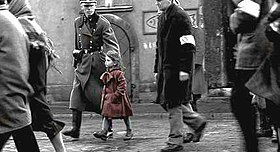
I sat down for a bit, half listening to our presenter, half trying to get my bearings. I flashed to a scene in Schindler’s List. The black and white film had one moment of color. A little Jewish girl in a red coat, her body later appears in a pile of corpses. It was 1993 and she reminded me of my then 5-year-old friend in Prague, Suzanka, who was living too close to the genocide in Yugoslavia. I burst out sobbing in the Phipps Plaza movie theater. The memory, as I sat on barrack steps in Auschwitz, caused me to burst out sobbing again.

Gradually, I wiped my eyes and rejoined the tour as we entered the slightly warmer barracks and viewed their displays. Our guide returned to the refrain, “You must remember,” and how the total count of those exterminated may never be known, because the Nazis burned the paperwork along with the bodies. Each display was more devastating than the last; children’s shoes, human hair removed from the gassed to make into fabric, luggage waiting to be claimed. The one that put me back in my panic was the massive collection of crutches, canes, and prosthetic limbs of the “invalids,” deemed too defective to work and put to immediate death. That specter of ablism did not fade with the Third Reich.

I soldiered on for the rest of the tour, through gas chambers, past the gallows, in front of the “wall of death,” where prisoners were shot, and down to the ovens, and finally to the spot where Auschwitz Commandant Rudolf Höss was finally hung on this day (April 2) in 1947. But this was only the first half of the trip. Auschwitz had a sequel, Auschwitz II-Birkenau, ordered built by Heinrich Himmler in 1941 to accelerate the extermination of the Jews. Mike ferried us over to the second, much larger camp, much of which was destroyed by the Nazis at the end of the war in a futile attempt to hide their crimes. Our guide walked us along the train tracks where prisoners were divided between those who would be forced into labor than those who were marched straight to the gas chambers. Babies and small children were thrown into open burning pits. I stood there, as a father, unable to move. Where was goodness? Where was God? Where was the empathy that should have been present among Hitler’s willing executioners?

On the ride home, we were all silent, including puking girl. I thought about what I had seen in Ukraine; the faces of frightened children forced out of their homes by an unprovoked war-monger. I thought about the concerns of my Polish friends, that nuclear weapons would turn them to ash like those who left Auschwitz and Birkenau through the chimneys. I thought about the new rise of authoritarianism in the form of Putin and Trump, that gleefully weaponizes hate and the threat of violence. I thought about the anti-trans laws and voter suppression acts that are slowly eroding democratic freedoms in my “beacon of liberty” home country.

The first chapter of Ellie Wiesel’s Night is a cautionary tale. The Jews who lived in his Hungarian village thought they were far enough from the war not to worry about the rumors of Nazi anti-Semitism. When they were pushed into a ghetto, many thought it was to protect them from the violence of the Allied invasion, and when they got to the platform at Birkenau, and Wiesel saw his mother and sister forced into the line for the gas chambers, many thought that no such horror would be allowed in the mid-twentieth century. The Holocaust was not a sudden tsunami of death. It was a slowly rising tide that drowned those who never realized they were so far from the shore.

That tide is rising again. I will not sit on my hands and hope things get better. I will use every tool at my disposal. This trip has taught me that I must.