Foreshadowing the Clampdown on Academic Freedom

From Substack September 5, 2025

September 5, 2025

My senior year at Emory, I added a second major. I had taken more than the required sociology classes, so I decided to double major in political science. I wanted to better understand the history of fascism, but also the geopolitical events of the day. So I signed up for Professor Juan del Aguila’s Latin American Politics class and Professor Thomas Remington’s Soviet Foreign Policy class (where President Carter was a regular guest lecturer). I also enrolled in a semester-long course called The Philosophy of Marxism, taught by a wonderful Catholic priest named Professor Thomas Flynn. I tried to integrate all this with my sociology background into my senior honors thesis, a Marxist analysis of the Irish conflict.

Emory in the 1980s was a vibrant place. Between classes, frequent protests over apartheid, CIA recruitment, and whatever Ronald Reagan was doing that week, and keeping up with the abundance of live music, there was a small fracture on campus. As a kid from a Georgia Klan town, Emory opened me up to a multiplicity of progressive approaches to politics, culture, and sexuality. But there was dissent in the liberal utopia. A conservative group called Students for America, founded by Christian Coalition leader Ralph Reed, began showing up in classrooms. Their goal was to out “liberal” college professors. They weren’t very effective. As it turns out, the truth is liberal.

But forty years ago, I already knew what this was. Having studied the rise of Hitler, I knew that college campuses were the first targets of the Third Reich. In April 1933, the Nazis passed the Law for the Restoration of the Professional Civil Service. It effectively forced universities to fire faculty who were leftist, Jewish, and/or anti-fascist. Among those let go was Albert Einstein. After that, students in the Hitler Youth and the National Socialist German Students’ League would report professors who made “un-German” statements or who were critical of the Reich. The students forced the firing of more faculty, often threatening them with violence. A climate of fear overtook German universities as Nazis purged them of any hint of “leftist indoctrination.” Many professors fled Germany, and others ended up in concentration camps.

At Emory in 1985, we joked that the Students for America were the Reagan Youth, following history’s fascist playbook. Little did we know what was to come.

The far right has long waged a war on higher education funding. Fascists need a docile, uneducated populace, not cohorts of college grads who have read Karl Marx and Frantz Fanon. Professors were in the crosshairs of Joseph McCarthy’s Red Scare in the 1950s. More recently, laws and executive orders have been passed to restrict university funding and curriculum around LGBTQ and race issues. In 2021, when I was teaching my Race and Ethnicity class at the University of Oregon, I announced on the first day, “This class is based on Critical Race Theory. Tell me if you have a problem with that.” Fortunately, Oregon still protects academic freedom, but I was told I would be watched by conservative students. It was clear that universities were nervous about pressure from the right. (That same year, Professor Nikole Hannah-Jones, creator of the 1619 Project, was denied tenure at UNC–Chapel Hill because of pressure from conservative donors.)

Things began to shift after the election of Trump last November. Right-wing social media influencers began to encourage conservative students to out liberal professors and try to get them fired, as the Hitler Youth had done 90 years earlier. Far-right group Turning Point USA published their online “Professor Watchlist” (which includes some of my favorite academics, like Ta-Nehisi Coates and Robin Kelley). It should be noted that the front-page of their website features a “professor” who appears to be Jewish. Right-wing pundits and online influencers attacked history professor Ibram X. Kendi, the author of How to Be an Antiracist, and tried to have him removed from his position at Boston University. Hopefully academic unions are tracking complaints from conservative students. I’m guessing they have spiked.

When I was a tenured full professor at Portland State University, I felt ten feet tall and bulletproof. But this is a new era, and I am in a new position. As I focus on my consulting work, I’ve had the great privilege to adjunct at our local community college, and I’ve had a front-row seat for the shift. I have great respect for all my students, no matter their political leanings. Sociology classes are kind of group therapy. We’re all working it out in real time. But some of the young white men—the demographic that broke for Trump—have been given permission by our anti-education president to disrupt that sacred space. They are more likely to push back against discussions of patriarchy and white supremacy. It pops up in class, in course evaluations, and in online reviews, often as snide comments. Since I was in their exact shoes all those years ago (as a conservative white teenager), I desperately want to reach them. But I’m also deathly afraid of them. I’ve studied the history and know what they can do.

Fortunately, I’ve got a union and an administration that defends faculty freedom. But it feels like a dark cloud is coming to campuses across the country. And we have been here before. Buckle up.

Laissez les mauvaise temps rouler?: The Terror of 2025 and How to Stop It

January 3, 2025

Well, 2025 is off with a bang. My New’s Eve hangover didn’t have time to kick in before the news from New Orleans rolled in. And then Las Vegas. Welcome to the worst year of our lives.

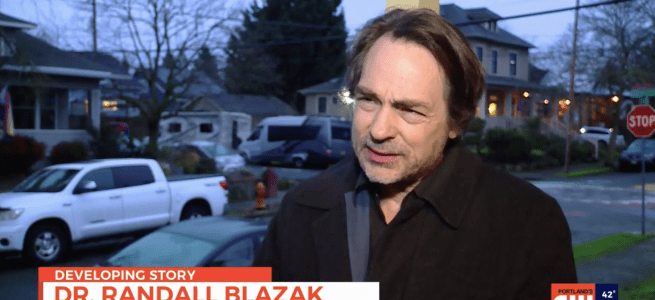
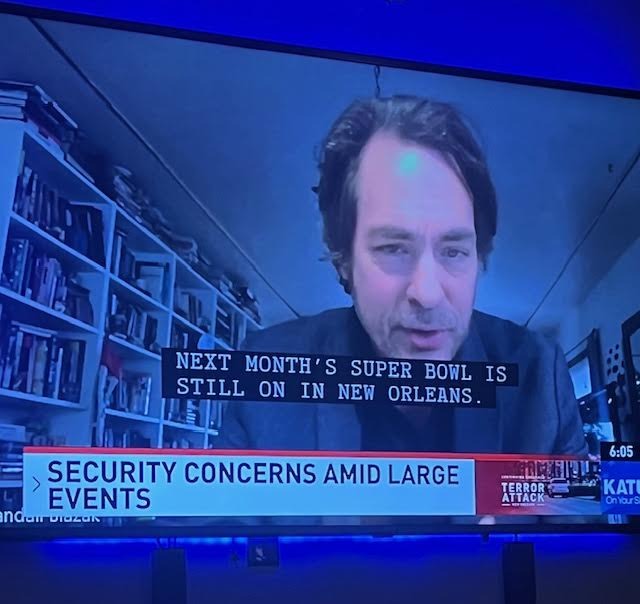
Forty years ago, my study of fascism was the focus of my second undergrad major of political science. That then moved headlong into the field of criminology. As a graduate student, my research on teenage skinheads evolved into a study of right-wing extremists groups. Once I had my PhD in my pocket, that work became a scholarship on domestic terrorism. When I was asked to contribute to the 2003 edition of the Encyclopedia of Terrorism, I knew had achieved the title of “terrorism expert.” And that meant I would spend a chunk of New Year’s Day talking to reporters.

The study terrorism is not exactly an exact science. And those coming from academia and those coming from law enforcement are going to have different focuses (root causes vs. threat assessments, for example). But where we come together is in vague intention to create terrorist profiles (which I jokingly refer to as terrorist stereotypes). The good news is that we have a massive amount of data from previous bombings, mass shootings, car rammings, and the like to have a pretty good picture of who commits these crimes, with a handful of relevant variables. The bad news is that we have all this data because of the success of these people in carrying out their deadly plots.

So with minimal facts available, I had a pretty clear picture of who Shamsud-Din Jabbar, the New Orleans attacker who killed 15, was and wasn’t. For example, despite the unhelpful grandstanding at Wednesday’s press conference, I was pretty certain Jabbar worked alone. The blather that Jabbar was a part of an “ISIS cell” fit conservative fear-mongering (since the “immigrant” narrative crashed), but did’t fit the typical profile. This was not the Oklahoma City Bombing. It was the Big Easy’s version of the 2016 truck attack in Nice, France. While Donald Trump decried “open borders,” I talked to local media about how we have seen this movie before.

You’ve got a guy with a military background who served in Afghanistan who probably saw the heavy hand of Uncle Sam in a Muslim land. That was enough for Army psychiatrist Nidal Hassan who went on a shooting spree at Fort Hood in 2009, killing 13 and injuring dozens. Jabbar also had a host of economic crises, including massive debt, and a dramatic divorce involving conflict over children. Most men who go on workplace mass shootings are in the same situation. Exactly. The insanity of ISIS gave him a place to put his anger. Their binary world of believers vs. non-believers is like a warm blanket to someone whose life in a complete spiral. Like the workplace shooter, Jabbar was ready to check-out (AKA die) but he was going to go out in a blaze of glory, spreading his pain to others as he barreled down Bourbon Street.

The case of Matthew Alan Livelsberger is a little less obvious. Livelsberger was the Army Special Forces operations master sergeant who drove a rented Tesla Cybertruck up to the front door of the Las Vegas Trump Hotel, shot himself in the head and set off a bomb in the truck. Again, the nattering nabobs of disinformation over at Fox News claimed this was an attack on the incoming president and his boss, Elon Musk. But, there were facts that didn’t add up to that claim, including the fact that Livelsberger was a green beret (not known for their liberal anything) and that the bomb was so poorly constructed it didn’t injure anybody. (He could have driven straight into the hotel lobby if he was after casualties.) There are clues to motive that have nothing to do with Trump or Musk.

We’ve seen a steady increase in the suicide rate of active military (523 cases in 2023, up 9% from 2022). We still know so little about the PTSD-suicide link, but we know it exists. Livelsberger was a new father, so that should have been a mediating factor. (When Cozy was born, I didn’t want to miss a single second, staring at her while she slept.) But we don’t know much about the sergeant’s internal and external life yet. We do know that soldiers who suffer trauma from combat who also experienced trauma as young children are significantly more likely to spin off the rails. Musk and Trump have been a constant presence in the news. It’s likely that he chose the car and hotel as part of a strategy to make his suicide more newsworthy. After all, how many of the over 500 military suicides last year hit the news cycle? (And the suicide rate for veterans is almost twice the non-veteran rate, so maybe both Livelsbergerm and Jabbar were demanding attention on the matter.)

If there’s any good news in all this carnage it’s that we know these profiles inside and out. Which means we know the antecedents to the terror, the proverbial red flags. And the red flags provide intervention points to head off calamity. As we dissect these two New Year’s Day attacks, we’ll find points where “somebody could have done something.” The Cure-PNW project I work on, funded by the Department of Homeland Security, has been finding angles to de-escalate political violence by strengthening communities and empowering people to intervene when they see a Livelsberger or Jabbar moving toward criminal action. (We refer to these interveners as “credible messengers.”) This is the work that needs to be upscaled on a national level as 2025 promises many more January firsts. (Unfortunately, our grant runs out with the new administration.)

After Election Day there was a lot of “the sky is falling” hysterics on my side of the aisle. Yeah, decency and democratic guardrails took a major hit. But the 2026 midterm election is only 96 weeks away and there is already dissent in the Trump-Musk-GOP ranks. Maybe the sky won’t fall, but what we can count on remaining constant are the factors that drive (almost exclusively) men into choices to commit acts of terror. Better understanding how to utilize that knowledge gives that “something” that we can do.

I Remember America: It Was a Good 248 Years

Supporting the Right of Palestinians Not to Be Murdered is Not Anti-Semitic, And We Must Confront the Rise in Anti-Semitism

He Ain’t Heavy, He’s My Little Brother

July 7, 2023

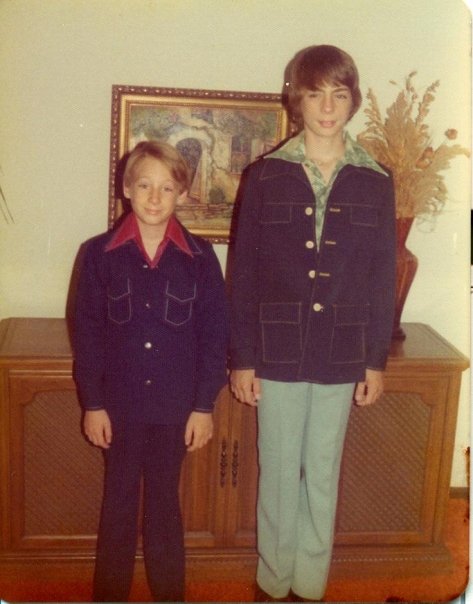
My little brother, Ronnie, and I took sibling rivalry to a new level. In fact, I’m quite sure we sent each other to the Emergency Room when we were kids. Our constant fighting must’ve driven our parents crazy. I know it did for me. It was the cause of some desperation, at age 16, when I first thought about throwing myself into a lake and drowning. (To be clear, the lake was a Stone Mountain, Georgia pond that was maybe three feet deep.) As an adult, I stopped talking to him for 17 years after he threatened to kill our mother. He did some time for that one.

Things have changed with my brother.

We started to reconnect in 2012, when I was back in Georgia. We visited some of our old stomping grounds in Stone Mountain and I learned how to talk to him in a non-antagonistic way. Ronnie has had a challenging life and I think our sibling dynamic played a roll. I wasn’t exactly the best big brother. I think Ronnie was the first target of my rolling anger that was the result of my abuse. I relished in the fight as that was my standard mode. When I could have been protective and nurturing, I was combative and cruel. So the reconnect was a chance for repair, especially when my bother fell into homelessness.

For the last few years, my brother has lived in the woods in Cartersville, Georgia, north of Atlanta. Cozy and I had lunch with him and my father in 2021 at the IHOP near his camp and he was skin and bones. We didn’t know it at the time, but he had cancer. We didn’t talk for 17 years, but we talk pretty much every day now, unless he can’t make it down to Kroger to charge his phone.

Trying to find Ronnie adequate cancer care in a backwards red state like Georgia has been next to impossible. Dissertations have been written on how the Republican Party has conned poor and working people to vote against their interests to pad the pockets of elites, but suffice it to say, being sick and poor in Georgia is a death sentence.

So I’m bringing my brother to Oregon.

The assumption in Georgia is that every poor person who claims to be sick is only after OxyContin, so the insane amount of bureaucratic bullshit that is required to even see a doctor guarantees poor and homeless people are cut out of the health care system. Ronnie’s cancer doctor was 46 miles away at Emory University and he was routinely too sick to even organize a ride to the city. Tired of missed appointments, they dropped him from their patient roll, a cost cutting measure that shortened my brother’s life expectancy. Social scientists know we can predict your life span by the zip code you live in and the death gap for Cartersville, Georgia is as wide as the Tallulah Gorge.

Oregon, on the other hand, expanded Medicaid under Obamacare, making sure low income people have first rate health and dental coverage. It took a matter of minutes to get Ronnie signed up to the Oregon Health Plan and get him space in a residential facility and an oncologist to start his cancer treatment. My mother was dumbfounded by how easy it was to get my brother the services he desperately needed. “Well, I live in a blue state, Mom,” I told her. Now I just have to get him here.

Early tomorrow morning, I’m catching a flight to Atlanta (paid for my father) to collect my little brother. The nature of his cancer is among the ugliest, anal cancer. He hasn’t been able to access the health supplies he needs so he’s often sleeping in his own waste. I’ve been Amazoning him colostomy bags, but he needs so much more, including diapers and clean clothes.  Getting him in shape to fly back across the country is going to take some work. He’s in great pain, without access to any sensible pain medicine, often sure he’s not going to live through the night. I assure him Oregon also has legal weed to help him through those nights. I would bring a bag of THC gummies with me from the corner pot shop, but in Georgia that would get you a one way trip to prison. (The penalty for possessing less than one ounce of marijuana is up to one year in prison and up to a $1,000 fine.) Did I mention that Georgia sucks?

These may be his last days or the wonderful care given to low income people in Oregon may extend his life considerably. Anything is better than being poor and sick in the South. I’m banking on him being alive when I get to Cartersville and being in good enough shape to get on the plane. I’m looking forward to our cross country trip and getting to know the guy I didn’t have time for when I was a kid.

I Was Jimmy Carter’s Most Annoying Student

February 19, 2023

As a Georgia boy, it was a big deal when the peanut farmer from Plains was elected as President of the United States in 1976. I was 12-years-old and remember my mother showing off her drivers license that was signed by “Governor Jimmy Carter.” His election was a rejection of all the Watergate era corruption that had tanked America’s faith in government. It was meant to be a return to normal, with an ethical Southerner who had admitted to Playboy Magazine that he had lusted in his heart. Seemed better than Gerald Ford falling down the stairs again.

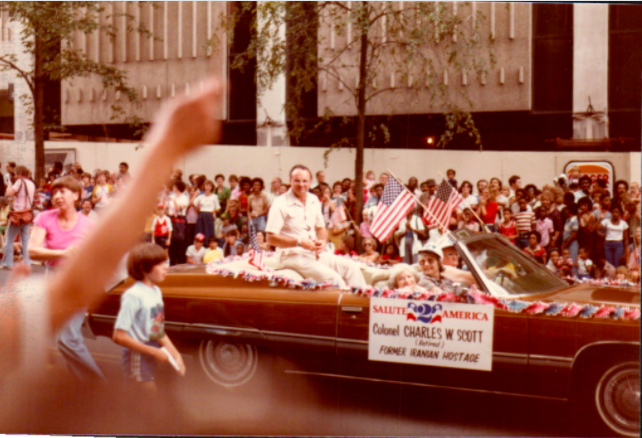
I could write pages on how history will kindly remember the 1977-1981 term that Carter had in the White House. Having a human rights advocate who loved Willie Nelson and the Allman Brothers stood in stark contrast to what was to come. Sadly, much of my high school experience was to be marked by the Iranian hostage crisis. One of the 52 Americans held in Teheran was Col. Charles Scott, of Stone Mountain, Georgia and his daughters went to my school. When they were finally released on January 20, 1981, we covered our town in yellow ribbons. 

Fast forward to my 1984-1985 senior year at Emory University, in Atlanta. I had become a sociology major and dedicated a large percentage of my waking hours to protesting whatever Ronald Reagan was doing that week. By my senior year, I had pretty much taken every sociology class Emory offered and added Political Science as a second major. I needed the scholarship to inform my activism. I would wear my Sandinista t-shirt to Professor Juan del Aguila’s Latin American Politics class and spar with him over the CIA’s role in the 1954 overthrow of Guatemala’s democracy for the benefit of the United Fruit Company. Good times.

My favorite classes were Professor Thomas Remington’s Soviet politics class. This was at the peak of the cold war when the U.S. and USSR were positioned, like two tribes, to wipe each other off the face of the map. On the first Wednesday of each month, at noon, the air raid sirens on campus would wail to remind us that Emory’s CDC (and all of us college kids) were the likely target of a nuclear strike. Remington’s classes seemed vital to understanding the Russian bear.

So it was great excitement that Professor Remington told us that President Carter would be doing a series of guest lectures in our Soviet Foreign Policy class. Carter had accepted a professorship in 1982, during my freshman year, and we would occasionally catch sitings of him on campus, but to sit in a classroom listening to a former U.S. president, instead of reading about him, was a privilege beyond belief.

It might not surprise you that I was the kid in the front row with his hand constantly darting up in the air. While Carter had an unrestricted forum at Emory, I was suddenly a 20-year-old with unrestricted access to the President of the United States. I took scrupulous notes and channelled my inner Arnold Horshack to pepper him with endless questions. Like this classic; “President Carter, why did you authorize Presidential Directive 59, authorizing the use of nuclear weapons if the Soviets advanced past Afghanistan?”

At times it seemed like it was just Jimmy and I in the room. He kindly addressed each of my questions with clarity and as much declassified intel as he could share with an overly earnest college kid. I imagined that the eyes of my fellow students were rolling as I continued the one-on-one but I was eternally grateful to Dr. Remington for creating this space that revealed the real world complexity of governing that was dramatically different from my Marxist-wannabe dogmatism.

The pay off was on a spring day in 1985 when I was sitting on the steps of Cox Hall with my gang of misfit Emoroids. We’d have our lunch there to talk about upcoming punk shows and make fun of frat boys. Suddenly, President Carter came out of Cox Hall with a small group, and stopped to say, “Hi Randy! How are your classes going?” As he walked away, my friends were just silent.

The following year Carter hosted a summit with Gerald Ford at Emory on foreign policy. I attended every session (and remember Ford falling asleep at the dais). After that, Carter opened his Carter Presidential Library across the street from my apartment in Little 5 Points. President Reagan came to speak at the opening and Carter (much to Reagan’s chagrin) allowed the event to be open to the public so we arrived to shout rude things at Ronnie. While I was in graduate school at Emory, I would have my Social Problems class work on pressing issues with the Carter Center, submitting my students work to the newly empowered Clinton Administration. Living across the street from his library I would occasionally see Jimmy walking the grounds and picking up trash (can you imagine Donald Trump doing that?) and thank him for those lectures in our Soviet politics classes. “I hope I wasn’t too obnoxious,” I said to him one fall day. “Not at all, Randy. You always asked the questions I wanted to talk about,” he said.

The four-year presidency of James Earl Carter was a tiny fraction of the nearly century long life of this man. Everyone that met him following his tenure in the Oval Office tells a similar version to this little story. A journey of a man guided by intention, service, and humility. It seems like the polar opposite of our current generation of political “leaders.” I was glad to know him and we were lucky to have him.

I Became a Teacher Because of Sydney Poitier

January 15, 2022

My first album was a four-record set called, #1 Hits of the ‘60s. I ordered it C.O.D. in 1973 after I saw Mickey Dolenz, of the Monkees, hawking it on our local UHF channel (WTCG). My mom had to pay for it when it arrived, but I immediately chose Lulu’s “To Sir, With Love”  as my favorite track of the 52 songs. So when the 1967 movie of the same name was scheduled to play on the 4 O’clock movie, I knew this latchkey kid would be parked in front of the TV.

What that 9-year-old living in a Georgia Klan town got was his first introduction to Mr. Sydney Poitier. I loved the story of American who tamed the rowdy British kids by breaking the traditional rules of the classroom. He was dignity and respectful control in the face of youthful chaos. Perhaps I craved that.  The fact that that he was black man corralling white kids added to the juxtaposition. But he didn’t treat them as children, and they transitioned into young adulthood under the guidance of “Sir.” There was nothing in my Georgia schools like this. This white boy immediately thought, I want to be like Sydney Poitier.

The film itself, directed and written by James Clavell, is overly sentimental and plagued with real gender problems, but it tackled British racial politics the same season that the Beatles were singing, “All Your Need is Love.” To my young mind, it was all about Pointier’s poise and composure as he deconstructed the politics of the public school, literally throwing out the book (into the classroom trashcan) to take the students to museums and other London adventures. I’d had a taste of Montessori under my belt from the second half of second grade (the first half was wasted in Bible school), and I craved that educational freedom.

So I became a teacher. The first classes I taught were as a young graduate student at Emory University. In one sociology class, taught on the second floor of the Candler Library, I had my own Mark Thackery moment. (Thackery was Poitier’s character in the film.) Instead of working class hoodlums, my students were the privileged children of wealth. It was clear that students weren’t invested in the curriculum I had created for my Youth Subculture class, so I went into a monologue about the corrosive nature of privilege and the opportunity of youth to define itself in its own historical moment. Then I threw the three required texts out of the library window and told them we would never meet in that classroom again. I channeled Sydney as we took the class out into the world. (I later went and retrieved those books from the bushes below the window.)

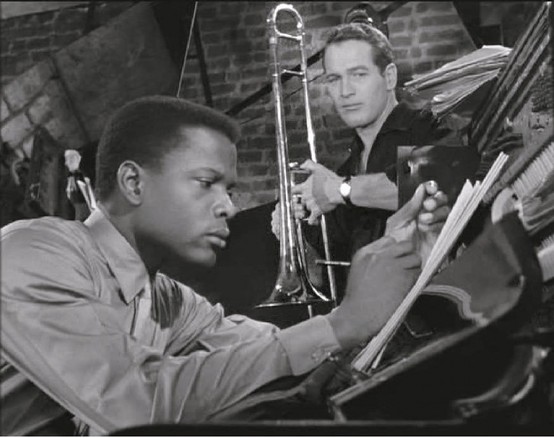
That dignified grace was a hallmark of so many of Poitier’s roles, including favorites like The Defiant Ones (1958), A Raisin in the Sun (1961), and Guess Who is Coming to Dinner (1967). His seminal role as Virgil Tibbs in In the Heat of the Night (1967) was a pretty accurate picture of policing in my rural Georgia town and planted the seed police reform in my young brain. I became obsessed with his films, never missing them on the 4 O’Clock movie or when I’d sneak downstairs into the recroom to watch Paris Blues (1961) on the late movie. When I learned about his civil rights work, I had permission to question the racism of my peer culture. Other kids had their role models, this was mine. Sydney and I had the same birthday (February 20) and I knew that the best thing I could be was to be like Sydney Poitier.

There will never be anyone like him, but I carry his Mark Thackery with me into the classroom every time, with love.

In Defense of the Classroom

January 12, 2018

The first time I ever taught a college-level class was as a graduate student at Atlanta’s Emory University in White Hall, probably the fall 1986. I was the teaching assistant of renown criminologist Robert Agnew. He was out of town at a conference and left it to his 22-year-old TA to give a lecture on some crime theories that were to be covered that day. I spent a week preparing, including jokes and pop culture references I thought the undergrads would appreciate. When it was time to shine, I just froze. Like Cindy Brady on that game show, I was frozen, nailed to podium. My main memory was the realization that I can see my own cheeks. So much for the dazzling young professor.

It wasn’t long before I got my 10,000 hours of teaching in. As a grad student, I was teaching at private Emory, urban community colleges, and rural universities up in North Georgia. All my peers were musicians and I had found my own performance platform. Give me a topic and I was ready to rock it. I had found what I was good at.

Unknown

My inspiration for my whole approach can be blamed on the British film, To Sir With Love. The 1967 classic stars Sidney Poitier as Mark Thackeray, an American teacher thrown in with a bunch of working class “unteachable” students. It’s the racial opposite of all the American white savior pics, like Dangerous Minds, where a rebellious white teacher shows all the minority kids why they should value education. Thackeray is black and his students are white and he soon realizes a traditional curriculum isn’t gonna a work with these hoodlums so he throws their school books in the trashcan and takes them out museums and shit for some real-world lessons. Cue greatest theme song ever.

I had a similar moment at Emory when I realized that not only were my bourgeois students not doing the readings, they weren’t really taking my class seriously. Channeling Sidney (who shares my birthday), I threw all the books out of the classroom window in the Candler Library. I cancelled all the quizzes and exams and told them that now the only requirement was that they come to class and participate. They were always bugging me, on nice days, to have class outside on the grassy Emory quad. I told them we would now have every class outside, no matter what the weather.

That little tantrum paid off because that was the most engaged I had ever seen students on that campus. They read, discussed, and did a lot of the work for me. There were days when it was a brutal Georgia thunderstorm and we’d be sitting in the grass, soaking wet, discussing semiotics and doing class analysis of subcultural phenomenon. People must have thought we were crazy but I still hear from those students.

899726

There are two general ways of thinking about teaching at the university level, what we call pedagogy. One is the “sage on the stage” who stands up there and shares his or her knowledge with the lucky students. The other is the “guide on the side” who facilitates the learning process, building on the student already accumulated knowledge. As I began to fashion myself as a feminist educator, the guide on the side made much more sense. I could assign a book, like The Beauty Myth, but, the real learning came from the testimony from female students. Similarly, I would tackle race by assigning a classic like The Autobiography of Malcolm X, but the students of color would have the real authority on the topic. I just sit there with my coffee taking it in.

My teaching style over the years has been a bit more like a grand performance art piece. Once, on the first day of my Youth Subcultures class at Portland State University, I walked in the classroom and asked to the students to follow me. Like the Pied Piper, I led them outside to Southwest Broadway, the main boulevard that runs through campus. I asked the students to lie down in the street. They did, stopping the busy traffic across three lanes. It looked like a protest but I was trying to make the point about the street as a multi-facet metaphor for youth in America. We were literally on the street. That one got back to the dean.

26857113_10156948305364307_1385068994_n

I’ve been mourning my exit from PSU and sad that my program at the University of Oregon was defunded, throwing a lot of committed teachers out of work in favor of some “on line learning” alternative. There is nothing that matches the magic that happens in the classroom. So I couldn’t be more exited to finally be back in the classroom teaching sociology. I started my adjunct position at Portland Community College on Wednesday with a discussion of how the sociological imagination liberates us from the boxes that we have been shoved into. Like getting back on a bike, I was right back in the zone. This stuff matters.

In a time when universities are shedding tenure track faculty in favor of websites, the vitality of the classroom is the last fortress of our shared Enlightenment values. Online education is a hoax. Research demonstrates that online students retain less information. (There are some effective online classes and, for some students, it is their only access to higher education.) The student who is registered for the class may not be the one who is actually taking it and the professor who is listed as the instructor may not be the one who is actually teaching it. It’s a money making fraud. So back I’m there in the classroom. I don’t need a Powerpoint slideshow or any fancy technology. I just need students who are ready for an adventure. I’m back, let’s go.

The emotional fatigue of liberation work

October 13, 2017

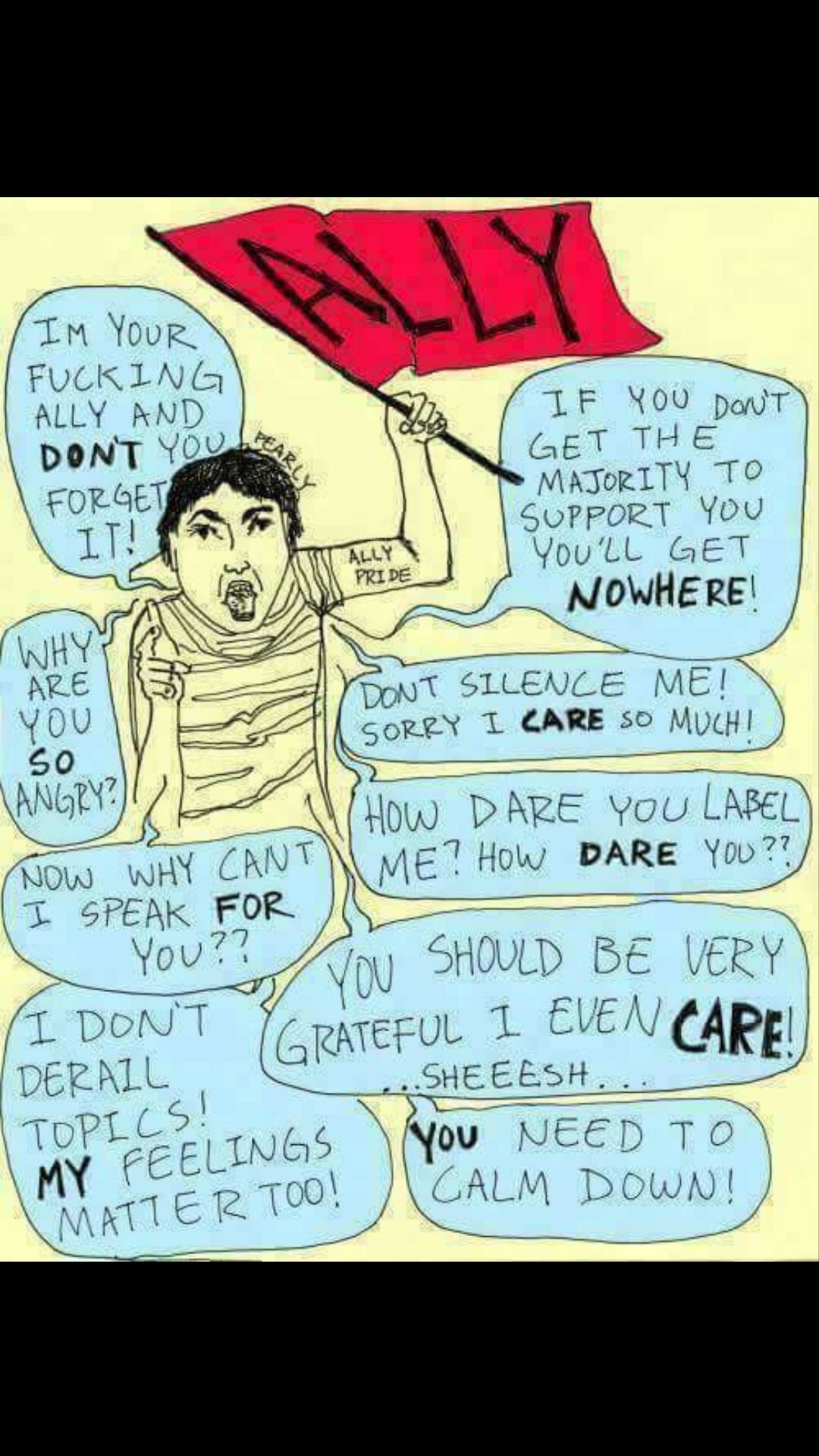
Sometimes I have to remind myself of my own advice. When we are trying to be allies or accomplices in liberation movements that are not about our liberation, there’s gonna be some big bumps in the road. It you’re a man who cares about smashing sexism or a white person who wants to dismantle racism, don’t expect to be welcomed with open arms as the great savior. I advise people to be prepared for uncomfortable situations and let folks know that they’re going to be mistakes. Don’t beat yourself up too much. Just stay on the path.

Most of my classmates at Emory University went off to Wall Street, or law school, or medical school and are now making six and seven figure incomes and probably vote Republican. I chose a different path. My road has been to dedicate my life to unmasking and upturning forms of oppression in my world. It started the day I turned my back on the Klan town I grew up in and really took off when I began my undercover research in the white supremacist subculture. That path may have earned me a PhD and some media notoriety, but I’ve also got over 30 years of committed racists threatening to kill me and attacking me in ways that have severely impacted my family.

A white activist friend recently said we do this anti-racism work because we have to and she was exactly right. This work is woven into my being now, but I still have a lot to learn. For my senior high school ring I chose Mother of Pearl for the stone as a subtle nod to the “white power” vibes in my school. That was 1981. By 1984, I was working on Jesse Jackson’s presidential campaign. I just needed that first sociology class to help me understand how I had become an agent of others’ oppression. I cast off that yoke but all these years later, there is still more to learn and it gets hard at times. I can’t count the number of racist, sexist, ableist, homophobic, transphobic, agist, classist (and whatever the body-shaming “ist” is) things I’ve done or said over the years.

690369676

To do this work is to deal with emotional fatigue because you never “win.” There’s always another battle and you wonder (especially with a president who today is speaking at a conference of an actual hate group) if any progress has been made. I was at the Portland Max train station last a May after the brutal attack by an alt-right racist that left two men dead and a third clinging to life. I was taking in the candles, flowers, and messages in what had become a makeshift memorial to these three Portland heroes. I suddenly was overwhelmed with desperation. What was the point of my decades of work on this issue if people are still being murdered by Nazis? Had I wasted all this effort? I was going to be a dentist. It was 2017 and the hate mongers were stronger than ever with an ally in the White House. I walked towards some shadows so I could bawl my eyes out.

Blazak, Randy

I do regular educational tours with the Fair Housing Council of Oregon. We put a bunch of people on big Blue Star bus and drag them on a tragical history tour of Portland. Here’s where the black community was redlined, then displaced by “urban renewal” and gentrification. Here’s where Japanese-American men, women, children, and babies were imprisoned as “enemy aliens” after Pearl Harbor. Here’s where a community of working class people were wiped out by a catastrophic flood. We visit the spot where Mulugeta Seraw was beaten to death with a baseball bat by racist skinheads in 1988, and around the corner is the Hollywood Max station, site of the 2017 version of the same damn thing. We finish at Clyde’s Prime Rib, the great jazz bar and restaurant that in the 1940s was the Coon Chicken Inn. After the four hour tour, half of the bus riders look like they want to slit their wrists. It’s draining and deflating.

Site108-CoonChickenInn

In this work, I’m used to being attacked by people on the right. It comes with the territory. White supremacists have labeled be a “race traitor” and were doxxing me long before that was even a word. Conservatives call me a “libtard,” and a communist and are convinced that white privilege is a hoax and that discussions of implicit bias is a liberal tool to generate a false white guilt.

DMCGRwNVAAA8FRU.jpg-large

It’s the attacks from the left that are more debilitating. It’s very in vogue for self-proclaimed radicals to bash “white liberals” these days, and much of it (as a self-proclaimed radical) I must say is deserved. As James Baldwin once said, “White people are trapped in a history they don’t understand.” But my work is about bringing people into liberation movements, so I worry attacking the people who are trying to be part of the solution will have an opposite effect. The (young) left can be very dogmatic and humorless, not allowing people to find the most effective path for themselves on this collective path. “Oh, you made an inappropriate comment? You’re out and I’m going to get my righteous posse to kick your ass out the door. Whose streets? Not yours.”

f3ee9b5c6f

I was on a panel this week for an amazing program called Race Talks; monthly community conversations about issues related to race and racism. This month’s talk was about how to be a white ally. The organizer called me and asked me to participate and who else should be on the panel. I suggested a young African-American activist who had recently been on my podcast. His position on the issue was provocative but important. My interview with him really helped me grow. So I was excited when we were all up on the stage together in front of a crowd so big they had to create an overflow room. I was prepared to talk about lessons learned about being a white ally and how to take a back seat in others’ liberation movements. I even wrote some notes. I never got to use them.

DMNHHltVQAANutq.jpg-large

Instead of the the woman who organized the panel moderating the discussion (as she had planned), our one black panelist decided he would ask the questions (in what could be framed as an act of male privilege). Questions like how the white people on the panel had burned people of color with their efforts to “help” and what reparations were we paying to make amends for our white privilege. I told you he was provocative. And these were important, valid questions. I’m not sure how it helped the standing-room-only crowd learn to be racial allies (in fact it probably scared a few folks away from the whole idea), but it certainly gave me one of those uncomfortable situations I encourage people to put themselves in.

One of his points is that his time is valuable and he should not be expected to help white people with their racism without compensation. I totally agree. Before the event, I messaged him and said I was looking forward to the panel. I wanted to thank him for taking the time to  be on my podcast. In the South we do that by buying folks beer.

Me: I owe you a beer. Let me buy you one tonight.

Him: I don’t drink.

Me: How about a salad. LOL

Him: I find salads offensive.

I made a joke about the salad. Apparently, I offended him. He trotted out this interchange to the packed room (and streaming on line) about “this white man” offering him a salad. I apologized for the offending comment and took it as a cue that I should probably think about my use of humor, something that has gotten me in trouble before. (I tried to acknowledge his point by getting out my wallet that only contained 3 bucks, which I placed on the table in front of him. In retrospect, that was probably seen as being a bit rude.) I really do think his point about being compensated for his efforts is valid. As the crowd thinned, some of the older African-Americans in the audience asked if I was okay. One said it was unfair that I had been ambushed like that. But I want to grow on these issues, so I’m trying to not go into a defensive mode and take everything as a learning experience.

I was still bruising when I got home and in true Trump fashion turned to Twitter and posted something that I would have not posted if I’d gone straight to bed.

“Tonight I learned what my white guilt cost”

Tweets don’t die quietly (just ask Donald). But I engaged in the conversation that lasted into the following morning. I learned a lot, including about the meaningful discussion of reparations. The income gap between whites and blacks due to generations of oppression is real and continues to widen. I believe that any reparations should come from the government (the collective “us”). It’s unfair to expect some poor white person to shoulder the responsibility. But there are lots of ways white people can participate that are meaningful.

Reparations site asks people to ‘offset your privilege’ with acts of kindness

I mentioned that I would address this issue in my blog and included a link to a recent blogpost on white privilege. I desperately wanted these fellow ant-racist activists to see I was not the enemy, just in a parallel lane on this journey. I got accused of invading a “black space” to promote my blog. It seemed anything I did or said, I was already convicted of being the bad guy. I was trying to understand their landscape, but I was somehow now the enemy. I offered to link my interview with this young activist to his PayPal account in hopes that people that listened would consider supporting his work through contributions. He said no. “I have been severely traumatized by your self-promotion over the last few days,” he wrote.

Sometimes you feel like you just can’t win. It sucks not being perfect in the eyes of others who apparently are perfect. Sometimes you are tempted to give up and let others do the work. When I was in grad school, I almost did my masters thesis on Appalachian quilt makers instead of Nazi skinheads. Think how different my life would be. Think of all the quilts I would have! But this is my life’s work, so I soldier on, learning from my mistakes.

NHZ-logo

In the last few years I’ve learned the concept of “self care” and that it’s okay to be mindful of how hard this work can be and sometimes it’s okay to take a day off the fight and gorge on ice cream. One of the other panelists from that night, No Hate Zone founder Sam Sachs, called me to make sure I was alright after the panel/Twitter/Facebook public thrashing I got from my friends on the left. He told me my work is vitally important and has changed lives. It was just what I needed to hear.

To all those engaged in the struggle for human liberation, it is important that we keep each other’s feet to the fire, so we come from a place of empathy and not ego. It is also important to remember that we are all imperfect in our humanity and in our path to our common goals of equality, so treating each other with kindness and love is key. I am not one to suffers fools gladly, even when that fool is me. We can be hard on ourselves for our imperfections and mistakes and our failures. The moral arc of the universe is long, but we’ll get there. Give us a break.

And since this will likely be picked up by some of those young radicals who will confidently accuse me of being a “self-promoting” asshole, let me just say I love you and will see you a little further down the road.

Super important endnote: No matter how much fatigue a white person feels doing this work, it’s always going to be more fatiguing to be black in America. People of color don’t get to take a “self-care” day off.

SaveSave

Jukebox Hero 2: I Will Follow

June 29, 2017

To break things up, I’m occasionally posting chapters for the memoir I wrote a few years ago about my adventure with rock stars. Here’s one of two about U2. Chapter 1, about the Runaways is here: Queens of Noise

Chapter 2:  U2 (Part 1 of 2) – I Will Follow

Soundtrack song: “Sunday Bloody Sunday”

The great thing about working at a record store was you got to get the new music first and listen to it for free. Before I got the job at Turtles, I would find out the release date of a new album and what time the store got its shipment and be there with bells on. In 1979, I was there to get new LPs by The Cars and George Harrison out of the box. First person in Stone Mountain, Georgia to hold a copy of Gary Numan’s Pleasure Principle in his hands. When I started at Turtles in 1981, this became a biweekly thrill; Tuesdays and Fridays. I had gotten the job thanks to David Riderick. David was the bass player for Riggs (who had two great songs on the Heavy Metal soundtrack in 1981) and worked at Turtles. When I was just a fan, he’d let me into the new shipments first. Finally he convinced Jimmy Cisson, the manager, to just hire this kid and let him open his own damn boxes. I’ll never forget opening the box for Michael Jackson’s Thriller in 1982 with a crowd of fans lined up at the door. I wasn’t the only one who needed the music ASAP.
U2_Boy_America

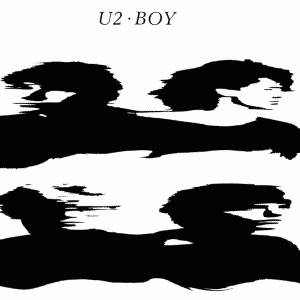
Most of the world got U2’s first album, Boy, in late 1980. For obvious reasons (it was Stone Mountain), it didn’t show up at the Memorial Drive Turtles until early 1981. I was immediately interested because it was produced by Steve Lillywhite, who had recorded some XTC albums I was obsessed with (and my favorite Siouxsie & the Banshees song, “Hong Kong Garden”). It was exciting seeing how punk was evolving in the new decade. And I loved “breaking a new record;” selling an album or single to people who didn’t know they wanted it. Maybe that was a bit of my dad, the salesman, at work. A single by Diesel, “Sausalito Summernight” was a huge hit in America in 1981 largely because of my convincing people in Stone Mountain to buy it. Also, the success of The Go-Go’s. That was me.

I loved the ringing guitars and emphatic vocals of “Bono Vox” on Boy. The album just seemed important and I played it constantly in the store (and refused to play REO Speedwagon’s Hi Infidelity). Jeremy Graf, the lead guitarist from Riggs, was working part-time at the store during a big sale and hated the record. He’d tell me the band was “whiney” and would never go anywhere. Riggs was a great rock band and I’ll just leave it at that. Boy was a hard sell in Stone Mountain. We were selling tons of Kim Carnes records, but not much U2.

Screen Shot 2017-06-29 at 9.15.35 PM

I could write a whole book about how the older Turtles, like Jeff Aronoff, Eric Wiggle, Nan Fischer, and David Remy, turned me on to real music. They would drag me to shows like B.B. King and say, “Randy, Eric Clapton is not the blues. THIS is the blues.” So I was thrilled when I saw that U2 was coming to the Agora Ballroom. The Agora was a small downtown venue across the street from the Fox Theatre that you had to be 18 to get in to. When I was in high school, I’d sit outside the stage door and listen to shows by The Pretenders, The Police, AC/DC, and The Clash (there is a picture from that show on the back of London Calling). My fake ID turned 18 on February 20, 1980 (my 16th birthday), and I became a regular at the Agora. The chance to bring my fellow Turtles to see my new favorite band would pay back all the great music they had turned me on to.

Screen Shot 2017-06-29 at 9.04.13 PM

On May 6, 1981, The Agora was maybe half-full but U2 filled the place up with sound. Bono’s stage presence was hypnotic. On “I Will Follow,” he dramatically threw his cup of water into the air and it landed on Larry Mullen’s drums, bouncing off the skins. The band embodied the punk ideal of erasing the barrier between bands and fans. I knew that this would be another of my “I saw them when” moments. No doubt the 200 who were there still talk about that night in 1981. And one of the nice things was that at clubs like that, it was relatively easy to meet the performers. After the show, the band came back to the stage to break down the equipment. We talked to Bono about the show and how we were pushing Boy at the store. When my enthusiasm got the better of me, my workmates described me as the “baby Turtle.” I picked up a Penrod’s matchbook from the floor and asked him to sign it. He wrote, “To Randy, the baby Turtle, Bono.” I still have it inside my copy of Boy.

U2_October

When their second album, October, came out, I got deep in to its mysticism. Was it a Christian album? I had wrestled with the wisdom of rejecting my Presbyterian roots, deep in the Bible Belt, for something more “spiritual.” I only knew that a rare airing of the “Gloria” video was the only reason to find MTV (which wasn’t available in much of the South yet). They opened up for the J. Geils Band and the Atlanta Civic Center on March 11, 1982. J. Geils had finally made it, thanks to their song, “Centerfold,” and U2 was still pretty unknown. Older rockers in the audience told me to sit down when U2 opened their set with “Gloria” and I leapt to my feet. By the last song, “Out of Control,” they had won over the crowd. After the concert, I tried to find my “friend,” Bono by the stage door but the opening band was long gone.
advertisement_31_july_1982_640

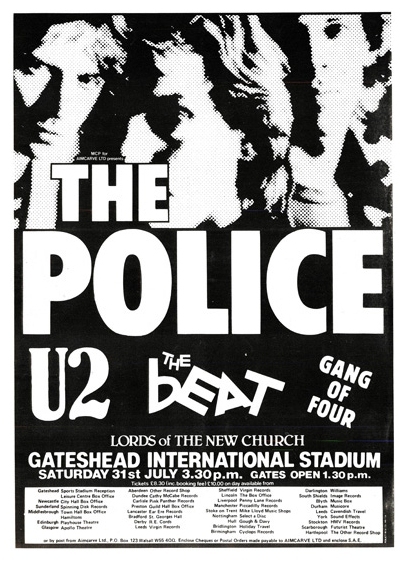
In the summer of 1982, I went off to school in London. I wanted to get away from Stone Mountain and get closer to the music I loved (especially all things Beatle-related). I had finished my freshman year at Oxford College and when the opportunity came to study in London, I caught the first flight from JFK to Heathrow. I saw a million shows that summer, from the massive to the tiny. I caught the Rolling Stones at Leeds, The Clash in Brixton, and The Lords of the New Church in a hotel bar in Hammersmith, where I had my arm pulled out of the socket while slam dancing. When I saw that U2 was opening for The Police up in Newcastle on July 31st, I went to a West End ticket office and a bought ticket for the show and the coach to ferry me up there. Seeing U2 playing to the huge arena of people who seemed to know every word was both super-cool and a bit sad. I knew I wouldn’t be watching them play at the tiny Agora again.
U2_War_album_cover

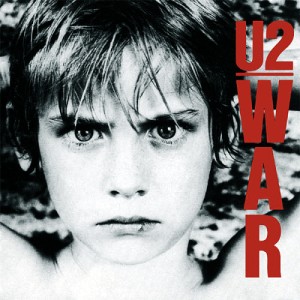
When I returned from London in the fall, I immediately began planning my return to the UK. If I had my summers off from college, there was no reason I couldn’t spend them in London, seeing bands and shopping for mod clothes on Carnaby Street. I’d work double shifts at Turtles and bank the money. Fortunately, I could use my employee discount on new albums, like U2’s third release, War. I really dug War because it was more political, like a Clash album. It captured the fear of living in Ronald Reagan’s Cold War, where the world could end at any minute. It only takes a second to say goodbye.

I was 19 and dating a women who was six years older than me with a young son. Reneé was a bartender at the 688 Club, the famous punk venue I was pretty much living in by 1983. Reneé’s best friend, Babs, was back from living in London for a bit and let me know her boyfriend, Steve, was the violinist on War. He added the chilling bit on “Sunday, Bloody Sunday,” among other accompaniment. When I mentioned to Babs that I was planning my return to London, she mentioned that she and Steve lived in a squat in Brixton (sight of the 1981 Brixton youth riots where I had gone to see The Clash play in the year before) and I was welcome to crash there. Perfect; a free crash pad in London with a guy that plays with U2.

After catching U2’s big headline show at the Atlanta Civic Center, with The Alarm opening, (I still couldn’t get backstage) I headed back to London. I caught the Victoria line Tube to the last stop, Brixton and walked down Electric Avenue to a massive abandoned apartment building. Squatters had taken over the flats on Cold Harbour Lane and if London had a ghetto, this was it. I stood in the rain and loved it, The Clash’s “Guns of Brixton” playing in my head. It was late and Babs looked a bit surprised when I knocked on the door, like, “Holy shit. This kid actually showed up!”
45563_10151631077304307_1866214982_n

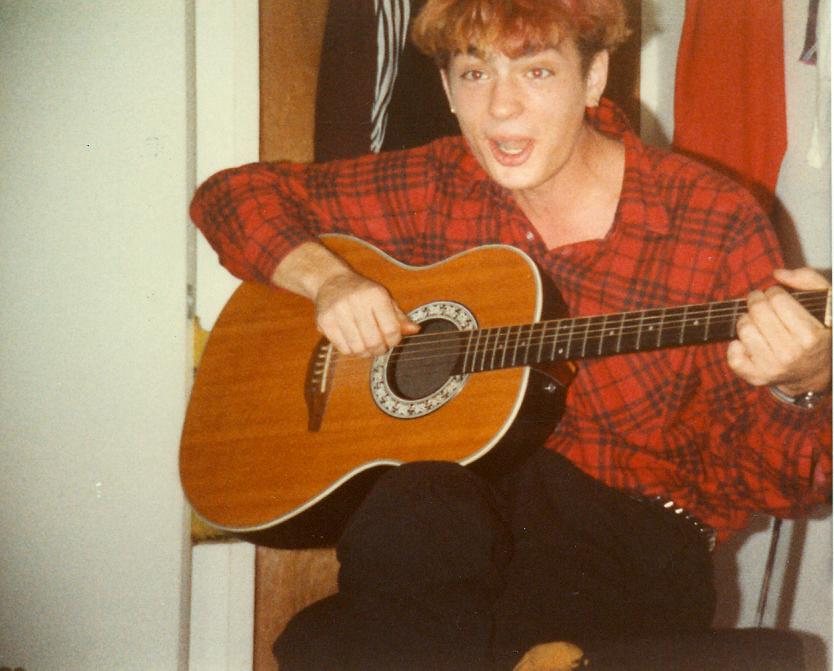
I instantly hit it off with Steve Wickham. He wasn’t just a name on a U2 record, he was a sweet funny Irish guy who loved American music. Since it was summer, the flat was never too cold and two more Irish roommates and a cast of visitors made my new home seem very warm, even if the hot water only came on once a week. I had taken to my punk lifestyle, dying my hair fuschia and getting tips from German punks who used egg whites to keep their spikes up. The French girls next door would occasionally dress me and I played Velvet Underground songs with the Irish buskers and, one night, told stories about hobbits during a party where everyone was on LSD but me.

Screen Shot 2017-06-29 at 9.57.11 PM

Life on Brixton in 1983 was brilliant. There was a constant flow of reggae music bubbling up from windows and the market. There was a Marxist bookstore and an almost daily rally against South African apartheid. The squat was like a 24-7 scene from The Young Ones, with punks, mods, and Irish musicians showing up with cider and buckets of Kentucky Fried Chicken. I learned how to ride the Tube for free and would be yelled out by little old English ladies for blasting UB40 tapes out of my boombox in the subway.

10471199_10152927136764307_5474422783773450193_n

The highlight of the summer was going to be a trip to Dublin. U2 was wrapping up their War tour with a big show in Phoenix Park on August 14 with Simple Minds, the Eurythmics, Big Country, and Steel Pulse. Steve left a week early to rehearse with the band. I took the coach to Holyhead, Wales with two Irish flatmates and their French girlfriends and then headed across the Irish Sea. It was the beginning of a long odyssey in Eire that would open my soul to the true power of music and revolution.

In Ireland, Steve had been reunited with his band, In Tua Nua. They were headquartered on the island of Howth, just to the east of Dublin. Drummer Paul Byrne had a cottage on the sea that was my crash pad for the week. The quaint place, on a high cliff above Balscadden Bay, also housed band member Vinnie Kilduff, who played the Irsh uillean pipes on War. In Tua Nua were about to be signed to U2’s new record label, Mother Records, with their new singer Leslie Dowdall (who had replaced one Sinéad O’Conner).

After getting settled, Steve and I hitchhiked up to the top of Howth, to The Summit pub. At the time, The Summit was really the only place to get a pint of the black water (aka Guinness) and some Irish bonhomie on the island of Howth. There we ran into Bono, who was relaxing in the days before the big homecoming concert. Steve was going to introduce me when Bono walked up and said, “Randy, the baby Turtle!” remembering our brief meeting in Atlanta two years earlier. This was my first glimpse into Bono’s sponge-like brain. We enjoyed a pint, talked about whatever country Reagan was overthrowing that week, and shared excitement about Saturday’s Phoenix Park show.

Unknown-1

The concert was incredible. I spent some of it backstage (hanging out with The Alarm) but I was a big fan of every act on the bill. I was impressed at how European crowds sang along to every song and the Irish were twice as enthusiastic. The fans cooled the hot August afternoon by drinking from big mylar bags of cider that had been ripped from their cardboard boxes. Clouds of sweated-out cider and beer steam hung over the throng (I don’t think I ever went to a show in Europe were there were actually “seats”). When U2 hit the stage, the crowd was frenzied. It was like slam dancing with thousands of people. And when Steve and Vinnie joined the band, everyone cheered at two more of their hometown boys in the big league. I got to meet the rest of U2 after the show, Larry, Adam, and Edge, but it was all a blur. I was too excited to remember any of it.

I returned that fall to begin my junior year at Emory and have other musical adventures. I became the entertainment editor of The Emory Wheel and kept in touch with Steve and Babs and started saving for my trip back. After getting married, Babs and Steve left the squat in Brixton and moved to Dublin where Steve was going to devout his full time fiddling for In Tua Nua. It was agreed that I should plan on spending the summer of 1984 in Dublin and I could work as a roadie for the band.

June couldn’t come fast enough. Flying into Dublin from New York was much different than flying into London. The plane was filled with Irish souls heading home. There was much drinking and singing on the flight. Fiddles and whiskey were passed across the seats. It was a dose of the Irish muse that follows the Irish around, getting them through the hell of their history. Babs and Steve met me at the gate and we headed to their new flat on Rathmines Road.

The flat was small, but I had a little pallet in the back to sleep on. I figured I could earn my keep by telling tales of life in America, playing the latest cassettes, and, in general, being entertaining. There was also some big news that I knew about in advance. First, U2 was working on a new album at Windmill Lane Studios and Steve was going to lay down some violin parts. And second, my hero, Bob Dylan, was playing a massive outdoor concert on July 8 at Slane Castle. In Tua Nua was on the bill and I was going to be the drum roadie.

Screen Shot 2017-06-29 at 10.28.52 PM

In the past year, I had become a student of Irish history and “the troubles.” When I was a student in London in 1982, the IRA had set off a series of bombs. One was under a bandstand in Regents Park where I often studied. I had a marginal bit of knowledge, mainly from two songs from 1972, John Lennon’s “Sunday, Bloody Sunday” and Paul McCartney’s “Give Ireland Back to the Irish.” I quickly added Eire to my radical history crash course after that, especially after my quick trip to Belfast in 1983, when British soldiers took the film out of my camera for taking pictures of the wrong thing (British soldiers). Slane Castle was on the River Boyne, near the site of the 1690 Battle of the Boyne. It was there that the Protestant King William defeated the Catholic King James, beginning a long history of foreign rule of Ireland. The concert would be a chance to experience the intersection of Irish and rock history.

I rode to the show in the van with In Tua Nua past the 100,000 people who wanted to be in the same physical space with the legendary Bob Dylan. The band teased me about wearing shorts and I informed them that this appropriate attire for a roadie at a festival. UB40 and Santana were on also on the bill. In Tua Nua, who had put out a wonderful 12 inch single on Mother Records, was now being courted by U2’s own label, Island Records. An A&R man from Island, known as The Captain, was waiting for us backstage. The Captain was a guy named Nick Stewart who had signed U2 to Island in 1980. But we were all more excited about being close to Dylan.  He was a mythical character and none of us really knew what he looked like up close. I had seen him in 1980 at the Fox Theater, but I was about twenty rows back and the clouds of pot smoke and Frisbees were in the way. At one point, a guy that looked like the man walked by and a friend shouted out, “Welcome to Ireland, Mr. Dylan!” He turned around and with a smile said, “I’m not Bob but I’ll tell him you said so.” A guy that knew Bob Dylan, that was pretty close!

Screen Shot 2017-06-29 at 9.58.13 PM

I was about to go bother Carlos Santana, who was standing alone on the banks of the Boyne when Paul Byrne asked me to come to the stage and help set up his drum kit. I was working after all. The crowd was the biggest I’d ever seen and when In Tua Nua started the set they roared in approval. Leslie looked great in her black leather skirt and very un-Irish tan. Steve lept about the stage wearing a polka-dot shirt I had found in the basement of Walter’s Fine Clothes in Atlanta. The band was tight and my big job was to make sure Paul’s vocal mike swung in when he had to sing background vocals. Being on stage with the band, hearing the music through the monitors, and looking down on the huge crowd was such a rush. If only I had a bit of musical talent that would justify me stepping out of the shadows.
10398622_75497409306_1578834_n

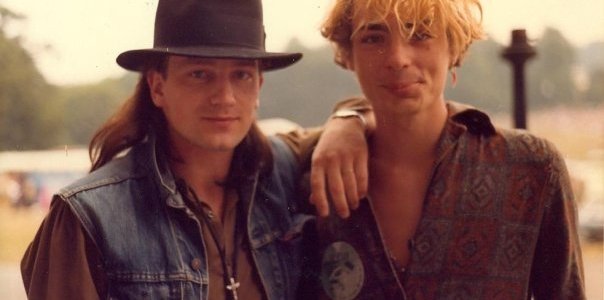
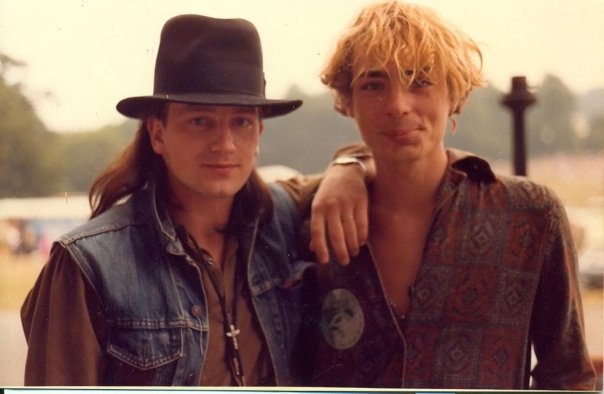
After their set, Steve and I headed up the castle to watch the UB40 set. U2 had been recording there with Brian Eno, so it wasn’t that surprising that we ran into Bono in the VIP area. He gave me a big hug and we talked about how great the In Tua Nua set was. Steve snapped a picture of us there and I have the goofiest look on my face. It was such a great day and about to get better. As much as I loved UB40 and Santana, I only remember hanging on Bono’s coattails, hoping he would introduce me to Eno. However, my All Access Pass meant that I could watch Dylan from a castle on a hill or from a few feet way.

I found a perfect spot in front of the stage, in front of the barrier that separated Bob from 100,000 screaming Dylan fans. I think the Irish cared more about Bob than the Americans did because, unlike TV obsessed Americans, the Irish actually care about poetry and politics. Bob was still in a bit of a lost phase (that he really wouldn’t emerge from until 1997), but when he opened with “Highway 61 Revisited,” you would have thought that he was the fucking messiah. I was ten feet from him the whole time, snapping pictures and hoping I wouldn’t run out of film before something major happened.

225431_10150300890594307_8052378_n

At the end of the show, Dylan announced a special guest and the patron saint of Irish music, Van Morrison walked on stage and the Boyne Valley erupted in jubilation. Bob and Van the Man dueted on “It’s All Over Now, Baby Blue” and “Tupelo Honey” and you could just feel the cosmic synergy. Then it was over. But the sweaty Irish masses demanded more. The summer sun was still up and there were a million more Dylan songs to get to. So out comes Bob and tells people there is another special guest, “Bono from U2!” But he pronounced “Bono” like “Bozo,” like “Bono the Clown.” The crowd loved it. It wasn’t just Bono out their with Dylan. Leslie and Steve were on stage too! And of course, I was out of film. Bob launched into “Leopard Skin Pill-Box Hat.” Bono and Leslie, not knowing the words (who does?) just sang “leopard skin pill-box hat” at odd moments and Steven fiddled away.

Bob played three more songs but I raced behind the stage to meet up with Leslie, Steve, and Bono, all who could not believe that they just performed with the actual guy that every busker in Ireland was trying to become. The sun was now down and I helped pack up the bands gear, wishing I had worn long pants.

After the show, we went to the Pink Elephant basement bar to celebrate the great gig. It was a classic 80s small disco bar with plenty of mirrors and colored lights. I would regularly see Def Leppard there. They were living in Ireland as a tax dodge and would huddle in a booth together with their pints of lager. Dublin in 1984 seemed like the least heavy metal place on earth. I got a kick out of telling them that my little brother (not me) was a big fan. They seemed to be happy that anyone knew who they were. I spent the rest of the night dancing to Frankie Goes to Hollywood songs with Sinead O’Conner. But that is another story for another chapter.

I think reuniting with Bono at Slane gave Steve permission to bring me down to Windmill Lane Studios, where U2 was working on their new album. We stopped in the Temple Bar first where we ran into Adam Clayton, the bass player. He was wearing a printed shirt with images of the Ku Klux Klan and burning crosses. I told him about growing up in a Klan town in Georgia and he talked about how the new album was going to be full of themes about American culture. Forget being the first to get the record out of the box, I was going to hear this album before it was even made!
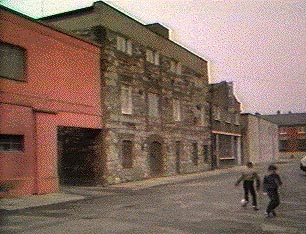
before_the_painting_in_1984

In the studio, Bono was working on a song about the heroin problem in Dublin. He didn’t have any words for it but it would evolve into the epic, “Bad.” The band’s backing track played and Bono yelped and hummed and found words that fit the vibe. “Let it go!” The band was interested in Steve laying down some soulful lines on his fiddle and Bono gave him a demo tape to work with. I noticed a few cassettes in the trashcan and quietly slid them into my pocket. Bono seemed glad I was there and I later asked Steve if he could get me a job as a gofer in the studio so I could have a legitimate reason to hang out and watch the sessions. I got a call at Rathmines a few days later, while I was watching Miami Vice, to go pick up some bass strings for Adam. That was enough. And there is a song on Unforgettable Fire with a great bass part that are played on strings I bought.

R-3361128-1327334597.jpeg

Skimming the edge of the U2 inner circle was a thrill, but I had my own rock career to nurture. Since 1983, I had been helping out a great Atlanta band called The Nighporters that I will write more about. (They were the band that morphed into Drivin’ N’ Cryin’, the band that would dominate my rock n roll lifestyle for years to come.) By the summer of 1984, The Nightporters had a single, were selling out shows at 688, and had opened for The Clash. So I spent a good bit of time trying to break them in Ireland. I gave Bono a copy of a tape and I’d hunt down RTE DJs at the record station’s commissary and put the 45, “Mona Lisa,” in their hands along with a photocopy of a picture of the marquee at the Fox Theatre with The Nightporters’ name right below The Clash’s. To my credit, “Mona Lisa” blasted out across the Irish airwaves one night that summer.

My love of underground bands was the source of great interest for Bono. He knew there were scores of brilliant bands that would never have the success that U2 had. We talked about the Paisley Underground bands in LA, the hard-core bands in Washington, DC, and the drunken post-punk bands in Minneapolis. Bono hit on the idea of using Mother Records to get some of these groups more exposure and deputized me to collect demo tapes from unsigned bands that would expose the real sound of America. This was an easy task for me as there was a vast underground of music sharing that had nothing to do with computers. Bands would come through town, sleep on your couch and leave a handful of cassettes, like musical Johnny Appleseeds. I was actually looking forward to my return to the States to begin my job as Bono’s hipster A&R man.

The rest of the summer was filled with music and travel. I went to London with In Tua Nua to meet with The Captain at Island and watch the signing of the record deal. Nick and I had bonded after the Dylan show. We spent the next afternoon running up and down Grafton Street looking for a leopard skin pillbox hat for Leslie to commemorate her song with Dylan. At Island, there was a large white board with hand-written info about tours and releases from various Island acts. Standing in front of the wall was a big haired guy I recognized as Mike Scott of The Waterboys, another Island band.
10398622_75508969306_4185015_n

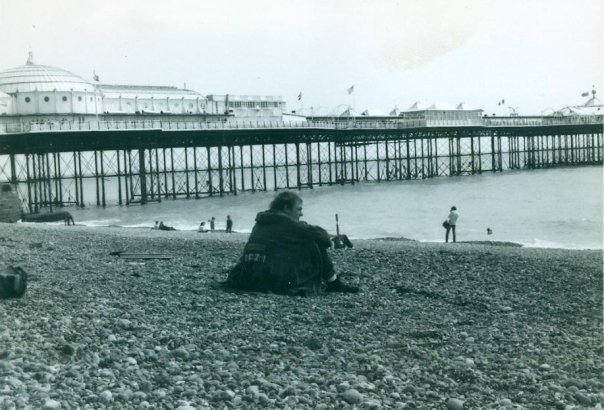
I cut loose from the band to visit some students at my old London dorm. I made a trek down to Brighton in my parka, like a mod Hajj.  A friend from college took pictures of me on the beach, trying to recreate the images from Quadrophenia. Then I headed off to Paris (in the days when you had to go across the English Channel, not under it). I ended up meeting some American girls from Colorado on the Champs Elysees and watched the L.A. Olympics in their hotel room while they smoked hash and asked me what it was like to be Irish. I put on my best Irish accent in the hopes it would charm them into letting me crash on the floor. Or in a bed.

One of the girls, Debbie, seemed to like all things Irish, including U2. I told her about life in Dublin and working with the band and told her she should visit some time. She was on a package trip and they were headed to London next. We made plans to meet in a few days. As I waited her outside her London hotel on Piccadilly Circus, a female copper tried to get me to move away, assuming I was trying to meet a prostitute. In Piccadilly Circus? Fortunately, Debbie came out in time and I gave her an Irish boy’s tour of London, careful not to drop my brogue I had been practicing all summer. I gave my address in Dublin (really Steve and Babs’ address) and sent her off on her package tour of Europe.

When I got back to Dublin, I decided it was time to head back up to the North. I took a train up to Belfast. I learned my lesson after my trip the previous summer and vowed to be more discrete around any soldiers. This time I was armed with books about the IRA, the loyalists, Green Republicans, and Orange coppers.  On August 12, I took a train across the border into the North. This happened to be the same day that Martin Galvin was headed to Belfast. Galvin was an Irish-Lawyer who had been banned from entering Northern Ireland because of his leadership of NORAID. NORAID was an American group that provided supported financial aid to the IRA and Galvin was a major thorn in the side of the British government.

When I showed up in the Catholic neighborhood in Belfast where Galvin was going to speak with a bag full of books on Irish nationalism, I learned a quick lesson about global politics. I assumed that my American passport gave me international immunity from local conflicts. When the Royal Ulster Constabulary (RUC) saw me snapping pictures of British soldiers (a serious transgression as the IRA targeted known soldiers), they questioned me, took my camera and my passport. They asked me if I was with NORAID. I tried to explain that my name was Czech, not Irish and, as much as I hated saying it, I was a tourist. That wasn’t good enough and I was held for questioning.

That might have been a good thing, since shortly after that, the RUC opened fire on the crowd that Galvin was speaking to. A guy about my age named Sean Downes was killed by a plastic bullet. The RUC questioned me on a side street. Once they realized I was a dumb American who had just listened to too many U2 records they let me go. They did wait until after the last train for Dublin had left and trailed me as I looked for a Bed & Breakfast to camp out in. The couple who ran it delighted me in tales of the “English savages.” When I made it back to college in the fall the whole experience became a part of my senior honors thesis, “A Marxist Analysis of the Irish Conflict.”

When I got back to Dublin from Belfast, there was a postcard from Debbie. She was coming to Dublin to see me. I went into a panic. I had pretended to be Irish because I thought being a kid from Stone Mountain, Georgia in Paris wouldn’t really get me anywhere. I explained my charade to Steve and Babs and they fell all over in hysterics. I begged them to help me keep up the act so I wouldn’t look like a complete idiot. When Debbie knocked on the door of the flat I quickly pulled her onto a bus for Grafton Street. Steve and Babs tagged along, constantly quizzing me on my Irish lineage and how Randy Blazak was actually a “very Irish name.” It was torture, We seemed to run into everybody the next few days. They all had the same puzzled look when I began to speak in my fake Irish accent. I’m not sure what Debbie made of it. Probably that I was an idiot.

u2_unforgettable_fire_castle_Moydrum_Castle

That fall, back at college, I busied myself helping The Nightporters and finding tapes of cool bands for Bono. It was always cool when a letter from him would show up in my Emory PO box. When The Unforgettable Fire came out in October it just blew me away. It was such a departure from the strident War album. I would listen to the hypnotic “Bad” in my dorm room and think about the early version I heard Bono working on in Windmill Lane. And I knew the tour was going to be a major event.

During the spring, I was on top of my game. I had become the leading campus activist, leading demonstrations against apartheid and whatever Reagan was up to that week. I was flying to LA to hang out with rock star friends. I was loving my “Philosophy of Marxism” course, taught by a Catholic priest. The dogwoods were in bloom and my little clique of campus freaks had colonized the steps of Cox Hall. And on one sunny day, while I was organizing a protest, or a road trip, there was Debbie from Colorado. “Randy! What are you doing here?”

Photo of U2