The James Bond Project #27: No Time to Die (2021)

This series is intended to evaluate each product of the James Bond film franchise through a feminist lens, and the relevance of the Bond archetype to shifting ideas of masculinity in the 2020s.

No Time to Die (2021, directed by Cary Joji Fukunaga)

August 27, 2025

And in the end. Here we are at the final (for now) review. The final Daniel Craig performance as James Bond. The final 007 in the 59 year history to be produced by Eon Productions and anyone named Broccoli. And perhaps the last Bond film ever. Spoiler: James dies but rumors of another reboot abound. Last February, Amazon/MGM bought the franchise from Eon, so we may get another generation of 007, perhaps AI generated.

No Time to Die,  the 25th Eon Bond film, wraps up the Bond story in some interesting ways. Danny Boyle was to direct but backed out at the last minute so True Detective director Cary Joji Fukunaga took on the job. Daniel Craig, 51 at the time, who’s body had been battered by the role, reportedly said he’d rather slash his wrists than play Bond again. MGM reportedly offered him $100 for two more Bond films, which he turned down. He utilmateiy accepted a payday of $25 million for a film that would tie up the Bond story’s loose ends. We’d see some familiar faces for the last time, including Jeffrey Wright as Felix Leiter, Ralph Fiennes as M, Naomie Harris as Moneypenny, and Christoph Waltz as Blofeld.

NTTD doesn’t really have a Bond girl in the traditional franchise sense. For the first time, a female lead returns in a film. Léa Seydoux, who played James’ love interest, Dr. Madeleine Swann in Spectre, returns in NTTD and she has a surprise for 007. Ana de Armas, who racked up the awards as Marilyn Monroe in 2022’s Blonde, is CIA agent Paloma and she out-La Femme Nikita’s Nikita. Her action scenes are the highlight of the film.

The final installment gives us the expected Bond tropes, including our final underground lair, Bond in a tux, cool gadgets (including a glider submarine), exotic locations (Bond’s back in Jamaica!), and more than one Aston Martin. But this Bond is not the walled-off Lothario of the past six decades. Craig still plays him with smirky panache, but NTTD 007 is a family man.

For one last time, let’s plug the film into our evaluation matrix and see how the final Bond film ranks in our toxic masculinity scale.

Driver of Action – It makes sense that the final film centers on Bond himself. As Spectre ended, we have James leaving MI-6 to be with Madeline. The MI-6 crew, including Q, play small roles. There’s even a new 007, who, fittingly, is a black female, played by Lashana Lynch. Bond is reunited with CIA agent Felix Leiter, who is killed by a bad DOJ agent. The diversion from solo Bond is the scene with Ana de Armas in Cuba where they make an excellent team opening an epic can of whoop ass on Spectre.

The Role of Violence – Rogue Bond doesn’t need a license to kill, but when he’s reinstated to MI-6, his body count is off the charts. The Cuba scene with the Paloma has the highest kill rate in Bond history and in the Norway chase scene and the underground island lair of the assassin Safin (played by future Freddie Mercury Rami Malek) we see countless henchmen mowed down. Fan count is 27 killed but it felt like twice that. As usual, Bond dodges an endless hail of bullets, but one fired by Safin, finds him, leading to his death as British missiles destroy the island base.

Vulnerability – James Bond has never been more vulnerable in a James Bond film. The first part of the film, Bond is plagued by thoughts of Vesper Lynn, his previous love interest who died. Then he’s plagued by thoughts that Madeleine has betrayed him. Then he learns that that was a mind trick by Blofeld. Reunited with Madeleine, he learns that he has a child named named Mathilde. In the end he sacrifices himself to save Mathilde and Madeleine.

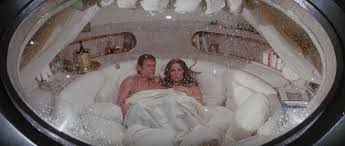
Sexual Potency – That’s not really the vibe in this film. The films opens with James and Madeleine, in love in Italy, including a scene in bed. He tries to make the moves on a woman in his room in Jamaica until he learns she is an MI-6 agent, the new 007 (in a scene that felt like an homage to Live and Let Die). He briefly flirts with Paloma until they get busy killing Spectre baddies. NTTD is a Dad Bond film.

Connection – Jame is fully connected to Madeline in this movie. Even in the scene where he puts her on the train after he believes she tried to kill him is full of pathos. Later in the film, he tells her, “I have loved you and I will love you.” Once he learns Mathilde is his daughter, the parent protection gene is unleashed and he is focused on saving his people. NTTD has no cute epilogue where we see he’s survived the missile strike and on a boat, drinking martinis with Madeleine. We see him blown up real good and the film ends with Madeleine telling their daughter about her heroic father.

Toxic Masculinity Scale: 1

Summary: NTTD might score higher because of the constant explosion of gun violence, but paternal Bond levels all that out. Even the title sequence steps back. Over a great Oscar-winning theme song by Billie Eilish, instead of the titles being projected on the bodies of nude women, it’s over Bond and his weapons. It should also mentioned that the credits included the names of many women, not just hair and make-up and casting. For reasons that might be sad (the end of Eon Bond films), we finally get a more human model of masculinity from Ian Flemming’s iconic character.

No Time to Die’s release was held up by the COVID pandemic. Principle photography wrapped in October 2019, but post-production was shuttered during the lockdown. The final Eon Bond film had its world premiere on September 28, 2021 at London’s Royal Albert Hall and landed in a market where most theaters were still closed. A month later, the global deaths from COVID-19 topped 5 million.

Because of the nature of corporate ownership of film franchises, nobody really lamented No Time to Die as the LAST JAMES BOND MOVIE EVER. In fact, “Bond 26” is currently being written by Peaky Blinders creator Steven Knight and Dune director Denis Villeneuve is tapped to direct. Who will play the new Bond? Rumors are floating about Kick Ass star, Aaron Taylor-Johnson. I’ve been routing for Idris Elba, but he might be a little old. Could it be a person of color? Or even a woman? I mean, why not? We can only hope the new Bond is a healthier versions of masculinity that is both vulnerable and lethal. He (or she) still has a license to kill, after all.

The James Bond Project #26: Spectre (2015)

The James Bond Project #25: Skyfall (2012)

The James Bond Project #24: Quantum of Solace (2008)

The James Bond Project #23: Casino Royale (2006)

The James Bond Project #22:  Die Another Day (2002)

The James Bond Project #21:  The World Is Not Enough (1999)

The James Bond Project #20:  Tomorrow Never Dies (1997)

The James Bond Project #19: GoldenEye (1995)

The James Bond Project #18: License to Kill (1989)

The James Bond Project #17: The Living Daylights (1987)

The James Bond Project #16: A View to a Kill (1985)

The James Bond Project #15: Never Say Never Again (1983)

The James Bond Project #14: Octopussy (1983)

The James Bond Project #13: For Your Eyes Only (1981)

The James Bond Project #12: Moonraker (1979)

The James Bond Project #11: The Spy Who Loved Me (1977)

The James Bond Project #10: The Man with the Golden Gun (1974)

The James Bond Project #9: Live and Let Die (1973)

The James Bond Project #8: Diamonds are Forever (1971)

The James Bond Project #7: On Her Majesty’s Secret Service (1969)

The James Bond Project #6: You Only Live Twice (1967)

The James Bond Project #5: Casino Royale (1967)

The James Bond Project #4: Thunderball (1965)

The James Bond Project #3: Goldfinger (1964)

The James Bond Project #2: From Russia With Love (1963)

The James Bond Project: #1: Dr. No (1962)

Winding Down Elementary School: Gender Check-In

May 15, 2025

As fifth grade starts to wind down and the complex reality of middle school looms, I’m reminded of how this blog began. November 2014, I was a stay at home dad, spending my days with Baby Cozy, wondering how I was going to raise a girl in a culture that still devalued half the population. The idea of a blog charting the challenges of “feminist fatherhood” seemed like a good way to share the struggle. Over ten years later, while the the world burns, protecting her gendered journey is still the priority.

The experience of elementary schools has seen the predicted emergence of pre-teen gender rolls. As discussed in Carol Gilligan’s pioneering 1982 study, In a Different Voice, the primary grades, 1 – 3, saw boys and girls as a fairly homogenous blob of “kids.” Half of Cozy’s friends were made of snips, snails and puppy-dogs’ tails. But by 4th, each team peeled off. In fourth grade, Cozy found her tribe of Swifties and boys became the object of much gossip and wonder. “Does he like me?”

Gilligan wrote about how 13 was the age of the great gender divide in which girls start to realize their value is based on how boys view them and their self-esteem plummets. But 2025 is not 1982, for better or for worse. For worse, kids are hitting puberty earlier now. In the 1970s, the average of the first menstruation was 13 and it’s down to 12 now. The beauty industry is targeting younger and younger girls. Cozy has been experimenting with make up but tells me it’s just for fun. On the better side, Gen Alpha kids have been raised by parents who mostly accept the basic tenants of feminism that girls and women are human beings. Boys seem less creepy and girls seem less concerned with their opinion.

We’ll see if that holds up in sixth grade.

This week I got a little tour of the middle school Cozy will attending in the fall. Parents had fun sharing their fond memories of middle school. I don’t know if it’s a “Deep South” thing, but we didn’t have middle schools where I grew up. Elementary went to seventh grade and eighth grade was high school, where you were a “sub-freshman,” the dreaded “Subbie.” Being in seventh meant you were the very big fish in the pond, but the year was also spent full of horror stories about what awaited the little subbies, destined to be terrorized by giant (and practically adult) high school kids. “They’ll force you to do heroin in the bathroom!”

I’ve gathered that middle school is the crucible of adolescent drama. Take 300 kids going through puberty and lock them in a building together for 5 days a week and see what happens. I’m guessing the gendered game of attracting boys is part of that. I’m hoping Cozy’s internal compass is rooted in enough self-efficacy that she won’t be knocked off track by that monstrous norm. But I’ll be on the look out for anything that looks like the surrendering of self that happens to girls in that patriarchal zone, including eating disorders. I think her girl squad will provide a buffer to that traditional pull.

When this blog started, my primary rants were about gendered baby toys and the lack of TV commercials that show men doing housework. Now we’re getting into the real stuff, from body image to sexual safety. This is where the feminist fatherhood business either pays dividends or goes into crisis mode. I have faith in my daughter. The rest of the world, populated by MAGA incels and Carl’s Jr. ads, I’m on guard against. What will happen?

The James Bond Project #21:  The World Is Not Enough (1999)

May 1, 2025

This series is intended to evaluate each product of the James Bond film franchise through a feminist lens, and the relevance of the Bond archetype to shifting ideas of masculinity in the 2020s.

The World Is Not Enough (1999, directed by Michael Apted)

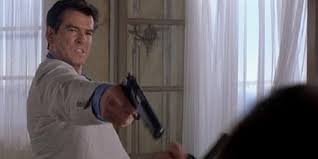
Four decades of 007 movies and so many bullets fired at Bond. Not that I want to see James get shot, but couldn’t one bullet at least graze his perfect temple? The World Is Not Enough, Pierce Brosnan’s third go at 007, finds Brosnan comfortably coasting as Bond in a film with epic stunts but not much else. Eon Productions still seems unsure of Bond’s role in a post-Cold War world, so they rely on the time-tested (over 37 years! That’s 4 years older than Jesus Christ!!) conventions. James in a tux in a casino. James wrestling a nuclear submarine. James and his obligatory three sexual conquests. Yawn.

Barbara Broccoli wanted to find a director who could bring out strong female performances. (Peter Jackson, pre-LOTR, had been considered.) She settled on Michael Apted because of his work with Sigourney Weaver (Gorillas in the Mist), Jodie Foster (Nell) and Sissy Spacek (Coal Miner’s Daughter). All three women were nominated for Oscars (with Spacek winning). One would think that would lead to a more woman-centered film, especially after the heavy reliance on Michelle Yeoh in Tomorrow Never Dies. Nope. TWINE is about as boilerplate Bond as we get.

Side note, as a viewer who has been keeping an eye on the credits of these films, the one filmmaking role that is most constantly populated by women (besides costumes, and hair & makeup) is the casting director. According to 2025 data, 74% of casting directors in the United States are women. So one wonders what casting director Debbie McWilliams was thinking when she cast Denise Richards as nuclear physicist Dr. Christmas Jones. Richards was an “it” girl in the late 90s, starring in two of my favorite fluff films of the era, Starship Troopers and Wild Things. She might be believable cast as a substitute high school science teacher (maybe), but as a nuclear physicist dressed as Lara Croft, completely laughable. Maybe Barbara Broccoli was trying to hold on to the horny teenage boy demographic (who, in 1999, were heavily breaking for Natalie Portman in Star Wars: Episode I – The Phantom Menace).

There were some casting coups in TWINE. Robert Carlylem, who had been so great in Trainspotting, was cast as the psychotic terrorist, Renard. And Sophie Marceau, the French actress who stared in Braveheart and Anna Karenina, played the erotically complex role of Electra. But most notable was the final performance of Desmond Llewelyn as Q. The one consistent thread through the Bond franchise was Llewelyn’s Q, starting with From Russia with Love in 1963, through 17 films. TWINE had Q training his replacement, R (played by Monty Python’s John Cleese) and joking about retirement, but his fate in the series was sealed. Three weeks after the premiere of TWINE, Llewelyn, 85, was driving home in his Renault Mégane, when he was hit head on by 35-year-old man in a Fiat. To die a young man’s death.

The World Is Not Enough, as expected, has plenty of exotic locations, including Spain, Azerbaijan, and an UNDERGROUND LAIR in Kazakhstan. We even get the Bond staple of 007 on skis being chased by Russian assassins. (Don’t fix it if it ain’t broke.) But this film finally gives us an action sequence in London with an epic boat chase on the Thames that climaxes with Bond flying off his rocket boat and grabbing a dangling rope of hot air balloon that the beautiful assassin is getting away in. (Assassin played by Maria Grazia Cucinotta. I had to look her up.) Cinema!

The 20th century of Bond ended, not with a bang, but with a meh. Let’s analyze it.

Driver of Action – Unlike the previous film, TWINE is a Bond solo vehicle. There’s a subplot about a relationship between Renard and Electra but it’s barely dealt with. M has more of a role but she’s mostly another damsel in distress for 007 to rescue. The world is not enough for the black hole that is James Bond.

Role of Violence – The body count is significantly less than the last two Brosnan films. About 19, if you don’t count all the henchmen that drown in the nuclear submarine. He kills Renard with a nuclear fuel rod to the chest. More dramatic is when he confronts Elektra for planning mass murder. “You wouldn’t kill me. You’d miss me,” she says. “I never miss,” he says then shoots her in the chest. She dies in her bed and Bond lays on top of her in one of the creepiest moments in the franchise.

Vulnerability – Early in the film we see James wearing glasses, but they may be a disguise, not a sign of aging. Later, when the beautiful assassin blows up her hot air ballon, he falls, crashing on a roof and dislocating his shoulder. It’s not getting shot, but it’s something. Later, Elektra talks about the death of her mother and asks James, “Have you ever lost someone?” but the scene moves on before we can get a glimpse of James recalling the death of his wife. That inference is left for longtime Bond fans.

Sexual Potency – The formula is in play. First Bond sleeps an MI-6 doctor, Dr. Molly Warmflash (I shit you not) so he can get her to forge a doctors note so James can get back to work. Then he sleeps with Elektra, who turns out to be a bad girl. At the end of the film, he sleeps with Dr. Christmas Jones as M, R, and the rest of the MI-6 brass watch their humping heat signatures. Bond quips, “And I thought Christmas only came once a year.” Check, please!  And, just to check it off the list, there is the prerequisite sex banter between James and Moneypenny. “Close, but no cigar.”

Connection – Yeah, no. Brosnan has mastered Moore’s detached Bond. There’s no sense of connection, not even with the fading Q or captured M. There are no CIA friends to lean on. We’re not sure why he sleeps with Elektra. It’s just expected. And his relationship with Denise Richards’ nuclear-physicist-damsel-in-distress-in-wet-clothes is more than flimsy. They don’t end up in a screwing in a boat. They do it on a rooftop in Istanbul while fireworks explode overhead. But for a Bond climax, it’s pretty flaccid.

Toxic Masculinity Scale – 6

Summary Bond 1999 is a disappointment. The previous film, Tomorrow Never Dies, offered so much promise. TWINE feels like a big back slide. Brosnan is playing a cartoon character version of James Bond, swimming up from the floor of the Black Sea, with his damsel in distress, holding his breath. (If ever a scene needed a man-eating shark.) We expect the sexy one-liners. When future beautiful assassin is just the beautiful cigar girl, she asks James, “Would you like to check my figures? Bond replies, “Oh, I’m sure they’re perfectly rounded.” Low hanging fruit. The action scenes redeem somewhat but, otherwise, this is 007 the two-dimensional prick.

The film was originally going to be called James Bond 2000, but they moved up the release to cash in on the holiday season and the film did quite well. (It was the first film I saw as a new homeowner on Thanksgiving night 1999.) The World Is Not Enough premiered in LA on November 8, 1999, as a MGM film (not United Artists). Four days later a massive earthquake struck Turkey, destroying some of the locations used in the film. The theme  song, performed by Garbage, attempted to make the film contemporary, but the TWINE made Bond feel like an artifact of the 20th century. Brosnan would have one more chance to update Bond for the new millennium.

Next: Die Another Day (2002)

The James Bond Project #20:  Tomorrow Never Dies (1997)

The James Bond Project #19: GoldenEye (1995)

The James Bond Project #18: License to Kill (1989)

The James Bond Project #17: The Living Daylights (1987)

The James Bond Project #16: A View to a Kill (1985)

The James Bond Project #15: Never Say Never Again (1983)

The James Bond Project #14: Octopussy (1983)

The James Bond Project #13: For Your Eyes Only (1981)

The James Bond Project #12: Moonraker (1979)

The James Bond Project #11: The Spy Who Loved Me (1977)

The James Bond Project #10: The Man with the Golden Gun (1974)

The James Bond Project #9: Live and Let Die (1973)

The James Bond Project #8: Diamonds are Forever (1971)

The James Bond Project #7: On Her Majesty’s Secret Service (1969)

The James Bond Project #6: You Only Live Twice (1967)

The James Bond Project #5: Casino Royale (1967)

The James Bond Project #4: Thunderball (1965)

The James Bond Project #3: Goldfinger (1964)

The James Bond Project #2: From Russia With Love (1963)

The James Bond Project: #1: Dr. No (1962)

The James Bond Project #20:  Tomorrow Never Dies (1997)

April 17, 2025

This series is intended to evaluate each product of the James Bond film franchise through a feminist lens, and the relevance of the Bond archetype to shifting ideas of masculinity in the 2020s.

Tomorrow Never Dies (1997, directed by Roger Spottiswoode)

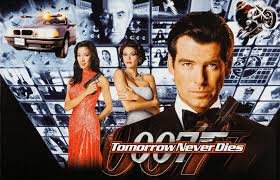
OK, who wouldn’t be excited for a film that paired James Bond and Michelle Yeoh? I mean seriously. Yeoh was still more known as a Hong Kong action star and was three years from 2000’s Crouching Tiger, Hidden Dragon, but this pairing was inspired. Tomorrow Never Dies, Pierce Brosnan’s second 007 film (and the first after producer Cubby Broccoli’s death) is another post-Cold War blockbuster that ramps up the violence and pits James against a megalomaniac media mogul who is probably supposed to be Rupert Murdock, if Rupert Murdock thought nuking Beijing could improve ratings.

The casting of TND (the title inspired by the Beatles’ “Tomorrow Never Knows”) is mostly spot on. Bond “girl” Michelle Yeoh, as ass-kicking Chinese agent Wai Lin, is genius. Terri Hatcher, hot off Lois & Clark, as a past “love” interest of James, grabs the screen. Judi Dench is in full command as M. Joe Don Baker is back as CIA agent Jack Wade. Desmond Llewelyn is hilarious as Q (“Grow up, 007”). There’s a funny bit with Vincent Schiavelli (Mr. Vargas in Fast Times at Ridgemont High) as a professor/assassin. But Jonathan Pryce’s portrayal of evil media magnet Elliot Carver is so cartoonish, it kills the good versus evil paradigm. More like, good versus goofy. (Anthony Hopkins was offered the role but declined in favor of making The Mask of Zorro.)

The writing is much sharper than GoldenEye, including James’ quips. Even Miss Moneypenny gets in the action. “You always were a cunning linguist, James.” And the action is bigger. There are a lot of explosions in this film. A lot. The direction by Roger Spottiswoode (Turner & Hooch, 1989) is meant to fill the wide screen with non-stop action. Apparently, Michelle Yeoh wanted to do all her own stunts but Spottiswoode had to hold her back for liability concerns. 

Tomorrow Never Dies has lots of Bond staples; 007 in a tux, 007 scuba diving, 007 flying a plane that’s not his, 007 not being struck by any of the thousands of bullets being fired at him. And he’s got a woman in every port. Most of the film takes place in Hamburg, Germany, Saigon, Vietnam, and the South China Sea. Bookended with theme songs by Sheryl Crow and k.d. lang, it’s Bond carving out space in a woman’s world. “Never argue with a woman,” he says in the film.

Let’s plug Tomorrow Never Dies into our matrix.

Driver of Action – The second half of this film actually feels like a buddy film. Once Michelle Yeoh drops into the plot, there are two action stars on the screen. I don’t know if Eon Productions magically knew that Yeoh would become one of the biggest movie stars of the 21st century, but she’s driving a lot of the action at the end of the film. She has to do a bit of time as a damsel in distress to justify the sexual chemistry (Bond still can’t have a woman who is an equal), but, so far in the franchise, this is close to a screen share as we’ve seen.

Role of Violence – Bond with a machine gun and hand grenades is a killing machine. It’s another bloodbath. It’s so far removed from Connery’s Bond, it’s hard to believe it’s the same character. The climatic finale, where he kills Carver with a giant drill, used to sink battle ships, is particularly gruesome. But Wai Lin is wailing away as well, mostly using marital arts, so there’s a female balance to 007’s orgy of violence.

Vulnerability – Brosnan’s Bond is zipped up like Moore’s but there is the tiniest glimpse of humanity this episode. It’s established that he has a history with Carver’s wife, Paris (Terri Hatcher). When she appears in his Hamburg hotel room, he’s drawn to her but expresses some guilt over abandoning her. “What happened, James? Did I get too close?” He says yes and they “reconnect.” Carver finds out and has her killed and then Bond confronts the man who killed her and shoots him in the head at point blank range.

Sexual Potency – We’re back to the criteria of 3. After the opening titles, we find James in bed with a beautiful Oxford University professor (yeah, right) “brushing up on a little Danish” after sex. Then, after reconnecting with Paris, he slips her dress off that they have sex (which gets her killed). And then he ends up with Wai Lin. Despite changing social norms, you get the feeling the Eon just gave up and let Bond be Bond.

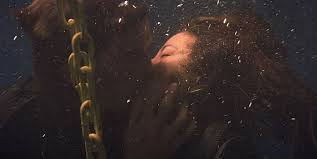
Connection – Until Wai Lin shows up, we don’t get much connection. James has no scenes with M and only briefly with Moneypenny. He softens up around Paris but she is killed before he has a chance to rescue her. Wai Lin falls back into the Damsel in Distress mode when Carver throws her into the water tied to a massive chain and she appears to drowned. James saves her with a long underwater kiss, blowing air into her lungs. But the connection between James and Wai seems more about a celebration of having just saved the world from Rupert Murdoch than anything romantic. Although they do end the film KISSING IN A RAFT in the South China Sea while the British Navy looks for them. Traditions matter!

Toxic Masculinity Scale: 5

Summary Scarface Sex Fiend Bond is somewhat balanced out by a strong female M (although Dench as a maternal concern for our man James) and a scene-stealing action star doubling as this episode’s Bond girl. Q’s tech plays an outsized role with a remote controlled BMW 750 that has a scene all to itself, and a fully-loaded cell phone (meh). Both Bond and Carver play their sexism cards. When Carver catches Wai on his stealth ship, he dangles her in front of 007 and says, “And it seems you can’t resist any woman in my possession.”

Something that stands out are the henchmen in TND. They have really cool outfits and a loaded armory, but I was left with two questions. Where are all the henchwomen? And how does one go about acquiring the job henchman? I’m assuming Carver paid top salary. Regardless, his massive stealth ship made a great stand-in for an underground lair, especially when it got blown up.

Tomorrow Never Knows premiered December 9, 1997, the same week as the Kyoto Protocol, the first global attempt to address climate change. The film was a massive success, earning a Golden Globe nomination, but kept out of the #1 spot by the behemoth that was Titanic. Its release was also timed to coincide with United Artist’s parent company, MGM, becoming a publicly traded corporation, making James Bond a massive cash cow at the end of the century.

Next: The World Is Not Enough (1999)

The James Bond Project #19: GoldenEye (1995)

The James Bond Project #18: License to Kill (1989)

The James Bond Project #17: The Living Daylights (1987)

The James Bond Project #16: A View to a Kill (1985)

The James Bond Project #15: Never Say Never Again (1983)

The James Bond Project #14: Octopussy (1983)

The James Bond Project #13: For Your Eyes Only (1981)

The James Bond Project #12: Moonraker (1979)

The James Bond Project #11: The Spy Who Loved Me (1977)

The James Bond Project #10: The Man with the Golden Gun (1974)

The James Bond Project #9: Live and Let Die (1973)

The James Bond Project #8: Diamonds are Forever (1971)

The James Bond Project #7: On Her Majesty’s Secret Service (1969)

The James Bond Project #6: You Only Live Twice (1967)

The James Bond Project #5: Casino Royale (1967)

The James Bond Project #4: Thunderball (1965)

The James Bond Project #3: Goldfinger (1964)

The James Bond Project #2: From Russia With Love (1963)

The James Bond Project: #1: Dr. No (1962)

The James Bond Project #11: The Spy Who Loved Me (1977)

February 5, 2025

This series is intended to evaluate each product of the James Bond film franchise through a feminist lens, and the relevance of the Bond archetype to shifting ideas of masculinity in the 2020s.

The Spy Who Loved Me (1977, directed by Lewis Gilbert)

This was the first Bond film I saw in the theater. My dad took my little brother and I to see the PG-rated Spy Who Loved Me the summer of ’77. I was 13 and what I remember most was the brief glimpse of Barbara Bach’s (or her body double’s) right breast in the submarine shower scene. I was 13, OK? But The Spy Who Loved Me was a return to form after the limp Man with the Golden Gun in 1974. It had all your musts, including oodles of cool gadgets from Q, Bond in his tux and bad girls in bikinis, scores of henchmen willing to die for a megalomaniac, and sharks. My absolute favorite part of the film when I was a kid (besides the boob) was the Lotus Esprit that turned into a submarine, complete with missiles. I thought that was the coolest thing on earth and dreamed of a submarine car of my own. Ironically, in 2013 actual megalomaniac supervillain Elon Musk bought the film’s Lotus for £616,000 in hopes of turning it into a workable submarine. (Like most of his crazy ideas, he failed.)

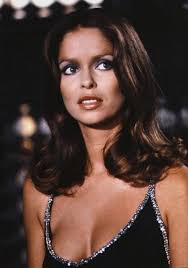
Roger Moore definitely is getting his mojo back in his third installment in the Bond franchise. While his lines still fall a bit flat, he’s got Bond “girls” dripping from his arms. On top of the TSWLM list is Barbara Bach as KGB agent Anya Amasova, AKA Agent XXX (get it?). Bach was a model and Spaghetti Western actor who would next star in Caveman (1980) with her future husband, Beatle Ringo Starr. (Rumors were that Moore wanted Brigitte Bardot for the role.) As a sort of seventies Blofeld, this installment’s villain is wealthy industrialist Karl Stromberg, who wants to destroy the world so he can build a new world under the ocean. Stromberg is played by Curt Jürgens, who starred with Bardot in And God Created Woman in 1956. Added to the cast is Richard Kiel, who stars as the indestructible steel toothed giant, Jaws. The return of You Only Live Twice director Lewis Gilbert helped to bring some of the Connery-era swagger back to 007’s mission.

As is expected, the exotic locales splash across the screen. Bond riding a camel across the Egyptian desert and then chasing the bad guys through the Giza ruins was not filmed on an English set. It was there on sight, as were the scenes filmed on the Italian island of Sardinia. We return to some classic Bond tropes, like assassins on skis (On Her Majesty’s Secret Service) and underwater battles (Thunderball). There’s sexy one-liners (Her: But James, I need you! Him: So does England.) And sexist one-liners (James commenting on a woman in a bikini in a boat, in front of Anya, posing as his wife – “What a handsome craft. Such lovely lines.”) And while we don’t get an underground lair, we get an under WATER lair that serves its purpose.

The Spy Who Loved Me premiered in the United States on August 3, 1977, the same day that the Tandy Corporation debuted the first mass produced microcomputer, the TRS-80, forever changing popular culture and gadgets in James Bond movies. The film received mixed reviews but fared better than its predecessor. Boosted by a great theme song, sung by Carly Simon (and constantly on the radio the summer of 1977), the film was United Artists biggest grossing movie to date, but competed in theaters with the box office sensation that was Star Wars, putting it at #8 for the year (between The Deep and Oh, God!)

Let’s put The Spy Who Loved Me in our feminist evaluation machine.

Driver of Action – I’m getting the feeling that the formula for Moore’s Bond films are it’s just him. Even though he’s paired up with a Soviet spy, Anya Amosova, this isn’t a buddy film. She’s primarily sexy arm candy whom 007 has to rescue. (Although there is one scene in Egypt where she throws up her arms in a Charlies Angels karate pose that I thought was going to give us some Russian aggression, but no such luck.) James does not even have a support team. We get brief cameos by Q and Moneypenny, but this is just James.

Role of Violence – 007 kills some people in TSWLM. At the start of the film he shoots a Soviet agent (who is Anya’s boyfriend) with a rocket ski poll while skiing backwards. He drops one of Stromberg’s henchmen off a roof in Cairo, and then kills a half dozen more in a crazy car chase in Sardinia, including killing a bikini-clad helicopter pilot with a missile from his submerged Lotus. When the action moves to Stromberg’s tanker, which is being used to capture nuclear submarines, 007 with a machine gun goes on a rampage. There are literally bloodless corpses everywhere. Where’s the blood? And James shoots Stromberg multiple times in his underwater HQ. 

Vulnerability – There is actually a mention of Bond being married in the film. Anya brings up that he was married and his wife was killed and he stops her from going any further. It was almost a moment of James the person. The break from James performing “007” was jarring but it only lasted for a split second and then it was back to Robot Bond.

Sexual Potency – This version of Bond wants to be as horizontal as possible. Miss Moneypenny might be too old for him in the late 70s, but every other women on the screen is fair game for his jacked up libido. To be fair, the film starts with a twist on the familiar theme. A man that looks like James is in bed with a beautiful woman when the phone rings. We learn that the woman is actually a Soviet agent, Anya Amosava, and the man is just a lover. Never fear, the very next scene is James in bed with a Russian woman in Austria. It’s a clever trick perhaps meant to say that women can play this game. James in Egypt meets a very white sheik who has a harem of beautiful women. When Bond is offered one of the women for the night he says it would be rude to refuse the offer. In Cairo, he meets another woman who is linked to a connection. He tries to seduce her but ends up using her body to block an assassin’s bullet. Oh well.

The rest of the film is about James and Anya, cold war enemies who have teamed up for some “Anglo Soviet cooperation” to stop this dude who is stealing submarines and wants to blow up the world. Bond can’t keep his hands off her and she may just be playing him by letting his hands and lips wander. But there is a scene on a train (You know, the scene on the train!) where Jaws attacks James and Anya and Bond tosses him out of the train window (We’ve seen this movie before) and Anya says, “You saved my life.” The sexy sax version of theme song swells up as James takes her in his arms. Later, the film ends with 007 and XXX getting busy in a preview of Glasnost ten years down the road.

Connection – This is a weird one. (Surprise.) The film is called The Spy Who Loved Me and theme song is sung by a female so it’s reasonable it’s about Anya being loved by James. In the film Stromberg says Bond is “in love with a Russian agent.” But it doesn’t seem like either are in love with anyone. Anya seems to forgive him after finding out he killed her boyfriend, but it doesn’t seem the least bit romantic. This is the aloof Bond of the seventies. Even Q and Moneypenny are kept at arm’s length. Regardless, the film ends with James and Anya bobbing in the ocean in a luxury escape pod, complete with a bed and a chilled bottle of Dom Pérignon ’52. The pod floats into a cruising British destroyer where M and the British Ministers of Defense peer in through the window to see the two spies in flagrante delicto. “Bond! What do you think you’re doing?” asks the defense minister. “Keeping the British end up, sir.” And scene.

Toxic Masculinity Score: 6

Summary Watching this movie took me right back to the summer of ’77. The underwater submarine car battling frog men with their own subs was bliss for a 13-year-old boy. Catching a glimpse of Bach’s boob while sitting next to my dad was both terrifying and titillating. (See what I did there?) No part of me questioned the silly logic of the plot. Now I look at through the lens of 48 years of media. Stromberg has hundreds of henchmen all in red suits, like they were the henchmen of Squid Games. I wondered, who made these suits? Did Stromberg buy in bulk? Are they one size fits all? And do these henchmen get benefits? They all seem to be willing to die for him (and they all do). There should at least be life insurance in their benefits package. And dental.

The Spy Who Love Me, through that modern lens, has a pretty dim view of women. Bach, a few years after the film, said as much, telling People Magazine in 1983 that in the film Bond, “is a chauvinist pig who uses girls to shield him against bullets.” Moore himself said much the same in the 1970s. “Bond, like myself, is a male chauvinist pig. All my life I’ve been trying to get women out of brassieres and pants.” At least Bond doesn’t smack any women in this film on his way to thwart the accelerationist doomsday plot of this episode’s mad genius. While the mushroom clouds over the Atlantic might dampen the joie de vivre of the cold warriors warming things up the film’s climax, were left wondering will the aging Commander Bond will run out of notches on his belt before producers run of out of Ian Fleming novels to film.

Next: Moonraker (1979)

The James Bond Project #10: The Man with the Golden Gun (1974)

The James Bond Project #9: Live and Let Die (1973)

The James Bond Project #8: Diamonds are Forever (1971)

The James Bond Project #7: On Her Majesty’s Secret Service (1969)

The James Bond Project #6: You Only Live Twice (1967)

The James Bond Project #5: Casino Royale (1967)

The James Bond Project #4: Thunderball (1965)

The James Bond Project #3: Goldfinger (1964)

The James Bond Project #2: From Russia With Love (1963)

The James Bond Project: #1: Dr. No (1962)

The James Bond Project #10: The Man with the Golden Gun (1974)

February 1, 2025

This series is intended to evaluate each product of the James Bond film franchise through a feminist lens, and the relevance of the Bond archetype to shifting ideas of masculinity in the 2020s.

The Man with the Golden Gun (1974, directed by Guy Hamilton)

This is the first “meh” of the Bond series. Guy Hamilton is back in the director seat, for the last time, and he seems to have run out steam. If Live and Let Die was meant to crib from blaxploitiation films, 1974’s entry is meant to riff on Kung Fu flicks popular at the time. (Bruce Lee’s Enter the Dragon grossed over $400 million in 1973 dollars.) Richard Maibaum turned in a flaccid script then bailed. The Man with the Golden Gun was the last Bond film to be joint produced by Cubby Broccoli and Harry Saltzman for Eon Productions and their falling out would end the “Bond film a year” schedule. That’s probably a good thing.

The good news is TMWTGG gets away from the Bond in America motif of the last two films. We’re back in the “exotic” far east. There’s no army of henchmen, no sharks, not even any Q designed gadgets, but there is (thank God) an underground lair. In the middle of the 70s Energy crisis, there’s a convoluted plot about how a former circus performer with three nipples named Francisco Scaramanga plots to control the solar energy market, as if that is not just called “capitalism.”.  Scaramanga is played wonderfully by Dracula icon Christopher Lee, who had just appeared on the cover of Band on the Run, the new album by Live and Let Die theme-singers Paul McCartney and Wings. The scenery in Hong Kong and Thailand is spectacular (even if the scene in Beirut was shot on a soundstage in London).

Roger Moore was back in his second 007 installment, already a bit weary. His quips fall flat (except for one at the end) and his mojo is dragging. TMWTGG was meant to be Moore’s entry into the Bond canon after You Only Live Twice. One wonders how 1967 Moore would have treated the role compared to 1974 Moore. As has become cliche, Scaramanga has a reluctant “lover,” played limply by Maud Adams (another Melania Trump clone). And, like the last film, there’s a bumbling but beautiful female MI-6 operative. This time it’s Mary Goodnight (Lord, these names) played by Swedish model/actress Britt Elkland, who was so great in 1971’s gangster classic, Get Carter. The great addition to the cast (and highlight of the film) is Hervé Villechaize as Scaramanga’s pint-sized right hand man, Nick Nack. Villechaize would go on to play Tattoo on TV’s Fantasy Island, cementing the words, “De plane!” into the English lexicon.

The Man with the Golden Gun was not well received upon its release in December 1974, the same week Nelson Rockefeller was sworn in as vice president, after Gerald Ford became president to replace “Tricky” Dick Nixon, who had resigned. A dozen years in, TMWTGG was seen as boilerplate Bond, dropped in for 1974’s chapter for fans of the franchise. There’s a super-70s car chase that ends with one car jumping over a river (with an Evel Knievel reference!) and a car literally flying away and a Swedish sex symbol in a bikini, but not much else to write home about.

Let’s plug it into our analysis.

Driver of Action – Again, this is all Bond all the time. We don’t even get Felix. There is a minor sidekick in Lieutenant Hip, the Hong Kong cop played by Soon-Taik Oh (who was a staple on 70s TV shows like MASH and Charlie’s Angels). In one scene, he and his teen nieces rescue James with some serious (and seriously dumb) Kill Bill Kung Fu action. But yeah, it’s the Live and Let Die formula with much less payoff. Maybe it’s Bond’s polyester suits.

Role of Violence – Surprise, surprise, Bond smacks Maud Adams’ character, Andrea Anders, hard in the face and threatens to do it again. Was Bond striking women in the face required in all 007 scripts? Didn’t someone say something? I mean, Helen Reddy’s “I am Woman” was #1 on radio while they made this. Someone could have said SOMETHING. Bond pulls out his little pistol a lot in this movie but only shoots Scaramanga in the climatic end scene, posing as a wax figure of himself (don’t ask). Bond also takes out a kung fu master, manly man that he is. His violence is balanced by Miss Goodnight, who throws Kra, Scaramanga’s only henchman, into a vat of liquid oxygen.

Vulnerability – Yeah, no. James loses his gun at one point. He seems a little annoyed that Goodnight wants to reconnect. This is Stepford Bond on autopilot.

Sexual Potency – We get glimpses of the Bond of old when James tries to suck a golden bullet out of a belly dancer’s navel and when he encounters a nude woman swimming in a Chinese crime lord’s pool. She introduces herself as Chew Mee, to which Bond replies, “Really?” The main sexual conquest is Bond’s bedding of Scaramanga’s lover, Andrea. In an über creepy scene he sneaks into her hotel room and watches her shower and then man handles her only to learn that (shock) she is a damsel in distress. Later, he’s decided that, why not, he’s going to have sex with Agent Goodnight, but Andrea shows up so he throws Goodnight in the closet and has sex with Andrea Anders instead. It’s pretty messed up.  Bond can’t keep his work life and his sex life separate. He does end up back in bed with Goodnight at the end of the film, but it feels more obligatory than romantic. 

Connection – 007 is even more isolated in this film. Even Moneypenny gets the brush off. Q and James seem annoyed by each other. James knocks a kid who fixes his boat into the river. When Andrea Anders is shot, he’s not phased. There are zero fucks given by this Bond. The film ends, are you ready for it, with Bond and Bond girl Britt Ekland in a boat! (This time it’s a Chinese junk.) James and Agent Goodnight are finally back in bed on a slow boat from China. But, as is now tradition, it’s a false ending. Tick Tack is waiting (for some reason) to kill 007. In an unnecessarily funny scene, there is a Bond vs. little person battle to expedite before James can get Mary back in the sack. When he does, in another moment of coitus interruptus, Q calls and asks to speak to Agent Goodnight. “She’s just coming, sir,” says James. Ah, there’s our man Bond. Then he sets the phone down so Q can listen them making the MI-6 agent with two backs. Really creepy.

Toxic Masculinity Scale: 6

Summary The Man with the Golden Gun does a little bit better on the race issue than Live and Let Die. We do get some cool street-level views of Thai culture, including some great moments of Thai boxing. The contrast of free Hong Kong (with casinos) and Red China is flirted with. But the martial arts bit is weak. There’s no way 007 bests a Kung Fu master so easily, let alone an army of them. We get the comedic return of the racist Sheriff J. W. Pepper (from Live and Let Die), here on vacation in Thailand. (That’s a hard sell.) And a scene where Kra, Scaramanga’s black henchman, gets a little rapey with Goodnight. The hope is that mainstream audiences might have used TMWTGG as a gateway drug into the explosion of brilliant martial arts films that were coming out of Asia in the 1970s.

There are some great moments in this film. Bond flying a seaplane through island outcrops in the China Sea must have looked brilliant on the big screen. The ahead-of-its-time concept about the power of controlling renewable energy sources is noteworthy. Hervé Villechaize is an absolutely brilliant foil and steals every scene. And (recognizing that this might not be the most feminist bit of analysis) Britt Ekland is completely loved by the camera, which, of course, in Bond-land represents the male gaze. But there’s just a lot of silliness here. How did Scaramanga build an underground lair in an outcropping? And why did he include a funhouse, like some Disneyland attraction gone horribly wrong? James is going save his kept woman, but not really. James fancies Agent Goodnight, but not really. There is a car spinning 360 through the air and another flying off into the sunset. It’s like the writers just threw every leftover idea at the wall without the energy to see them through.

Roger Moore’s Bond smokes a ton of cigars in this film (calling Dr. Freud), drives a 1974 AMC Hornet through the streets of Bangkok like a madman, and kills guy who might have prevented global warming. It’s a mess and partly so because Bond is stuck in a tired model of manhood that had already become a caricature.

Next: The Spy Who Loved Me (1977)

The James Bond Project #9: Live and Let Die (1973)

The James Bond Project #8: Diamonds are Forever (1971)

The James Bond Project #7: On Her Majesty’s Secret Service (1969)

The James Bond Project #6: You Only Live Twice (1967)

The James Bond Project #5: Casino Royale (1967)

The James Bond Project #4: Thunderball (1965)

The James Bond Project #3: Goldfinger (1964)

The James Bond Project #2: From Russia With Love (1963)

The James Bond Project: #1: Dr. No (1962)

The James Bond Project #7: On Her Majesty’s Secret Service (1969)

January 19, 2025

This series is intended to evaluate each product of the James Bond film franchise through a feminist lens, and the relevance of the Bond archetype to shifting ideas of masculinity in the 2020s.

On Her Majesty’s Secret Service (1969, directed by Peter Hunt)

James Bond got married! Eon Productions had to scramble to find a new Bond after Sean Connery quit during the making of You Only Live Twice. Potential 007s included future Bond Timothy Dalton (too young) and Superman bad guy Terrence Stamp (too creepy?). Producer Albert Broccoli and first time director Peter Hunt settled on Australian model George Lazenby after seeing him in a chocolate bar commercial. Lazenby looked like a slightly younger Connery, but lacked the acting chops. He was offered a contract for seven Bond films but agreed to do only one, believing the 007 franchise would become passé in the 1970s. 

On Her Majesty’s Secret Service was the first Bond novel authored by Ian Fleming after his spy became a big screen feature and was written to leave out the heavy reliance on gadgets Hollywood Bond relied on. The primary Bond girl was Countess Tracy di Vincenzo, played by Diana Rigg. From 1965 to 1968, Rigg played Emma Peel on the popular British spy TV show, The Avengers. (Rigg joined The Avengers to replace Honor Blackman, who had left to play Pussy Galore in Goldfinger.) Emma Peel was often considered the “female James Bond,” so bringing Rigg in may have been meant to offer a new role for the Bond “girl” at the end of the decade.

The film was premiered in the United States on December 19, 1969 while the country was consumed with the details surrounding the Charles Manson murders. By January, it topped the box office on both sides of the Atlantic but received mixed reviews for veering from the blockbuster Bond formula. Overtime, the film has gained respect for remaining closer to the Fleming novel than other screen adaptations, and that was Hunt’s intent. The script even comments on previous Bond films, such as the opening scene were Lazenby’s Bond rescues Rigg from the ocean and fights some random henchmen. Lazenby breaks the fourth wall and says to the camera, “This never happened to the other fellow.” Or when Bond resigns from MI-6 and looks at some of his gadgets from previous films with a smirk of disdain while they remain in his shabby office desk.

We do get tried and true Bond tropes, including an underground lair filled with henchmen, Bond at the Baccarat table, his appetite of Beluga caviar and Dom Perignon, flirting with Moneypenny, and Blofeld (this time played by American Telly Savalas). But in one way, this is a very different Bond film, one that ends with a Mrs. James Bond.

Let’s plug it in to our feminist matrix and see where we come out.

Driver of Action – We are in full solo Bond mode in OHMSS. We have no “team” helping drive the story. (Q only makes a brief appearance at the end of the film.) There is an MI-6 agent, apparently named Shaun, who keeps an eye on James, from a distance, in Portugal and Switzerland but is killed off pretty early. And there’s Draco, the head of a Portuguese crime syndicate, who helps Bond take down Blofeld at the end of the film. But it’s pretty much just James, including when he goes rogue from MI-6 after being taken off the Blofeld case by M. We do see Blofeld (as a prequel to Kojak) leading more of the action, including slapping on a pair of skis to race down the Alps to catch Bond. There’s also a killer bobsled race between Bond and Blofeld. And, sadly, Blofeld’s cat only appears briefly.

Role of Violence – Lazenby’s Bond seemed a little more skilled in fake martial arts skills than Connery. There’s more chops and flips but the body count is reserved for the the end of the film (although, early in the film, he slaps Rigg’s character pretty hard). He sends a few henchmen on skis to their deaths as they plunge off a cliff and during the climatic assault on Blofeld’s mountaintop lair, he machine guns a bunch of henchmen and a scientist who throws a bottle of acid at him. This Bond punched harder, but used his gun a lot less. Does that make him less manly or more?

Vulnerability – OK, this is the big one. The set up is that mob boss Darco wants Bond to marry his troubled daughter, Tracy (AKA TV bad ass Emma Peel). Darco says, “What she needs is a man to dominate her” (puke) and offers James a million pounds in gold as a dowery. Bond says he doesn’t need the money and says, “I have a bachelor’s taste for freedom.” But something strange happens. It seems like Bond is falling in love with Tracy. There’s even a very 1969 montage of James and Tracy doing “falling in love” stuff, like walking on the beach and window shopping for rings, set to an original song written by Burt Bacharach and Hal David called “We Have All the Time in the World,” sung my Louis Armstrong! Is this a chick flick? Maybe it’s all part of a ruse to get Darco’s help going after Blofeld.

Nope. After Tracy rescues Bond in a Swiss town and escapes more henchmen in one of the craziest chase scenes on film, Tracy and James end up hiding in the hayloft of a barn. Instead of making his usual sex moves (like he did several times earlier in the film), he tells her, “I’m thinking about us. I love you. Will you marry me?” (I’ll take “Things I’d Never Expect to Hear in a James Bond Film” for $200, Alex.) She agrees to be “Mrs. James Bond” and we have a very different 007 flick. Instead of sealing the deal, James decides they should sleep separately. “The proper time for this is our wedding night. That’s my New Year’s resolution,” he says. “Whatever you say, my dear,” says Tracy. “And that is yours,” James quips. OK, maybe not that different.

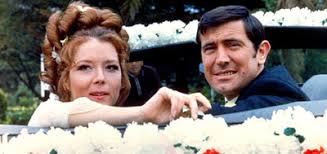
The last Bond film of the 1960s ends like the dozens of Elvis Presley films of the 1960s, with a wedding. The proficient bedder of endless women is now wedded in holy matrimony, with M (and the rest of us) in shock that it happened and poor Miss Moneypenny in tears. But there is no happily ever after. A car driven by Blofeld pulls up next to the newlyweds and Irma Bunt, Blofeld’s henchwoman, fills Bond’s Aston Martin with machine gun fire. The final scene of On Her Majesty’s Secret Service is James Bond in tears, holding his dead wife.

Sexual Potency – Before we forget, this is a James Bond film. When Tracy appears at the casino, the camera lingers on her cleavage. She ends up in Bond’s bed as a business transaction (he payed her gambling debt). The encounter is so transactional it creates doubt in the legitimacy of the “romance” that follows (enhanced by a scene at a bullfighting ring where Darco is trying to pass his daughter off to Bond.) When Bond gets into Blofeld’s lair, pretending to be a gay genealogist (don’t ask), he’s met with a dozen beautiful women (Blofeld’s “Angles of Death”) that he goes to work on, sleeping with two in one night while scheduling a third. “Work is piling up,” he snorts. He may be in love with Tracy, but Bond’s gotta Bond.

Connection – This Bond does seem to have some genuine affection for M and Moneypenny, even kissing Moneypenny on the lips. But, again, this is solo Bond in action. His connection to Tracy seems to become genuine when she rescues him from Blofeld’s henchmen, repeatedly kissing her on the cheek as she frantically drives her getaway car from their gunfire. In the end, he is alone again and viewers are told to get ready for the next chapter of our man Bond.

Toxic Masculinity Scale: 5

Summary Hunt and Lazenby’s Bond may be closer to Ian Fleming’s 007 than the formula viewers had had become used to, but there’s still plenty of sexism in OHMSS. The most obvious proponent of misogyny is Darco (played by Italian actor Gabriele Ferzetti). He just goes on and on telling Bond how his daughter needs to be manhandled and smiles at that fact that Bond got her in the sack. He even punches his daughter in the face, knocking her out, so she doesn’t try to rescue James in the gunfight. At the wedding he says to her, “Obey your husband in all things.” We also get get Bond ogling a Playboy magazine (and stealing the centerfold) and working his way through Blofeld’s scantily clad angels of death. “Just a slight stiffness coming on,” he says, sitting among them in his kilt.

Don’t expect Bond to be mourning his dead wife in the next installment, 1971’s Diamonds Are Forever. James will be back to his old tricks. But the final scene of On Her Majesty’s Secret Service gives a glimpse of a more human man than in all the previous 007 films, left to reconcile the cost of vulnerability when your job requires you to carry a license to kill.

Next: Diamonds Are Forever (1971)

The James Bond Project #6: You Only Live Twice (1967)

The James Bond Project #5: Casino Royale (1967)

The James Bond Project #4: Thunderball (1965)

The James Bond Project #3: Goldfinger (1964)

The James Bond Project #2: From Russia With Love (1963)

The James Bond Project: #1: Dr. No (1962)

The James Bond Project #4: Thunderball (1965)

January 8, 2025

This series is intended to evaluate each product of the James Bond film franchise through a feminist lens, and the relevance of the Bond archetype to shifting ideas of masculinity in the 2020s.

Thunderball (1965, directed by Terence Young)

Adjusted for inflation, Thunderball is the largest grossing of all Bond films. And it looked big, being the first Bond flick shot in widescreen Panavision. This was supposed to be the first Bond feature in 1962, but a legal dispute held it up in court. However, original director Terence Young was back at the helm so it had a very “classic Bond” feel. We end up back in the Caribbean (the Bahamas this time) so we see more black faces, including Bond team member Pinder, played by Earl Cameron (who some will remember from Dr. Who). And also sharks. Lots of sharks.

My initial thought watching this film was that all these “Bond Girls” look alike. Same cheek bones, same hair style, same dubbed in voice. Maybe it was just post-holiday malaise, but I found myself repeatedly confused as to which actress Sean Connery’s Bond was making the moves on. By film #4, they were virtually cookie cutter. The primary Bond girl in Thunderball is Domino. Producers originally considered Julie Christie, Raquel Welch, and Faye Dunaway for the part, but settled on beauty queen Claudine Auger (Miss France!). By film four you get the feeling that half the draw of a Bond film is just the cavalcade of beautiful women for James to plow through. However, there is a scene where SPECTRE assassin Fiona Volpe (played by Italian actress Luciana Paluzzi) blows up a car with rockets on her motorcycle and then takes off her helmet to reveal her flowing red hair that is pretty, um, empowering.

Thunderball premiered in Tokyo on December 9, 1965 at a time when the anti-Vietnam War movement was gaining steam in the U.S.. (On November 27, tens of thousands of protestors marched from the LBJ White House to the Washington Monument.) Thunderball skirts Cold War tensions by, again, making SPECTRE the bad guys. This time, #2, Emilio Largo (played by Italian actor Adolfo Celi), is ransoming NATO for £100 million in diamonds after stealing two nuclear bombs (a plot later spoofed in the first Austin Powers movie).

What this Bond film is most famous for is not the women or the evil plot (both a bit tired by 1965), but the extensive underwater filming. A quarter of this film takes place underwater, including shots of cool submersible vehicles and a massive speargun battle between the good guys and the bad guys. It must have been spectacular to see it on the widescreen in the mid-1960s. Apparently, the ocean shooting in Nassau had to be done at low tide because of the constant threat of sharks and the scene where Bond is in a salt water pool full of sharks almost ended with Connery getting chomped. The tropical locale means we get plenty of bikinis and bare-chested Bond as well as boats exploding (now a Bond film staple).

Let’s plug Thunderball into our feminist matrix.

Driver of Action – For the first time, we almost get Bond as a part of a team. Presumably assembled by MI-6, we get an on-the-ground team in Nassau put together to help James avert nuclear catastrophe, including familiar faces like CIA bro Felix Leiter (this time played by Rik Van Nutter) and MI-6 gadget guy Q, who, in Bermuda shorts, laments having to meet 007 “in the field.” He’s also joined by Pinder, another unnamed Afro-Caribbean dude, and CIA agent Paula Caplan, played by Martine Beswick (back from her role as “Gypsy Girl #2” in From Russia with Love). It’s mainly Felix who bales James out (in his handy CIA helicopter), but it should be noted that Paula is kidnapped by SPECTRE and commits suicide rather than rat on James. She’s the DDID. (Dead Damsel in Distress.) But it’s still Bond in the driver seat, whether he’s dodging sharks or ordering Beluga caviar.

Role of ViolenceThunderball opens with Bond killing SPECTRE assassin Jacques Bouvar (who is dressed as a woman, so there’s that) and then escaping with a supercool (for 1965) jetpack. There’s a few henchmen (dressed in black, like an episode of Batman, which debuted the following year) that Bond kills, although they may just be stunned. Some henchmen throw another henchman into a pool of sharks. And whole bunch of frogmen, good, bad, and otherwise, get shot by spearguns in the Caribbean, some likely by 007. Other than the epic underwater battle, the body count is not giant and those scuba dudes who are killed are probably then eaten by sharks, so, the circle of life.

Vulnerability – It’s 007, so audiences don’t expect an inner window into Bond’s heart and it seems even more walled up than ever. He’s less dependent on technology than in Goldfinger, but James swallowing a radioactive pill so the CIA can track him seems like some kind of weird acknowledgement that maybe James can’t do everything by himself. There’s also a moment where James is trying to rescue Paula from Largo’s compound and he accidentally drops his gun off the roof he’s on. The look on his face seems to say, “Uh oh. My dick just fell off.”

Sexual Potency – Here’s where Thunderball goes off the rails. The first part of the movie, Bond is camped out at an English health spa called Shrublands, where he continually sexually harasses a masseuse (physiotherapist?) named Patricia (played by Molly Peters, featured in Playboy’s 1965 “James Bond’s Girls” spread). He forcefully kisses her and then when she thinks Bond’s bad experience on a, more Medieval than medicinal, stretching rack is her fault (it was a henchman) she frets that if her boss finds out, she could lose her spa job. “My silence could have a price,” James says then pulls her away for some quid pro quo sex. In the end, they’re in bed, with Bond doing the massaging.

Then there’s James’ relationship with SPECTRE agent Volpe. Her red hair is a classic signifier of a libidinous woman and when Bond walks uninvited into her bathroom to find her naked in her bathtub, he smirks with the recognition that he’s about to get another notch in his belt, “as if it was intended.” Because she’s a wicked redhead, she takes off Bond’s clothes and they end up in the sack where he tells her, “you should be locked up in a cage.” Rawr. Post coitus, she (and her henchmen) turn the tables on Bond, who seems shocked that he got caught with his pants down. In a moment for the Bond Girl demographic, she says, “But of course, I forgot your ego, Mr. Bond. James Bond, who only has to make love to a woman and she starts to hear heavenly choirs singing. She repents, and immediately returns to the side of right and virtue. But not this one.” Snap.

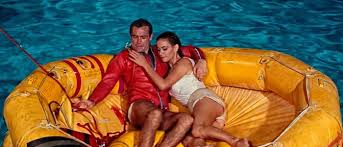
The final scenes are about rescuing Miss France/Domino from bad guy Largo. Bond sucks sea urchin poison from her foot and then they make love on the beach. When 007 says he needs her help catching Largo, she dejectedly says, “Of course. That’s why you make love to me.” Sex as transactional in Bond films. And also now cemented as a cliche, the film ends with Bond and Domino in a boat, this time a rescue raft floating in the Caribbean.

ConnectionThunderball begins and ends with Bond alone, acting or celebrating (with his prize) his actions. We do get to see a section of the Bond working with a team, but it’s sort of like Superman and his super-friends. Bond is in the lead. Again, as by Film 4, Bond is now the archetype of the man alone. He mocks love (including with Moneypenny), but he never actually has it. I wonder if writers ever considered developing a bromance between James and Felix. Maybe, at some point in this chronology, we’ll meet a James Bond who cares about somebody.

Toxic Masculinity Scale: 8

Summary By 1965, James Bond had officially become a franchise, produced by men to maximize 007 revenue. In the opening credits, the only females listed are “continuity girl” and “wardrobe mistress.” The fledgeling second wave feminist movement hadn’t yet turned its attention to Hollywood and the impact of this picture of gender. The normalization of sexual harassment in the 1960s (here, Bond’s treatment of spa worker Patricia) would later be unpacked by the brilliant AMC series Mad Men (2007 – 2015). But Bond is such a cad in Thunderball it makes watching his witty banter with the other characters in the film a lot less fun to watch. 

We do get tastes of gender subversions. There’s Volpe (Italian for “fox”) blowing stuff up, motorcycle between her legs, and later removing 007’s clothes and then sexually besting him. (“But not this one.”) Again, we get a female hotel concierge ogling Bond’s backside and Paula, the female CIA agent (who dies because, you know, lady CIA agents). But it all stands in the shadow of Bond’s hyper-masculinity. He even tries to feminize Largo by saying of his skeet shooting rifle, “That gun looks more fitting for a woman.” Huh?

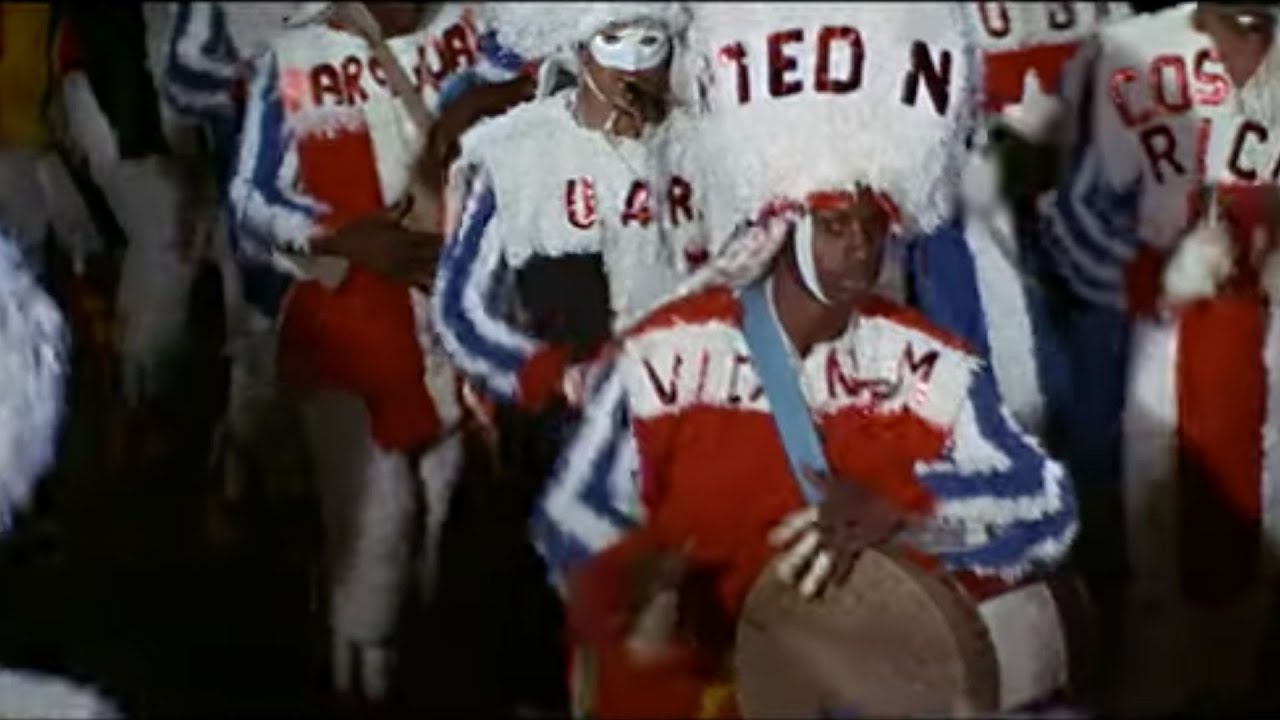
On a personal note, I appreciated the return to the Caribbean, especially Nassau where I experienced a particular “man making” experience as a 17-year-old boy. I loved the scenes shot during Junkanoo; Carnival in the Bahamas. It caught a glimpse of the decolonization that was happening in the black world in the 1960s and while there was no dreadlock rasta in Thunderball, behind the highly paid white actors in the camera’s focus there were a bunch of black faces who knew the world was changing. Those are the Bahamians I met when I was there as a teenager in the 1980s.

Next: Casino Royale (1967)

The James Bond Project #3: Goldfinger (1964)

The James Bond Project #2: From Russia With Love (1963)

The James Bond Project: #1: Dr. No (1962)

The James Bond Project #3: Goldfinger (1964)
December 30, 2024

Goldfinger (1964, directed by Guy Hamilton)

“That’s my James!” Welcome to the James Bond blockbuster. With the massive success of From Russia With Love came an even bigger budget (and a new director). Goldfinger gave us franchise staples, like the pre-credits action scene, the bouncy Bond quips, infinite gadgets (including the loaded Aston Martin), the epic theme song, and multiple exotic locations (including rural Kentucky). And of course there are multiple women who are branded as Bond “girls” in the film who find their way into 007’s beefy arms.

The box office smash surely benefited from the 1964 British Invasion and the American obsession with all things English. Bond even has a snarky line about the Fab Four after he beds Goldfinger’s girl Jill Masterson, chiding her not understanding his standards for chilled Champaign. “My dear girl, there are some things that just aren’t done, such as drinking Dom Pérignon ’53 above 38 degrees Fahrenheit. That’s as bad as listening to the Beatles without earmuffs.” (It should be noted that two of the actors in Goldfinger, Richard Vernon (Colonel Smithers) and Margaret Nolán (Dink), had just appeared in the Beatles’ film A Hard Days Night and the Beatles 1965 film, Help!, would be a send up of Goldfinger.)

Goldfinger cemented the formula for what a Bond film would be for decades to come. It was released in September of 1964, in a world that was increasingly surrendering to the ennui of the East-West Cold War, the same month as Lyndon Johnson’s apocalyptic “Daisy” campaign ad that ended with a mushroom cloud. I had been born 7 months earlier and would be socialized into a world that saw Bond as the modern model of masculinity. Let’s check Goldfinger with our five reference criteria.

Driver of Action – Goldfinger is the archetypical Bond film, the begins with him blowing some shit up in Mexico and ends with him making sweet love to Bond Girl #3 Pussy Galore on a desert island, telling her “This is no time to be rescued.” There is no “buddy,” as in the previous two films, just Bond, and his MI-6 and CIA supporters (who play minimal roles). Even the nefarious plotting by Goldfinger (played by former Nazi Gert Fröbe after Orson Welles proved to be too expensive) to irradiate all the gold in Fort Knox is a minor subplot. Goldfinger is all about watching Sean Connery as Bond move from scene to scene; Mexico, Miami, London, Switzerland, Kentucky. In the opening scene, he steps out of his wetsuit dressed in a white dinner jacket and you know this going to be 110 minutes of pure Connery.

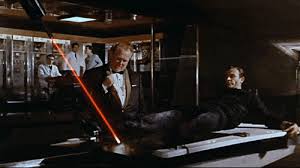
Role of Violence – Again, Bond has a relatively low bodycount in this film. People do die, especially women, including Jill Masterson. For her flirtation with Bond, she is painted gold and dies of “skin suffocation.” Her sister Tilly is killed by Oddjob, Goldfinger’s Korean henchman. But Mr. License-to-Kill is mostly restrained. A Mexican assassin gets an electric fan tossed into his bathtub. Some henchmen go over a cliff in a fiery crash after Bond shoots slick oil out of his Aston Martin. In the climatic scene in Fort Knox, Bond throws a henchman off a ledge and electrocutes Oddjob. (Apparently actor Harold Sakata was severely burned in the stunt.) Mostly Bond is the recipient of violence, including a laser beam aimed at his most manly parts while he is strapped to a table.

Vulnerability – Yeah, no. You wonder if we have to wait until the ‘90s to get new age sensitive James Bond. Whether strapped to a table with a laser heading toward his junk or locked in a Kentucky holding cell, or in a plane plummeting to the earth, we never see James break a sweat. 

Sexual PotencyGoldfinger is balls out on the message that Bond is the conquerer of women. In the opening sequence, he goes after a Mexican dancer and then uses her body to deflect an assassin. In Miami, he’s getting a poolside massage from his Florida fling, Dink (who’s cleavage was also featured in A Hard Days Night). Then there’s the romp with Jill who gets painted gold. In Switzerland, when a blonde passes him by in a ’64 Mustang convertible, he resists the urge to chase after her. “Discipline, 007, discipline,” he says to himself. She turns out to be Jill’s sister and they have a moment before Oddball kills her with his killer hat.

That brings us to Pussy Galore (the character, not the male fantasy). The Bond double entendres hit a new level here and Pussy’s name is mentioned constantly in the second half of the film. Galore is played by Honor Blackman, who was Diana Rigg’s predecessor on the highly popular British spy show, The Avengers. So she was coming in to Bondland a Judo-flipping badass, not a submissive DID (Damsel In Distress). In Goldfinger, she’s the leader of Goldfinger’s team of female pilots, playing a role in his grand slam plan. But there’s a scene in Goldfinger’s barn where James manhandles Pussy and the subsequent judo fight ends up with the two literally rolling in the hay. Galore tries to push Bond off her, but no woman can resist 007 and his assault ends in a passionate kiss. Woot, there it is.

Connection – Unbeknownst to the viewer, Pussy Galore’s Stockholm Syndrome turns her into an ally of Bond’s and Goldfinger’s evil plot is thwarted. As has already become an uber-cliche in Bond films, their end scene, making out under the parachute, casts no allusion that it’s the beginning of a beautiful relationship between James and Pussy. We know how this works. Women are transitory and co-workers are support players. Does Bond have any friends? A love that got away? He is supremely untethered. A man alone.

Toxic Masculinity Scale: 7

Summary –  Like an explosion of everything that was 1960s before LSD, Goldfinger is a magnum opus of a spy action film. The clever crime attempted (to irradiate the gold in Fort Knox to drive up the value of personal stocks of the metal) takes a back seat to watching Connery leap frog from woman to woman, often with his suped-up Bondmobile (Oh, to have stock in Aston Martin in 1964). Connery’s Bond is the Id unrestrained. One wonders what MI-6’s HR department would say about the workplace flirtations between Bond and Miss Moneypenny in the post #metoo era. But it’s the scene between Bond and Galore in the barn that reminds us that the debonair spy is not immune from the misogynistic value of male entitlement. A generation of boys learned women are to be taken by men, even if they resist. Pussy galore, indeed.

While contemporary audiences my get a bit of a creepy vibe from Goldfinger’s Bond, there’s a creeping trend that may be less noticed today. The third Bond film sees 007 more dependent on the technology provided by his employer. It may be a homing device in his shoe or an ejection seat in his car, but 1964 Bond is becoming less a man left to his own devices and more to the devices Q builds for him. Bond is the halfway point between the archetypical cowboy, fending for himself on the frontier, and Modern Man, juggling apps and monitoring social media, never not wired to the electronic collective. Where would Bond be without Q? Where would we be if the internet went down? One imagines that Bond would be better off, but not by much.

Next: Thunderball (1965)


The James Bond Project: #1 – Dr. No (1962)
The James Bond Project #2: From Russia With Love (1963)

The James Bond Project #2: From Russia With Love (1963)

December 28, 2024

From Russia With Love (1963, directed by Terence Young)

With the unexpected success of Dr. No, United Artists doubled the budget for the sequel and the bet paid off. (The $2 million film took in more than $78 million worldwide.) We are now firmly in a franchise of films made by men for men and their dates, starring manly man Sean Connery. Although it should be noted that Johanna Harwood, who had worked on the script for Dr. No, played a large role in the screenplay for From Russia With Love. Producers cast Italian beauty queen Daniela Bianchi as Bond Girl #2 Tatiana Romanova, after actress Elga Gimba Andersson refused to sleep with a United Artists executive. Bianchi, who could barely speak English, had her lines dubbed by a British actress.

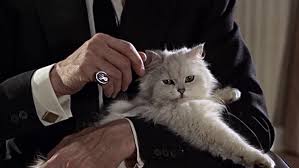
The film starts the Bond tradition of the opening credits being projected on to the bodies of scantily clad or nude women, firmly establishing that these are stories for boys. Instead of Jamaica, most of the action takes place in Turkey, although there are obligatory scenes in London and wherever SPECTRE Island is. There we meet the Dr. Evil of the Bond cinematic universe, Blofeld (or at least his cute cat). Leaving the Caribbean means we leave any and all black actors, and the primary Turkish character, Ali Kerim Bey, is played by Mexican actor Pedro Armendáriz. (In a bizarre side note, Armendáriz contracted neck cancer after filming a Howard Hughes film near a nuclear test site in Utah, and before he finished shooting his parts for From Russia With Love, shot himself with a gun that he snuck into his hospital room.)

From Russia With Love was filmed as the Cold War intensified and SPECTRE agents replaced Russian agents (who were the villains in Ian Fleming’s original Bond novel) to not further inflame tensions. President Kennedy told Life Magazine that From Russia With Love was one of his favorite novels. The film version premiered on October 10, 1963, the same day U.S. Attorney General Robert Kennedy (crazy guy’s dad) approved J. Edgar Hoover’s wiretapping of Martin Luther King, Jr.. The film was screened at the White House for JFK before he left for Dallas, where he was assassinated. From Russia With Love received mixed reviews, some saying it was slower than Dr. No, but has gone on to be held up as one of the best of the Bond series.

Here’s how FRWL charts with our five evaluations.

Driver of Action – Director Terrence Young had established a formula and he’s not going to break it on the sophomore outing. This is Bond in all his glory, now supplied with cool gadgets by MI-6’s Agent Q (played by Desmond Llewelyn, who remained as Q to 1999’s The World is Not Enough). There is a great “buddy” feature between Bond and Bey (similar to Dr. No’s Quarrel role) and a fun subplot about SPECTRE operatives Rosa Klebb and Kronsteen, groveling before Blofeld as they attempt to kill Bond for offing Dr. No. (The “R” in SPECTRE is for “revenge”- Special Executive for Counter-intelligence, Terrorism, Revenge and Extortion. FYI.) But the story doesn’t happen without their dastardly plot to kill Bond and the delight of our man James foiling their fiendishness.

Role of Violence – There is considerably less violence in Dr. No’s sequel. There are some cool explosions after a helicopter attack and a boat chase, but 007 only kills one person, SPECTRE assassin Donald Grant (played by Robert Shaw, who will always be Captain Quint in Jaws to me). Grant’s death is the result of a beautifully choreographed fight scene in a train car on the Orient Express. (Fight scenes in train cars become something of a trope in the Bond franchise.) The most shocking violence in the film is Bond’s full-handed smack across Russian agent Tatiana’s face, after which she repeatedly tells him that she loves him. I bet that clip has showed up in a few “Sexism in Film” classes.

Vulnerability – Again, there’s no chink in James Bond’s armor. No glimpse inside. Even when Bond is literally on his knees prostrate before assassin Grant, we know he has a plan to quickly turn the tables.

Sexual Potency – The first shot of Bond in the film is him making out with Sylvia Trench (from Dr. No) in a floating punt, probably on the banks of the River Cam in Cambridge. He’s playing hooky from MI-6 to work his way around the bases with Trench. (Is there a cricket version of “third base”?). When Bond first meets Tatiana, she is naked in his Istanbul hotel bed. Later she asks him, “James, will you make love to me in London?” He answers, “Day and night.” There’s another strange segment where Bond must decide which of two young, attractive “gypsy” women will be awarded the man they both want. They arrive at his room to seductive music. “This might take some time,” he says. We see the women the next morning with broad smiles as James leaves. All these women are happy for a piece of 007’s sexual mojo, even when he slaps them.

Connection – The scenes with Pedro Armendáriz as Ali Kerim Bey sparkle. They have immense chemistry, enhanced by the knowledge of the great pain he was in from his cancer. Had he lived, one could see Armendáriz as Bond’s Morocco Mole sidekick in future Bond films. But both Armendáriz and his character are dead by the end of the film. His relationship with Tatiana is less mutual, even though they have to pretend to be a married couple while on the train, and she dreams of marrying him when they reach London. She even saves him from the venomous boots of Rosa Klebb in a hotel room in Venice and his heart is unmoved. Like the closing scene in Dr. No, we end with Bond and Bond Girl #2 romantically floating together in a boat, this time a gondola, with end credits urging viewers to get ready for Bond #3, Goldfinger, which will most certainly present us with Bond Girl #3.

Toxic Masculinity Scale: 7/10

Summary From Russia With Love really front loads the male gaze on women’s bodies thing. From the opening credits, to the (very) long shot of Ali Kerim Bey’s girlfriend’s cleavage, to a very oily masseuse on SPECTRE Island, to the camera endlessly hovering on a belly dancer’s torso, there’s plenty to ogle. Then there’s the weirdly placed “duel” between two scantily glad “gypsy girls” that has zip to do with the plot. If there’s any sense of balance, we do get Bond wrapped in a towel, which probably had some men wondering what they needed to do to grow crops of hair on their chests.

There’s also an odd lesbian subtext with Rosa Klebb. Props to having a female antagonist in the second Bond film. In 1963, there was a narrative that Russian (i.e. “communist”) women were more manly, so that tracks. But to make the point that women on the other side of the Iron Curtain are not bound by the same gender rules, they add a suggestion of sexual predation when Klebb is informing Tatiana of her mission to seduce Bond. And Romanova doesn’t seem to shirk as Klebb evaluates her body and places her hand on her leg. Russians, they not like us. (Or are they?)

From Russia With Love is rough film to place. It’s the most realistic of all the Bond films from the classic era. There’s a nice complexity to the plot but we know even less about the person of James Bond. It’s almost like Sean Connery is playing James Bond pretending to be a caricature of James Bond. A lot of people think this is one of the greatest British films ever made, but it felt flat to me. And the slapping scene seemed very un-Bond, even if it served as a reminder of how normalized violence against women is in film. Where is Wonder Woman when you need her?

Next: Goldfinger (1964)
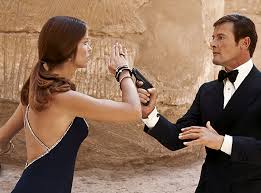
The James Bond Project: #1: Dr. No