Being Blasé About Gun Violence (and a possible solution)

February 4, 2023

On Groundhog Day, 2023 there were 68 reported gun assaults in America with 30 people killed and another 33 injured. The recent mass shootings in California were quickly replaced in the news cycle by mass shootings in North Carolina, Texas, and Florida. And, hey! Is that a Chinese spy balloon? Are they watching us kill each other, too?

Another day, another two mass shootings. According to the data kept by the Gun Violence Archive (gunviolencearchive.org) there are an average of 1.87 school shootings a day in America. Add that to workplace shootings, gang violence, and domestic terrorists shooting up power stations and it’s just hard to keep up. These shootings have become so common, only the most extreme cases rise to the tired rank of “Breaking News.” And when they do, we are more than likely to see it as another passing headline, unless it occurs in our community. Have we become immune to the carnage? Are we no longer shocked by the body counts? Is this just normal life now?
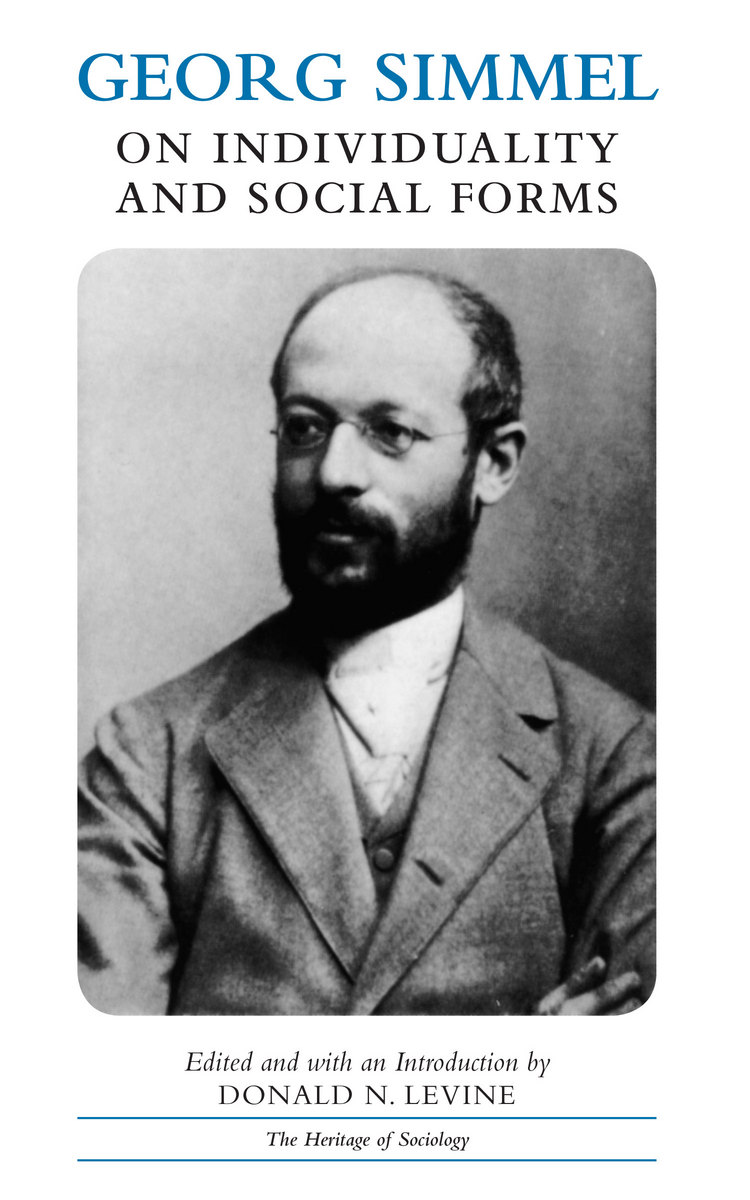
Pioneering sociologist George Simmel, in 1903, defined the “blasé attitude,” a state of absolute boredom and lack of concern caused by life in the metropolis. For Simmel, this was a defense mechanism, an adaptation of our nervous system to the intense stimulation we experience from the explosion of stimuli in modern society, But in 2023, that defense mechanism may be helping to facilitate the death toll from gun violence. What’s the point of trying to prevent today’s mass shooting when there will be two more tomorrow? In reality, our growing immunity to gun violence all but ensures the trend will continue and spread like a contagion. We certainly have seen this dynamic in other epidemics, including AIDS and COVID.

But when people begin to act together those seemingly unstoppable pandemics begin to slow their rate of infection. They didn’t disappear but death rates dropped. In 1995, the peak year of the HIV pandemic, 45,213 Americans died of AIDS. By 2000, that number fell below 20,000 (16,072 deaths) and has declined every year since (7,053 in 2019). Part of what led to the change in our collective response was seeing the victims as disease as “us” and not “them.” When people began to see friends, neighbors, workmates, and family members contracting coronavirus, for example, the masks went on. It was no longer an abstract news story happening somewhere else. Action was required.

The contagion of mass violence has a similar trajectory. You don’t have to tell the parents of Uvalde or the African-America community in Buffalo or Asian-Americans in Monterey Park that action is required. However, to the rest of us, the urgency of another mass casualty event blends into the background noise with all the other pressing issues, and takes a backseat to our own economic, family, and social struggles. Added to this mental malaise is the hyper-vigilance we also experience as fear of our own potential victimization becomes part of that background static. “I’m not really paying attention to the upward trends but I know that I (or the the people I love) could fall victim to the random nature of gun violence.” Paralysis sets in.

So what’s the solution?

We make it personal. The high school students of Marjory Stoneman Douglas High School organized the March for Our Lives movement after a gunman killed 17 of their classmates in 2018. They realized the school shootings weren’t just news stories, they were a part of a constellation of gun violence in America, not an isolated incident, requiring thoughts and prayers. They organized to highlight the vulnerability of all Americans to this disease of violence. 

We need to shift to a state of radical empathy. The hedge against the blasé attitude is to see all gun violence victims, including those killed and injured in today’s 1.87 mass shootings, as members of our community. They are all our family members and action is required.
Envisioning Our Renaissance at Home: Life After the Pandemic

March 8, 2021

A year ago, we were in a panic. I remember walking into the grocery store on February 29th, and seeing every roll of toilet paper gone. (I bought a 6-pack of Corona and went home.) Now, after over half a million deaths in America, the light is at the end of the tunnel. Things are beginning to open, like a late-winter purple crocus. Thirty million Americans have already been vaccinated. (I’m scheduled for my Pfizer vaccine on Saturday!) Schools are making plans to reopen and restaurants are starting to seat diners. The insanity of March 2020 is being answered by the hopefulness of March 2021. There are still incredibly high rates of infection (Don’t you dare take off that mask!), but the future looks bright.

I’ve done several trainings on racial and ethnic inequities related to the COVID-19 infection and death rates (and now immunization access) over the past year. I always try to balance all the doom and gloom with a “silver lining” ending about the power of resistance and resilience. Looking back at history, the explosion of cultural creation that began in the Renaissance of the 15th century was a life-affirming response to the “black death” of the 14th century’s bubonic plague pandemic. The “Roaring Twenties” were a celebratory pivot from World War 1 and the influenza pandemic that wiped out nearly 100 million people a century ago. Maybe this pandemic will give us a new Renaissance, I would offer my bummed-out audiences.

So let me throw an idea into our grand re-opening.

We’ve survived this year-long pandemic in various ways. Mainly retreating from bars, clubs, restaurants, block parties, and family celebrations, as we socially distanced from each other. We’ve retreated into our phones (Tik-Tok as therapy?) and endless binges on the small screen. (I’ve seen every iteration of 90 Day Fiancé and am now bingeing The Marvelous Mrs. Maisel.) We’ve become anti-social. The majority of my college students mute their videos during our Zoom classes. I’m not sure if they are human beings or Russian bots. Can I get a human interaction??? So the response to this year of isolation is to become SUPER SOCIAL.

People of America, let me reintroduce the once popular pastime known as home entertainment.

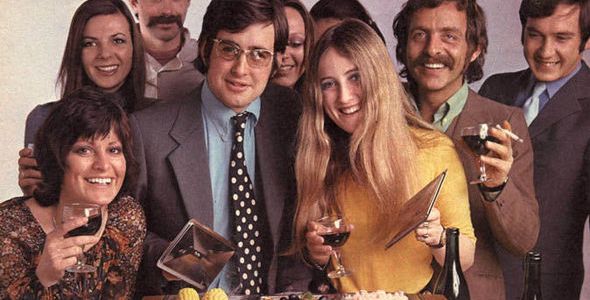
When I was a kid in the 1970s, my parents were always going to parties. My brother and I were either stuck with a babysitter, or peaking under the bedroom door wondering who all the laughing people in our house were. My mom hosted bridge parties, my dad hosted poker parties. My parents belonged to a gourmet dinner club and, when it was their turn, cooked and decorated the house for disco-era foodies. I grew up thinking every weekend was a house party. Complete with a wet bar. To this day when I hear Herb Albert and the Tijuana Brass my mouth waters for leftover hors d’oeuvres.

What did the swinging parents of the Seventies have that we don’t?

Well, for starters, they didn’t have social media sucking their eyeballs in an endless doom scroll. They also had better wages that allowed them to keep the wet bar stocked. But post-pandemic, we have a greater desire to be in a living room together, reading faces sans masks. (Did Ms. McGillicuddy just lick her lips while she handed me that Gin Rickey?) If there ever was a generation that was desperate to sit on a sectional couch and complain about kids and parents and government, it’s Generation Zoom.

So let’s bring it all back. Card games, Monopoly, charades, dinner parties, album listening sessions, jigsaw puzzles, Twister, fancy cocktails, inappropriate party games. All of it. Except the misogyny. We can leave that in the Seventies. (No key parties!) If the women want to smoke cigars in the backyard and complain about how their men are crappy at laundry while the men clean up the spilled Chex Mix, let ‘em. The kids can be locked in the bedrooms, watching the Wizard of Oz (or Ozark), while the parents crack open another bottle of pinot in the kitchen.

We’ll be back in the clubs and bars, seeing bands and getting Ubers home soon enough. But let’s not go back to normal. Normal sucked, too, if you remember. I don’t want 2019. Nobody wants 2019. If it’s Saturday evening, either you are going to somebody’s home for dinner, or you’re having somebody over for dinner. And then maybe an apéritif (Look up that word, loser) and a nice game of Parcheesi or even Cards Against Humanity. We need this! We need to sit across from each other, at a card table, and reconnect.

Great things can come from this. During the Enlightenment, salons became all the rage in Paris. People turned their living spaces into community meeting places, called salons. In apartments and front rooms, people would gather to discuss art, politics, and the meaning of existence in a post-Dark Ages Europe. German sociologist Georg Simmel invented the field of small group dynamics by observing interactions of salon participants. The next generation of grand ideas is not going to come from hunched-over trolls, sliding though endless posts on Instagram. It’s going to come from the collision of ideas that occur during a game of rummy, fueled by Whiskey Sours.

During the quarantine, we decided to take on a kitchen remodel in our 1909 Portland Craftsman home (with a very out-of-date 1960s kitchen). We want to turn our home into a welcoming place where people can bring a bottle of wine and stay as late as they want. No TV, we’re adding another couch to the living room for relaxed conversations. I’m going to re-learn how to play poker. (Seventh grade was a long time ago.) We want to start a circle of friends who feel comfortable inviting each over to their homes, even if it’s for a cocktail before heading out to the movies.  (Remember going to the movies? And friends?) Enough take out. Let’s cook in! And invite the neighbors! Home entertaining could be the great salve we’ve secretly craved. You’ve spent a year cleaning your place, for godssake.

Our culture is so divided right now. Let’s get to know each other again. Let our homes become safe spaces to argue and discuss and figure out what our Roaring Twenties should look like. I want you to dress for the occasion. I’ll bring the deviled eggs. Cheers!