“It’s not my job to make you comfortable”: Teaching in the Era of Trump 2.0

January 6, 2024

As a student of the history of fascism and a teacher of that history, I’m well aware of the echoes of the past. When Hitler came to power in Germany in 1933, the first targets of the Third Reich were not Jewish shop owners, but college professors. Germany’s universities were purged of faculty that were Jewish or branded to be communist, socialist, or liberal. Albert Einstein, among other intellectuals, wisely fled his home country. The main work of the Nazi purge was not done by the SS, but by fascist students who were part of the Hitler Youth movement.

One the reasons Einstein and others, including the brilliant social theorists of the Frankfurt School, came to America is because of our value of academic freedom. Academic freedom creates a space for faculty and students to have the right to the free exchange of ideas. One core tenet states, “Academic freedom gives both students and faculty the right to express their views — in speech, writing, and through electronic communication, both on and off campus — without fear of sanction, unless the manner of expression substantially impairs the rights of others or, in the case of faculty members, those views demonstrate that they are professionally ignorant, incompetent, or dishonest with regard to their discipline or fields of expertise.” (Source: Inside Higher Ed)

I highlight this passage because it is clear that Donald Trump plans to go after universities in his second term, which is also laid out in Project 2025, authored by his former and current advisors. Trump has derided universities as engaging in “radical left indoctrination” and promised using federal levers to turn higher ed into centers of ideological loyalism. This includes making it harder for non-wealthy students to attend college, deporting student protestors, and firing accreditors. American universities are encouraging international students to return before Trump reinstates his Muslim travel ban and other draconian travel restrictions. His vow to reclaim universities from the “radical left” is a page torn from 1933.

Trump is not even sworn in and academics are already feeling the pressure as emboldened MAGA students try to out their liberal professors at colleges and on social media. I remember the last version of this in the 1980s when the group, Students for America, tried to publicly ostracize professors they deemed to be leftists. It was chilling. This time those students will have POTUS and the repurposed Department of Education on their side. Teachers and professors, especially those who are un-tenured, may censor their lessons out of fear of being dragged before institutional review boards or disciplinary hearings for making MAGA students feel uncomfortable.
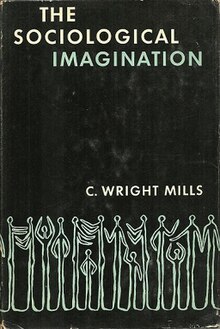
My job as an educator is to make students feel uncomfortable so I am not looking forward to the Trump Reich. As a sociologist, my entire pedagogy is based on C. Wright Mills concept of the sociological imagination, popularized in his 1959 book of the same name. Mills, writing at a peak moment in the Cold War, wanted Americans to be focused, not just on their (micro) personal lives, but the larger (macro) social structures that affect their personal lives. Mills argued that that happens with two conditions. First people have to be aware of their values and second is some sort of threat to those values. Mills argued that the threat puts people in a “crisis” where they begin to see things in a more sociological way.

I’m here to present the threat.

Don’t get me wrong. College classes are intended to be safe spaces, free from harassment. The threat is presented as challenges based on the Mills model. For example if your values say that women should have autonomy over their bodies, I will present how that right is threatened by politicians (including Trump) who have actively limited access to legal abortion procedures. That news should put you in a state of crisis, where you start thinking about social systems that allowed this to happen.

In my classes, we talk about race, gender, God, class, sex, and a bunch of other “uncomfortable” topics and my goal is to never make students feel more comfortable. (We called my own college Sociology 101 course, taken in 1981, the “everything you know is wrong class,” and I’m better for it.) I’m here to push buttons, but I’m guessing educators like me are concerned that some MAGA snowflakes are not going to respond well to intellectual challenges. They will be encouraged by a president who has positioned himself as the enemy of truth and science and the core values of The Enlightenment that brought us here.

When Trump is sworn in on the 20th, there will be numerous battlefields across the country, including the places where immigrants work and live, where women and girls get health care, and where trans people simply exist. I fear the classroom will also become a battleground. But instead of falling into the us vs. them narrative the fosters more conflict, my work will be to bring those students in, valuing their different views, and engaging them in the magic of academic freedom. I am not afraid.


The Dream Police Are Inside My Head

October 6, 2016

How do you go back in time and fix a mistake to change the course of your life? How do you channel all the things you are passionate about into one story of redemption or escape?

41adhf4m9gl

These were the questions I faced when I sat down to write The Dream Police early last year. The follow up to The Mission of the Sacred Heart was published this week and the Kindle version is available today. Like Mission, it is rooted in the true events of my life. Like Mission, it is a “rock novel,” a work of musical fiction, inspired by a classic rock album from my youth. And like Mission, it is a complex piece of literature that can’t easy be described in a quick elevator speech. But I think it is an important work that emerged from the plasma in my veins and the neurons in my synapses. So let me try to share with you why you might be interested in this story.

10001313_10152654051049307_1156545696_n

First and foremost, anyone who reads this will probably be able to understand why I had to leave my tenured position at Portland State University last year. There is a sexual paranoia that has invaded college campuses. Disguised as the important and real work that is earnestly meant to stop sexual harassment and aggression in an institution that often turns a blind eye, it is a form of fake feminism that undermines actual feminism. It sees all women as victims and all men as aggressors and ignores the agency of women and the complexity of the sexual dance between consulting adults.

As a male feminist, I’ve wanted to write about this sticky swamp for years. Then it happened to me. I was the subject of a witch hunt that stopped cold the important work I was doing at the university, including raising awareness of the importance of dismantling patriarchal power. The question was what to do with my anger at the real villains in this true-life tale. I didn’t want to go on a workplace shooting spree (Who would the local media ask to comment on it?), so I chose to write this story.

sdp-page-lawn-sign-site

Second, as a Portland sociologist, there are a host of sociological issues I confront on a regular basis. Portland has been named the most gentrified city in America. My neighborhood tienda is being turned into an artisan salt shop as I write this. My first academic  publication in 1991 dealt with issue (although I called it “yupification”). Gentrification is changing the face of urban America and I feel like I’m in a good position to write about it. It becomes a metaphor for how are lives change around us in ways we both love and hate.

45499785-cached

My research on white supremacist groups began moving into prisons about ten years ago. White prison gangs, like the Aryan Brotherhood and European Kindred, have become a growing problem outside prisons, including a recent murder just outside of Portland. A former racist skinhead incarcerated in an Oregon prison instigated my nightmare at PSU, so it was a perfect opportunity to bring a bit of light to the issue.

There are plenty of other issues floating around, including how your favorite rock song becomes your least favorite commercial, the backlash against unionization, the grieving process following the death of loved ones, and the dangers of spending too much time online scrolling through your social media. All this gets folded into The Dream Police.

unknown

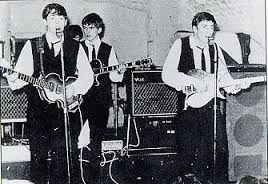
Then there is the unifying theme of lucid dreaming. If you could be conscious in your dreams, what would you do? My first thought is that I’d go see The Beatles play. Maybe I’d revisit the woods I played in as a child. How about a beer with Karl Marx and Halle Berry? It’s wide open. Some people lucid dream every night. Andrea and I practiced it while I was writing the book and had some cool experiences. Zak and Lenny, the central characters of The Dream Police, use lucid dreaming to visit some musical landmarks, but also revisit moments in their own lives to explore alternative paths. Zak’s pregnant wife was killed in a car crash, so he’s fixated on going back in time to change just one small thing.

cheap_trick_dream_police

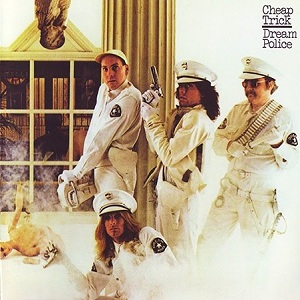
Finally, this book is about music and how music moves us forward in life. When I was teenager, I spent a lot of time in my room listening to albums. This included Cheap Trick’s 1979 Dream Police LP. The record was a whole world to me and I constructed this book around that themes in that album and dozens of Cheap Trick songs. The book also deals with the growing voice of women in rock and the shrinking opportunities for musicians to capitalize on their own music.

I think it’s important to tackle the minefield of gender politics. I was honored to do it in the classroom for over twenty years. Social research and punditry are also forums for it and fiction is another. I was thrilled to be listed as one of the representatives of the new genre of musical fiction in Wikipedia. It’s a great opportunity to be like my teenage heroes, The Clash, and use a good backbeat to get people to think about big issues.

In the end, I just want to tell a good story and maybe take readers to some unexpected places. Author Brian Paone, in his review, wrote, “Blazak pushes the reader through an endless web of a chess game that every time you think you have checkmate, a pawn appears out of nowhere, sending everything you thought was real into a tailspin.” In the last few years I’ve been through a lot. I’ve also thought a lot and grown a lot. It all goes into a story that reflects the complexity and dream-like state of my own journey. It feels good to have created a piece of literary fiction that my daughter could read some day. I hope you will read it now.

NOTE: Because, as a parent I feel I have to do something about the children of Aleppo, 10% of all book sales are going to UNICEF’s Syrian relief fund.

dreaming