December 14, 2024
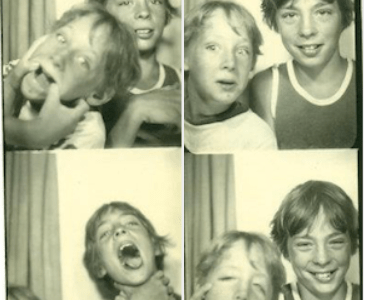
My little brother and I never got a long very well. One time when I was 12 or 13, and he was my daughter’s age, we got into a big fight at our house in Stone Mountain, Georgia. He threw a tennis ball can at me that sliced open my forehead (I still have the scar). With blood pouring out my face, I smashed through the flimsy suburban house door of his bedroom and Ronnie jumped out of the second story window, escaping into the woods behind our house where he spent the next two nights. I remember my mother saying, “Let him. We’ll have some peace and quiet for a few days.” I can’t imagine feeling good about Cozy, 10, living in the woods for a few days, but my childhood home was a firestorm of sibling chaos.
Last Sunday, Cozy and I went to spend some time with Ron in his room in the assisted living facility where he’s been in hospice care for the last year. We brought him snacks from Safeway, including requested chocolate covered pretzels. We told him about our trip to Vancouver to see Taylor Swift and I promised to bring him some eggnog on Friday when I got back from a short work trip to Washington, DC.

Yesterday, I sat on his empty bed in his empty room, eating those pretzels and thinking about his body in a funeral home down the street. When we were leaving Sunday, he had a look of terror on his face. I think he knew we’d never see each other again. I tried to reassure him. “You’re gonna be OK. I’ll see you on Friday.” Now I wish I would have stayed a little longer. He died in his sleep Tuesday night. Finally free of the pain of cancer and the nightmares of demons dragging him to hell.
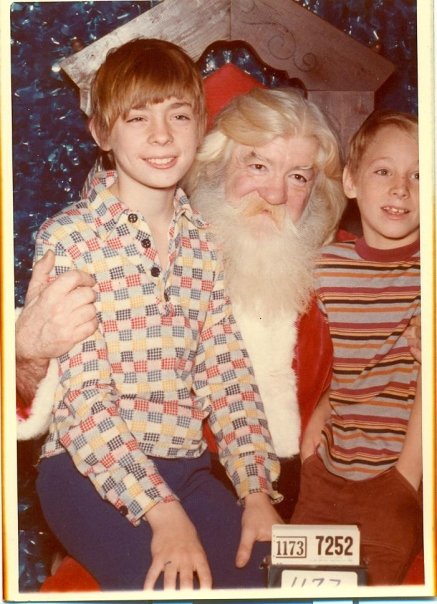
It’s a strange experience, losing a sibling. He drove me crazy for 57 years. I remember the day he came home from the hospital to our little house in Parma Heights, Ohio. My mother tried to head off the inevitable sibling rivalry by giving me a box of building blocks and saying that they were from the baby. But our life was only conflict. That included a 17-year stretch that I didn’t speak to him after he went to prison for threatening to kill our mother. After that, I thought I’d never speak to him again. Now, I find myself missing him. It’s a weird, dream-like state. Is that the same kid who threw the tennis ball can at me?

About 12 years ago, Ron became homeless, moving into the woods in Cartersville, Georgia, about an hour north of Atlanta. He found comfort in the woods, where he told me he talked to owls and ghosts. He was never what you would call a “people person,” challenged by the requirements of modern living. He had a job washing dishes at the local Applebee’s restaurant and would call me to lament his exclusion from our family, including his estrangement from his son. We slowly began to reconnect. On one visit, I took Ron back to our old neighborhood in Stone Mountain, and stopped by our elementary school. I could start to interact with him without the weight of the past and focus on the good memories of our childhood.
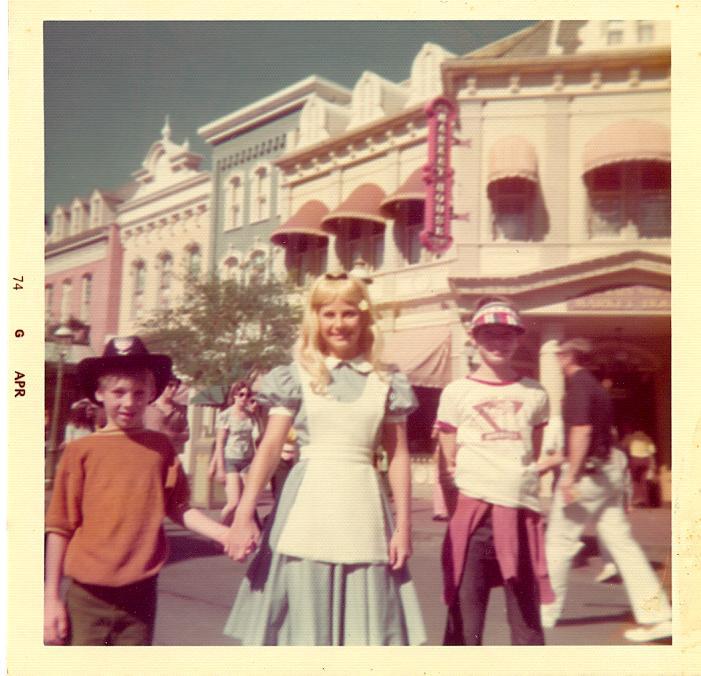
And there are good memories. We’d take family trips every summer, often to Florida or to Colorado, where my cousins lived. A favorite picture of us is at Disney World, 50 years ago. We’re on Mainstreet USA with Alice in Wonderland. I refused to hold her hand because, at 10, I thought girls had cooties. Ron, 7, had no hesitation. I use that picture to talk to my students about how straight people come out as well. Ron and I fought a lot but we also found great moments of joy on those road trips, so when I went to get him out of the Georgia woods last year to bring him to Portland, it was one more road trip for us.
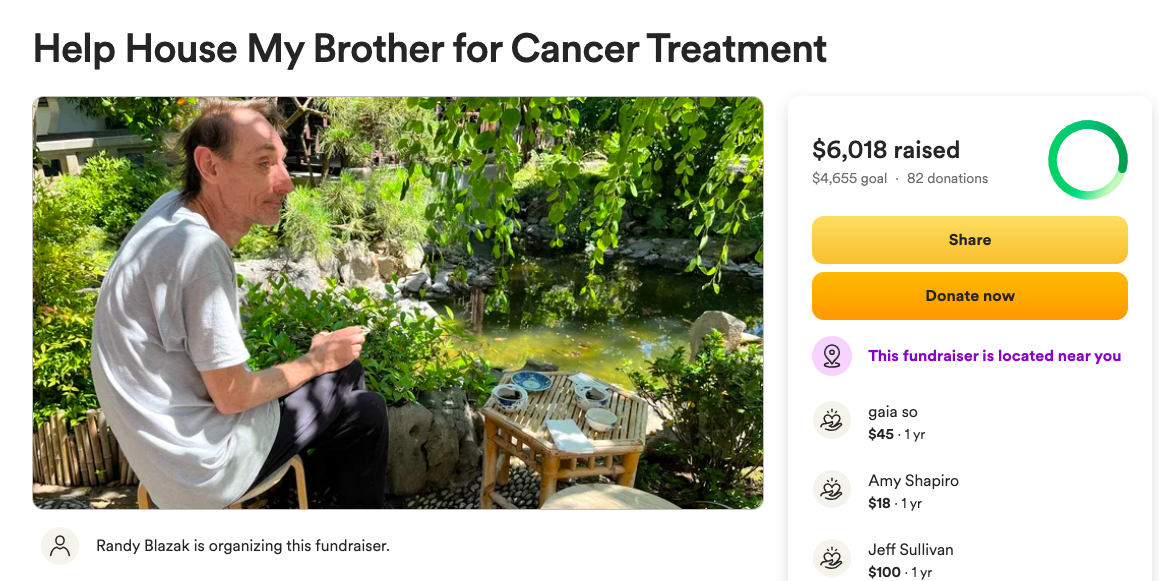
Getting my brother situated was a challenge, he was so used to being alone in nature. Finding him housing (after a few rough weeks on my couch) and getting him to chemo appointments were a struggle. Fortunately, there was a great amount of support from my friends in a fundraiser that got him into a care facility. Eventually, he recognized hospice care made more sense although he often talked about “getting better” and building a cabin in the woods outside Knoxville, Tennessee, where he had visited. Our road trips got shorter, the Oregon coast, the Japanese Gardens in the West Hills, until finally he was bed bound, with the trees of Forest Park barely visible out of his window.
It is of great comfort to know my brother isn’t suffering anymore. Anal cancer is the worst thing you can imagine. “Why does it have to be in my ass,” Ron would say as I’d deliver his opioids from the Safeway Pharmacy. It was excruciatingly miserable and he’d often wish he was back in his tent in Cartersville. “I’ll drive you to the airport if you want,” an older version of me would say, annoyed that he didn’t appreciate having a roof over his head and access to legal weed. But I knew Ron was doing me a favor by letting me play the caring older brother role I’d failed to as a kid.
Today, I will deliver his prayer shawl to the funeral home for him to be cremated with and a note expressing gratitude for letting me take care of him. In the coming year I will take his ashes back to Georgia and spread them in the woods where he found his peace. Fittingly, there are no photographs of all the times we fought, just of us in times of happiness. I’ll let that record be the memory of my little brother.

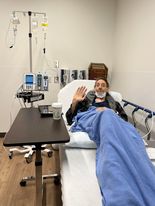
 Watching the Wheels