Foreshadowing the Clampdown on Academic Freedom

From Substack September 5, 2025

September 5, 2025

My senior year at Emory, I added a second major. I had taken more than the required sociology classes, so I decided to double major in political science. I wanted to better understand the history of fascism, but also the geopolitical events of the day. So I signed up for Professor Juan del Aguila’s Latin American Politics class and Professor Thomas Remington’s Soviet Foreign Policy class (where President Carter was a regular guest lecturer). I also enrolled in a semester-long course called The Philosophy of Marxism, taught by a wonderful Catholic priest named Professor Thomas Flynn. I tried to integrate all this with my sociology background into my senior honors thesis, a Marxist analysis of the Irish conflict.

Emory in the 1980s was a vibrant place. Between classes, frequent protests over apartheid, CIA recruitment, and whatever Ronald Reagan was doing that week, and keeping up with the abundance of live music, there was a small fracture on campus. As a kid from a Georgia Klan town, Emory opened me up to a multiplicity of progressive approaches to politics, culture, and sexuality. But there was dissent in the liberal utopia. A conservative group called Students for America, founded by Christian Coalition leader Ralph Reed, began showing up in classrooms. Their goal was to out “liberal” college professors. They weren’t very effective. As it turns out, the truth is liberal.

But forty years ago, I already knew what this was. Having studied the rise of Hitler, I knew that college campuses were the first targets of the Third Reich. In April 1933, the Nazis passed the Law for the Restoration of the Professional Civil Service. It effectively forced universities to fire faculty who were leftist, Jewish, and/or anti-fascist. Among those let go was Albert Einstein. After that, students in the Hitler Youth and the National Socialist German Students’ League would report professors who made “un-German” statements or who were critical of the Reich. The students forced the firing of more faculty, often threatening them with violence. A climate of fear overtook German universities as Nazis purged them of any hint of “leftist indoctrination.” Many professors fled Germany, and others ended up in concentration camps.

At Emory in 1985, we joked that the Students for America were the Reagan Youth, following history’s fascist playbook. Little did we know what was to come.

The far right has long waged a war on higher education funding. Fascists need a docile, uneducated populace, not cohorts of college grads who have read Karl Marx and Frantz Fanon. Professors were in the crosshairs of Joseph McCarthy’s Red Scare in the 1950s. More recently, laws and executive orders have been passed to restrict university funding and curriculum around LGBTQ and race issues. In 2021, when I was teaching my Race and Ethnicity class at the University of Oregon, I announced on the first day, “This class is based on Critical Race Theory. Tell me if you have a problem with that.” Fortunately, Oregon still protects academic freedom, but I was told I would be watched by conservative students. It was clear that universities were nervous about pressure from the right. (That same year, Professor Nikole Hannah-Jones, creator of the 1619 Project, was denied tenure at UNC–Chapel Hill because of pressure from conservative donors.)

Things began to shift after the election of Trump last November. Right-wing social media influencers began to encourage conservative students to out liberal professors and try to get them fired, as the Hitler Youth had done 90 years earlier. Far-right group Turning Point USA published their online “Professor Watchlist” (which includes some of my favorite academics, like Ta-Nehisi Coates and Robin Kelley). It should be noted that the front-page of their website features a “professor” who appears to be Jewish. Right-wing pundits and online influencers attacked history professor Ibram X. Kendi, the author of How to Be an Antiracist, and tried to have him removed from his position at Boston University. Hopefully academic unions are tracking complaints from conservative students. I’m guessing they have spiked.

When I was a tenured full professor at Portland State University, I felt ten feet tall and bulletproof. But this is a new era, and I am in a new position. As I focus on my consulting work, I’ve had the great privilege to adjunct at our local community college, and I’ve had a front-row seat for the shift. I have great respect for all my students, no matter their political leanings. Sociology classes are kind of group therapy. We’re all working it out in real time. But some of the young white men—the demographic that broke for Trump—have been given permission by our anti-education president to disrupt that sacred space. They are more likely to push back against discussions of patriarchy and white supremacy. It pops up in class, in course evaluations, and in online reviews, often as snide comments. Since I was in their exact shoes all those years ago (as a conservative white teenager), I desperately want to reach them. But I’m also deathly afraid of them. I’ve studied the history and know what they can do.

Fortunately, I’ve got a union and an administration that defends faculty freedom. But it feels like a dark cloud is coming to campuses across the country. And we have been here before. Buckle up.

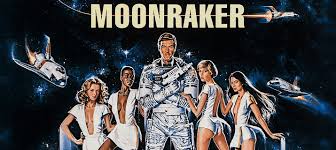
The James Bond Project #12: Moonraker (1979)

February 7, 2025

This series is intended to evaluate each product of the James Bond film franchise through a feminist lens, and the relevance of the Bond archetype to shifting ideas of masculinity in the 2020s.

Moonraker (1979, directed by Lewis Gilbert)

Bond in space! For Your Eyes Only was supposed to be the last 007 of the ‘70s, but due to the popularity of Star Wars, Close Encounters of the Third Kind, and the sci fi genre, Eon Productions decided to launch James into orbit. For the last time, Lewis Gilbert directed an expansive epic action adventure that starts with Bond falling through the sky without a parachute and ends with him floating in space with this episode’s Bond “girl.” The story is that Steven Spielberg offered to direct Moonraker after he wrapped up Close Encounters, but producer Cubby Broccoli wanted to stick with Gilbert. One can only imagine what THAT film would have looked like. Instead we get a camp romp that pleased Bond fans but looks pretty silly now.

Moonraker sees Roger Moore closing in on 50 but bringing some svelte bona fides to an older Bond. Hair and makeup prop him up nicely. Bond is up against another evil industrialist, this time its rocket designer Hugo Drax (played by Michael Lonsdale, who looks way too much like Peter Dinklage in this movie). Drax, like the megalomaniac in the last movie, wants to kill all the people on earth and then repopulate the planet with his master race of humans who are hanging out in his space ark. Bernard Lee makes his final appearance as M, the role he played since the first Bond film in 1962. Bond is aided by CIA agent/astronaut Dr. Holly Goodhead (Woot! There it is!). Goodhead is played by Lois Chiles, who delivers every line like she’s loaded on valium. Even when everyone on Earth is about to die, her voice remains in the “Gee, what should I wear to work?” range. Maybe Chiles was trying to play against the sexist “hysterical female” archetype, but women are allowed to have emotions. Oh, and Jaws (Richard Kiel) is back and he’s in love.

As we’ve come to expect, Bond does some globetrotting before he leaves the globe. Moonraker takes him to California, Venice, Italy, and Brazil. There’s a boat chase in the canals of Venice, that’s played for comedy (and is really dumb) and there’s a boat chase on the Amazon (that’s pretty cool). In the film, Drax has built a fleet of space shuttles to launch from his underground lair (Yes!) in the Amazon. The real space shuttle wouldn’t be launched by NASA for another two years, on April 12, 1981. That gave movie goers in 1979 a glimpse into what the 80s might look like.

Moonraker premiered in London on June 26, 1979, a week after President Jimmy Carter and Soviet Premier Leonid Brezhnev signed the SALT II agreement in Vienna, bringing cold war tensions down a few notches. The film was United Artists widest opening picture and highest grossing of the Bond franchise to that point. There was no hit theme song this time. Shirley Bassey was brought back in after Frank Sinatra, Johnny Mathis, and Kate Bush (!) passed. At the end of the seventies, Bond’s philandering was becoming tired, leaving audiences wondering if the franchise would survive into the 1980s.

Let’s drop Moonraker into our analysis matrix.

Driver of Action – As we’ve established, the Moore Bond films firmly place James in the driver seat, typically with the female spy sidekick who he can also sleep with. Dr. Goodhead doesn’t drive much of the story in Moonraker, and, like, the last film, needs to be rescued from the bad guy. Even though she’s a CIA agent AND an astronaut, James is still running the operation. We do get the team of M, Q, Moneypenny, and (now) the Defense Minister wedged in to help the ludicrous plot move along.

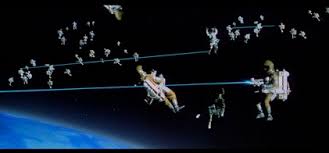
Role of Violence – 007 has a pretty low bodycount in this film. He shoots a would-be assassin out of a tree while pheasant hunting and, other than killing Drax at the end, that’s about it. There is a crazy climactic space battle with lasers when, somehow, a battalion of U.S. soldiers are crammed into the cargo bay of a space shuttle and then attack Drax’s space station. (I’m guessing this is where Trump got his idea for a U.S. Space Force.) Not sure where all the laser guns were in 1979, but Bond doesn’t really engage in any of the violence (like in the last film when he was mowing suckers down). Maybe older Bond has lost his taste for blood.

Vulnerability – Moore’s Bond is a robot. When he discovers Goodhead alive in Drax’s underground lair (beneath a shuttle that’s about to lift off), he says “Thank God you’re safe.” That’s it.

Sexual Potency – I could write a dissertation on this one. The FDA wouldn’t introduce Viagra until 1998 and one wonders if the mad scientists at Pfizer dreamed of a drug that would give men Bond boners. 007 is MI-6’s heat seeking missile. He’s rapacious. There isn’t a skirt he won’t chase, except for Miss Moneypenny, who is now matronly and completely off Bond’s radar. (How I miss their banter.) Speaking of Moneypenny, at the start of the film M asks her if 007 is back from his mission. “He’s on his last leg, sir,” she replies. The next shot is Bond’s hand on a flight attendants bare leg. “Any higher Mr. Bond and my ears will pop,” she says. (Of course she’s a double agent and Bond is sent flying out of the plane without a parachute, leading to one of the greatest action stunts in movie history.)

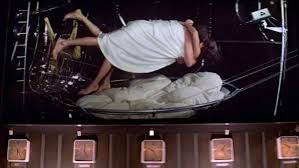
Bond may have failed at getting her knickers down, but you can’t keep a good Double O down. He makes passes at every woman under 40 that passes his field of vision. He would have made the moves on Drax’s hench-women, but he had to wrestle a giant anaconda. Shit happens. He does end up in bed with Corinne Dufour, Drax’s personal pilot, played by The Story of O’s Corinne Cléry. (She is killed by dogs for her transgression.) He also beds his MI-6 contact in Rio, Manuela. In his hotel room, she bares her leg and James asks, “How do you kill 5 hours in Rio if you don’t Samba?” Then he unties her frock. James meets Dr. Goodhead in California at Drax’s compound, but then again in Venice where he realizes she is CIA. He seduces her into bed and makes the case that she should team up, but she slips away in the morning. The film ends with Bond and Goodhead having sex in zero gravity onboard a Space Shuttle. As is the gag now, the MI-6 brass is watching and M asks what Bond is doing. Q replies, “I believe he is attempting re-entry, sir.” Thank you and goodnight.

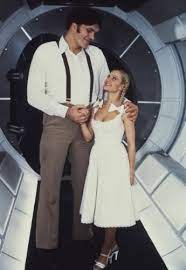
There also a side story worth commenting on. The monstrous Jaws is “redeemed” by falling in love in Rio. He’s a giant and she’s tiny with braided pigtails and glasses, dressed like a farm girl with heaving cleavage. Next to him, she looks like a child and I think that’s the point. She doesn’t speak, only stares lovingly her 7 foot 2 man. When Jaws realizes there’s no room for him and “Dolly” in Drax’s fascist utopia, he helps Bond to thwart the evil plot. The odd pair then open a bottle of champaign as the space lair is destroyed. The whole thing is icky.

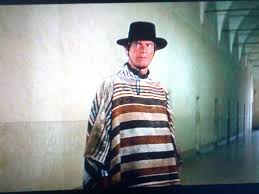
Connection – Again, Moore’s Bond is a man untethered to anyone. There’s a scene where he’s riding a horse in Brazil looking like a gaucho. It’s an obvious nod to Clint Eastwood, the penultimate seventies model of masculinity, the high plains drifter. His connection to Goodhead is wafer thin. In the obligatory coitus end scene, James and Holly are having space sex and she says, “Take me ’round the world one more time.” He drolly replies, “Why not?” Boring sex is boring.

Summary Moonraker is so broad and silly it’s just a romp at this point. The countless henchmen scientists in their yellow jumpsuits, the martial arts attack by Drax’s Asian manservant in a glass museum that destroys dozens of priceless artifacts, escaping the bad guy in a Carnival celebration (Thunderball redux), pretending to be weightless by moving slowly, it’s all in good fun. But the fact that Moore and Chiles seem so completely bored by the script drags down the campiness of Bond ’79. And Jaws and his child bride may have delighted young fans in the Carter era, but it just seems kind of sad now.

These seventies 007 movies have consistently missed an easy opportunity to be a part of the decade where feminism went mainstream. Most of them attempted to pair James up with a female spy that could have been his equal or even taught him a few things. Instead they played the role to attract the male gaze and be yet another notch on James’ bedpost. Yawn. Will things be different in the third decade of our hero?

Next: For Your Eyes Only (1981)

The James Bond Project #11: The Spy Who Loved Me (1977)

The James Bond Project #10: The Man with the Golden Gun (1974)

The James Bond Project #9: Live and Let Die (1973)

The James Bond Project #8: Diamonds are Forever (1971)

The James Bond Project #7: On Her Majesty’s Secret Service (1969)

The James Bond Project #6: You Only Live Twice (1967)

The James Bond Project #5: Casino Royale (1967)

The James Bond Project #4: Thunderball (1965)

The James Bond Project #3: Goldfinger (1964)

The James Bond Project #2: From Russia With Love (1963)

The James Bond Project: #1: Dr. No (1962)

2024: WTF


Lessons from Joan of Arc – Courage for the Coming Battle (January 6, 2024)


The Moral Arc: Did MLK Get This One Wrong? (January 15, 2024)


What Taylor Swift Tells Us About the Fragility of Men: Welcome to the Backlash (February 1, 2024)


On Turning 60 in an Ageist Culture (February 19, 2024)


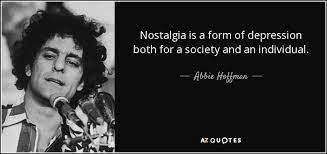
Make America Classic Rock Again? The Political Danger of Nostalgia (March 5, 2024)


The End of Democracy and the New Dark Age (March 28, 2024)


Is “Civil War” a Preview of 2025? (April 22, 2024)


Supporting the Right of Palestinians Not to Be Murdered is Not Anti-Semitic, And We Must Confront the Rise in Anti-Semitism (April 27, 2024)


I Would Have Hated the Beatles in 1964, or How My Daughter Made Me a Taylor Swift Fan in 2024 (May 4, 2024)


We Defeated Fascism 80 Years Ago, We Must Defeat Trump Now. It’s Go Time! (May 27, 2024)


The Secret Life of Fourth Grade Girls (June 7, 2024)


June is the Cruelest Month (June 21, 2024)


I Remember America: It Was a Good 248 Years (July 4, 2024)


The Chickens Have Come to Roost: The Assassination of Donald Trump (July 16, 2024)


Will Republican Misogyny Drive White Women to Harris and Can Taylor Swift Help? (July 23, 2024)


The Mulatto Panic: MAGA’s Racial Confusion (August 7, 2024)


Watching Coach Walz and the Painfully Fragile Masculinity of MAGA (August 24, 2024)


Fascism on America’s Doorstep (and are your pets safe?) (September 14, 2024)


Guilty Jews, Black Nazis, and Pet-eating Immigrants: Donald Trump’s Not So New Brand of Racism (September 21, 2024)


Beta Trump: The Day the King Fell Off the Hill (October 12, 2024)


Will America Elect Hitler on Tuesday? (October 29, 2024)


America, I Quit (November 6, 2024)


When Hate Wins (November 9, 2024)


Coming Back from the Ledge of Election Day (November 21, 2024)


The end of the Eras Tour and how Taylor Swift stopped time for my daughter (December 8, 2024)


Remembering My Brother Who Lived in the Woods (December 14, 2024)


Dad’s Top Discs of 2024 (December 18, 2024)


The James Bond Project: #1 – Dr. No (1962) (December 27, 2024)


The James Bond Project: #1 – Dr. No (1962) (December 28, 2024)


The James Bond Project #2: From Russia With Love (1963) (December 30, 2024)

2024: WTF (December 31, 2024)

Make America Classic Rock Again? The Political Danger of Nostalgia

I Don’t Know How to Talk about the War in Israel

I Was Jimmy Carter’s Most Annoying Student

February 19, 2023

As a Georgia boy, it was a big deal when the peanut farmer from Plains was elected as President of the United States in 1976. I was 12-years-old and remember my mother showing off her drivers license that was signed by “Governor Jimmy Carter.” His election was a rejection of all the Watergate era corruption that had tanked America’s faith in government. It was meant to be a return to normal, with an ethical Southerner who had admitted to Playboy Magazine that he had lusted in his heart. Seemed better than Gerald Ford falling down the stairs again.

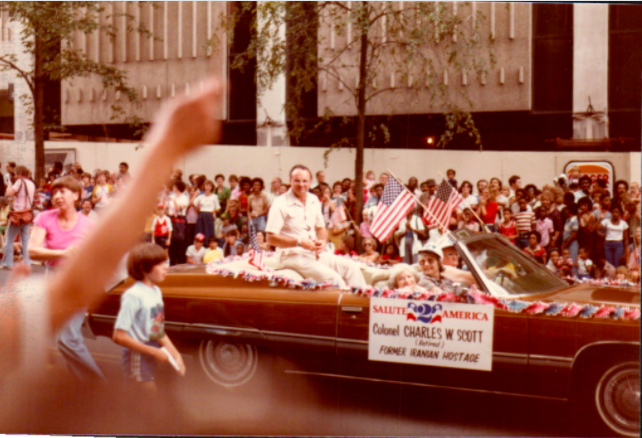
I could write pages on how history will kindly remember the 1977-1981 term that Carter had in the White House. Having a human rights advocate who loved Willie Nelson and the Allman Brothers stood in stark contrast to what was to come. Sadly, much of my high school experience was to be marked by the Iranian hostage crisis. One of the 52 Americans held in Teheran was Col. Charles Scott, of Stone Mountain, Georgia and his daughters went to my school. When they were finally released on January 20, 1981, we covered our town in yellow ribbons. 

Fast forward to my 1984-1985 senior year at Emory University, in Atlanta. I had become a sociology major and dedicated a large percentage of my waking hours to protesting whatever Ronald Reagan was doing that week. By my senior year, I had pretty much taken every sociology class Emory offered and added Political Science as a second major. I needed the scholarship to inform my activism. I would wear my Sandinista t-shirt to Professor Juan del Aguila’s Latin American Politics class and spar with him over the CIA’s role in the 1954 overthrow of Guatemala’s democracy for the benefit of the United Fruit Company. Good times.

My favorite classes were Professor Thomas Remington’s Soviet politics class. This was at the peak of the cold war when the U.S. and USSR were positioned, like two tribes, to wipe each other off the face of the map. On the first Wednesday of each month, at noon, the air raid sirens on campus would wail to remind us that Emory’s CDC (and all of us college kids) were the likely target of a nuclear strike. Remington’s classes seemed vital to understanding the Russian bear.

So it was great excitement that Professor Remington told us that President Carter would be doing a series of guest lectures in our Soviet Foreign Policy class. Carter had accepted a professorship in 1982, during my freshman year, and we would occasionally catch sitings of him on campus, but to sit in a classroom listening to a former U.S. president, instead of reading about him, was a privilege beyond belief.

It might not surprise you that I was the kid in the front row with his hand constantly darting up in the air. While Carter had an unrestricted forum at Emory, I was suddenly a 20-year-old with unrestricted access to the President of the United States. I took scrupulous notes and channelled my inner Arnold Horshack to pepper him with endless questions. Like this classic; “President Carter, why did you authorize Presidential Directive 59, authorizing the use of nuclear weapons if the Soviets advanced past Afghanistan?”

At times it seemed like it was just Jimmy and I in the room. He kindly addressed each of my questions with clarity and as much declassified intel as he could share with an overly earnest college kid. I imagined that the eyes of my fellow students were rolling as I continued the one-on-one but I was eternally grateful to Dr. Remington for creating this space that revealed the real world complexity of governing that was dramatically different from my Marxist-wannabe dogmatism.

The pay off was on a spring day in 1985 when I was sitting on the steps of Cox Hall with my gang of misfit Emoroids. We’d have our lunch there to talk about upcoming punk shows and make fun of frat boys. Suddenly, President Carter came out of Cox Hall with a small group, and stopped to say, “Hi Randy! How are your classes going?” As he walked away, my friends were just silent.

The following year Carter hosted a summit with Gerald Ford at Emory on foreign policy. I attended every session (and remember Ford falling asleep at the dais). After that, Carter opened his Carter Presidential Library across the street from my apartment in Little 5 Points. President Reagan came to speak at the opening and Carter (much to Reagan’s chagrin) allowed the event to be open to the public so we arrived to shout rude things at Ronnie. While I was in graduate school at Emory, I would have my Social Problems class work on pressing issues with the Carter Center, submitting my students work to the newly empowered Clinton Administration. Living across the street from his library I would occasionally see Jimmy walking the grounds and picking up trash (can you imagine Donald Trump doing that?) and thank him for those lectures in our Soviet politics classes. “I hope I wasn’t too obnoxious,” I said to him one fall day. “Not at all, Randy. You always asked the questions I wanted to talk about,” he said.

The four-year presidency of James Earl Carter was a tiny fraction of the nearly century long life of this man. Everyone that met him following his tenure in the Oval Office tells a similar version to this little story. A journey of a man guided by intention, service, and humility. It seems like the polar opposite of our current generation of political “leaders.” I was glad to know him and we were lucky to have him.