The James Bond Project #18: License to Kill (1989)

April 8, 2025

This series is intended to evaluate each product of the James Bond film franchise through a feminist lens, and the relevance of the Bond archetype to shifting ideas of masculinity in the 2020s.

License to Kill (1989, directed by John Glen)

Timothy Dalton’s Dark Bond is back for the second and final time in this revenge film that calls itself a James Bond movie. Maybe Eon Productions thought gangsta rap fans in 1989 wanted a 007 who was closer to Scarface than the guy in Goldfinger. License to Kill sees Bond go rogue from MI-6 as he goes after the guy who kidnapped his friend, CIA agent Felix Leiter, and fed him to a shark (after killing his wife). There’s no time for snarky quips here. James is out for blood.

License To Kill brings the action closer to home, primarily Key West, Florida, a bit of Bahamas, and a fictional country called the Republic of Isthmus (that’s actually Mexico). Even M and Moneypenny’s London scene was shot in Mexico to save money. David Hedison, who played Felix Leiter in Live and Let Die, is back in the role 16 years later. Carey Lowell, who went on to fame on TV’s Law & Order, was this installment’s Bond “girl.” The object of Bond’s obsession is drug lord Franz Sanchez, expertly played by Robert Davi, who will always be Jake Fratelli from The Goonies, to me. His sidekick is played by a very young Benicio del Toro. The score was by the brilliant Michael Kamen, who had just done the music for Die Hard.

The last of Bond film of the 1980s was also a fond farewell of sorts. It was the final film produced by Albert “Cubby” Broccoli, who had produced every Eon Bond film since Dr. No in 1962. It was the last Bond directed by John Glen, who had filmed all five 007 films of the eighties. It was the last Bond project of screenwriter Richard Maibaum, whose work goes back to Dr. No. It was also the last film appearance of Robert Brown (M since Octopussy) and the final film of Maurice Binder, who had designed the iconic opening title sequences of every Bond film since 1962.

Even though License to Kill may have been an end of era, there will still plenty of reminders of the staples of the franchise, primarily sharks and Q. Desmond Llewelyn’s Q gets more screen time than in any Bond film to date. Like James, Q goes rogue and arrives in Isthmus to help 007 with his revenge fantasy. Like Batman’s butler Albert, he’s not afraid to be right in the action. And because the action returns to America, we see more African-American actors, including DEA Agent Hawkins (played by Die Hard’s Grand L. Bush) and CIA aid Sharkey (played by pro football player Frank McRae).

The Dark Bond of License to Kill is a bit more unhinged than in The Living Daylights, so let’s do the analysis.

Driver of Action – While LTK is formed around Bond’s revenge plot, he does share the screen. Pam Bouvier (Carey Lowell), his femme fatale is less fem and more fatal. She’s a shotgun toting ex-Army pilot who never plays the damsel in distress. In fact, she saves James more than once. Bond even says, “Yes, sir!” to her at one point because she’s clearly in charge.

Role of ViolenceLicense to Kill takes the title literally. This film is a blood bath. Bond kills at least a dozen people, some in gruesome ways. He throws a renegade DEA agent into a shark tank and watches him get gobbled up by a Great White. He rigs a diving pressure chamber on boat and watches as a drug trafficker explodes inside it, his head inflating like a balloon. In the final act of revenge, he sets Sanchez on fire with the lighter Felix gave him at the wedding. It’s supposed to feel cathartic, but it just feels sadistic.

Vulnerability – We don’t get the “Is Bond in love?” question from the last installment. More like, “Has Bond lost his mind?” as he resigns from MI-6 to go after Sanchez. There is a scene at the wedding where Felix mentions to his bride that Bond was briefly married where we get a glimpse into James’ trauma, but this 007 is hard as nails.
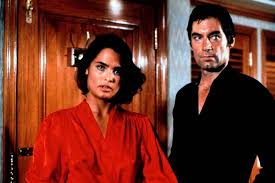
Sexual Potency – Dalton’s Bond is still low key swinging through the AIDS epidemic, but he’s a bit more Id-drivien than The Living Daylights. First of all, there is no scene with 007 and Moneypenny in LTK, so that banter is left on the table. His relationship with Pam is more equal than previous films. (She demands to be called “Ms.” Kennedy, while playing his accomplice). They share there first kiss on a small boat (!) in the Bahamas and the scene fades as the go below deck, implying some seafaring hanky panky. He also has a fling with Sanchez’s girlfriend, Lupe Lamora (played by model Talisa Soto, who went to be Johnny Depp’s love interest in Don Juan DeMarco). Pam’s jealousy about the James-Lupe link is played for laughs, because, you know, he’s James Bond. (When Lupe tells Q, “I love James so much,” Q’s eye roll tells the whole 27-year story.)

Connection – The fact that 007 is attending Felix’s wedding as the best man is a solid implication that these men have formed a tight bond over the many years. And the fact that he throws his career out the window to go after Leiter’s attacker is evidence of his loyalty to his CIA friend (or maybe a reflection of the trauma Bond suffered when Blofeld killed his own wife shortly after their wedding). James’ connection to Pam seems more transactional (unlike his tie to Kara Milovy in the previous film). At the end of the film, he does choose her over Lupe and they end the film, fully clothed, in a pool, kissing (They’ve already checked boat sex off the Bond to-do list), but there is no sense this relationship is going anywhere.

Toxic Masculinity Scale: 5

Summary

While the hyper-violent vengeance theme doesn’t feel very “Bond,” there are plenty of 007 hallmarks here, including underwater battles with frogmen, Bond hanging off of planes, Bond gambling in his tux, and even a completely random attack by ninjas (in Mexico). We even get a nod to Blofeld when an obscured man is holding a cat at Hemingway’s house in Key West. (It’s just M.)  And there is a great theme song by the fabulous Gladys Knight. The stunts are epic with plenty of massive explosions, and a comedic appearance from Wayne Newton as a televangelist fronting for the cocaine traffickers. (You know this was a comment on the PTL scandal that dominated the media in the 1980s.)

Dark Bond pays lip service to the changing gender rolls. When Pam asks why she has to play the roll of James’ “administrative assistant” when the arrive in Isthmus, and not the other way around, James says, “We’re south of the border. It’s a man’s world.” Carey Lowell is certainly a more masculine Bond girl than we’ve seen in the past (still with plunging necklines), but this isn’t exactly a feminist film. And Bond’s sadistic use of violence erases any enlightenment our James may have experienced over the decades.
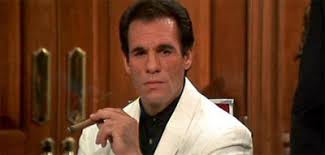
License to Kill premiered on June 13, 1989, a month after Panamanian President Manuel Noriega staged a coup to retain power in his banana republic. Similarities between Noriega and Robert Davi’s Franz Sanchez, with regard to both physical looks and cocaine connections, were commented on when the film was released. The film generated less income than previous films, perhaps reflecting its divergence from the Eon Productions formula. There was to be a third Dalton Bond film called Property of a Lady, to be released in 1991, but studio contract conflicts got in the way and we would not see a new Bond film, and a new Bond, until the mid-1990s.

Next: GoldenEye (1995)

The James Bond Project #17: The Living Daylights (1987)

The James Bond Project #16: A View to a Kill (1985)

The James Bond Project #15: Never Say Never Again (1983)

The James Bond Project #14: Octopussy (1983)

The James Bond Project #13: For Your Eyes Only (1981)

The James Bond Project #12: Moonraker (1979)

The James Bond Project #11: The Spy Who Loved Me (1977)

The James Bond Project #10: The Man with the Golden Gun (1974)

The James Bond Project #9: Live and Let Die (1973)

The James Bond Project #8: Diamonds are Forever (1971)

The James Bond Project #7: On Her Majesty’s Secret Service (1969)

The James Bond Project #6: You Only Live Twice (1967)

The James Bond Project #5: Casino Royale (1967)

The James Bond Project #4: Thunderball (1965)

The James Bond Project #3: Goldfinger (1964)

The James Bond Project #2: From Russia With Love (1963)

The James Bond Project: #1: Dr. No (1962)

The James Bond Project #13: For Your Eyes Only

February 23, 2025

This series is intended to evaluate each product of the James Bond film franchise through a feminist lens, and the relevance of the Bond archetype to shifting ideas of masculinity in the 2020s.

For Your Eyes Only (1981, directed by John Glen)

The third decade of Bond! After the silly sci-fi spectacle of Moonraker, producer Cubby Broccoli wanted to get 007 back to basics for the first Bond of the 1980s. While there is no underground lair, there’s plenty of other Bond staples, like assassins on skis, James in his tux at the baccarat table, underwater battles, and sharks. First time director John Glen, who had edited several Bond films before this, was brought in to bring James back to earth with a plot that was back to spy vs. spy and less reliant on tech (much to the chagrin of Q who seems at his limit with 007 snark).

A 54-year-old Roger Moore (who seems a bit out of breath in a few scenes) is paired with this round’s Bond “girl,” 25-year old French actress Carole Bouquet. Her character, Melina Havelock, is the daughter of marine archeologists who are killed because the KGB is trying to retrieve some British spy technology from the bottom of the Mediterranean. This launches her into the role of sidekick as she tells Bond,  “I don’t expect you to understand, you’re English, but I’m half Greek, and Greek women like Elektra always avenge their loved ones!”

By 1981, we have established the tradition of the opening action scene being completely over the top. This one starts James at the grave of his wife, Tracy and ends with Bond captured in a remote controlled helicopter controlled by none other than Blofeld! (and his white pussy cat, presumably not the same one from Diamonds Are Forever). The scenes with the helicopter (with 007 hanging on for dear life) careening over London are eighties epic. The comic death of Blofeld was a long time coming and apparently meant as an FU to the producer of Thunderball, who claimed ownership of the Blofeld name.

For Your Eyes Only gives 007 fans the tropes they crave and, unlike Moonraker, has aged well. Moore’s Bond flirts with the problematic nature of his Lothario reputation while still throwing a solid punch. The quips are dialed back and much of the action is movie candy for the widescreen. For the first time the opening credits reveal females in roles like “production manager” and “continuity,” where previously women were relegated to costumes and make-up. Maybe some of these women whispered in filmmakers’ ears not to make Bond such a dick.

Let’s plug FYEO into our analysis.

Driver of Action – This is Moore’s Bond, but early in the film he is rescued by Melina and her crossbow, although in the mad escape car chase he does ask, “Mind if I drive?” Later in the film he is assisted by Milos Columbo, a pistachio-eating smuggler, and his band of thieves. No CIA help here, M (Bernard Lee) died of cancer before his scenes could be filmed, and Q was inserted merely for comic value. This James Bond is completely capable of solving all problems and escaping all sticky situations.

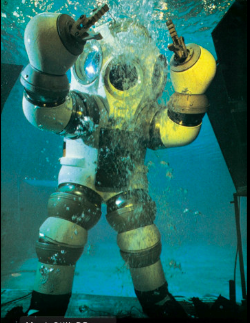
Role of Violence – There is a great relief of seeing 007 finally kill Blofeld, the man who had his wife killed, by dumping him and his electric wheelchair down an industrial smokestack on the Southside of the Thames. (We don’t know who got custody of the cat.) There are a bunch of henchmen killed, connected to various parts of the plot to get the spyware to the KGB. The most spectacular death is a henchmen in a deep diving suit, looking very robotic, who is blown up inside a sunken English trawler. Boom.

Vulnerability – Credit is given for reminding Bond fans that he was (briefly) married and she died in his arms. It was the only real glimpse we ever got into James the man. The epitaph on her tombstone is, “We have all the time in the world,” his last words to her in On Her Majesty’s Secret Service. Early in the film, Bond is captured by Cuban hitman Hector Gonzales and rescued by Melina. He seems a bit confused that he suddenly is the damsel in distress, but, like Jesus, he ultimately takes the wheel.

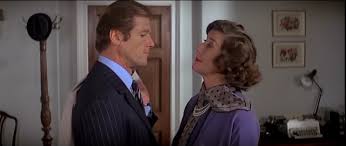
Sexual Potency – Here’s where we start to get a bit of a shift. Bond does not seem to be leering or sexually flirtatious with Melina, 29 years his junior. And between Bond and Moneypenny, the old spark is back, perhaps because they actors are now close in age (both were born in 1927!). Moneypenny, knowing Bond is about to arrive at MI-6 HQ, applies her makeup as James’ hat flies to the hatrack. “Moneypenny, a feast for my eyes,” James says, kissing her on the lips. “What about the rest of you?” she asks. “Well, I was going to get around to that.” There’s the old James Bond we love.

Another character is figure skater Bibi Dahl, played real life figure skater Lynn-Holly Johnson. She has a girl-like crush on Bond and climbs, naked, into his bed. In a shocking turn of events, he rejects her. “You get your clothes on and I’ll buy you an ice cream,” he says trying to kick her out of his room as she plants a kiss on him. Bond does sleep with the Countess Von Schlaf (played by Cassandra Harris, wife of future Bond Pierce Brosnan). The scene feels a bit like, “Oh, this is a Bond film, he needs to bed SOMEBODY.” But like a lot of James’ one night stands, she is killed by some bad guys shortly after bed with Bond. (Death by dune buggy.) And, as if a contractual obligation, James sleeps with Milena at the end of the film. (Can’t let the fans down.) But Bond ’81 seems noticeably less horny. Maybe he was worried about Blofeld’s cat.

Connection – Even though the the plot is pleasingly complex (for a Bond film), 007 is just here to get the job done. There is zero emotional connection. Even Q seems to get on his wick. Milena is strikingly beautiful but she seems to be just a pawn in his plan to stop the KGB from getting this thing (that looks like cheap lighting board). That’s why it’s a bit of a shock that the film ends with them in bed together (ON A BOAT!). Her neglige slides off and she tells James, “For your eyes only.” Roll credits.

Toxic Masculinity Scale: 2

FYEO has some boffo Bond moments. James and Milena in a mini-sub battling another mini-sub under the Mediterranean is pretty damn cool. The scene where 54-year-old Bond is scaling an Alpine cliff in Northern Italy while a henchmen is trying to dislodge the pitons holding his rope is pretty edge of the seat. And there’s a wild ski chase sequence in a bobsled track (that led to the actual death of a stuntman). There’s also some light comedy regarding Britain’s first female prime minister, Margaret Thatcher. “She’ll have our guts for garters,” the Minister of Defense says. The film ends with Thatcher (perfectly played by Scottish comedian Janet Brown) trying to congratulate Bond over the phone but actually talking to Milena’s parrot, who repeatedly says, “Give us a kiss.”

The misogyny in this 007 chapter seems to be dialed back a little. Bibi, the pigtailed ice skater, gets slapped by two men, but not by our hero. Gonzales’ Spanish villa is basically a swimming pool surrounded by bikini-clad women and KGB boss, General Gogal, has a secretary who appears to also be his young mistress. Posters for the movie featured Bond framed by woman’s bare legs, meant to attract male eyeballs. But for 1981, the year Porky’s came out, that all seems rather tame. It offers promise that 80s Bond can deliver the action that fans love with out the adjacent sexism.

For Your Eyes Only Premiered June 24, 1981 putting in direct competition with the Bill Murray film, Stripes. Aided by the popular theme song, sung by Sheena Easton, the film was second highest grossing Bond film (after Moonraker). Long, at 127 minutes, the film attempted to bring the grit back to 007 and find a place for the British spy in the new decade after 20 years of carving out the formula. Can Moore’s Bond age gracefully?

Next: Octopussy (1983)

The James Bond Project #12: Moonraker (1979)

The James Bond Project #11: The Spy Who Loved Me (1977)

The James Bond Project #10: The Man with the Golden Gun (1974)

The James Bond Project #9: Live and Let Die (1973)

The James Bond Project #8: Diamonds are Forever (1971)

The James Bond Project #7: On Her Majesty’s Secret Service (1969)

The James Bond Project #6: You Only Live Twice (1967)

The James Bond Project #5: Casino Royale (1967)

The James Bond Project #4: Thunderball (1965)

The James Bond Project #3: Goldfinger (1964)

The James Bond Project #2: From Russia With Love (1963)

The James Bond Project: #1: Dr. No (1962)