This year has definitely had a musical theme. It was the year when Cozy and I became consumed with all things Taylor Swift. I dove into her back catalog and Cozy bonded with her 5th grade Swiftie crew, and begged me to buy every Taylor magazine on the newsstand (I didn’t). There were plenty of highlights, including April 19, when Taylor’s new album, The Tortured Poets Department, dropped. Cozy and I listened to the stream (Well, streams. Turns out it was a surprise double album.) And then went to the record store to get a vinyl copy, quickly reviewing it on my YouTube channel. The peak was December 6, when we got to see Taylor herself at one of her final Eras Tour concerts in Vancouver, BC. We’re both still buzzing from that one.
Other than Tay Tay, I didn’t go to many concerts in 2024 as my social life was mostly homebound. I did see lots of jazz and funk shows in great Portland bars like the Goodfoot, the Alberta Street Pub, and the Keys Lounge. Two of my favorite concerts were seeing old friend Billy Bragg and old boss Kevn Kinney, both at the Revolution Hall (and I got to perform with Kevn). I have tickets to see Nick Cave & the Bad Seeds in May, so maybe there will be more live music in 2025, if we’re allowed out past the Trump curfews.
It was a really a year of Top 40 radio as Cozy and I kept Z100 on in the car, listening to Taylor, Sabrina Carpenter, and Chappell Roan (and that damn Hozier song). My mom did the same thing when I was 10, burning the Hits of ’74 into my forever brain. But when a song came on the Cozy didn’t like, she’d change the station to KMHD, the jazz channel. Because she’s my kid.
There was so much great music to listen to in 2024, including some great old stuff. I got a lot better about posting videos on Vinyl Fetish, my YouTube channel, especially my running feature, 100 Albums that Matter. That got me diving into some old favorites for repeat listens. Working through Rolling Stones’ 500 Greatest Albums of all Time list also provided great listens to old and new favorites (and endless opportunities to explain to my students what life was like before Spotify).
There was plenty of vinyl, mostly bought in second hand shops. My favorite re-issue was the newly remixed release of John Lennon’s 1973 album Mind Games, which I’ve always thought was poorly mastered.
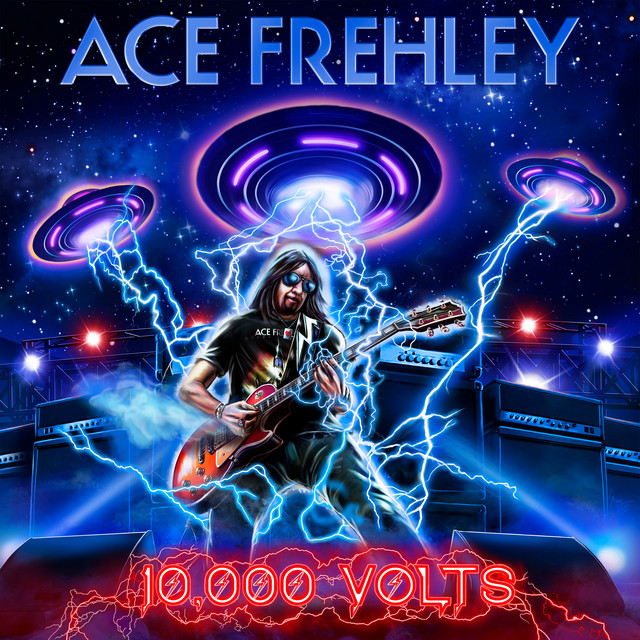
Deciding the ranking of my favorite albums was not easy. I played the new Ace Frehley album way too much (until he came out for Trump). The expansive Transa collection brought attention to the joy and pain of the trans community and gave us a glorious new Sade song. I could not stop playing new albums by the Cure, Father John Misty, and Nick Cave. It was a great year to be a Radiohead fan with a Thom Yorke solo album and two releases from The Smile (Wall of Eyes being the better). Waxahatchee’s Tigers Blood and Jack White’s No Name shocked me, they were so good and St. Vincent released the PJ Harvey album I’ve been waiting for.
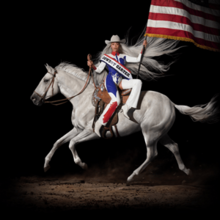
But one album grabbed me out of the gate and would not let go: Country Carter by Beyoncé. I don’t know if it’s a country album or not (but I got a kick out of white people proclaiming it most certainly wasn’t). That debate paled in comparison to draw of the music itself, touched by Willie, Dolly, Beatle magic, and the brilliant Rhiannon Giddens (who has firmly planted the BLM flag in country music). “Texas Hold ‘Em” was classic Bay but also completely new, but my favorite track was “Bodyguard,” where Mrs. Carter also lays claim to 90’s alt rock. Every time I listen to it, I discover something new. It might end up being my favorite album of 2025 as well.
So here’s my 20 favorite albums of a year that went to shit. Let’s hope 2025 produces the angriest punk rock since Thatcher and Reagan were elected.
Beyonce – Cowboy Carter
Father John Misty – Mahashmashana
Nick Cave – Wild God
Waxahatchee – Tigers Blood
Various Artists – Transa
The Cure – Songs of a Lost World
Taylor Swift – The Tortured Poets Society
Jack White – No Name
John Lennon – Mind Games (The Ultimate Collection)
The Smile – Wall of Eyes
Kim Deal – Nobody Loves You More
Charles Lloyd – The Sky Will Still Be There Tomorrow
Pylon Reenactment Society – Magnet Factory
Dandy Warhols – Rockmaker
Paul Weller – 66
Rosie Tucker – Utopia Now!
St. Vincent – All Born Screaming
Ace Frehley – 10,000 Volts
Miranda Lambert – Postcards from Texas
Gary Clark, Jr. – JPEG Raw
Spotify playlist of songs from the Top 20 albums: CLICK HERE
There have been red flags along the way; the Civil War, Watergate, Rosanne Barr singing the national anthem at a Padres game. America has always been an idea more than a reality. “We hold these truths to be self-evident, that all men are created equal” referred to a small group of white men in 1776, some of whom owned slaves and none of whom (except for Thomas Paine) thought women should have a vote. America was a work in a progress. It wasn’t until the arrival of an orange-hued huxter that this grand experiment went completely off the rails.
When Trump and his mail order bride came down the golden escalator in 2015, no sane thinking person thought this malignant narcissistic game show host could become the leader to the free world. Trump was a buffoon with a string of bankruptcies. (You have to be a special kind of moron to bankrupt a casino.) But his rough justice brand of racism (“Mexicans are murderers and rapists”) spoke to the victims of globalization and, while he lost the popular vote, he managed to sneak in to the high office. Thus began the campaign to hijack the no-longer Grand Ol Party and dismantle the guard rails of democracy.
If the 2022 Dobbs decision, that ended women’s bodily sovereignty, was a sign that this was democracy’s sunset, the July first Supreme Court decision in Trump vs. United States, that gave presidents absolute immunity, was our lights-out moment. Goodnight, John Boy. The President is now officially above the law. Trump will claim that he is now immune from all indictments, past and future. If re-elected, he becomes Caesar.
The once revered Supreme Court has gone down this road before. In 2000, the court literally stopped the counting of ballots in Florida and handed the presidency to George W. Bush. But the Federalist Trump Court, stacked with his three nominees and insurrection supporters Alito and Thomas, represent the complete obliteration of the checks and balances system our Founding Fathers designed. The federal judiciary is now merely an extension of MAGA. MAGA controls the House of Representatives as well. So if Trump’s minions take the Senate and he takes back the White House, which controls the entire Executive Branch, America is completely under the control of this madman who has already proclaimed he will be a dictator on Day 1.
Since 1984, when I became a political science major at Emory University (on top of my sociology major), I have dedicated my life to understanding how fascism happens. My work has included going undercover in fascist movements to see how they recruit young people, to entering war zones in Eastern Europe to help children escape the invasion of fascists. For forty years, I have been consumed with this work in hopes that I could prevent it from happening here. That forty years of work, of expertise in this field, tells me one thing. It is happening here.
Let me put this into the most simple words I can, Donald Trump does not give a fuck about America or Americans. He would never let any of his knuckle-dragging MAGA base into his haughty Mar-a-Lago affairs where he flaunts his stolen wealth. Trump cares about power and ego and ratings. And he cares about retribution. He has made it exceedingly clear that his second term would be about revenge, including firing any and all federal workers that are not absolutely loyal to him. His (currently imprisoned) top advisor, Steve Bannon, has said Trump 2.0 will arrest, try, and imprison Biden officials and anyone viewed as not supporting Trump, including former FBI acting Director Andrew McCabe, former FBI Director James Comey, former Secretary of Defense Mark Esper, former Attorney General William Barr and former Chair of the Joint Chiefs of Staff Mark Milley.
Trump 2.0, would be modeled on the authoritarian regimes Trump has only shown admiration for. A national abortion ban, the releasing of the January 6 terrorists, and detention camps for immigrants would be the first impact. The hollowing out of voting access for minority populations and the protection of corporations from regulations comes next. Then, as Trump has publicly supported, the implementation of the Heritage Foundation’s Project 2025, replacing every federal worker not loyal to Trump, from the highest executive office staff to the lowest park ranger, with Christian nationalists. Department of Education? Gone. Environmental regulations? Gone. Civil rights enforcements? Gone. And finally, because of the July 1 ruling, Trump can legally “take out” any perceived opponents, from Nancy Pelosi to the teenage anarchist down the street. America becomes a hellscape where the Confederacy has won the long civil war. There will be blood.
Why Americans are not out in the streets, I’ll never know. Maybe we’re the frog in the slowly boiling pot. Maybe it’s, as John Lennon sang in 1970, they “keep you doped with religion and sex and TV and you think you’re so clever and classless and free.” Or maybe we have prematurely achieved Idiocracy. Whatever reason, fascism is at our doorstep and turning the knob.
Even if you think my words alarmist, you know another four years of Trump appointments to the federal judiciary will fundamentally transform the nation for generations in a way that will make America the nineteenth century again. An immunized presidency will provide no disincentive to the wanton criminal behavior of a sociopath. A sociopath who only cares about his own power.
Yeah, Joe Biden’s performance at the recent debate was a train wreck, but I would vote for Biden in a coma if it meant keeping this very real threat to the nation from access to the levers of our democracy. Trump and his GOP cult of personality will burn it to the ground.
I don’t remember what Beatlemania was like. I was born in February 1964 as the mop tops from Britain invaded the U.S.. The footage of them on Ed Sullivan and the girls screaming is exhilarating. We now look at that month as the moment the 1960s started; when the black and white era of the Kennedy assassination became a technicolor explosion of youth counterculture. But not everyone loved the Beatles in 1964. Conservative columnist William F. Buckley, wrote in the Boston Globe, “The Beatles are not merely awful; I would consider it sacrilegious to say anything less than that they are god awful. They are so unbelievably horribly, so appallingly unmusical, so dogmatically insensitive to the magic of the art that they qualify as crowned heads of anti-music, even as the imposter popes went down in history as ‘anti-popes.’”
Buckley wasn’t alone. A chorus on the right proclaimed the Beatles as “communists” and encouragers of “race mixing.” They were framed as untalented puppets, designed to upset the American moral order with sex, drugs, and rock and roll. John Lennon, in a lengthy interview with a British columnist in 1966, briefly commented on the sad state of contemporary religion. “We’re more popular than Jesus now; I don’t know which will go first—rock ’n’ roll or Christianity,” he said. The comments were reported out of context in the United States and the backlash was fierce. Right-wing stalwarts, the Ku Klux Klan, organized boycotts of Beatles concerts and claimed Ringo was “a Jew.” Conservative southern radio stations held Beatle bonfires and there were numerous death threats against the band. The Beatles quit touring and retreated to the studio to find other ways to speak to the youth of the world.
I was just a baby for all that. I didn’t experience Beatlemania first hand. But I am experiencing Swiftmania and if feels like basically the same thing. If the Ku Klux Klan could burn Taylor Swift music streams, there would be bonfires across the nation.
First things first. This is not about Taylor Swift’s music. Old people always hate young people’s music. My dad thought AC/DC was not music and there a million people my age who think Taylor Swift’s music is also noise. I recently posted on a classic rock page that Swift will be my daughter’s Joni Mitchell, and some of the Boomers shit bricks. And then I posted the Buckley quote about the Beatles, and they just grunted. The word “crap music” was use repeatedly. OK, boomer. I did an episode on my YouTube channel about Swift’s 2023 Midnights album and how it as essential LP for any vinyl collectors collection. There is little doubt that Swift is immensely talented. This is not about that.
This is about gender and what happens when a woman is in control of her own life. Especially on Super Bowl Sunday. Taylor Swift has sold over 200 million records but I hear more about the existential threat she poses to America itself than the countless people to whom she brings joy. She’s got seven albums on the top 40 of Billboard’s album chart at the moment, but, apparently, she’s ruining football and America as we know it.
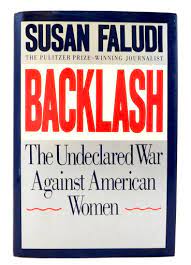
Susan Faludi, in her seminal 1991 book, Backlash: The Undeclared War Against American Women, gave us the roadmap for the conservative freakout about the girl from West Reading, Pennsylvania. Faludi argued that anytime in American history women gain power there is a patriarchal “backlash” to put them “back in their place.” One hundred years ago, women gained political power by winning the right to vote. The 1920s then generated flappers and housewives as the new feminine ideals, to push women away from using their collective voice at the ballot box. During WW II, women gained economic power as an army of Rosie the Riveters traded their dish rags in for blowtorches to build the weapons of war. And they had their own money to spend since their men were off on the battlefield. The end of the war brought back the demand that women return to the kitchen, or focus on the glamour like the new phalanx of blonde bombshells on the silver screen. Backlash #2. In the 1960s, women gained social power as the second wave feminist movement, again, worked to liberate them from domestic drudgery, as Mrs. John Doe flowered into Ms. Cindy Nobra. Faludi argued, in 1991, that the third backlash came in the form of the supermodel and the media message that women’s primary value is in their ability to attract men.
Faludi’s work was seen as helping to launch the third wave feminist movement of the 1990s and 2000s that culminated with the #MeToo movement in 2017. But by 2017, the fourth backlash was in full swing. There was never a greater movement to put women “back in their place” (and back into back alleys) than the rise of Donald J. Trump. I’ve reported here about my 2018 conversation with Gloria Steinem. When I asked Ms. Steinem how she explains the rise of Trump, she told me, “You know when a women is at most risk of being killed by her abuser is the moment she tries to escape him. When the battered wife tries to leave, that’s when he is his most violent. That’s where we are.” The way the MAGA movement has characterized the obese elderly Trump as a virile, chiseled, hyper-masculine macho man has become patriarchy’s ultimate weapon against women and their basic rights of self-determination.
Enter Taylor Swift.
Swift’s storied career, from her 2006 debut album to now (“Cruel Summer” is STILL on my radio in this cruel winter) has been a tale of wrestling control from men. Whether it’s songs dishing on ex-boyfriends who have done her wrong or fighting to reclaim her back catalog from Scooter Braun’s Big Machine record label, this has never been a woman who is going to shut up and just be pretty. She has, throughout for her career, stood up for the underserved. In 2015, when Apple was going to premier its new streaming music service with a three month free offer, they announced that artists would not receive any payment for their music being streamed during those three months. Taylor, who could afford the dip in income, saw how smaller artists were being ripped off and pulled all her music off the platform until Apple changed its policy. It did. Swift has donated millions to a wide variety of needs, including libraries, schools, flood, tornado, and hurricane relief, police departments, and victims of sexual assault. She’s paid off fans medical bills and student loans. Her philanthropy makes the “Christian charity” of her accusers look like pennies tossed in the church collection plate.
More than endorsing Joe Biden, it’s this persona of a woman in control of her life that triggers fragile conservative men most. Trump has said, defending his “Make America Great Again” slogan, America was last great in the 1950s, in the era of Father Knows Best, when women (and especially trans women) did not challenge the “natural” authority of men. (Make America Backlash 2 Again) Swift is not interested in going backwards in time to make men happy. In the most simplest of terms, Taylor Swift does not give a fuck. So American men are putting their wife beaters on and popping open a can of Bud Light (whoops, triggered by that beer) and getting ready to teach Taylor and all women like her a lesson. And they are manning up for Super Bowl Sunday, ready flex their atrophied muscles.
Let’s try to first extend a wee bit of empathy to these fragile men. The world has changed a lot since Trump says America was last great. Men are no longer the kings of their castles. Unlike in 1964, women can now have their own credit cards and punish sexual harassers. More women are going to college now than men (I see this in my classroom) and the workforce is now dominated by female labor. Unlike the days of Father Knows Best, now three fourths of women 25 to 54 are full time employees. Young women no longer marry the first man that asks them as a means to move out of their fathers’ houses. They do they same thing men do. They play the field and ditch the guys that don’t meet their needs (and sometimes write songs about them). In the 1950s, the average age for women’s first marriage was 20 (that’s average, so that means for every “spinster” that finally married at 30, two 15-year-old girls got married.) Now the average age for women’s first marriage is over 28. Swift is 34 and don’t expect her to “settle down” anytime soon. Her life is just getting started. (And let’s be 100% honest; Some of those young women in 1964 who bowed to social pressures to get married, weren’t interested men as romantic partners. Being out and gay now is another trigger for men who feel they are entitled to women and their bodies.)
So you can imagine manly men are feeling a little threatened. Their manly man world is fading in the rear view mirror of the the Kia Forte. Taylor Swift represents everything that wrong with their picture of how the world should look. And now she’s a fixture in the very last arena of the manosphere, the NFL. What’s a boy to do?
Fortunately for these fellas, the real manosphere, aka “society,” is dug in and fighting back, especially in a backlash. You don’t have to wade into the dark web as it vomits out deep fake nudes of Swift and endless discussions of the best methods to sexually assault her. It’s right there in the mainstream media, including among some women, like former Fox News host Megyn Kelly, who carry the water for the fragile men. (Kelly tried to organize a boycott of Swift for her support of relief work for children in Gaza. It failed miserably.) The conservative bashing of Swift has been, well, swift, including a bizarro conspiracy theory that Swift is a George Soros-funded Pentagon psyop operation to hand the Kansas City Chiefs the Super Bowl win (Isn’t San Fransisco the bastion of liberal politics?) and put Joe Biden back in the White House. Seriously.
The freak-out men are having about the “feminizing” of society is shaping the electorate as well. Recent research from Stanford University found that, while Gen Z women around the world are moving toward liberal positions, their male counterparts are moving to the right. Among the younger generation, there are really two cohorts, Gen Z women who are voting to regain their abortion rights and flocking to Taylor Swift concerts so big they can be seen from space, and Gen Z males who are tracking down fake nudes of Swift and trying rebuild their grandfather’s vision of gender roles, where the men where men and the women were REALLY good at making sandwiches. The fact that Swift has actively been registering these young women to vote must terrify these men, who are convinced this is the fall of the Roman Empire.
The Republican Party could embrace these young women, but as usual their party is the old man screaming at the kids to get off his lawn. Their fantasy of themselves as manly warriors will translate as more misogyny towards Swift, and towards women and girls in general. And there will be violence. Violence towards women who stand up for themselves and violence against other men as men signal that they are the volatile sex, so beware. But women, like Taylor, will shake it off and work to fix men’s mistakes, just like they always have.
As the father of a daughter who is growing up with the music Taylor Swift on the radio (Hearing Cozy riff the lyrics to “Cruel Summer” in the back of the car is pure bliss), I’m glad this pop singer is driving a massive wedge into the fading world of manly men. My daughter’s world will embrace her in a way my mother’s world never could. Like Madonna 40 years earlier, Swift will lead the charge against this generation’s backlash. “I’m so sick of running as fast as I can, wondering if I’d get there quicker if I was a man,” as she sings in “The Man.” My daughter’s future will have more space for her as a human being because of Taylor Swift, Beyoncé, Lady Gaga, Kesha, Lizzo, Cardi B, and all the other women on the charts who are doing this pop music thing by their own rules. But there are a lot of terrified boys and men to win over. Don’t fight this, boys. Mother is telling you it’s going to be OK. Enjoy the game.
Postscript: For all the women who don’t have the wealth or white privilege of Taylor Swift, but are in the trenches day in and day out working for gender equity without a subculture of fans to protect them, let’s lift them up in our songs, too.
This blog has many things over the last nine years. It started out as a parenting blog in 2014, as Andi went back to work after the birth of our child, Cozy, and I did the John Lennon “househusband” thing. Then Ferguson, Missouri and the murder of Michael Brown happened, and I went into “sociology of racism” mode. Since then, it’s covered a wide range of the personal and the political. From the fascist rise of Donald Trump to the collapse of my marriage. Over the summer, I posted a blog entitled “Dating While Married,” where I shared the excitement and trepidation of rejoining the dating world while separated.
It was both the most read blog post in ages and the worst thing I’ve written.
I was all in the flush of a new romance with a wonderful woman named Jaime. Unfortunately, I used the opportunity to lash out at Andi and did a pretty obvious job of throwing her (and her boyfriend) under the bus. There was a juvenile tone that, upon reflection, looked like, “My new girlfriend is better than your dopey boyfriend.” There was anger and pettiness and a lot of unobserved shittyness. I could have made the same pitch about the challenges of dating and finding love after marriage (that so many responded to) without the barbs. I can’t even bring myself to go back and read it. Maybe it was my cruel summer.
2023 has been the year that I finally learned how to let go of my anger. It’s still there, but now I’m better equipped to deal with it. The mantra, “You are not your emotions” and regular mediation provided a new path. By December, June seemed like a century ago. And I like this new me that is emerging from all the pain.
Friends often ask me, “What happened to you and Jaime?” Jaime is an incredibly smart woman and I think she recognized she was being pulled into someone else’s drama, even, perhaps, being used as a game piece in that conflict. After a few months she wisely backed away slowly and then cut off contact. I can’t say that I blame her even though I constantly missed her wit, charm, and obsession with all things Taylor Swift. I’m sure there are others entering the DWM zone who have faced similar dynamics. It reminded me of Princess Diana talking about the “three” people in her marriage.
The hardest lesson was reflecting how quickly I brought my daughter into the picture. I love my time with Cozy and I thought I could combine Cozy time and Jaime time. I was sure they would hit it off, and they did famously. But they met each other after Jaime and I had only been dating one week and now that seems like an impulse that could have been slow rolled. The relationship should have been on more solid ground before bringing Cozy in. When it ended, I had to answer Cozy’s question, “When are we going to see Jaime again?” Cozy needed consistency not chaos. And posting that first picture of Cozy and Jaime probably could have waited as well. I wanted to tell the world, I’m OK! I have a new love! But it probably felt crummy to Andi, who I was trying to rebuild trust with.
The good news is that over the holidays I reconnected with Jaime. I even spent Christmas Eve with her and her mom in a dimly lit bourbon bar in Northwest Portland. Jaime and I are going to explore our friendship while keeping the drama, ulterior motives, and bus-throwing-under at a distance. Kindness is more fun than anger. I can’t say what 2024 holds. I imagine this separation will become something more settled and formal. So many of us have been through this minefield of the transition of a relationship. If we care about “love” as a thing, that can be the emotion we become. Lessons learned.
This weekend I had assault rifle, a FN-Herstal PS90, pressed against my shoulder. I adjusted for the mechanical offset of the laser scope of the rifle and put a bullet right through the heart of my target. The gun was light and the trigger action was easy. In that moment I had a flash of God-like power in a world were we all feel all too powerless.
I’ve had a long history trying to understand the appeal of guns that began when a deranged fan shot and killed my hero, John Lennon, in 1980. As kid in the South, I was buried in gun culture. From watching The Rifleman after school (“Paw!”), and the toy weaponry of my G.I. Joe, to the gun racks in the back of pickup trucks that drove around Stone Mountain. I even had a plastic Tommy gun that shot out sparks when you squeezed the trigger. But the murder of Lennon turned me into a 16-year-old gun control advocate. Why did we need all these guns?
My work as a criminologist put me back in the middle of gun culture. Whether it’s the law enforcement agents I engage with or the right-wing extremists I study, everybody is packing heat. While I’ve lectured for over 30 years on America’s bizarre obsession with guns, I’ve also worked to respect the gun and the gun owner. I fashioned sticks into pistols as a boy. Could that childhood fascination provide a clue into the fact that 32 percent of Americans own a firearm?
In 1995, when I was a fresh young PhD., I was lecturing my criminology class about the statistics on gun ownership. About how homes that contained guns were more likely to see those guns used in a suicide, a domestic homicide, or in an accidental shooting, or be stolen, then they were to ever use them to defend the home from an intruder. A had an aspiring Oregon militia member in that class who was routinely aggrieved by my anti-gun rantings and invited me to the shooting range to experience the appeal of unloading high caliber rounds into some paper targets.
Needless to say, that day we hit the range was both terrifying and exhilarating (and loud). He brought several weapons for me to try (most of them legal). By the end of the morning, I was going full Clint Eastwood, firing a 45 with my left hand and a 357 Magnum with my right. I remember the guns feeling lighter as each round was launched toward the target. And I hung that target in my university office, as a subtle message to my students, “I am not one to be trifled with.”
After the 1999 Columbine High School shooting, that left 15 students dead, I began to explore the connection between guns and masculinity. School shootings mimicked workplace shootings, where (young) men were somehow emasculated and made the fatal decision to “go out like men.” My experience shooting certainly played into some macho fantasy of myself I’d harbored since I was a skinny boy in suburbia.
In 2005, I participated in the FBI’s Citizen Academy and got more formal weapons training, including with semi-automatic rifles. It was intense, but also gave me a deeper respect of the weapons themselves. I felt like I couldn’t have opinions about guns unless I knew what it was like to fire them. That training played into that macho fantasy of myself 17 years later while I was in Ukraine, when I secretly wished a Ukrainian solder would hand me a rifle and ask me to repel some Russian invaders. Fortunately, for my family (and for Ukraine itself), that never happened.
In 2021, 48,830 people died from gun-related injuries in the U.S. and that number only trends upwards. Over the years, I’ve considered owning a gun since my work has generated some seriously scary enemies. But I’ve always thought there were essentially two-parts of gun ownership. The first was acquiring the weapon and the second was looking for an opportunity to use it and I’m not sure that a creak in the house wouldn’t have me reaching for the ammo. And now that there is a kid in that house, guns are off the table. But, according to Pew Research, nearly 4 in 10 American adults live in a household with at least one gun in it and a lot of those homes have kids in them.
My experience at the range Saturday wasn’t just meant as a day to reclaim my inner-Rambo. I was there with members of my anti-violence team, one who is a bonafide gunsmith and brought his 45 handgun and rifle for us to fire. As soon as we entered the firing range, my heart rate shot up. About a half dozen men were firing off countless rounds, as shell casings flew through the air. It was the sound of war and mass shootings and domestic terror. But, with our skilled guide, we took our positions and fired at our targets, like I did at the Lickskillet shooting gallery at Six Flags amusement park, when I was a kid. Guns blazing around me, I focused on BRASS, “breathe, relax, aim, stance, and squeeze,” and tried to cluster my shots at the center of the target.
The term “gun culture” is overly broad. Yeah, it includes extremists on both the right and the left who are waiting for the call to play out their John Wick fantasies on real and imagined enemies. The faith in a soon-to-come civil war is very real to them. But there are also a heck of a lot people that enjoy the sport of shooting that includes the kind of recoil you don’t get in a video game. Going shooting helps me break through the “us vs. them” mentality I tend to have about gun owners, because now I can see the appeal. But I can also walk away from it.
What’s the John Lennon line about how life is what happens when you’re busy making other plans? I had this vision of flying into Georgia (on my father’s dime), rescuing my brother from his shithole hobo camp, and delivering him to a Portland cancer treatment facility, then watching his recovery from a safe distance. It didn’t quite turn out like that.
When I got to my dad’s after landing in Atlanta, my brother, Ronnie, was on the phone, telling me I had wasted my time and that he wasn’t going to leave his camp in Cartersville, Georgia. I could tell he was afraid of the incredible change he was facing. Instead of suffering from his rectal cancer in a hell he knew, he was looking at relocating in a place far away from the Georgia piedmont. And he had never even been on a plane. I told him I wasn’t going to force him to do anything, I was just headed to come hang out with him for a bit. He’d been held up in a Quality Inn for a few nights because his pain was so great. He was convinced he was on death’s doorstep and just wanted to be left alone. This would have to be his choice.
Finally seeing him after two years was a bit rough. I thought about the last days of Howard Hughes but without the billions. His hotel door was propped up open so the Georgia heat and flies could come in as he lay in the bed. I went into operational mode. Food, coffee, and whatever else he needed. Gradually he realized he would be better off in Portland. He wasn’t ready to die just yet. I got a room next to him and we made plans to strike his camp later in the day.
He had been living on a hill behind the Cartersville IHOP for seven years. How he survived, I’ll never fully understand. Another blistering summer in rapidly evaporating Georgia would have killed him. His camp was a tent, full of spiders, and a year of garbage hidden under tarps, and a dozen gallon jugs of urine that served as his bedpans when he was immobilized by pain. It wasn’t pleasant but that thought that there was something better waiting motivated us to clear the camp and head to Atlanta to catch a flight to the land of Obamacare.
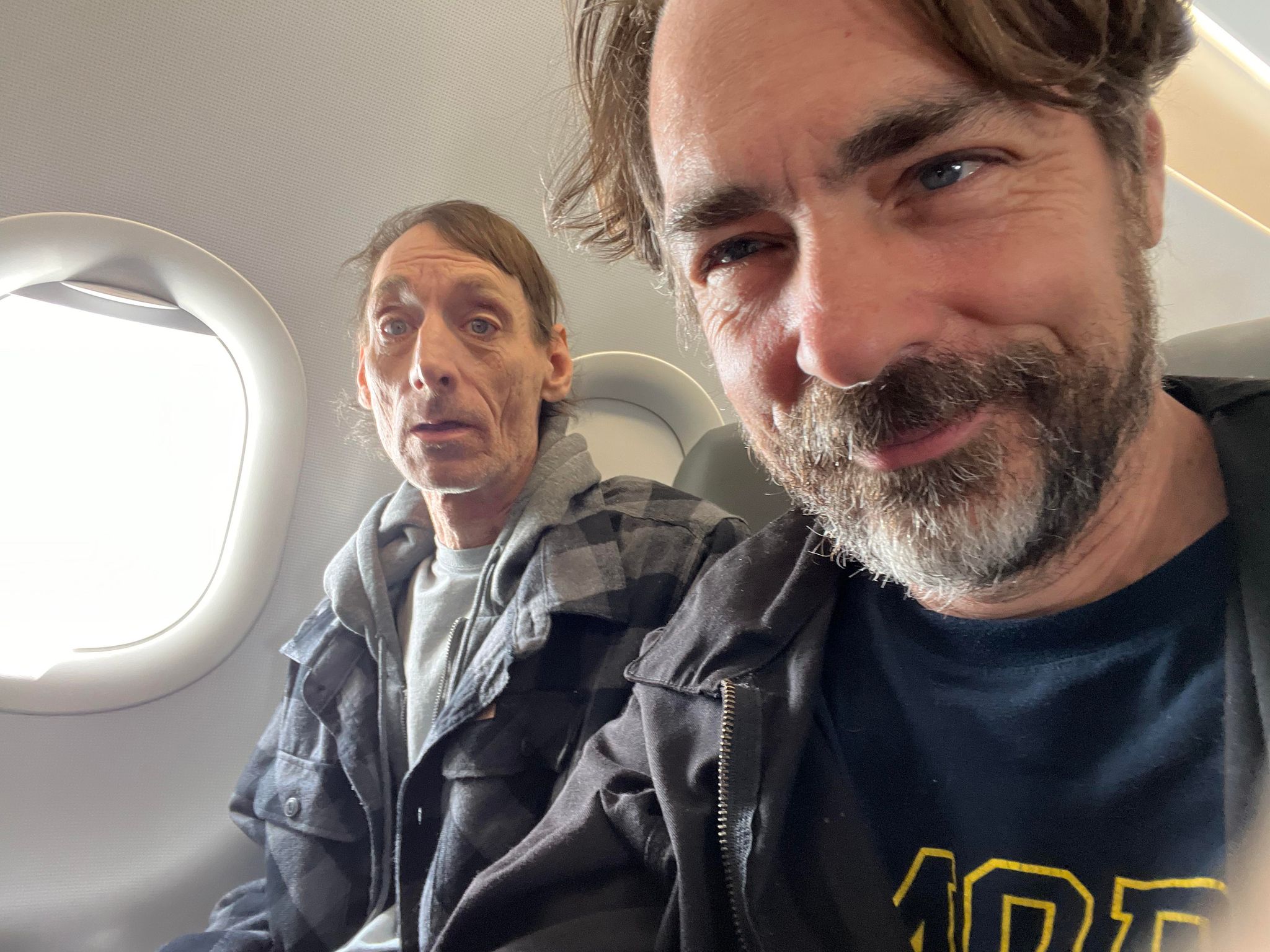
The journey home was a challenge. Whatever you do, don’t fly Frontier Airlines. It’s the nightmare airlines. Just getting a wheelchair to get Ronnie to the gate at Atlanta Jackson Hartsfield Airport was an ordeal. Then, because of cancelled flights, I had to race him to another gate on another concourse and hope that delayed flight would get us to our connecting flight in Las Vegas. The Las Vegas to Portland flight was cancelled and they told us they could get us on another flight home three days later. I told them he was a cancer patient who had an important oncology appointment the following day and Frontier Airlines ticketing agent just shrugged her shoulders. So we headed to another terminal (Ron still in a wheelchair) and bought a ticket for that night on Spirit Airlines. (I never thought I’d say this, but Frontier makes Spirit look like Delta.) We finally made it to Portland, but Ronnie’s backpack didn’t arrive until six days later, with all his electronic items stolen from the bag. Frontier sucks.
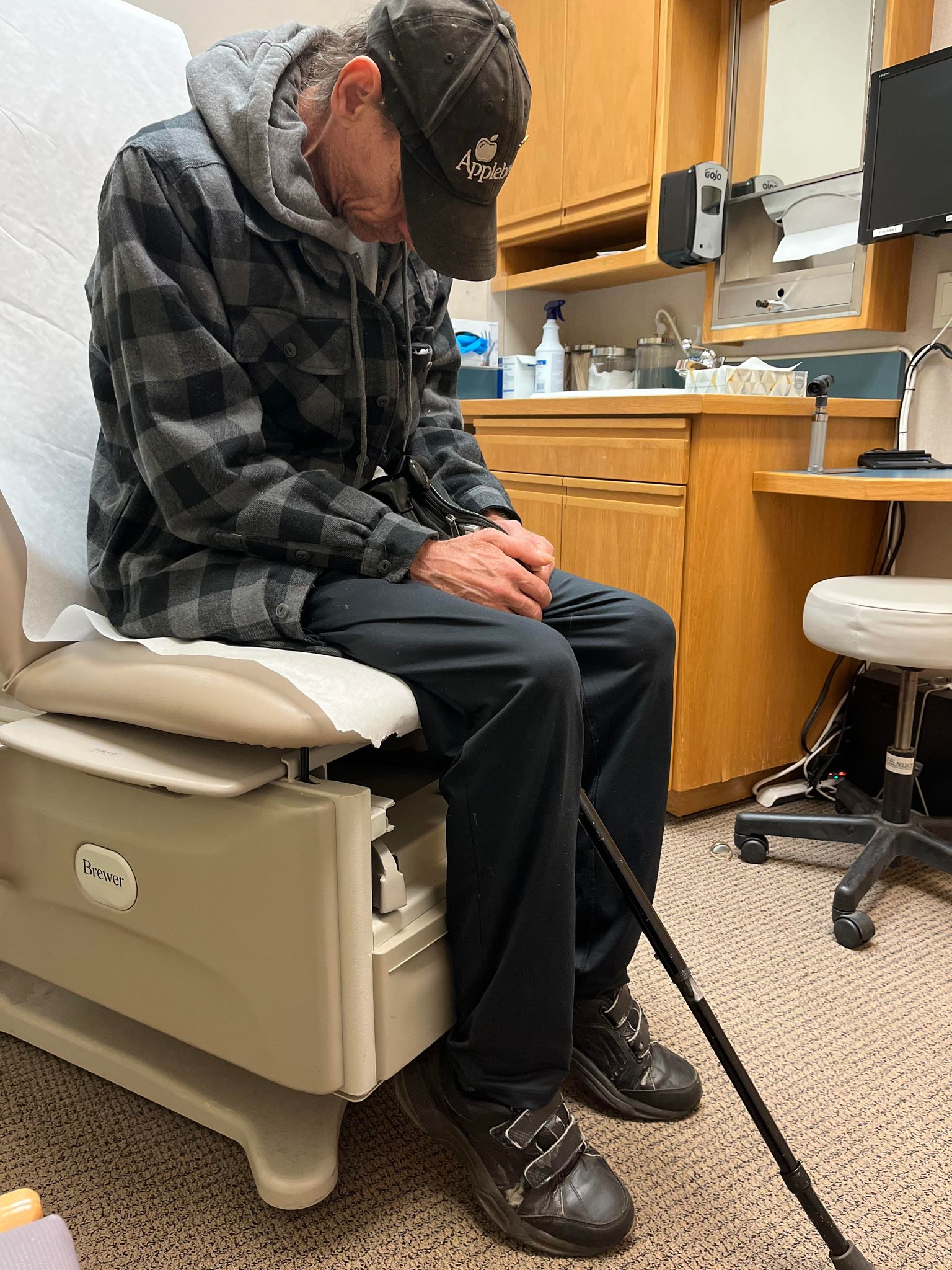
After a day of adjusting to West Coast time, my job driving my brother around began. First to an oncologist in Tualatin, south of Portland, where we found out his cancer was Stage 4. Then to a residential facility I was hoping to move him into, where they told us it would be a few weeks. This was happening the week I was driving Cozy to and from art camp, way out in the traffic hell of Beaverton. Endless calls to Medicaid to get his long term care interview moved up from late August, making CT scan appointments, preparing meals, and administering pain meds every two hours.
Suddenly, I’d become an in home care nurse.
It just seemed really clear that this was the obvious role to step into. What else should I do? My brother is battling anal cancer. He was doing it alone in the Georgia woods, and now he’s doing it on my couch in a state that has legal weed.
The legal weed bit has blown his mind. It’s been hugely helpful with his pain and appetite (although it wasn’t helpful with the Taylor Swift video I tried to make after we got high and watched Yellow Submarine.) In the conservative state of Georgia, possession of less than an ounce of pot is an automatic year in prison, on the taxpayers’ dime. In the liberal state of Oregon, an ounce of weed just means you’re running low on weed.
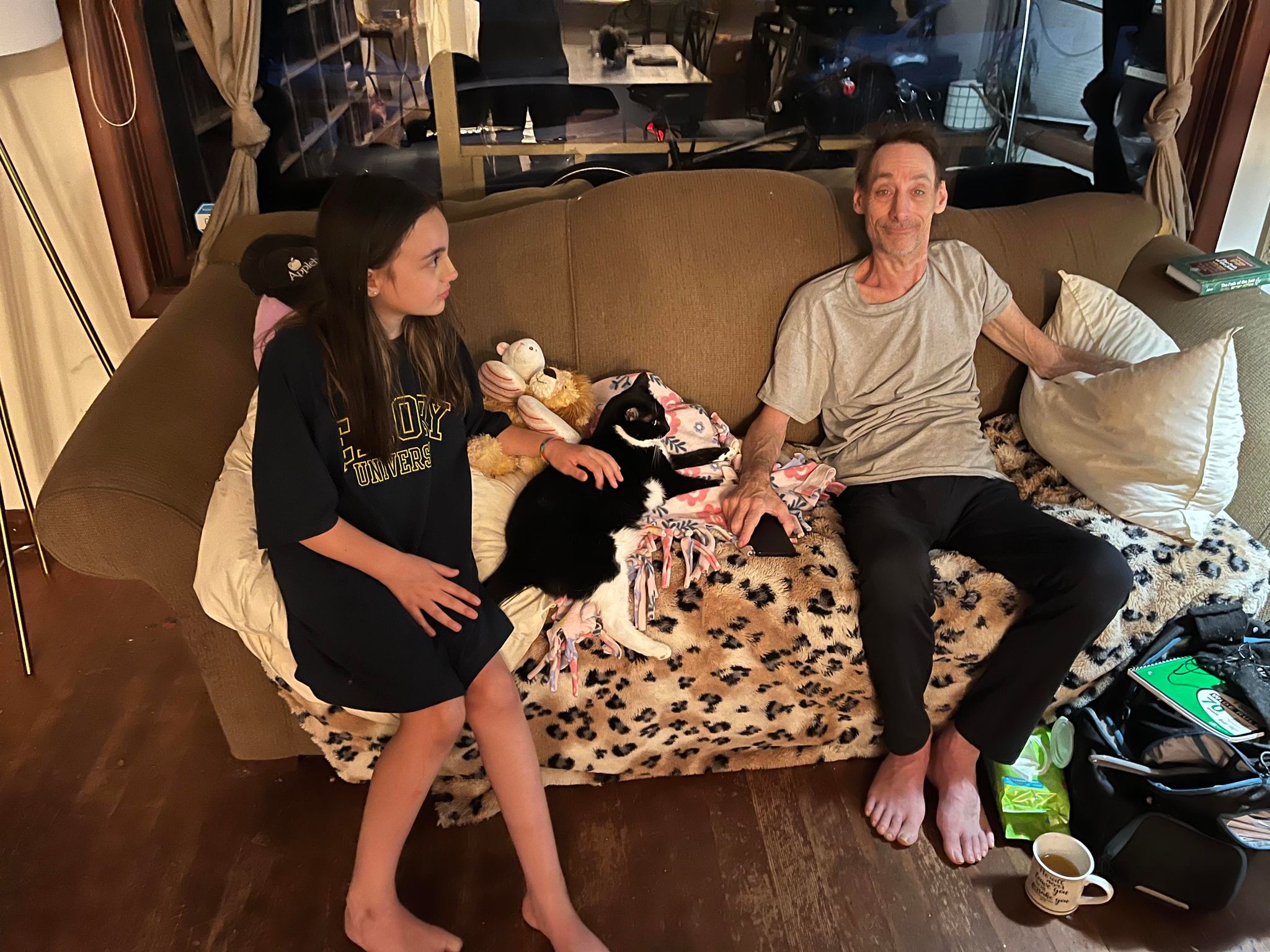
Once the pot and narcotic pain meds started to work, Ronnie started to feel human again. He’s got an amazing oncologist at OHSU’s Knight Cancer Center and wonderful palliative care coming. We’re still trying to find housing for him. Going through chemo on my couch is not an option. Keeping him in colostomy bags and diapers with an 8-year-old running around is a less than an ideal setting for him and my family, but he’s, literally, out of the woods. Sitting on our porch in the cool Portland night air (the opposite of Georgia), has allowed us to connect in a way we never did when we were kids. It started to feel like this experience was healing me as much as it was intended to heal him.
It’s certainly a left turn from my normal summer, teaching on line and working on my side projects, but the support of Cozy, Andi, and Jaime makes it work. Watching Cozy and her uncle bond has been a thrill (Cozy is ferocious on the board games), and Andi has helped me remember how important this effort is. The moments I can escape with Jaime for a bit have kept my battery charged and her concern for my brother just fills my heart. And I’ve been able to show Ronnie some of the joys of my little town, like green tea at the Chinese Garden and way too much sugar at Voodoo Donuts.
Fifty years ago, everything was a constant fight between us. I never would have thought of trying to comfort him. Now my hand is on his back as the doctor tells him that his cancer has spread from his rectum to his lymph nodes and lungs. I don’t put him down for his assertion that he can “shred” his tumor with turmeric and sound waves. I just encourage him to listen to his doctors, who are among the best in America. This isn’t Georgia. Under Oregon’s expanded Medicaid, even the poorest among us have access to be best care.
Part of employing empathy is seeing this through my brother’s eyes. He has to be scarred shitless about this diagnosis, that is close to a death sentence, with a treatment option that will be a true test of his mettle. He’s lived as a hermit in the Georgia woods for ten years and now he’s in the hipster metropolis of Portland (Just the number of people walking around has shocked him. Nobody walks down the street in Cartersville, Georgia.), and, on top of all that, he has to trust a brother that has showed him more hostility than love in his life. I can’t imagine what’s going on in his brain. Thank God (Oregon voters) for legal weed.
Ronnie has been incredibly appreciative and acknowledges turning my living room into a cancer ward has been an imposition. But I thank him. This opportunity to help him has been good my for soul. If I can expunge a lifetime at anger towards him, I can deal with my anger issues for good. The other day he reminded of me when I knocked him out for calling me a “baby killer” in front of my girlfriend who had just had an abortion. He’s not the same person, and now I have a chance to be different.
Healing can take many forms. For my brother, it’s going to be regular radiation and chemo treatments, a bunch of pot, and hopefully a bed of his own. For me, just being here for him is the healing I needed.
Like pretty much every Beatle fan, I’ve been waiting on Peter Jackson’s epic recut of the the Beatles’ 1970 Let It Be film. I first saw it as a midnight movie in Stone Mountain, Georgia in 1978, wincing when the rednecks hissed at Yoko Ono’s first appearance on the screen. The 1970 film was a sad document of a fabled band breaking up. Get Back, the new film, culled from 60 hours of unseen footage from those sessions, promised to rewrite the narrative of January 1969, which George Harrison had branded, “the winter of our discontent.”
I geared up for the Thanksgiving event by buying the 5 disc Let It Be “Super Deluxe” box set and reviewing it on my YouTube channel. I’d read everything about the sessions in the previous 40+ years, so I wasn’t expecting any surprises. And yet, all I got were surprises. It wasn’t just the insight into the working process of the band (Ringo’s farting not withstanding). It was the psychological dissection of what happens when strong personalities stifle equally strong personalities.
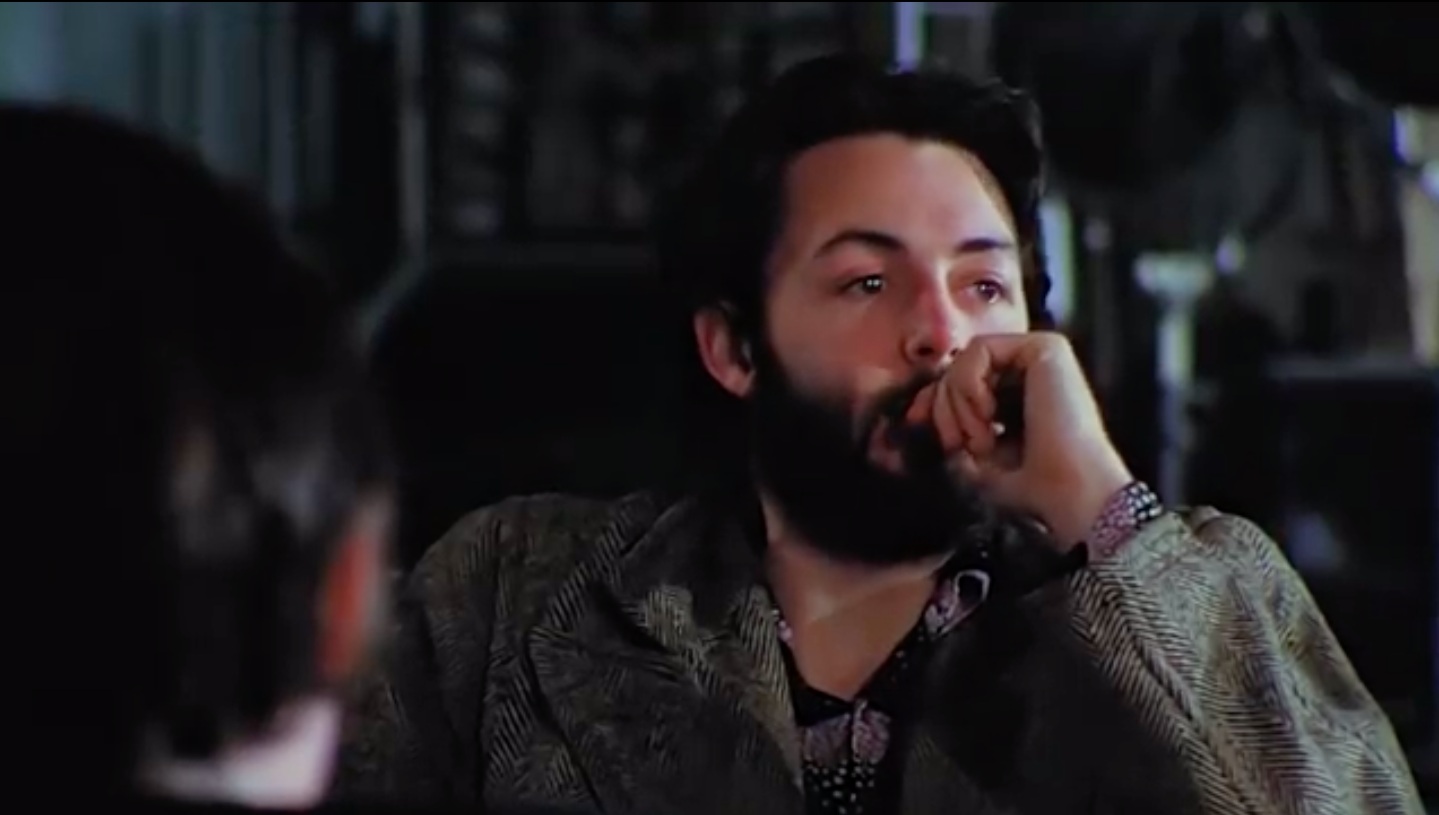
Thanksgiving morning Andrea and Cozy came over so we could make this viewing a family event. Andi and I curled up on the couch together and fell into the first part of the eight-hour three-day fab fest the world had been waiting for. Besides the brilliant ’69 fashions and endless smoking, which made us both briefly made us consider taking up the habit, was the revelation of the psychodynamic between John, Paul, George, and Ringo. In the first episode, there’s a moment when Paul discusses and accepts that he is losing his lifelong best friend to Yoko. Paul, looking old at 26, mourns the man who had been his musical partner since he was 14. There’s a long silent shot and you can see his eyes dampen. The realization that closeness is not locked in for life is shattering. John was now “John and Yoko.” No wonder Paul McCartney fell into a deep depression a year later.
But the great story is George Harrison’s rebellion. The Beatles were Lennon and McCartney’s band, both in camera time and musical direction. The quiet Beatle was lucky to get a few of his own tunes on each album. By 1969 he’d been hanging out with Eric Clapton, Bob Dylan and The Band but was still relegated to sideman in his own group. The songs he was bringing into the band were equal to Paul’s and even better than the ones John was bringing in. (John was checked out, on Yoko and on smack.) Just listen to the Beatles’ version of George’s “All Things Must Pass” and you can see how the understudy had become the master.
George could have just taken it all on the chin, the price of being a Beatle. But on January 10th, George stood up for himself and quit The Beatles. After seven days of rehearsing mostly Paul’s songs in a dank soundstage, George walked out saying, “See you ‘round the clubs,” and that was it. The Beatles were now a trio. Years later, in The Beatles Anthology (1995), George recalled his thinking at the time. “What’s the point of this? I’m quite capable of being relatively happy on my own and I’m not able to be happy in this situation. I’m getting out of here.” Certainly there’s more we don’t see on the screen in Get Back, including financial headaches at Apple and George’s crumbling marriage (apparently he was shacked up with Clapton’s ex-girlfriend at the time), but we see the youngest Beatle take a stand for his own sanity.
We also see John, Paul, and Ringo sink into a mild panic at George’s departure. John suggest recruiting Clapton, who had played on 1968’s Beatle classic “While My Guitar Gently Weeps.” They end up heading off on a visit (and then a second) to their young friend’s house to cajole him back into Beatledom. End of episode one.
Andrea and I reconvened on the couch the following day for Episode Two as the Beatles reconvened at Apple headquarters. Watching the Fabs, George included, enter the white office building on 3 Saville Row gave us a kick has we had been in the building on our trip to London in 2018. It’s now an Abercrombie Kids store. And yes they sell Beatles shirts. In 1982, I actually snuck onto the roof of the then empty building but we were seeing the reunited quartet walk in the same door we had. Turns out that one of George’s conditions to return was that the band move to the warmer Apple studio in the basement of 3 Saville Row.
The sweet spot occurs on January 11th, George’s second day back when he brings in old friend of the band, Billy Preston. Billy sits in on keyboards on tunes like “I’ve Got a Feeling” and “Don’t Let Me Down” and the chemistry is instant. These much labored-over songs now sound like album tracks. The look on George’s face was ecstatic, like you assholes downplayed my creative input and I just saved this imploding band. Oh, the satisfaction he must have felt.
Andi and I had a long conversation afterwards about how stifling a person’s true self just doles out misery around the circle. But when you honor their whole potential everyone benefits. There certainly were parallels in our situation as just a few weeks prior she had told me, “See you ‘round the clubs.” Without knowing it, I had been Paul McCartney, trying to make “our band” my band. I thought I was doing her a favor “letting her” have a few songs when she had a triple album’s worth of material ready to go that was far superior to my silly love songs.
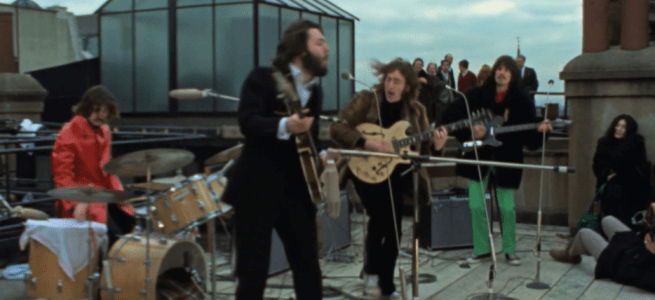
We stayed up until midnight to catch the premiere of Episode Three, that took the band up to the roof of Apple, where I would stand 12 years later. On that cold January 30th day nearly 53 years ago, the lads were in their true element, full of joy as a cohesive creative unit, blasting out “Get Back” to the curious listeners below. “I want to look at you the way Paul looks at John,” Andi said. I just want her to have the smile that George Harrison had on that rooftop. As we prepared to step back into our separate lives, feeling finally fully present with her true self, I thanked her for three of the best days I’d had in my life, spent with her, our daughter, and the Beatles. And I hope I passed the audition.
Blogs are ultimately about personal journeys. I began this blog on November 24, 2014 as a daily chronicle of my life as stay-at-home dad. I intended it to be me channelling the porto-feminism of pioneering house-husband John Lennon. That lasted exactly one day. By November 25th, I was writing about the uprising in Ferguson, Missouri in what would be the first in a long line of posts about the Black Lives Matter movement. In those seven years, my writing has ranged from family life stories to global gender politics and everything in between.
There have been two pillars in this writing. The first is the firm belief that we are all works in progress, never fully complete. We can’t make the world a better place if we are not willing to make ourselves better people. And mistakes will be made. That’s part of the process. The second pillar has been how I’ve benefitted from the input from my wife, Andrea. Her patience, strength, and wisdom have pushed me to be that better man. And her experience as a member of a few different marginalized populations has allowed me to confront my own privileges head on. If I could only give her as much as she’s given me.
So here’s one of those entries about the need to evolve.
It’s been clear in this year of revelations that I still have a lot of work to do on myself. Uncovering my abuse story has helped me see the roots of some of my narcissistic personality traits, but that doesn’t automatically cure them. So Andrea has moved out so I could focus on that work. She got a studio apartment nearby and I helped her move in. The three of us had dinner there that first night as I let this separation settle in. We talk constantly and she’s endlessly encouraging. We have dates planned and I bring her coffee in the morning. But this is time set aside for me to make my mindfulness practices my natural way of being and for her to figure out if the woman she’s become fits with the man I’m becoming.
I have a pretty heavy lecture in my criminology class about domestic violence and about how battered women who flee abuse are as likely to be killed by their male partners as they are by staying with them. (Then I tell them to watch Sleeping with the Enemy and listen to “Goodbye Earl” by the Dixie Chicks.) Research on wife-killers shows these man can’t handle that “their” women have been rejected and just snap. It’s the ultimate act of patriarchal control.
While the thought of violence has never crossed my mind, I’ve never been very good at break-ups, centering my emotional pain instead of what’s best for my (former) partners. Just ask my first girlfriend who ended our relationship so she could spend a year studying in Paris. I got to Paris a few weeks before her and spray-painted her name all over the city, including on a stature of Moliére at the Sorbonne, where she would be enrolled. I thought I was being wildly romantic, but I was just being wildly creepy, inserting myself into her post-Randy life in the City of Light.
So the evolved version of me has kicked that version of masculinity to the curb. This is about what Andi needs right now and how I can listen and deliver. Certainly 2021 has been filled with examples of me not doing that, including plenty of mad examples of me freaking out as I fell down the rabbit hole of panic and defensiveness that were shaped by a lifetime of acting out the patterns created by my childhood abuse. Putting in the work is under way. I finally feel like an adult and instead of a petulant child and it feels good. I enter this phase with respect, grace, a mountain of admiration for this woman who I will get to know in a completely new way.
My great hope is this process won’t take long. Apartments in Portland are not cheap and it’s coming out of her pocket. We have a trip to Paris planned for this spring and that spray-paint will have long faded away. I’m committed to making that the case for the version of me that took her for granted. Faded away like a lovelorn teenager’s graffiti.
Every generation has its snapshot memory, a historical event that is frozen in time. Talk to a baby boomer about the day JFK was shot. Ask Gen Xers about where they were when the Challenger Space Shuttle exploded. Younger “Greatest Generation” members talk about Pearl Harbor the way elder Millennials talk about 9/11. Like it happened yesterday. So much of the minutia of our lives is lost to the fog of time, but that event, like any snapshot, captures the detail of our lives and frames it in the historical context of that specific moment.
For me it was the morning of December 9, 1980, the morning I woke up to find that my beloved Beatle had been murdered.
Since this blog is dedicated the feminist influence of househusband John Lennon, I thought I’d try to recreate that snapshot. I understand, just like there are people alive now who have never known a world without a cold war or without the internet, there are billions alive who have never lived on the same planet as John Winston Ono Lennon.
Jukebox Hero, 1980.
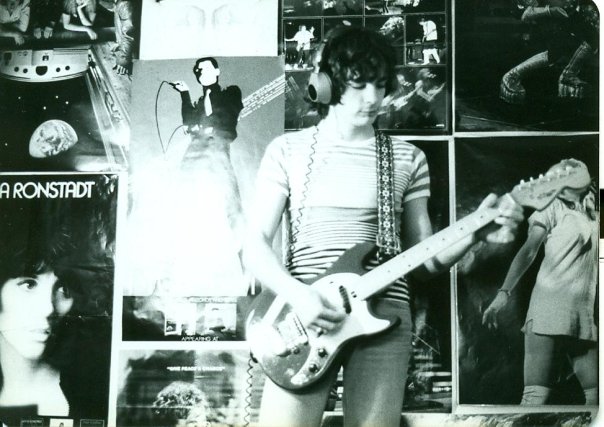
First things first, in 1980 I was know as the biggest Beatles fan at Redan High School in Stone Mountain, Georgia. Even more than my obsession for the Ramones and all things punk was by fandom for the Fab Four. I bought solo albums the day they were released, including Wing’s London Town and Ringo’s Bad Boy in 1978, Wings’ Back to the Egg and George’s George Harrison in 1979, and Paul’s McCartney II in 1980, and most significantly John’s Double Fantasy in November 1980. John hadn’t released any new music in five years and it was a big deal. Yeah, it was really a “John & Yoko” album and yeah, I wasn’t mad about the Elvis-sounding “Starting Over” single, but I quickly fell in love with the LP (bought at Turtles Records & Tapes on Memorial Drive). There were rumors John would tour in the new year and rumors about the rumors that said Cheap Trick would be his backing band,
By the first week of December of I was reading every interview John was doing and, again, dreaming that the world was preparing us for the inevitable Beatles reunion, at that point, the very reason for living for any music fan. Both John and Paul sported Beatle haircuts on their new albums, That must mean something!
The country in late 1980 was in a weird place. We were a year into the crippling Iranian hostage crisis that played a role in Ronald Reagan beating incumbent Jimmy Carter. The 80s felt like they were about to bust loose on a new wave soundtrack, but there was a dark cloud hovering.
The guy that killed John went to Columbia High School, one of the Dekalb County rivals of my school. He was on some psychotic mission that changed the world at 10:50 pm when he shot John Lennon 4 times outside the Dakota, John and Yoko’s gothic New York City apartment. A spot I visit almost every single time I go to New York City.
John was known as being super accessible in the Big Apple, loving the freedom of movement he didn’t have in England. The fall of 1980 my friend Ed and I discussed going to NYC the summer of 1981, after graduation, and hanging out in front of the Dakota to meet John and thank him for all the great music he had given us.
The night of December 8th, for some reason, I had been gone to bed early. Sportscaster Howard Cosell interrupted his broadcast of Monday Night Football to tell the world that Beatle John Lennon had been shot. Friends began calling our house to share the shattering news but my mother chose to let me sleep. Instead she laid the morning copy of the Atlanta Constitution on the kitchen table the following morning.
Like most Tuesday mornings, I woke up and turned on 96 Rock, pleased to hear a Beatles song on the radio. I showered and got dressed to more Beatles songs. Perhaps it was a “super-set.” I went into the kitchen for breakfast, first turning on my parents 70s console hifi (96 Rock was obviously on a Beatle binge.) The 1967 classic, “A Day in the Life,” began to play. The line “I read the news today, oh boy” came out of the speakers just as I looked down at the newspaper. “John Lennon Slain by New York Gunman.”
The headline was next to a picture of John in a suit and tie from his 1976 immigration hearing. My first thought was, “Wow, there’s another John Lennon” thinking the clean cut gent was a politician or businessman who shared a name with MY John Lennon. Then I realized it was my John Lennon and it felt like the floor fell out from under me. I quickly turned on Good Morning America and saw the scenes of thousands of fans sobbing outside the Dakota in New York. My head was reeling. I wanted to go to New York. I wanted to murder the man who murdered John Lennon.
Instead I ran to my room. “Watching the Wheels” was playing on the radio. I fell on my bed, surrounded by Beatle and John posters, and sobbed. “I just had to let it go.”
My mother reminded me I had to go to school, so I put on a John Lennon Walls and Bridges t-shirt (that I got at Beatlefest ’78) and carried myself to Redan. I only made it through three periods. I had become the wailing wall for the Beatle fans at school. Where before I got abuse for my weird music tastes, now I got hugs. Girls, who would never talk to me, came up to me in tears to say they were sorry. My English teacher, Mrs. Patsy Zimmerman, told me she had taught John’s killer when she was at Columbia. We both burst into tears and I decided to leave. I put the school’s flag at half mast and walked home, vowing to never laugh again, a punishment for the world stealing this peacemaker from us.
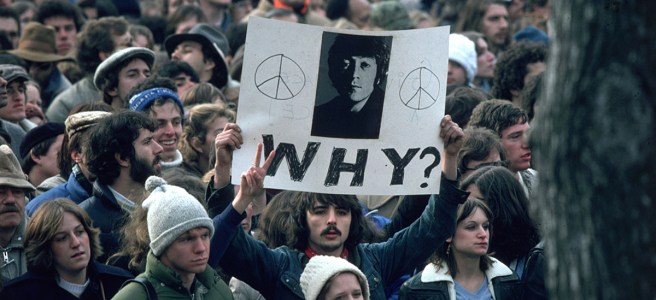
The week was spent playing records and piecing together what happened. I sat in my room, playing Double Fantasy and thinking I would suddenly wake up to find it had all been a nightmare and that the dream was over. Instead of a funeral, Yoko asked fans to gather that Sunday, December 14, for a 10-minute silent vigil. I ended up in Piedmont Park with thousands of other Atlanta-area fans. Without direction, at 2 pm the crowd moved to the center of the field on the south side of the park, grabbed hands and then formed a massive circle for ten very long and quiet minutes. Then someone began singing “Give Peace a Chance.” We all joined in and moved back to the center and hugged each other for the next hour. Peace. “Ah, this is what John was talking about,” I remember thinking.
“Starting Over” shot to #1 on the charts and six weeks later Ronald Reagan was sworn in, launching an era that we REALLY could have used John Lennon to help navigate.
I was 16 on that day and I am 56 today. It seems like a minute ago. John’s served as a model for mine, the evolution of a man. He died at 40, so I will now always be older than him, but I still feel like I learn from him in new and surprising ways. This “househusband blog” has been a part of that lesson. We all shine on in our own way.
I miss you, John and if I had gotten to meet you in the summer of 1981, I would have thanked you for showing me how to grow.
It’s not a good time to be watching the news. The stories of people losing loved ones to COVID-19 can have me sobbing like a baby. Parents, like, me leaving their families too quickly. Some are frontline medical workers, some are educators, some are bus drivers that an idiot coughed on. They were here and then they were gone. Most got a test too late, not that there’s much help that’s available once you slide down the hole. I have a very old friend who is on a ventilator in a hospital room in Atlanta and we’re just hoping the wind shifts direction and blows him back to his family. So turning on the TV at the moment is sure to remind you that the glass is half empty as it’s being used to waterboard you.
I started this blog in late 2014 because I was inspired by John Lennon’s decision to leave work and become a stay-at-home father for his son, Sean. I wanted to give the same kind of intensive care to our daughter, Cozy. Cozy, 5, is now the same age as Sean was when John was killed by a gunman in front of their New York home. In numerous interviews, people ask Sean Lennon what he remembers about his dad and he honestly replies not much. That answer shakes me to the core. I’ve gotten to meet Sean a few times (and so did Cozy, in the womb), and I always wonder how his life would have been different if he had gotten two or three more years with his fab father.
The specter of death seems very real today, watching the rising death count from coronavirus. (Remember on February 26th, when Donald Trump said that in a couple of days, the virus would disappear, “like a miracle”?) You can tell me that I’m statistically more likely to be killed by a falling Comcast satellite than to die of the novel coronavirus, but that’s not going to register, especially since there’s a pretty good chance I’m already carrying it. My persistent cough worries me. There’s no fever but the “science” on what this thing is seems to change daily. We certainly don’t have any leadership on the issue from our president, just daily campaign rallies where the science is attacked along with journalists and handy scapegoats (“China!”).
The rate at which people go from fine to dead, body stacked in a refrigerated truck, is horrifying. The Detroit bus driver who went on social media to complain about coughing passengers was dead in 11 days. And like the Class of 2020 high school seniors who will never be in high school again, no prom, no hugging your favorite teacher, there’s little chance to get your house in order and say goodbye. If you’re lucky, you’re isolated from all humans, including your family, with a ventilator tube down your throat. People have brought family members to emergency rooms “just to be safe” and then never seen them again.
I’m not obsessed with death. Other than being over 50, I’m not particularly “high risk,” but what does that even mean? I’m the family member who makes the supply runs to the grocery store, where two employees tested positive. I touched an avocado to see if it was ripe. Then I touched my face. I’m probably gonna die. It’s been nice knowing you. When I was 7, I stole a piece of Brach’s candy from a Piggly Wiggly. There, I said it.
I do worry about leaving my family in the lurch if I succumb to this thing. I know it’s fashionable and all, but it seems like more trouble than it’s worth, and I think my wife would be pissed off if I got COVID-19 after running to the store because I suddenly had a mad craving for Pop Tarts. I think she actually likes me and appreciates my ability to, um, well, do something. God, I don’t even know. I do know my daughter thinks pretty highly of me and I’d prefer to stick around long enough for her to learn that I made some life changing decisions so this wonderful family could exist. Am I the only one who is thinking about how all these fragile relationships turn out if I become a part of the daily corona body count? I mean they can’t even have a funeral for dead me. I require a wake with multiple drunken awkward moments! But I was just cremated along with all the other wheezers. Poof.
For those of us that have wrestled with depression, there’s a real need to constantly monitor our mental states. The moment it really hit me was the first time I had to wear a cloth face mask in public. I sat in the grocery store parking lot trying to get my courage up to don a cute face covering that one of our crafty neighbors had made. I knew it was the responsible thing to do, maybe even saving lives (I had touched the avocado, after all), but it felt like I was giving into the fear. Once inside the Fred Meyer, mask in place, I saw all the other depressed faces hidden behind their masks. It felt like an awful version of The Handmaid’s Tale. The sinking feeling that this was normal now had me wanting to go lay down in the bread isle and cry. What started out as kind of funny (“Why the hell is everyone buying toilet paper?”) is now centered around saving the lives of family members. On a beautiful spring day, it can seem so dark.
Those of us that don’t die, will get through this. And maybe we’ll have that promised renaissance afterwards. I just wish we had an actual leader to help guide us through the darkness instead of a self-serving madman. I guess it’s up to us. I guess it’s always been up to us. Let’s live. At least until we can have funerals again.





















 Watching the Wheels