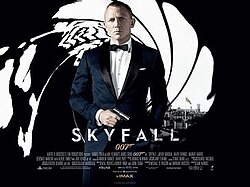
The James Bond Project #25: Skyfall (2012)

This series is intended to evaluate each product of the James Bond film franchise through a feminist lens, and the relevance of the Bond archetype to shifting ideas of masculinity in the 2020s.

Skyfall  (2012, directed by Sam Mendes)

July 31, 2025

Daniel Craig is back for his third stint as Bond, a little older, a little more beat up in a film that further tweaks the 007 formula. There are some classic staples here, including James gambling in his tux, James under the ice, James fighting on top of a moving train, James in rooftop motorcycle chase, exotic locations, random hook ups, and the Aston Martin, but American Beauty (1999) director Sam Mendes brings enough innovation to Skyfall to bring a bolt of electricity to the franchise, marking its fiftieth anniversary.
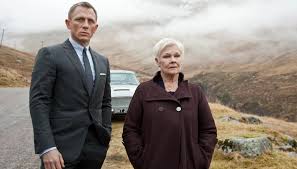
The most obvious shift from the formula here is that Skyfall is as much a Judi Dench movie as a Daniel Craig movie. M’s outsized role is fitting as it would be her last in the franchise. (She dies.) Also different is the strange twist that there really is no “Bond Girl” in this film. There’s not even a leggy woman on the movie posters! French actress Bérénice Marlohe’s character, Sévérine, almost plays the part, but she’s only briefly in the film. (She dies.) The most exciting addition is the return of Miss Moneypenny and this time she has a first name (“Eve”), she’s an action hero, and she’s black. We also get a Millennial Q, who has no time for gadgets.

The cast of Skyfall is robust, with 28 Days Later’s Naomie Harris as Moneypenny, Ralph Fiennes as head of intelligence Gareth Mallory, and Albert Finney as the housekeeper at Skyfall (a part Sean Connery was considered for as a nod to the fiftieth anniversary of Dr. No). The role of Bond Bad Guy went to No Country for Old Men break-out star Javier Bardem. Bardem dyed his hair blonde for the role, drawing comparisons with Julian Assange. Bardem also plays his character, Raoul Silva, as “gay” against James’ straight man role, although when Silva is sexually suggestive with James, Bond replies, “What makes you think this is my first time?” I remember the internet chat asking if 007 has been bi all these decades.
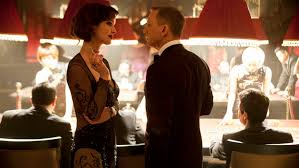
The flimsy plot follows a former MI-6 agent who is revealing the identity of fellow agents because M sold him out after Hong Kong was returned to China. Skyfall is the first Bond film to actually be partially filmed in China with segments in Shanghai and Macau. (Other locations include Instabul and Scotland). What the film lack in sense it make up for in bombast, including seeing our man James finally get shot, twice. (Although he does get winged by a speargun in 1965’s Thunderball.) But being shot clean through, and falling off a massive train bridge can’t kill Bond. He plays dead for a few months and then comes back to save the day.

Twenty-first century Bond has been described as “cool, not camp.” Let’s plug Skyfall’s 007 into our evaluation matrix.

Driver of ActionSkyfall is as much about M and her past choices as it is about James Bond. We do get some Bond backstory (and even see his parents’ grave), but this film is built on M’s career as spymaster in a changing global political landscape. We even get Judi Dench shooting at henchmen! Moneypenny also takes on a sidekick role often reserved for Bond girls. Is Eve Moneypenny Skyfall’s Bond girl?

The Role of Violence – An A.I. source says Bond kills 23 people in the film. It’s hard to tell because Bardem (as bad guy Silva) has so many henchmen. (Why, we don’t know.) Bond kills all of them. He also drops an assassin from a Hong Kong skyscraper. It’s interesting that everyone Bond shoots dies, but he bounces back from being shot like a Phoenix on coke.

Vulnerability – We do get a bit more of Bond’s soft white underbelly in Skyfall. Besides the backstory of James the orphaned child (not much emotion shared here but M quips, “orphans make the best recruits), we get a window into “dead 007,” as James lets the world think he’s dead as a means of retirement. He’s in some Black Sea coastal village, doing shots on the bar with the boys and a scorpion on his hand, having drunken sex, and letting his rock hard body atrophy with self indulgence. It’s not very believable but it sets up his comeback. When M asks him where he’s been, he replies, “Enjoying death.” Later, he states that his hobby is, “resurrection.” But there are plenty of allusions to spycraft being a “young man’s game,” and James being past his prime. (Craig had two more 007 films on his contract.)

Sexual Potency – Is the Bond “rule of 3 back”? Old Bond is still Horny Bond. While he’s “dead” we see drunk James having sex a local (or maybe she’s a contractor for Halliburton, we don’t know). Later, he climbs in the shower with sex-trafficking victim Sévérine, which seems just a tad misogynistic. I mean, c’mon James. Then he watches as she’s murdered by Silva. The big question is if 007 sleeps with Moneypenny after she shaves his face, while he’s clad only in a towel. It’s implied that, after 50 years of sexy banter, he seals the deal. There is an implication that Moneypenny with a gun is closer to his equal, even if she does shoot him on accident. But the message is consistent, that Bond is sexually irresistible to beautiful young women. (James sleeping with M would’ve made for a better film.)

Connection – The connection Bond has to M drives the film. Not only does he come back from the dead to help her, but he takes her to his childhood hiding place to keep his “mum” safe. The job of protecting and vindicating M is the framework of this episode. The connection with Moneypenny is noteworthy as is his lack of connection with the new, younger Q. Dench’s M dies in Bond’s arms, saying, “I did get one thing right.” Her trust and faith him were justified and now death has ended that bond.

Toxic Masculinity Scale: 3

Summary Bond’s interaction with Sévérine is highly problematic. Maybe we’re more sensitive in a post-Epstein era, but it should be clear that you don’t show up naked in the shower of a woman who is clearly a traumatized sex trafficking victim. Maybe it’s business as usual in a Bond film, but the scene was more anger-inducing, than “sexy.” However, the fact that Skyfall is really an M-centered film, with 007 in a supporting role, elevates the film as portraying a gender dynamic unique in the 007 canon.
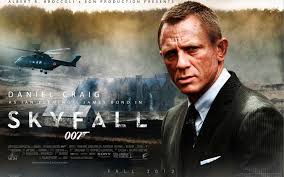
For the 50th anniversary of Eon’s Bond franchises, there are familiar friends, like a title sequence featuring female bodies (and an Oscar-winning theme song by Adele), sharp dry quips from James (“Only a certain kind of woman wears a strapless dress with a Beretta 37 strapped to her thigh.”), and the return of the Aston Martin, along with the Bond theme music. (When Silva’s men blow up the car, 007 goes Rambo.) There’s even a glimpse of the vintage of the Macallan scotch Silva pours for Bond, 1962. Easter eggs aside, Bond’s emotions are still restrained but M (Dench) reveals the truth behind James masculine stoicism.

Skyfall premiered at Royal Albert Hall on October 23, 2012, while Hurricane Sandy was lashing America’s east coast. The film, as articulated by M, shares that the cold war world that produced Dr. No in 1962 now exists “in the shadows,” without clear enemies but with a new climate of danger. Mendes as director was an inspired choice to frame the action in service to M instead of Bond. Mendes would direct the next Bond as well as the Oscar/Golden Globe winning 1917 (2019). Medes is now directing four biopics on the members of the Beatles. For the kick-off of the next half-century of 007, Mendes would soon bring back a familiar foe to Bond’s universe.

Next: Spectre (2015)
The James Bond Project #24: Quantum of Solace (2008)

The James Bond Project #23: Casino Royale (2006)

The James Bond Project #22:  Die Another Day (2002)

The James Bond Project #21:  The World Is Not Enough (1999)

The James Bond Project #20:  Tomorrow Never Dies (1997)

The James Bond Project #19: GoldenEye (1995)

The James Bond Project #18: License to Kill (1989)

The James Bond Project #17: The Living Daylights (1987)

The James Bond Project #16: A View to a Kill (1985)

The James Bond Project #15: Never Say Never Again (1983)

The James Bond Project #14: Octopussy (1983)

The James Bond Project #13: For Your Eyes Only (1981)

The James Bond Project #12: Moonraker (1979)

The James Bond Project #11: The Spy Who Loved Me (1977)

The James Bond Project #10: The Man with the Golden Gun (1974)

The James Bond Project #9: Live and Let Die (1973)

The James Bond Project #8: Diamonds are Forever (1971)

The James Bond Project #7: On Her Majesty’s Secret Service (1969)

The James Bond Project #6: You Only Live Twice (1967)

The James Bond Project #5: Casino Royale (1967)

The James Bond Project #4: Thunderball (1965)

The James Bond Project #3: Goldfinger (1964)

The James Bond Project #2: From Russia With Love (1963)

The James Bond Project: #1: Dr. No (1962)

The James Bond Project #24: Quantum of Solace (2008)

This series is intended to evaluate each product of the James Bond film franchise through a feminist lens, and the relevance of the Bond archetype to shifting ideas of masculinity in the 2020s.

Quantum of Solace  (2008, directed by Marc Foster)

July 1, 2025

I wonder if ChatGPT could tell me which 007 movie had the most bullets fired at James Bond. I’m guessing Quantum of Solace would be in the top three. Thousands of rounds. After two dozen films and millions of bullets, I’m convinced our James has a magical forcefield around him. Is it wrong to want to see Bond shot just once? I mean, he’s shot so many people since 1962. Where is the equity?

Quantum of Solace is framed as somewhat of a sequel to Daniel Craig’s first Bond film, Casino Royale, as he seeks revenge for the killing of Vesper, who M described as “someone you loved.” But, because of the writers’ strike, it gets folded into a different film about another Elon Musk-like billionaire trying to corner the market on fresh water in South America. Directed by Marc Foster (Monster’s Ball, The Kite Runner), who in 2013 would direct my favorite zombie film, World War Z, QoS is a non-stop action film. Craig trained for the role this time but still sustained multiple injuries during the film, including losing the tip of a finger.

Maybe because this film was set up as a revenge caper for the death of Vesper in the last film, the fast cracking Lothario Bond is dialed way back and replaced with the one speed demolition man.  This episode’s Bond “girl” is Ukrainian actress Olga Kurylenko, playing Bolivian agent Camille Montes. (Future Wonder Woman Gail Gadot also auditioned for the role.) Kurylenko, who did many of her own stunts, went on to a long action film career, most recently starring as Taskmaster in 2025’s Thunderbolts*. French actor Mathieu Amalric, who plays the villainous Dominic Greene, broke the Bond mold of bad guys having some weird distinguishing characteristic. He’s just a dude.

Besides the endless hail of bullets, there are some Bond staples in QoS; Bond in a suped-up Aston Martin, Bond in a tux, Bond falling out of an airplane without a parachute, and a wide variety of exotic locations, including Haiti (with no references to voodoo!). This film is somewhat of a departure in that M, still played by Judi Dench, takes almost a co-starring role as she both helps Bond and tries to reign him in. It has a different feel because of that so let’s plug it into our matrix.

Driver of Action – James Bond movies will always be “James Bond” movies but I started to wonder if the formula of the femme fatale who was good in a fight, Camille in this picture, was tweaked to have Bond teamed up with a male crime fighter, if the film would have a different feel. With the exception of Michelle Yeoh in Tomorrow Never Dies, Bond’s female accomplices always seem very subordinate. QoS see the return of CIA gadfly Felix Leiter, but he’s relegated to the shadows. What’s different here is the upsized role of Judi Dench’s M. It’s almost a movie about Mom/Mum/Mam trying to discipline her wild boy. Dench was not given co-billing but it feels as much her film as it does Craig’s.

Role of Violence – 007 maximizes his license to kill in this film. Over two dozen bodies stack up, including a traitorous MI-6 agent shot after an insane rooftop chase in Sienna, Italy, a hitman killed in a knife fight in Haiti, and the main bad guy left to die in the driest desert on earth in Bolivia. Bond even instructs Camille how to kill. “Have you ever killed someone? The training will tell you that when the adrenaline kicks in you should compensate. But part of you’s not going to believe the training because this kill is personal. Take a deep breath. You only need one shot. Make it count.”

Vulnerability – QoS Bond is zipped up tight. I don’t think he even smiles once in this film. It’s re-iterated throughout the film how little he cared about Vesper, the last scene not being Bond in a boat with a woman, a flagrante delicto, but Bond throwing Vesper’s neckless into the Russian snow. Even bloodied, he’s laser-focused on the mission, whatever it is.

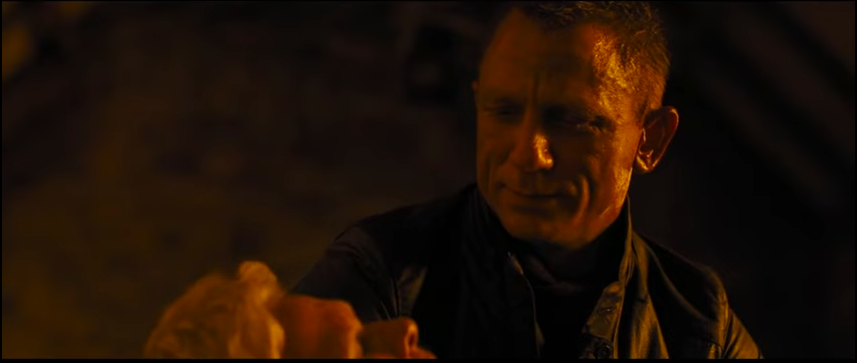
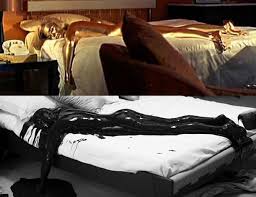
Sexual Potency – An hour into the film, James finally gets to unzip his pants. It’s with MI-6 underling Strawberry Fields (I’m not kidding). In an act of obligatory sexual harassment of company subordinates that’s become the most persistent cliche of the franchise, Bond gets his romp. There is no flirtation or chemistry. It seems purely contractual and you know that Ms. Fields will be dead before the end of the film. (Her naked body in a bed covered in oil, a nod to the famous scene in Goldfinger.) That’s it for the sex. He briefly kisses Camille, but it’s just sad all the way through for James.

Connection – There is one interesting bond in this Bond film, and that’s between James and M. She comes off as the strict mother, even applying face cream while she frets that her boy has gone off the rails. At the end of the film, she says, “Bond, I need you back.” To which he replies, “I never left.” Bond’s need to prove the threat of Quantum seems purely to prove the threat to M.

Toxic Masculinity Scale: 5

Summary

How can you be unhinged without appearing unhinged? QoS Bond is not a man. He’s a killing machine trying to prove a point that, ultimately, he doesn’t care about. But there’s a weird sense of balance in this film. On one side you have NONE-STOP action scenes, including classic Bond boat chases and airplane chases. On the other side, there’s the chunk of the film that is about M holding MI-6 and the entire geo-political order together. The brilliant theme song by Jack White and Alicia Keys hints at the promise of gender parity in the film, but it all goes off the rails amid the chaos. This includes the complete destruction of a hotel, that for some weird reason, is powered by hydrogen fuel cells. 

It should be mentioned there is an attempted rape scene. A woman working for exiled Bolivian General Medrano attacks her on a bed but is then killed by Camille, avenging the rape and murder of her family by the general.

Despite any real plot, Quantum of Solace was a box office smash, sailing on its over the top action sequences. You can literally hear Daniel Craig’s bones break in these scenes. The filming of this Bond coincided with the rise of the opioid painkiller epidemic so QoS doubles as a direct to consumer ad for OxyContin. The absence of Q and Moneypenny is made up for in the presented mythology of the indestructibility of the “good guy.”

Quantun of Solace premiered in London on October 29, 2008 as the American financial crisis, now known as the Great Recession, was just starting to drive Americans from their homes. QoS, Madagascar 2, and Twilight would give people brief escapes while the global economy crashed into a sinkhole. But steely-eyed assassins would not rescue their hope. It would be a man named Barack Obama.

Next: Skyall (2012)

The James Bond Project #23: Casino Royale (2006)

The James Bond Project #22:  Die Another Day (2002)

The James Bond Project #21:  The World Is Not Enough (1999)

The James Bond Project #20:  Tomorrow Never Dies (1997)

The James Bond Project #19: GoldenEye (1995)

The James Bond Project #18: License to Kill (1989)

The James Bond Project #17: The Living Daylights (1987)

The James Bond Project #16: A View to a Kill (1985)

The James Bond Project #15: Never Say Never Again (1983)

The James Bond Project #14: Octopussy (1983)

The James Bond Project #13: For Your Eyes Only (1981)

The James Bond Project #12: Moonraker (1979)

The James Bond Project #11: The Spy Who Loved Me (1977)

The James Bond Project #10: The Man with the Golden Gun (1974)

The James Bond Project #9: Live and Let Die (1973)

The James Bond Project #8: Diamonds are Forever (1971)

The James Bond Project #7: On Her Majesty’s Secret Service (1969)

The James Bond Project #6: You Only Live Twice (1967)

The James Bond Project #5: Casino Royale (1967)

The James Bond Project #4: Thunderball (1965)

The James Bond Project #3: Goldfinger (1964)

The James Bond Project #2: From Russia With Love (1963)

The James Bond Project: #1: Dr. No (1962)

The James Bond Project #23: Casino Royale (2006)

May 30, 2025

This series is intended to evaluate each product of the James Bond film franchise through a feminist lens, and the relevance of the Bond archetype to shifting ideas of masculinity in the 2020s.

Casino Royale (2006, directed by Martin Campbell)

This is not your grandfather’s 007. Casino Royale was meant as Eon Production’s 21st century reboot of the Bond series.  Gone are Q, Moneypenny, endless sexual double entendres, laser watches, and the dumb CGI of Die Another Day. And gone is the brunette James as Daniel Craig steps into the role. The story starts with Bond earning his “00” license to kill, so we can frame it as a prequel, but the film still features Judi Dench as M, so it’s not clear where the story fits in the 007 timeline, if there is one.

Producers Barbara Broccoli and Michael G. Wilson brought GoldenEye director Martin Campbell back in for a bit of continuity (although Quentin Tarantino expressed interest in taking the gig). The hunt for a new James Bond was massive and included possible candidates such as Christian Bale, Hugh Jackman, Keith Urban, Ralph Fiennes, and Ewan McGregor. After initially rejecting the role, Craig took the job in 2005.  The casting of Bond “girl” Vesper Lynd also had long list, including Angelina Jolie, Charlize Theron, Audrey Tautou, Rachel McAdams, and Olivia Wilde. Finally producers cast French actress Eva Green (who I absolutely loved in 2003’s The Dreamers).

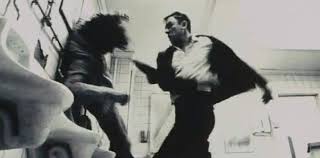
Casino Royale, while based on the same Ian Flemming novel as the 1967 spoof, starring Peter Sellers, is darker Bond that centers practical stunt work over impossible gadgets. The opening scene is shot in black and white and looks more like a scene from Dr. Strangelove than a sprawling action adventure flick. The opening credit montage features the iconic eye shot followed by a great theme song, sung by Soundgarden’s Chris Cornell. But instead of images of women’s bodies, it’s all Bond. We still have the prerequisite globe trotting, Aston Martins, and Bond gambling in a tux, but so much of this film shatters the Bond formula and that was the intent.

Let’s plug this Casino Royale into our evaluation criteria.

Driver of Action – Each time we get a new Bond, the story tends to revolve around him. There is a small MI-6 team that involves Vesper, and we get the return of Felix Leiter (played by Jeffrey Wright, who was so great in Basquiat). As we get in the final shot of the film, this movie belongs to Bond, James Bond.

Role of Violence – Not only can Daniel Craig’s Bond run more than Tom Cruise in any Mission Impossible film, he can kill without remorse. He takes out 11 or 12 bad guys in the film, including drowning a guy in a bathroom sink in the first scene. He remarks that his second kill, a rogue MI-6 officer, is much easier. He shoots an unarmed bomb maker in Madagascar, which creates some bad press for MI-6. His ability to fight the bad guys to death, seems superhuman at time, but this is a James Bond film after all.

Vulnerability – Big shift here. While we get the strong silent bit out the wazoo (M says, “I would ask you if you could remain emotionally detached, but that’s not your problem, is it, Bond?”) We do see fear on Bond’s face when he is about to be tortured  by Le Chiffre (played by creepy Mads Mikkelsen). He should be. The torture is him being repeatedly hit in the scrotum, sending him to the hospital. He also shows great grief when Vesper dies, even though she double crossed him. The scene mirrors the final moment of On Her Majesty’s Secret Service (1967), with James Bond in tears, holding his dead wife.

Sexual Potency – Bond makes a quip about married women being his type, after he beds Solange Dimitrios, wife of a bad guy. MI-6 pairs him with Vespers Lynd, who keeps him at arms length for most of the film. Of course, they end up in bed together. But that’s it. This Bond ain’t a player.

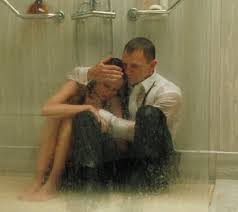
Connection – This is where 2006 Bond really departs from the formula. There’s a scene where a traumatized Vespers is sitting in a hotel room shower, and James steps in and holds her. There is a strong connection between the two. After they survive near death and torture stopping Le Chiffre, James is in the hospital and Vesper says, “You’re not going to let me in there, are you? You’ve got your armour back on. That’s that.” And he replies, “I have no armour left. You’ve stripped it from me. Whatever is left of me – whatever is left of me – whatever I am – I’m yours.” Who is this man who recognizes the “00” prevents him from being able to love? This scene was 44 years in the making. James resigns from MI-6 to run off with her. Of course, this is a James Bond movie so you know there will be no happily ever after.

Toxic Masculinity Scale: 2

Summary

Casino Royale has enough Bond tropes to connect it to the genre. As a poker player I absolutely loved the extended scenes of Bond, Leiter and Le Chiffre playing high stakes Tex Hold ‘em. Gripping. The film also turns some of those tropes upside down. We get Bond back in the Bahamas coming out of the water like Ursula Andress in Dr. No (1962), his body on full display. This James plays more the role of psychoanalyst than sexual conquerer. But he’s still portrayed as a man’s man. (Vesper: You know, James, I just want you to know that if all that was left of you was your smile and your little finger, you’d still be more of a man than anyone I’ve ever met. James: That’s because you know what I can do with my little finger.)

The high level of violence in the film led to Casino Royale being re-edited in numerous countries, including the United States, Britain, Germany and China. But the film is securely located in the 2000s, with the prevalence of cell phones, a parkour inspired chase scene in Madagascar, and the Body Worlds exhibit in Miami.

Casino Royale premiered in London’s Odeon in Leicester Square (where I saw the premiere of Pink Floyd’s The Wall in 1982) on November 16, 2006, with Queen Elizabeth and Prince Phillip in attendance. It’s the same week Nintendo’s Wii and Sony’s Playstation 3 hit the market, so there was a competition for young male eyeballs. The film received rave reviews with the Rotten Tomatoes website reporting,  “Casino Royale disposes of the silliness and gadgetry that plagued recent James Bond outings, and Daniel Craig delivers what fans and critics have been waiting for: a caustic, haunted, intense reinvention of 007.”

Maybe after four decades James learned the weight of his license to kill.

Next: Quantum of Solace (2008)

The James Bond Project #22:  Die Another Day (2002)

The James Bond Project #21:  The World Is Not Enough (1999)

The James Bond Project #20:  Tomorrow Never Dies (1997)

The James Bond Project #19: GoldenEye (1995)

The James Bond Project #18: License to Kill (1989)

The James Bond Project #17: The Living Daylights (1987)

The James Bond Project #16: A View to a Kill (1985)

The James Bond Project #15: Never Say Never Again (1983)

The James Bond Project #14: Octopussy (1983)

The James Bond Project #13: For Your Eyes Only (1981)

The James Bond Project #12: Moonraker (1979)

The James Bond Project #11: The Spy Who Loved Me (1977)

The James Bond Project #10: The Man with the Golden Gun (1974)

The James Bond Project #9: Live and Let Die (1973)

The James Bond Project #8: Diamonds are Forever (1971)

The James Bond Project #7: On Her Majesty’s Secret Service (1969)

The James Bond Project #6: You Only Live Twice (1967)

The James Bond Project #5: Casino Royale (1967)

The James Bond Project #4: Thunderball (1965)

The James Bond Project #3: Goldfinger (1964)

The James Bond Project #2: From Russia With Love (1963)

The James Bond Project: #1: Dr. No (1962)

The James Bond Project #19: GoldenEye (1995)

April 15, 2025

This series is intended to evaluate each product of the James Bond film franchise through a feminist lens, and the relevance of the Bond archetype to shifting ideas of masculinity in the 2020s.

GoldenEye (1995, directed by Martin Campbell)

The first Bond film in the fourth decade of the 007 franchise is something of a synthesis of all the previous EON Production films and a fair send-off for EON producer Cubby Broccoli, who died five months after its release. After a long six year gap, while Eon dragged Timothy Dalton into development hell, Bond was back with Pierce Brosnan as the new British MI-6 commander. GoldenEye fused License to Kill’s vengeful 007 with the smarmy, Casanova Bond of the past. The first Bond film not to be based on an Ian Fleming story is a sweeping tale that presents Bond with his first post-Cold War conflict and was tailor-made for 90s audiences who were getting used to the widescreen violence in films like Natural Born Killers.

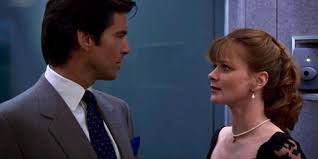
Brosnan, who had been offered the role before Dalton, comes in a more upper crust English, but also more boyish, Bond who has parachuted into a third-wave feminist world. This disconnect is magnified by the new M, now played by Dame Judi Dench. The new M states a clear opinion on the archetype that is Bond, James Bond. “I think you’re a sexist, misogynist dinosaur, a relic of the Cold War, whose boyish charms are wasted on me,” she tells him. Welcome to the 90s, James. We still have Desmond Llewelyn as Q to link us to the Bond cannon. This installment’s Bond “girl” is Swedish model and actress Izabella Scorupco, who forces a rough Russian accent. Also trying to be Russian (or Georgian) is “sadistic lust murderer” Xenia Onatopp (There’s the names we love in these films), played by Famke Janssen (soon to be Jean Grey in the X-Men films).

GoldenEye starts with a flashback to the Cold War days with 007 and 006 on a mission in the Soviet Union where 006 (played by the great Sean Bean) is killed. Bond blames himself, setting up the revenge redux. After an epic scene where James dives into a falling plane (This is the first Bond film to use CGI), we flash forward to the present where new Russia is losing track of its shit and we’re off. The scene where James is chasing the rogue Russian general through the streets in St. Petersburg in a giant Russian tank was classic 007 thrills on the big screen. I remember watching it in the Lloyd Center Cinema and thinking it was the wildest thing filmmakers could cock up for a James Bond movie.

This installment gives us plenty of Bond staples fans crave. There’s Bond in a tux, playing baccarat, there’s Bond in the Caribbean, there’s the double entendre quips (none very clever), and thousands of bullets fired at our James with nary a scratch. The film also features some epic stunts, including a record setting bungee jump off a Russian (actually Swiss) dam that has to be seen to believed. Brosnan plays Bond closer to Moore than Connery and his bourgeois demeanor adds to the “Man out of place” element that makes this film kinda fun. Cubby Broccoli’s daughter, Barbara, took over the production as her father’s health failed, so some of the gender commentary may have been here doing.

Let’s see how GoldenEye fares in our feminist matrix.

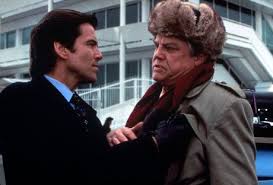
Driver of Action – New Bond, new star. Q and his lab techs show up for comedic effect. There’s a new CIA agent, Jack Wade, to help out (Joe Don Baker is back!) because Felix is still legless from the shark. The new post-communist Russia really plays the support role. In the gap between Yeltsin and Putin, it presented a blank slate to the world, where the need for secret agents might be a thing of the past. But this film rests purely on the shoulders of Remington Steele star Pierce Brosnan.

Role of Violence – There’s a lot of slaughter in GoldenEye, largely due to Bond’s use of machine guns. I had to ask ChatGBT the body count because I lost track. AI reports James killed 47 people in the film, mostly Russian soldiers. (Wasn’t the Cold War over?) There’s also some weird violent sexual scenes with Xenia Onatopp (we’re to believe that violence is her kink) and a scene where 007 knocks her unconscious.

Vulnerability – For the first time in a Bond film, we learn that James’ parents were killed in a mountain climbing accident when he was a boy. But there’s no sense that this plays a role in his present psyche. It’s just presented as a factoid to contrast the story that 006’s parents were killed by Stalin.  There’s no James in love and only a mild sense of guilt that 006’s death might be his fault.

Sexual Potency – Here’s the James Bond rule of three. 1) Caroline – An MI-6 psychologist, sent to evaluate James, gets seduced by our agent who has a bottle of bubbly in the glovebox. He’s going to let her give him, “a very thorough evaluation.” Wink. 2) Xenia Onatopp – It’s more fighting than sex. James is taken aback by her biting his lip and drawing blood. Her death (pulled into a tree by a helicopter) is also played as sexual but in 2025 seems just weird. 3) Natalya Simonova (played by Izabella Scorupco), a Russian computer programmer, is Bond’s “love” interest/damsel in distress in the film. He forcibly kisses her and then suddenly they’re a romantic couple. (This quasi-rape trope seems all too common in 007 flicks.)

It should be mentioned that Bond’s relationship with Moneypenny (now played by Samantha Bond) is firmly located in 90s feminist positions. She’s not having any of James’ “charm” offensive. Bond: “What would I do without you?” Moneypenny : “As far as I can remember James, you’ve never had me.” Bond: “Hope springs eternal.” Moneypenny: “This sort of behavior could qualify as sexual harassment.” Finally.

Connection – Brosnan plays Bond detached, as we have come to expect. There’s a hint of a back story between 006 and 007 that might have been nice to know about. As is expected, he and Natalya end the film together, not in a boat but in a Cuban meadow. They think they’re alone, but there is some coitus interruptus from the United States Marines, so they’ll have to save their victory sex for another day, or never. There’s no real chemistry between these two so the door is open for Bond’s next “girl.”

Toxic Masculinity Scale: 5

Summary The opening title sequence of GoldenEye, with women smashing hammers and sickles to a song written by U2 (and sung by Tina Turner) locates the film in a new era. The Cold War was the golden era of the Flemming novels and the platform for Bond’s good vs. evil adventures. Now New Bond is forced (again?) to find his relevance. Is he a 90s-action hero, right up there with Arnold Schwarzenegger, or a washed-up antique who has lost his cultural relevance? His elevated violence and philandering may be intended as a middle finger to the politically correct shifts in cinema.

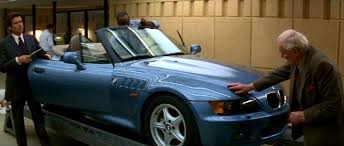
The tech in GoldenEye is a co-star along with lots of product placement. (Welcome to the new global market place.) IBM is featured front and center (and a great scene where a young Alan Cumming gets an “email”). The Aston Martin is replaced with a BMW, fully loaded with Q’s gadgets. “You have a license to kill, not to break the traffic laws,” Q tells an impish Bond. GoldenEye also gives us that most central staple of Bond Baddie accessories, the underground lair, hidden below a lake, from where a deadly satellite is controlled. Its explosive destruction is everything that Bond fans buy movie tickets to see.

GoldenEye premiered on November 13, 1995 at Radio City Music Hall, as the war in Yugoslavia, the largest hot war resulting from the end of the Cold War, was reaching its peak. The direction of Martin Campbell and the production of Barbara Broccoli (with Judi Dench’s M) represented a chance to reboot the franchise in a world without the Soviet Union. What issues would MI-6 confront as the 20th century closed? With the help of CGI, the promise of epic stunts and a horny agents would be a part of it.

Next: Tomorrow Never Dies (1997)

The James Bond Project #18: License to Kill (1989)

The James Bond Project #17: The Living Daylights (1987)

The James Bond Project #16: A View to a Kill (1985)

The James Bond Project #15: Never Say Never Again (1983)

The James Bond Project #14: Octopussy (1983)

The James Bond Project #13: For Your Eyes Only (1981)

The James Bond Project #12: Moonraker (1979)

The James Bond Project #11: The Spy Who Loved Me (1977)

The James Bond Project #10: The Man with the Golden Gun (1974)

The James Bond Project #9: Live and Let Die (1973)

The James Bond Project #8: Diamonds are Forever (1971)

The James Bond Project #7: On Her Majesty’s Secret Service (1969)

The James Bond Project #6: You Only Live Twice (1967)

The James Bond Project #5: Casino Royale (1967)

The James Bond Project #4: Thunderball (1965)

The James Bond Project #3: Goldfinger (1964)
The James Bond Project #2: From Russia With Love (1963)

The James Bond Project: #1: Dr. No (1962)