The James Bond Project #17: The Living Daylights (1987)

April 6, 2025

This series is intended to evaluate each product of the James Bond film franchise through a feminist lens, and the relevance of the Bond archetype to shifting ideas of masculinity in the 2020s.

The Living Daylights (1987, directed by John Glen)

This new James Bond is quite new and old at the same time. Eon producer Cubby Broccoli had been after Timothy Dalton to play Bond since On Her Majesty’s Secret Service. In 1967, Dalton felt he was too young for the role. Now, at 41, he was the right age. With Roger Moore retired, there were several considerations for the new Bond, including Superman (and American) Christoper Reeve, Sam Neil, and Mel Gibson. Irishman Pierce Brosnan was offered the job but was under contract to the TV show Remington Steele. Broccoli’s wife, Dana, pushed to bring back Dalton to the role and she got her wish.
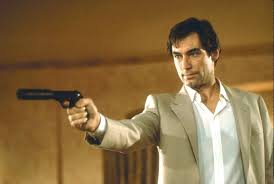
Besides being a “Bond-in-waiting” for 20 years, Dalton went back to the source material, Fleming’s 007 novels, to rediscover a less campy Bond, constantly living on the edge of death. His performance in The Living Daylights feels drastically different than Moore’s, less cartoonish. There are some over-the-top action scenes, like escaping Russians by sledding down a mountain, with his female accomplice, in a cello case, but the horniness and quips are dialed way back. (Although, the “He got the boot” line was classic Bond.)

The movie was the last Bond film to be scored by John Barry, with a Duran Duran-inspired theme song by A-Ha and, for the first time, a closing song by The Pretenders. TLD’s Bond “girl” was British actress Maryam d’Abo, cousin of Olivia d’Abo, from The Wonder Years. The film also introduced a new Moneypenny, played by Caroline Bliss. Desmond Llewelyn is still there as Q and, boy, does he have the gadgets in this installment.

Despite Dalton’s more toned down Bond, there are still plenty of franchise tropes, including the obligatory bikini-clad women by the pool scene, Russian assassins on skis chasing James down a mountain, Bond in his tux, and more rounds of ammunition fired at Bond than anyone could count. We have multiple locations in the eastern hemisphere, including Afghanistan after the 1979 Russian invasion. In 1987, the Mujahideen were still considered the good guys, before they birthed the Taliban and Osama bin Laden.

The Living Daylights, in many ways, feels very different. Let’s put it into our review machine.
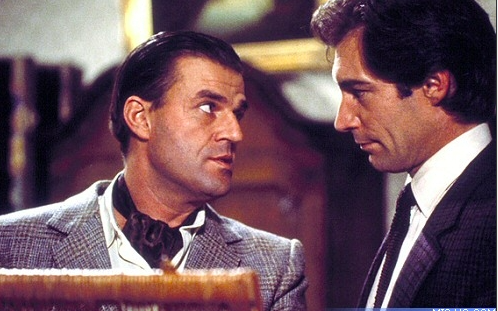
Driver of Action – It makes sense that when introducing a new Bond, you’d spend your screen time on the star. Some old friends show up, like M and CIA agent Felix Leiter, but they just pop in to move the story along. There is a fun subplot with renegade Russian General Georgi Koskov (played by Dutch actor Jeroen Krabbé, who was so good in The Prince of Tides) that feels like it could have been a great film on its own. But here we are getting to know this James, and he’s not the previous James.

Role of Violence – Dalton’s Bond is more serious than previous incarnations and so is his use of violence. He kills about 10 bad guys in the film, most notably Koskov’s henchman, Nekros, who he drops from a plane over Afghanistan by cutting his bootstraps. There’s a lot of gunfire and, while James never gets a nick, he blows away plenty (mostly Russian) dudes.

There is a scene where Bond rips a nightgown off a woman to distract a KGB agent. Seems like a gratuitous excuse to give the audience a brief boob shot.

Vulnerability – Is our James in love? His relationship with Kara (Maryam d’Abo) seems genuine. It begins when doesn’t kill her as she appears to attempt an assassination of a KGB asset and he get’s shit from another 00 agent. He also seems somewhat traumatized when that other 00 agent gets murdered with a sliding glass door.

Sexual Potency – This isn’t your father’s James Bond. It’s very possible that James doesn’t have sex with anybody in TLD. First of all, his banter with Moneypenny is chilled out. When she suggests he come over to listen to her “Manilow collection,” he looks at her like he wants to barf. 

The film centers around his partnership with Kara. He pretends to be a friend of Koskov, who is her boyfriend. When they check into a hotel in Vienna, the concierge, with a wink, says, “Your usual suite, Mr. Bond?” Instead, he asks for a suite with separate bedrooms. They end up kissing on a giant ferris wheel. (I rode that ride in Vienna in 1991!) She resists, and creepy Bond says, “Don’t think, just let it happen.” It might be implied that they hook up after that, but we never see it. Same thing when they are in Afghanistan. He tells her she is beautiful and they kiss. No morning after scenes, as we’ve come to expect.

Connection – There is some banter with Saunders, the 00 agent who gets killed helping him track Koskov. He’s detached from his other MI-6 colleagues, including the aging Q. But his affection for Kara seems genuine. “To us,” he toasts, after she makes him a martini (shaken, not stirred, and poisoned). The film doesn’t end with them having sex in a boat, but James surprising her backstage after her symphony performance, with a kiss. Will Kara Milovy return in the next film?

Toxic Masculinity Scale: 2

Summary

There are nods to Bond of old. In the opening action sequence, James after an epic battle on the Rock of Gibraltar, is parachuting over the Mediterranean. A bikini-clad woman on a yacht is on the phone complaining to a friend, “It’s all so boring here, Margo – there’s nothing but playboys and tennis pros. If only I could find a real man.” Then 007 crashes through the yacht canopy, right on cue. It’s implied that she’s found her man for a few hours. But after that, it’s all Bond, more grounded in his work than we’ve seen.

007 fans might have been disappointed by the absence of Lothario Bond (by 1987, AIDS was a full blown crisis), but they got more than they bargained for in gadgets (a ghetto “blaster”!), especially with the return of the Aston Martin. Q has loaded this car with more gadgets than Speed Racer’s Mach 5, including a jet engine. Q urges caution, “It’s just had a new coat of paint!” But we know James. The locations are also a real treat, including Czechoslovakia, Tangiers and Afghanistan (filmed in Morocco). There’s a scene of James riding across the desert on horseback with the Mujahideen that looks like a scene from Lawrence of Arabia. Glorious.

Dalton’s playing of Bond with more of an edge was well received. Maybe, by the late 80s it was time to tweak the formula. The Living Daylights premiered in London on June 29, 1987, two weeks after Ronald Reagan, standing in Berlin, said, “Mr. Gorbachev, tear down this wall.” The growing detente between the U.S. and U.S.S.R. is referenced the film as a motive for the renegade KGB agents. There’s also a goofy villain arms dealer in the movie, played by Joe Don Baker, that seems very Reagan-era. While retaining some James of old (“Forget the ladies for once, Bond,” Saunders tells him as he spots Kara through his opera glasses), we get a more serious, less flamboyant 007 in this film. Will this be the new Bond?


Next: License to Kill (1989)
The James Bond Project #16: A View to a Kill (1985)

The James Bond Project #15: Never Say Never Again (1983)

The James Bond Project #14: Octopussy (1983)

The James Bond Project #13: For Your Eyes Only (1981)

The James Bond Project #12: Moonraker (1979)

The James Bond Project #11: The Spy Who Loved Me (1977)

The James Bond Project #10: The Man with the Golden Gun (1974)

The James Bond Project #9: Live and Let Die (1973)

The James Bond Project #8: Diamonds are Forever (1971)

The James Bond Project #7: On Her Majesty’s Secret Service (1969)

The James Bond Project #6: You Only Live Twice (1967)

The James Bond Project #5: Casino Royale (1967)

The James Bond Project #4: Thunderball (1965)

The James Bond Project #3: Goldfinger (1964)

The James Bond Project #2: From Russia With Love (1963)

The James Bond Project: #1: Dr. No (1962)

The James Bond Project #16: A View to a Kill (1985)

March 18, 2025

This series is intended to evaluate each product of the James Bond film franchise through a feminist lens, and the relevance of the Bond archetype to shifting ideas of masculinity in the 2020s.

A View to a Kill (1985, directed by John Glen)

One last time into the breach, with Roger Moore. Probably the most famous thing about A View to a Kill was the theme song that shot Duran Duran to #1 and gave them a Golden Globe award. Eon coaxed Moore, 57, into doing “just one more” Bond film. He apparently was more than reluctant, especially when learning that he was older than his co-star Tanya Robert’s mother. Unlike Never Say Never Again (1983), the film makes zero references to Commander Bond’s age. Instead we get improbable fights on top of the Golden Gate Bridge with an ax wielding Christopher Walken. No sharks, but Walken and Grace Jones, both completely maniacal, are entertaining enough.

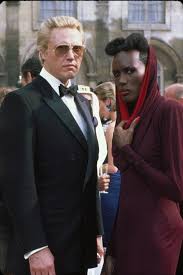
The casting of AVTAK is pretty eighties. Casting Christopher Walken as this episode’s evil capitalist is a delight (although the part was originally offered to David Bowie, and then Sting). There’s a part where Walken is trying to escape in his personal blimp where he screams, “More power!” and I just heard cowbell in my head. This episode’s Bond “girl” is former Charlie’s Angel Tanya Roberts, fast off her acting magnum opus, Beastmaster. The role was intended for Priscilla Presley, but Presley had a conflict due to her role on Dallas. (A pause here to imagine the scenes with David Bowie and Priscilla Presley. What could have been.) This was also the final time we would see Lois Maxwell, 58, in the perennial role of Miss Moneypenny, there from the very start in 1962.

The plot of A View to a Kill is pretty thin. Walker’s character, Max Zorin, wants to destroy Silicon Valley with a manmade earthquake so he can corner the microchip market. (These evil capitalists tend to spend massive amounts of capital on the plots to maybe make a little more capital. Maybe they should just invest in government bonds.) He’s the product of a Nazi genetic experiment, so he’s a bit kooky. He has a girlfriend, who is also assassin, played my great music star Grace Jones as May Day. Jones would release her brilliant album, Slave to the Rhythm, later that year. There’s the usual globe hopping. A ski-chase in Siberia where James skis on one ski (last time it was with one ski pole) and invents snowboarding. There’s a spectacular base jump off the Eiffel Tower that ends with 007 driving half a car along the Seine and then (literally) crashing a wedding party. And there’s James scuba diving in the dirty San Francisco Bay, almost getting sucked into an intake tube. The sexual double entendres are dialed back ( “A little restless but I got off eventually”), but director John Glen knows how to ramp up the Saturday matinee action. The chase scene through the streets of San Francisco with Roberts driving a hook and ladder fire truck and the senior Moore swinging from the ladder is one for the ages.

For Roger Moore’s final James Bond (1973 – 1985), lets put him through the wringer on more time.

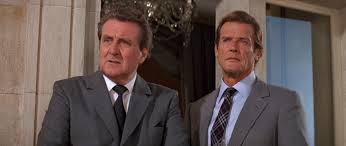
Driver of Action – The film really has two parts. The first involves Zorin’s horse selling business in France. Here, Bond shares the story with Sir Godfrey Tibbett, an MI-6 agent who is also a horse trainer (played by another Avengers alumni, Patrick Macnee). The second part of the story front-actions Stacey Sutton, Roberts’ character, who is a geologist whose father’s oil company was bought by Zorin. In both we get (very thin) backstories, but it does feel like Moore “shares” the story.

Role of Violence – Bond doesn’t really use his license to kill in 1985. He even winces and grabs his hand after punching a henchman in the face. Where the violence comes from is Walken’s character who laughs and smiles as he machine-guns hundreds of his own workers to death. It’s the first bloodbath in a Bond film and it’s jarring. But he IS the product of a Nazi experiment, so…

Vulnerability – Bond does seem genuinely bothered when Tibbett is murdered (by May Day), saying, “Killing Tibbett was mistake” to Zorin. He’s not as bothered when CIA ally Chuck Lee is murdered (also by May Day). Side note: You’d think that MI-6 and CIA agents would know to ALWAYS look in the backseat of the car before getting in. Moore’s Bond is always zipped up tight. He finishes the series as he started in Live and Let Die, stay calm and don’t give a damn.

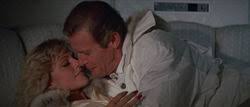
Sexual Potency – Here’s where the formula comes through – The Eon promise of three + women bedded per film. The opening sequence ends with 007 in a submarine disguised as an iceberg driven by a beautiful blonde. We assume she’s MI-6, but she could be just a local submarine/iceberg driver. James tells her, “Be a good girl and put her on automatic.” Cue Duran Duran song. Bond also has some rough sex with Grace Jones character in France. Then, in SF, he hooks up with sexy KGB agent Pola Ivanova in a hot tub. (The part was written as Major Anya Amasova, but Barbara Bach declined to reprise her role from Live and Let Die.) “Would you like it harder?” He asks as he rubs her back. Then in the film’s closing scene that first zooms in on a bowl with the word “pussy” on it (the cat’s bowl), he bags Stacey in the shower of her house, with Creepy Q watching via his new robot, reporting to M that, “He’s just cleaning up a few details.” I guess since the film started with Bond boning on a boat, they’d let him finish (for once) on land.

Connection – One might hope that Bond approaching 60 would develop attachments to other human beings. He seems even less invested in his MI-6 colleagues, including Moneypenny and Q, than ever. They are just background scenery. You’d think that since Moore was leaving the series after a dozen years (as was Lois Maxwell after 23 years), the screenwriters would have added some sentimentality to the story. Nope. Moore plays Bond as unconnected as ever, fading into the sunset as a caricature of the lonely man.

Toxic Masculinity Scale: 3

Summary

A View to a Kill could have been grand send off for Sir Roger Moore, but Moore himself disliked the film. “I was horrified on the last Bond I did. Whole slews of sequences where Christopher Walken was machine-gunning hundreds of people. I said ‘That wasn’t Bond, those weren’t Bond films.’ It stopped being what they were all about. You didn’t dwell on the blood and the brains spewing all over the place.” We do get some Bond staples, like 007 in a tux and white dinner jacket. There’s not an underground lair, but there is a giant mine cave that’s basically an underground lair. (And I’d like to go back in time and inform Eon Productions that there are SHARKS in San Francisco Bay.)

There are some hints of progress. Women’s names start to pop up in the credits, including casting and unit manager. Producer Cubby Broccoli’s daughter, Barbara Broccoli, had been a Bond assistant director since Octopussy. Bond doesn’t immediately bed Stacey, even after two bottles of wine. He tucks her in and then sleeps in the chair with a shotgun in his lap. (That’s a good grandpa.) When a henchman spots Stacey’s heels on the mine sight, undercover James quips, “It’s women’s lib. They’re taking over the Teamsters.” While we are yet to get a lead female villain, Grace Jones as the bad guy’s #2 is pretty powerful (even if she’s played with a bit of a “black animal” trope).

Side Note 1: This the 16th Bond film I’ve watched in this series and I’ve seen hundreds of rounds of ammunition fired at our James. Maybe thousands. Never has a bullet come close to him. If MI-6 has the technology to make bullets go around their agents, they should tell us!

Side Note 2: I’ve long said that I ever win Powerball, I will first buy a personal blimp. A View to a Kill makes me believe that is possible.

A View to a Kill premiered in San Francisco on May 22, 1985, as cans of New Coke were hitting the shelves. Maybe the world was ready for a change but not sure what that change should be. Near the end of the film, Bond gets a meddle from the KGB for taking out Zorin, the joke being that the Soviets get their technology intel from Silicone Vally. The film was released a year before glasnost came to the USSR. Maybe 007 knew something we didn’t. I’ll leave Moore’s line as horny Bond to close this chapter. “On a mission I am expected to sacrifice myself.” Oh, James.

Next: The Living Daylights (1987)

The James Bond Project #15: Never Say Never Again (1983)

The James Bond Project #14: Octopussy (1983)

The James Bond Project #13: For Your Eyes Only (1981)

The James Bond Project #12: Moonraker (1979)

The James Bond Project #11: The Spy Who Loved Me (1977)

The James Bond Project #10: The Man with the Golden Gun (1974)

The James Bond Project #9: Live and Let Die (1973)

The James Bond Project #8: Diamonds are Forever (1971)

The James Bond Project #7: On Her Majesty’s Secret Service (1969)

The James Bond Project #6: You Only Live Twice (1967)

The James Bond Project #5: Casino Royale (1967)

The James Bond Project #4: Thunderball (1965)

The James Bond Project #3: Goldfinger (1964)
The James Bond Project #2: From Russia With Love (1963)

The James Bond Project: #1: Dr. No (1962)

The James Bond Project #13: For Your Eyes Only

February 23, 2025

This series is intended to evaluate each product of the James Bond film franchise through a feminist lens, and the relevance of the Bond archetype to shifting ideas of masculinity in the 2020s.

For Your Eyes Only (1981, directed by John Glen)

The third decade of Bond! After the silly sci-fi spectacle of Moonraker, producer Cubby Broccoli wanted to get 007 back to basics for the first Bond of the 1980s. While there is no underground lair, there’s plenty of other Bond staples, like assassins on skis, James in his tux at the baccarat table, underwater battles, and sharks. First time director John Glen, who had edited several Bond films before this, was brought in to bring James back to earth with a plot that was back to spy vs. spy and less reliant on tech (much to the chagrin of Q who seems at his limit with 007 snark).

A 54-year-old Roger Moore (who seems a bit out of breath in a few scenes) is paired with this round’s Bond “girl,” 25-year old French actress Carole Bouquet. Her character, Melina Havelock, is the daughter of marine archeologists who are killed because the KGB is trying to retrieve some British spy technology from the bottom of the Mediterranean. This launches her into the role of sidekick as she tells Bond,  “I don’t expect you to understand, you’re English, but I’m half Greek, and Greek women like Elektra always avenge their loved ones!”

By 1981, we have established the tradition of the opening action scene being completely over the top. This one starts James at the grave of his wife, Tracy and ends with Bond captured in a remote controlled helicopter controlled by none other than Blofeld! (and his white pussy cat, presumably not the same one from Diamonds Are Forever). The scenes with the helicopter (with 007 hanging on for dear life) careening over London are eighties epic. The comic death of Blofeld was a long time coming and apparently meant as an FU to the producer of Thunderball, who claimed ownership of the Blofeld name.

For Your Eyes Only gives 007 fans the tropes they crave and, unlike Moonraker, has aged well. Moore’s Bond flirts with the problematic nature of his Lothario reputation while still throwing a solid punch. The quips are dialed back and much of the action is movie candy for the widescreen. For the first time the opening credits reveal females in roles like “production manager” and “continuity,” where previously women were relegated to costumes and make-up. Maybe some of these women whispered in filmmakers’ ears not to make Bond such a dick.

Let’s plug FYEO into our analysis.

Driver of Action – This is Moore’s Bond, but early in the film he is rescued by Melina and her crossbow, although in the mad escape car chase he does ask, “Mind if I drive?” Later in the film he is assisted by Milos Columbo, a pistachio-eating smuggler, and his band of thieves. No CIA help here, M (Bernard Lee) died of cancer before his scenes could be filmed, and Q was inserted merely for comic value. This James Bond is completely capable of solving all problems and escaping all sticky situations.

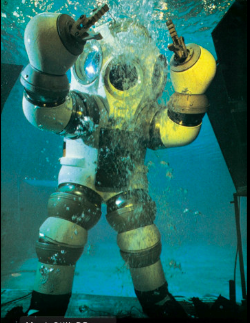
Role of Violence – There is a great relief of seeing 007 finally kill Blofeld, the man who had his wife killed, by dumping him and his electric wheelchair down an industrial smokestack on the Southside of the Thames. (We don’t know who got custody of the cat.) There are a bunch of henchmen killed, connected to various parts of the plot to get the spyware to the KGB. The most spectacular death is a henchmen in a deep diving suit, looking very robotic, who is blown up inside a sunken English trawler. Boom.

Vulnerability – Credit is given for reminding Bond fans that he was (briefly) married and she died in his arms. It was the only real glimpse we ever got into James the man. The epitaph on her tombstone is, “We have all the time in the world,” his last words to her in On Her Majesty’s Secret Service. Early in the film, Bond is captured by Cuban hitman Hector Gonzales and rescued by Melina. He seems a bit confused that he suddenly is the damsel in distress, but, like Jesus, he ultimately takes the wheel.

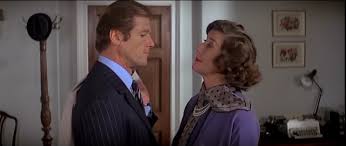
Sexual Potency – Here’s where we start to get a bit of a shift. Bond does not seem to be leering or sexually flirtatious with Melina, 29 years his junior. And between Bond and Moneypenny, the old spark is back, perhaps because they actors are now close in age (both were born in 1927!). Moneypenny, knowing Bond is about to arrive at MI-6 HQ, applies her makeup as James’ hat flies to the hatrack. “Moneypenny, a feast for my eyes,” James says, kissing her on the lips. “What about the rest of you?” she asks. “Well, I was going to get around to that.” There’s the old James Bond we love.

Another character is figure skater Bibi Dahl, played real life figure skater Lynn-Holly Johnson. She has a girl-like crush on Bond and climbs, naked, into his bed. In a shocking turn of events, he rejects her. “You get your clothes on and I’ll buy you an ice cream,” he says trying to kick her out of his room as she plants a kiss on him. Bond does sleep with the Countess Von Schlaf (played by Cassandra Harris, wife of future Bond Pierce Brosnan). The scene feels a bit like, “Oh, this is a Bond film, he needs to bed SOMEBODY.” But like a lot of James’ one night stands, she is killed by some bad guys shortly after bed with Bond. (Death by dune buggy.) And, as if a contractual obligation, James sleeps with Milena at the end of the film. (Can’t let the fans down.) But Bond ’81 seems noticeably less horny. Maybe he was worried about Blofeld’s cat.

Connection – Even though the the plot is pleasingly complex (for a Bond film), 007 is just here to get the job done. There is zero emotional connection. Even Q seems to get on his wick. Milena is strikingly beautiful but she seems to be just a pawn in his plan to stop the KGB from getting this thing (that looks like cheap lighting board). That’s why it’s a bit of a shock that the film ends with them in bed together (ON A BOAT!). Her neglige slides off and she tells James, “For your eyes only.” Roll credits.

Toxic Masculinity Scale: 2

FYEO has some boffo Bond moments. James and Milena in a mini-sub battling another mini-sub under the Mediterranean is pretty damn cool. The scene where 54-year-old Bond is scaling an Alpine cliff in Northern Italy while a henchmen is trying to dislodge the pitons holding his rope is pretty edge of the seat. And there’s a wild ski chase sequence in a bobsled track (that led to the actual death of a stuntman). There’s also some light comedy regarding Britain’s first female prime minister, Margaret Thatcher. “She’ll have our guts for garters,” the Minister of Defense says. The film ends with Thatcher (perfectly played by Scottish comedian Janet Brown) trying to congratulate Bond over the phone but actually talking to Milena’s parrot, who repeatedly says, “Give us a kiss.”

The misogyny in this 007 chapter seems to be dialed back a little. Bibi, the pigtailed ice skater, gets slapped by two men, but not by our hero. Gonzales’ Spanish villa is basically a swimming pool surrounded by bikini-clad women and KGB boss, General Gogal, has a secretary who appears to also be his young mistress. Posters for the movie featured Bond framed by woman’s bare legs, meant to attract male eyeballs. But for 1981, the year Porky’s came out, that all seems rather tame. It offers promise that 80s Bond can deliver the action that fans love with out the adjacent sexism.

For Your Eyes Only Premiered June 24, 1981 putting in direct competition with the Bill Murray film, Stripes. Aided by the popular theme song, sung by Sheena Easton, the film was second highest grossing Bond film (after Moonraker). Long, at 127 minutes, the film attempted to bring the grit back to 007 and find a place for the British spy in the new decade after 20 years of carving out the formula. Can Moore’s Bond age gracefully?

Next: Octopussy (1983)

The James Bond Project #12: Moonraker (1979)

The James Bond Project #11: The Spy Who Loved Me (1977)

The James Bond Project #10: The Man with the Golden Gun (1974)

The James Bond Project #9: Live and Let Die (1973)

The James Bond Project #8: Diamonds are Forever (1971)

The James Bond Project #7: On Her Majesty’s Secret Service (1969)

The James Bond Project #6: You Only Live Twice (1967)

The James Bond Project #5: Casino Royale (1967)

The James Bond Project #4: Thunderball (1965)

The James Bond Project #3: Goldfinger (1964)

The James Bond Project #2: From Russia With Love (1963)

The James Bond Project: #1: Dr. No (1962)