April 6, 2023
White supremacy is a real thing. Let me be more specific, white supremacy in 2023 is a very real thing. And it’s not just Klansmen and whoever pays the “Blacks for Trump” guy to stand behind the GOP’s favorite felon at every rally. It’s in all of us who have grown up in a society that brainwashes us to believe “white” is the standard to judge all other races by. If you think Jesus Christ was a white dude, you are a victim of internalized white supremacy. And White Jesus has done more damage than any Klan rally ever could.
I shouldn’t have to convince you of the damage all this white supremacy has done on people of color. From the Mexican-American woman who is considered “fiery” Latina to the black man bleeding in the middle of the street because police assumed he had a gun, and a trillion other examples of micro-aggressions, discrimination, bias crimes, and hate groups dreaming of genocide, I shouldn’t have to convince you. But if you are a white person who thinks racism magically vanished in the 1960s and all this is liberal fantasy, just read any account by a person of color. (I have been reminded that it is not black people’s job to educate white people about reality.) And don’t you dare say, “I was raised to be colorblind,” because you weren’t.
This isn’t about how white supremacy hurts BIPOC folks. It’s about how white supremacy hurts white folks.
As a feminist scholar, much of my work centers around how patriarchy hurts men. Yes, we benefit greatly from it, but it also squeezes us into a small box called “masculinity,” where you better not “cry like a girl,” and solving a problem “like men” means beating the shit out of each other. There’s a reason women live, on average, seven years longer than men. Whether it’s young men popping wheelies in crotch rockets on the interstate or older men not going to the doctor to have that lump looked at, men’s internalized sexism presents them infinite stupid ways to die. We are afraid to be vulnerable and it is killing us in droves.

Similarly, white supremacy puts us white people in a bland box. The monster of American assimilation screams at non-WASPs to do their damndest to look, think, act, pray, and eat as WASPy as possible. But his “melting pot” con also burns people of European origin. It tells them to give up their ethnic identity and morph into this imaginary, but powerful, thing called “white people.” How many times have you heard a white person describe themselves as an ethnic “mutt”? Whites gain entry into an elite county club but the price is their beautiful culture.
The category of white people is a relatively recent invention. There were no white people before the late 17th century. There were European people but there were no white people because there are no people who are the color white. (Ghosts not withstanding.) White people were invented to distinguish themselves from “black” Africans (who are also not the color black) to rationalize the dehumanization of Africans for the purpose of chattel slavery. The invention assured that even the most impoverished white person would perpetually hold power over the masses of earthlings now defined as “non-white.”
So how can we help “white” people escape the yoke of slave master?
There are three parts to this strategy. The first two must be undertaken before the third can even be considered as an option. The first is the need to acknowledge the expansive privilege that goes along with being considered white. Not only are you white folks more likely to get the job and less likely to be profiled by the police, you’re more likely to not have to think about the issue of race. Ever. This extends to the shade bias of colorism. Barack Obama has had it a lot easier than Jesse Jackson. My bi-racial daughter presents as “white,” and will escape much of the hell her Mexican cousins would endure in the same settings.
Second is the importance of taking an active anti-racist life position. Don’t tell me, “I’m not a racist.” That’s crap. Internalized white supremacy makes us all racist to a degree. I am a life-long anti-racist educator. I would never say I’m not racist. The question is, what are you doing to fight the evil of racism? And if you are “white,” what are you doing to dismantle your privilege? If you are a liberal white person and you think listening to Beyoncé and putting a Black Lives Matter sign in your yard is enough, you are part of the problem. Roll up your damn sleeves and get to work, even if is just unpacking your own internalized white supremacy.
OK, here’s the payoff that will make your white lives matter. Stop thinking of yourself as a white person and reclaim your ethnicity!
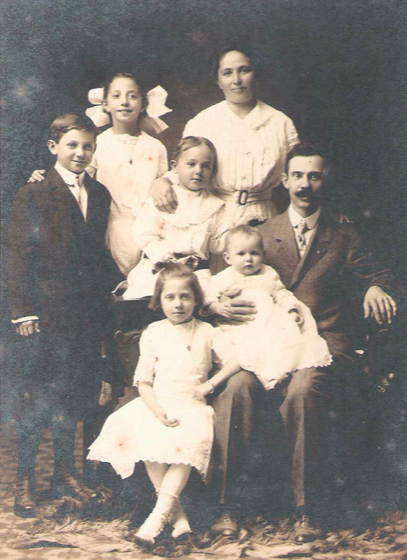
Even if you are “mutt,” you have an ethnic identity somewhere in your family line. And ethnicity, unlike race, is culture and food and music and history and celebration. My last name, Blazak, is an Americanized Slavic name. My great grandfather came to America in 1891 from Prague (at the time part of the Austro-Hungarian Empire) and the assimilation started. My mother’s family were English immigrants in the 1770s. According to genetic test 23 and Me, I’m a quarter Czech and a whole bunch of other stuff (including 1% middle eastern!). So I chose Slavic as my primary cultural identity.
Rediscovering my Slavic roots has been liberating, from diving into the rich history of Czechoslovakian literature to helping my daughter make Polish pierogis each Christmas, there is so much to uncover. The de-assimilation includes learning about my family’s buried Catholic history and the heroism of my Slavic cousins in tearing down the Iron Curtain. I first travelled to Prague in 1991 and immediately felt a part of the land of the Velvet Revolution. My connection to that people was a major factor in my decision to head to Ukraine last spring to help people who physically looked like many family members. I learned, while I was there, that there is a small Polish town on the Ukraine border called Błażek, the likely starting place of my great grandfather’s clan. I don’t have to suffer from ethnic envy. I have an ethnicity and it’s wonderful. (Now if I could just perfect the polka.)
White people get a small version of this every St. Patrick’s Day, when they struggle to identify some lone Irish chromosome in their DNA. “My great grandmother’s wet nurse was from Killarney! Give me a beer!” On March 17th each year, white people briefly discover they are “ethnic.” What if we did that everyday?

There’s a good chance that if you are in the white people club, you have more than one ethic history in your family tree. That’s even better. Spend some time shopping from the menu and pick the one that most speaks to you. (Helpful hint: Pick the one with the best food and the fewest slave traders.) “White pride” is racist A.F., but “French pride” is cool as shit! Start finding restaurants, festivals and events that cater to your new ethnicity. You will see me every August at Portland’s Polish Festival drinking pilsners with my fellow Slavs, gorging on plates of latkes.
So stop being white. You have so much to gain by being your chosen ethnicity. And if you are adopted, even better! Just choose a random ethnicity out of a hat! (I might suggest Czech as a good option.) Stop with the self-defeating “mutt” business that forgoes your rich ethnic history for the power mad invention of whiteness.
Racists often ask me, “Why do you hate white people?” Obviously, I don’t. I hate whiteness and what that social construction has levied on the world. Europeans and European-Americans have done many amazing things. The invention of the bidet, for example. White people, as a category, have propped up centuries of violent oppression. That’s not a club I want to be a part of.
So help me destroy it.


 Watching the Wheels