The James Bond Project #7: On Her Majesty’s Secret Service (1969)

January 19, 2025

This series is intended to evaluate each product of the James Bond film franchise through a feminist lens, and the relevance of the Bond archetype to shifting ideas of masculinity in the 2020s.

On Her Majesty’s Secret Service (1969, directed by Peter Hunt)

James Bond got married! Eon Productions had to scramble to find a new Bond after Sean Connery quit during the making of You Only Live Twice. Potential 007s included future Bond Timothy Dalton (too young) and Superman bad guy Terrence Stamp (too creepy?). Producer Albert Broccoli and first time director Peter Hunt settled on Australian model George Lazenby after seeing him in a chocolate bar commercial. Lazenby looked like a slightly younger Connery, but lacked the acting chops. He was offered a contract for seven Bond films but agreed to do only one, believing the 007 franchise would become passé in the 1970s. 

On Her Majesty’s Secret Service was the first Bond novel authored by Ian Fleming after his spy became a big screen feature and was written to leave out the heavy reliance on gadgets Hollywood Bond relied on. The primary Bond girl was Countess Tracy di Vincenzo, played by Diana Rigg. From 1965 to 1968, Rigg played Emma Peel on the popular British spy TV show, The Avengers. (Rigg joined The Avengers to replace Honor Blackman, who had left to play Pussy Galore in Goldfinger.) Emma Peel was often considered the “female James Bond,” so bringing Rigg in may have been meant to offer a new role for the Bond “girl” at the end of the decade.

The film was premiered in the United States on December 19, 1969 while the country was consumed with the details surrounding the Charles Manson murders. By January, it topped the box office on both sides of the Atlantic but received mixed reviews for veering from the blockbuster Bond formula. Overtime, the film has gained respect for remaining closer to the Fleming novel than other screen adaptations, and that was Hunt’s intent. The script even comments on previous Bond films, such as the opening scene were Lazenby’s Bond rescues Rigg from the ocean and fights some random henchmen. Lazenby breaks the fourth wall and says to the camera, “This never happened to the other fellow.” Or when Bond resigns from MI-6 and looks at some of his gadgets from previous films with a smirk of disdain while they remain in his shabby office desk.

We do get tried and true Bond tropes, including an underground lair filled with henchmen, Bond at the Baccarat table, his appetite of Beluga caviar and Dom Perignon, flirting with Moneypenny, and Blofeld (this time played by American Telly Savalas). But in one way, this is a very different Bond film, one that ends with a Mrs. James Bond.

Let’s plug it in to our feminist matrix and see where we come out.

Driver of Action – We are in full solo Bond mode in OHMSS. We have no “team” helping drive the story. (Q only makes a brief appearance at the end of the film.) There is an MI-6 agent, apparently named Shaun, who keeps an eye on James, from a distance, in Portugal and Switzerland but is killed off pretty early. And there’s Draco, the head of a Portuguese crime syndicate, who helps Bond take down Blofeld at the end of the film. But it’s pretty much just James, including when he goes rogue from MI-6 after being taken off the Blofeld case by M. We do see Blofeld (as a prequel to Kojak) leading more of the action, including slapping on a pair of skis to race down the Alps to catch Bond. There’s also a killer bobsled race between Bond and Blofeld. And, sadly, Blofeld’s cat only appears briefly.

Role of Violence – Lazenby’s Bond seemed a little more skilled in fake martial arts skills than Connery. There’s more chops and flips but the body count is reserved for the the end of the film (although, early in the film, he slaps Rigg’s character pretty hard). He sends a few henchmen on skis to their deaths as they plunge off a cliff and during the climatic assault on Blofeld’s mountaintop lair, he machine guns a bunch of henchmen and a scientist who throws a bottle of acid at him. This Bond punched harder, but used his gun a lot less. Does that make him less manly or more?

Vulnerability – OK, this is the big one. The set up is that mob boss Darco wants Bond to marry his troubled daughter, Tracy (AKA TV bad ass Emma Peel). Darco says, “What she needs is a man to dominate her” (puke) and offers James a million pounds in gold as a dowery. Bond says he doesn’t need the money and says, “I have a bachelor’s taste for freedom.” But something strange happens. It seems like Bond is falling in love with Tracy. There’s even a very 1969 montage of James and Tracy doing “falling in love” stuff, like walking on the beach and window shopping for rings, set to an original song written by Burt Bacharach and Hal David called “We Have All the Time in the World,” sung my Louis Armstrong! Is this a chick flick? Maybe it’s all part of a ruse to get Darco’s help going after Blofeld.

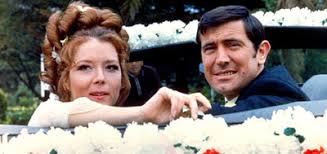
Nope. After Tracy rescues Bond in a Swiss town and escapes more henchmen in one of the craziest chase scenes on film, Tracy and James end up hiding in the hayloft of a barn. Instead of making his usual sex moves (like he did several times earlier in the film), he tells her, “I’m thinking about us. I love you. Will you marry me?” (I’ll take “Things I’d Never Expect to Hear in a James Bond Film” for $200, Alex.) She agrees to be “Mrs. James Bond” and we have a very different 007 flick. Instead of sealing the deal, James decides they should sleep separately. “The proper time for this is our wedding night. That’s my New Year’s resolution,” he says. “Whatever you say, my dear,” says Tracy. “And that is yours,” James quips. OK, maybe not that different.

The last Bond film of the 1960s ends like the dozens of Elvis Presley films of the 1960s, with a wedding. The proficient bedder of endless women is now wedded in holy matrimony, with M (and the rest of us) in shock that it happened and poor Miss Moneypenny in tears. But there is no happily ever after. A car driven by Blofeld pulls up next to the newlyweds and Irma Bunt, Blofeld’s henchwoman, fills Bond’s Aston Martin with machine gun fire. The final scene of On Her Majesty’s Secret Service is James Bond in tears, holding his dead wife.
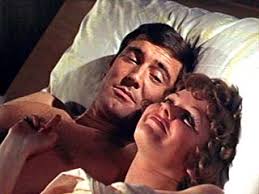
Sexual Potency – Before we forget, this is a James Bond film. When Tracy appears at the casino, the camera lingers on her cleavage. She ends up in Bond’s bed as a business transaction (he payed her gambling debt). The encounter is so transactional it creates doubt in the legitimacy of the “romance” that follows (enhanced by a scene at a bullfighting ring where Darco is trying to pass his daughter off to Bond.) When Bond gets into Blofeld’s lair, pretending to be a gay genealogist (don’t ask), he’s met with a dozen beautiful women (Blofeld’s “Angles of Death”) that he goes to work on, sleeping with two in one night while scheduling a third. “Work is piling up,” he snorts. He may be in love with Tracy, but Bond’s gotta Bond.

Connection – This Bond does seem to have some genuine affection for M and Moneypenny, even kissing Moneypenny on the lips. But, again, this is solo Bond in action. His connection to Tracy seems to become genuine when she rescues him from Blofeld’s henchmen, repeatedly kissing her on the cheek as she frantically drives her getaway car from their gunfire. In the end, he is alone again and viewers are told to get ready for the next chapter of our man Bond.

Toxic Masculinity Scale: 5

Summary Hunt and Lazenby’s Bond may be closer to Ian Fleming’s 007 than the formula viewers had had become used to, but there’s still plenty of sexism in OHMSS. The most obvious proponent of misogyny is Darco (played by Italian actor Gabriele Ferzetti). He just goes on and on telling Bond how his daughter needs to be manhandled and smiles at that fact that Bond got her in the sack. He even punches his daughter in the face, knocking her out, so she doesn’t try to rescue James in the gunfight. At the wedding he says to her, “Obey your husband in all things.” We also get get Bond ogling a Playboy magazine (and stealing the centerfold) and working his way through Blofeld’s scantily clad angels of death. “Just a slight stiffness coming on,” he says, sitting among them in his kilt.

Don’t expect Bond to be mourning his dead wife in the next installment, 1971’s Diamonds Are Forever. James will be back to his old tricks. But the final scene of On Her Majesty’s Secret Service gives a glimpse of a more human man than in all the previous 007 films, left to reconcile the cost of vulnerability when your job requires you to carry a license to kill.

Next: Diamonds Are Forever (1971)
The James Bond Project #6: You Only Live Twice (1967)

The James Bond Project #5: Casino Royale (1967)

The James Bond Project #4: Thunderball (1965)

The James Bond Project #3: Goldfinger (1964)

The James Bond Project #2: From Russia With Love (1963)

The James Bond Project: #1: Dr. No (1962)

The James Bond Project: #1 – Dr. No (1962)

December 27, 2024

As a latchkey kid who grew up on the 4 O’Clock movie (with a father often away on sales trips), most of my young models of masculinity came through the family color TV. Those films offered me the standard trinity of white manhood: John Wayne, Elvis Presley, and James Bond. All three were good with their fists and spared few words for the ladies. John Wayne was the iconic “strong silent” man who solved problems with a gun. In the 2000s, I taught a summer class at Portland State University called, “Hollywood Elvis and Post-War Masculinity” that used Presley films to explore changes in parameters of male roles. But it was Bond that I most wrestled with as a feminist man. Was he a patriarchal archetype or a subversion of it?

After the 1996 film Swingers brought back lounge culture, I found myself fantasizing about the Sinatra swagger and the Bond confidence. I’d sit at the roulette wheel in casinos in Old Las Vegas, on Fremont Street, dressed in a vintage suit, surrounded by frat boys in khaki shorts and backwards baseball hats. Was I an agent of the backlash or mocking gender, the same way drag queens deconstruct femininity? And now, what is the relevance of Bond’s manly schtick in MAGA America, where sex offenders are running the show?

So I decided I need a winter binge to address the question. The James Bond Project is intended review every Bond film, from 1962 to the present, to glean insight into the gendered appeal of 007, genital warts and all. And here’s the matrix for our evaluation:

  1. Driver of Action – Team player or rugged individual?
  2. Role of Violence – Body count
  3. Vulnerability – Behind the mask
  4. Sexual Potency – Lady “killer”
  5. Connection – Autonomous into the sunset

Toxic Masculinity Scale  (1 to 10)

Dr. No (1962, directed by Terence Young)

The first Bond film is based on the sixth novel in Ian Fleming’s famous series on the British spy and is set against the backdrop of Kennedy’s Space Race. Producers cast Sean Connery, 31, after Carey Grant said he wasn’t interested in playing Bond more than once. Dr. No, released October 5, 1962 (less that two weeks before the Cuban Missile Crisis), introduces all the series staples; “Bond, James Bond,” “Shaken, not stirred,” a license to kill, SPECTRE and the underground lair, creative ways to kill the heroes, and Bond hitting on Miss Moneypenny.

My first thought watching it was that it was nice to see so many black people in a movie from 1962. I’m used to any film made before 1968 being made by, for, and about white people. Dr. No is set in Jamaica, so the cast diversity makes sense. The Caribbean was a common Bond locale (and where I saw my first big screen inter-racial kiss – more on that later). Jamaica was granted its independence in 1962, but in the film it still feels like a British colony. No reggae yet, just limp calypso and CIA officers hanging around airports. But it gave the world its introduction to 007 James Bond, the suave spy with a license to kill.

Driver of Action – There is no doubt that Bond is his own man. His boss, M, tries to replace his Beretta handgun with a new model, which James (unsuccessfully) tries to sneak out of the office. Other than that and a scene where Bond and Honey Ryder (played by Bond “Girl” #1 Ursula Andress) pass out after drinking Dr. No’s drugged coffee, there is never a moment where Sean Connery’s Bond isn’t in complete control. There are car chases, jungle chases, and scenes where Bond outsmarts would-be assassins (including smashing a tarantula to an epic musical score). Even though, for part of the film, he has a black sidekick named Quarrel and female accomplice (Honey Ryder), Bond drives the story and camera lens.

Role of Violence – 007 takes out a handful of baddies, including a corrupt geology professor and some blokes who go over a cliff in a fiery crash. “I think they were on their way to a funeral,” he quips. Compared to the massive body count of your average John Wick movie, there is surprisingly little violence in Dr. No. I found myself wishing 007 had watched a few of my favorite Kung Fu self defense reels on Instagram to better defend himself from henchmen and CIA operatives. Dr. No doesn’t even try to kill Bond, although he does strap Honey Ryder down to be drowned by a rising tide. Spoiler alert: Bond kills Dr. No in a radioactive pool.

Vulnerability – There is no moment when James shows any weakness or gives us any backstory. Was there (ever) a Mrs. Bond? Does he have a panic attack if his martini is stirred? Does he ever suffer from erectile dysfunction when bedding double agents? This may be the feature that resonates with men so much. Bond is a cartoon character of a man with no internal monologue, just commanding action.

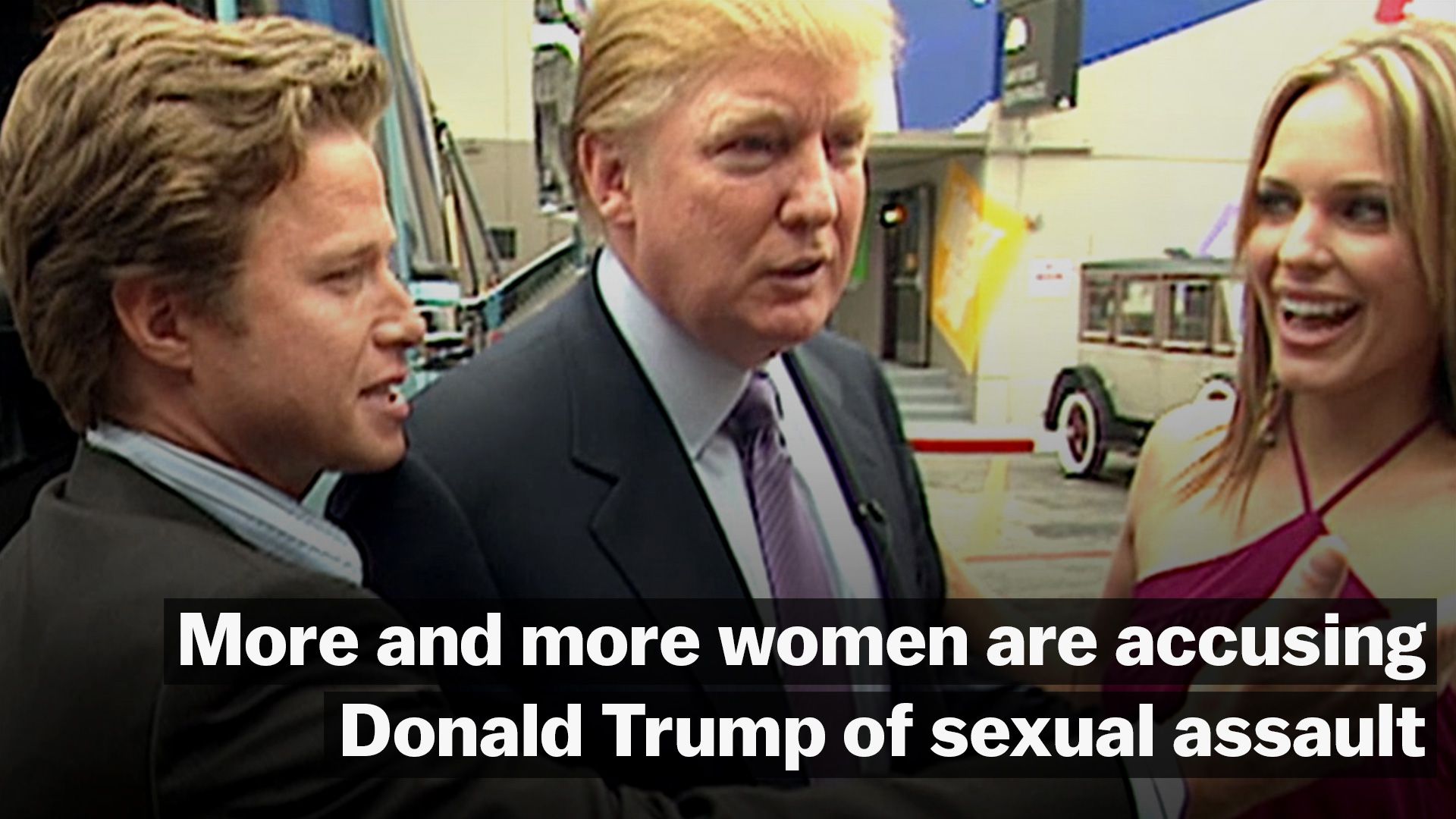
Sexual Potency – This isn’t a Doris Day movie. Bond gets plenty of play. At the start of the film he beds a woman he meets playing baccarat in a casino. Her name is Sylvia Trench, and we’re off to the races for how women are named in Bond films. Then he spends a night between the sheets with MI-6 secretary Miss Taro, who is (of course known to James) working for the bad guys. Surprising to no-one, he ends the film in the arms of blonde bombshell Ursula Andress, bobbing in a dingy in the Caribbean. In the scene with Miss Taro, unprompted, he grabs her and kisses her, reminding me of Trump’s comments in the Access Hollywood tape. “You know I’m automatically attracted to beautiful… I just start kissing them. It’s like a magnet. Just kiss. I don’t even wait. And when you’re a star they let you do it. You can do anything.”

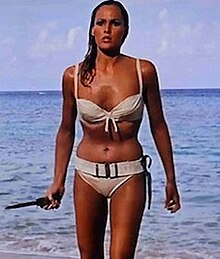
Connection – Bond has passing connections with Quarrel (played by John Kitzmiller) and American CIA agent Felix Leiter (played by Hawaii Five-O’s Jack Lord), but they’re just vehicles for Bond to complete his mission. Bond even seems briefly sad when Quarrel is burned alive by the bad guys. But James Bond is the model of the autonomous male. He is a self-contained unit who doesn’t “need” anyone. Sex is transactional, not romantic. Even the end scene with Honey Ryder is not a “and they lived happily ever after” moment. You get the feeling that Ryder, in her iconic white bikini, will be dropped off at the next beach as 007 jets off on his next mission.

Toxic Masculinity Scale: 5/10

Summary – Watching a young Sean Connery chew up every frame he’s in is infinitely entertaining. Yeah, Ursula Andres on the beach (knife in hand) is a classic male gaze moment where even Bond says, “I’m just looking,” but the gaze is all on 007. There’s even a scene where a female concierge in a Kingston hotel stares at Bond’s ass. James Bond is the spectacle. All eyes are on him. It’s man’s world. Dr. No is 55 years before Patty Jenkins ground-breaking Wonder Woman movie. Action is man’s work, with bikini-clad damsels in distress.

Fortunately, there is no homophobia or overt misogyny in Dr. No. Women are beautiful and disposable but also strong, with agency. No bimbos in Bondland and toxicity is toned down in the Kennedy era. The film establishes the archetype of the autonomous “love ‘em, and leave ‘em” hero franchise to be mimicked by countless others, from Matt Helm to Austin Powers. At his core, Bond is always cool and always in control. Men want to be him and women want to be with him. But we all want to know, its that all there is?

Next: From Russia with Love (1963)

When Hate Wins

November 9, 2024

“Sometimes the fight takes a while. That doesn’t mean we won’t win.” – Kamala Harris, November 6, 2024

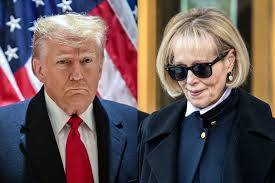
I went down a pretty deep rage hole after Trump the Rapist won Tuesday’s election. The list of things that made him unfit to be our president was as long as an Alaskan winter night, including being found liable for a sexual assault by a jury of his peers, which the judge described as rape. Remember when Mitt Romney was disqualified from the Presidency because he left the family dog on top of his car? That Trump the Rapist won the popular vote defied comprehension . I found myself quoting the line from Marilyn Manson’s “Irresponsible Hate Anthem,” that screams, “I wasn’t born with enough middle fingers.”

So I unplugged for a few days. I didn’t want to see the gloating MAGA memes or sit through MSNBC’s Monday morning quarterbacking. We know what happened. The Putin-Musk disinformation campaign pushed millions of gullible Americans into Trump’s cult of personality, while the Democratic Party sat around and got high on the smell of their own farts, clueless to the reality on the ground. The White House, the Senate, and probably the House, now the playthings of a sociopath and his self-enriching oligarchs.

We know it’s going to get bad. It already has. The day after the election, African-Americans of all ages started receiving texts stating that they would be enslaved to pick cotton. Many texts mentioned Trump, saying things like, “Our Executive Slaves will come get you … be prepared to be searched down once you’ve enter the plantation.” In the last few days, Trump’s misogyny has unleashed an army of male trolls who have been harassing women (and girls in school) with the chant, “Your body, my choice.” And this thing is less than a week old.

After a few days of screaming at the sky (and one night of poker and much whiskey), it may be time to lick my wounds and figure out how to prepare for what’s to come. And how to fight it. Step one is to let go of the hate. That’s their game. There was a news story today that Iran was working on a plot to assassinate Trump to avenge the death of Qassem Soleimani, but the FBI caught the three plotters. My immediate thought was, “I guess Iran didn’t have a Plan B.” But that doesn’t cure America of the sickness that is Trumpism. It would only elevate the calls for more blood.

Resisting the lizard brain mandate to blindly fight my supposed enemies is part of this. Who are these enemies? I can generalize them as “MAGA morons,” too dumb to see through Trump’s con act. But these “morons” are people I know. Some of them are my students and family members. They see us as “evil” and we see them as cognitively impaired. Neither is the reality. (Well, Trump is most certainly cognitively impaired, and if he makes it to January 2029, we’ll see the 82 year-old sitting with a drool bucket, staring at the sun, on Inauguration Day.) But falling into the us vs. them binary just turns a needed conversation into a mindless war and, again, that’s not our thing.

It doesn’t mean we shouldn’t be ready to fight. I’m already geared up for the 2026 midterms. Cozy and I will make pink pussy hats for the coming marches. I’m dusting off my civil disobedience skills and will be a 60-something monkey-wrench in Trump’s march to authoritarianism. Don’t think I’m making the case for resting on my white male privilege.

But I think we can do it without the vitriol. Yeah, millions of women voted for Trump the Rapist. Are they just bimbos and battered women suffering from Stockholm Syndrome? Or are they complex human beings with multiple motivations that, with love instead of hostility, can be cleaved away from the misogynistic cult of Trump the Rapist? And the men who love them may follow.

I had a publication in 2004 titled, “Getting It: Women and Desistance from Hate Groups.” It was based on my research on former racist skinheads. Their exit stories followed a similar path; a woman in their life, a girlfriend, a teacher, a step-mother, gave them the gift of empathy. They said, “Listen to what I have to endure as a female. That’s what you are doing to people of color.” Lightbulbs went off and the skinheads walked away from hate. There is no greater hate group than MAGA, so why wouldn’t that same strategy work again?

So it’s time to unclench the fist and open the hand and start rescuing people from this death cult. I didn’t know how to truly put women first until I became a father of girl. I wonder how many MAGA bros would vote for Trump the Rapist if Trump raped a women they loved. (Well, besides Ted Cruz.)

So here is my Three Point Strategy to get us out this nightmare. 1) Let go of the hate and the us vs. them narrative. It stops meaningful action in its tracks. 2) Circle the wagons. We need to let know those most vulnerable know that we have their backs. This includes members of immigrant and trans communities. Their fear-level is off the charts. (We’re locking down Andi’s citizenship before the Inauguration so we don’t have to worry about her being disappeared by the “Day 1” plan for mass deportations.) And 3) Reach out with soft hands to those that voted for Trump the Rapist, especially the women. Let’s be Pied Pipers of love. The alternative is a war of all against all and we’ve done that. We don’t want MAGA civil war re-enactors 150 years from now in red hats, screaming, “Your body, my choice!” at Gettysburg.

Deep breaths, America. And let’s get in there where we are needed. 

Will Republican Misogyny Drive White Women to Harris and Can Taylor Swift Help?