The James Bond Project #26: Spectre (2015)

This series is intended to evaluate each product of the James Bond film franchise through a feminist lens, and the relevance of the Bond archetype to shifting ideas of masculinity in the 2020s.

Spectre (2015, directed by Sam Mendes)

August 7, 2025

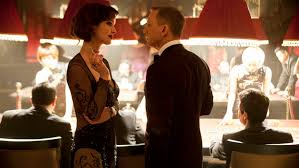
Yeah, it’s a formula, but when it works, you are in for a wild ride. There is not a scene or line in Spectre that one can not see coming from Sean Connery instead of Daniel Craig. The second half-century of Bond begins where we saw 007 50 years, locked in a death match with Ernst Stavro Blofeld. The long legal dispute between Eon Productions and screenwriter Kevin McClory finally resolved, we are gifted classic Bond that reunites these iconic arch rivals. Director Sam Mendes is back at the helm after Nicolas Winding Refn (Drive, 2011) backed out of the project. Here we go.

Ralph Fiennes (Lord Voldemort, himself) has replaced Judi Dench as M after Dench’s M was killed in Skyfall. Craig (46) is still doing his own stunts and tore his meniscus during filming. Brief love interest Lucia Sciarra, played by Italian actress Monica Bellucci, 50, would have been the first time a “Bond girl” was older than Bond himself. But the true “Bond girl” of the film is psychologist Madeleine Swann, played French actress Léa Seydoux, 30. The twenty-first century Blofeld is played by Christoph Waltz, the break-out star of Inglourious Basterds (2009), who completely owns the role.
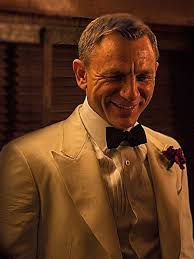
Spectre has all the staples you want in a Bond film; Bond in a white dinner jacket, Bond fighting inside a careening helicopter, Bond battling a mute assassin on a moving train, Bond going rogue, the classic Aston Martin, and Blofeld’s pussy cat. There are exotic locations that range from Mexico City’s Day of the Dead celebration (with 1500 extras) to a (not underground) lair in the Sahara desert. Shot on 35mm film but shown in IMAX theaters, Spectre makes the most of the Bond spy formula in a gift for 007 fans that also departs from the formula in some important ways.

The plot revolves around Blofeld’s SPECTRE (also back after legal wrangling) controlling the data flow from the first world’s intelligence agencies, making Blofeld the Big Brother for all intel on Earth. Ernst is watching you. Monneypenny is back behind the desk in M’s office but she and Q are secretly helping James. (We’ve seen this film before.) Bond has been left breadcrumb’s by Dench’s M and has bailed from MI-6 to find out about the conspiracy that threatens the global order. But on the way to beat Blofeld, something happens to Bond. Something we haven’t seen since 1969.

Let’s plug Spectre in to the matrix and see what happens.

Driver of Action – Unlike Skyfall that gave ample screen time to Dench, Spectre is back in the lone rogue spy narrative. M, Moneypenny, Q and MI-6’s Bill Tanner are the support team and Felix Leiter is mentioned but never shown. 007 has no female or male partner in this film. The center of the eye’s gaze.

The Role of Violence – Bond only kills a few dozen people in this film, including a bunch of Blofeld’s henchmen (it’s a dangerous job), assassin Marco Sciarra (by throwing him out of helicopter in Mexico City), and assassin Hinx (played by professional wrestler Dave Bautista), who he throws out of a train. Madeleine does press him on his chosen life as a killer, to which he replies, “It was that or the priesthood.”
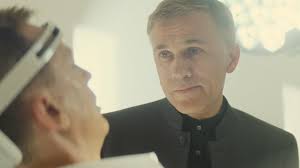
Vulnerability – This is a tough one. We get the obligatory Bond being tortured scene and 007 keeps his wits. But we also get Blofeld claiming to have been behind the suffering of Bond’s losses, including M, Vesper Lynd, Bond’s love interest from Casino Royale (2006), and (unmentioned because Craig is leading a “reboot”), James’ wife Tracy, from On Her Majesty’s Secret Service (1969). “I am the author of all your pain, James.” Even so, Bond never breaks. It is not until he develops an emotional attachment to Madeleine, which magically creeps out at the end of the film, that we that 007 has a soft white underbelly.

Sexual Potency – Here’s our Lothario. The first scene of the film has a masked Bond ushering a beautiful woman into a hotel room in Mexico City, she removes her mask and we think Spectre is going to begin with a bang, but 007 escapes out the window to do some assassin work. Then, in Italy, he sleeps with the wife of the assassin he killed in Mexico. Finally, after an epic fight scene on a train, all juiced up on adrenaline, he beds Madeleine. It’s like the old song goes, “Fuckin’ and fightin’, it’s all the same.”

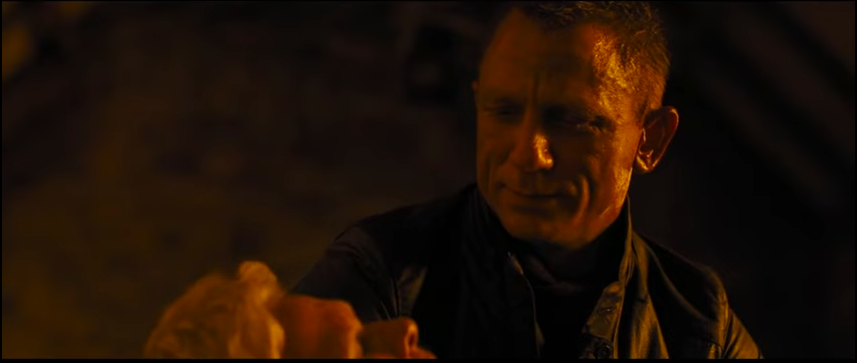
Connection – This is where the franchise takes a left turn. Bond, apparently, has fallen in love. It’s so slight, it’s barely noticeable until the final scene. When Blofeld is drilling into James’ skull Madeleine tells him that she loves him. That gives Bond the jolt to go apeshit and save the day (and the girl). Later, she says she doesn’t want any part of James’ action hero lifestyle (her father was an assassin, after all) and they calmly walk way from each other. But when Blofeld captures her and forces James to save one more damsel in distress, I guess he decides he loves her and, like James f’ing Bond, saves her and gets Blofeld. Instead of killing him, he says, “I’ve got something better to do.”  Then he throws away his gun and walks away with Madeline. The epilogue scene is not them in a boat, but James and Madeline driving away in the restored Aston Martin, presumably leaving MI-6 to be with the woman he loves.

Toxic Masculinity Scale: 2

Summary One does not expect James Bond to leave the life of a spy for love. Even when George Lazenby’s Bond got married in 1969, 007 was still 007-ing. But Madeline’s pressuring James’ being “always alone” created a crack in his iron wall, apparently. So we get Bond riding off into the sunset for a new life. No more killing and random hook ups, right? Right?

This installment has plenty of gifts for longtime 007 fans, including a modern Aston Martin DB10, Q’s exploding watch, finding out the Blofeld’s father raised an orphaned James, learning how Blofeld got the facial scar associated with Donald Pleasence’s performance of the character, and the return of Blofeld’s white Persian cat (“Hello, pussy,” says 007). While the plot is purely Bond by the numbers, the scope of Mendes production is as satisfying as it needs to be.

Spectre opened in London on October 26, 2015 the same day as a massive 7.5 earthquake struck the Himalayas. The film opened to mixed reviews but record-breaking box office receipts. The theme song, written and performed by Sam Smith, won both the Oscar and Golden Globe for best Theme song. The film’s ending had some asking if Spectre was the end of the 53-year-long 007 franchise, but Craig’s Bond had one more outing up his tuxedo sleeve.

Next: No Time to Die (2021)
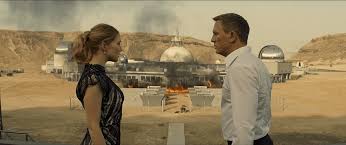
The James Bond Project #25: Skyfall (2012)

The James Bond Project #24: Quantum of Solace (2008)

The James Bond Project #23: Casino Royale (2006)

The James Bond Project #22:  Die Another Day (2002)

The James Bond Project #21:  The World Is Not Enough (1999)

The James Bond Project #20:  Tomorrow Never Dies (1997)

The James Bond Project #19: GoldenEye (1995)

The James Bond Project #18: License to Kill (1989)

The James Bond Project #17: The Living Daylights (1987)

The James Bond Project #16: A View to a Kill (1985)

The James Bond Project #15: Never Say Never Again (1983)

The James Bond Project #14: Octopussy (1983)

The James Bond Project #13: For Your Eyes Only (1981)

The James Bond Project #12: Moonraker (1979)

The James Bond Project #11: The Spy Who Loved Me (1977)

The James Bond Project #10: The Man with the Golden Gun (1974)

The James Bond Project #9: Live and Let Die (1973)

The James Bond Project #8: Diamonds are Forever (1971)

The James Bond Project #7: On Her Majesty’s Secret Service (1969)

The James Bond Project #6: You Only Live Twice (1967)

The James Bond Project #5: Casino Royale (1967)

The James Bond Project #4: Thunderball (1965)

The James Bond Project #3: Goldfinger (1964)
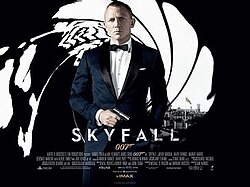
The James Bond Project #2: From Russia With Love (1963)

The James Bond Project: #1: Dr. No (1962)

The James Bond Project #25: Skyfall (2012)

This series is intended to evaluate each product of the James Bond film franchise through a feminist lens, and the relevance of the Bond archetype to shifting ideas of masculinity in the 2020s.

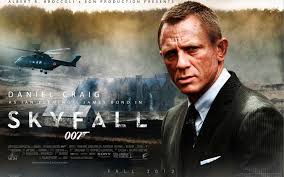
Skyfall  (2012, directed by Sam Mendes)

July 31, 2025

Daniel Craig is back for his third stint as Bond, a little older, a little more beat up in a film that further tweaks the 007 formula. There are some classic staples here, including James gambling in his tux, James under the ice, James fighting on top of a moving train, James in rooftop motorcycle chase, exotic locations, random hook ups, and the Aston Martin, but American Beauty (1999) director Sam Mendes brings enough innovation to Skyfall to bring a bolt of electricity to the franchise, marking its fiftieth anniversary.

The most obvious shift from the formula here is that Skyfall is as much a Judi Dench movie as a Daniel Craig movie. M’s outsized role is fitting as it would be her last in the franchise. (She dies.) Also different is the strange twist that there really is no “Bond Girl” in this film. There’s not even a leggy woman on the movie posters! French actress Bérénice Marlohe’s character, Sévérine, almost plays the part, but she’s only briefly in the film. (She dies.) The most exciting addition is the return of Miss Moneypenny and this time she has a first name (“Eve”), she’s an action hero, and she’s black. We also get a Millennial Q, who has no time for gadgets.

The cast of Skyfall is robust, with 28 Days Later’s Naomie Harris as Moneypenny, Ralph Fiennes as head of intelligence Gareth Mallory, and Albert Finney as the housekeeper at Skyfall (a part Sean Connery was considered for as a nod to the fiftieth anniversary of Dr. No). The role of Bond Bad Guy went to No Country for Old Men break-out star Javier Bardem. Bardem dyed his hair blonde for the role, drawing comparisons with Julian Assange. Bardem also plays his character, Raoul Silva, as “gay” against James’ straight man role, although when Silva is sexually suggestive with James, Bond replies, “What makes you think this is my first time?” I remember the internet chat asking if 007 has been bi all these decades.

The flimsy plot follows a former MI-6 agent who is revealing the identity of fellow agents because M sold him out after Hong Kong was returned to China. Skyfall is the first Bond film to actually be partially filmed in China with segments in Shanghai and Macau. (Other locations include Instabul and Scotland). What the film lack in sense it make up for in bombast, including seeing our man James finally get shot, twice. (Although he does get winged by a speargun in 1965’s Thunderball.) But being shot clean through, and falling off a massive train bridge can’t kill Bond. He plays dead for a few months and then comes back to save the day.

Twenty-first century Bond has been described as “cool, not camp.” Let’s plug Skyfall’s 007 into our evaluation matrix.

Driver of ActionSkyfall is as much about M and her past choices as it is about James Bond. We do get some Bond backstory (and even see his parents’ grave), but this film is built on M’s career as spymaster in a changing global political landscape. We even get Judi Dench shooting at henchmen! Moneypenny also takes on a sidekick role often reserved for Bond girls. Is Eve Moneypenny Skyfall’s Bond girl?

The Role of Violence – An A.I. source says Bond kills 23 people in the film. It’s hard to tell because Bardem (as bad guy Silva) has so many henchmen. (Why, we don’t know.) Bond kills all of them. He also drops an assassin from a Hong Kong skyscraper. It’s interesting that everyone Bond shoots dies, but he bounces back from being shot like a Phoenix on coke.

Vulnerability – We do get a bit more of Bond’s soft white underbelly in Skyfall. Besides the backstory of James the orphaned child (not much emotion shared here but M quips, “orphans make the best recruits), we get a window into “dead 007,” as James lets the world think he’s dead as a means of retirement. He’s in some Black Sea coastal village, doing shots on the bar with the boys and a scorpion on his hand, having drunken sex, and letting his rock hard body atrophy with self indulgence. It’s not very believable but it sets up his comeback. When M asks him where he’s been, he replies, “Enjoying death.” Later, he states that his hobby is, “resurrection.” But there are plenty of allusions to spycraft being a “young man’s game,” and James being past his prime. (Craig had two more 007 films on his contract.)

Sexual Potency – Is the Bond “rule of 3 back”? Old Bond is still Horny Bond. While he’s “dead” we see drunk James having sex a local (or maybe she’s a contractor for Halliburton, we don’t know). Later, he climbs in the shower with sex-trafficking victim Sévérine, which seems just a tad misogynistic. I mean, c’mon James. Then he watches as she’s murdered by Silva. The big question is if 007 sleeps with Moneypenny after she shaves his face, while he’s clad only in a towel. It’s implied that, after 50 years of sexy banter, he seals the deal. There is an implication that Moneypenny with a gun is closer to his equal, even if she does shoot him on accident. But the message is consistent, that Bond is sexually irresistible to beautiful young women. (James sleeping with M would’ve made for a better film.)

Connection – The connection Bond has to M drives the film. Not only does he come back from the dead to help her, but he takes her to his childhood hiding place to keep his “mum” safe. The job of protecting and vindicating M is the framework of this episode. The connection with Moneypenny is noteworthy as is his lack of connection with the new, younger Q. Dench’s M dies in Bond’s arms, saying, “I did get one thing right.” Her trust and faith him were justified and now death has ended that bond.

Toxic Masculinity Scale: 3

Summary Bond’s interaction with Sévérine is highly problematic. Maybe we’re more sensitive in a post-Epstein era, but it should be clear that you don’t show up naked in the shower of a woman who is clearly a traumatized sex trafficking victim. Maybe it’s business as usual in a Bond film, but the scene was more anger-inducing, than “sexy.” However, the fact that Skyfall is really an M-centered film, with 007 in a supporting role, elevates the film as portraying a gender dynamic unique in the 007 canon.

For the 50th anniversary of Eon’s Bond franchises, there are familiar friends, like a title sequence featuring female bodies (and an Oscar-winning theme song by Adele), sharp dry quips from James (“Only a certain kind of woman wears a strapless dress with a Beretta 37 strapped to her thigh.”), and the return of the Aston Martin, along with the Bond theme music. (When Silva’s men blow up the car, 007 goes Rambo.) There’s even a glimpse of the vintage of the Macallan scotch Silva pours for Bond, 1962. Easter eggs aside, Bond’s emotions are still restrained but M (Dench) reveals the truth behind James masculine stoicism.

Skyfall premiered at Royal Albert Hall on October 23, 2012, while Hurricane Sandy was lashing America’s east coast. The film, as articulated by M, shares that the cold war world that produced Dr. No in 1962 now exists “in the shadows,” without clear enemies but with a new climate of danger. Mendes as director was an inspired choice to frame the action in service to M instead of Bond. Mendes would direct the next Bond as well as the Oscar/Golden Globe winning 1917 (2019). Medes is now directing four biopics on the members of the Beatles. For the kick-off of the next half-century of 007, Mendes would soon bring back a familiar foe to Bond’s universe.

Next: Spectre (2015)

The James Bond Project #24: Quantum of Solace (2008)

The James Bond Project #23: Casino Royale (2006)

The James Bond Project #22:  Die Another Day (2002)

The James Bond Project #21:  The World Is Not Enough (1999)

The James Bond Project #20:  Tomorrow Never Dies (1997)

The James Bond Project #19: GoldenEye (1995)

The James Bond Project #18: License to Kill (1989)

The James Bond Project #17: The Living Daylights (1987)

The James Bond Project #16: A View to a Kill (1985)

The James Bond Project #15: Never Say Never Again (1983)

The James Bond Project #14: Octopussy (1983)

The James Bond Project #13: For Your Eyes Only (1981)

The James Bond Project #12: Moonraker (1979)

The James Bond Project #11: The Spy Who Loved Me (1977)

The James Bond Project #10: The Man with the Golden Gun (1974)

The James Bond Project #9: Live and Let Die (1973)

The James Bond Project #8: Diamonds are Forever (1971)

The James Bond Project #7: On Her Majesty’s Secret Service (1969)

The James Bond Project #6: You Only Live Twice (1967)

The James Bond Project #5: Casino Royale (1967)

The James Bond Project #4: Thunderball (1965)

The James Bond Project #3: Goldfinger (1964)
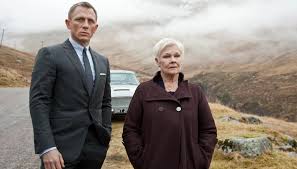
The James Bond Project #2: From Russia With Love (1963)

The James Bond Project: #1: Dr. No (1962)