The Real Trauma of Trump 2.0

From The Blazak Report, August 11, 2025.

NOTE: This piece was originally provided to paid subscribers to The Blazak Report on Substack.

August 11, 2025

Unpacking the impact of traumatic events on our brains is an adolescent science. We’re just beginning to understand the ways acute and chronic trauma affects how the parts of the brain work. Much of what we do know is because of the courageous sharing of war veterans. This journey of understanding is detailed in the highly readable book, The Body Keeps the Score: Brain, Mind, and Body in the Healing of Trauma by V.A. doctor Bessel van der Kolk. But the short version is that trauma can freeze the brain in the fight/flight/freeze mode. Our amygdala hijacks our prefrontal cortex and we are forever on the battlefield.

Fortunately, we’ve also learned that people can heal their deepest traumas. Once PTSD officially became a diagnosis in 1980, treatment plans followed. But the hard truth remains that it is next to impossible for trauma to heal when there are new attacks coming in. An open wound will never heal when it is constantly being picked at. And that brings us to the trauma of Trump.

So much of our nation’s history has been a piss-poor attempt to heal the scars of the past. The Black Lives Matter uprising of 2020 was a desperate plea to heal the racial wounding by American police. We clearly diagnosed the problem and began implementing treatment in the form of meaningful reforms and prioritizing diversity, equity, and inclusion as American values. And then in 2025, it went all off the rails.

Donald Trump is the abusive husband, standing at the door, threatening his immigrant wife with violence if she leaves. Or if she stays.

There are so many groups who are suffering residual trauma from Trump 2.0.

First women. Trump’s Supreme Court rolled back women’s reproductive rights in his first term. While out of office he had to face a jury of his peers for one of his many sexual assaults and America still elected the “Grab ‘em by the pussy” rapist. His war on women has only ramped up in his second term, shored up by a cast of misogynists, like Defense Secretary Pete Hegseth, who belongs to a church that thinks women should not have the right to vote. The gang of Epstein pedophiles roams free, protected by the GOP. How can girls and women feel safe knowing the federal government has been taken over by incels?

Next immigrants. So much for the pledge for Trump just going after the “worst of the worst.” Children with cancer, nursing mothers, and any brown person within ICE’s reach has been grabbed by masked goons and sent to disgusting internment camps or Central American gulags. Legal residents, asylum seekers, dreamers, veterans, and, yes, citizens have been caught up in ICE’s “one-shade-of-not-white fits all” mass deportation plan, as Stephen Miller screams for more. The anxiety of my students, some DACA, some from mixed-status families, some just Hispanic, is palpable. Many immigrants are refugees from violent police states like El Salvador and Syria, carrying massive trauma loads of their own, hoping to find peace and safety in the United States. And now masked men with guns are smashing their car windows and ripping them away from their families.

Veterans are also on this list. We got the memo after the Vietnam War that we need to take better care of our veterans, recognizing the scars of service run deep and long. What was derided as “shell shock,” is now viewed as the very real journey of living with PTSD. Tom Cruise movies aside, we had a national call for healing in a rare example of bipartisanship. Right or left, we all agree that we need to do everything possible to support our veterans. Since January, the cuts by Pvt. Bonespurs and his fellow civilian Elon Musk have devastated struggling vets. They include $30 billion from disability benefits and $1.6 trillion in health care cuts for vets over the next ten years. Most recently, Trump is denying early retirement for transgender members of the Air Force. Why? Because he can. It should be noted that not a single member of the Trump family has served in the military. Not one. He has referred to them as “suckers and losers.” Their wound has been ripped back open by a rich brat from Queens.

We could go on and on. Trans people because of his childish “there are only two genders” executive orders. Native Americans because of his war on tribal sovereignty. Protestors because MAGA officials have promised to use lethal force against them and “put them in trauma.” And all queer people and people of color because of his undoing of decades of progress by ending federally funded DEI programs. And there are so many more. I have a Latina green card holder in my life and she recently told me that she “low grade hates white people” because they are completely oblivious to the stress she must endure every waking hour living in Trump’s America. I totally get it. I mean, wouldn’t you?

Trump and his MAGA masters are driving America into a new Dark Ages. The last Dark Ages was centuries of the most brutal torture. More than princes and princesses, it was random drawing and quartering. The amount of new trauma that’s coming our way while Trump and his goons golf on New Epstein Island may not be survivable. And that’s their goal, because the traumatized are less likely to fight back.

That’s why we have to fight now.

My Lizard Brain Made Me Do It: Why We Do Stupid Things

Jacksonville is America and America is Sick: Can We Cure White Supremacist Violence?

Calm the F Down: Mindfulness as a Survival Strategy

March 20, 2023

When I was a young punk, I had this dumb mantra, “Impulse to action!” I believed that any thought that came into my head should be acted on. It seemed “mod” and “vibrant” and “rebellious.” In reality, it was the reflection of how unformed my young brain was. How my prefrontal cortex was not yet able to reign in my limbic system. I was all unchecked impulse and unmoderated action.

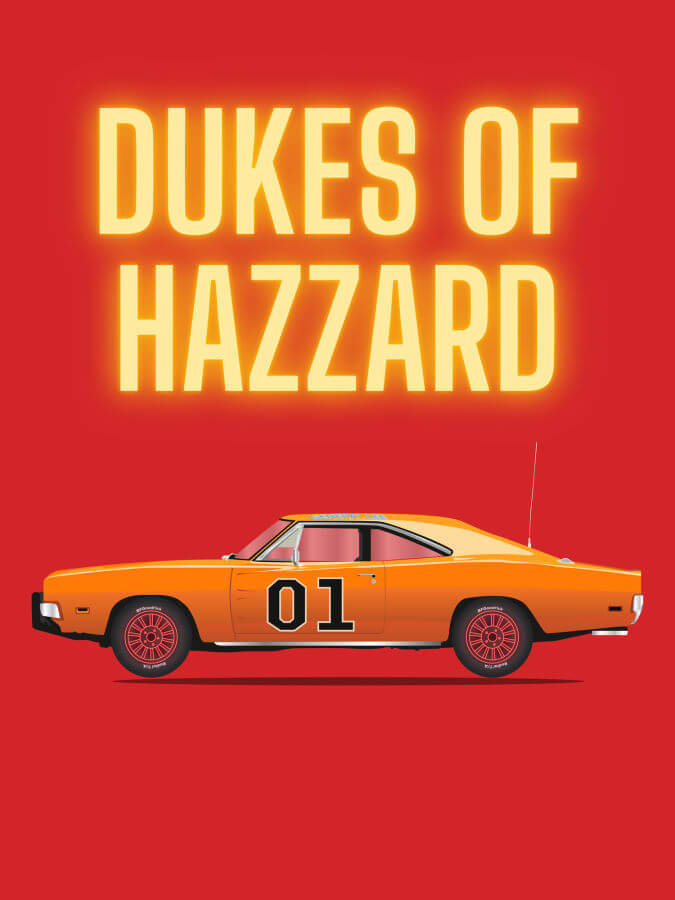
What I did that look like when I was 16? Talking my dad’s Monte Carlo and, channelling the Dukes of Hazzard, doing donuts in the fields of rural Georgia and then telling him it got hit in a parking lot (again). By 20, it was less bad behavior and more the belief that I could say whatever thought came into my head without first saying, “Should I say this?” Brain scientists believe the pre-frontal cortex is finally fully developed around age 25, but by that point my “impulse to action” synapses were well worn grooves in my head. My cake was baked.

We live in a culture that over-values the individual (“Me!!!”) and celebrates impulse to action behavior. Carpe diem gets rewritten as permission for road rage and buying stupid crap on credit cards. We can escalate from zero to a hundred in a heartbeat. My own centering of my impulses was a severe case of my white male entitlement. “I’m entitled to everything I want!” When women, BIPOC and queer folks are impulsive, they’re often raked over the coals for being “overly emotional” or “uncivilized.” We all need to calm the fuck down.

So much of this impulsive behavior is linked to our experience of trauma. I know my sexual abuse at age four is wired right into my limbic brain, what we lovingly refer to as our “lizard brain.” Like lizards, our limbic brain works on the fight/flight/freeze option to keep us safe. Lizards don’t ponder their options when an eagle is overhead. They skedaddle. Those of us with trauma histories are often locked into the fight/flight/freeze mode. Much of my life has been some version of looking for a fight, from battles with my little brother to running off to a Ukrainian war zone. I am the master of the knee-jerk reaction and it’s a 4-year-old boy who is doing the kicking.

One of the most important books I’ve ever read on this topic is My Grandmother’s Hands: Racialized Trauma and the Pathway to Mending Our Hearts and Bodies (2017) by Resmaa Menakem. Menakem points out that white bodies carry the historical trauma of the centuries of brutality of medieval Europe and when white people had the opportunity to unleash their unresolved trauma on black bodies, in the form of slavery, they went hog wild. The trauma levied on black people didn’t magically disappear in 1865 and is manifest in black bodies today. The need for African-Americans to make sure white people are OK is one manifestation of that trauma, which ads “fawn” to fight/flight/freeze. Additionally, police carry the unresolved trauma of dealing with traumatized people everyday and act out their trauma on the (mostly black) bodies they are charged to protect. Hurt people hurt people.

Manakem suggests a mindfulness approach to all this drama caused by people acting on their lizard brain impulses. In a fast-paced world, what if we all just slowed down and learn how to soothe ourselves? What if cops, before hitting the streets, practiced meditation and thought about their own thoughts? Maybe instead of cop lizard brains seeing black bodies as a threat and squeezing off a few rounds, they’d calmly assess what was actually needed in that situation. Calming the brain can interrupt micro-aggressions and explosive anger. Think of all those times you fucked up and wished your thinking brain had been in charge instead of your “impulse to action” brain.

This has been a huge issue for me. I can’t count the number of times I’ve heard Cher singing, “If I could turn back time” after I did or said something stupid. I apologize and swear I’ll never do it again. Then I do it again. The lizard brain doesn’t think. It just reacts. That baked cake has been my trauma response for over 50 years and has not made my life any better. Worse, it’s driven away the people I claim to love.

So finding a space between impulse and action is now my mandate. Daily meditation has become a requirement. Exercise and yoga, too. Breathing exercises, also. Anything to slow myself down and give myself the space to think before I act. I knew this past Saturday was going to be particularly challenging given the sad turns this marital separation has taken and I meditated six times throughout the day, which kept me from sending angry texts or stewing in my juices on a rare sunny Saturday in Portland. I’m having an ongoing conversation with the 4-year-old me. He can’t drive the car anymore, but he’ll be protected and safe.

There’s a quote attributed to David Bowie that says, “Aging is an extraordinary process where you become the person you always should have been.” If I could speak to that younger version of myself, I’d tell him to ditch that “impulse to action” bullshit as soon as possible. Slow your role and calm your soul. Give yourself permission to first see your thoughts and then, the ones that don’t actually serve you, let them go like big red balloons.

And to all the people that are screaming at each other, shooting each other, storming capitols, and hurting each other, please learn soothe yourselves. The lizard brain trauma response that tells you to pop a cap in his ass or street race down Broadway is the same impulse that tells you to text someone that they are a piece of shit or blow off someone’s sincere need to communicate. We can all be better at managing our tendency to cause harm. We have a buffer between our impulsive lizard brain and the mistakes we will later regret. That buffer is our ability to calm ourselves before we choose to act.

It’s All Too Much: You Don’t Want to Arm This Teacher at the Moment

June 1-6, 2022

Note: This piece was written in different sessions, usually while listening to The Monkees, or Death Angel’s “The Ultra-Violence,” and not the usual one-session stream of consciousness that is my usual blog brilliance.

Ms. McSwilly has been teaching 5th Grade math for over 40 years. She is just a few weeks away from retirement. On this day, she is discussing square roots with her students who are more focused on the AR-15 that’s slung over her shoulder. The gun and ammo were given to her to her by the government, who told her it was the best weapon to stop a school shooter. The government also paid for her training. That’s where she learned to keep her rifle on her shoulder at all times, to keep it out of the hands of students. Also, if a shooter burst into the classroom, she might not have time to retrieve it. Ms. McSwilly needed to be ready to shoot and kill in seconds. But on this day her headaches were back and she was losing focus. The classroom door opened as the school janitor entered to empty the trashcan. Ms. McSwilly spun around at the sound and unloaded three rounds into the man, killing him in front of her students.

Somewhere I wrote, “Life is a bedspring.” It was some metaphor for something. Now it feels like it was a bedspring in a mattress that needs to be replaced. Too many heavy dudes have been jumping on it. Too many bad headlines. The Russians are advancing in Ukraine. The Supreme Court wants to overturn Roe v. Wade. A white supremacist goes on a killing spree in New York. Another sociopathic teenager kills scores of grade school kids in Texas. Elon Musk wants to re-platform every hate monger on earth, including Donald Trump. My wife is choosing her boyfriend instead of her husband. And a tank of gas just drained America’s bank account. That bedspring just don’t bounce back like it used to.

When the mass shooting happened to Buffalo, I had to go into my “hate crime expert” mode, giving numerous interviews, including on CNN and Turkish News. Sadly, it was a fairly textbook case but I tried to keep the focus on the black community and the endless trauma people of color endure just being not white in America. When the shooting at Robb Elementary School unfolded, I just wanted to crawl in a hole with my second grader. Watching Ted Cruz suggest arming teachers made me want to throw up. The school drop-off the following morning was just about the hardest thing ever. Parents were in tears, extra hugging their kids, hugging the teacher, hoping that she would be able to protect them from a man-child with AR-15. The weight of the world falling on kids who shouldn’t know they are somebody’s target.

Andi had a great idea the day after the Uvalde shooting because we were both trying to figure out what to do in a nation where there are more guns than people and little will to stand up to the gun lobby. Her idea was to have “a day without children,” and let the country’s classrooms be empty for a day of protest. It was brilliant, but the school calendar was running out. Wanting desperately to please her, I tried the make the day happen two days later but the plan didn’t have time to catch fire and fizzled quickly. I felt impotent in the face of the entrenched status of bad news headlines.

I wondered allowed with my students what it would be like to have a year where nothing happened. You know, like the Obama years. Do we have the resilience to withstand what’s to come this summer? They say the personal is the political and both have been pretty traumatizing over the last few years. And, as we know, trauma can be debilitating, turning us inward into a state of learned helplessness. Getting up to fight seem pointless. Slide into bed and scroll through posts about Johnny and Amber instead.

It seems increasingly overwhelming and carbs (or whatever is your drug of choice) tastes so good. Bitcoin is down but suicide is up, way up. Is there a secret to resilience? A lifeline until happy days are here again? A reason to hunker down between mass shootings and GOP landslides?

Turns out there is; optimism. Not every solider that comes back from the battlefield is plagued by PTSD and not every kid with who is the victim of bullying shoots up his school. Research has shown a key factor in trauma recovery is simple optimism. A positive outlook is your hedge against the plunge into the black hole of despair. You might not know it, but reflecting on how (and that) you got through past shit will help you get through future shit. And there will be future shit. 

Worried that you might implode this summer and be Googling “Can I hold my breath until I die?” by Election Day? Here’s three things that will help keep you from losing it.

1. Get some friends. One thing all these shooters have in common is that they are loners. Most guys who go through job loss and divorce go out with their friends and get shit-faced until they’ve come though it. The guy with no friends (and easy access to guns) is the one shooting up his former office place. Get friends. Church, the bowling alley, adult kickball, even those LARP weirdos. Plug into your tribe. We all need each other right now. And not faceless Zoom or 4chan. Go have a beer, you wuss. We’ll get through this with karaoke.

2. Volunteer. Mr. Rogers famously said, “Life is for service.” Stop whining and do something to help. Not only is your aid desperately needed, it makes you feel damn good. The work I do on hate crime and Ukraine issues is unpaid but if feeds my soul. I just went to a Moms Demand Action gun violence event and those mothers were motivated to be the change they want to see. It was intoxicating. These narcissists who just want to “live their best lives,” taking and never giving, are draining energy and missing out on the magical spring of optimism, service to others.

3. Make a list. Setting simple goals is such an easy thing to do. After a session with my therapist, where I was feeling overwhelmed by my financial situation, I acted instead of wallowed. I bought a whiteboard and started organizing my bills and made lists of things to do to improve my situation and then began erasing said things as I did them. A few days ago I called both my senators to ask them to close the loopholes on gun background checks. It took five minutes and it made me feel like I was moving the ball forward. Just get shit done.

There’s so much happening right now. When we’re all super old, we can read about the history of the 2020s and be like, “How the fuck did we survive that?” But now is the time to be like sharks. Keep moving forward. Forest fires? Timmothy McVeigh wannabes? Custody battles? Trump tweets? It will all be in the rearview mirror at some point and me and all my rowdy friends will have a laugh and say, “Look how bad-ass we are. You kids today suck.”

This was going to be a piece about how if you arm teachers, we might pull a January 6 on all the assholes that have defunded education, like Ted Cruz, but, halfway through, I decided to write about resilience. There’s no flowchart for this moment we are in.

Where I’ve Been, What I’ve Seen, Who I Am: A Brief Reflection of My Time in Ukraine/Poland

April 5, 2022

After my epic journey from Poland to Portland, that included another two missed flights and a night spent in the Newark Airport, I had the brief honeymoon of home. As if written in a screenplay, my Lyft driver at the Portland airport was a Ukrainian named Ruvim. He dropped me off in front of my house and Cozy ran out to great me. After over two weeks away, I fell to my knees and hugged her, thinking of all the dads in Ukraine who long to hold their kids but can’t because they are saving their nation from sociopathic Russians who are raping Ukrainian women in front of their children.

Coming home to Cozy and Andi felt like a dream. They are my sanctuary, my reason for everything. As is tradition, I gave Cozy her snow globes (from Paris and Krakow). I gave Andi a neckless and cross that had belonged to a Ukrainian mother who we got to safety. It felt like I was finally home. But it wasn’t really home. Andi had boxed up her things while I was away and was already entrenched in another relationship, and my silly plan to return home like a badass Rambo and sweep her off her feet with stories of glory was lost in my lack of sleep and the ghosts of what I had seen while I was away, not to mention that I was now only her husband on paper. I just wanted to take hot shower and fall asleep cuddling with my daughter, which I did.

The next morning, I jumped back into the routine and got Cozy to school. I hopped in the car after dropping her off and switched on NPR and that was that. The news was the horror stories coming out of Bucha, where Russian soldiers had tortured and murdered Ukrainian civilians in ways that make ISIS look like kindergartners. My heart raced and my first and only thought was, “ WHAT THE FUCK AM I DOING IN PORTLAND? I SHOULD STILL BE THERE GETTING PEOPLE OUT!” The intense guilt of leaving. I knew these kids that they were killing. I knew their mothers. I knew the men who were living lives like me in one moment and thrown into an unexpected and unwanted war the next. How dare I be on my way to grab a latte when Russians are cutting their tongues out?

I don’t know if this is trauma but I do recognize my brain has changed. I have to imagine this is exactly what veterans experience when they return home from combat, the intense compulsion to rejoin the fight. And it’s not like I did 12 months in Afghanistan. I did two weeks in Poland and Ukraine and already I’m all Deer Hunter, ready to go right back. There’s also the adrenaline rush that a former cop recently told me is the attraction for many in law enforcement. If my cognitive patterns were changed in a fortnight, imagine how it must be for career military. 

The guilt is intense. While I was there, it seemed like things might be winding down and the Russians would go home with their tails between their legs, having underestimated the strength and courage of the Ukrainian people. Au contraire, mon frère. The Russians just leveled up their savagery. I should have stayed. I should have driven vans full of ammo straight to our contacts in Irpin so they could have taken these monsters’ heads off. I proved that I can do this work, racing around sandbags and hedgehogs in western Ukraine. I mean how old was Pablo in Hemingway’s For Whom the Bell Tolls

It’s a race of emotions that is balanced out by the very real fact that I have a beautiful daughter who needs her father here. I know she was proud of the fact that I was helping kids like her on the other side of the planet. She needs to know that she’s my priority. But the reality is, she’s not worried about Russian rockets slamming into her school and the children of Lviv are.

I’m just writing this, processing this, in this, getting it out for my own sake. You’re welcome to continue reading. I’ve had several espressos today, doubled my Zoloft, and am blasting Napalm Death’s “Suffer the Children” on my stereo. Not sure what the real world has to offer, especially after my day at Auschwitz on Friday. Is the world being destroyed or recreated? Will something wonderful emerge from the ashes, or will the illogic of the Putin-Trump cults lead us into a dystopian nightmare?

I’ll be OK. I have a great therapist, a good job, friends, an amazing kid, and a roof over my head. I can find ways to help Ukrainians from Portland and I can loose myself in music and books (although I might have to finish For Whom the Bell Tolls later). One thing I did do is ditch being called “Randy.” I’ve grown up. Call me Randall. I’m not the person I was. It’s time to be better at being better.

These two weeks did a number on me. My heart is in Ukraine. My heart is with all the veterans experiencing PTSD. My heart is with every refugee who wishes they were home. My heart is with my daughter who deserves a better world than the one we currently have. I’ve learned not to expect empathy, but I have a feeling there are countless people who understand what this feels like.

How to not be an anti-racist asshole: Mindfulness and Racial Progress

December 21, 2021

There are a lot of well-meaning people who’s well-meaning actions just make things worse. I’ve  certainly been one of those people. Portland is filled with self-proclaimed anti-racists who believe that by smashing windows and setting trashcans on fire, they are somehow making black lives matter. Have they bothered even asking any of these black lives if this is a good strategy? The people of color that I’ve talked to see is it as purely white performance. Now working on policies that help people of color buy homes and operate local businesses, that helps. A lot.

My challenge to anti-racist activists, of which I am one, is to take a break from chasing down neo-Nazis and Proud Boys, and take a look in the mirror. Until we start on the long process to undo our own internalized white supremacy, we will be blind to the racial trauma we cause while we’re chanting “Black lives matter!” There is a simple sociological formula that goes like this:

Racist socialization

Internalized white supremacy

Implicit bias

Micro-aggression

= Trauma

In 2021, still, we all learn various versions of “white is normal and better” lessons. That seeps into our subconscious where it lives as implicit bias and then emerges as micro-aggresions (a clutched purse, an off-handed comment, a joke that shouldn’t have been told). And that small thing lands as another wounding message to people of color that they are still not full members in this society. And the endless barrage of those “micro-assaults” become cumulative trauma. And that’s why BIPOC folks were in the streets in 2020, because enough was enough.

As I’ve written in this blog, 2021 has provided a great opportunity to move inwards from the barricades as Delta, and now Omicron, send us back into our shelters. Mindfulness and meditation give us strategies to interrupt our hard-learned tendencies to act in racist ways, even while we lecture others against their racism. I had a great week training with the Center for Equity and Inclusion here and Portland and consumed Mindful of Race by Ruth King. Both had huge impacts on how I move through the world as a white person.

King, a Buddhist woman of color, offers useful strategies to manage those situations that can cause racial distress. It could be finding yourself in an uncomfortable conversation with a Trump-loving uncle who wants to make America white again, or, on the other side, those white fragility moments when a person of color is taking apart your liberalness as just a vacant act of wokeness. One of her mindfulness strategies, that goes by the acronym “RAIN,” has been helpful for me in not only navigating my racial interactions, but also being more present in my relationship with my wife. It works like this:

The “R” stands for recognize. A big part mindfulness is paying attention to our emotional states as things to be observed. When you have an uncomfortable feeling, where is it? Is it a sick feeling in the pit of your stomach or an angry tension in the middle of your forehead. Recognize it. “There’s that feeling. Hello again. I see you there.”

A is for allow. Buddhists teach us that everything is temporary, especially our emotions. Instead of letting them control us, let them float past, like a cloud. Accepting impermanence (“anitya” in Sanskrit) allows us to not, as U2 once perfectly sang, get stuck in a moment that we can’t get out of. So in those racially tense moments, we can see it and then remind ourselves that they will be in the rearview mirror shortly, so hold off on any emotionally driven impulses (including micro-aggressions).

I is for Investigate. Mindfulness teaches us to be curious about our thoughts. Where did this discomfort come from? Could it be projection, or due to a lack of true reflection? Could it be rooted in mis-learned lessons from our childhood? Maybe it’s those implicit biases we all hold.

And finally, the “N” is for nurture. What do you need right now to pass through this moment without adding to the racial harm? And what do others need to address their harm? It could be developing a strategy to address a problematic policy or person, or it could be a hug and a short walk around the block to calm down.

At the root of King’s teaching is kindness. Kindness to ourselves and to those traumatized by racism, and, yes, kindness to those who perpetrate racism in the world. They, like us and as us, are products of this racist society and capable of becoming forces for racial healing themselves. The Buddhist principles of racial mindfulness might be a tough sell to a black clad 20-year-old who thinks vandalizing a police station somehow helps black people, but that 20-year-old has the capacity for personal transformation and the ability to participate in stopping the harm so there can be true racial healing.

Follow Up: Fixing What’s Broken

November 7, 2021

I needed to let the dust settle after that one.

When I wrote my little “coming out” piece about my experience with sexual abuse a few weeks ago, I wrote it for an audience of two. I wrote if for myself, because I needed to say these things out loud so I could start the healing. And I wrote it for my wife because I was desperate to mend the damage my behavior had caused in our relationship. I had already discussed it with my parents who were surprisingly tranquil about the news that their four-year-old son had been sexually abused. My mother seemed to separate herself from any of the events and my father thought it was a good explanation for how I treated my little brother. Now, as then, they didn’t seem concerned for my emotional well being.

Who did care about me were many of my friends. When I posted the link to the story on my Facebook page I got so many wonderful messages, including friends coming out about their own victimization stories, some leading to failed marriages and life-long challenges. It meant so much and also let me know how many of us are struggling with the adult effects of childhood trauma. We are a statistic (1 in 7), but we are also pieces of the story of humanity. The narcissist in me could be seen as saying, “Hey, look at me! I’m an abuse victim, too!” I thought about that before I posted it. But I think it just needed to be said and I’m glad I did. It was like taking a breath.

The hard part about this is the realization of brokenness. I was pretty cool before, just bopping along, blaming all my problems on other people. I had a poem called “Psycho Chick Magnet” that I’d perform at readings in the 90s to laughter and a lot of dudes saying, “Me, too!” I now see that I was the psycho. My fucked-up defense mechanisms gas lit them. They were crazy. But they weren’t crazy. I was deeply damaged.

Now that I know this, it’s endlessly frustrating. I know what the problem patterns are. I know what the root cause is. I know the behavioral shift to make everything work like it should. Sounds super simple, right? This pattern is fucking up your life, so just stop doing it. This the part where I tell you that I am so completely broken that I’m not sure I can fix it. These patterns have evolved over a half century and I was a fool to think I could snap my fingers and be a different person. That the wirings of my brain that were the result of trauma in a 4-year old boy could just be switched off and I would forever be in the green zone.

Since I posted my story, I’ve fallen off the “Grown Up Randy” train a dozen times. Here’s just the latest example. I thought it would be fun to spend a rainy Sunday at the movies, so Cozy, Andi, and I went to go see Addam’s Family 2 at the Kennedy School. Cozy had her popcorn and lemonade. Andi and I had our beer and held hands and cuddled during the movie, which meant a lot because there had been some me-caused tension (surprise!) earlier in the day. After the film, Andi commented that it would have been nice if I would have put my arm around her. I should have just listened and said I would next time. But instead the four-year old me, who was stuck defending against endless attacks, popped up and ruined everything. I got defensive and felt like nothing I did was enough. I became the asshole that I swore I wouldn’t.

Our therapist warned against expecting immediate results. That changing patterns was like a snake shedding its skin and that old skin was sticky. That makes sense but tell it to my wife who is past her tolerance level fo sticky snake skin. But the feeling sinks in. That I will never break the patterns that were created in me by an entitled babysitter in 1968. It’s nearly unbearable because I see the harm it causes. I should be smart enough to figure this out.

I’ve been doing some research on Polyvagal Theory and how trauma rewires the nervous system. I now understand the my reactive nature is pretty much baked into my body. More great information but still doesn’t get me out of this loop I’m stuck in. All the enlightenment in the world doesn’t carry you out of the darkness.

The only point to this blogpost is to report on how hard this work is. There’s a good chance I will have to do it on my own, but I do it for that little kid who I was and the man I hope to become. You can only shoot yourself in the foot so many times.

Afterthought: I was listening to the news of the world leaders in Glasgow trying to kick the can on the global climate crisis. We know what the problem is. We know what the cause is. We know what behavior change is required to fix things. You can only shoot yourself in foot so many times, earth people. (I am the world. I am the inner children.)

I am the victim of child sexual abuse and it made me toxic.

October 22, 2021

I have a few clear memories from when I was four-years-old. I remember the birch trees in our front yard in Parma Heights and turning my tricycle upside down, pretending it was an ice cream machine. I remember doing the Tarzan call over our back fence, hoping my neighbor, Sharon, would climb over to play. I remember my breath becoming condensation on the inside of my Secret Squirrel Halloween mask. I remember the Christmas tree and learning that I could swallow SpaghettiO’s without chewing them. I didn’t remember being molested.

This might be the hardest thing I’ve ever written but I have to. I have to because I remember now and that memory has allowed me to connect so many dots in my life, a series of dots that includes a trail of tears full of damaged relationships with family members and other people I supposedly loved. Two failed marriages and a third that is hanging by the tiniest of threads. All connected to one weekend in 1968.

Over the years I’ve trumpeted the benefits of therapy as a place of self-evolution and fixing broken patterns. “I worry about the people NOT in therapy,” I’d tell my students. Since my first drop into clinical depression, that I fictionalized in my novel, The Mission of the Sacred Heart, therapy has been a place to put out the emotional fires. But it’s often just tinkering around the edges and not getting to the root. The root takes time to dig down to, maybe years.

I was in couples counseling about a dozen years ago when I had a very clear childhood memory that stopped me cold. My young parents were looking for their American dream and got involved in some of those “multi-level marketing schemes,” like Amway. They would take weekends to go to sales seminars and drop me off with an older couple that lived down the block. While sitting on our therapists couch, I remembered my parents picking me up at the end of a weekend away and me crying uncontrollably, thinking they had left me with these people forever and being so relieved they hadn’t. I chalked it up to a root cause of my vague abandonment issues and moved on.

This pandemic has offered us an opportunity for self work. My patient and loving wife has helped me to identify my tendency to center myself instead of her in our marriage. (Something I’ve written about in this blog.) She was strong enough to name it; narcissism. She gave me reading list on the subject so I could continue my work. I was reading one of her recommendations, Why Do I Do That? Psychological Defense Mechanisms and the Hidden Ways They Shape Our Lives, and I began to see a lifelong pattern that started with endless fights with my younger brother and my tendency to be in perpetual “battle mode” in my romantic relationships. But I was puzzled about why I could see this pattern and seemingly be powerless to stop it.

Then, one day, because I really wanted to know, I was reading about theories on the origin of Narcissistic Personality Syndrome. And there it was in black and white, that one root can be child sexual abuse. It was like great whooshing enveloped me. I suddenly remembered why I was crying so hard when my parents picked me up from the neighbor babysitters. I had a crystal clear memory of being in the guest room, window facing the street, with the man, maybe twice as old as my 25-year-old father, standing in front of me, staring, with my clothes in a pile on the floor in front of me. The memory gets a little hazy after that, but I know I was crying because I needed my parents to rescue me from how that man was hurting me.

Realizing this literally stopped my breath. I began to hyperventilate and then sob. The timing was not perfect because I was in the middle of a me-caused crisis with my wife. I had shared an intimate detail of our lives with a friend (who was really just a local bartender) that she had asked me not to share. I had betrayed her trust in the most callous of ways for no reason other than momentary titillation, wounding this person I claim to love. This realization shed light on that and so much more. My hyper-sexuality, my narcissism, and probably why I never had a best friend. 

That 4-year-old didn’t have the skills to stop this abuse so he erected a wall around himself for protection. I entered into a world where I constantly had to be on guard and defend myself. Everyone was a potential attacker, including my little brother, who I was endlessly cruel towards. I would see his efforts to emulate me as sinister attempts to take the things that were unique about me for himself. At age 10 I remember freaking out because he said he liked Elton John. Elton John was mine! I should have just said, “Yeah, Ronnie. Elton is awesome. Let me play you some of my favorite songs.” Instead I beat him up. That hyper-defensiveness and self-centering (and fortunately not the violence) followed me into adulthood and sabotaged every single romantic relationship I entered. I can provide you a list of women who will testify that was not a very good boyfriend or husband.

That 4-year-old also didn’t have the skills to process what was occurring. How could my parents let this happen? So all that trauma got folded into my subconscious and came out in my toxic personality traits. That’s where it hid until I was 57-years old, and by then those brain pathways were pretty well-worn grooves.

I found a new therapist to help me work on this psychodynamic that has only hurt people I love. She’s a hypo-therapist, so much of the work has involved talking to that 4-year-old who has been in control of my mind and behavior since 1968. I can take care of him, acknowledge his pain, and move forward as the adult version of me. But that kid is strong. He doesn’t want to let go. One thing that is painfully clear is that alcohol, something often abused by adult abuse victims, lets that kid out with a vengeance. So as of today, I’m going back to my straightedge tendencies. No more Portland benders. I can’t let the child cause more pain. And he’s caused a lot pain.

The research is clear, people who experience trauma tend to traumatize others. Veterans with PTSD have higher rates among domestic abusers. So many of the hate criminals I’ve studied over the years have histories of abuse in their background. Roughly one in seven American children experiences abuse, and you can bet that many of them are going to turn that pain outward, creating an endless cycle of trauma.

One of my favorite novels is Nick Hornby’s 1995 book, High Fidelity. The protagonist, Rob, is going through another break-up and decides to write all his ex’s to ask them why they broke up with him. I’m tempted to write all my ex’s to tell them that I know why they broke up with me and to apologize. Profusely. But my work has be in the present, being ever-mindful of this hurt 4-year-old that lives inside me. His need to lash out and erect walls has destroyed so much. I want to give him love and protection so he, and the other people I love, can finally feel centered and safe with me.

I know two things. What happened to me wasn’t my fault and that this internal dynamic that my abuse shaped is not an easy thing to change. Wish me luck on this path. It’s not going to be a straight line. And also that I’m sorry that I didn’t figure this out sooner. So sorry.

Death By a Thousand 9/11s

September 11, 2021

They say one person’s terrorist is another person’s freedom fighter. From the perspective of a lowly stormtrooper inside the Death Star, Luke Skywalker and his band of rebel fighters, guided by an archaic religion, were not heroes, but mass murderers. Was the U.S drone strike that targeted ISIS-K in Kabul on August 29th a part of our righteous war on terror or was it a terrorist attack that killed seven children (and no ISIS fighters)? Remember when Bill Maher said, on his show Politically Incorrect, the 9/11 hijackers were not cowards, but those who launch cruise missiles from 2000 miles away were and ABC canned him? Are we even allowed to ask these questions?

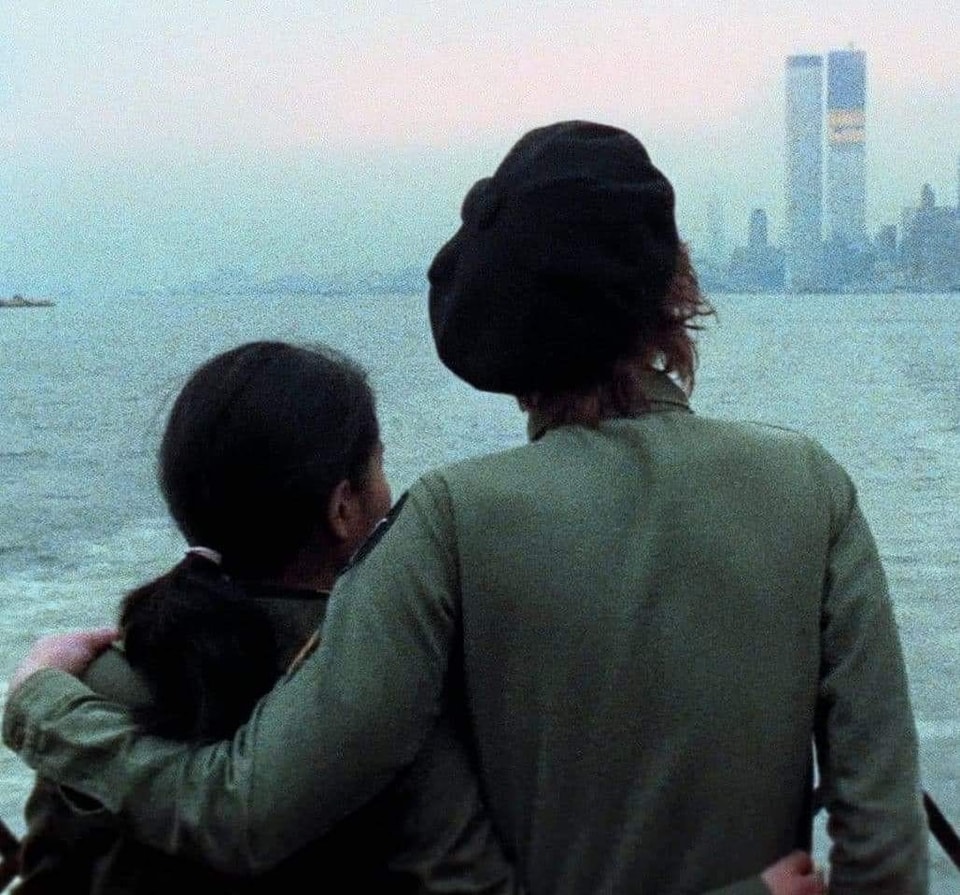
Today is not the day to debate whether or not the attacks twenty years ago were terrorism. They most certainly were. If they weren’t, the word has no meaning. Anyone who was alive and old enough to pay attention on September 11, 2001 (and now a quarter of Americans weren’t), felt the terror. I had just flown to Atlanta on 9/10 for my 20th high school reunion and my dad woke me up in time for me to see the second plane slam into the World Trade Center. I remember saying out loud, “What the hell is happening?” as Peter Jennings attempted to translate the untranslatable. It was about to get worse. Much worse.

The U.S. government defines terrorism as, ““the unlawful use of force and violence against persons or property to intimidate or coerce a government, the civilian population, or any segment thereof, in furtherance of political or social objectives” (28 C.F.R. Section 0.85). Much of my work is built around the description of hate crimes as acts of terrorism. Why do we not think of the 9/11 attacks as merely 2,977 murders? Because all Americans were the targets. I had a friend from college who was in Tower 1. Osama bin Laden didn’t know about him, or have anything against him personally. (Three of my former Emory classmates were killed in the New York attacks.) He was a random target, a death meant to intimidate a larger civilian population. And it worked. It was several months after 9/11 before I could enter a tall building or drive over a Portland bridge without thinking of a passenger plane crashing into it.

Hate crimes work the same way. Like the victims of 9/11, targets are randomly selected for their symbolic value, to coerce others like the targets that they aren’t wanted here. Leave. A burning cross, a gay bashing, a swastika on a synagogue, all meant to terrorize large populations. After the 9/11 attacks hate crimes against American Arabs and Muslim (and people perceived to be Arab and/or Muslim) increased 500%. Four days after the attack a Sikh named Balbir Singh Sodhi was shot in the head in a gas station in Mesa, Arizona by a white male who claimed he seeking revenge for the 9/11 attacks. Not only were Arab and Muslim-Americans living in fear, but so were Sikhs and others. (Here in Portland, an Italian man was beaten by three teenagers after the attacks because he was perceived to be Middle Eastern.) 2001 wasn’t an anomaly. Just this week, data released but the FBI revealed that hate crimes increased dramatically in 2020. Who is terrorizing whom?

On this sad occasion, I’m reminded of how the Bush-Cheney-Halliburton Administration tried to falsely pin 9/11 on Saddam Hussein, leading to the invasion of the wrong county, a protracted and completely unnecessary war that was responsible for the death in over 4000 U.S. troops, and over half a million Iraqi men, women, and children killed. But we were the ones fighting terrorism. We couldn’t possibly be the terrorists. Could we?

I visited Ground Zero the summer following the attack and I could still smell the dust of all the souls who had been atomized on that Tuesday in September. I’ve been to New York at least a dozen times since then and always notice what’s not there and what is. My recurring 9/11 dreams were central to my 2016 novel, The Dream Police. At the 9/11 memorial when I see the names of the victims who were pregnant women, I can’t help but convulse and every trip I make to Washington DC, I have a moment when I wonder what would have happened if the fourth plane had hit its intended target, the U.S. Capitol building. I carry this as trauma as does every American, to varying degrees, who remembers that day.

But we also carry the trauma of all the other acts of terrorism, many done in our name or done by people who look like us against people who don’t look like us. We’ve become blasé to the trauma and really good at rationalizing the traumatizing of others. We’ve become masters at dehumanizing the “other.” They see us as “infidels” and we see them as “fanatics.” They see us as “libtards” and we see them as “Nazis.” Nobody is just a human being capable of love and redeemable imperfection. If you told members of the radical right or the radical left they could push a button to launch a drone strike to wipe out the other side, the air would be filled robots on their death trips.

Trauma requires healing and there has been a lot of healing in the last 20 years. New Yorkers are resilient. The passengers on Flight 93 showed great courage in the face of their own deaths. And the work of the war machine that launches drone strikes into wherever continues at the Pentagon. But the healing is hampered by all the other terror we inflict on each other. An open wound never truly heals.

I will never forget that day. The confusion of wondering if it was real or a movie. The image of people choosing to jump rather than burn. The realization that the world would never be the same. But I will also never forget a lot of other things, including what happened in a Mesa, Arizona gas station four days after the attack and what happened two weeks ago in Kabul. Never forget any of it.