Standing, Again, at Ground Zero: Trying to capture the depth of 9/11 for my child

December 26, 2025

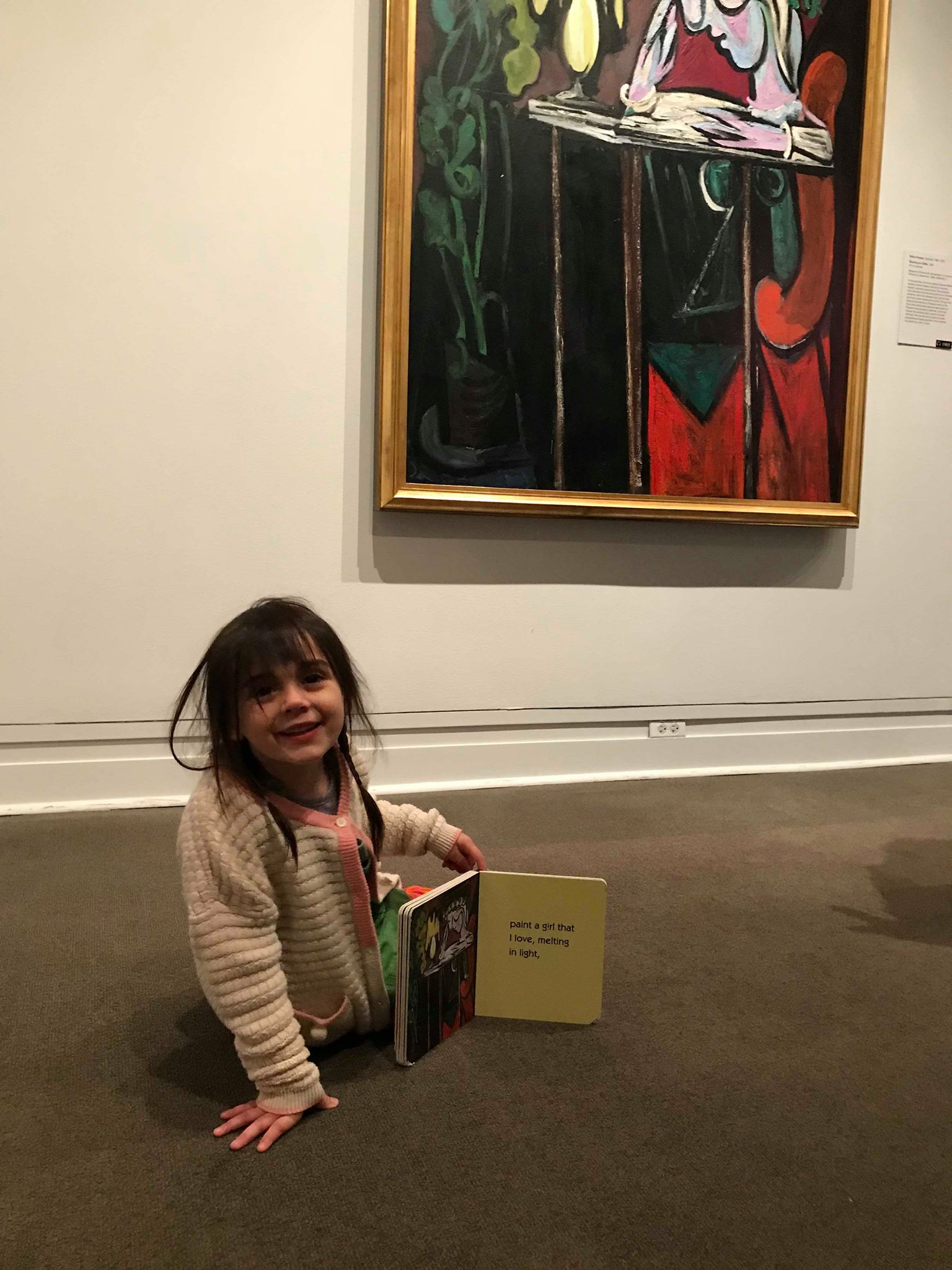
New York is like a giant magnet. I’ve been making pilgrimages to the city for over 40 years now for many different reasons. I had a speaking engagement there in 2018 and took my four-year old daughter and delighted at her constant wide eyes. (Although I had to tell her the bad news that if the Elmo in Times Square asked for a hug, we’d have to call the police.) So when Cozy, now 11, said what she wanted for Christmas was a trip to the Big Apple, I knew what we had to do.

There were some obligatory stops on the four-day stay in Manhattan, including shopping at Macy’s, the top of the Empire State Building, and the Christmas Tree at Rockefeller Center. But we were staying downtown, just a few blocks from the New York Stock Exchange, so I mustarded up the courage to suggest that we visit the 9/11 memorial. Born in 2014, my sixth-grader had limited knowledge about the event, other than it was a terrorist attack. When I was 11, I didn’t know much about the events of 1951, 13 years before my birth. The Korean War, that was it. I didn’t want to give her a history lesson, I just wanted to convey to her the weight of that day.

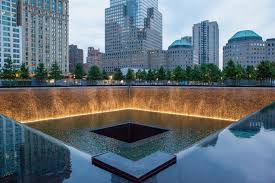
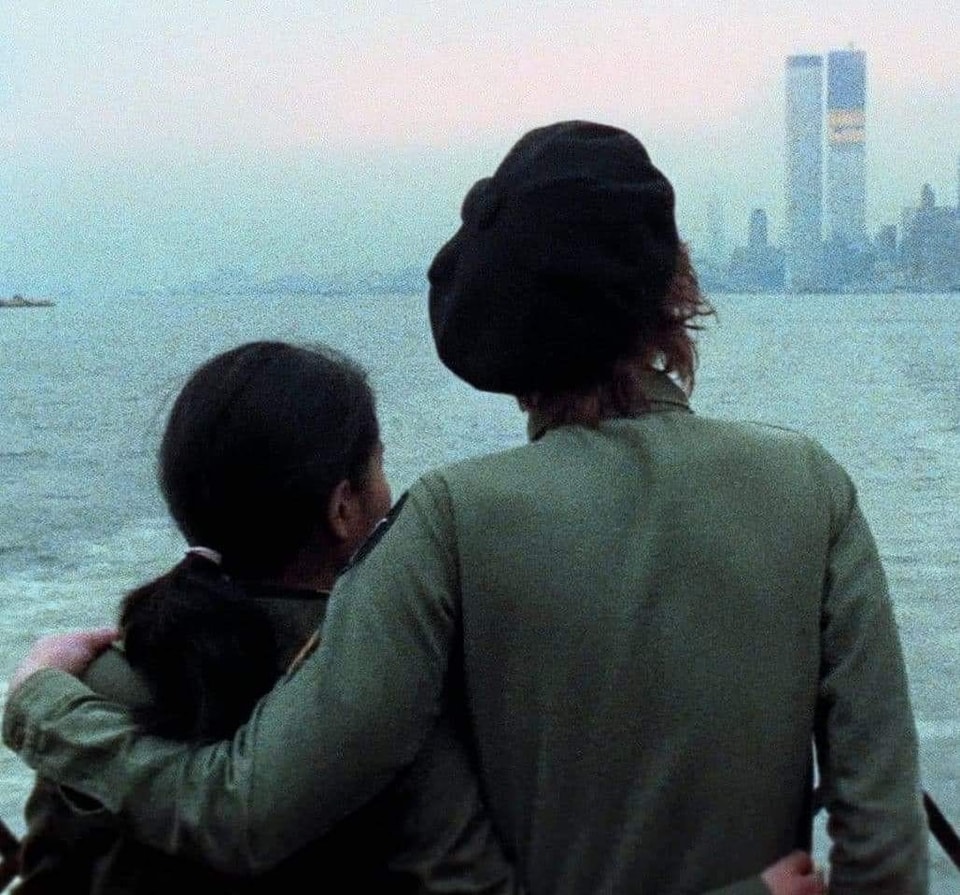
So on Tuesday morning, we walked over to the sacred ground as the rain mixed with snow. My first trip to Ground Zero was the summer of 2002, when the dust of the fallen was still drifting in the downtown air. Now, almost a decade and half later, the area has been completely transformed. “FiDi” is bustling under the new World Trade Center, opened the year Cozy was born. I had been to the memorial before, and it features in my 2015 novel, The Dream Police. But now it was all integrated into life in the city, a tourist destination.

I guided her to the places where the twin towers stood, now two deep fountains, ringed by the names of the thousands of people who died on another Tuesday morning. I told Cozy how, in 1987, when I was managing a band on Island Records, I would sit between the two towers and watch the commuters come out of the WTC subway station, work shoes in hand, and go up into the skyscrapers I first saw in the 1976 version of King Kong. Then I started to choke up and had to step back for a second to collect myself.

There’s no way to convey the horror of that day so I just told her a few details. I told her about the people who chose to jump to their death rather than burn to death and the sound of bodies crashing to the ground. I told her about Fight 93 and the passengers who crashed their own plane to stop it from being used as a missile into the Capitol Building. I told her about the hundreds of firefighters who were buried alive trying to rescue those trapped in the towers. And I sobbed. I’m sobbing as I’m writing this.

Since September 11, 2001, two billion people have been born on this planet. To them, 9/11 is a story from history, like Pearl Harbor is to me. Cozy will study in greater detail. I was 37 on that day. Maybe when she’s 37, in 2051, she’ll have something worse than 9/11 to weld her to history. I hope not. But when she does learn more about it, I want her to picture herself in that spot in Manhattan, filled with real people and two holes in the ground. I want her to remember the sound of my voice as it cracked.

I wonder what her perspective on that day will be in 2051.  Will she remember the pointless wars it produced that took so many more lives? Will she remember the hate crimes that spiked after the attack and the Patriot Act that started to roll back our liberties. Or will she tell a story about how a divided nation found something to bring people together? Both can be true but I think the latter is more of the myth we tell ourselves about 9/11.

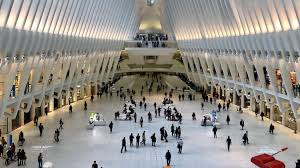
After the attacks, I had a recurring nightmare about being in the WTC subway station during the attack. The station begins to fill with water from all the broken water mains above and dead bodies float by me as I try to escape. That area is now the futuristic shopping mall called “Oculus.” We both were amazed at the open design with the subway stops adjacent to the shopping area. Cozy and I stopped by the Apple store where I bought a phone case, replacing my nightmare with some well-lit retail therapy.  It felt strangely healing.

She will learn more about that day; the ugly, the bad, and the good. Maybe, at some point, I’ll be ready to visit the museum and I can tell her more stories of that time, again through tears. I have so many memories, but it’s her story to discover now. I’ll tell her how I flew on 9/10 (with a camping knife in my bag) and, after the attacks, how silent the sky was with no planes above. And she can fold the tenor of my voice in with her own role in witnessing the history she’ll live through. 

The James Bond Project #9: Live and Let Die (1973)

January 24, 2025

This series is intended to evaluate each product of the James Bond film franchise through a feminist lens, and the relevance of the Bond archetype to shifting ideas of masculinity in the 2020s.

Live and Let Die (1973, directed by Guy Hamilton)

Now we’re into “my” Bond. The era of Roger Moore. And we’re still in America. Director Guy Hamilton and screenwriter Tom Mankiewicz are back to give us a Bond version of a seventies blaxploitation film. Producers couldn’t bribe Sean Connery (with $5.5 million) to put his white dinner jacket on one more time so the scramble for the next Bond began. Steve McQueen, Paul Newman, Anthony Hopkins, and (again) Burt Reynolds were considered but the license to kill went to Roger Moore (the first English actor to play the role), who had long been considered for the job. In the 1960s, Moore starred in The Saint, a British mystery thriller series, so he was 007 in training. Moore’s Bond comes off as more bourgeois than Connery’s, making his snarky quips much more funny. Maybe the comedic writing was just better in the seventies, but Live and Let Die has plenty of laugh out loud lines.

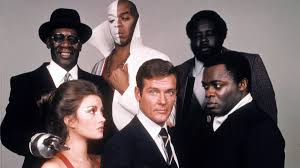
Live and Let Die is not a European film. The action takes place in New York (starting at the UN, then moving to Harlem), New Orleans, and the fictional island of San Monique. (Producers wanted to use Haiti, but the instability of Papa Doc Duvalier’s island forced filmmakers to move back to Jamaica and invent a tropical name.) There’s no Blofeld this time (but there is an underground lair!). Instead we get Mr. Big, a drug kingpin who has relationship with a Caribbean dictator named Kanaga (played by Yaphet Kotto, who had just played in the blaxploitation flick, Across 110th Street). The primary Bond “girl” this time is played by 21-year-old actress Jane Seymour. Since Pussy Galore (Goldfinger), the formula for the Bond girl has been a woman who is somehow in league with the bad guys who Bond peels away with his swarmy charm and Dudley Do-Right ethos. Here Solitaire (Seymour) is a psychic tarot card reader (as long as her virginity is intact) who belongs to the criminal Kanaga. Damsel in Distress Alert!!!

I didn’t see this movie when I came out the summer of 1973 (I was 9), but I knew all about it. The theme song was written and performed by Paul McCartney and Wings and was a radio staple that summer. I first saw it on TV a few years later and loved much of it, especially bayou boat chase that included a stunt that put the movie in the Guinness Book of World Records (which was like the Bible for kids in the 70s). As a boy in the Southern Klan town I was certainly challenged by the portrayals of black culture in the film that I found mostly frightening (especially the voodoo scenes). On its first TV screening the version that the Atlanta station showed removed the interracial kiss from the film. I missed out on that moment watching it age ll, but it was returned to the film by 1977 and, as a 13-year-old boy, I was already indoctrinated into the racist trope of black women as “sexual,” and was fixated on that scene. (The woman in question was CIA agent Rosie Carver, played by model Gloria Hendry.)

Live and Let Die was released at a time when “blaxploitation” films, made mostly by black filmmakers, started to find white audiences. Movies like Shaft (1971), Superfly (1972), and Cleopatra Jones (like Live and Let Die, in theaters the summer of ’73) were known for their gritty portrayals of black urban life, where black crime was often contrasted to the deeper crimes of racism. Live and Let Die contained many of these motifs and the images of James in Harlem capture a picture of urban decay that has long since gentrified. The film also finds great humor in the man out of place theme with Bond in his suit across 110th Street. “Can’t miss him. It’s like following a cue ball.” There’s a scene in a Harlem bar where Bond explains to a black waiter that ordering his whiskey “neat” means no ice, to which the waiter says, “Oh, we charge extra for that.” Brilliant.

Live and Let Die was hugely successful and worthy of our feminist analysis and probably a discussion about the portrayal of blackness as well.

Driver of Action – Maybe because there was (another) new Bond to introduce to the world, Roger Moore is the star of the show. We do get CIA agent Felix Leiter back in the fray (and a clever joke about a “Felix Lighter”). Felix (this time played by David Hedison) has, like in the last film, a team of unnamed CIA operatives, but this film is all about Bond in America, like a fish out of water. Everyone else is a  bit player.

Role of Violence – One might make the case that the violence in LALD is ramped up because it’s Bond vs. black gangsters (This time Mr. Big smacks the Bond girl instead of James), but it’s a pretty standard body count, including four MI-6 and CIA agents. As has become tradition, the carnage is saved for the end of the film, including 007 opening fire on a voodoo gathering. The climax of the film has James and Solitaire dangling over a pool of sharks (lordy) that end with 007 literally blowing up Mr. Big (his guts raining down into the shark pool). And after that, Bond battles Tee Hee, Mr. Big’s metal clawed henchman, tossing him out of the window of a moving train. Moore is less physical than Connery and Lazenby’s Bonds (at 45, Moore was 16 years older than Lazenby). He’s also more likely to rely on wit than weapons.

Vulnerability – This one is less clear. Moore is stepping into an established caricature that is forged on a popular formula. James shaving while sitting in the bathtub is about as “naked” as we are privy to witnessing. We do get to see James’ kitchen, complete with art deco tiles and espresso machine (Paging Martha Stewart!), but we still know little about James when he’s not 007-ing. Even his relationship with Rosie, the bumbling CIA agent posing as “Mrs. Bond” is more predatory than empathetic. Moore’s more bougie Bond is still walled off.

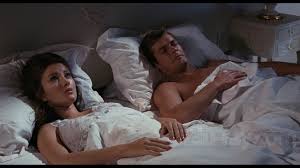
Sexual Potency – Bond is back. James quota of bedding three women is achieved in Live and Let Die. Bond’s first scene is him in the sack with a beautiful Italian agent, Miss Caruso, who has to hide in the closet when M and Moneypenny arrive at his apartment to give him his next mission. After they leave, he uses his cool magnet watch to unzip her dress for another round of “bonding.” In San Monique, he makes its with (double) agent Rosie in another interracial romp. When he calls her out for working for Mr. Big, looking for answers, he says, “And I’ll kill you if you don’t.” Having just had sex with him, she says, “But you couldn’t. You wouldn’t. Not after what we just done.” And his uber-creepy retort is, “Well, I certainly wouldn’t have killed you before.” Just a bit rapey. Finally, he beds the virginal Solitaire by tricking her with a tarot deck stacked with “Lover” cards so he can hit his quota. Even though her impropriety with Bond spells her death, she wants more 007 and begs him to come back to bed. “There’s no sense in going off half cocked,” he says in the best line of the film.

Connection – This new Bond is supremely detached, even from Moneypenny. When Rosie is killed, there’s not even a pause. There’s a reference to an MI-6 agent who was killed, and Bond says, “I rather liked him. We had the same hat maker.” That’s it. Even Felix is just a resource at the other end of a phone line. We do get the Bond/Bond girl end scene, this time not on a boat but a train to New York, headed for perhaps for some more cocking, somewhere south of Harlem.

Toxic Masculinity Scale: 5

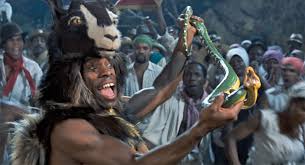
Summary Live and Let Die has a racial subtext that is a bit rough in 2025. Let’s start with the good news. Producers hired a ton of black performers for this film. Scenes shot in Harlem, New Orleans, and Jamaica are populated with black bodies. Cabaret singer B. J. Arnau’s soulful version of McCartney’s theme song is a high point of the film. Having said that, the movie is rife with racial stereotypes, from “pimp mobiles” and black gangsters peddling heroin in hollowed-out Harlem, to “mystical blacks” dancing with snakes and chanting voodoo mumbo. As a dumb white kid in rural Georgia, the film didn’t make me want to advocate for black people, it made me afraid of them. It was a spin on that “mystical black” trope when Geoffrey Holder, who plays voodoo-practicing Baron Samedi, became the pitchman for 7-Up in the “Uncola” commercials a few years later.

Contemporary viewers are likely to pin LALD as both racist and sexist. You’ve got the southern white cop who calls black men “boy” and you’ve got Bond who calls every woman “darling.” You get the sense that all the movements toward equity that we starting to become institutionalized in society in the seventies are kept at arms length by the WASP male fantasy of Bond. It’s a fair start for Moore, who comes in as a more older “gentleman” than Connery, which might lead one to think we’d get a Bond with a little more introspection. (You learn things as you age!) Instead we get sardonic raised eyebrows and lies to get women’s underwear off. That’s not an evolved man.

The action scenes in this movie are absolutely spectacular. I could watch the boat chase a hundred times. The surprise appearance of an underground lair with sharks is a chef’s kiss gift to Bond fans. And the one liners, delivered like a Blofeld laser, are side splitting. (“Butterhook!”) The score by Beatles producer George Martin is epic. And the voodoo and alligator scenes are completely terrifying. There’s so much to love in this film, even if Bond is stuck in a world that has left him behind. As Sheriff J. W. Pepper says to Bond, “What are you? Some kinda doomsday machine, boy?” No, just a device to preserve the old order.

Next: The Man with the Golden Gun (1974)

The James Bond Project #8: Diamonds are Forever (1971)

The James Bond Project #7: On Her Majesty’s Secret Service (1969)

The James Bond Project #6: You Only Live Twice (1967)

The James Bond Project #5: Casino Royale (1967)

The James Bond Project #4: Thunderball (1965)

The James Bond Project #3: Goldfinger (1964)

The James Bond Project #2: From Russia With Love (1963)

The James Bond Project: #1: Dr. No (1962)

Death By a Thousand 9/11s

September 11, 2021

They say one person’s terrorist is another person’s freedom fighter. From the perspective of a lowly stormtrooper inside the Death Star, Luke Skywalker and his band of rebel fighters, guided by an archaic religion, were not heroes, but mass murderers. Was the U.S drone strike that targeted ISIS-K in Kabul on August 29th a part of our righteous war on terror or was it a terrorist attack that killed seven children (and no ISIS fighters)? Remember when Bill Maher said, on his show Politically Incorrect, the 9/11 hijackers were not cowards, but those who launch cruise missiles from 2000 miles away were and ABC canned him? Are we even allowed to ask these questions?

Today is not the day to debate whether or not the attacks twenty years ago were terrorism. They most certainly were. If they weren’t, the word has no meaning. Anyone who was alive and old enough to pay attention on September 11, 2001 (and now a quarter of Americans weren’t), felt the terror. I had just flown to Atlanta on 9/10 for my 20th high school reunion and my dad woke me up in time for me to see the second plane slam into the World Trade Center. I remember saying out loud, “What the hell is happening?” as Peter Jennings attempted to translate the untranslatable. It was about to get worse. Much worse.

The U.S. government defines terrorism as, ““the unlawful use of force and violence against persons or property to intimidate or coerce a government, the civilian population, or any segment thereof, in furtherance of political or social objectives” (28 C.F.R. Section 0.85). Much of my work is built around the description of hate crimes as acts of terrorism. Why do we not think of the 9/11 attacks as merely 2,977 murders? Because all Americans were the targets. I had a friend from college who was in Tower 1. Osama bin Laden didn’t know about him, or have anything against him personally. (Three of my former Emory classmates were killed in the New York attacks.) He was a random target, a death meant to intimidate a larger civilian population. And it worked. It was several months after 9/11 before I could enter a tall building or drive over a Portland bridge without thinking of a passenger plane crashing into it.

Hate crimes work the same way. Like the victims of 9/11, targets are randomly selected for their symbolic value, to coerce others like the targets that they aren’t wanted here. Leave. A burning cross, a gay bashing, a swastika on a synagogue, all meant to terrorize large populations. After the 9/11 attacks hate crimes against American Arabs and Muslim (and people perceived to be Arab and/or Muslim) increased 500%. Four days after the attack a Sikh named Balbir Singh Sodhi was shot in the head in a gas station in Mesa, Arizona by a white male who claimed he seeking revenge for the 9/11 attacks. Not only were Arab and Muslim-Americans living in fear, but so were Sikhs and others. (Here in Portland, an Italian man was beaten by three teenagers after the attacks because he was perceived to be Middle Eastern.) 2001 wasn’t an anomaly. Just this week, data released but the FBI revealed that hate crimes increased dramatically in 2020. Who is terrorizing whom?

On this sad occasion, I’m reminded of how the Bush-Cheney-Halliburton Administration tried to falsely pin 9/11 on Saddam Hussein, leading to the invasion of the wrong county, a protracted and completely unnecessary war that was responsible for the death in over 4000 U.S. troops, and over half a million Iraqi men, women, and children killed. But we were the ones fighting terrorism. We couldn’t possibly be the terrorists. Could we?

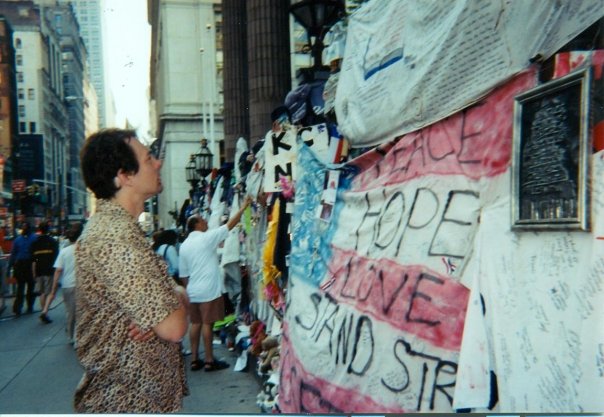
I visited Ground Zero the summer following the attack and I could still smell the dust of all the souls who had been atomized on that Tuesday in September. I’ve been to New York at least a dozen times since then and always notice what’s not there and what is. My recurring 9/11 dreams were central to my 2016 novel, The Dream Police. At the 9/11 memorial when I see the names of the victims who were pregnant women, I can’t help but convulse and every trip I make to Washington DC, I have a moment when I wonder what would have happened if the fourth plane had hit its intended target, the U.S. Capitol building. I carry this as trauma as does every American, to varying degrees, who remembers that day.

But we also carry the trauma of all the other acts of terrorism, many done in our name or done by people who look like us against people who don’t look like us. We’ve become blasé to the trauma and really good at rationalizing the traumatizing of others. We’ve become masters at dehumanizing the “other.” They see us as “infidels” and we see them as “fanatics.” They see us as “libtards” and we see them as “Nazis.” Nobody is just a human being capable of love and redeemable imperfection. If you told members of the radical right or the radical left they could push a button to launch a drone strike to wipe out the other side, the air would be filled robots on their death trips.

Trauma requires healing and there has been a lot of healing in the last 20 years. New Yorkers are resilient. The passengers on Flight 93 showed great courage in the face of their own deaths. And the work of the war machine that launches drone strikes into wherever continues at the Pentagon. But the healing is hampered by all the other terror we inflict on each other. An open wound never truly heals.

I will never forget that day. The confusion of wondering if it was real or a movie. The image of people choosing to jump rather than burn. The realization that the world would never be the same. But I will also never forget a lot of other things, including what happened in a Mesa, Arizona gas station four days after the attack and what happened two weeks ago in Kabul. Never forget any of it.

Taking Manhattan with a 4-year old

Oct. 23, 2018

My first experience in New York City was the summer of 1982. I was 18 and my dad and I were driving to Kennedy Airport from Stone Mountain, Georgia. I was heading off to go to school in London and we made it a leg of the journey. That first glimpse of the Manhattan skyline, with the looming World Trade Center towers and the Statue of Liberty floating in the foreground, injected me with an energy. So much bigger than the biggest thing I had ever seen. And somewhere in there was Lou Reed singing, “Take a walk on the wild side.” I would soon return to explore every corner.

Screen Shot 2018-10-22 at 10.06.59 PM

I’ve probably been to NYC fifty times since, but never like this trip. I was booked to speak at a forum on extremism in mid-town Manhattan and we thought, why not bring the kid? She had just spent a week in Mexico with Andrea and was fine traveling with one parent. Why not the Big Apple? I’ve been traveling so much this year without her I thought it would be fun to bring her along. So I called a travel agent and got her booked on my flight and we started planning what New York City with a 4-year-old and a 54-year-old would look like. No Russian bars. Can you tell me tell me how to get to Sesame Street?

Cozy is great on planes. She’s been flying since she was a baby. But navigating JFK airport was a challenge. I forgot how huge it was and she was tired of walking before we were anywhere near Baggage Claim. I should have taken that as a sign of things to come. Our first night was at an AirBnB up in Spanish Harlem and she fell asleep on the subway ride across Queens and Brooklyn. Once in checked in she was more excited by her bunkbed than the city streets outside. What to see first?

We took the 6 Train down to Grand Central Station and rode a pedicab to Times Square. Her eyes exploded. It’s a pretty overwhelming site for any first-timer, more lights, more people, more out-of-shape Spidermans than the kid could imagine. (And she’s been to Mexico City.) Fortunately, there were no drunk Elmos to contend with. We stopped in the Disney Store that I remember was a dildo store in the mid-1980s. I wanted to tell the kids working there but it seemed inappropriate. 

44091313_760852910973475_5681972429568606208_n

Then we caught a train down to the East Village where I had a meeting with an old friend and his colleague who are turning a novel of mine into a stage musical. But first we happened into a diner on Broadway that just happened to be called Cozy Soup ‘n’ Burgers. “When I grow up, I’m gonna be a chef here!” said Cozy, munching on her grilled cheese sandwich. The kid seemed to immediately take to the city, bouncing with its energy, as I had in 1982. I wondered what it would have been like if I had gotten that faculty job at CUNY and this was our life.

44126947_689919844699167_1114688736530006016_n

She slept through a noisy night in Harlem. That’s a lot in one day for a 50-month-old. The next morning we moved into our hotel in midtown and started another day of adventure that included going to the Met to where we had a date with Picasso, a trip to the Central Park Zoo, where she saw her favorite animal, the impressive snow leopard, and then dinner in Greenwich Village with some of friends who had kids who were super NYC-savy. Seeing Cozy run around Washington Square with her squad while nobody tried to sell me pot made me reflect at how much New York had changed since the Lou Reed days.

44253204_10157788158874307_4004879788874399744_n

Day 3 we had breakfast in bed and then headed downtown to hop the Staten Island Ferry for a gander at the Statue of Liberty. She wasn’t prepared for the cold wind off the water as we wandered around Wall Street and tried to compete with a huge crowd of Chinese tourists for a picture with the Fearless Girl statue in front to the Charging Bull at the U.S. Stock Exchange. I don’t know if the tourists understood its significance but Cozy got it. Later, during my keynote, an old friend whisked Cozy off for a matinee of Frozen: The Musical on Broadway and a trip to the M&M Store (apparently her highlight of the entire trip). We topped the day off with a trip to the top of Rockefeller Center and an ice cream sundae from room service.

Our last day we had breakfast with feminist scholar Michael Kimmel at Veselka in the East Village, picking up an order of pierogis to take home to Andrea. Soon we were in a cab for LaGuardia and beginning our journey home.

44249880_391295568103263_952208564649197568_n

I had so much fear about bringing a 4-year-old to the big city, but Cozy was amazing. She mastered riding the subway (including the Lexington line during rush hour). She also loved catching cabs, no booster seat needed, and always had a good conversation with the driver. “Do you like kitties?”  When I go to NYC I just like to walk most places, but after a day Cozy reminded me that her feet were smaller than mine and that I should carry her, “because it’s good exercise.” After a few blocks she’d ask, “Do you feel stronger, Daddy?” Sort of, not really.

Manhattan has evolved so much since I started coming to hang out in the 1980s. Did I ever tell you about the time I accidentally bought heroin in Alphabet City? I was hanging out with the Portuguese boyfriend of a college friend of mine when he saw somebody he knew. “Man, I don’t want to talk to that guy because I owe him money. Would you give him this $20 from me?” I handed the guy his 20 and ended up with a small white packet in my hand. Not cool. But I’m sure there’s a Starbucks on that corner now and we can be all romantic about the drug infested days of the Lower East Side. New York is now a city of families, and it’s not just the Disney-fied Times Square. As a parent, it’s nice to see so many kids inhabit the city and I can still cherish my memories of barfing in the toilet at CBGBs on the Bowery. I’m glad Cozy got this version, because she could see herself in the city.

John Lennon ended up in New York City in 1971 because it was the center of the world. He became a father and househusband here and died on its streets. NYC might not be the center of the world anymore, (Nǐ hǎo, Beijing), but the Big Apple still feels like the place to be. Even though much of it’s twentieth century character has been gentrified into oblivion (I mean, a Target in the East Village?), much of it is still iconic and I could see Cozy soak it up like a Sponge Bob costume in the Hudson River. She gobbled up Denino’s pizza on MacDougal and asked if we could spit on Trump Tower on Park Avenue and threw a mean right arm up to hail a cab. She’s 4 and has been to one more Broadway musical than I have. It’s already her kinda town.

Manhattan is life. It is the culmination of American grit and diversity. It is the world on one island. I’m glad my kid has begun her New York story.

44548610_752940821716669_7985468286399676416_n

My Little New York Patti Smith Dream

January 9, 2016

Dakota

I’m sitting in a bar on West 72nd Street in Manhattan. This is John Lennon’s block. John Lennon, the househusband and patron saint of this blog. I often come here on trips to New York, a solemn pilgrimage to consecrated pavement, blessed by his blood, thinking I will see him and his death will all have been a bad dream, conjured up by Rosemary’s devil-eyed baby. I walked the block, past the Dakota and thought about how many times he did the same. I’m sure it’s changed a bit since 1980. The Starbucks and the tour busses (“And to your left you’ll see the spot where Beatle John Lennon was murdered.”) weren’t there during the last days of the Carter years. And when it happened we thought our love affair with guns was finally done. On this Saturday the Dakota is draped in sheets and scaffolding. At first I thought it was a Yoko Ono performance piece as she still lives in the Victorian castle overlooking Central Park. Turns out the old house is just being cleaned.

But most of this short trip has been spent in Greenwich Village (although I did hike up to the East Village this morning for some perfect pierogies at Veselka Café that happily took their time melting on my tongue). As long as John has been in my life, Patti Smith has been there almost as long. At least since I read about her in rock magazines in my teenage bedroom in 1976 Stone Mountain, Georgia; the wild woman, chanting, “Go Rimbaud!”

3035943544_ca6a585a86

The dirty, nasty world of CBGB’s on the Bowery is where I wanted to be, not in my Ted Nugent-loving southern suburbia, draped in pink and blue Laura Ashley curtains. At age 14, I got the Easter album after hearing “Because the Night” on the radio and tried to dissect the poetry imbedded in what was then considered “punk rock.” High on rebellion. Words can carry you. Maybe I can do that, my pimply brain thought. Maybe I can write a line that will take on a life of its own.

After my piano-playing mother, Patti was my first exposure to the energy of the goddess artist. There was a raw feminist power to her, unrestrained by gendered expectations. Her hairy armpits were mocked on Saturday Night Live when Gilda Radner did her “Candy Slice” character. It was all wild abandon to a boy trapped in the suffocating Bible Belt. I’d sit in front of my stereo speakers like Hendrix kneeling in front of his burning guitar. Give me more, I’d beg.

1516928_943495982393592_160775547_n

The first time I saw her play live, I was in a state of ecstasy. It was at the Crystal Ballroom in Portland in 2001 and when she played “Gloria,” I ripped my shirt off thinking I was being ushered into a Roman orgy. There’s track from that show on her 2002 Land album. She’s reading from Ginsberg’s Howl and you can hear me screaming like a banshee. The only drug I was on was transcendence. And now my artist wife is deep under her spell. Our own Frida Kahlo with a rock band and a return to Portland on Andrea’s birthday.
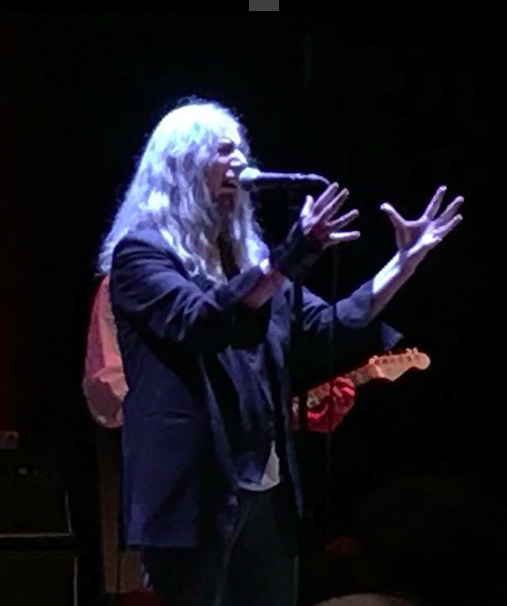
Screen Shot 2016-01-10 at 10.39.02 AM

After seeing her last Wednesday night with Andrea, performing 1975’s Horses front to back (including the prose-rhapsody of  “Birdland.” Oh, how long I’ve waited for you!), I decided to take her new book, M Train, with me to New York, where I would be interviewing at a wonderful university. It’s a brilliant free floating tome about travels and not being able to write this particular book. It’s like her version of a Seinfeld episode. By the time I landed, I had the first hundred pages dancing barefoot in my head.

Ino

As it turns out, the book unfolds around the world but mostly in Greenwich Village, near where I was staying in Chinatown. Much of it begins at Café ‘Ino on 21 Bedford Street, just past 6th Avenue. I must go there, I thought on the plane, and have black coffee and toast at her table! Of course, in rapidly transforming New York City, Café ‘Ino is gone gone. It closed in 2013 and now is a lovely Italian bistro called Cotenna, where I had a sumptuous penne al fungi and a glass of red wine and imagined her sitting by the window, scribbling in her notebook.

MTrain

The other Patti spot is Caffé Dante, around the corner on MacDougal. They didn’t open until noon and it was 11 am on Friday, so I walked up the block to Caffe Reggio, an old favorite of mine. I was traveling light, just my laptop bag with the Mac, M Train, a few pens, the latest issue of Beatlefan and the new Village Voice with a caricature of Donald Trump as a fascist demagogue on the cover.

Reggio

I found a seat surrounded by fellow literary travelers all enclosed in the café’s red womb-like walls, waiting to birth some brilliant thought or first line. A young guy next to me was reading Kerouac, an older fellow (who I’m sure I’ve seen there before) was reading Lacan: A True Genius and kept putting the book down with a “Holy psychoanalysis!” look on his face. I had my copy of M Train and a cappuccino, keeping one eye out the window in case Ms. Smith walked by. But my singular mission was to spend some time in her world through the pages of her book.

As my year of writing winds down it’s time to put myself back on the market. Parenthood demands a stable income, but my mind is still floating in the ether. A winning Powerball ticket bought on St. Marks aside, I’d really like Cozette to know her father as more than the guy sitting on the couch writing while drinking endless cups of coffee. So on MacDougal I developed a fantasy about running into Patti before my interview with the provost. I’d grab a seat next her at Caffé Dante and mention our prior meeting at Powell’s Books in Portland when I showed her my Cobain homage in my book of poetry to her Dylan homage in her book of poetry.

homage

“So what are you doing here in New York?” She’d ask.

“Hoping to land a job. I was a criminologist at a university in Portland for twenty years…”

Her attention would zip up a few notches. As it turns out, Patti is obsessed with crime shows on TV.  I remember when I first heard her mention this, at a concert at the Crystal Ballroom, I thought, What? Patti Smith watches TV??? I thought she only read poems by doomed bohemians. I watch TV! I wonder what else we have in common. Does she buy wine based on what the label looks like? Because I totally do that!

I’d continue with the story of how I was forced into a position to choose between love or my job and I chose love without hesitation, resigning my tenured post to become a stay-at-home-dad.

“That’s horrible,” she’d say. “I’ve heard professors can be targets like that.”

“It turned out for the best. I’ve had time to write and be with my daughter. But I’m ready to go back to work. I’ve got a meeting with a university here at 2 o’clock. Do you think you could give me a special blessing? It would mean a lot to me and my family.”

“Well, I’m not Pope Francis,” she’d say, “but okay.”  Then she’d make the mark of the cross on my forehead like she had holy water on her fingers instead of coffee and I’d be Joan of Arc, ready for battle. And that’s how our long friendship would begin.

A friend on Facebook reminded me that Patti was performing in Los Angeles the next night so I wasn’t likely to see her strolling down MacDougal, eating a falafel from Mamoun’s. Still, I felt her there, standing on the corner of 6th Avenue and Houston, sending me on my way as I mis-sang the lyrics to “Kimberly.” Give me your starry eyes, baby.

Horses

I don’t want to mention the name of the university for fear of jinxing my chances (or the greater fear that evil conspirators in Portland will catch wind and work their black magic on it), but the interview went really well and the university administrator, as providence would have it, was a Patti Smith fan. On top of that, the AirBNB where I stayed in Chinatown had an autographed copy of Horses outside my room. All the stars of the northeastern cross were aligned.

P1100355

After the interview and lunch where Café ‘Ino once was, I went to Caffé Dante for coffee and a dessert that I felt I’d earned. I needed some writing time and got a few scenes for the new book down, including one deep discussion between the two main characters about farting in airport men’s rooms. (I’m not pretending to be Fredrico Garcia Lorca here.) I tried my rusty Italian on the waiter and he told me in slightly less rusty English how expensive this city had become but that there are still small places for artists.

New York seems warm for early January. Yesterday people tossed their Christmas Trees on to the sidewalks to be sent God knows where, but Christmas decorations still hang above Columbus Avenue and in Little Italy, near “my” flat. This morning at Veselka a group of young Russian immigrants came in and sang Christmas carols. The Russian Orthodox calendar must be different than ours, I half remembered. Maybe this would be a magical place to raise a child, I thought. The carolers wore wonderful costumes including a Grim Reaper. Joyousness!

My fantasy of New York has always been the dirty boulevard of Lou Reed songs. Trash and Vaudeville. But now as the parent I have to reimagine that fantasy. It’s horribly expensive and the school situation seems impossible, people tell me. And what if I lost Cozy on the A Train or in the Museum of Modern Art? (Although there are worse fates for a child.) But then again, she could grow up in the absolute center of the world and sit in cafés on Saturdays in the Village, maybe bumping into Patti Smith. Or John Lennon.

Addendum: I finished M Train on the flight from Newark to Seattle. I was laughing and then crying and then I just wanted to write. Read this book, but be sure to find a good café in which to do it.

Afterword: Well, the job ended up going to some kid fresh out of Harvard. I guess I could have used the blessing from Mother Patti after all.