The James Bond Project #27: No Time to Die (2021)

This series is intended to evaluate each product of the James Bond film franchise through a feminist lens, and the relevance of the Bond archetype to shifting ideas of masculinity in the 2020s.

No Time to Die (2021, directed by Cary Joji Fukunaga)

August 27, 2025

And in the end. Here we are at the final (for now) review. The final Daniel Craig performance as James Bond. The final 007 in the 59 year history to be produced by Eon Productions and anyone named Broccoli. And perhaps the last Bond film ever. Spoiler: James dies but rumors of another reboot abound. Last February, Amazon/MGM bought the franchise from Eon, so we may get another generation of 007, perhaps AI generated.

No Time to Die,  the 25th Eon Bond film, wraps up the Bond story in some interesting ways. Danny Boyle was to direct but backed out at the last minute so True Detective director Cary Joji Fukunaga took on the job. Daniel Craig, 51 at the time, who’s body had been battered by the role, reportedly said he’d rather slash his wrists than play Bond again. MGM reportedly offered him $100 for two more Bond films, which he turned down. He utilmateiy accepted a payday of $25 million for a film that would tie up the Bond story’s loose ends. We’d see some familiar faces for the last time, including Jeffrey Wright as Felix Leiter, Ralph Fiennes as M, Naomie Harris as Moneypenny, and Christoph Waltz as Blofeld.

NTTD doesn’t really have a Bond girl in the traditional franchise sense. For the first time, a female lead returns in a film. Léa Seydoux, who played James’ love interest, Dr. Madeleine Swann in Spectre, returns in NTTD and she has a surprise for 007. Ana de Armas, who racked up the awards as Marilyn Monroe in 2022’s Blonde, is CIA agent Paloma and she out-La Femme Nikita’s Nikita. Her action scenes are the highlight of the film.

The final installment gives us the expected Bond tropes, including our final underground lair, Bond in a tux, cool gadgets (including a glider submarine), exotic locations (Bond’s back in Jamaica!), and more than one Aston Martin. But this Bond is not the walled-off Lothario of the past six decades. Craig still plays him with smirky panache, but NTTD 007 is a family man.

For one last time, let’s plug the film into our evaluation matrix and see how the final Bond film ranks in our toxic masculinity scale.

Driver of Action – It makes sense that the final film centers on Bond himself. As Spectre ended, we have James leaving MI-6 to be with Madeline. The MI-6 crew, including Q, play small roles. There’s even a new 007, who, fittingly, is a black female, played by Lashana Lynch. Bond is reunited with CIA agent Felix Leiter, who is killed by a bad DOJ agent. The diversion from solo Bond is the scene with Ana de Armas in Cuba where they make an excellent team opening an epic can of whoop ass on Spectre.

The Role of Violence – Rogue Bond doesn’t need a license to kill, but when he’s reinstated to MI-6, his body count is off the charts. The Cuba scene with the Paloma has the highest kill rate in Bond history and in the Norway chase scene and the underground island lair of the assassin Safin (played by future Freddie Mercury Rami Malek) we see countless henchmen mowed down. Fan count is 27 killed but it felt like twice that. As usual, Bond dodges an endless hail of bullets, but one fired by Safin, finds him, leading to his death as British missiles destroy the island base.

Vulnerability – James Bond has never been more vulnerable in a James Bond film. The first part of the film, Bond is plagued by thoughts of Vesper Lynn, his previous love interest who died. Then he’s plagued by thoughts that Madeleine has betrayed him. Then he learns that that was a mind trick by Blofeld. Reunited with Madeleine, he learns that he has a child named named Mathilde. In the end he sacrifices himself to save Mathilde and Madeleine.

Sexual Potency – That’s not really the vibe in this film. The films opens with James and Madeleine, in love in Italy, including a scene in bed. He tries to make the moves on a woman in his room in Jamaica until he learns she is an MI-6 agent, the new 007 (in a scene that felt like an homage to Live and Let Die). He briefly flirts with Paloma until they get busy killing Spectre baddies. NTTD is a Dad Bond film.

Connection – Jame is fully connected to Madeline in this movie. Even in the scene where he puts her on the train after he believes she tried to kill him is full of pathos. Later in the film, he tells her, “I have loved you and I will love you.” Once he learns Mathilde is his daughter, the parent protection gene is unleashed and he is focused on saving his people. NTTD has no cute epilogue where we see he’s survived the missile strike and on a boat, drinking martinis with Madeleine. We see him blown up real good and the film ends with Madeleine telling their daughter about her heroic father.

Toxic Masculinity Scale: 1

Summary: NTTD might score higher because of the constant explosion of gun violence, but paternal Bond levels all that out. Even the title sequence steps back. Over a great Oscar-winning theme song by Billie Eilish, instead of the titles being projected on the bodies of nude women, it’s over Bond and his weapons. It should also mentioned that the credits included the names of many women, not just hair and make-up and casting. For reasons that might be sad (the end of Eon Bond films), we finally get a more human model of masculinity from Ian Flemming’s iconic character.

No Time to Die’s release was held up by the COVID pandemic. Principle photography wrapped in October 2019, but post-production was shuttered during the lockdown. The final Eon Bond film had its world premiere on September 28, 2021 at London’s Royal Albert Hall and landed in a market where most theaters were still closed. A month later, the global deaths from COVID-19 topped 5 million.

Because of the nature of corporate ownership of film franchises, nobody really lamented No Time to Die as the LAST JAMES BOND MOVIE EVER. In fact, “Bond 26” is currently being written by Peaky Blinders creator Steven Knight and Dune director Denis Villeneuve is tapped to direct. Who will play the new Bond? Rumors are floating about Kick Ass star, Aaron Taylor-Johnson. I’ve been routing for Idris Elba, but he might be a little old. Could it be a person of color? Or even a woman? I mean, why not? We can only hope the new Bond is a healthier versions of masculinity that is both vulnerable and lethal. He (or she) still has a license to kill, after all.

The James Bond Project #26: Spectre (2015)

The James Bond Project #25: Skyfall (2012)

The James Bond Project #24: Quantum of Solace (2008)

The James Bond Project #23: Casino Royale (2006)

The James Bond Project #22:  Die Another Day (2002)

The James Bond Project #21:  The World Is Not Enough (1999)

The James Bond Project #20:  Tomorrow Never Dies (1997)

The James Bond Project #19: GoldenEye (1995)

The James Bond Project #18: License to Kill (1989)

The James Bond Project #17: The Living Daylights (1987)

The James Bond Project #16: A View to a Kill (1985)

The James Bond Project #15: Never Say Never Again (1983)

The James Bond Project #14: Octopussy (1983)

The James Bond Project #13: For Your Eyes Only (1981)

The James Bond Project #12: Moonraker (1979)

The James Bond Project #11: The Spy Who Loved Me (1977)

The James Bond Project #10: The Man with the Golden Gun (1974)

The James Bond Project #9: Live and Let Die (1973)

The James Bond Project #8: Diamonds are Forever (1971)

The James Bond Project #7: On Her Majesty’s Secret Service (1969)

The James Bond Project #6: You Only Live Twice (1967)

The James Bond Project #5: Casino Royale (1967)

The James Bond Project #4: Thunderball (1965)

The James Bond Project #3: Goldfinger (1964)

The James Bond Project #2: From Russia With Love (1963)

The James Bond Project: #1: Dr. No (1962)

Dad’s Top Discs of 2019

December 30, 2019

In 2014, the provost of Portland State University brought in some expert to tell us the university as we know it, would “cease to exist in 50 years,” so we better get onboard with higher education moving online. He compared it to CDs replacing vinyl albums. I remember thinking that sometimes the old way is better and CD sales were fading fast. 2019 saw vinyl albums outsell compact discs for the fist time since the late 1980s. Vinyl has roared back into the marketplace. I wonder where that shithead “expert” is now.

Unknown

I certainly bought plenty of vinyl in 2019, including plenty of new releases. Nothing like spinning a black platter on a grey rainy Portland day. Here’s my annual list of my favorite albums of the year. In the top spot are some old friends of mine, drivin n cryin, from Atlanta. I picked up their new album, Live The Love Beautiful, in a record store in Austin, Texas and immediately fell in love with it. It represents everything I love about the conflicting themes of life in the South, the beauty and the stark desperation. 

71PeuZS9LZL._SY355_

There are plenty of great 2019 releases that I haven’t discovered yet. I just bought the new Lana Del Ray album, Norman Fucking Rockwell, today. I’m dying to hear the new records from Beck and Nick Cave. There were other great albums that just missed my Top 20, like The Highwomen, Vampire Weekend, Little Sue, and The Dandy Warhols. These are just the 20 that I spent the most time with. 2019 was a year when listeners rediscovered the Paisley Underground and the Laurel Canyon sound. I didn’t have much time for auto-tuned hip hop but all the time in the world for Lizzo and her brilliant debut album.

Screen Shot 2019-12-30 at 6.37.50 PM

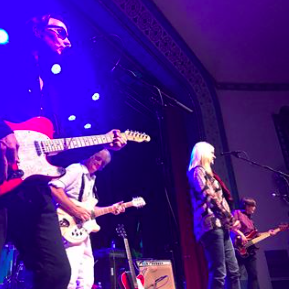
We also saw plenty of shows this year as we’ve been rebuilding our normal routine. Some great gigs from old friends passing thorough town, including Amy Ray, the Long Ryders, and the Waterboys. Great jazz in local Portland haunts and one show I was completely conflicted over, Morrissey at the Moda Center. He was a prat but was he a fascist prat? (Regardless, openers Interpol were brilliant.)

2020 is gonna be a rough year. There will be more unraveling before we come together. Hopefully the tension will produce some brilliant music. But here’s my 20 pixel snapshot of the end of the decade.

My 20 Favorite LPs of 2019

  1. drivin n cryin – Live the Love Beautiful 
  2. Lizzo – Cause I Love You
  3. The Beatles – Abbey Road Reissue Box
  4. The Waterboys – Where the Action Is
  5. Billie Eilish – When We All Fall Asleep, Where Do We Go?
  6. The Who – Who
  7. Amy Ray – Holler
  8. Miranda Lambert – Wildcard
  9. The Bangles, The Dream Syndicate, Rain Parade, and The Three O’Clock – 3 X 4
  10. Jeff Lynne’s ELO – From Out of NowhereUnknown-1
  11. Jenny Lewis – On the Line
  12. Our Native Daughters – Songs of Our Native Daughters
  13. Mavis Staples – We Get By
  14. Sleater-Kinney – The Center Won’t Hold
  15. Linda Ronstadt – Live in Hollywood
  16. John Coltrane – Blue World
  17. Solange – When I Get Home
  18. Bruce Springsteen – Western Stars
  19. The Raconteurs – Help Us Stranger
  20. Pistol Annies – Interstate Gospel

Your biography is history: Taking in the Trump impeachment

October 3, 2019

When I was a teenager in the late-1970s, I wished I had been a teenager in the 1960s, so I could have swum in the countercultural revolution. Of course, I was already in history. It was called the punk rock rebellion, and there are a million kids now who wished they could have been in my shoes, buying Ramones albums (on vinyl!) as they came out. I was just too close to it to see it as a moment in history. It was just my life.

41qCZndDFNL._BO1,204,203,200_

The great sociologist C. Wright Mills argued that for people to start to understand how society works they have to understand their own biographies as history. When we read a biography, we see it as a reflection of the history that was unfolding around that person’s life, whether it’s the biography of George Washington or Judy Garland. My students are reading The Autobiography of Malcolm X this quarter and you can’t view the life of Malcolm Little/Malcolm X/Malik Shabazz outside of the context of the racially oppressive twentieth century. His biography is the history of hi century.

And so is yours. The goal of any individual should be to create a biography that both reflects the times and impacts the times. Live in the moment and shape the moment. You are living history. Most fascinating of all histories is the present.

Screen Shot 2019-10-02 at 11.06.37 PM

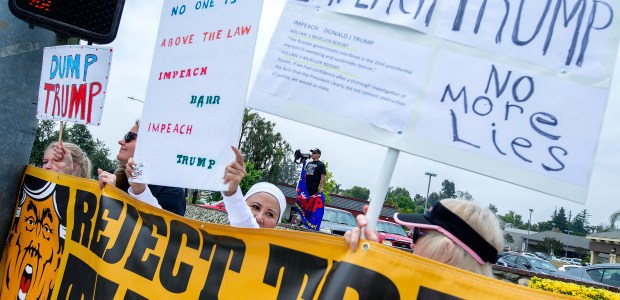
This couldn’t be any truer than right now. This era will be analyzed for centuries. People are still debating whether or not the French Revolution worked. That won’t hold a candle to the late night conversations students, history buffs, and robots will have about the spectacular rise and fall of Donald J. Trump. We are in perhaps the most significant turning point in U.S. history since the test of World War II. This generation may be witnessing the end of the American Century or the birth of a global youth revolution to save the Earth, sparked by a Swedish kid with Aspergers who demonstrates more class and intelligence than our president does on his very best day (which, I know, isn’t saying much).

screen-shot-2017-02-23-at-11-12-57-pm

I cut my political teeth on the Watergate hearings in 1973. I was 9-years-old and watched it with rapt attention. When Nixon named Gerald Ford as his vice-president in 1974, I knew there was a quid pro quo that would lead to Ford’s pardon of Tricky Dick. My first trip to the White House was while Nixon was deciding to bug out instead of enduring impeachment proceedings. I probably could have stolen the china and they would have assumed Pat Nixon was looting the place before their shameful exodus.

It felt like history was happening and it feels that way again. The impeachment of Bill Clinton felt more like politics as usual. Bill’s shenanigan’s definitely sparked a national conversation about what constitutes “sex.” (To future generations, blow jobs are, in fact, sexual relations.) It all unfolded during my disastrous first marriage and I don’t doubt that couples across the country were having uncomfortable conversations about the nature of infidelity thanks to the Oval Office antics of Slick Willy. But it didn’t seem monumental, just sad. This feels monumental.

R1325_FEA_Cortez1

History is always happening and always has a soundtrack. Yeah, the upheaval of 1968 had the Beatles’ “Revolution” and the Rolling Stones’ “Street Fighting Man,” but you better believe the “look backs” 20 years from now will have Billie Eilish and Lizzo playing along. (“Why men great ’til they gotta be great? Don’t text me, tell it straight to my face.”) This moment in history is framed by news apps, bipartisan divides, and generational warfare. The old white men would rather die guns blazing and burn the house down on their way out than see young women (especially young women of color) even the playing field. Sorry Mitch McConnell, the future of America looks more and more like Alexandria Ocasio-Cortez every day. We’re no longer being handed history by Walter Cronkite on the CBS Evening News, we’re finding it on our phones and Twitter feeds. And we’re sharing the news that the Orange Emperor has no clothes. (Cannot unsee!)

MV5BMTM4NjY1MDQwMl5BMl5BanBnXkFtZTcwNTI3Njg3NA@@._V1_UX182_CR0,0,182,268_AL_

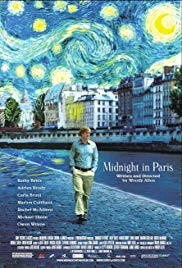
There’s a great 2011 Woody Allen film called Midnight in Paris all about how we over-romanticize the past. It was always better in some previous era. I’ve often thought about how great it would be to live in the Bohemia of 1840’s Paris or 1950’s San Francisco. No doubt the food would suck in both and no wi-fi to boot. The same is true for the Make America Great Again suckers who think the country was better off back in the days of Jim Crow. (Also no wifi.) This is the moment to be in. This crisis. This opportunity for transformation.

I’m committed to taking all this in, every presidential tweet storm, every unhinged Rudy Giuliani interview, every cabinet member indictment, every smirking Stephen Colbert monologue. Future generations will ask us what it was like to witness the compete collapse of America’s mad king. I’ll tell them I LMAO. They’ll have no idea what I’m talking about.