Yeah, yeah, yeah. 2023 was the year I bought new recordings by the Beatles and the Stones, changed my opinion about Barbie, Taylor Swift, and Bud Light (support!), but also Robert Kennedy, Jr. (who should take a long walk on a short pier). It was the year I found out I didn’t have cancer but was surrounded by people who do. It was the year I became obsessed with Joan of Arc, Henry V, and what clues 15th century Europe might offer us about the chaos and collapse that is at our doorstep. The year began with power grid attacks across the country and ended with watching rising seas and rogue waves attacking our coastline. In between, 2023 was the year I took a journey to the center of my mind.
The biggest story of 2023 should have been the growing climate crisis and the hottest summer on record, but we all know it will be worse next year and every year after that for the rest of our and our children’s lives. So instead we focused on doomed Chinese spy balloons above and doomed billionaire submarines below. The countless criminal indictments against Donald Trump seemed to only embolden his crusade to become an American dictator, while mass shootings, and continued wars in Ukraine and the Middle East became background noise to life as we approached the quarter century mark.
There was certainly plenty of good news this year. The COVID pandemic that killed so many people was finally declared over. Gas prices started dropping and a whole bunch of labor strikes made things better for workers, including my daughter’s teachers, who were on strike for over three weeks. (And it looks like Cozy’s dad will be on strike in February.) The Barbie movie had everyone at least talking about patriarchy and that’s a good thing. The news story that hit hardest was the death of singer Sinead O’Conner in July. Sinead and I had a brief romance in the eighties and the pang of not being a better friend when she was in pain had me reflecting on all the missed opportunities to be a more present partner over the course of my life.
I think when we look back on 2023, we’ll see it as the year when Artificial Intelligence became an issue that we have to reckon with. The U.S. Senate held hearings as AI threatened to eliminate jobs and deep fakes rendered truth passé. I had my first final exam essay answers lifted from ChatGBT and wondered if traditional academia was a thing of the past as student brains become replaced with AI bots. The AI worst-case scenarios could make The Terminator look like The Teletubbies. I don’t know what I will be writing at the end of 2024 but there’s a good chance I won’t be the one writing it.
Personally, the year was a period of intense growth. Mindfulness and meditation helped me to learn to monitor my internal states and make better decisions. I thought the growth would help me repair my marriage but my wife had other plans, so it’s up to me to keep on this path. I occasionally tried my hand at dating and had a mad fling with a movie producer and even, however briefly, had a girlfriend. Most of my energy went into teaching and the federal grant I have been working on, charged with reducing political violence. Portland, as it turns out, might not be a great dating city but it’s the perfect place to tackle radical extremism.
While 2022 was framed by my trip to Ukraine to offer assistance in that horrific battle against Russia, 2023 was framed by my trip to Georgia to help my brother with his horrific battle against cancer. Bringing him back to Oregon, where our more “socialized” health care coverage offered him a fighting chance, was quite an ordeal. And he’s still fighting, out of hospice care and back into chemotherapy. The cancer “caretaker” work became a primary role for me but offered me a chance to build the relationship with my brother I didn’t have when we were younger. He can be a pain in the neck sometimes (Who wouldn’t be in this situation?), but I am happy to see him enter the new year with the rest of us.
I suppose I am 365 days wiser. I tried to share little bits of that insight here in this blog. My post about Sinéad O’Conner was the most popular, as we all sat in shock over her sudden death. I was honored to post several articles related to the Cure-PDX project I’m working on. They are partially intended to prepare us for 2024 and the danger that is sure to come as Trump and his minions plot to reclaim power by any means necessary. Hopefully, both the personal and the political musings have offered something to think about this year. We’re all trying to figure this out together.
As a “subject matter expert” on right-wing extremism, I often get asked, “What about the left?” There are obviously some stark differences between the two political wings (I would offer bodycount as one measure), but there also might be some parallels worth considering as we look for ways to reduce political violence.
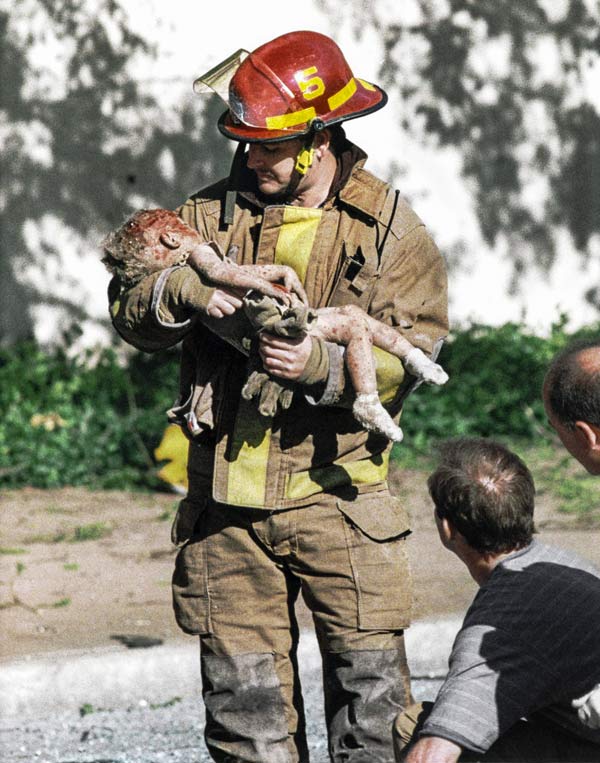
I’ve spent a lot of time in this blog discussing the “militia funnel” that became a useful tool in explaining anti-government violence in the wake of the 1995 bombing of a federal building in Oklahoma City. I even got to sit down and explain it with W. Kamau Bell on CNN’s United Shades of America in 2021 (and CNN turned it into a cool animation). There was a great need after the bombing in Oklahoma City, that included 19 children among the 168 casualties, to explain how “average people” were falling into the world of domestic terrorism.
In April 1995, I was just finishing up my dissertation on right wing extremism, when the news of a massive bombing in the “nation’s heartland” blasted across the news. It was devastating, and the images of dead children in the building’s daycare center brought the country to its knees. I stayed up that night, listening to talk radio from my Atlanta apartment. The talking heads were sure the carnage was the work of the usual suspects, Muslim terrorists. It wasn’t a crazy hunch. Two years earlier, Ramzi Yousef and a small band of jihadists tried to blow up the World Trade Center in New York City, killing 6 people. But Oklahoma was on April 19th, so I knew it was probably one of my guys.
April 19, 1993 was the culmination of the standoff in Waco, Texas that had become a rallying cry for the far-right. That carnage (that included the death of 28 children) was being framed as the result of an out-of-control federal government that was no longer by and for the people. So when on April 20, 1995, a white guy named Timothy McVeigh, who had been at Waco, was arrested for the Oklahoma bombing, I got a chill. These were the anti-government white supremacists I had spent the last seven years studying. The radio hosts who had been quick to blame “Muslim terrorists,” pivoted to the “Wacko from Waco” narrative. It was the act of a crazy person. It certainly couldn’t have anything to do with their aggrieved white male hatred of the government.
The structure of the militia funnel
I learned about the militia funnel from Kenneth Stern’s excellent 1996 book, A Force Upon the Plain: The American Militia Movement and the Politics of Hate. He got it from Ken Toole, at the Montana Human Rights Network. The funnel model explains how people can enter a world that sees violent revolution as the only solution from very mundane starting points that have nothing to do with violence or terrorism. For decades, my work has focused on the movement of people through a ‘right-wing funnel.’ I have written and spoken extensively about this dynamic. At the bottom of this article, I set forth how the funnel analysis applies to current willingness to use political extremist violence among some people in the left wing of politics. First, let’s address how the funnel has been used for the last nearly 30 years to frame pathways to right wing extremism.
At the top of the funnel are just a lot of people who are activated by fairly mainstream conservative issues. They are second amendment gun activists, tax protestors, or think the federal government shouldn’t be taking perfectly good timber land to save spotted owls. They come from a wide variety of backgrounds, including black and Jewish conservative spaces.
Some (importantly, not all) fall into the next level, based in a deep hatred for the federal government. Instead of “we the people,” the feds have too much power and have superseded their Constitutional mandate. Some of these folks are part of the Posse Comitatus movement who believe the highest legal authority is the county sheriff and any constitutional amendment after the first ten is hokum. But the bottom line is the federal government is the bad guy. Growing up in the rural South, the term we’d hear for this was “revenuer.”
At the third level down the funnel, some of these folks start buying into some pretty pervasive conspiracy theories. We are now into the world of Freemasons and the Illuminati and who REALLY killed JFK. Just watch those Nicholas Cage National Treasure movies for a dose of this world. Here the Republican and Democratic parties are both controlled by the same puppet master, leveraging the federal government against hard-working (white) Americans for their own benefit.
Some of those conspiracy believers make it down to the next level, where the conspiracy takes a familiar turn. The elite Bilderbergers are rebranded as simply “the Jews.” In a same way Hitler used anti-Semitic tropes to explain Germany’s downfall, anti-government conspiracy theorists here see a global Jewish cabal behind everything from immigration to gay rights to why their kids are listening to rap music instead of Lee Greenwood.
Again, this is a funnel, so each level has fewer people than the one above it. In the final stage of the model are the revolutionaries. It’s one thing to have analysis, but here is the belief you have to act on it. The people who make it to the bottom of the funnel are consumed with language about a second American Revolution, and a second Civil War, and “Rahowa” (short for Racial Holy War) and a whole bunch of stuff concerning the “blood of patriots.” The funnel starts wide and ends very small, but as we saw in 1995, it only takes a small band of self-proclaimed patriots to change the face of a nation. And McVeigh’s intent was to inspire other like-minded Americans to commit similar acts of terrorism.
The militia funnel in the MAGA-era
The militia model became useful again in the Obama era when anti-government militias roared back into action. Here in Oregon, a militia group occupied a federal wildlife refuge for 40 days in 2016, resulting in one death. Then the surge of militia activists, like the Oath Keepers and the 3 Percenters, under Donald Trump’s MAGA movement made the militia model even more applicable, especially after the January 6, 2021 storming of the U.S. Capitol.
In the Trump years, I regularly updated the 1990s militia model when explaining the “new” right-wing activism. Because of social media and reach of the Trump message, the mouth of the funnel was much wider than it was in the 1990s. It included some of those same conservative issues, like gun rights, but now included “culture war issues,” like opposition to rights for transgender people and hostility to Critical Race Theory, but also a rejection of lockdown mandates to prevent the spread of COVID-19. This wider funnel served to attract not just rural white men who were the 90s candidates for patriot militia groups, but suburban moms, aging incels, and others who thought America was last great before the civil rights movements made “inclusion” a weapon against white privilege.
The rest of the funnel, took an updated sheen. The anti-federal government level was rebranded as “the swamp,” full of libtards and RINOs (Republicans in Name Only). The conspiracy theory level was now the domain of QAnon adherents and beliefs in the “deep state.” Below that were the anti-Semitic theories about “global Jews,” including George Soros, Anthony Fauci, and a belief (spread by Robert Kennedy, Jr.) that COVID was created to kill non-Jews. At the bottom of the funnel, the revolutionaries renamed their call to arms the “Boogaloo,” and began stockpiling weapons. In 2020, I had a chat with a 3 Percenter in a Home Depot parking lot and asked him what he thought about the escalation of violent rhetoric. His only reply was, “We’re locked and loaded.”
That this funnel was exponentially wider at the top meant more Americans were ending up at the violent bottom level. This was evident in the massive turnout for Trump’s “Stop the Steal” rally on January 6th, motivated by the President of the United States, not a fringe website, spreading a fully debunked conspiracy theory that the “deep state” stole the 2020 election. While organized militia groups, like the Oath Keepers, were key players in the attack, many of the over 1,2000 people arrested have claimed they just got “swept up” in the moment. They had fallen down the funnel into the land of Timothy McVeighs and Stewart Rhodes. I half expected to see my Trump-loving father there that day (but his feet are bad).
The value of the militia funnel in this work is that there are multiple points along the pathway down to violence where intervention can take place. Someone who angry about public school dollars going to a student Gay Straight Alliance isn’t automatically destined to become a domestic terrorist, but if they are, there are places where that path can be diverted. Could there be a similar trajectory for activists on the left?
Constructing a left-wing funnel
The origin of the right-left political spectrum, that has its roots in the French Revolution, is all about who should have power. On the right, power should be concentrated and on the left, power should be dispersed. That’s why the far right values fascism and the far left values communism. But all along that spectrum there are values concerning fairness. The liberal is concerned teachers’ low pay is unfair and the conservative thinks their tax dollars supporting a curriculum they think opposes their values is unfair. Oh, yeah, and plenty of people on both sides think the government sucks.
The structure of the militia funnel offers a guide to what a left-wing militia funnel might look like.
At the top level are widely popular liberal issues related to social justice-based matters of equity, including Black Lives Matters, abortion access, and LGBTQ+ rights, along with other stalwart liberal causes. The next level finds strong distrust of the federal government as the historic defender of status quo power dynamics. The feds are “the Man,” who surveilled MLK and protected alleged sex-offenders, like Bill Clinton and Donald Trump. And also, all cops are “bastards.” Further down the funnel, we see the appearance of all-encompassing conspiracy theories that see Republicans and Democrats as puppets of corporations, the monied class (Google “Bohemian Grove”), and the World Trade Organization. Like on the right, there is a darker level that introduces anti-Semitism to the conspiracy theories. This is where Robert Kennedy, Jr. lives and where anti-Zionism slides into a broader anti-Jewish narrative, most recently seen as an element of some pro-Gaza rallies. (It should be pointed out is that anti-Semitism is less visible on the left than it is on the right, but it does rear its ugly head in places.) At the bottom of this funnel is the rhetoric of Marxist revolution, which sees the entire capitalist system, and all its institutions, as corrupt and in need of overthrow.
Those of us who are older than millennials and Gen Z kids will remember that in the 1970s there were hundreds of terrorist bombings in the United States. They weren’t from patriot or neo-Nazi groups. They were committed by radical leftist groups like the Weather Underground, the New World Liberation Front, and the Symbionese Liberation Army. And there were casualties. In 1970, a group of leftists angry about the University of Wisconsin-Madison’s participation in military work related to the Vietnam War, detonated a massive bomb in Sterling Hall, killing one researcher and injuring several others. The FBI has counted 2500 bombings connected to the Weather Underground, including one that killed four people in a Wall Street restaurant in 1975.
When the Right-Left political spectrum becomes a circle
There is also a weird space where the extremes at the end of the left side and right side meet to form a circle. In the 1990s, some neo-Nazi groups began publicly (and financially) supporting the PLO’s campaign against Israel under the guise of “the enemy of my enemy is my friend.” The Seattle WTO protests in 1999 that brought labor union members, environmentalists, and other liberal activists to the streets also saw participation far-right activists, who saw the “global bankers” behind the World Trade Organization as the hand of Jewish control. In the 2000s, the right also joined the left on issues related to climate change. Their angle was the climate crisis was the result of immigration, non-white population growth, and (again) Jewish monied interests.
More recently, the language of “accelerationism” has pervaded extremists on bother the far-right and far-left. The philosophy states that standard democratic forms of social change, like voting, are too hopelessly glued to institutions of power to ever affect real change. Each November we vote for a Tweedle Dum or a Tweedle Dee and hope things will be different. Accelerationists believe the only way to achieve their desired society is to bring the current one crashing down and rebuild the new one out of the ashes. The right and left have radically different visions of what those societies look like. (I know the right has no place for progressive academics like me, but they left would probably see me as a “collaborator” with “the Man” and exclude me from their Utopia, so I’m likely SOL whoever wins fantasy league fanaticism.) We have seen extremists on the right, like Proud Boys and active clubs look at their counterparts on the left in anarchist and Antifa circles, not as enemies, but as allies in bringing the system down. In 2021 a Boogaloo activist said, “Right now it’s about provoking BLM, antifa and militias or 3 Percenters into engaging in violence that will provoke disproportionate police response, which can be used to fuel further unrest.”
If the value of understanding the militia funnel is to interrupt well-meaning conservatives’ slide down the rabbit hole of violent extremism, there should be a similar opportunity for those escalating towards left wing violence. Again, the intent is not to “de-radicalize” anyone one either side, just to prevent the violence that might emerge at the bottom of those funnels. Working on constructive engagement with the government as, not an oppressive entity, but a reflection of our collective will can slow the roll down the funnel. Also, the work on critical thinking skills that disrupt simplistic conspiracy theories can be hugely helpful in dismantling the binary thinking that characterizes extremist ideologies.
The vast majority of activists are doing the important work of putting democracy to the test and advancing their shared values. A small fraction fall into the black hole of political violence. Understanding these paths across the political spectrum allows to us design strategies to reroute those who may see terrorism as a legitimate expression of their political agendas.
“Hindsight is 20-20. Looking back, we should have known that would happen.” That is a common refrain for every major historical calamity, from Hitler invading Poland to the January 6, 2021 attack on the U.S. Capitol. We have an entire federal agency, the Department of Homeland Security, created, in large part, to address all the indicators the intelligence community missed in the lead up to the 9/11 attacks in 2001. Will we ever have the science down that accurately predicts some calamitous event so we can prevent it?
The good news is we’re getting better at preventing bad things from happening. After the deadly 1995 Oklahoma City bombing, that killed 168 people (including 19 children), the FBI made the investigation of right-wing militia groups a priority and broke up several plots leading up to Y2K. Since 9/11, there are 44 known terrorist plots that were thwarted by government agents, including a 2012 al-Qaeda plot during the Obama administration to blow up the U.S. Capitol, and 2019 neo-Nazi plot during the Trump administration to kill numerous Democratic politicians and mainstream journalists.
These acts of mass violence are prevented for three main reasons. First, people who are close to the plotters come forward to authorities with concerns that there is some suspicious activity. “Hello, 911? I think my neighbor and his friends are building a bomb in his garage.” Second is old fashioned gumshoe detective work by law enforcement agents. “Our confidential informant in that anti-government militia group is telling us the plan of attack has been made.” But group working on this issue is the not-as-exciting work of data scientists. “The chat on Discord referencing gun training spiked 63.2% following the fourth Trump indictment.” It may be the data scientists that keep us safe at night.
Since 2021, I have been working on a federally funded project that looks for ways to reduce extremist violence across the political spectrum called Cure-PDX. The sheer scope of the attack of the January 6th attack woke up a lot of folks in both public and private sectors to the fact that the stability of our democracy might be more fragile than we ever thought. Part of this work has been utilizing data to find where the flashpoints for political violence are, and it is a sad reality that they are often school board meetings and LGTBQ events. How drag queens managed to trigger the Proud Boys would probably give Sigmund Freud a thrill, but there are real victims in these violent clashes. For example, last March, the Proud Boys and other right-wing activists attacked a crowd at a Drag Queen Story Hour in Manhattan’s West Village, a historically gay enclave of the New York City.
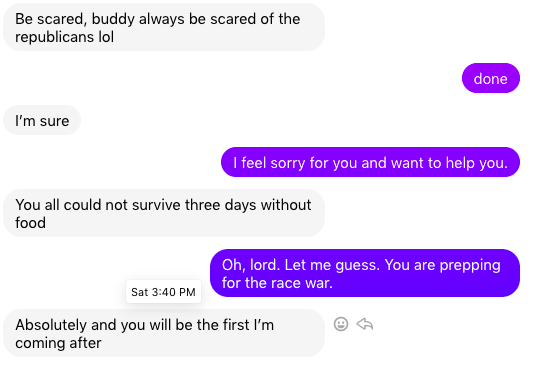
Focusing on the Pacific Northwest, our project has noticed more tension around these flashpoints. Much of this has been fueled by local right-wing groups, like the Portland Active Club, Patriot Front, and the Rose City Nationalists. These groups have been dubbed White Nationalists 3.0 by monitoring groups (and by the activists themselves). The violent skinheads of the 1980s and 1990s were 1.0. The keyboard racists of the “alt right” that rose under Obama and came to the mainstream under Trump were 2.0. These new 3.0 groups are not hiding behind keyboards, and are actively fashioning themselves as foot soldiers in what they believe to be an approaching race war. I was bantering with one last weekend and he was quite clear what his immediate agenda was:
Him: Be scared, buddy always be scared of the republicans lol
Me: done
Him: I’m sure
Me: I feel sorry for you and want to help you.
Him: You all could not survive three days without food
Me: Oh, lord. Let me guess. You are prepping for the race war.
Him: Absolutely and you will be the first I’m coming after
Much like in the Timothy McVeigh-era of the 1990s, there is a growing subculture of heavily armed anti-government activists who are hellbent on a second civil war in which the Confederate values of white supremacy are an organizing principles. Unlike the 90s patriot militia movement, thanks to social media and the encouragement of a certain four time indicted presidential candidate, this well-armed anti-government movement is massive. In the 1990s, it was a handful of guys building bunkers in Idaho. Now, it’s soccer moms, drunk on QAnon conspiracy theories, and suburban mixed martial art clubs training for combat with the “woke mob.”
2024 is gonna be a rough year. Gas prices aren’t coming down. LGBTQ people are not going to be shoved back into the closet, triggering Kid Rock and all his fragile boys who pretend this is the fall of the Roman Empire. The southern border, which has always been a rolling crisis, will be shoved in our faces on the nightly news. There could well be another COVID lockdown (or whatever the next plague will be). And whether Donald Trump wins, loses, or gets thrown in jail, there are going to be some people who will be seriously pissed off.
We’re heading into a dark season and yes, we’re going to need whistleblowers and ace detectives to foil plots. But we’re also going to need an army of data scientists who are willing to scrape the data from the armpits of the internet and other electronic platforms (including CB radios!) where the enemies of civility thrive. With good data, we can plan interventions that include preventing people falling into the rabbit holes of violent extremism. It’s go time for democracy and we need science to save us.
“Regrets, I’ve had a few,” Sinatra once sang. We can claim to have no regrets but any thinking human has gobs of them. I’ve often joked that my epitaph should read, “He was his own worst enemy.” Better than Frank singing, “My Way,” would be Cher singing, “If I could turn back time, if I could find a way, I’d take back those words that have hurt you” (to a boatload of sailors). We’ve all been Cher.
When I was a young criminology professor, I would occasionally spend my lunch hour at the county courthouse, watching trials and hearings. The vast majority were for men who had made insanely stupid choices. Almost all offered the same defense, “It might have been me who committed that act, but it wasn’t really ME.” I remember one case of domestic violence that was particularly dramatic. The man attacked his wife after she said she was leaving him. In tears he told the judge, “I don’t know who that person was that hit her. It wasn’t me. I’m not that kind of man. It was like I was possessed.” I could tell the judge had heard that excuse many times and she booked him straight into the county clink for 90 days.
We have all done or said stupid things and wondered, who was that mad person in my body? I was commuting on my bicycle when a woman in an SUV ran a red light in front of me. I chased her down, accused her of being drunk, and spit on her window. That was 15 years ago and I still think about it with shock. (If SUV Lady is reading this, I’m sorry. I’m not that kind of man.)
Why do we do these things? Is it brief demonic possession?
There’s actually a simple answer and it has nothing to do with the devil and everything to do with our lizard brains. And fortunately, you don’t have to be a brain scientist to understand it.
Think of a lizard in the desert. It’s constantly on alert. It doesn’t sit around trying to figure out what’s funny or what’s hip. It’s constantly in survival mode. If there is a shadow on the ground, it isn’t going ponder what caused the shadow. It’s going to assume that it’s a hungry hawk and with zero pondering it is going to race under a rock or freeze and try to blend into the background.
Lizards have itty bitty brains that are primarily made up of something called the amygdala. It is quite literally prehistoric and it is the part of the brain that keeps animals alive. We think of it as the center of the fight or flight or freeze emotional response. Dinosaurs didn’t sit around wondering why the local T. Rex was hangry, they just ran or fought. The amygdala is connected to the sympathetic nervous system that turns those instantaneous brain impulse into immediate action. The lizard brain does not think. It makes a b-line for safety, fights with all its might, or freezes like a deer in headlights. The lizard brain is driven by hunger and, mostly, fear.
Humans have amygdalae. (I just learned that was the plural of amygdala.) Fortunately, millions of years of evolution have built an insanely complex structure around it that we call the “human brain.” One of the best parts of the human brain is the prefrontal cortex that gives us the ability to reason, imagine, and, yes, ponder. The prefrontal cortex regulates the lizard brain so we’re not alway freaking out every time we see a shadow on the ground. The prefrontal cortex allows us to function, otherwise we’d be overwhelmed with fear, aggression, and paralysis.
There’s an easy way to illustrate this point. Since the prefrontal cortex is the thing that makes us cognitively human, it’s the last part of our brain system to develop. Newborn babies are a lot like lizards. They just want their basic needs met. Babies don’t think, “I should wait for the sun to come up before I demand breakfast.” Babies are in survival mode all the time. Neuroscientists believe the prefrontal cortex isn’t fully formed until around age 25. So take a moment to think of all the epically stupid and impulsive things you did when you were a teenager that you would NEVER do now. It’s because your brain was like an IKEA kitchen that still had a thousand pieces to connect. Every time I go on Instagram, I see endless “reels” and “stories” of young people doing things that will make them cringe when they are older. You don’t see any 59-year-olds participating in street takeovers or skateboarding off of cliffs. Young brains can be dumb as lizards.
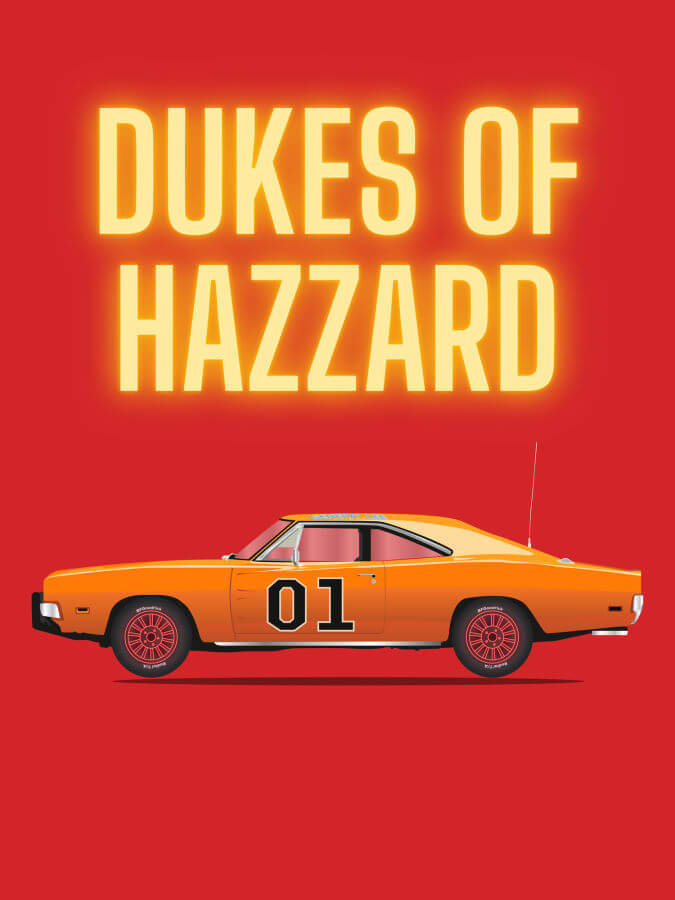
Side Story: When I was a 16-year-old in Stone Mountain, Georgia, one of my favorite TV shows was The Dukes of Hazzard. I would regularly borrow my dad’s 1978 Pontiac Grand Prix to “go to the store,” and end up doing donuts in the field like I was Bo and/or Luke Duke. If I happened to side-swipe a pine tree, I would tell my dad that it got hit in the parking lot. Fortunately, my father won’t read this. But if he does, I’M SORRY DAD! MY LIZARD BRAIN MADE ME DO IT!
If the human lizard brain had a motto, it would be, If it feels good do it. It is the knee jerk reaction that gets us into stupid fights, drives us to be sexual in situations where we shouldn’t, or causes us to completely shut down all normal interaction skills. Basically, our lizard brain gets us into trouble if our prefrontal cortex doesn’t regulate those very primitive impulses. Our brain (and body) gets hijacked by our amygdala. Sometimes, we need to fight or run away or freeze, but usually there’s some “context” to analyze. Bear is brown, lay down. Bear is black, fight back!
As adults, most of us develop the ability to self regulate. We know that throwing a punch ends up hurting our hands and getting the cops called. We know that sexually harassing a workmate gets a call to HR and makes us look like a serious creep. And we know that shutting down emotionally doesn’t really get us what we need, emotionally. In addition, or human brain allows us to develop empathy for others, so there is a greater benefit in centering others than just centering ourselves. But we do know that one of the things that throws the human brain into primitive lizard mode is trauma. Whether it’s something that happened when our brain was still forming, like childhood sexual abuse, or something that happened last week, like experiencing a serious car crash, trauma locks the brain into fight/flight/freeze mode. And it takes a lot of work to get the prefrontal cortex back on line to do the heavy lifting of regulation.
So we all have a lizard brain inside our heads. And we all have varying levels of ability in regulating that lizard brain. Some prefrontal cortexes are hampered by trauma, mental health issues, brain injuries, or substance abuse, but even the most sober “healthy brain” can find itself in a “road rage moment.” Something triggers us and we’re off to the races. And an hour later, we are singing that damn Cher song. “If I could turn back time…”
In my current work on political violence, we see a lot of dis-regulated lizard brains in control. The escalation of violence between protestors on the right and left in Portland is a sad example that has led to people dead on both sides. A case could be made that many of the insurgents at the January 6th riots in Washington DC never intended to storm the Capitol. They just got caught up in the mayhem and their lizard brains took over. It’s so easy to go from sane to insane when our amygdala is activated. We’ve all been there.
Fortunately, there are some well proven strategies to reign in our dino-brains and prevent the need to bust into the Cher song from the county jail (or divorce court). Here are a few:
1. Be aware of your triggers. If the best predictor of future behavior is past behavior, avoid the factors that lead to escalation. If you know booze makes you more “lizardy,” moderate. If you know arguing about Trump sends you into the red zone, argue about sports instead. And if you know your crazy Uncle Ernie really likes to push your buttons, try not taking the bait.
2. Regulate when your lizard brain is activated. Uh oh, you’ve been activated and the fight/flight/freeze siren is wailing. What do you do now? You have the ability to insert your prefrontal cortex between the impulse and the action. This could be something as simple as a few deep breaths or a walk around the block. Anything to calm the lizard brain down before it gets your ass in trouble. Meditation is a great way to train your brain to become calm and see your thoughts AS thoughts, and not as orders to act.
3. Get curious. Your prefrontal cortex gave you the potential for radical empathy. That driver who cut you off or that politico who is trying to shove a nutzo conspiracy theory down your throat has a story. They are human beings with something that drives them. Instead of defaulting to fight/flee/freeze mode, get curious about their story. What makes them tick? Maybe you are more alike than different.
We live in fearful and polarizing times so it’s very easy for our lizard brains to be activated. Traffic, news stories about shootings, bizarre weather, people on TV screaming at each other, and the fact that so many of us (myself included) are walking around with scars of trauma, it’s shocking that we’re all not constantly living in fight/flight/freeze mode. But the fact we’re not reflects the triumph of our collective prefrontal cortex. We have the ability to not to be slaves to our impulses. We have the ability to calm our minds and make wise choices. We just need a little practice and thinking about how we think is a good place to start.
I haven’t always had the best relationship with Mattel’s Barbie Doll. As a boy, the dolls we played with were called “action figures” and had “Kung Fu Grip,” not endless accessories. I’m sure my GI Joe took a few rifle scopes on the Barbies that lived across the street. I do remember my Evel Knievel doll driving his motorcycle at full speed into Barbie’s Malibu Dream House, causing screams of horror and delight. There was one boy in my small town that was known for beheading Barbies and hiding their heads on the “trail” behind our houses. As far as I know, he’s still trying that in a small town.
When I became a feminist sociologist, my war on the doll became more academic. She was a perfect example of gender socialization. Barbie was an early teacher of girls that their looks were their most important asset. Yeah, they could become doctors or astronauts, as long as they stayed skinny and their feet were forever contorted for high heels. When Talking Barbie appeared in the early 90s, with lines like, “Math is hard!” it made my point for me. I delighted my students with stories about the BLO (Barbie Liberation Organization) that secretly swapped the voice boxes of Barbies and G.I. Joe’s, so Joe said things like, “Let’s go shopping,” while Barbie now said, “Vengeance is mine!”
When it became clear that our neighborhood in Portland was generating more female babies than boys, in a very Portland way, we declared it a “Barbie Free Zone.” My daughter, Cozy, has never had or wanted a Barbie and I take that as a win.
So I figured the MAGA boys would be thrilled with a movie that encouraged their wives and little girls to become anorexic and worry more about shoes than votes. Lord, was I wrong about that.
The Barbie movie has now passed the one billion dollar mark (after only 17 days in theaters) by taking what Barbie was and turning it on its head. Director Greta Gerwig turned the “problematic” doll into an epic feminist dissection of patriarchy that actually names patriarchy, and, boy, are the boys triggered. I’m waiting for Kid Rock to blow away some Barbie dolls with his AR-15 and Jason Aldean to write as song called “Try That In a Small Town, Girls.” But why are these men so aggrieved by a movie about a doll?
First, let’s get his out of the way. “The go woke or go broke” chant from the bigots on the right was just revealed as a great lie. Barbie is one of the biggest movies on earth and is the biggest movie on earth directed by a woman. I took my daughter to a sold out screening on a WEDNESDAY AFTERNOON. Woman and girls applauded at the end and hugged each other. “I finally feel seen,” said a woman in the row in front of us. The MAGA cult can brag about how many Bud Light workers have been laid off because of their hissy fit, but the amount of money Barbie will make is a tsunami compared to the ripple Cleatus caused at Anheuser-Busch because he traded in one shitty beer for another shitty beer.
So this feminist sociologist has a two-part answer.
The first is that gender socialization starts before we are even born. There’s a reason female babies are aborted at a higher rate than male babies. (Just ask China and India where all their women went.) A person’s value is (still) based on their sex. Patriarchy begins in the womb. And that socialization is non-stop through our lives. Even the most radical feminist has internalized male supremacy. Ask yourself, are there any empowered women in congress who dare to fly their grey hair? I mean, how old is Nancy Pelosi? She’s like Methuselah. But she’s gotta dye that hair because there’s a different standard for women. We get the message that men and women are “opposites” and that “It’s a man’s world” from our family, our schools, our religion, our peers, and the media. Constantly. God is a man. Eve was created for Adam. Father knows best. Becky is a slut. And on and on and on. Life in plastic, it’s fantastic.
No wonder patriarchy feels natural.
In the 1990s, I did an experiment with my students to convey the “natural” feeling socialization gives us. I’d ask them to spend a day wearing their watch on the other wrist. They’d report being disoriented all day long. Now that no-one wears watches, I ask the students to leave their homes for one hour without their phones. Those that actually dare do it, describe going into convulsions, not being able to function, fearing they might miss a text or the opportunity to take a selfie. That’s how patriarchy works. A fish doesn’t know it’s in water until you take it out of the water. Then it gurgles, “WHAT THE FUCK!!!!”
All the Barbie movie does is take Barbie and Ken out of the non-patriarchal Barbieland and plop them into very patriarchal America. The difference is immediately clear to Barbie. Ken is thrilled that everyone is looking at him. But for Barbie, it feels more like, well, violence. Later, she says of her brief time in reality, “Men look at me like I’m an object, girls hate me.”
The film does an excellent job of doing the opposite for the audience. With humor and pathos, it holds a mirror up to us and our persistent power dynamic. Every girl and woman, whether or not she calls herself a feminist, understands the countless ways this power dynamic plays out in their daily lives, but for men it must be shocking. Like when Toto pulls away the screen revealing the real “wizard” of Oz, Barbie pulls away the screen that women have any meaningful equality in 2023. America Ferrera’s rousing “It’s literally impossible to be a woman” speech has resonated with women and girls across the political spectrum, but for many men, it must sound like an indictment. And watch them fall into the ludicrous “Feminism is about hating men” trope.
Holding the reality of patriarchy up to men (conservative and otherwise) is like asking them to leave their homes without their phones. It’s a full body reaction. Seeing females as just as human and entitled as they are is contrary to the messages about gender that we are told from the womb. They can’t handle it on a cellular level. And the anti-woke mob wants to declare the planet (not just America) a Barbie Free Zone for much different reasons than my little parent group. The men on Fox News and the men on TikTok are bashing Barbie’s messages of equality. But all those men came from a woman’s womb, so they better take a deep breath.
So the first reason is the emotional shock a glimmer of truth about patriarchy gives to the fragile male ego. They imagine themselves becoming a dickless Ken in a world where their demands for attention go ignored.
The second explanation for the Barbie Backlash is just the cultural shift we are in right now. America is changing. There are more women working than men in the current economy. And there are more people of color moving into the white enclaves of suburbia. The Father Knows Best ethic of the 20th century is fading, but it’s not going down without a fight. Ron DeSantis’ war on DEI (Diversity, Equity, and Inclusion) is a perfect example of the new Jim Crow. As Susan Faludi outlined in her brilliant 1993 text, Backlash: The Undeclared War Against American Women, throughout history, every time women have made gains towards equality, there is a sustained cultural push to put them back in their subordinate role. And we’ve been in a hell of a backlash. It includes incels, ending legal abortion, and Donald “Grab ‘em by the pussy” Trump.
The chorus of men who are so challenged by a doll are the same men who were freaked out by Helen Reddy’s “I Am Woman” zooming up to #1 on the pop charts in 1972. “What will happen to us if women have all the same privileges we have?” they quaver. “It won’t be privilege anymore!” This is a cultural moment where straight white cis-gender men feel like their “natural” authority is being challenged (it is) and is evaporating (it’s not), so they are rushing to the barricades, hoping to make America 1953 again. As Gloria Steinem once told me of this moment, the abusive husband might win. But maybe, just maybe, we’ll finally break free.
The oxymoron of “conservative women” has always vexed me. Why would any woman participate in an ideology that sees her as a less autonomous version of men? Of course, the answer is we reward them for doing so. They are tools of the status quo, so you will hear some women complain about “woke Barbie.” But a lot of those Trump-voting women are sitting in packed movie houses right now feeling very validated by the very simple effort Barbie attempts in just trying to humanize girls and women. That theme of humanization is central to the film and the long historical arc to smash patriarchy.
Feminism is the radical idea that women are human beings and are entitled to all the basic rights and privileges that men humans have been afford through time. The final scene in Barbie makes that point in a very simple (and hilarious) way. The massive success of Barbie might not mark the end of patriarchy, but is a sign the that women and girls of Gen Z, including my daughter, are not going to be put in any pink toy box so easily. And there will be plenty of their male peers who will see the great benefit of that. As Ken says at the end of the film, “To be honest, when I found out the patriarchy wasn’t about horses I lost interest.”
I have a very specific memory from the summer of 1980. I was 16 years old, driving west on North Decatur Road in my 1973 Gran Torino to do some record shopping at the Wuxtry. Foreigner’s “Hot Blooded” was blasting on 96 Rock. I had the windows down and the volume all the way up. I stopped at the red light at Church Street. The car to the right of me and the car in the turn lane to the left of me were both playing 96 Rock at full volume. We all looked at each other and screamed, “Check it and see!” – united by technology, generation, and a great chorus.
I can’t imagine anything like that happening today, with everyone locked in their algorithmic streams.
Nostalgia is a dirty drug. There are countless memes that will tell you that music, cars, TV shows, and culture were better “back then.” It’s a lie. There was crappy music that you conveniently forget, death trap cars that were unsafe at any speed, stupid TV shows, and a culture that rewarded the bullies and marginalized everyone else. Donald Trump’s “great” America was 1950 (as he told CNN in 2015), the peak of Jim Crow, before civil rights movements for women, gay and trans people, and Americans with disabilities. And the top song was “Chattanoogie Shoe Shine Boy” by Red Foley. No thanks.
The truth is the past was great and super shitty. Just like now.
I love it when Boomers yearn for the days when you could ride in the back of a pick up or ride your bike without a helmet. That’s because they are alive to yearn. A bunch of kids got bounced out of the bed of the pick up and are not yearning because they are in yearn-free graves.
So what is it about music that locks us into these powerful memories of yesteryear? Incredible research with Alzheimer’s Disease patients has demonstrated that music can activate incredibly specific memories in people who can’t even remember their spouses and family members, because music exists in a part of the brain the progressive disease can’t reach. I’m guessing 90-year old me, in 2054, might not remember you, but play “Hot Blooded” and I’ll tell you all about that day on North Decatur Road in the summer of 1980 with great clarity.
The reason for my curiosity is the mindfulness practice of being present. Buddhism warns of being lost in the past (and worrying about the future). We spend scant time being in the present. Being present allows us to see our internal state and manage our emotions. Like Ringo said, sometimes you gotta stop and take time to smell the roses. As I’ve written about in this blog, there is great value in stopping.
So, to all the people of my generation, think about how we would listen to music. I have such clear memories of going over to Doug Warringer’s house to listen to a Kiss album or going over to Ed Overstreet’s house to listen to a Clash album. And we would JUST listen. We were present in the moment of listening to the songs. There was no, “This track reminds me of when,” or “This track makes me think about what I need to do.” There was just that moment. Then, when the album was over, we would do something else. But listening was the activity.
Our songs take us to those moments when we were fully present. It’s a weird nostalgia trick about memories of the present. I write this on Memorial Day, thinking about veterans whose brains are often frozen in those traumatic battlefield experiences. I know the songs that were blasting as we raced through the Ukrainian war zone last year are still in my ears. There is a direct link that connects what was playing during our first dance and our first war, present moments sealed in amber for all time. When I was 16, I didn’t have much of a past to ruminate over and my future was wide open so it was easy to absorb the moment. All these years later, being present is handicapped by memories of what was and what could have been and concerns about the future for me and my child.
Here’s where music can help.
I’ve been kicked off of numerous “Classic Rock” Facebook pages for arguing with old timers who all think music today sucks. I remind them of what their parents had to say about AC/DC and they sound just like old people. “These kids today!” They point of youth music is that is separates young people from their parent’s generation. Then they’ll go on and on about autotuning and profanity and the “that’s not music” about the Cardi B’s of the world in rants that seem more racist than music purist. And I’ll say, there are countless new rock bands putting albums out and if you love 70s pop, have you tried Harry Styles? And bam, I’m banned again by classic rock old farts who are prisoners of their nostalgia, forever blocked out of being present with a great song.
I have the best moments with my daughter and her friends driving around with the Top 40 station (Z100 in Portland) turned all the way up, listening them sing along. I know the hits of 2023 will resonate with them the way the wonderful/horrible songs of 1973 do for me.
So here’s the assignment. If you were born in the twentieth century, I want you to go straight to the pop charts. Find a hit that speaks to you. My third grade daughter’s favorite song of the moment is “Flowers,” by Miley Cyrus (currently #3 on the charts). Listen to that song while doing nothing but listening to that song. How does that tune make you feel? Try not to get nostalgic or concerned about what’s to come. Just be in the moment. Then put it on a playlist. Make it your song for late spring 2023. Every time you hear it take a deep breath and think, I am here now.
There’s so much amazing music happening right now and so many opportunities to just stop and take in the moment. Be here now.
White supremacy is a real thing. Let me be more specific, white supremacy in 2023 is a very real thing. And it’s not just Klansmen and whoever pays the “Blacks for Trump” guy to stand behind the GOP’s favorite felon at every rally. It’s in all of us who have grown up in a society that brainwashes us to believe “white” is the standard to judge all other races by. If you think Jesus Christ was a white dude, you are a victim of internalized white supremacy. And White Jesus has done more damage than any Klan rally ever could.
I shouldn’t have to convince you of the damage all this white supremacy has done on people of color. From the Mexican-American woman who is considered “fiery” Latina to the black man bleeding in the middle of the street because police assumed he had a gun, and a trillion other examples of micro-aggressions, discrimination, bias crimes, and hate groups dreaming of genocide, I shouldn’t have to convince you. But if you are a white person who thinks racism magically vanished in the 1960s and all this is liberal fantasy, just read any account by a person of color. (I have been reminded that it is not black people’s job to educate white people about reality.) And don’t you dare say, “I was raised to be colorblind,” because you weren’t.
This isn’t about how white supremacy hurts BIPOC folks. It’s about how white supremacy hurts white folks.
As a feminist scholar, much of my work centers around how patriarchy hurts men. Yes, we benefit greatly from it, but it also squeezes us into a small box called “masculinity,” where you better not “cry like a girl,” and solving a problem “like men” means beating the shit out of each other. There’s a reason women live, on average, seven years longer than men. Whether it’s young men popping wheelies in crotch rockets on the interstate or older men not going to the doctor to have that lump looked at, men’s internalized sexism presents them infinite stupid ways to die. We are afraid to be vulnerable and it is killing us in droves.
Similarly, white supremacy puts us white people in a bland box. The monster of American assimilation screams at non-WASPs to do their damndest to look, think, act, pray, and eat as WASPy as possible. But his “melting pot” con also burns people of European origin. It tells them to give up their ethnic identity and morph into this imaginary, but powerful, thing called “white people.” How many times have you heard a white person describe themselves as an ethnic “mutt”? Whites gain entry into an elite county club but the price is their beautiful culture.
The category of white people is a relatively recent invention. There were no white people before the late 17th century. There were European people but there were no white people because there are no people who are the color white. (Ghosts not withstanding.) White people were invented to distinguish themselves from “black” Africans (who are also not the color black) to rationalize the dehumanization of Africans for the purpose of chattel slavery. The invention assured that even the most impoverished white person would perpetually hold power over the masses of earthlings now defined as “non-white.”
So how can we help “white” people escape the yoke of slave master?
There are three parts to this strategy. The first two must be undertaken before the third can even be considered as an option. The first is the need to acknowledge the expansive privilege that goes along with being considered white. Not only are you white folks more likely to get the job and less likely to be profiled by the police, you’re more likely to not have to think about the issue of race. Ever. This extends to the shade bias of colorism. Barack Obama has had it a lot easier than Jesse Jackson. My bi-racial daughter presents as “white,” and will escape much of the hell her Mexican cousins would endure in the same settings.
Second is the importance of taking an active anti-racist life position. Don’t tell me, “I’m not a racist.” That’s crap. Internalized white supremacy makes us all racist to a degree. I am a life-long anti-racist educator. I would never say I’m not racist. The question is, what are you doing to fight the evil of racism? And if you are “white,” what are you doing to dismantle your privilege? If you are a liberal white person and you think listening to Beyoncé and putting a Black Lives Matter sign in your yard is enough, you are part of the problem. Roll up your damn sleeves and get to work, even if is just unpacking your own internalized white supremacy.
OK, here’s the payoff that will make your white lives matter. Stop thinking of yourself as a white person and reclaim your ethnicity!
Even if you are “mutt,” you have an ethnic identity somewhere in your family line. And ethnicity, unlike race, is culture and food and music and history and celebration. My last name, Blazak, is an Americanized Slavic name. My great grandfather came to America in 1891 from Prague (at the time part of the Austro-Hungarian Empire) and the assimilation started. My mother’s family were English immigrants in the 1770s. According to genetic test 23 and Me, I’m a quarter Czech and a whole bunch of other stuff (including 1% middle eastern!). So I chose Slavic as my primary cultural identity.
Rediscovering my Slavic roots has been liberating, from diving into the rich history of Czechoslovakian literature to helping my daughter make Polish pierogis each Christmas, there is so much to uncover. The de-assimilation includes learning about my family’s buried Catholic history and the heroism of my Slavic cousins in tearing down the Iron Curtain. I first travelled to Prague in 1991 and immediately felt a part of the land of the Velvet Revolution. My connection to that people was a major factor in my decision to head to Ukraine last spring to help people who physically looked like many family members. I learned, while I was there, that there is a small Polish town on the Ukraine border called Błażek, the likely starting place of my great grandfather’s clan. I don’t have to suffer from ethnic envy. I have an ethnicity and it’s wonderful. (Now if I could just perfect the polka.)
White people get a small version of this every St. Patrick’s Day, when they struggle to identify some lone Irish chromosome in their DNA. “My great grandmother’s wet nurse was from Killarney! Give me a beer!” On March 17th each year, white people briefly discover they are “ethnic.” What if we did that everyday?
There’s a good chance that if you are in the white people club, you have more than one ethic history in your family tree. That’s even better. Spend some time shopping from the menu and pick the one that most speaks to you. (Helpful hint: Pick the one with the best food and the fewest slave traders.) “White pride” is racist A.F., but “French pride” is cool as shit! Start finding restaurants, festivals and events that cater to your new ethnicity. You will see me every August at Portland’s Polish Festival drinking pilsners with my fellow Slavs, gorging on plates of latkes.
So stop being white. You have so much to gain by being your chosen ethnicity. And if you are adopted, even better! Just choose a random ethnicity out of a hat! (I might suggest Czech as a good option.) Stop with the self-defeating “mutt” business that forgoes your rich ethnic history for the power mad invention of whiteness.
Racists often ask me, “Why do you hate white people?” Obviously, I don’t. I hate whiteness and what that social construction has levied on the world. Europeans and European-Americans have done many amazing things. The invention of the bidet, for example. White people, as a category, have propped up centuries of violent oppression. That’s not a club I want to be a part of.
I’m not old enough to remember how badly white people hated Martin Luther King, Jr. during his lifetime. How they protested, en masse, his calls for racial integration and an end to Jim Crow. How they called him a communist and a terrorists. How they jailed him and threatened the life of he and his family on a daily basis. I was four years old that day in April when a white person put a bullet in his face on a Memphis hotel balcony. I only learned about that later in my white-authored schoolbooks.
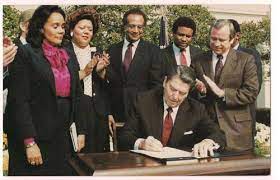
But I am old enough to remember how white people fought tooth and nail to stop Dr. King’s a birthday being made a federal holiday. I was 19 when Ronald Reagan, who spent much of his presidency undoing the civil rights legislation that King fought for, bit his tongue and signed the holiday into law (after 90 white congressmen and 22 white senators voted against it). In my Georgia town, white people began calling the holiday, “Martin Luther Coon Day.”
So I’m leery of how so many white people now embrace Dr. King while ignoring his core messages. As a kid from a southern Klan town, I’m the last person to say that white people’s hearts cannot be changed. I’ve seen the most vicious racists transform into the most dedicated anti-racist activists. And I’ve seen that more than once. But if feels like every MLK Day we get the sanitized version of the black radical who white America despised.
The perfect example is the focus on one passage in King’s 1963 “I Have a Dream” speech that you will hear repeated on Fox News every January.
I have a dream that my four little children will one day live in a nation where they will not be judged by the color of their skin but by the content of their character.
Taken out of context this sentence to gets white people off the hook. “Hey, I’ll just judge black people by the content of their character and we can be done with this whole race thing.” This lame assertion denies some very important facts.
Doctor King’s “I Have a Dream” speech, as well as pretty much everything he said, makes the exact opposite case. He was saying we will never get to the colorblind world UNTIL we deal with the engrained problems of structural and cultural racism. “White America must recognize that justice for black people cannot be achieved without radical changes in the structure of our society,” King later wrote. He had a dream of how things could be but we weren’t there in 1963 and we’re still not there in 2023. We have to do the work first. And the work is hard and the push back against the work is mighty. It’s just not from powerful white nationalists like Donald Trump. The pushback is felt in every white person that has ever said, “I’m not a racist, but…”
“I was raised not to see color” is a lie. We live in a white supremacist society that sees white as “good” and “normal” and sees black as “bad” and “other.” We internalize these message throughout our entire lives. All of us internalize white supremacy. Numerous studies have shown that black kindergartners have already learned to value whiteness over blackness. Even if you are not a rabid Klansman, we know these messages about race are baked into your subconscious as implicit bias. Even the most woke-ass liberal notices the black guy standing by their car. Research shows again and again that implicit bias is a factor in why black and brown kids are disciplined more by teachers and why people of color are more likely to be shot by police. So when a white person says they are “colorblind,” they might think they are but they most definitely are not. We are trained to see color from the get-go.
Black and brown people do not have the privilege of being colorblind. Seeing color is a matter of survival. If I’m an African-American man and I walk into a bank full of white people, I may have to adjust my behavior, appearance, and demeanor so the white people a) don’t think I’m there to rob the place, and b) maybe give me the same service that white people get. I had a black student who always wore a suit and tie to class everyday and when I commented on his dapper style he said, “I just got tired of everyone assuming I was here on an athletic scholarship.”
The content of one’s character is most certainly shaped one’s environment and upbringing. If I’m facing the daily sledgehammer of racism and oppression, that’s gonna play a role in my character. Dr. Joy DeGruy, author of the seminal text, Post Traumatic Slave Syndrome, refers to the “ever present anger” black people experience because of the constant othering. If you are going to judge someone by their character, you better understand the forces that helped create it.
In Martin King’s famous “I Have Dream” speech, in a section rarely quoted by contemporary white people, he says:
There are those who are asking the devotees of civil rights, “When will you be satisfied?” We can never be satisfied as long as the Negro is the victim of the unspeakable horrors of police brutality.
Last year there were over a thousand people killed by the police. African-Americans, who make up roughly 12 percent of the population represented 27 percent of those who were killed. George Floyd and every black police victim that has followed speak to the unspeakable horrors that persist. So why should those clamoring for basic human rights be satisfied?
Simplified history-telling has often portrayed white people as facing a perilous question sixty years ago; Either go with the kinder assimilationist rhetoric of Reverend King or face the revolutionary rage of Minister Malcolm X. King or X was a false choice. Underlying MLK’s rainbow vision was a fairly radical call for a power shift in America. The “I Have a Dream” line, “the sons of former slaves and the sons of former slave owners will be able to sit down together at the table of brotherhood,” was as much about the tables in the backrooms of congress and corporations as it was the tables in diners. Toward the end of his life, King’s message was much more explicitly class-based and anti-war (which must’ve made J.Edgar Hoover’s blood boil).
The white cherry-picking of MLK sentences from long, complex speeches and essays and the casting him as a “good negro” (in contrast to all the “bad” ones) erases the core message of King’s life. Yeah, there as been a little progress, but we ain’t there yet. We still have to explain to white people why black lives matter, because the facts on the table show they still don’t. Until there is fundamental structural change and black people, and other marginalized folks, have the EXACT same access to economic, political, and cultural power, we can dream about it, but we ain’t there yet.
So share the dream. It’s a good one. But action is required. That’s what Martin asked of us.
On Christmas Day, four utility substations were knocked out in Pierce County, Washington, shutting off electricity to more than 14,000 homes on the holiday. The previous month, on Thanksgiving, there were similar attacks on utility substations in both Washington and Oregon. Officials and customers are concerned that these attacks, following a similar but larger attack in North Carolina, are part of a new trend of domestic terrorism.
The extreme right has long had the soft-targets of America’s infrastructure in its sights. For decades, their guidebook has been The Turner Diaries, a novel about a future fictional race war in America. It was a crucial part of Timothy McVeigh’s planning of the 1995 Oklahoma City bombing that killed 168 people. The book, and subsequent right-wing manifestos, call for “patriots” to attack infrastructure to destabilize society and “accelerate” the chaos that will lead to a civil war. In the late 1990s, there were numerous militia plots to attack power stations and dams leading up to Y2K and the gang of extremists who plotted to kidnap Michigan Governor Whitmer in 2020 also plotted to blow up a bridge.
With the advent of social media, shifts in demographics and the economy, and the influence of right-wing celebrities like Donald Trump and Alex Jones, more and more Americans have fallen into the conspiracy theory-driven counterculture of violent extremism. But each of those individuals is a person acting on the information and influence that surrounds them. Those forces can be countered and the subsequent violence can be prevented. According to the Chicago Project on Security and Threats, at the University of Chicago, 87% of the individuals arrested for attacking the U.S. Capitol on January 6, 2021 were not members of any identifiable group, like the Proud Boys or Oath Keepers. Most were just swept up in the moment.
This gives us a vector for intervention. If those ramping towards violence, either because they read The Turner Diaries or watched one too many episodes of Info Wars, as well as those MAGA followers who are angry the midterm elections didn’t go their way, can be reached, deescalation is possible. Nearly every future domestic terrorist has a person in their orbit that can talk them off the ledge of violence. These “credible messengers” might be friends, family members, co-workers, or neighbors, who just take the extra time to appeal to the individual who is inching toward violence. This intervention could be a heartfelt conversation about the real damage of violent actions, or it could just be grabbing a coffee and having a chat about the value on non-violence. According to research, even watching cat videos can reduce violent impulses.
The U.S. Department of Homeland Security released a bulletin in late 2022 stating that infrastructure locations will be likely targets by extremists in the coming years. Attacks on the relatively accessible targets can have a massive impact on civilian populations. At least 2.5 million Americans rely on durable medical devices that can create life-threatening situations during power outages. Many millions more rely on the power grid for work, communication, and keeping the lights on in our homes. Extremists’ desire to create chaos to force their insurgent revolution make this issue, quite literally, one of life or death.
It’s time to activate the credible messengers in our communities. Instead of shying away from uncomfortable conversations with folks that seem to be “crazy radicals,” we can train people on how to better engage with those who are ramping up to violent action. The approach might not prevent every instance of domestic terrorism, but it can surely lower the body count. So if you’ve got a family member who loves guns and hates the government, invite them over to watch some cat videos. You might be saving lives.
I knew this year was going to be hard, but it was a real test on all of us. From mass shootings in Buffalo, Ulavde, and over 600 others, to the Russian invasion of Ukraine in February, there was death all around us. Throw in the carnage from the accelerating climate crisis and it felt like we were in last days of humanity. If it weren’t for the sizable wins by Democrats and the World Cup performance of Lionel Messi, the year might have been a complete write off.
The lowlight of 2022 was American women losing their right to choose but the highlight of the year was the hearings of January 6th Committee that deftly presented the case to the American people that Donald Trump employed multiple tactics to overthrow American democracy. It was must-see TV and we can only hope 2023 gives us indictments for the orange traitor and his inner circle of enablers. Watching him flail after his November 16 campaign announcement has bordered on high comedy. (Do you know anyone who has bought his “collectable” NFTs? I don’t.) Maybe he and Elon Musk can compete over who has the lamest social media platform.
All that informed my own year, which included heading to Ukraine to help resettle refugees, spending a day at Auschwitz, working on a federal DHS grant to find ways to interrupt extremist violence, and talking to the media about the rising threat of Kanye West. It was a great distraction from my personal life which I struggled to make sense of my domestic circumstance. I started the year in the depths of despair and I’m ending it with a healthy dose of “I don’t care.” A great somatic therapist allowed me to connect the dots from my childhood abuse to the problematic patterns in my history and finally take agency in my life. I know I’ll be fine.
The thread through this all has been the complete joy of watching my daughter move from being a silly second grader to a chess playing third grader (still pretty silly). Her growth as a person has been both challenging and inspiring. Particularly interesting has been watching her negotiate the encroaching gender norms and fairly successfully smashing them. Gen Z will have its own relationship with patriarchy, but it’s not your mother’s Riot Grrrl feminism.
I didn’t blog much in 2022. I got 26 posts out, mostly about my trip to Ukraine, which I am still processing. The posts about my separation reflect how hard I was working to fix things, but it takes two to tango and I’m starting to think I should find a better person to dance with. When I hosted poetry readings in Atlanta, I used to make fun of middle-agers who read poems about their divorces. I’m not going to be that guy. Besides, 2023 has much to offer. There will be baseball and birthdays (Disney turns 100). Russia getting the hell out of Ukraine and maybe the last Daylights Savings ever. Great music I don’t even know about yet. I have tickets to Springsteen’s February 25th show in Portland. (But who will I take?) And maybe I will blog about the Trump family in custody. Who knows?
I’m ending the year on a melancholy note but there has been immense joy in 2022 between the crushing moments of sadness. We can use the year push us to keep our children safer and our democracy stronger.

























 Watching the Wheels