Feminist Herstory Part 6 – Revolution Grrrl Style Now!

September 22, 2015 (Happy birthday, Joan Jett!)

We’re back for the occasional history of feminist theory. Earlier posts are here:

Feminist Herstory Pt. 1 – It is discovered that Women are PEOPLE!!!

Feminist Herstory Pt. 2 – Here comes the FIRST WAVE

Feminist Herstory Pt. 3 – Let’s Judge Ourselves as People

Feminist Herstory Pt. 4 – The Swingin’ Second Wave arrives

Feminist Herstory Pt. 5 – Hey, Soul Sister

Sexual_Personae__Camille_Paglia

In the early 1990s, it was clear there was something going on with feminism. As the second wave became an established voice in academia and the media, things begin to change. There was a wave of books finding a new audience of young women and men, like Naomi Wolf’s The Beauty Myth (1991), Susan Faludi’s Backlash: The Undeclared War Against American Women (1991), and Camile Paglia’s Sexual Personae: Art and Decadence from Nefertiti to Emily Dickinson (1990). No one could figure out if Paglia, for example, was a feminist or an anti-feminist. She wrote about patriarchy and sexuality in a way that pissed-off established feminists, like Germaine Greer (but got her on a lot of talk shows). Was this a new kind of feminist voice?

At the time I was teaching my signature class at Emory University called The Sociology of Youth Subcultures (which I continued to teach at Portland State). I had a young graduate student named Lauraine LeBlanc in the class. Lauraine was a Canadian with a Mohawk and deeply involved in the punk subculture. A big part of the class was the exploration of link between music and youth and I made the students several compilation tapes, mixing everything from Minor Threat to the Sugarhill Gang (and violating countless copyright laws). Lauraine told me about a new scene coming out of Olympia, Washington called Riot Grrrl.

Born at Evergreen State College, the Riot Grrrrl movement built on the failed promise of punk rock. In the 1970s, punk emerged as an androgynous subculture that rejected the beauty myth and the macho bullshit of mainstream hard rock (with Alice Cooper hacking up female mannequins and all). In 70s punk, females had a place on the stage or in front of it. But by the 1980s, punk had devolved into “hard core” and females bands faded out and females being groped in the pit at Corrosion of Conformity shows faded in.

every-girl-is-a-riot-girl

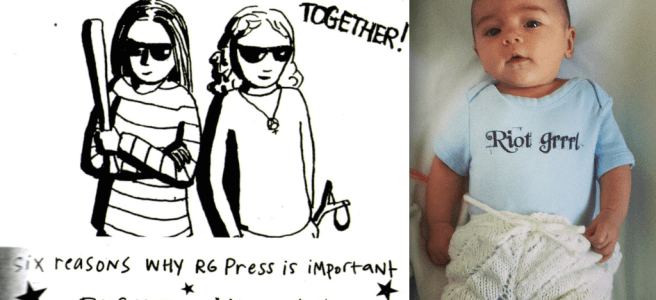
So the radical kids at Evergreeen and in other scenes across the country began to create pro-women punk rock. There was an explosion of bands like Bikini Kill, Heavens to Betsy, and Bratmobile. What the bands lacked in musical chops, they made up in passion. Most bands had only female members and the songs were about things like rape victimization and menstruation, stuff you were not going to hear Ozzy Osbourne singing about (although allied male groups, like Nirvana did take up the banner).  They drew on influences like Patti Smith, Joan Jett and Yoko Ono and even the Black Panther Party for Self Defense. It was so exciting that something new was happening in music and it was coming from young women who were sick of being told that if they wanted to be in band, they had to be the sexy lead singer.

I got a first hand lesson in Riot Grrrl ethics when I went to see the band 7 Year Bitch in Portland in May 1996. I will always be the guy who wants to get as close to the band as possible. I was a huge fan of 7 Year Bitch. The four women from Seattle rocked full on, so I pushed my way to the front of the stage at EJ’s, the tiny punk club on Sandy Boulevard. Within seconds a young woman said, “Hey man, you guys always have the space in front of the stage. How about tonight letting us have it?” I got it. I’m a tall view-blocking guy and guys who look like me often want to get rough in the mosh pit. Female fans usually get pushed farther and farther away from the action. I got how much that must suck for a young woman who just wants to rock. I smiled and watched the show from bar. Man, those riot grrrls were in heaven.

riotequalsnotquiet

Lauraine brought me tapes, CDs, and lists of bands I needed to seek out. She also supplied me with zines, homemade magazines, made by young, pre-internet, women who didn’t want to be told by Cosmopolitan or Glamour how to do gender. They re-appropriated the dismissive term, “girl,” as the angry “grrrl” and wrote it across their chests. Boys who didn’t get it could fuck off. I learned a lot from Lauraine LeBlanc that semester, including how to think about gay and lesbian subcultures. Lauraine ended up turning her interest in the voices of young women in punk into her doctoral dissertation and one of the best books ever written about gender and youth culture, Pretty in Punk: Girl’s Resistance in a Boys’ Subculture (1999). It is required reading in my Subcultures class.

51BzH1yAaoL._SY344_BO1,204,203,200_

The Riot Grrrl scene was part of a larger trend that became known as Third Wave Feminism. The Third Wave took a cue from black feminists, like bell hooks, and rejected the monolithic voice of mainstream feminism. There wasn’t one feminist position, there were millions. And the voice was local. Like postmodernists, who love to deconstruct all things social, third wavers deconstructed what it meant to be a feminist. Supposedly, wearing lipstick and a short skirt made you a sex object and potential rape victim. Third wavers asked why can’t you be a feminist AND dress how you like? Can’t you be for the eradication of sexism and enjoy silly pop culture?

sepia

So it’s not surprising that by the late 1990s, “grrrl power” had morphed into the girl power tag associated the Spice Girls (more on them next chapter). Any female in music was being called a riot grrrl, including Madonna and Gwen Stefani. But any girl power is a good thing, right? But the ethics of the subculture survived its diffusion into the mainstream, with institutions like the Rock and Roll Camp for Girls, based here in Portland, Slut Walks, and the continuation of much-revered band, Sleater-Kinney. Sara Marcus’ 2010 book, Girls to the Front The True Story of the Riot Grrrl Revolution, is now required music history reading. The 2013 film, Punk Singer, about Bikini Kill’s Kathleen Hanna has brought the message to a whole new generation of girls who weren’t even alive in the 1990s.

We’ll discuss next about how Third Wave Feminism is about a lot more than a punk rock position statement, but the call of the wild attracted a lot of kids (and a few older sociologists) with the battle cry, “Revolution, grrrl-style now!”

1928699_78649639306_2160086_n

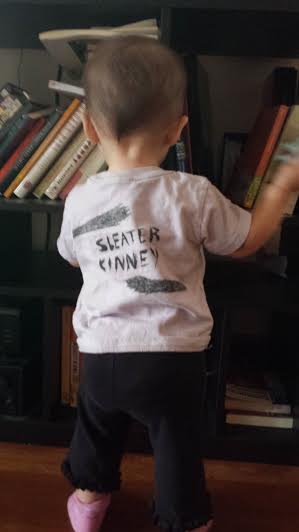
I got to see one of the first Sleater-Kinney shows in 1995 and Andrea recently went to their reunion show here in Portland and got a T-shirt for our daughter Cozy. Cozy will grow up with this music in her house and be her own rebel girl. I’m glad I live in a time with people like Kathleen Hanna and Carrie Brownstein, of Sleater-Kinney (and Portlandia) and all the other strong young women who rocking out on their own terms. Sisters are doing it for themselves, and it sounds damn good.
unnamed

The following books mentioned in this post are available at Powell’s by clicking on the covers below.

NBC’s The Island – The Myth of Punch-You-In-The-Face Manhood

May 26, 2015

Well, I was working on a blogpost on baby brain development last night when, for some reason, I started watching this new NBC show, The Island, and my own brain exploded. What is this shit? asked my baby brain. Oh, it’s the latest backlash programming, said my feminist brain.

56f4eae07bf8c29408db33ea1a07a090_600x400

If you haven’t seen the set up, apparently “manhood is in crisis” (Here we go again) and the solution is for survivalist Bear Gryllis to take 14 “American men” to a deserted island in the Pacific with cameras and not much else and say “Good luck, boys.” The lead-up shows how unmanly American society as made these once proud Ninja warriors. Technology and women have stolen their “survival instinct.” One is a 28-year-old attorney who sheepishly admits that his survival tool is Google. In the bunch is a 43-year-old stay-at-home dad who worries he’s “gotten soft.” What a bunch of wussies! Welcome to the jungle, baby. You’re gonna die.

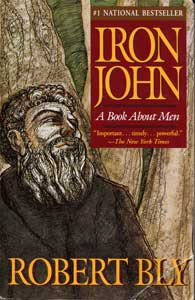
iron_john

If this sounds familiar, it’s because it’s the basis of Robert Bly’s 1991 book, Iron John, and the subsequent “Men’s Movement” that followed. Supposedly, modern society has turned once mighty men into a race of simpering mama’s boys who need to reclaim their “inner king” by finding their “deep masculinity.” In the 1990s, feminists like Susan Faludi and Michael Kimmel observed how this was just a lot of hooey in the service of restoring patriarchy after modern feminists put tiny ding in its door. The rise of the pink collar workforce and sexual harassment suits could be countered “real men” running through the woods with mud on their faces, rescuing their warrior within.

I remember the appeal of this thinking when I was young. In 1980, I was 16-years-old and, according to the TV, America was being held hostage. Actually, it was just 52 Americans who were being held hostage by some radical Iranian students. One of those hostages, Col. Charles Scott, was from my hometown. President Carter sent in a Delta Force rescue team on April 24th on a mission called Operation Eagle Claw, but sand got into the rotor blades and the helicopters crashed in the Iranian desert. Eight servicemen were killed. You would have thought that Jimmy Carter, a liberal Democrat, had caused the crash himself.

Unknown

Into this void stepped Republican presidential candidate Ronald Reagan. While not a military veteran (unlike Carter), he had played a war hero in movies and that was good enough for us. Reagan the Cowboy promised to “reclaim American greatness” (like back when we slaughtered the Indians) and knock the shit out of anybody who pushed us around, unlike that pansy peanut farmer. I was in the bag. Bye-bye Jimmy. Reagan got America’s dick hard and he won in a landslide. On his inauguration day, the hostages were released, as if just the presence of Reagan near the Oval Office made those nasty Iranians back down. (I should point out that by 1982 I was regularly wearing a “Reagan Hates Me” T-shirt and now have pissing on his grave on my bucket list.)

So we’re seeing this reactionary impulse all over again. In a world of gay marriage and metrosexual body waxing, comes another fake “crisis of manhood.” And shows like The Island are meant to “fix” men by turning them loose in the wilderness. But these people don’t know much about gender. They reduce it to biology and cherry pick cartoonish moments from history to back up their claim of the essentialness of a masculinity that is (somehow) differentiated from femininity. Kimmel and Michael Kaufman commented on it in 1995 by writing:

Bly and others wander through anthropological literature like post-modern tourists, as if the world’s cultures were an enormous shopping mall filled with ritual boutiques. After trying them on, they take several home to make an interesting outfit – part Asian, part African, part Native American… All totally decontextualized.

Men don’t need to separate from the feminine to become better men. Evidence shows that way leads to war and suffering. The men in prison that I study do that. We call it toxic masculinity and it ain’t good. I don’t want my daughter living in a world where this mythology of warrior men still is embraced. Recent evidence has revealed that half the Viking warriors were female. This silly cartoon of “cavemen” clubbing their cavewomen over the head to have cave sex (now, rebranded as “rape” by those ball-busting feminists) is a grand lie men tell each other and women. Hunting and gathering societies were a lot more gathering than hunting and evidence shows us that both tasks were split evenly among gender lines.

NBC-The-Island_Bio-Image_15_1455x1455_AC

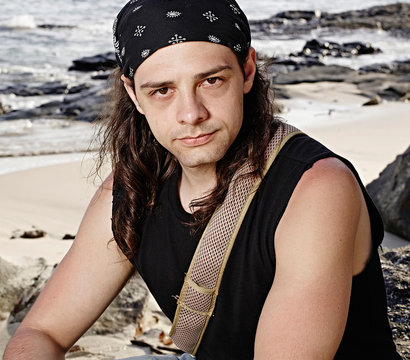
So what is the value of The Island? There’s a 25-year old radio producer who screams at everyone to “Man up!” or he will punch them in the face (that’s his cool picture to the left). There’s a 50-year-old military guy who wants to name the band of brothers, “The Conquistadors” (a group that knew something about rape, murder, and slavery), and a variety of others who are struggling to hold on to their masculinity while their  women receive marching orders from Hilary Clinton’s underground lair. It would be almost comical if it didn’t reinforce the single biggest piece of human bullshit ever told, that men and women are “opposite” sexes.

But maybe we’ll find these guys rejecting the refuge of this bogus idea of masculinity. Mr. I’m Going To Punch You In The Face was taken off the island after the first episode when his little tantrum bit him on the ass and his male body shut down. Maybe for every snake they kill, they’ll have two conversations about their true emotional selves. Maybe one, instead of saying he was wounded by his father leaving the nest (as Bly contends), will say he was saved from being raised by an asshole. And maybe, when they are on their last drop of fresh water and crying out their children’s names, they’ll be rescued by some badass Amazon women who live on the next isla.

I’m just tired of the notion that there is a singular definition of masculinity and a set of rules for “real” men. That’s not an idea of gender that helps my daughter succeed. If you want to be a real man, put down your machete and your war paint and listen to a woman. For a change. You can’t “survive” without women. Monday nights are “Reclaim the Phony Masculine” on NBC, I guess. American Ninja Warriors (Don’t get me started on that one) and The Island. Where are Cagney & Lacy when you need them?

agney-and-lacey

Feminist Herstory Pt. 4 – The Swingin’ Second Wave arrives

April 10, 2015

We’re back for the occasional history of feminist theory. Earlier posts are here:

Feminist Herstory Pt. 1 – It is discovered that Women are PEOPLE!!!

Feminist Herstory Pt. 2 – Here comes the FIRST WAVE

Feminist Herstory Pt. 3 – Let’s Judge Ourselves as People

The 1960s were exploding with numerous waves of consciousness raising. In a short period of time, masses of people (especially young people) were re-evaluating how they thought about race, war, politics, social class, sexuality and gender. Boys began to grow their hair like girls and reject the marriage/house in the suburbs trajectory. Girls, with the help of the birth control pill in 1960, stopped waiting for Prince Charming and started practicing “free love.” A lot of the same old bullshit continued, but second wave feminists were active on numerous fronts.

2blog-msmagazine

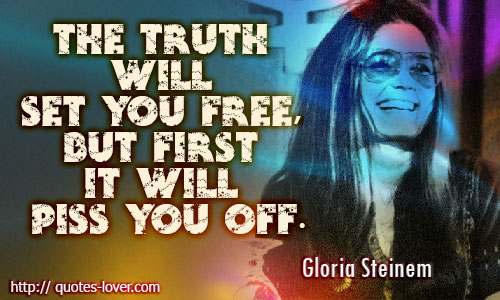
In popular culture, Gloria Steinem not only went after Hugh Hefner on a 1960s talk show for referring to grown women as “girls,” but helped change the language itself. Single women were referred to as “Miss,” while married (claimed) women were “Mrs.” There was no equivalent shift for males. They were always “Mr.” whether they were single or not. Why not refer to females as “Ms.”? (Steinem founded Ms. Magazine in 1971, which became the standard bearer of second wave feminism.)

Feminist themes began creeping into 60s pop culture, in TV shows, like That Girl, and songs, like Aretha Franklin’s reworking of Otis Redding’s “Respect” and even the Rolling Stones’ “Mother’s Little Helper.” Much of the feminist energy was not just a rejection of the plastic suburban lifestyle, but the gender politics of larger liberation movements. For example, young women would show up to participate in anti-war and New Left groups, like the Students for a Democratic Society (SDS) and find males running the program and females expected to prepare food, not author manifestos.

My mother was typical of many middle-American women who heard about the feminist movement (“women’s lib”) from the fringes. She was 20 in 1963, when Friedan’s book came out, and newly married. She remembers seeing her on TV frequently in the 1960s, talking about The Feminine Mystique but not making the connection with her own situation. She recently emailed me about it:

Men were getting paid more than women for the same job, (and they still are). The big saying in the 60’s for men was “keep your wife barefoot and pregnant.” I also felt that with or without the feminist movement, a women could get ahead on her own with hard work a few brains, and knowing how to maneuver in a man’s world, such as starting a company, which I did.

Stepford wives

I think my mother, like a lot of women, didn’t see herself in the faces of the activists who were railing against “patriarchal oppression” and protesting against Playboy magazine and stay-at-home moms (which was never really the target). In the 1970s, she found a space to start her own consulting business. But that small space was created by the feminist pioneers who fought to get their foot in the door. It’s interesting that she pointed out the 1975 film, The Stepford Wives, as more influential on her ideas about gender power. The horror flick was rooted in the core principles of The Feminine Mystique; that you can only treat women like robots for so long.

The feminist movement of the late 1960s and early 1970s was wide-ranging and defied any simple characterization of what a “feminist” was. (But, as we shall see in the Part 5, it wasn’t exactly inclusive). Liberal feminists, like Friedan, pushed towards an equality of the sexes, focusing on issues like equal pay and an end to job-discrimination. Marxist feminists, like Jeanne Gross, pointed out that women gaining access to the same jobs that exploit men is not true liberation. Their position was that, since capitalism turns women into commodities (and not just prostitutes), the best way to end sexist exploitation is to end capitalism.  Radical feminists, like Charlotte Bunch, pointed out that patriarchy predates capitalism and what feminists should focus on is various systems of oppression. And then socialist feminists, like Barbara Ehrenreich, were concerned about how all of these issues impact women’s individual economic lives.

So when people tried to characterize feminists as “bra-burning man-haters,” they were really just perpetuating a caricature favored by those who defend sexism. First of all, despite some of the un-evolved men at the SDS meetings, there were men engaged in consciousness raising groups and exploring their own male privilege. The debate within feminism was healthy and held together around two basic ideas. First was the idea that society is primarily organized around male power and that patriarchy is insidious in virtually every aspect of life. The second idea was the slogan, “The personal is the political.” Individual experiences of oppression are manifestations of social patterns and the solution to personal problems is collective action. The personal is the political!

By the early 1970s, the debates within the feminist movement were raging. Liberal feminists mobilized women to break through the old boys clubs of power and start cracking the glass ceilings. Radical feminists asked if claiming 50 percent of a world created by men was really best for women. Would a military in which half the members were female really be a transformation of society, or just one where women were good at playing men’s games? Some feminists were increasingly frustrated with the reluctance of the men in their lives to share power. Is it possible to have a truly equal relationship with a man? Some feminists suggested lesbianism and separatism as the only way to escape abuse, oppression and dehumanization. This extreme position actually makes a lot of sense when you think about it but separatist groups, like the Furies Collective, added to image of feminists as hating men.

As men (including many progressive men) dug their heals in to defend their patriarchal power (you could be Mr. Radical and still want “your woman” to get dinner on the table), the rhetoric heated up. Rage towards “male domination” and “male chauvinist pigs” may have been justified, but it fed into the hype that feminism was all about stoking the “battle of the sexes.” For me as a 9-year-old in Stone Mountain, Georgia, this was all manifested in a tennis battle between Bobby Riggs and Billie Jean King. Riggs was a loudmouth who’d been a tennis champion in the 1940s. He seemed personally offended by the notion of female equality and made something of a comeback by challenging female tennis pros. The grand match was on September 20, 1973. There was a ton of hype about the ultimate “battle of the sexes” and anyone with a soul was rooting for King. Billie Jean beat Bobby’s ass in all three matches and he disappeared back into his cave. If you know the Elton John song “Philadelphia Freedom,” you know the right person won that round.

billie-jean-king-bobby-riggs-battle-of-the-sexes

Despite some of the rhetoric from some of the more militant factions, feminism was never about turning the oppression of women into the oppression of men. I think that was the fear of a lot of men. Just like Southern whites feared free blacks would torture whites as blacks had been tortured, many men feared free woman would go all Amazon on men, forcing them to bake three-level cakes and wear open-toed high heels. But feminism was geared towards ending oppression in general and men could be strong allies in that cause. But in the early 1970s, feminism needed a good look in the mirror to achieve that.

As the second wave moved into the 1980s, many feminists began to explore intersectionality and expand the big tent of feminism (that’s the subject of Part 5). Some liberal feminists, like Hilary Rodham Clinton, figured out how to beat men at their own game. But some Second Wavers got stuck in the early feminist thinking that cast women as universal victims and all men as dastardly agents of patriarchy. Some of those folks found an enclave working in Human Resources departments, zealously looking for sexual harassers, denying the agency of women. As we will discuss in a coming section, third wave feminists rejected this reductionary view as denying the complexity of gender power. But it makes for engrossing movies on the Lifetime Channel. Those evil men! But we still owe the second wave a great debt for naming the problem with no name and fighting it on multiple fronts.

The following book was mentioned in this post and available at Powell’s by clicking the cover below.

“That dude has intense eyes!” Normative maleness and my baby

April 6, 2015

One of the main goals of my Intro Sociology class at Portland State was to get students to develop an understanding of what feminism is really about. I would start with a riddle;

“OK, imagine a father hasn’t seen his son in 5 years. They are reunited and spend the day together. They go to a ballgame and out for burgers. On the way home there is a horrible crash and the father is killed. Barely alive and in need of surgery, the boy is rushed to the hospital. In the ER, the doctor rushes up and, with a shocked look, says, ‘I can’t operate on this child. He’s my son!’

So who is the doctor?”

In a room of 100 students there is almost always dead quiet. When I first heard this my mind went to SoapOperaLand. Maybe they were switched at birth and the doctor thinks this is his child.

The answer is much more simple. The doctor is the boy’s mother. But in a patriarchal culture we are taught to assume the male. It’s called normative maleness. “Female” is the default position. Actors (and actresses), poets (and poetesses).  Even with animals we assume the dog is a “he” even if we haven’t checked underneath to be sure.

tumblr_mdrweq1Eex1r4gisno1_500

It happens everyday. Cozy has plenty of pink but most of her clothes are not. She wears lots of clothes that were mine 50 years ago. We were at the videostore yesterday and a young clerk looked at her and Cozy gave him the “Whatchu lookin’ at, Willis?” stare. The kid said, “Man, that dude has intense eyes!” Yeah, it’s a girl, young brother. I did it just this morning. I got a note that a child of Cheap Trick singer Robin Zander, Holland Zander, might be interested in talking about my Dream Police novel. I immediately replied, “Please email him!” Turns out Holland is a she (and Robin is a he, a very awesome he). In the 2000s, whenever I would see a news headline that read something like, “Clinton headed to China,” I would think, “Oh, Bill’s taking a trip!” It was always Secretary of State Hilary Clinton. Always.

So I lecture on normative maleness and how it serves to make females fade from view. It’s even in our politics. There are political issues and then “women’s issues,” like health care and education. All the women in the class, whether they call themselves feminists or not, get it. A lot of the guys have sort of a “so what” look on their faces, but I get 10 weeks in a quarter to work my magic. There’s a similar  situation of normative whiteness, how we assume a person is white unless we are told otherwise. What’s the picture in your head when you hear the term, “All-American kid”? It’s probably not a girl named Fatima.

Having a baby is a good place to see this play out on a daily basis. Since gender is socially constructed, babies start out genderless. We horseshoe them into pink or blue realities from Day 1. (Now we can start before they are even born!). But, in reality, babies don’t look much like boys or girls. They look like babies.

PATTON

We were out at the coast yesterday, a nice Easter road trip to Lincoln City. Cozy was in awe of the Pacific. I love seeing her see things for the first time. I snapped a picture of her. As soon as I looked at it I realized that my baby looks like comedian Patton Oswalt! When I posted it on Facebook, a friend commented that all babies look like Patton Oswalt. Whew. Love the guy but my projection on my daughter, as it turns out, is more gendered than I thought. If she’s going into comedy, I see her as more of a Cecily Strong an Amy Schumer. (Although, Patton Oswalt seems like a perfectly happy person, so I’ll take him.)

I’m a bit off point here. It’s just very telling how many people think Cozy is a boy when she is wearing her green sweater or sucking on her blue binky. In this “genderless” moment she is completely free. I love her gender transgressions and I hope it sows the seeds of not feeling trapped in the “girl box.” She’s Cozy Fucking Blazak! She can construct her own definition of gender.

This Dar Williams song makes me think about the time she has to be genderless.

Was this a feminist Super Bowl?

Feb. 2, 2014

OK, as a Seahawks fan, I’m not going to talk about the last 60 seconds of the big game. If I was a hockey fan, I might have enjoyed it, but it was just a sad ending to an exciting game. So end-zone battles not withstanding, how could the Super Bowl ever be viewed as “feminist”? It’s framed as a celebration of male violence that drives a billion dollar industry that promotes more violence as sport. The players are chewed up with the lure of big paychecks and the chance of not ending up with debilitating head injuries. This past year’s issues with players and domestic violence surely hasn’t helped the sport as a place where women can feel safe in the stands or on the couch.

I can guess what Patricia Hill Collins thinks of the NFL, but plenty of 3rd wave feminists have made a case for football fandom.

Feminist Football Fan: Reflections from the 12th Woman

How to be a feminist and a football fan and not hate yourself

Now that Super Bowl 49 is in the can, how does it rate? Over 100 million people watched, so it’s important to look at the gendered messages.

This year’s face-off between Seattle and New England had a lot of bright spots. The first thing is what was missing from the game. There was a serious absence of gratuitous shots of cheerleaders bumping and grinding for the cameras. I’m old enough to remember when the Dallas Cowboy Cheerleaders were the main attraction to the 1977 Super Bowl, setting the precedent for maximizing eye candy for male viewers. It’s clear that the NFL knows the female viewing audience is growing.

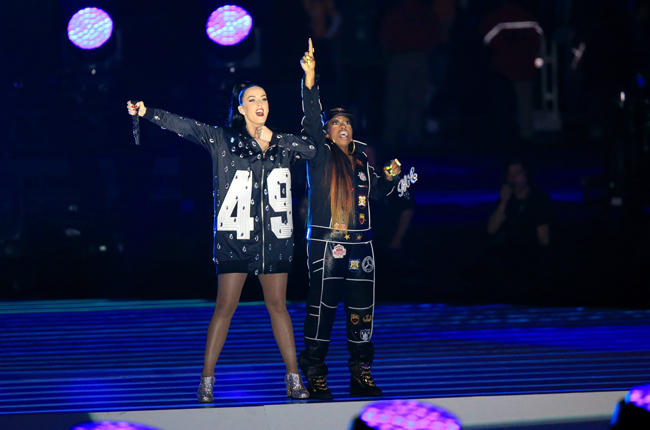
Also missing was the annual cleavage-heavy Godaddy commercial. The King of Sexist ads, Carl’s Jr, had their sad entry pulled in many markets. While the game was still dominated by male voices (I would love color commentary from Amy Poehler or Wanda Sykes), seeing Missy Elliot in the half time show, next to Katy Perry, was a welcome dose of serious femtasticness! The rap pioneer has been suffering from Graves Disease, so any moment we get to share with Ms. Misdemeanor should be cherished.

So let’s talk about the ads, because unless you want to discuss who is cuter, Tom Brady or Russell Wilson, that’s the topic of the day.

Aside from Kim Kardashian’s hips (they lie!) and a generic Victoria’s Secrets ad, there were plenty of rare feminist moments during the broadcast. Everyone’s talking about how depressing the ads were (Christ, don’t let a flatscreen TV fall on my daughter!). But the NoMore.org about ad about domestic violence was chilling and needed after this past year. I’m sure it was a tough moment at Ray Rice’s house. Or it was a bathroom break?

Instead of endless Viagra commercials warning of about 4 hour erections (Please sir, may I have another?), we got Always feminine pads with an important message, that when you use “like a girl” as a put-down, you are putting down all girls, including your sister. This add went viral on Facebook last year, but seeing it featured on such a massive media platform was like a breath of fresh air. On a summer’s eve.

https://www.youtube.com/watch?v=q3GpXgFwWmk

My personal campaign to get men to embrace feminism got a serious, if subtle, push in the ads as well. In a sport where there are lots of props for moms who raise players, often on their own, 2015 was the year of the dad. Toyota’s “Bold Dad” ad and Nissan’s take on “Cat’s In The Cradle” commercial, both celebrated father’s being present. Although anyone who knows the Harry Chapin song knows the tune does not end well for the father or the son. Fortunately for Nissan, the ad maxed out at 90 seconds, before the song’s sad climax.

The prize winner in the dad category was the one for Dove Men. The company has done much around the issue of women’s body image in advertising but here we get a redefinition of masculinity. What makes a man stronger? the bit asks. The answer is not having a better car or winning an arm wrestling contest. The answer is simple and it’s not about power or oppressing others. It’s “showing he cares.” And after 30 seconds of images of dads being there, you believe it.

There were other refreshing moments. Seeing Sarah Silverman and Chelsea Handler (T-Mobile) made us forget when Jerry Lewis said that female comedians can’t be funny. There was Mindy Kaling showing us that brown women can feel invisible (Nationwide) and Loctite Glue entertaining us with the most normal looking people ever. Even horrible McDonald’s sacrificed the production budget for a simple message of love and Jeep gave a shout-out to Mother Earth.

There will be plenty of Monday morning quarterbacking. (“Why oh why didn’t Russell just give the ball to The Beast?”) But this year feminists were part of the conversation. Even the Portlandia feminists, who run the TV version of the very real feminist bookstore just down the street from me, were live tweeting during the game.

We’re About To Freak Out! Real Feminist Bookstore To Live Tweet Super Bowl

Maybe someday there will be a female professional football league with a Super Bowl that will be nothing like Lingerie Bowl. Or at least an audience for women’s sports that rivals 100 million people on a winter afternoon. But, at the moment, we can take a NFL that now sees domestic violence as a serious problem, not something the sports heroes sometimes do, as a small victory. The voice of women has changed the game and there is a new standard emerging. The female senators who urged the NFL take a zero-tolerance stance on domestic violence are just part of that chorus. The country is realizing that girls and women love sports as much as the guys.

It sort of makes me excited for Super Bowl 50. And no, I don’t want a Budweiser.

katy-perry-12-missy-elliot-super-bowl-halftime-xlix-2015-billboard-650

Feminist Herstory Pt. 2 – Here comes the FIRST WAVE

This is part of a book I’m writing on men and Western feminism. I’ll be occasionally posting a little bit of history of feminist theory in a way I hope you like. Part 1 is here:

FEMINIST HERSTORY PT. 1 – IT IS DISCOVERED THAT WOMEN ARE PEOPLE!!!

All people are created equal

Feminist thought did not die like Dr. Frankenstein. In fact it ramped up in 19th Century America. People forget that the leading voices for the abolition of slavery were female. It shouldn’t be that surprising that the abolition movement gave birth to the first modern feminist movement. There are important names that came out of this era that you might know from a picture on a coin or an Amy Ray song, but they are important as the Founding Fathers because they helped to liberate not only the enslaved populace, but also half of the “free” citizens.

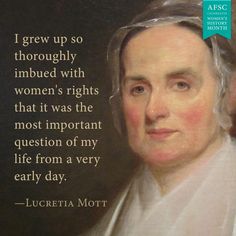
One of the key voices of the abolitionist movement, Lucretia Mott, is also viewed as the first American feminist by many. Mott was a Quaker from Nantuckett and founder of the Philadelphia Female Anti-Slavery Society. In 1840 she headed off to London to speak at the International Anti-Slavery Convention. But the male abolitionists turned out to be just as sexist as the general population and wouldn’t let the women speak. Mott rallied her supporters and became known as the “Lioness of the Convention.”

Another American abolitionist was in the audience, watching Mott get the short end of the stick; Elizabeth Cady-Stanton. Cady-Stanton was the daughter of a prominent New York attorney who introduced her to the law and her husband was an anti-slavery activist. She met with Mott in London and the two decided to combine forces to speak against the oppression of women and slaves.

For those that think that line in the Declaration of Independence about “all men a created equal” negates the need for any feminist agitation need a little historical footnote. Not only were slaves denied full citizenship, so were women. At no point in the 18th or 19th century did female Americans have a Constitutional right to vote. The belief was that women had the vote through their husbands. Widows, spinsters, and hussies were screwed, but oh well. Women couldn’t inherit wealth or sign contracts or sit on juries or divorce their husbands or wear designer jeans. In reality that “all men are created equal” stuff only referred to white men who owned property. So when Lott and Cady-Stanton got back from London, they were ready to stir some shit up.

Throughout the 1840s female abolitionists, like Mott, Cady-Stanton, and Lucy Stone from Massachusetts, began lobbying for legal rights for women. With the help of male politicians (including Cady-Stanton’s cousin, presidential candidate Gerrit Smith) small changes were made, mostly in Northeastern states. The women wanted to build a larger movement and built towards a convention that would focus on women’s rights and kick the cause into high gear.

The Seneca Falls Convention in July 1848 was really the birthplace of modern feminism. For two days in Seneca Falls, New York, men and women debated the various issues (white) women faced in their struggle to be full citizens. Speakers included Frederick Douglas, the famous abolitionist, who gave an impassioned speech urging the convention to make women’s suffrage a priority. The end result was the Declaration of Sentiments. Modeled after the Declaration of Independence and utilizing the language of the Enlightenment, the Declaration outlined the structural imbalance women suffered at the hands of free men. Sixty-eight women and 32 men signed the Declaration and launched it into the world. The opening paragraphs read:

When, in the course of human events, it becomes necessary for one portion of the family of man to assume among the people of the earth a position different from that which they have hitherto occupied, but one to which the laws of nature and of nature’s God entitle them, a decent respect to the opinions of mankind requires that they should declare the causes that impel them to such a course.

We hold these truths to be self-evident: that all men and women are created equal; that they are endowed by their Creator with certain inalienable rights; that among these are life, liberty, and the pursuit of happiness; that to secure these rights governments are instituted, deriving their just powers from the consent of the governed. Whenever any form of government becomes destructive of these ends, it is the right of those who suffer from it to refuse allegiance to it, and to insist upon the institution of a new government, laying its foundation on such principles, and organizing its powers in such form, as to them shall seem most likely to effect their safety and happiness.

gfx_declaration

Change wasn’t immediate. A lot of men were scared shitless about giving women the right to vote, let alone any legal equality. As the suffrage movement heated up, a lot of powerful men went into a panic. Turns out there were (and are) more women in the U.S. population and the “majority rules” democracy could be turned upside down. Major newspapers, like the New York Times, began running editorials about the White House becoming the Pink House and wars being replaced with quilting bees if women had voting rights. But Suffragettes, like Susan B. Anthony, the Quaker founder of The Revolution, kept the heat up. Finally, in 1920, the 19th Amendment was passed, and 57 years after the slaves were freed by Lincoln and 124 years after the Declaration of Independence, women were granted full citizenship. The “first wave” feminists had achieved their greatest goal.

A range of other views moved to the front burner. These included birth control for women, the legalization of abortion, equality within marriage, sexual freedom, and the ability of women to escape drunken, abusive husbands. While some women found liberation in the Flapper fad of the 1920s, personified by actors like Clara Bow, once the Depression hit in 1929, the focus moved back towards basic survival. It wouldn’t be until fifteen years after WWII that the Second Wave would appear.

Coming soon:

Feminist Herstory, Pt. 3 – Rosie the Riveter and WW2

Feminist Herstory Pt. 1 – It is discovered that Women are PEOPLE!!!

Some people find history boring. Then they go watch an episode of Downton Abbey. I love history and the history of feminist theory is pretty wild. In feminism we talk a lot about waves. (Are you a second or third wave feminist?) I’ve been working on a book on 4th wave feminism, but before we get there, we need some history. So I will periodically drop in some excerpts from my, hopefully not boring, “herstory.”

Feminist Herstory Pt. 1 – Roots, Galileo and Frankenstein

There’s a famous quote I use at the beginning of my social theory class by Cambridge professor Geoffrey Hawthorn,  “The sociologist who begins a history of social theories is at once very tempted to stop.” Finding starting points for ideas is only asking for trouble. Capitalism existed long before Adam Smith became the father of it. Punk rock existed before Patti Smith became the godmother of it. So finding a starting point is an exercise in futility. And then everyone is going to complain about what and whom you left out. “How could you not mention Emma Goldman in your history of feminism???”

For me, the whole thing started in second grade, when I heard Helen Reddy’s song, “I Am Woman,” on the radio. I loved that song. I loved that it used the word “embryo” as a rhyme. I loved how it went into the minor key for the “Yes, I’m wise” part. I loved seeing my mom sing it in the car. The song was source of discussion among my friends at school and in the neighborhood. Apparently there was this thing called Women’s Lib and (some) women were as pissed off as (all) black people. That was about the extent of my feminist consciousness at age seven. But I can still do a mean version of that song at karaoke after a few whiskeys.

So any history is incomplete, insufficient, and inconsistent.  It is important to say, though, that at every step of the evolution of feminist thought, men have been there. Sometimes just as supportive husbands and sometimes as primary movers and shakers. Famous male thinkers, like John Stuart Mill and John Dewey, had plenty to say on the equality of women. One of the first European intellectuals to identify patriarchy as a root cause of social inequality was Friedrich Engles in his 1884 book, Origin of the Family, Private Property, and the State. Engles was Karl Marx primary collaborator and addressing the core matters of feminism.

This complex history has two threads in it and it’s not what Rush Limbaugh and his army  of “femi-nazi” haters think.  It is not that feminists think that women are the same as men or better than men (although some individuals may think that). It is that women and girls are human and therefore deserve the same basic rights that men and boys do. The second thread is that there is a structured system that benefits men and disadvantages women (patriarchy). We feminists think there is a better way to organize society, but our views are shaped by the times we live in. As C. Wright Mills once pointed out, our history is our biography.

Galileo’s head was on the block

You could make the case that 6000 years ago, you didn’t need feminists as pretty much all people living in civilized settings were feminists. As discussed in the work of Riane Eisler, those cultures did not view males and females as occupying an inherent power imbalance. It wasn’t until the advent of patriarchal religions that “original sinners” got demoted to bitches and hos.

The long reign of the Catholic Church plunged Europe into a dark age of patriarchal violence. Women (and men) who challenged the new order were tortured and executed. At the peak of the witch trials (1480- 1750) it is estimated that 100,000 people were executed as witches.

But the hegemony of the papacy wouldn’t last forever. The Protestant Reformation worked to put non-Latin Bibles in Christian hands and help folks figure out the meaning of the Gospels for themselves (which many used to justify slavery and more oppression of women). Perhaps more significantly was the finding of one man, Galileo Galilei. Using the theories of Copernicus, in the early 1600s Galileo discovered that the earth was rotating around the sun, not the other way around as proscribed by The Bible and the Church.

Galileo began to promote this heliocentric view of the universe and, boy, was the Church pissed off. If the Bible was wrong on this simple point, what other lies had the Church been covering up? Galileo was denounced by the Roman Inquisition in 1615 and placed under house arrest as a heretic. The good news is that the Catholic Church eventually pardoned Galileo. In the year 1992.

The observations of the little astronomer from Pisa represented the beginning of the end of the Dark Ages and the birth of the Age of Enlightenment. Enlightenment thought based knowledge on rationality and empirical evidence, not in blind faith of the unseen and the autocratic authority of church officials. Enlightenment philosophers across Europe and America ushered in a new age of science, philosophy, economics, and political thought, undermining the “divine right of kings.” Revolutions in America and France swept away monarchies and established governance based on the ancient rational process known as democracy.

It was in this period that the modern championing of women’s humanity began to take hold. You could argue that there is a long history of women standing up to the Man, or doing the job better than men, but it was never really based on a critique of patriarchal power. Joan of Arc was a badass, but she wasn’t a feminist. But in the 1700s, a chorus of voices took up the cause of female equality. American revolutionary Thomas Paine, author of The Age of Reason, argued that his new nation could not be completely free if its citizens could own slaves and its women could not vote. In 1775 he wrote:

“Nature herself, in forming beings so susceptible and tender, appears to have been more attentive to their charms than to their happiness. Continually surrounded with griefs and fears, the women more than share all our miseries, and are besides subjected to ills which are particularly their own. They cannot be the means of life without exposing themselves to the loss of it.”

If there is one name that stands out as the Enlightenment feminist, it is Mary Wollstonecraft (1759-1797). Wollstonecraft, who influence the work of Paine and others, was a British writer who covered many subjects. As a product of the Age of Reason, she applied the ethic of rationality to the wave of social change that was occurring in the late 18th Century. In A Vindication of the Rights of Man (1790), she assailed the aristocracy that had survived the French Revolution and advocated for true democratic forms of government. Her next book, A Vindication for the Rights of Woman (1792) is generally seen as the first feminist work published for a large audience. In Rights of Woman, Wollstonecraft makes what we would think of now as a standard sociological case on gender; that the passivity of women is not due to biology, but socialization. She advocated for educations as the primary method to change the role of women.

A Vindication for the Rights of Woman was still written in the language of the era (there is much discussion of how women’s role as mothers is crucial), but for the first time the language was clear, females are as human as males. They could be wives, but as full humans they could be her husband’s companion, not his ornament. She links racism and sexism, stating that the justification for gender roles as tradition is the same for the justification of slavery as tradition. “If women be educated for dependence; that is, to act according to the will of another fallible being, and submit, right or wrong, to power, where are we to stop?” she writes.

If Mary Wollstonecraft had been born a hundred years earlier, she probably would have been burned at the stake. Instead her short life produced some of the most radical writings of her time. She died in childbirth at the age of 38 and her daughter, Mary, became one of the most famous female authors of all time. Mary Shelly wrote Frankenstein 20 years after her mother’s death. Pretty much everyone knows Frankenstein. Not enough people know about the writings of Mary Wollstonecraft.

The following books were mentioned in this blog post and can purchased from Powell’s by clicking on the covers below.

Coming Soon: Part 2: Birth of the First Wave

I Hate Housework (2nd Wave Feminist Edition)

December 29, 2014

When Betty Friedan published The Feminine Mystique in 1963, she described a world where women were told they could find salvation in housework. Television programs like The Donna Reed Show and Leave It To Beaver featured perfectly polished housewives in perfectly polished homes. Those women were fictional. Real women were popping mother’s little helpers, praying the laundry would be done before the pot roast and maybe there was enough money in the cookie jar to hire a maid on Fridays.

There is no reward in drudgery if that’s all you’ve got. If you have an actual life, there is something satisfyingly zen about going at the bathroom tile like your life depended on it. Like rock climbers who free climb and can ONLY think about where their fingers go next, you can block out all the noise when your are channeling Mr. Clean. (This is how yoga is supposed to work but my mind is usually focused on the percent chance I will fart before the hour is up.) But for those who are not grout yogis, housework sucks.

I get it. So much of being a house-husband is getting it. You gotta walk a mile in somebody’s slippers, pushing a vacuum cleaner. I so get it. I get my mom and why she had to get the hell out. I get all the women who were sold a bill of goods about the American dream and then felt like they were sold into slavery. A white picket fense ain’t gonna make Swiffing any more rewarding.

I have done housework my whole life, but it always seemed manageable. When I first moved to Portland I had a roommate who must have had June Cleaver for a mom. He never cleaned anything. He took his laundry to his parents’ house where it was magically washed. I once got a little fed up and said, “Hey, who do you think cleans the bathroom? Me. You need to do it sometimes.” I came home the next day and found a young woman cleaning our bathroom; his new “girlfriend.” (Happy day note – this guy has evolved since then. It was the grunge era after all.)

I’m the kind of guy who feels like the world is askew if my bed is not made. I am not anal. I am a slob. But there is a maximum number of dishes in the sink and a laundry on the floor before my inner neurotic begins to hyperventilate. So cleaning is just part of life’s routine. All that changes when a baby shows up.

A baby is the ultimate excuse for everything. I’ve completely missed meetings and just said, “Oh, the baby was being fussy” and people are like, “Don’t worry. I totally understand. Cherish these moments.” It’s like having cancer. You can totally get away with murder. “I stabbed that guy because the baby was crying and I just got stressed out.” “Don’t worry. I remember when my kid was that age and I stabbed a guy.”

So if my house is kind of messy right now and you don’t have kids of your own, back the fuck off. I thought I would have so much time as stay-home-dad. I would get my new novel started and work on remodel projects while the baby slept. Nope. The baby takes up all the time. Her quick naps allow me enough space to check my emails, maybe work on this blog and run down the street to give the outgoing Netflix of The Good Wife to the postman, who I missed because I was feeding the baby. While my wife watches time slow down at work, my day speeds by and I didn’t even get a chance to throw the dirty bibs in the wash.

When the wife gets home, she’s drained and in no mood to do housework. I get that, too. I was that guy. Who wants to tackle the kitchen floor after a long day at the office? So I try to make her coffee in the morning and a cocktail at night. But I’m still in Suzy Homemaker mode. Now that she can watch the baby, I can get a load of laundry through and wash a dish or two. Weekends are our time, but there is still bills to be paid and grocery shopping. So I’m first out of bed and the last in. There are baby bottles still to wash. So if my house doesn’t look like the Brady house, kiss my dishpan hands.

Dorothy Smith wrote in feminist classic The Everyday World As Problematic (1987) that women are relegated to domestic sphere doing the logistic work so man can occupy the public sphere. (“Behind every great man is a great woman – not getting any credit.”) I understand that the laundry and the dishes are now my job (and the kitchen floor and putting the diapers out and…) and that’s OK. My wife works hard. She brings home the bacon and nurses the baby and so much more. I can make her a bagel in the morning. But I can totally see how so many women get lost in this support role. When is it my time?

Empathy is the most important quality in the world. I wish the New York cops who turned their backs on the mayor this weekend had empathy for the members of the minority community who continue to be racially profiled. I wish the members of ISIS had empathy for anybody who is not in ISIS. But most importantly, I wish men had empathy for all the women stuck at home who are supposed be be happy because they have a new dishwasher and a front-loading dryer. Maybe if you would just lend a hand.

EDIT: The dishwasher is now officially dead and I have to wash everything by hand. Represent!

These books are available at Powell’s independent bookstore by clicking the covers  below.
“Oh, house husbands are so great!” and other double standards.

December 15, 2014

Andrea and I had a rare Saturday night out. (Thank humanity for family willing to babysit.) We were sitting at our local bar next to a guy who was lavishing praise on me for being a stay-at-home dad. (He stayed home with his dog, so he knew.) He then went on to imply that my wife was giving up something up essential. I missed it but it went straight to Andrea’s heart. What working mother doesn’t carry some guilt? (And maybe working fathers should share said guilt.)

How many double standards does sexism create for women? The slut/stud one is obvious. Then there’s the beauty standard. Women need to be better at their job than men and look good while they do it. Me, I look like a slob and slack off a bit too much. But there’s another one that is worth discussing. The duel parenting standard.

I can’t lose. As a man, if I shuffle off to the 9 to 5, I am a good provider. I am playing the role that every traditionalists thinks is the backbone of modern society. If I stay at home to raise children (as more and more men are doing), I get constant pats on the back as a “trailblazer” and challenger to domestic gender roles. But for my wife, it’s the exact opposite. If she stays at home with the baby, then she is viewed as “giving up her life” for diaper changes and kitchen chores and if she returns to work, she’s seen as somehow depriving her child (and herself) of a precious mothering experience. You can see how it could make a mom a bit nuts. She can’t win.

In the 2000s, there started to be this backlash against “supermoms,” who greedily wanted it all. The result of evil feminism was to deprive women of the thing that was essential to their femaleness (changing diapers and kitchen duty). You thought that job would make you happy? Now you’re just a man in drag. It was pitched as the opposite of Friedan’s “feminine mystique.”

But those conservative “post-feminist” critiques (as usual) ignored the power of patriarchy. The 2nd Wave vision (We will discuss feminist waves soon) in the 1960s was that women would be able to pursue careers, as men had, and men would take up the slack at home. Firemen became firefighters, mailmen became letter carriers and stewardesses became flight attendants. But men didn’t hold up their end of the bargain. Don Draper didn’t start vacuuming and planning meals. It was the men who still wanted it all; a self-actualizing career and dinner on the table at 6.

So that gave birth to the supermom burnout. Mom’s didn’t have it all. They had to do it all. In 1989, Arlie Hochschild referred to this as the “second shift.” She’s got a job and responsibility for the care of the family. Mom gets home from work and then goes to work. Where is dad? Hey, he’s had a hard day at the office. Get off his back!

Society is a work in progress, especially in the good ol’ USA. Gender roles are evolving. Anthropologists can tell you that there are tribal cultures that can go for centuries with little social change. Europe in the Dark Ages was just stuck for over 500 years. We are light-years from 1954, but we are still looking for balance.

So let’s stop the judgment. Judgement of women who choose to stay home or choose to work (we can discuss women who are forced into these roles, as well). Don’t assume that a stay-at-home dad is a hero. We live in an economy where more women are working than men (I blame Wal-Mart). The rise of the modern house-husband is a delayed but natural response to ideas the feminist movement had 50 years ago. But it’s also just natural. Praise for one parent shouldn’t come at the expense of the other.

This book is available at Powell’s by clicking the cover below.


“You’re raising your daughter as a feminist?”

December 11, 2014

There seems to be some real confusion about what feminism is for some folks. This includes the Twitterverse, where some very ignorant women somehow got #WomenAgainstFeminism trending last summer. So let me clear it up.

First of all, being ignorant does not mean you are a bad person. We are all ignorant about more than we are knowledgeable about. I do not know Swahili, nor do I know how to bake a flambé. I am also ignorant of federal tax code and how to potty train a child. But let’s not be ignorant about what feminism is.

In her vital book, Feminist Theory: From Margin to Center, author bell hooks very clearly states, “Feminism is a movement to end sexism, sexist exploitation, and oppression.” This is my favorite definition because it implies that someone who is not a feminist does not want to end sexism, sexist exploitation and oppression. And we know who those people are.

It also establishes what feminism is not: man-hating hairy armpit lesbianism that could care less about men’s lives (Shout out to my hairy armpit lesbians!). It is not about free abortions, getting fat, destroying the family and blowing up the make-up counter at Macy’s.

I argue in my classes that every woman is feminist, whether she identifies as such as not. Every woman understands the double standards. Every woman understands street harassment and the constant threat of rape. Every woman understands unequal pay for equal work. Every woman understands that society says you are less attractive each day you age. You might not call it “patriarchy,” but you understand it exists.

Feminism is a huge tent. There are radical feminists, liberal feminists, Marxist feminists, eco-feminists, psychoanalytical feminists, transnational feminists and even free market feminists. There are Beyoncé feminists, Taylor Swift feminists, and, yes, Sarah Palin feminists. Queer feminists, Suzy Homemaker feminists, and CEO feminists. There are feminists who oppose pornography and those who support it (if it’s done right). There are feminist who oppose Rush Limbaugh and… well, I guess there are feminists who don’t know he exists. After all, this is the cretin that said, “The feminist movement was created to allow ugly women access to the mainstream of society.”

Forty years ago, the core of the feminist club was a small clique of upper middle-class white women at private universities with subscriptions to Ms. magazine. Now it’s open to everyone. Women of color have a voice and so do men, as well as transpeople and rural people (and rural transpeople).  I try to get copies of bell hooks’ 2010 book, Feminism is for Everybody, into people’s hands as often as possible. Feminism is now addressing how patriarchy hurts men as well as women and that’s the work that I do as a sociologist. Men die at an alarming rate for doing things just because they are “manly.”

When I was a graduate student at Emory, I was teaching Intro to Sociology at Dekalb Community College. I would get a lot of working-class (often black) women who would say, “I’m not a feminist, but…” and then say something completely feminist, about abusive men, unfair work situations, or unreal beauty standards. They were feminists but that term had been both stigmatized by anti-feminists, like Mr. Limbaugh (and all the men sympathetic to his cause), and made obtuse by academic feminists who favor 10-dollar phrases over opening the door to those outside the academy.

Here is one of my favorite quotes by one of my favorite academic feminists, Dorothy E. Smith –  “The relations of the ruling are rationally organized. They are objectified, impersonal, claiming universality. Their gender subtext has been invisible.” It makes perfect sense to me but I am a university professor. Smith’s thought might send anybody else running for the comfort of Keeping Up with the Kardashians.

The point of this piece is this. When I say I am a feminist and I will raise my daughter as a feminist, don’t blow a gasket if you don’t even know what feminism is. If you want my kid to grow up in a world where she is appreciated as a full human, with her own dreams and desires and rights and freedoms, welcome to the feminist club.

These books are available at Powell’s by clicking the covers below.