I’m trying to navigate my newfound celebrity. For whatever algorithmic reason, my Instagram account has exploded. At this writing I have over 62 thousand people following and over 3 million views in the last 30 days. That includes a certain star of Pretty in Pink and The Breakfast Club. I’ve gone viral! My 90-second takes on the state of political crisis are generating a vibrant dialogue from people around the world who are concerned about the fate of American democracy.
And it’s also brought out the trolls.
It’s shouldn’t be surprising that right-wing trolls target my masculinity. They call me “gay,” “beta,” and “cuck.” It’s the same language of the schoolyard bullies who called me “fag” and “pussy.” One troll said, “I bet he can’t even do 20 push ups.” (I immediately got on the floor to make sure that I could.) Somehow they associate caring about democracy with being feminine and they associate being feminine with being weak. These “alpha men” must not know any actual women. And their AI girlfriends don’t count.
I’ve written endless words in this blog about the ginned up “mansophere,” the booming world of performative masculinity that is there for boys and men who can’t navigate the social changes that include seeing girls and women as human beings. These are the fragile fellas that rally for Trump and rail against all things DEI, that think the man should be the king of his castle. They love MMA and rapists like Andrew Tate because they mourn the loss of the myth of unrestrained male id, to fight and fuck whoever they want. Trump allowed them to escape 4chan and take over Washington. Pete Hegseth is the Incel god.
The fragile troll boys aren’t much of an issue for me. I learned how to deal with them in high school. Redan High had a notorious bully named Ted who one day during lunch, unprompted, said, “Blazak, you’re a pussy.” I shot back, “Well, Ted, I guess you are what you eat, you dick.” I escaped while he tried to figure out what I had just said. These guys are never too smart. They can’t argue policy. They only have ad hominem attacks on how much you’re not like their avatar on Grand Theft Auto V.
Where the danger is in how these “alpha men” treat women and how they vote. The gender gap among the youth is widening. According to a recent NBC poll, only 24% of young women approve of Trump’s performance, but 45% of young men approve of Trump’s shit show. I see this in my college students. There are young men, including men of color, who see the MAGA movement as “preserving” a world where men had status over others. The idea of sharing power cripples them with fear. Trump, the sexual assaulter, with the porn star wife, is their redemption.
So they come after me as a “soy boy libtard.” It would be funny if it wasn’t so sad. Their hollow macho fantasies of fascism will ultimately bite them in the ass. This isn’t their imagined Roman Empire and it was never meant to be. But trying to beat them down only triggers their fight response. We need to learn how to talk to these boys and men to bring them into the family of man and woman. Alpha Men might just need a hug.
This series is intended to evaluate each product of the James Bond film franchise through a feminist lens, and the relevance of the Bond archetype to shifting ideas of masculinity in the 2020s.
The Man with the Golden Gun (1974, directed by Guy Hamilton)
This is the first “meh” of the Bond series. Guy Hamilton is back in the director seat, for the last time, and he seems to have run out steam. If Live and Let Die was meant to crib from blaxploitiation films, 1974’s entry is meant to riff on Kung Fu flicks popular at the time. (Bruce Lee’s Enter the Dragon grossed over $400 million in 1973 dollars.) Richard Maibaum turned in a flaccid script then bailed. The Man with the Golden Gun was the last Bond film to be joint produced by Cubby Broccoli and Harry Saltzman for Eon Productions and their falling out would end the “Bond film a year” schedule. That’s probably a good thing.
The good news is TMWTGG gets away from the Bond in America motif of the last two films. We’re back in the “exotic” far east. There’s no army of henchmen, no sharks, not even any Q designed gadgets, but there is (thank God) an underground lair. In the middle of the 70s Energy crisis, there’s a convoluted plot about how a former circus performer with three nipples named Francisco Scaramanga plots to control the solar energy market, as if that is not just called “capitalism.”. Scaramanga is played wonderfully by Dracula icon Christopher Lee, who had just appeared on the cover of Band on the Run, the new album by Live and Let Die theme-singers Paul McCartney and Wings. The scenery in Hong Kong and Thailand is spectacular (even if the scene in Beirut was shot on a soundstage in London).
Roger Moore was back in his second 007 installment, already a bit weary. His quips fall flat (except for one at the end) and his mojo is dragging. TMWTGG was meant to be Moore’s entry into the Bond canon after You Only Live Twice. One wonders how 1967 Moore would have treated the role compared to 1974 Moore. As has become cliche, Scaramanga has a reluctant “lover,” played limply by Maud Adams (another Melania Trump clone). And, like the last film, there’s a bumbling but beautiful female MI-6 operative. This time it’s Mary Goodnight (Lord, these names) played by Swedish model/actress Britt Elkland, who was so great in 1971’s gangster classic, Get Carter. The great addition to the cast (and highlight of the film) is Hervé Villechaize as Scaramanga’s pint-sized right hand man, Nick Nack. Villechaize would go on to play Tattoo on TV’s Fantasy Island, cementing the words, “De plane!” into the English lexicon.
The Man with the Golden Gun was not well received upon its release in December 1974, the same week Nelson Rockefeller was sworn in as vice president, after Gerald Ford became president to replace “Tricky” Dick Nixon, who had resigned. A dozen years in, TMWTGG was seen as boilerplate Bond, dropped in for 1974’s chapter for fans of the franchise. There’s a super-70s car chase that ends with one car jumping over a river (with an Evel Knievel reference!) and a car literally flying away and a Swedish sex symbol in a bikini, but not much else to write home about.
Let’s plug it into our analysis.
Driver of Action – Again, this is all Bond all the time. We don’t even get Felix. There is a minor sidekick in Lieutenant Hip, the Hong Kong cop played by Soon-Taik Oh (who was a staple on 70s TV shows like MASH and Charlie’s Angels). In one scene, he and his teen nieces rescue James with some serious (and seriously dumb) Kill Bill Kung Fu action. But yeah, it’s the Live and Let Die formula with much less payoff. Maybe it’s Bond’s polyester suits.
Role of Violence – Surprise, surprise, Bond smacks Maud Adams’ character, Andrea Anders, hard in the face and threatens to do it again. Was Bond striking women in the face required in all 007 scripts? Didn’t someone say something? I mean, Helen Reddy’s “I am Woman” was #1 on radio while they made this. Someone could have said SOMETHING. Bond pulls out his little pistol a lot in this movie but only shoots Scaramanga in the climatic end scene, posing as a wax figure of himself (don’t ask). Bond also takes out a kung fu master, manly man that he is. His violence is balanced by Miss Goodnight, who throws Kra, Scaramanga’s only henchman, into a vat of liquid oxygen.
Vulnerability – Yeah, no. James loses his gun at one point. He seems a little annoyed that Goodnight wants to reconnect. This is Stepford Bond on autopilot.
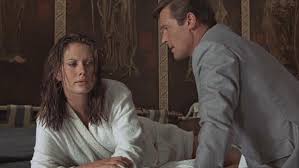
Sexual Potency – We get glimpses of the Bond of old when James tries to suck a golden bullet out of a belly dancer’s navel and when he encounters a nude woman swimming in a Chinese crime lord’s pool. She introduces herself as Chew Mee, to which Bond replies, “Really?” The main sexual conquest is Bond’s bedding of Scaramanga’s lover, Andrea. In an über creepy scene he sneaks into her hotel room and watches her shower and then man handles her only to learn that (shock) she is a damsel in distress. Later, he’s decided that, why not, he’s going to have sex with Agent Goodnight, but Andrea shows up so he throws Goodnight in the closet and has sex with Andrea Anders instead. It’s pretty messed up. Bond can’t keep his work life and his sex life separate. He does end up back in bed with Goodnight at the end of the film, but it feels more obligatory than romantic.
Connection – 007 is even more isolated in this film. Even Moneypenny gets the brush off. Q and James seem annoyed by each other. James knocks a kid who fixes his boat into the river. When Andrea Anders is shot, he’s not phased. There are zero fucks given by this Bond. The film ends, are you ready for it, with Bond and Bond girl Britt Ekland in a boat! (This time it’s a Chinese junk.) James and Agent Goodnight are finally back in bed on a slow boat from China. But, as is now tradition, it’s a false ending. Tick Tack is waiting (for some reason) to kill 007. In an unnecessarily funny scene, there is a Bond vs. little person battle to expedite before James can get Mary back in the sack. When he does, in another moment of coitus interruptus, Q calls and asks to speak to Agent Goodnight. “She’s just coming, sir,” says James. Ah, there’s our man Bond. Then he sets the phone down so Q can listen them making the MI-6 agent with two backs. Really creepy.
Toxic Masculinity Scale: 6
SummaryThe Man with the Golden Gun does a little bit better on the race issue than Live and Let Die. We do get some cool street-level views of Thai culture, including some great moments of Thai boxing. The contrast of free Hong Kong (with casinos) and Red China is flirted with. But the martial arts bit is weak. There’s no way 007 bests a Kung Fu master so easily, let alone an army of them. We get the comedic return of the racist Sheriff J. W. Pepper (from Live and Let Die), here on vacation in Thailand. (That’s a hard sell.) And a scene where Kra, Scaramanga’s black henchman, gets a little rapey with Goodnight. The hope is that mainstream audiences might have used TMWTGG as a gateway drug into the explosion of brilliant martial arts films that were coming out of Asia in the 1970s.
There are some great moments in this film. Bond flying a seaplane through island outcrops in the China Sea must have looked brilliant on the big screen. The ahead-of-its-time concept about the power of controlling renewable energy sources is noteworthy. Hervé Villechaize is an absolutely brilliant foil and steals every scene. And (recognizing that this might not be the most feminist bit of analysis) Britt Ekland is completely loved by the camera, which, of course, in Bond-land represents the male gaze. But there’s just a lot of silliness here. How did Scaramanga build an underground lair in an outcropping? And why did he include a funhouse, like some Disneyland attraction gone horribly wrong? James is going save his kept woman, but not really. James fancies Agent Goodnight, but not really. There is a car spinning 360 through the air and another flying off into the sunset. It’s like the writers just threw every leftover idea at the wall without the energy to see them through.
Roger Moore’s Bond smokes a ton of cigars in this film (calling Dr. Freud), drives a 1974 AMC Hornet through the streets of Bangkok like a madman, and kills guy who might have prevented global warming. It’s a mess and partly so because Bond is stuck in a tired model of manhood that had already become a caricature.
This series is intended to evaluate each product of the James Bond film franchise through a feminist lens, and the relevance of the Bond archetype to shifting ideas of masculinity in the 2020s.
Thunderball (1965, directed by Terence Young)
Adjusted for inflation, Thunderball is the largest grossing of all Bond films. And it looked big, being the first Bond flick shot in widescreen Panavision. This was supposed to be the first Bond feature in 1962, but a legal dispute held it up in court. However, original director Terence Young was back at the helm so it had a very “classic Bond” feel. We end up back in the Caribbean (the Bahamas this time) so we see more black faces, including Bond team member Pinder, played by Earl Cameron (who some will remember from Dr. Who). And also sharks. Lots of sharks.
My initial thought watching this film was that all these “Bond Girls” look alike. Same cheek bones, same hair style, same dubbed in voice. Maybe it was just post-holiday malaise, but I found myself repeatedly confused as to which actress Sean Connery’s Bond was making the moves on. By film #4, they were virtually cookie cutter. The primary Bond girl in Thunderball is Domino. Producers originally considered Julie Christie, Raquel Welch, and Faye Dunaway for the part, but settled on beauty queen Claudine Auger (Miss France!). By film four you get the feeling that half the draw of a Bond film is just the cavalcade of beautiful women for James to plow through. However, there is a scene where SPECTRE assassin Fiona Volpe (played by Italian actress Luciana Paluzzi) blows up a car with rockets on her motorcycle and then takes off her helmet to reveal her flowing red hair that is pretty, um, empowering.
Thunderball premiered in Tokyo on December 9, 1965 at a time when the anti-Vietnam War movement was gaining steam in the U.S.. (On November 27, tens of thousands of protestors marched from the LBJ White House to the Washington Monument.) Thunderball skirts Cold War tensions by, again, making SPECTRE the bad guys. This time, #2, Emilio Largo (played by Italian actor Adolfo Celi), is ransoming NATO for £100 million in diamonds after stealing two nuclear bombs (a plot later spoofed in the first Austin Powers movie).
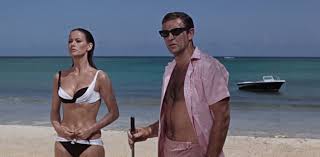
What this Bond film is most famous for is not the women or the evil plot (both a bit tired by 1965), but the extensive underwater filming. A quarter of this film takes place underwater, including shots of cool submersible vehicles and a massive speargun battle between the good guys and the bad guys. It must have been spectacular to see it on the widescreen in the mid-1960s. Apparently, the ocean shooting in Nassau had to be done at low tide because of the constant threat of sharks and the scene where Bond is in a salt water pool full of sharks almost ended with Connery getting chomped. The tropical locale means we get plenty of bikinis and bare-chested Bond as well as boats exploding (now a Bond film staple).
Let’s plug Thunderball into our feminist matrix.
Driver of Action – For the first time, we almost get Bond as a part of a team. Presumably assembled by MI-6, we get an on-the-ground team in Nassau put together to help James avert nuclear catastrophe, including familiar faces like CIA bro Felix Leiter (this time played by Rik Van Nutter) and MI-6 gadget guy Q, who, in Bermuda shorts, laments having to meet 007 “in the field.” He’s also joined by Pinder, another unnamed Afro-Caribbean dude, and CIA agent Paula Caplan, played by Martine Beswick (back from her role as “Gypsy Girl #2” in From Russia with Love). It’s mainly Felix who bales James out (in his handy CIA helicopter), but it should be noted that Paula is kidnapped by SPECTRE and commits suicide rather than rat on James. She’s the DDID. (Dead Damsel in Distress.) But it’s still Bond in the driver seat, whether he’s dodging sharks or ordering Beluga caviar.
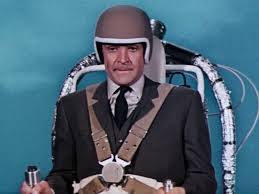
Role of Violence – Thunderball opens with Bond killing SPECTRE assassin Jacques Bouvar (who is dressed as a woman, so there’s that) and then escaping with a supercool (for 1965) jetpack. There’s a few henchmen (dressed in black, like an episode of Batman, which debuted the following year) that Bond kills, although they may just be stunned. Some henchmen throw another henchman into a pool of sharks. And whole bunch of frogmen, good, bad, and otherwise, get shot by spearguns in the Caribbean, some likely by 007. Other than the epic underwater battle, the body count is not giant and those scuba dudes who are killed are probably then eaten by sharks, so, the circle of life.
Vulnerability – It’s 007, so audiences don’t expect an inner window into Bond’s heart and it seems even more walled up than ever. He’s less dependent on technology than in Goldfinger, but James swallowing a radioactive pill so the CIA can track him seems like some kind of weird acknowledgement that maybe James can’t do everything by himself. There’s also a moment where James is trying to rescue Paula from Largo’s compound and he accidentally drops his gun off the roof he’s on. The look on his face seems to say, “Uh oh. My dick just fell off.”
Sexual Potency – Here’s where Thunderball goes off the rails. The first part of the movie, Bond is camped out at an English health spa called Shrublands, where he continually sexually harasses a masseuse (physiotherapist?) named Patricia (played by Molly Peters, featured in Playboy’s 1965 “James Bond’s Girls” spread). He forcefully kisses her and then when she thinks Bond’s bad experience on a, more Medieval than medicinal, stretching rack is her fault (it was a henchman) she frets that if her boss finds out, she could lose her spa job. “My silence could have a price,” James says then pulls her away for some quid pro quo sex. In the end, they’re in bed, with Bond doing the massaging.
Then there’s James’ relationship with SPECTRE agent Volpe. Her red hair is a classic signifier of a libidinous woman and when Bond walks uninvited into her bathroom to find her naked in her bathtub, he smirks with the recognition that he’s about to get another notch in his belt, “as if it was intended.” Because she’s a wicked redhead, she takes off Bond’s clothes and they end up in the sack where he tells her, “you should be locked up in a cage.” Rawr. Post coitus, she (and her henchmen) turn the tables on Bond, who seems shocked that he got caught with his pants down. In a moment for the Bond Girl demographic, she says, “But of course, I forgot your ego, Mr. Bond. James Bond, who only has to make love to a woman and she starts to hear heavenly choirs singing. She repents, and immediately returns to the side of right and virtue. But not this one.” Snap.
The final scenes are about rescuing Miss France/Domino from bad guy Largo. Bond sucks sea urchin poison from her foot and then they make love on the beach. When 007 says he needs her help catching Largo, she dejectedly says, “Of course. That’s why you make love to me.” Sex as transactional in Bond films. And also now cemented as a cliche, the film ends with Bond and Domino in a boat, this time a rescue raft floating in the Caribbean.
Connection – Thunderball begins and ends with Bond alone, acting or celebrating (with his prize) his actions. We do get to see a section of the Bond working with a team, but it’s sort of like Superman and his super-friends. Bond is in the lead. Again, as by Film 4, Bond is now the archetype of the man alone. He mocks love (including with Moneypenny), but he never actually has it. I wonder if writers ever considered developing a bromance between James and Felix. Maybe, at some point in this chronology, we’ll meet a James Bond who cares about somebody.
Toxic Masculinity Scale: 8
Summary By 1965, James Bond had officially become a franchise, produced by men to maximize 007 revenue. In the opening credits, the only females listed are “continuity girl” and “wardrobe mistress.” The fledgeling second wave feminist movement hadn’t yet turned its attention to Hollywood and the impact of this picture of gender. The normalization of sexual harassment in the 1960s (here, Bond’s treatment of spa worker Patricia) would later be unpacked by the brilliant AMC series Mad Men (2007 – 2015). But Bond is such a cad in Thunderball it makes watching his witty banter with the other characters in the film a lot less fun to watch.
We do get tastes of gender subversions. There’s Volpe (Italian for “fox”) blowing stuff up, motorcycle between her legs, and later removing 007’s clothes and then sexually besting him. (“But not this one.”) Again, we get a female hotel concierge ogling Bond’s backside and Paula, the female CIA agent (who dies because, you know, lady CIA agents). But it all stands in the shadow of Bond’s hyper-masculinity. He even tries to feminize Largo by saying of his skeet shooting rifle, “That gun looks more fitting for a woman.” Huh?
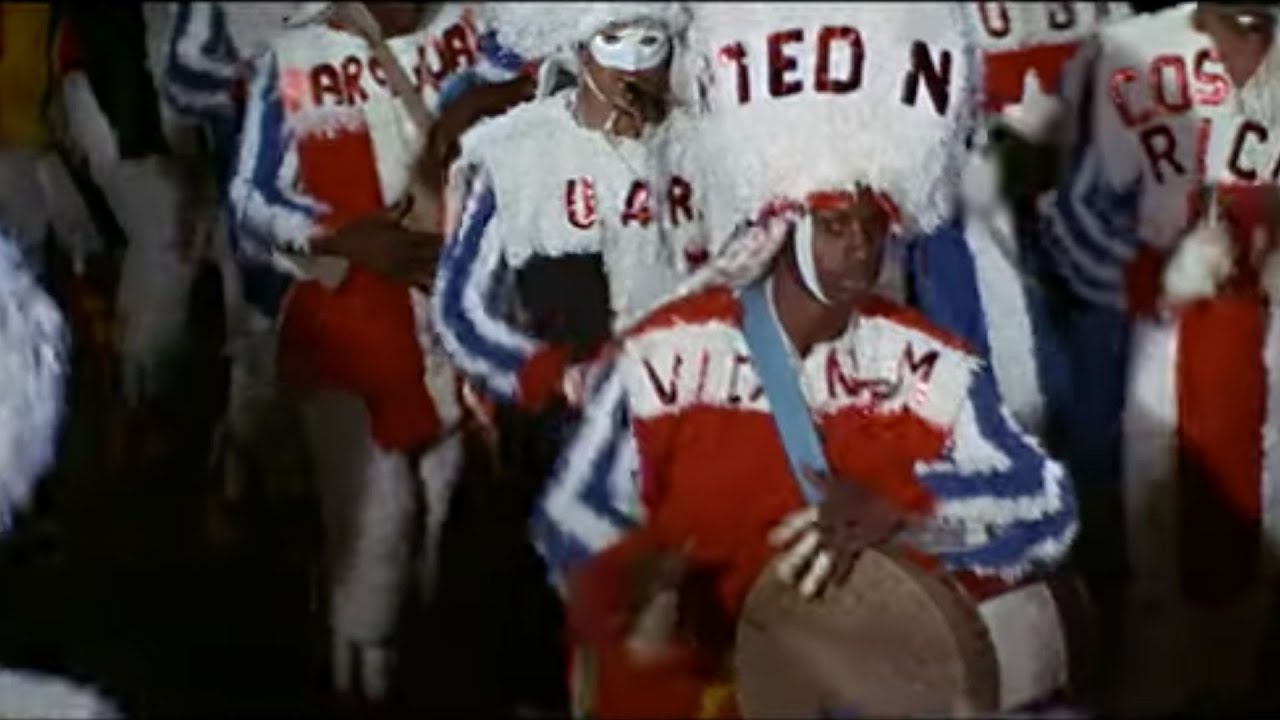
On a personal note, I appreciated the return to the Caribbean, especially Nassau where I experienced a particular “man making” experience as a 17-year-old boy. I loved the scenes shot during Junkanoo; Carnival in the Bahamas. It caught a glimpse of the decolonization that was happening in the black world in the 1960s and while there was no dreadlock rasta in Thunderball, behind the highly paid white actors in the camera’s focus there were a bunch of black faces who knew the world was changing. Those are the Bahamians I met when I was there as a teenager in the 1980s.
“Sometimes the fight takes a while. That doesn’t mean we won’t win.” – Kamala Harris, November 6, 2024
I went down a pretty deep rage hole after Trump the Rapist won Tuesday’s election. The list of things that made him unfit to be our president was as long as an Alaskan winter night, including being found liable for a sexual assault by a jury of his peers, which the judge described as rape. Remember when Mitt Romney was disqualified from the Presidency because he left the family dog on top of his car? That Trump the Rapist won the popular vote defied comprehension . I found myself quoting the line from Marilyn Manson’s “Irresponsible Hate Anthem,” that screams, “I wasn’t born with enough middle fingers.”
So I unplugged for a few days. I didn’t want to see the gloating MAGA memes or sit through MSNBC’s Monday morning quarterbacking. We know what happened. The Putin-Musk disinformation campaign pushed millions of gullible Americans into Trump’s cult of personality, while the Democratic Party sat around and got high on the smell of their own farts, clueless to the reality on the ground. The White House, the Senate, and probably the House, now the playthings of a sociopath and his self-enriching oligarchs.
We know it’s going to get bad. It already has. The day after the election, African-Americans of all ages started receiving texts stating that they would be enslaved to pick cotton. Many texts mentioned Trump, saying things like, “Our Executive Slaves will come get you … be prepared to be searched down once you’ve enter the plantation.” In the last few days, Trump’s misogyny has unleashed an army of male trolls who have been harassing women (and girls in school) with the chant, “Your body, my choice.” And this thing is less than a week old.
After a few days of screaming at the sky (and one night of poker and much whiskey), it may be time to lick my wounds and figure out how to prepare for what’s to come. And how to fight it. Step one is to let go of the hate. That’s their game. There was a news story today that Iran was working on a plot to assassinate Trump to avenge the death of Qassem Soleimani, but the FBI caught the three plotters. My immediate thought was, “I guess Iran didn’t have a Plan B.” But that doesn’t cure America of the sickness that is Trumpism. It would only elevate the calls for more blood.
Resisting the lizard brain mandate to blindly fight my supposed enemies is part of this. Who are these enemies? I can generalize them as “MAGA morons,” too dumb to see through Trump’s con act. But these “morons” are people I know. Some of them are my students and family members. They see us as “evil” and we see them as cognitively impaired. Neither is the reality. (Well, Trump is most certainly cognitively impaired, and if he makes it to January 2029, we’ll see the 82 year-old sitting with a drool bucket, staring at the sun, on Inauguration Day.) But falling into the us vs. them binary just turns a needed conversation into a mindless war and, again, that’s not our thing.
It doesn’t mean we shouldn’t be ready to fight. I’m already geared up for the 2026 midterms. Cozy and I will make pink pussy hats for the coming marches. I’m dusting off my civil disobedience skills and will be a 60-something monkey-wrench in Trump’s march to authoritarianism. Don’t think I’m making the case for resting on my white male privilege.
But I think we can do it without the vitriol. Yeah, millions of women voted for Trump the Rapist. Are they just bimbos and battered women suffering from Stockholm Syndrome? Or are they complex human beings with multiple motivations that, with love instead of hostility, can be cleaved away from the misogynistic cult of Trump the Rapist? And the men who love them may follow.
I had a publication in 2004 titled, “Getting It: Women and Desistance from Hate Groups.” It was based on my research on former racist skinheads. Their exit stories followed a similar path; a woman in their life, a girlfriend, a teacher, a step-mother, gave them the gift of empathy. They said, “Listen to what I have to endure as a female. That’s what you are doing to people of color.” Lightbulbs went off and the skinheads walked away from hate. There is no greater hate group than MAGA, so why wouldn’t that same strategy work again?
So it’s time to unclench the fist and open the hand and start rescuing people from this death cult. I didn’t know how to truly put women first until I became a father of girl. I wonder how many MAGA bros would vote for Trump the Rapist if Trump raped a women they loved. (Well, besides Ted Cruz.)
So here is my Three Point Strategy to get us out this nightmare. 1) Let go of the hate and the us vs. them narrative. It stops meaningful action in its tracks. 2) Circle the wagons. We need to let know those most vulnerable know that we have their backs. This includes members of immigrant and trans communities. Their fear-level is off the charts. (We’re locking down Andi’s citizenship before the Inauguration so we don’t have to worry about her being disappeared by the “Day 1” plan for mass deportations.) And 3) Reach out with soft hands to those that voted for Trump the Rapist, especially the women. Let’s be Pied Pipers of love. The alternative is a war of all against all and we’ve done that. We don’t want MAGA civil war re-enactors 150 years from now in red hats, screaming, “Your body, my choice!” at Gettysburg.
Deep breaths, America. And let’s get in there where we are needed.
It seems like there is a widespread consensus that the highlight of this week’s Democratic National Convention was the reaction of Minnesota governor Tim Walz’s son to his nomination to the vice president slot under Kamala Harris. We’ve all see the clip of 17-year-old Gus Walz overcome with emotions, in tears, shouting, “That’s my dad!” I burst into tears watching it as did millions of fellow dads, moms, sons, and other normal human beings. Gus immediately became a meme, celebrating joy, pride, and a love of a child for their parent.
That was among normal people.
As is my habit, I flipped over to check on the dark side. Fox News commenters said the young Walz was faking it, overly feminine, and “retarded.” Some said this is the kind of “sissy boys” that liberal men raise and another made an image of Tim Walz breastfeeding his teenage son. Seriously damaged commentator Ann Coulter decried that the teenager’s display of emotion was “weird.” And it just got worse from there. “We need to raise men who can defend their country, not blubber like babies. This proves that communism destroys masculinity,” one poster wrote. Others pointed to the teenager as proof that “liberals have turned boys into girls and girls into boys.”
This is par for the course for the right. They’ve tried to emasculate Democratic men for supporting a female presidential candidate. (Numerous memes assert that liberal men are all gay.) That includes National Guard veteran and former high school football coach Tim Walz (who, I’m quite sure, is a better gun shot than any of them). MAGA men want “trad wives,” not “boss ladies.” And while they feminize Democratic men, they turn Trump into a hyper-masculine Rambo, giving the elderly obese junk food fan a six-pack and bulging muscles, dodging bullets and taking down communists. It’s perfectly homo-erotic.
This is the tried and true tactic of the schoolyard bully. I co-authored a book with Wayne Wooden in 2001, in the wake of the rash of school shootings that peaked with Columbine in 1999. It was called Renegades Kids, Suburban Outlaws and in it I examined a wide range of school shooting cases, often digging into court transcripts. The common denominator was that the shooters were typically bullied with feminizing language, like “fag” and “pussy.” The bullies tried to take these young men’s masculinity away. The bullies also helped define masculinity as the opposite of femininity, after all, “opposite sexes.” Anything coded as feminine, including showing emotion and not supporting violence, was “unmasculine” and “weak,” threatening the masculine/feminine boundary, deserving of punishment.
I dealt with this in 10th grade when I quit the football team and became a punk rocker. The attacks were relentless. I can still hear Ted, the bully of Martin Road. “Hey Gayzak, you like that fag music!” One afternoon he stopped me after school and said, “Hey Gayzak, you’re a pussy!” And I replied, “Well Ted, I guess you are what you eat, you dick.” He punched me in the face.
For the school shooters in my book, when bullied, they attempted to reclaim their masculinity in the only way they knew how, with murderous gun violence. They took the old macho adage “die on your feet or live on your knees” literally. They went out like “men.”
Fortunately there’s a new version of masculinity in town and it’s not the John Wayne, strong, silent, and violent model that gets men and boys killed. It’s not defined by dominating women, girls, and all things feminine. It’s strong, free with emotions, and embraces women and girls as equals, not bodies to be dominated. We’ve traded in John Wayne for Tim Walz and, boy, are the fragile “alpha” men of MAGA triggered. If Trump men don’t have domain over women and their bodies, what do they have?
We’ve been here before. Right-wing men called Barack Obama a “pussy” and his wife a “man.” But it’s not 2008 anymore. The majority of the workforce is now female and women are not going back. The looming reality of a female president has fragile MAGA men apoplectic. If the president is female, what is left of their “God-given” authority?
But there is a way out of this quicksand of toxic masculinity. Those men can talk to the women in their lives and, by “talk,” I mean listen. Ask those women what they really want to see in the world and I guessing what they will hear is that the women and girls they love want men to enable them, not disable them. Or they can just ask, what would Coach Walz do? #WWCWD
As Cozy approaches the end of her stint as a fourth grader, I’d like to take a moment to reflect on the evolution of peer culture for a 9-year-old. The difference between third grade (which is technically “primary school”) and fourth have been like night and day, and the primary shift is all about who she wants to hang out with. I’m still Daddy and get plenty of time and love, but her friend group is now her preferred time occupier. There’s a new sheriff in town and it’s a passel of pre-tween girls.
In her seminal 1982 piece of feminist scholarship, In a Different Voice: Psychological Theory and Women’s Development, Carol Gilligan charted how children generally play in mixed-sex groups through primary school. Cozy certainly had as many male friends as female friends. But then, as children begin to approach adolescence, they split up along gender lines; boys on one side of the playground and girls on the other. As a parent who is both at drop off and pick up, I’ve watched this phenomenon evolve over the school year. It’s like watching the formation of competing gangs.
We know that puberty is starting earlier for kids over recent decades. Every decade that passes, the average age of the onset of puberty moves up three months, according to recent research. This due to a number of factors including lack of exercise and changing diet. Researchers also think COVID accelerated precocious puberty, so there’s that. The bottom line is I was not ready for my child to be launched into adolescence quite yet, but here we are. Cozy has a bra.
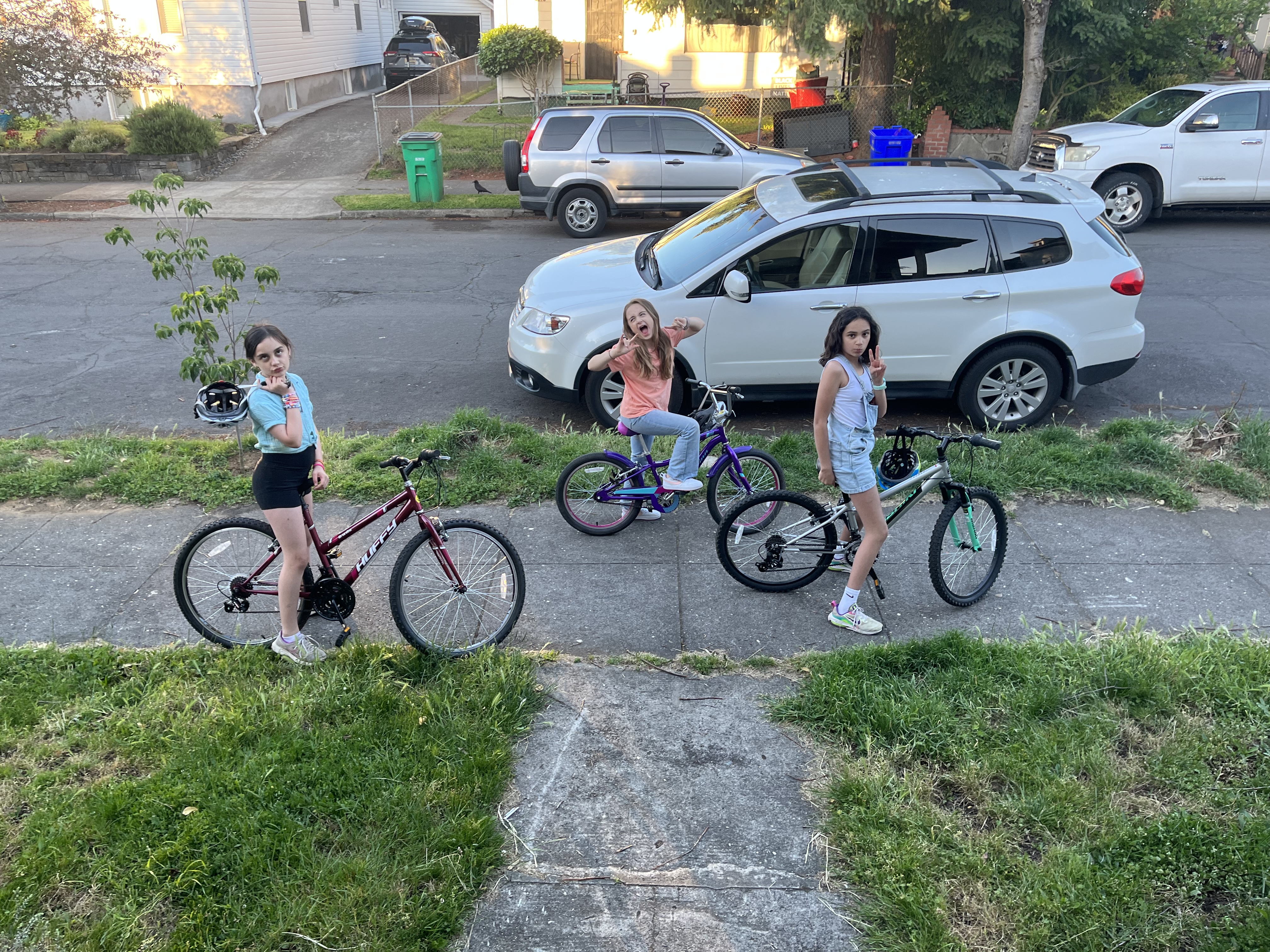
At the moment, the gender split has a decidedly childlike element. It’s not about dating or harassment. It’s about bikes. That’s right, Cozy is in a biker gang. It’s a regular occurrence now that three or four girls on bikes show up in front of our house and holler, “Hey, Cozy! Come out and ride with us!” I encourage her to watch out for cars and then advise her to do a good job terrorizing the neighborhood. While her male counterparts are playing video games, the girls of Sabin Elementary are owning the streets and it’s glorious.
I spent a large part of my fourth grade year riding bikes with my friends, so I trust her as she rides out of view. In my time, boys ruled the streets while girls stayed home and learned how to fold clothes. If there’s any “domestic apprenticeship” in this house, it’s me telling Cozy to pick up her clothes before she ding dong ditches the boys on the next block. The girl bike gang is a revolution on wheels. I can only imagine what they talk about when they ride to the park to lay on the fourth grade gossip and pop culture obsessions.
The dark side of the peer bonding has been some actions that drift into the bullying zone. Cozy’s both flirted with it and been the subject of it. We’ve taken away her phone twice because of reports of chats that tease and exclude. I can’t police her interactions, 24-7, but I can limit her access to screens where impulsive actions are a lot easier. But the bright side is seeing Cozy’s peer group engage in pop culture separate from their parents. Her squad is firmly in the Swiftie camp and they will sing Taylor’s songs at full volume (including in the back of my car). It must be like what was like 60 years ago when The Beatles took over America. I love it.
Gilligan’s 1982 book offered a darker picture of this period. Gilligan found that when girls and boys peel away from each other, girls start to evaluate themselves by how well they can attract boys’ attention, not by how smart or athletic they are. She discussed that girls’ self-esteem plummeted around age 13 as they are repeatedly told that their worth is in their looks, forcing them to compete with each for the middle school Prince Charming. “Boys don’t make passes at girls who wear glasses.”
I’m hoping none of this patriarchal hell lands on my daughter. I can’t change 8000 years of male dominated culture, but I can hope, a) things have changed a lot since 1982, and b) she’s a lesbian. For now, she’s rolling with her girlfriends, having sleepovers, and evaluating clues in Taylor Swift songs (mostly clues about a guy named Joe). Unlike Gilligan’s 13-year-olds, Cozy is bonding with her diverse pool of girl power classmates. (In 1998, I presented a paper on how the Spice Girls were positively impacting girls ability to bond.) As they ride off into the summer, I’m going to support their freedom and close friendships. They’re gonna need it.
It’s a common refrain around here – “Where did the baby go?” She’s just grown up so fast (said pretty much every family ever). Besides becoming a full on person, somewhere this past year, she became a full on girl. As a sociologist, for decades I’ve harped on the mantra that we are products of our environment and that gender is social construct. So I’m not quite sure how this happened. Is it my fault?
We really worked on the gender neutral thing from day one, including dressing her in “boy” clothes, but the girl just loves all things pink. She’s had her stay-at-home dad as her primary caretaker but she’d still rather put on make-up with mom. And it’s not that her working mom is the most girly-girl. (Mexican women seem to have a bad-ass streak woven into them, but you didn’t hear that from me.) All our plans to dominate her nurture seem to have been thwarted by her nature.
Or have they?
I’ve said it before. You don’t raise children in a vacuum. Cozy is not a lab project. She has countless influences outside of mom and dad, including little friends, teachers, grandmas and tias, and, of course, the media. All play a part in the nurturing of her gender cues. I blame Minnie Mouse. I think that was her first role model. Minnie, who just got her star on Hollywood Boulevard last week (40 years after Mickey), is not exactly an action hero. She’s come a long way, baby, but she still plays her cute card. Just watch where her knees go (in) compared to Mickey’s (out). Is Minnie a virgin to Mickey’s playa? We love Minnie Mouse around here but I’m betting that rodent has her own #metoo story. (I’m looking at you, Harvey Weinstein.)
Cozy’s moved off Disney (maybe because we lost our Disney Channel connection) and on to the Paw Patrol. I don’t quite know what to make of this cartoon that has been mass marketed beyond belief. (Yes, she is wearing Paw Patrol undies today.) I like the positive go get ‘em attitude – “No job is too big, no pup is too small! – but it’s not like they are taking all that canine energy to improve access to the treehouse for dogs with disabilities or out defending the Paw Pussy Cats from being grabbed by the evil Drumpf. The gang is mostly male but there are two females (don’t call them bitches) named Skye and Everest. And Cozy is obsessed with them. She named her cat Skye and she has Everest socks. The patrol is led by a male (Chase), so we’re going to have to have a little Paw Patrol talk. “Wouldn’t the Patrol get more done if Skye took over?”
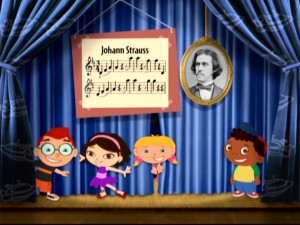
She recently discovered the Little Einstein cartoon series. It’s another gang led by a (white) boy. These four kids fly around in their rocket, and have adventures based in famous works of art and classical music. It’s pretty cool, actually. There’s an episode based on on Strauss’ “Blue Danube Waltz” and Warhol’s Fish painting. My kid is humming Bizet and talking about Van Gogh’s Starry Night. Her favorite character is June, the dancer, and Cozy will dance to some Edvard Grieg like she was auditioning for the Bolshoi. I love my classical music-loving kid!
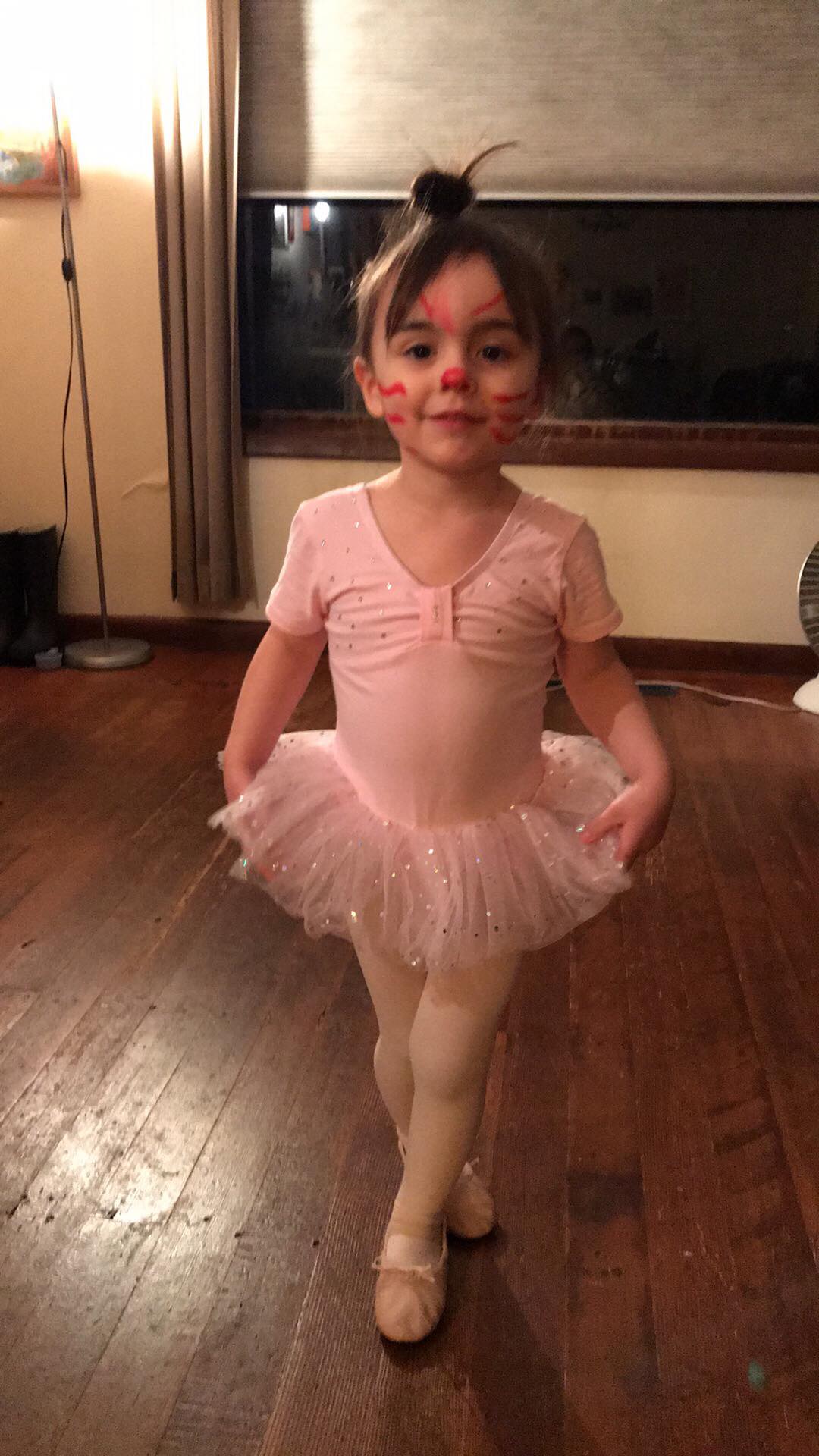
I think seeing the Nutcracker last month was a turning point in her gendered idea of herself. It wasn’t the Nutcracker, or the Rat King that ignited her. It was the Sugar Plum Fairy. She just started glowing when the SPF tiptoed onto the stage. It reminded me of when I saw Elvis Presley in concert at age 9. “That looks like a good job,” I remember thinking. Cozy got to meet the ballerina who performed the role after the show and she was hooked. Now she is constantly dancing in her own ballet for one in a way that’s making us think she might actually be a natural at this. It’s feminine and flowing. How did this happen and how much are ballet lessons? And can she be a ballet dancer and community organizer at the same time?
I recently asked Cozy if she thought there was a difference between boys and girls. She told me that girls can jump higher and then started talking about the difference between kids and grown-ups. I think that’s still the main binary in her head. She still mixes up “she” and “he,” and I purposely don’t correct her. She’s “gender-fluid” on her own but suddenly really cares about being “beautiful.” Maybe it’s just a phase and by this summer she’ll want to be a basketball player. But at the moment, there is very pretty ballerina dancing in our living room.
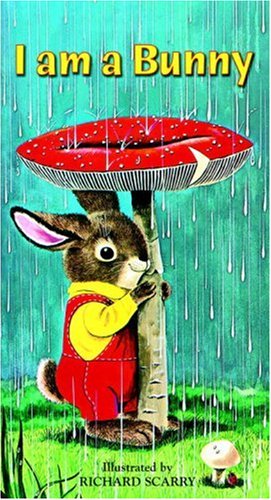
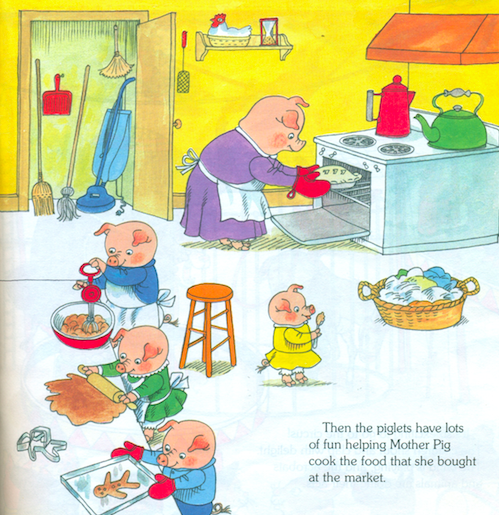
My mother has always been on the verge of serious hoarding. “Don’t throw that away! It might be worth something someday!” I heard that a thousand times. When Cozy was born, I was grateful. Stuff my mom had held onto for 50 years started to come our way, including my 1960s Batman sweatshirt. And a ton of kids books. Each one zapped my brain backwards. I just have to open I Am Bunny, and I’m sitting on my mommy’s lap, fascinated by the artwork and stories. And my mom read to me a lot.
I was excited to introduce Cozy to my love of books (Thanks, Mom!), so I wasted no time reading to my daughter. I took about two seconds to realize that the message that this father was sending to his girl was dramatically different than the one that my mother had sent to her boy. On the one hand it was exciting to see these books sold for only 39 cents when I was little, but on the other side the messages about gender were heartbreaking. From the time when Donald “Dotard” Trump thought America was “great.”
Many of the stories are a continuation of the fairytale traditions from Hans Christian Anderson where some damsel in distress or dainty princess has to be rescued by a dashing prince. So much of the classic Disney filmography is rooted in this sexist trope that has, thankfully, been exploded by Frozen and Moana. These two movies mean so much to Cozy and now I understand why. (Mulan had too much fighting. “I don’t like this, Daddy. Turn it off.”) More of these books followed the domestic dynamic of the mid-century model. There’s mom in the kitchen. A legion of my friends reminded me how messed up the Berenstain Bears books are when you read them through a gendered lens. The same is true for most of the books by Richard Scary and Dr. Seuss. (But I still have a soft spot for Cindy Lou Who.)
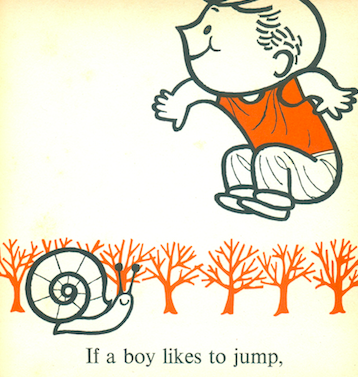
Even more books are just male-driven stories. How can my daughter find herself in Where the Wild Things Are? The imbalance really hit me when I was reading Cozy a book called Jumping. It’s about how much boys love to jump. Seriously. I grew up reading the adventures of the Hardy Boys. Will Cozy be left with the Bobbsey Twins? Was Nancy Drew a feminist? Can we get a 21st Century reboot? I do not like green eggs and misogyny.
It became a real struggle to find a book in the boxes that were arriving that had a female character that was somehow equal to the males, let alone in the lead role. Cozy was getting that in her contemporary cartoons, like Disney’s Elena of Avalor and PBS’s Peg + Cat. It was time to update my girl’s library. So we took a walk up to Green Bean Books.
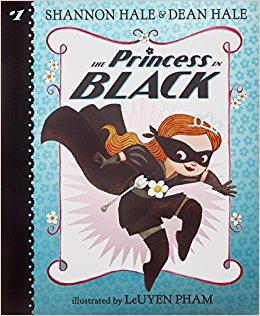
Cozy loves any store that has a “kids’ section.” She appreciates any space that is carved out for “kids not people” (adults are “people” – we have to work on that one). Green Bean is all kids’ section and she loves the feeling that it’s all there for her. (Wait, I’m smelling the seeds of a generation gap.) When I asked for a storybook for a three year-old, the clerk had the perfect recommendation, The Princess in Black. Cozy set down her book about dinosaurs and grabbed the book, plopped down on the little sofa and pretended to start reading.
The Princess in Black is a five-part series by Dean Hale and Shannon Hale. It follows the adventures of prim and proper Princess Magnolia who sneaks into her broom closet to become… The Princess in Black; a superhero who fights monsters. Cozy loves both princesses and superheroes. (Ask her to do her Spiderman imitation.) Seeing her respond to this book was fascinating. It’s 15 short chapters, cleverly crafted, that we’ve read pretty much every night since we got the book. She’s got the whole story memorized and has even picked up on hints that our superhero may get a sidekick in future volumes – the Goat Avenger (aka, the mild mannered Goat Boy).
It was almost like a shock to the system after all these books about male characters, including Richard Scary’s male bunnies, to have a female-driven story. It must have been like women 200 years ago reading a Jane Austen novel for the first time. (I’m not equating The Princess in Blackand the Mysterious Playdate to Pride and Prejudice, but I kind of am.) As a male, I could read all these male-driven kids’ stories to Cozy and not notice the impact of it all on her, as girls and women were pushed to the background (and draped in aprons). But three pages in to the PIB and I saw the shift. She has a place in the world of stories.
Of course, there is a debate worth having that this place is in occupying the traditionally male-dominated world of superheroes, which often relies on violence to solve problems. The Princes in Black does open a can of whoop ass on a big blue monster. Sparkle kick! This is at the heart of the debate between liberal and radical feminists. Does gender equality mean that females should want half of the world that patriarchy created. When 50% of serial killers are females can we raise a toast and say, “Equality!” Or are their other ways of organizing ourselves that don’t don’t involve trying to beat men at their own game? As a parent of an evolving girl, I wrestle with this question. A female version of Trump saying she is going to “totally destroy” a nation of millions of people would not be progress.
For now, story time will be about a consistent messaging that Cozy will not be marginalized because she is a girl. Andrea has been reading her Good Night Stories for Rebel Girls. My mother sent a new book about Frida Kahlo, Viva Frida by Yuyi Morales, that Cozy fell madly in love with. And I know that there are now tons of others out there. (Please feel free to make any recommendations.) Seeing how my daughter responded to this one book pierced a gaping hole in my male privilege bubble. It might be time to put The Cat in the Hat on the bottom of the stack. What would you do if your mother asked you?
I’m not sure what compels me to write when my favorite musicians die. I think it began when Miles Davis died in 1991 and I put on In a Silent Way wrote an ode. When Kurt Cobain blew his brains out in 1994, a local weekly in Atlanta asked me to write a poem in tribute. I had already written it. In this blog I have marked the sociological significance of the passings of David Bowie and Chuck Berry. But waking up this morning to the news that Chris Cornell had hung himself was particularly rough.
Soundgarden is/was in the middle of a tour and, this morning their singer was found dead in his Detroit hotel room. Chris was may age. I might be biased, but I tend to think people born in 1964 are special. It was such an epic year (The Beatles, Dylan, MLK, my birth). This spring, Soundgarden was a booked for a big reunion tour bringing much needed rock to the kids, or at least their parents. He seemed to be back on top.
Others will write about his life or the “Seattle sound.” I was cold on the grunge thing at first because we were trying to carve out our own musical identity in Atlanta at the time and didn’t need the competiton. I was invited to contribute some spoken word to a local compilation in 1991 and I wrote a rant against Seattle that contained the line, “Riding on Tad’s log, lame as Temple of the Dog.” About five minutes later, I was all about Seattle. Turns out I smelled like teen spirit, too.
Others will also write about suicide. I’ve written about my own past with the issue here in this blog and how it unfolded in my first novel, The Mission of the Sacred Heart. The follow up, The Dream Police, ends in a grand climax with the Soundgarden song, “Black Hole Sun” playing. I couldn’t think of a better song to accompany the end of the world, so it’s there as a musical epitaph.
I wanted to write a sex, or more specifically, how one night in Atlanta with Soundgarden pried open my brain about the fluidity of sexuality.
It was March, 1989 and Soundgarden was touring in support of their first album, Ultramega OK. Neighbors in my North High Ridge apartment (the fabled Treehouse) were probably sick of me blasting it (and extra notch up on “Smokestack Lightning”), but the punk era was over and I was growing my hair long. It was time for bass guitars to rattle the building. Aspersions of the Seattle hype aside, I loved their monster sound that was an alternative to the hair metal that was ruling MTV at the time. This was our music, not theirs. For those of us that grew up on Kiss and The Ramones.
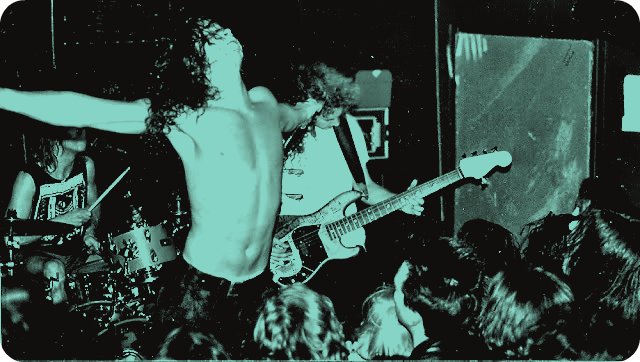
In those days, I went out to see bands play almost every night. So when Soungarden had a gig at the Cotton Club on Peachtree Street of course I would be there. And when they opened with the song, “Gun,” and Kim Thayil’s exploding guitar riff, it was on. I was 25-years-old and pressed against the front of the stage, because that’s the only place to be when a band is splitting the universe open. They were inches away from us and it was one throbbing sea of sweat and hair.
Chris Cornell was shirtless, screaming like a banshee, his long brown hair cascading over his shoulders as he leaned back in his Jesus Christ pose. (I think you might guess where this is going.) The music sounded great but I was just captured by him and his charisma. Like the most iconic of iconic rock stars. Like if Ozzy Osbourne looked like Calvin Klein model instead of a puppy dog who had been hit in the head with a ball peon hammer. He was… beautiful.
Let me back up a space and say, at this point, at age 25, I was hyper-hetero. From the first Farrah Fawcett poster on my wall to my questionable antics on the road with the band I was working with, it was never not about being in a “girl-crazy” frenzy. Never even a crack. Sure, Tom Cruise was “good looking,” but I wouldn’t say it without the quotes. I would joke about homoerotic elements of skinhead and fraternity culture and even the mosh pit, and was still working out my own homophobic training. Gay was fine. I loved my gay friends and music idols. It just never was about me.
Chris Cornell cracked that. The memory is as clear as day. I thought, “I’m straight but I think I might make an exception for this guy.” It was the strangest feeling in the middle of a blasting rock show. What was my sexuality? Is he the only guy on the planet I would make an allowance for? He was just so, perfect. Should I try to meet him?
I didn’t go backstage. Or write him love letters. I kinda forgot about it (at least until the next time I saw Soundgarden play). But I began to question the idea that anybody is exclusively anything as far as sex goes. Around that time I began teaching undergraduate sociology at Emory University and would lecture on the Kinsey Scale. In 1948, the famed sex researcher published Sexual Behavior in the Human Male. His findings identified that only about the 10% of the male population was either exclusively heterosexual or homosexual. The other 80% are somewhere in the middle (or asexual). I would joke to my students, “If you haven’t at least one gay thought, you will!” And then I’d make some crack about the repressed sexuality of “brothers” in the “Greek” system. Holla!
During my tenure at Portland State University, I became immersed in Queer Theory. Queer Theory seeks to break down these arbitrary binaries we place ourselves in. Gender is fluid. How butch are you today? (After blasting Soundgarden all morning, I feel pretty macho, except the moments when I start to sob.) Sexual orientation is also fluid. A lot of dudes like to play this game. – If there’s one guy you HAD to have sex with, who would it be? It’s permission to flirt with Kinsey’s scale. In my PSU classes, I began to utilize Gender Gumby. Gender Gumby is an exercise that allows a person to plot where, in that moment, they fit on a scale of assigned sex (opening the discussion for people who are born inter-sexed), gender identity, gender presentation, and sexual orientation. The beauty of the exercise is that, where you map your gender today may be completely different tomorrow. I would map mine for the students. On sexual orientation, I would make mark pretty close to the “Attracted to females” end of the spectrum, but not at the very end of it. Because of Chris Cornell.
I’m so sad about his passing. I also loved those Audioslave records, and, after some time, came to appreciate the Temple of the Dog album. I saw him many times over the years. Soundgarden played the 1996 Olympics in Atlanta. The city fenced off an area downtown and forced people to pay to get in. I watched the show, precariously perched on a newspaper box so I could see over a fence. Soundgarden was onstage blasting their wall of sound into the city and Chris saw me straining to see the band. He said something to someone, who came over and let me in so I could watch from inside, safe and fully rocking. We shared this generation together.
Gender and sex are complex things, far from black and white. And sexuality is like magma looking for a way to the surface. Horrible things happen when you try to suppress it. (Google “Afghanistan” or “Mississippi.”) It’s not surprising that people are fearful of all that hot lava. Even the most “100% certain” person can be surprised by their own sexuality and where it might take them. I got a lesson about that in 1989 thanks to a killer Soundgarden show and got to let go of that certainty. Thanks, Chris. You were never not really hot. Lava hot.
Last week I took a Spring Break from this blog. My father was visiting us in Portland. He had just celebrated his 75th birthday in Hawaii and (for some reason) chose to leave a sunny beach for cold and rainy Oregon. I was happy because it had been over a year since we had seen him and Cozy really wanted to see her Grandpa. He took Cozy and I to see Moana (Cozy loved it, powering through the scary part, and I appreciated Disney utilizing a Goddess tale) and we had a belated birthday dinner at Portland City Grill. It was nice to catch up.
It’s an odd thing being around your parents when you’re a parent. You realize how like them you are, whether you want to be or not. I see so much of my dad in me. We even have similar mannerisms. It kinda freaks me out a bit. There are certainly qualities in this man I greatly admire, and a few I’ve worked to limit. How much like this person am I? I tend to think I turned out pretty good. I didn’t become a serial killer or a military contractor or a wife-beater or a guy who spends all his time playing fantasy football. I went to graduate school instead of Wall Street. Also, I like quiche. (There are a few kinks still to be worked out.) He did a pretty good job on the parenting front it seems.
So I thought, while he was here, we’d sit down and I’d ask him what it was like to be a new father of a boy in the mid-1960s, when the world and gender roles were changing. What I got was a very honest conversation about his struggle to find balance between his home life and his work in sales that often took him away from home, a flash of insight into issues that led to my parents divorce when I was 17, and some useful wisdom about how to be a great parent to my daughter. We sat on the couch in my living room talking and I just wanted to ask good questions but as I transcribed our talk I got a greater appreciation for his own journey as a parent.
Randy: So I was born in February 1964. The world was a little different then. Did you know I was going to be a boy?
Dad: No. We talked about it before you were born, about whether we wanted a boy or a girl and we agreed it doesn’t matter the first time, especially the first child, as long as they’re healthy and have all the fingers and toes. It didn’t really matter to us. In fact, we decorated the nursery in yellow so that it didn’t matter whether it was a boy or girl. We changed the decor after it was born, but we were just happy to have a healthy child.
R: Would you have thought differently if I had been born a girl, knowing girls had fewer opportunities?
D: If it was a boy we would have raised it one way, and if it was a girl, we pretty much would have raised it the same way.
R: Did it help that mom had a job before she got pregnant? She didn’t really work after I was born.
D: She was woking in a business office and we agreed that when she was 6 months pregnant that she would stop working and stay home and make sure that she was healthy. We could live on one income and that’s what we did. The second income was nice but it wasn’t necessary. I was making enough money to take care of the family and I really didn’t want her to work. I wanted her to stay home with the baby. And she did.
R: Did she want to work?
D: Yeah, oh yeah. She was always wanting to help out and work and stay active but she found things to do at home and concentrating to getting to that baby to one year, at least.
R: The mid-60s was really the rise of the feminist movement and women discovering their life outside of the home. What did you think about “women’s lib”? Mom has said she was aware of it, but were you thinking it was a big change?
D: I was open minded about it. If she wanted to work she could work. But we had to consider the babysitter situation. We had an elderly lady upstairs that was a good babysitter and she had some girlfriends that would come over and babysit after that year. But she stayed home for about a year before she went back to work. And she was really bored and anxious to get back to work. She wanted to do more than be just a mother.
R: What did you think about her going back to work then?
D: Back then I wanted her to stay at home and take care of the baby and make dinner and do the laundry and all the stuff that women did then. And I was happy just working and having her be the housewife. Now I think the mother should do whatever they feel comfortable doing. If they wanna work, they should work.
R: OK, lets talk about me. Or just raising a boy. I didn’t really turn out like a typical boy. I wasn’t too obsessed with violence or sports. I’d rather just read. When I was little, did you have a philosophy about how to raise a boy?
D: Like all couples with their first child we didn’t have a clue. We were flying by the seat of our pants. From a philosophy standpoint, we didn’t want you to be a soldier. We wanted you to have a happy childhood. That was really important to us. We tried to do things with you that you’d enjoy. We bought that canoe and we used to take you canoeing when you were little. We went on some camping trips and things like that. We involved you and let you see what the world was like but we didn’t have any ideas of the future of what you were going to be or were going to do. You were always such a good kid we didn’t have to go through the challenge of trying to raise you. You kind of took care of yourself.
R: Did you think boys should be raised differently that girls?
D: We just let you do your own thing. We would keep an eye on you and make sure you didn’t get into anything too violent. We moved from the rental home to a house in Parma Heights, a three bedroom ranch house and I can remember you had your own room. It was a fun place. The backyard was fenced in and it had a playground and swing and you used to go out there and have fun by yourself. We would kind of keep an eye from the house and make sure you were OK.
R: We like to think we’re not raising Cozy as a girl but as a person. She’s gonna have to know about the world and that there’s some inequality she’s going to have to wrestle with, but she’s a person first.
D: Even thought it was 50 years ago we did the same thing. We raised you the same way. We didn’t try to make you macho. You’re your own person. You have respect for both genders and that’s important and you still have that gentleness you had as a kid. You never lost that and that shows up in Cozy.
R: You traveled a lot when I was little. Do you think that impacted how I developed?
D: I think I would have been able to more things with you and teach you more things. I tried when I was home to concentrate on teaching you the basic fundamentals and to get you involved in things, in sports, in life, in outdoors, and swimming. That was a big part of me. Then swim team. I tried to keep you involved. We started out with Indian Guides. You were Little Crow and I was Big Crow. We had a lot of fun with that. I tried to get you and your brother involved with things, but I tried to be there, included and supporting you. I think that created a problem with the marriage, actually, because when I was home I was so involved with you guys, I probably didn’t pay enough attention to Sandy (my mom). I think it created a lot of boredom on her part because a lot of the time she wasn’t working. She was at home taking care of you guys. There has to be a balance there and I didn’t recognize that balance. I was too intent on making as much money as I could so you guys could have a good life. You were always in neighborhoods and homes that were, um, “upscale.” You always had friends, it was safe, you could walk to church. I always tried to have the family in a place that was safe and fun.
R: OK, last question. What’s your general advice to being a parent to someone Cozy’s age.
D: You’ve gotta give them room to grow. Encourage them to do the right thing, of course. And push them in a direction they don’t want to go but pay attention and see what they enjoy and like to do and just kind of guide them in the direction to their future. They’ll tell you. They’ll let you know what they like. Cozy’s got a great start because she’s got an artist mom and a well-educated dad. You guys are in that period where you’re in a transition now. And when you find out what you want to do next it’s going to be good for you and good for the family. When you’re happy the rest of the family is happy.
That’s certainly a good piece of truth. Talking to my dad reminded me of Betty Friedan’s book, The Feminine Mystique, and how my mom must have felt a bit stifled in that home in Parma Heights. Those were times when gender roles in middle class homes were really being re-examined. But it also made me think about how much free reign I had as a little boy, to explore the yard, the neighborhood streets, and the woods. That had to play a role in my sense of independence. And that’s what we’re doing with our daughter. So my father will be a part of her independent spirit.
Postscript: My mother just read this and thinks a lot of it is just wrong. She used words like “male chauvinist” and “doormat.” I’m gonna do a parallel interview with her about this period and get her side of the story. It’s funny how we (re) remember our own lives.






























 Watching the Wheels