The Real Trauma of Trump 2.0

From The Blazak Report, August 11, 2025.

NOTE: This piece was originally provided to paid subscribers to The Blazak Report on Substack.

August 11, 2025

Unpacking the impact of traumatic events on our brains is an adolescent science. We’re just beginning to understand the ways acute and chronic trauma affects how the parts of the brain work. Much of what we do know is because of the courageous sharing of war veterans. This journey of understanding is detailed in the highly readable book, The Body Keeps the Score: Brain, Mind, and Body in the Healing of Trauma by V.A. doctor Bessel van der Kolk. But the short version is that trauma can freeze the brain in the fight/flight/freeze mode. Our amygdala hijacks our prefrontal cortex and we are forever on the battlefield.

Fortunately, we’ve also learned that people can heal their deepest traumas. Once PTSD officially became a diagnosis in 1980, treatment plans followed. But the hard truth remains that it is next to impossible for trauma to heal when there are new attacks coming in. An open wound will never heal when it is constantly being picked at. And that brings us to the trauma of Trump.

So much of our nation’s history has been a piss-poor attempt to heal the scars of the past. The Black Lives Matter uprising of 2020 was a desperate plea to heal the racial wounding by American police. We clearly diagnosed the problem and began implementing treatment in the form of meaningful reforms and prioritizing diversity, equity, and inclusion as American values. And then in 2025, it went all off the rails.

Donald Trump is the abusive husband, standing at the door, threatening his immigrant wife with violence if she leaves. Or if she stays.

There are so many groups who are suffering residual trauma from Trump 2.0.

First women. Trump’s Supreme Court rolled back women’s reproductive rights in his first term. While out of office he had to face a jury of his peers for one of his many sexual assaults and America still elected the “Grab ‘em by the pussy” rapist. His war on women has only ramped up in his second term, shored up by a cast of misogynists, like Defense Secretary Pete Hegseth, who belongs to a church that thinks women should not have the right to vote. The gang of Epstein pedophiles roams free, protected by the GOP. How can girls and women feel safe knowing the federal government has been taken over by incels?

Next immigrants. So much for the pledge for Trump just going after the “worst of the worst.” Children with cancer, nursing mothers, and any brown person within ICE’s reach has been grabbed by masked goons and sent to disgusting internment camps or Central American gulags. Legal residents, asylum seekers, dreamers, veterans, and, yes, citizens have been caught up in ICE’s “one-shade-of-not-white fits all” mass deportation plan, as Stephen Miller screams for more. The anxiety of my students, some DACA, some from mixed-status families, some just Hispanic, is palpable. Many immigrants are refugees from violent police states like El Salvador and Syria, carrying massive trauma loads of their own, hoping to find peace and safety in the United States. And now masked men with guns are smashing their car windows and ripping them away from their families.

Veterans are also on this list. We got the memo after the Vietnam War that we need to take better care of our veterans, recognizing the scars of service run deep and long. What was derided as “shell shock,” is now viewed as the very real journey of living with PTSD. Tom Cruise movies aside, we had a national call for healing in a rare example of bipartisanship. Right or left, we all agree that we need to do everything possible to support our veterans. Since January, the cuts by Pvt. Bonespurs and his fellow civilian Elon Musk have devastated struggling vets. They include $30 billion from disability benefits and $1.6 trillion in health care cuts for vets over the next ten years. Most recently, Trump is denying early retirement for transgender members of the Air Force. Why? Because he can. It should be noted that not a single member of the Trump family has served in the military. Not one. He has referred to them as “suckers and losers.” Their wound has been ripped back open by a rich brat from Queens.

We could go on and on. Trans people because of his childish “there are only two genders” executive orders. Native Americans because of his war on tribal sovereignty. Protestors because MAGA officials have promised to use lethal force against them and “put them in trauma.” And all queer people and people of color because of his undoing of decades of progress by ending federally funded DEI programs. And there are so many more. I have a Latina green card holder in my life and she recently told me that she “low grade hates white people” because they are completely oblivious to the stress she must endure every waking hour living in Trump’s America. I totally get it. I mean, wouldn’t you?

Trump and his MAGA masters are driving America into a new Dark Ages. The last Dark Ages was centuries of the most brutal torture. More than princes and princesses, it was random drawing and quartering. The amount of new trauma that’s coming our way while Trump and his goons golf on New Epstein Island may not be survivable. And that’s their goal, because the traumatized are less likely to fight back.

That’s why we have to fight now.
Laissez les mauvaise temps rouler?: The Terror of 2025 and How to Stop It

January 3, 2025

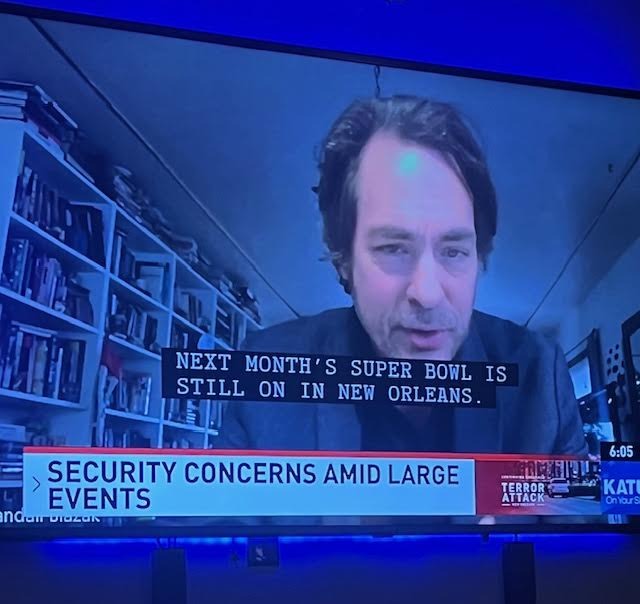
Well, 2025 is off with a bang. My New’s Eve hangover didn’t have time to kick in before the news from New Orleans rolled in. And then Las Vegas. Welcome to the worst year of our lives.

Forty years ago, my study of fascism was the focus of my second undergrad major of political science. That then moved headlong into the field of criminology. As a graduate student, my research on teenage skinheads evolved into a study of right-wing extremists groups. Once I had my PhD in my pocket, that work became a scholarship on domestic terrorism. When I was asked to contribute to the 2003 edition of the Encyclopedia of Terrorism, I knew had achieved the title of “terrorism expert.” And that meant I would spend a chunk of New Year’s Day talking to reporters.

The study terrorism is not exactly an exact science. And those coming from academia and those coming from law enforcement are going to have different focuses (root causes vs. threat assessments, for example). But where we come together is in vague intention to create terrorist profiles (which I jokingly refer to as terrorist stereotypes). The good news is that we have a massive amount of data from previous bombings, mass shootings, car rammings, and the like to have a pretty good picture of who commits these crimes, with a handful of relevant variables. The bad news is that we have all this data because of the success of these people in carrying out their deadly plots.

So with minimal facts available, I had a pretty clear picture of who Shamsud-Din Jabbar, the New Orleans attacker who killed 15, was and wasn’t. For example, despite the unhelpful grandstanding at Wednesday’s press conference, I was pretty certain Jabbar worked alone. The blather that Jabbar was a part of an “ISIS cell” fit conservative fear-mongering (since the “immigrant” narrative crashed), but did’t fit the typical profile. This was not the Oklahoma City Bombing. It was the Big Easy’s version of the 2016 truck attack in Nice, France. While Donald Trump decried “open borders,” I talked to local media about how we have seen this movie before.

You’ve got a guy with a military background who served in Afghanistan who probably saw the heavy hand of Uncle Sam in a Muslim land. That was enough for Army psychiatrist Nidal Hassan who went on a shooting spree at Fort Hood in 2009, killing 13 and injuring dozens. Jabbar also had a host of economic crises, including massive debt, and a dramatic divorce involving conflict over children. Most men who go on workplace mass shootings are in the same situation. Exactly. The insanity of ISIS gave him a place to put his anger. Their binary world of believers vs. non-believers is like a warm blanket to someone whose life in a complete spiral. Like the workplace shooter, Jabbar was ready to check-out (AKA die) but he was going to go out in a blaze of glory, spreading his pain to others as he barreled down Bourbon Street.

The case of Matthew Alan Livelsberger is a little less obvious. Livelsberger was the Army Special Forces operations master sergeant who drove a rented Tesla Cybertruck up to the front door of the Las Vegas Trump Hotel, shot himself in the head and set off a bomb in the truck. Again, the nattering nabobs of disinformation over at Fox News claimed this was an attack on the incoming president and his boss, Elon Musk. But, there were facts that didn’t add up to that claim, including the fact that Livelsberger was a green beret (not known for their liberal anything) and that the bomb was so poorly constructed it didn’t injure anybody. (He could have driven straight into the hotel lobby if he was after casualties.) There are clues to motive that have nothing to do with Trump or Musk.

We’ve seen a steady increase in the suicide rate of active military (523 cases in 2023, up 9% from 2022). We still know so little about the PTSD-suicide link, but we know it exists. Livelsberger was a new father, so that should have been a mediating factor. (When Cozy was born, I didn’t want to miss a single second, staring at her while she slept.) But we don’t know much about the sergeant’s internal and external life yet. We do know that soldiers who suffer trauma from combat who also experienced trauma as young children are significantly more likely to spin off the rails. Musk and Trump have been a constant presence in the news. It’s likely that he chose the car and hotel as part of a strategy to make his suicide more newsworthy. After all, how many of the over 500 military suicides last year hit the news cycle? (And the suicide rate for veterans is almost twice the non-veteran rate, so maybe both Livelsbergerm and Jabbar were demanding attention on the matter.)

If there’s any good news in all this carnage it’s that we know these profiles inside and out. Which means we know the antecedents to the terror, the proverbial red flags. And the red flags provide intervention points to head off calamity. As we dissect these two New Year’s Day attacks, we’ll find points where “somebody could have done something.” The Cure-PNW project I work on, funded by the Department of Homeland Security, has been finding angles to de-escalate political violence by strengthening communities and empowering people to intervene when they see a Livelsberger or Jabbar moving toward criminal action. (We refer to these interveners as “credible messengers.”) This is the work that needs to be upscaled on a national level as 2025 promises many more January firsts. (Unfortunately, our grant runs out with the new administration.)

After Election Day there was a lot of “the sky is falling” hysterics on my side of the aisle. Yeah, decency and democratic guardrails took a major hit. But the 2026 midterm election is only 96 weeks away and there is already dissent in the Trump-Musk-GOP ranks. Maybe the sky won’t fall, but what we can count on remaining constant are the factors that drive (almost exclusively) men into choices to commit acts of terror. Better understanding how to utilize that knowledge gives that “something” that we can do.

The Rescue of the Girl in the Red Coat: Gratitude for One Ukrainian Dad

April 17, 2022

It wasn’t until my tenth day home from my Poland-Ukraine trip that I really had a chance to process what the experience meant and why I felt so different upon my return. I knew I was different but I wasn’t sure why or how. I could write it off, as I had been describing it to friends, as a “thimble full of PTSD,” but it was something else. My therapist asked me for the one resonating image of time in the conflict zone. There was no hesitation in my answer.

Before crossing into Ukraine we went to a town on the Poland-Ukraine border called Korzowa. The Polish government had taken a massive abandoned shopping mall called Centrum Handlu and turned it into a refugee resettlement center. We were there to retrieve a mother and her kids and get them to a safe house. When we arrived in our passenger van, I immediately recognized the building from the news reports I had watched in Portland. I saw the chef from World Central Kitchen, José Andrés, preparing meals outside the building and the trucks bringing in supplies from across Europe.

Sally, our fearless leader, reminded me not to take pictures inside, as these severely traumatized people needed compassion and not to be treated like zoo animals. That was fine because the memories of the sea of displaced humanity inside the mall will forever travel with me.

It was midday so the thousands of cots were mostly stacked up but there were still many parents and children trying to sleep in the bright industrial lights. We found our family in an arrangement of couches they had made their “room” for a few days, a mother, six girls, and a Pekingese, who peed on the floor while we waited for their shelter discharge papers. It was clear that many of the Ukrainian children were afraid of strange men because of what they witnessed from the Russian soldiers who drove them from their homes, so I did my best to be cheerful, always sharing pictures of my daughter, Cozy.

While we waited to be released, I scanned the countless people who were trying to figure out the next steps in this insane disruption. My eyes stopped on a father sitting in the middle of the floor with a few bags and his daughter, who was wearing a red coat. The look on his face was of complete loss. His country was suddenly at war, his life as he knew it had evaporated, and he had no idea what was going to happen next. He had his hand on his daughter and occasionally stroked her hair, but he kept his face from her eyes. I held my phone at my waist and took one picture. I didn’t want to forget his face. That could be Cozy and I so easily.

Reflecting on the moment with my therapist, my first feeling was of sadness. While I was there, I saw so many families turned into “refugees” overnight as the Russian rockets crashed into their homes. But the more I thought about it, I started to see him as a hero. He was Atticus Finch, making the tough choices to protect his child. The refrain across the border was “Heroyam slava!” (“Glory to the heroes!” In Ukrainian.) This father wasn’t shooting at Russians, but he was still doing something heroic.

And his daughter was wearing a red coat. The girl in the red coat from Schindler’s List had haunted me during my day at Auschwitz the following month. But unlike that girl, who would end up in a pile of corpses headed for the crematorium, this girl in a red coat would escape to safety. Because of her father.

While in Poland and Ukraine, I routinely reflected on how lucky I was. A home, a family, safety. There was a moment when we were heading west, across the Ukrainian countryside with another displaced family in the van, that I noticed the color of the sky was the same color blue as on the Ukrainian flag. I thought about how that same sky was over my daughter who was safe with her mother, over 5000 miles away. The endless pain caused by stupid anger was evident on the faces of the Ukrainian children I met. What could I do to reduce the pain from anger in my own home?

When the momentum of the global travel began to subside (my sleep schedule is still on Poland time), those images and lessons began to settle in the front of my brain. Andi and I had an honest discussion about our relationship, her relationship, and the likely direction of things. The anger that had been there just lifted. I’d seen too many families ripped apart by pointless anger. I’d seen the trauma on the faces of kids whose parents were pulled in opposite directions and unable to be fully present. Things immediately improved between us. Yesterday we took Cozy to an Easter egg hunt and Andi put her head on my shoulder as we watched our child race across the grass. And today we are going to a Thorns game as family. It feels like a spring rebirth. All it took was me seeing that Ukrainian father and his girl in the red coat.

I don’t know how the war in Ukraine will play out. The same is true with events in my life. We both have some rough months ahead. In Krakow, I started the process of getting “лава Україні” (Glory to Ukraine) tattooed on my arm and finished it in Portland. The blue of the Ukrainian flag inked into my skin will serve to remind me that the love that connects us across the planet will always win out over the anger. This Easter Sunday, that suddenly means enough. Upon returning home I learned that Oliwia Dabrowska, who played the girl in the red coat on a Krakow street in Schindler’s List is now 32-years-old and has been doing refugee work in Poland at Centrum Handlu. We probably crossed paths. She’s a hero, and, OK, maybe I’m a thimble full of hero to my daughter and to those little girls I helped get to safety. Heróyam sláva!

Where I’ve Been, What I’ve Seen, Who I Am: A Brief Reflection of My Time in Ukraine/Poland

April 5, 2022

After my epic journey from Poland to Portland, that included another two missed flights and a night spent in the Newark Airport, I had the brief honeymoon of home. As if written in a screenplay, my Lyft driver at the Portland airport was a Ukrainian named Ruvim. He dropped me off in front of my house and Cozy ran out to great me. After over two weeks away, I fell to my knees and hugged her, thinking of all the dads in Ukraine who long to hold their kids but can’t because they are saving their nation from sociopathic Russians who are raping Ukrainian women in front of their children.

Coming home to Cozy and Andi felt like a dream. They are my sanctuary, my reason for everything. As is tradition, I gave Cozy her snow globes (from Paris and Krakow). I gave Andi a neckless and cross that had belonged to a Ukrainian mother who we got to safety. It felt like I was finally home. But it wasn’t really home. Andi had boxed up her things while I was away and was already entrenched in another relationship, and my silly plan to return home like a badass Rambo and sweep her off her feet with stories of glory was lost in my lack of sleep and the ghosts of what I had seen while I was away, not to mention that I was now only her husband on paper. I just wanted to take hot shower and fall asleep cuddling with my daughter, which I did.

The next morning, I jumped back into the routine and got Cozy to school. I hopped in the car after dropping her off and switched on NPR and that was that. The news was the horror stories coming out of Bucha, where Russian soldiers had tortured and murdered Ukrainian civilians in ways that make ISIS look like kindergartners. My heart raced and my first and only thought was, “ WHAT THE FUCK AM I DOING IN PORTLAND? I SHOULD STILL BE THERE GETTING PEOPLE OUT!” The intense guilt of leaving. I knew these kids that they were killing. I knew their mothers. I knew the men who were living lives like me in one moment and thrown into an unexpected and unwanted war the next. How dare I be on my way to grab a latte when Russians are cutting their tongues out?

I don’t know if this is trauma but I do recognize my brain has changed. I have to imagine this is exactly what veterans experience when they return home from combat, the intense compulsion to rejoin the fight. And it’s not like I did 12 months in Afghanistan. I did two weeks in Poland and Ukraine and already I’m all Deer Hunter, ready to go right back. There’s also the adrenaline rush that a former cop recently told me is the attraction for many in law enforcement. If my cognitive patterns were changed in a fortnight, imagine how it must be for career military. 

The guilt is intense. While I was there, it seemed like things might be winding down and the Russians would go home with their tails between their legs, having underestimated the strength and courage of the Ukrainian people. Au contraire, mon frère. The Russians just leveled up their savagery. I should have stayed. I should have driven vans full of ammo straight to our contacts in Irpin so they could have taken these monsters’ heads off. I proved that I can do this work, racing around sandbags and hedgehogs in western Ukraine. I mean how old was Pablo in Hemingway’s For Whom the Bell Tolls

It’s a race of emotions that is balanced out by the very real fact that I have a beautiful daughter who needs her father here. I know she was proud of the fact that I was helping kids like her on the other side of the planet. She needs to know that she’s my priority. But the reality is, she’s not worried about Russian rockets slamming into her school and the children of Lviv are.

I’m just writing this, processing this, in this, getting it out for my own sake. You’re welcome to continue reading. I’ve had several espressos today, doubled my Zoloft, and am blasting Napalm Death’s “Suffer the Children” on my stereo. Not sure what the real world has to offer, especially after my day at Auschwitz on Friday. Is the world being destroyed or recreated? Will something wonderful emerge from the ashes, or will the illogic of the Putin-Trump cults lead us into a dystopian nightmare?

I’ll be OK. I have a great therapist, a good job, friends, an amazing kid, and a roof over my head. I can find ways to help Ukrainians from Portland and I can loose myself in music and books (although I might have to finish For Whom the Bell Tolls later). One thing I did do is ditch being called “Randy.” I’ve grown up. Call me Randall. I’m not the person I was. It’s time to be better at being better.

These two weeks did a number on me. My heart is in Ukraine. My heart is with all the veterans experiencing PTSD. My heart is with every refugee who wishes they were home. My heart is with my daughter who deserves a better world than the one we currently have. I’ve learned not to expect empathy, but I have a feeling there are countless people who understand what this feels like.

I am the victim of child sexual abuse and it made me toxic.

October 22, 2021

I have a few clear memories from when I was four-years-old. I remember the birch trees in our front yard in Parma Heights and turning my tricycle upside down, pretending it was an ice cream machine. I remember doing the Tarzan call over our back fence, hoping my neighbor, Sharon, would climb over to play. I remember my breath becoming condensation on the inside of my Secret Squirrel Halloween mask. I remember the Christmas tree and learning that I could swallow SpaghettiO’s without chewing them. I didn’t remember being molested.

This might be the hardest thing I’ve ever written but I have to. I have to because I remember now and that memory has allowed me to connect so many dots in my life, a series of dots that includes a trail of tears full of damaged relationships with family members and other people I supposedly loved. Two failed marriages and a third that is hanging by the tiniest of threads. All connected to one weekend in 1968.

Over the years I’ve trumpeted the benefits of therapy as a place of self-evolution and fixing broken patterns. “I worry about the people NOT in therapy,” I’d tell my students. Since my first drop into clinical depression, that I fictionalized in my novel, The Mission of the Sacred Heart, therapy has been a place to put out the emotional fires. But it’s often just tinkering around the edges and not getting to the root. The root takes time to dig down to, maybe years.

I was in couples counseling about a dozen years ago when I had a very clear childhood memory that stopped me cold. My young parents were looking for their American dream and got involved in some of those “multi-level marketing schemes,” like Amway. They would take weekends to go to sales seminars and drop me off with an older couple that lived down the block. While sitting on our therapists couch, I remembered my parents picking me up at the end of a weekend away and me crying uncontrollably, thinking they had left me with these people forever and being so relieved they hadn’t. I chalked it up to a root cause of my vague abandonment issues and moved on.

This pandemic has offered us an opportunity for self work. My patient and loving wife has helped me to identify my tendency to center myself instead of her in our marriage. (Something I’ve written about in this blog.) She was strong enough to name it; narcissism. She gave me reading list on the subject so I could continue my work. I was reading one of her recommendations, Why Do I Do That? Psychological Defense Mechanisms and the Hidden Ways They Shape Our Lives, and I began to see a lifelong pattern that started with endless fights with my younger brother and my tendency to be in perpetual “battle mode” in my romantic relationships. But I was puzzled about why I could see this pattern and seemingly be powerless to stop it.

Then, one day, because I really wanted to know, I was reading about theories on the origin of Narcissistic Personality Syndrome. And there it was in black and white, that one root can be child sexual abuse. It was like great whooshing enveloped me. I suddenly remembered why I was crying so hard when my parents picked me up from the neighbor babysitters. I had a crystal clear memory of being in the guest room, window facing the street, with the man, maybe twice as old as my 25-year-old father, standing in front of me, staring, with my clothes in a pile on the floor in front of me. The memory gets a little hazy after that, but I know I was crying because I needed my parents to rescue me from how that man was hurting me.

Realizing this literally stopped my breath. I began to hyperventilate and then sob. The timing was not perfect because I was in the middle of a me-caused crisis with my wife. I had shared an intimate detail of our lives with a friend (who was really just a local bartender) that she had asked me not to share. I had betrayed her trust in the most callous of ways for no reason other than momentary titillation, wounding this person I claim to love. This realization shed light on that and so much more. My hyper-sexuality, my narcissism, and probably why I never had a best friend. 

That 4-year-old didn’t have the skills to stop this abuse so he erected a wall around himself for protection. I entered into a world where I constantly had to be on guard and defend myself. Everyone was a potential attacker, including my little brother, who I was endlessly cruel towards. I would see his efforts to emulate me as sinister attempts to take the things that were unique about me for himself. At age 10 I remember freaking out because he said he liked Elton John. Elton John was mine! I should have just said, “Yeah, Ronnie. Elton is awesome. Let me play you some of my favorite songs.” Instead I beat him up. That hyper-defensiveness and self-centering (and fortunately not the violence) followed me into adulthood and sabotaged every single romantic relationship I entered. I can provide you a list of women who will testify that was not a very good boyfriend or husband.

That 4-year-old also didn’t have the skills to process what was occurring. How could my parents let this happen? So all that trauma got folded into my subconscious and came out in my toxic personality traits. That’s where it hid until I was 57-years old, and by then those brain pathways were pretty well-worn grooves.

I found a new therapist to help me work on this psychodynamic that has only hurt people I love. She’s a hypo-therapist, so much of the work has involved talking to that 4-year-old who has been in control of my mind and behavior since 1968. I can take care of him, acknowledge his pain, and move forward as the adult version of me. But that kid is strong. He doesn’t want to let go. One thing that is painfully clear is that alcohol, something often abused by adult abuse victims, lets that kid out with a vengeance. So as of today, I’m going back to my straightedge tendencies. No more Portland benders. I can’t let the child cause more pain. And he’s caused a lot pain.

The research is clear, people who experience trauma tend to traumatize others. Veterans with PTSD have higher rates among domestic abusers. So many of the hate criminals I’ve studied over the years have histories of abuse in their background. Roughly one in seven American children experiences abuse, and you can bet that many of them are going to turn that pain outward, creating an endless cycle of trauma.

One of my favorite novels is Nick Hornby’s 1995 book, High Fidelity. The protagonist, Rob, is going through another break-up and decides to write all his ex’s to ask them why they broke up with him. I’m tempted to write all my ex’s to tell them that I know why they broke up with me and to apologize. Profusely. But my work has be in the present, being ever-mindful of this hurt 4-year-old that lives inside me. His need to lash out and erect walls has destroyed so much. I want to give him love and protection so he, and the other people I love, can finally feel centered and safe with me.

I know two things. What happened to me wasn’t my fault and that this internal dynamic that my abuse shaped is not an easy thing to change. Wish me luck on this path. It’s not going to be a straight line. And also that I’m sorry that I didn’t figure this out sooner. So sorry.

How Veterans and Rape Victims Can Help Us Stop Trump’s Racism

September 22, 2020

It’s sort of pointless to argue whether or not Donald Trump is a racist. His lifetime record of words and deeds proves it. Saturday night he rambled on about how is white crowd in Minnesota had “good genes.” He can pimp out Herschel Walker (who has had his fair share of blows to the head), or suddenly throw $13 billion at Puerto Rico, but 99% of black and brown people know what’s up. The Trump loyalists who don’t think he’s a racist are not going to be convinced by me that he is. Anyone with an a IQ over 80 and a minimal understanding of twentieth century history understands what’s happening in America right now.

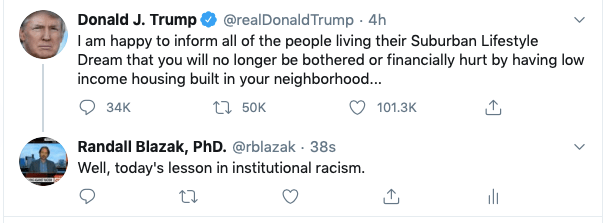
And we don’t have to go all the way back to Germany in the 1930s to see the populist swing to authoritarianism returning. Trump is straight up Nixon ’68, revisiting the racist “southern strategy” as he madly tweets at “suburban housewives” that black people (and Antifa!) are coming to destroy their bucolic worlds. The fear mongering worked for Nixon as race riots gripped American cityscapes. Things are different in 2020. The suburbs are different and most of those “housewives” are the primary breadwinners in their families. I doubt Mr. “Grab ‘em by the pussy” and his racist drumbeating is going to frighten them more than COVID-19 killing their children.

So then what to do? How do we deprive this racist lover of dictators of his oxygen? How do we kill the threat of Donald Trump to America?

It will be our veterans that show us the way

The absolute key to this racial mess is understanding the nature of trauma. Liberals and conservatives, antifascists and “patriots” all have a basic understanding of trauma. So here’s how it works.

Step One: Veterans – When was the last time we heard of someone coming back from a war zone and being spit on? We don’t do that anymore. Even hard core anti-war left wingers would never even think of doing that. My father used to joke about torturing a “shell shocked” Korean War vet who was his high school teachers in the 1950s. In the 1970s, tweaked Vietnam vets were the subject of derision. “Dude’s in his own private ‘Nam.” What changed?

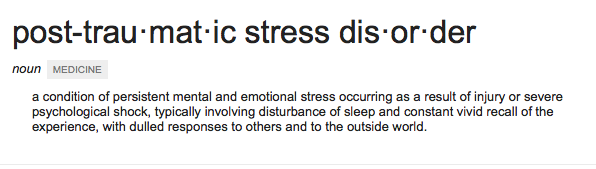
In 1980, the American Psychiatric Association recognized Post Traumatic Stress Disorder (PTSD) as a very real and life-lasting cognitive condition. Because of the suffering and sacrifice of a lot of vets, we understand how acute trauma, like getting shot at, alters the brain. And we learned that trauma can lie dormant and be triggered by something random, like fireworks going off on the 4th of July. In 1998, I went to a special screening of Saving Private Ryan that honored surviving WWII vets. The opening scenes of the Normandy landing had men in their seventies convulsing like they were back on that beach 54 years prior. They nearly had to stop the film.

We’ve learned that PTSD has a whole host of ripple effects, like depression, substance abuse, and elevated suicide rates. That’s why there is near consensus on helping our vets heal instead of adding to their trauma.

Step Two: Rape victims – Rape is epidemic in our society. Depending on the measure, as many as one and four women in this country will be sexually assaulted at least once. Rape knows no political boundaries, no race or even age. We exist in a rape culture which traumatizes women with sexual violence and the looming threat of sexual violence. Even typing the word rape will traumatize some of the women reading this. I was lecturing about rape statistics in my criminology class at the University of Oregon and a young woman burst into tears and left the class, never to return. I re-traumatized her without even trying. It’s the impact not the intent.

We also have a mountain of research that shows rape victims suffer from PTSD just like our veterans do. The difference is women don’t walk off the battlefield. America is the battlefield, with the next potential attack just around the corner, or, more likely, in the next room. And having entertainment, like Game of Thrones, that turns rape into spectacle and a president who brags about his sexual assaults doesn’t help.

Even the most right-wing asshole dude has a mother or a sister or a daughter or a favorite teacher or a lover who has been wounded by sexual violence. Just like he would never tell an Afghan war vet to “just get over it,” it would be hard to imagine he would tell his wounded rape victim to “just get over it.” Even assholes have hearts.

Step Three: People of Color – I know there are white people who think racism magically ended in 1865, or 1964, or 2008 when Obama was elected. But anyone who has watched the 8 minute and 46 second execution of George Floyd knows that the trauma of racism continues and is a daily reality for people of color. Seeing grown black men, weeping on live TV, begging for black lives to matter was a wake up call for many white people.

Think of the cumulative trauma that results from slavery, Jim Crow, lynchings, mass incarceration during the phony “War on Drugs,” redlining, educational discrimination, white flight, police violence, and on and on. Where is the opportunity to heal when the traumatizing impacts of racism are still coming, while white people chant, “just get over it”?

Black, brown, Asian, and indigenous people are marginalized in ways that are often completely invisible to white people. It could be a simple micro-aggression (“So, what are you?”) or a lack of representation (How many black male teachers have you had?). The rising rate of hate crimes based on race is the icing and Trump’s attacks on black athletes as “sons of bitches” are the cherries on top.

If we can understand the trauma of veterans and rape victims, why can’t we understand the trauma of racism victims? As a dude on American Ninja Warriors recently said, “Ignoring race doesn’t fix racism.”

An embarrassing story about myself

Two years ago I was taking my daughter, Cozy, to her preschool. I got there early and saw a young African-American male sitting on the steps to the school. His hood was up and he was on his phone. Something ticked in my head, that said, “Danger Will Robinson!” so I took Cozy in a different door, giving the young man a wide berth.

When I came back out, I saw him getting on a school bus, doing what we want every teenager should to be doing. The preschool steps were his bus stop. I felt incredibly embarrassed about my assumption and as he got on the bus, he shot me a look that I will never forget. It said, “What do I have to do? I’m going to school and you still think I’m a thug.” I had wounded him and his day was just starting.

What happened? I grew up in racist America which means I internalized white supremacy, including the belief that black men are threats to our safety. That internalized white supremacy turned into implicit bias, that gut feeling that had me choose to walk in a different door. That young man experienced that as a micro-aggression, he knew I was walking in the far door because he was black. And that micro-aggression was a small but meaningful traumatizing event. Instead of helping him to heal, I gave him YET ANOTHER reminder that being black in America is to be marginalized. I wounded him. And I’m sure there were plenty more woundings that followed that day.

Our president thinks discussing concepts like internalized white supremacy, implicit bias, micro-aggressions, and racial trauma are anti-American. He’s come out hard against the New York Times 1619 Project that tries to undo the whitewashing we’ve done on the history and impact of slavery on America. He wants to institute some Orwellian “patriotic education” curriculum to indoctrinate kids back into the white washing. (School curriculums are mandated on the state level, so he’s just playing to his racist base, again.) I’m waiting for Trump to sign an executive order replacing Black History Month with Slave Owners Had Good Genes Month.

If “All lives matter,” then black lives matter. That’s how words work.

The road out of this backsliding moment is to talk to white people about trauma and healing. If they can understand the experience of veterans and rape victims with PTSD, they can understand the traumatizing impacts of racism and marginalization. If it makes sense that a wounded warrior might be triggered by firecrackers or a rape victim might be re-traumatized by another news report of a sexual assault, than a white person should be able to understand the cumulative impact of another unarmed black person who was killed by the police on black people in general. In 2020, it seems like black lives just don’t matter yet.

Except for sociopaths (and I understand the ranks of neo-Nazis and “Pro-Trump” activists have plenty of those folks), all human beings are capable of empathy. I’ve written about how my road from white supremacist kid from a Klan town to anti-racist educator started with the recognition of how I traumatized a black janitor in my freshman dorm at Oxford College by ripping up a book by Martin Luther King, Jr. and throwing it in the toilet. Good people don’t want to cause trauma. Good people want to help people to heal from their wounds.

The problem is that white people are so damn fragile. They run away from the term “racist,” thinking it only applies to cross-burning Klansmen. We’ve all internalized white supremacy, full stop. Myself included. The switch has to flick from, “I’m not a racist!” to, “I am racist but I want to reduce the harm that’s caused. How can I help the healing?” I think when white people understand the depth and length of racial trauma, they will want to be helpers instead of hurters. Take down your Confederate flag and unclench your white fist into an open hand.

Donald Trump has cast himself as the savior of white America. It might work. There are are still a lot of anxious white people that can’t handle a black football player who cares about justice, let alone people taking to streets, demanding to dismantle racist institutions. Trump’s racism has been unleashed in his desperate eleventh hour attempt to salvage the train wreck of his presidency. Perhaps calm conversations about the wounding racism has caused to people we care about can end his reign of injury.

Brett Kavanaugh and Bro Culture: Let’s Look in the Mirror

Sept. 28, 2018

Judge Brett Kavanaugh and I are basically the same age. He’s almost a full year younger than me and a lot more bourgeoise. But the summer of 1982, we were probably pretty similar characters. He was hanging out at the country club in Deleware, and I was hanging out in punk rock bars in London. He was drinking a lot of beer at 17 and I was trying to be vegan at 18. But we were both teenage boys surrounded by Rocky images of masculinity and the patriarchal notion that God or the gods put all the world’s women on Earth for us to enjoy.

220px-Porkys

The difference is that I never tried to rip the clothes off of 15-year-old girls. My warped perception of male entitlement only went as far as envying the shower scene in Porky’s. I was sexually shy that summer, but he seemed to have an action plan.

Watching the testimony yesterday morning of Dr. Christine Blasey Ford was gut wrenching. I have to think that millions of women (and plenty of men) were both transfixed and transported back to their own moments of violation. The trauma of sexual assault isn’t a wound that is just healed by time. We don’t expect war veterans suffering from PTSD to “just get over it,” yet there seems to be some statute of limitations on the waves of devastation caused by sexual violence. Dr. Ford was calm but fragile, as she relived her deep-rooted trauma. Kavanaugh’s hysterical testimony, full of conspiracy theories about the Clintons and “Democratic hit jobs,” would have been derided if he had been a female, but men are allowed to use their anger as a cudgel in absence of the truth. “He must be right, look how loud he is yelling.” (And aren’t judges supposed to be politically impartial. This is like giving Fox News a seat on the Supreme Court.)

Image: US-COURT-POLITICS-ASSAULT

The underlying message is that the starting assumption is men are truth tellers and women are liars or patsies. Welcome to Anita Hill Redux. You haven’t come a long way, baby. And yes, maybe Ford was mistaken and Kavanaugh is innocent, but his “defense” didn’t convince a single rape victim. No matter how impressive your resume is and how many times you’ve flown on Air Force one and how much you lean on the wisdom of your daughters, good men can do bad things. His credentials don’t shield him from abusive behavior. It’s not good people vs. evil monsters, us vs. them. It’s just us.

As I recently wrote with regard to race, not only do we all internalize white supremacy, infecting each of us with a degree of racism, so to we all internalize misogyny, infecting each of us with a degree of sexism. We might not say it out loud, but we (men and women) are socialized to believe that “male” is the norm (a message delivered by your mailMAN each day), and women are, as Simone de Beauvoir called it, the second sex. I’ve written a great deal about the challenges of being a male feminist when the go-to switch in your head says women are “girls” and secondary or sexual objects. I am a racist and a sexist. Brett and I both learned these lessons long before 1982. The difference seems to be that I seek to purge the sexism within me and he has chosen to deny its existence. I half expected him to pull a Trump and claim, “I’m the least sexist person you’ll ever meet!”

Part of the gendered message we get early on is that men stick together to maintain their authority. “Bros before hos,” the frat boys chant. That male bonding was evident in the predatory behavior of teenage Kavanaugh and his wing-man Mark Judge and it is evident in the Republican men of the Senate Judiciary Committee who are desperate to give this bro a lifetime appointment on the high court. Bro culture reinforces patriarchy from the ball field to fraternity row to the senate chambers.

Screen Shot 2018-09-27 at 10.34.41 PM

But it’s easy to point to Brett Kavanaugh as the supreme douchebag of the land, who may or may not have spent Beach Week ’82 plying underage girls with grain alcohol. Whether or not he makes it on the court, he will always be known as the “rapey judge.” Kavanaugh is “them.” We need to focus on us and how our own internalized misogyny creates the rape culture that allows credentialed dicks like Kavanaugh to rise to prominence. If the rise of the alt-right is an opportunity for this country to explore the damage done by white privilege and normalized racism, the Kavanaugh hearings are an opportunity for us to confront our issues with male privilege and normalized sexism.

Brett Kavanaugh isn’t the problem. He’s a symptom of the problem. As my wife and I watched Ford’s testimony, we wondered if our daughter would be telling her own stories of sexual trauma one day, trying to convince a panel of old men about the lifelong damage created by one single act. Trump and his old boy network are fighting tooth and nail to make sure that #metoo is just a fad and the old regime stands firm, so I am desperately worried my daughter will encounter her own Brett Kavanaugh at some point.

But if we men can take a deep dive into our own sexism, our simple dismissal of women and all things feminine, we might put an end to the uproarious laughter of boys who have a girl locked in a room and see her dehumanization as sport. We might delegitimize the delegitimization of women and girls. We might keep my daughter safe by surrounding her with boys and men who see her not just as somebody’s daughter but as somebody. We might be able to undo what we have done for so long.

Empathy and PTSD in Rape Culture: Maybe a veteran would understand (better than Trump)

August 3, 2016

Sometimes I wonder when my thoughts about the world won’t have something to do with Donald J. Trump. I’m hoping by the second week of November. But his shameless attack on U.S. Army Capt. Humayun Khan’s family after their emotional appearance at the Democratic National Congress last week actually inspired me to have a hopeful thought. Seeing Clown Prince Trump claim he’s sacrificed as much as this grieving Gold Star family sent what few military families were still on the Trump Train jumping from the caboose. Trump tried to recover by waving around a Purple Heart that wasn’t his and claiming that he’s wished he’d gone to the Vietnam War (instead of taking all those rich kid deferments).

KHAN

Trump’s Islamophobic comments aside, the important part of this narrative was Khizr Khan’s passionate assertion that the the Republican nominee was devoid of empathy: empathy for veterans, empathy for the families of troops killed in combat, and empathy for the Vietnam Veteran whose Purple Heart he gladly took and showed off at a campaign rally.  “This person is totally incapable of empathy”, Khan told CNN. “I want his family to counsel him. Teach him some empathy. He will be a better person, but he is a black soul.”

Trump (and his authoritarian followers) aren’t the only people who need a lesson in  empathy. The lack of empathy knows no creed or color. But, unless you are a sociopath, there is hope that it can be learned. I’ve written about it in this blog and I teach it and I’m trying to maintain it when I talk about Trump supporters (which is getting increasingly difficult after the billionaire’s daily assault on core American values).

Here’s where this glimmer of hope from the Trump-Khan “feud” links to rape culture. And here’s where feminists can find unlikely allies. Every man has some female he loves, right? A mother, sister, daughter, wife, girlfriend, gaming store clerk. One would assume that they don’t want that female to be sexually assaulted. So if that dude learns that there is a good chance that she will be or already has been (a one in six chance by the most famous study on the topic), he might feel something: anger, maybe guilt that he doesn’t worry about being raped, hopefully concern for the (potential) victim he cares about, and MAYBE concern for other women he doesn’t even know. Empathy.

Ferber

I wrote about this power in a chapter I published in the 2004 book, Home-Grown Hate: Gender and Organized Racism. An emotional connection to a female can allow even the most committed right-wing hate-monger to build empathy towards others, including the people they are supposed to hate. So many hate group members left that world because a female impressed upon them how they are the victims of hate every single day as potential targets of sexual violence.

There’s a second link. I think most men, even the war-loving Trumpists that want to “bomb the shit” out of somebody, understand the complexity of Post-Traumatic Stress Disorder. When my dad was in high school he had a teacher who was a “shell-shocked” veteran from World War II. The not-empathetic 1950s kids (you know, when America was “great”) would make the sound of bombs falling to see the poor guy dive for shelter. What a hoot. Now we all have an idea of the ongoing hell many of our troops suffer when they return from war. We might not agree with the war, but we are all in agreement that those people served in conditions that the rest of us could never imagine and we owe it to them to take care of them and be mindful of the triggers of PTSD. Gone are the days of joking about vets who “go all Vietnam” when they get home. Maybe that was a contribution of President Reagan, maybe it was the 1978 film The Deer Hunter, or maybe it was the result of thousands and thousands of vets demanding their stories be heard.

PTSD def

Well, I’ve got some important news for you. Those thousands and thousands of women who have suffered from sexual violence can also suffer from PTSD. This includes a lot of women you know, maybe more than you could ever guess. You think there are a lot of reminders of war in the daily life of a vet? Ask a rape survivor about the daily reminders of sexual violence in America. It doesn’t have to a news report, or a rape scene in Game of Thrones, or a Robin Thicke song. It could just be in a setting or the sound of a man’s voice. I am looking out my window right now and across the bay is Cancun. That word alone surely brings back some nightmarish memories for many women (as I wrote about last year).

rapePTSD

I’ve known so many women who have suffered sexual assaults, many when they were very young. Those scars last lifetimes and are heartbreaking. I’ve had female students in my criminology classes burst into tears when I talk about rape statistics. I now give a “trigger warning” before I even bring up the subject. You wouldn’t dream of telling a war vet to “just get over it,” so don’t expect a rape survivor to be on some magical recovery path that the guy who did two tours in Afghanistan isn’t on either. Like war vets, rape victims have a much higher rate of suicide. Both need our open hands, not dismissal.

And there are surely others who suffer from some variation of PTSD, including police officers, abused children, and the millions of Americans who have been incarcerated. These are all people we care about. So if you are a conservative who cares about veterans and police, you can totally care about returning inmates and women living in a culture that has normalized rape. And if you are a liberal, the converse is true! Empathy is a powerful thing! It can even turn Mr. Rambo Republican into a feminist. Let’s care about others besides ourselves. Really care.

The only question left is – Is it possible for Donald J. Trump to learn empathy or is he a sociopath. America’s soul hangs in the balance.

PTSD