I guess it’s a normal thing to compare yourself to your kids. “When I was your age I had to walk three miles to school, in the snow, and barefoot, and uphill, and backwards!” I remember when I was in high school we all took our shoes off on a snowy Georgia day and walked to school so we could foist that same flex on our kids.
I’ve been doing a lot of that lately. There seems to be some clear differences between 3rd grade Randy and 3rd grade Cozy. In 1972, I loved to play outside in the woods, she loves to be inside playing Minecraft. I had brain-numbing Saturday morning cartoons, she has brain-numbing YouTube videos on demand. But much of it is the same. Our aversion to any food that is good for us, or to going to sleep, or to getting up. I loved Elvis Presley (“Burning Love” era), and she loves Dua Lipa (“Levitating” era), but other than that, not that dissimilar.
So, as I drop her off at school each day, I’ve been trying to remember what I remember from my 3rd grade experience at Atherton Elementary.
My teacher was Mrs. Weldon and we were supposed to get candy bars for completing our times tables, but I never got mine. I did a presentation on Boston by building a version of the U.S.S. Constitution from a huge cardboard box. The teacher read us James and Giant Peach and we had discussions about the 1972 presidential election. (I supported Nixon because I liked his funny-looking face.) My best friend was Keith Harrison and we focused our arguments on Elvis, Hank Aaron, and how to make the best go-cart. And I definitely thought girls had cooties.
For me, third grade was my introduction to Southern culture. Like many Slavic-rooted Americans, I was born in Cleveland, Ohio. My family fled the rustbelt for the sunbelt after the steel industry crashed, and after year in Boca Raton, Florida, we ended up in Stone Mountain, Georgia (for reasons I still don’t understand). Red clay, black-eyed peas, thick accents, and one classmate who took a dead possum home for “supper” presented me with an alternate reality that was both dreamlike and hostile to a “damn Yankee” 8-year-old. A neighbor named Kenny called me “Polish monkey,” which I later figured out was because of my non-WASP name. Church was king in Stone Mountain, so that was the vehicle of assimilation, although it always felt unwelcoming.
So I wonder what my own 3rd grader is collecting to be reflected upon 50 years from now, in 2072. Will she remember the names of her friends and practicing make-up application, like I remember playing in the creek with Tico and Kip? Will she remember the insanity of MAGA, like I remember the madness of George Wallace and Lester Maddox? Will she remember binging on Takis, like I remember seeing how many Little Debbies I could shove into my mouth? Will she remember her parents living apart and then together again (but still apart), like I remember my father gone on extended sales trips?
Eight seems like such an in-between age. I see my daughter carry herself like she’s 5 minutes from college, but she’s still a child (who wants to set up a spy-cam to catch Santa in action this Christmas). Her peer culture has gained power. She just got her ears pierced and is starting to use slang, like “That’s suss, Dad.” She calls me, “bra” like I’m a bro. How do I tell her to eat her vegetables? Was I that the age when I started separating myself from my parents? (I staged sit-ins in protest of their demand that I eat canned beets, I do remember that.)
If I could go do 8 again, there are certainly things I would do differently, besides buy stock in IBM. I would be kinder to my little brother, and pay more attention to the marginalized kids in my school. But much of 3rd grade seemed to not be about finding your direction, but finding that you could have a direction, any direction; that, at some point, you’d be able to do your own thing. I see that in Cozy, the potential to do really big things if she wants to.
What I needed from parents at 8 was a message of assurance, that they had my back even if I made mistakes. That they’d keep me safe but allow me to see how far I could walk across the ice. And I need encouragement to match the curiosity I had in myself with a curiosity in others. That’s the least I can do for my 3rd grader.
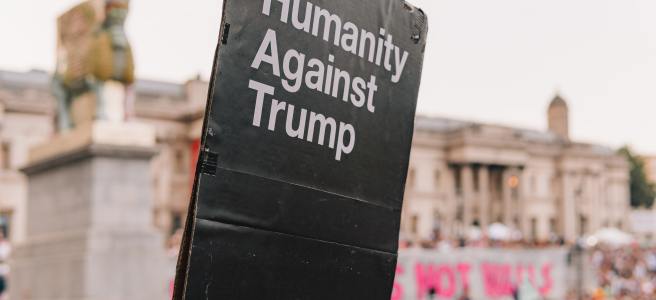
It’s sort of pointless to argue whether or not Donald Trump is a racist. His lifetime record of words and deeds proves it. Saturday night he rambled on about how is white crowd in Minnesota had “good genes.” He can pimp out Herschel Walker (who has had his fair share of blows to the head), or suddenly throw $13 billion at Puerto Rico, but 99% of black and brown people know what’s up. The Trump loyalists who don’t think he’s a racist are not going to be convinced by me that he is. Anyone with an a IQ over 80 and a minimal understanding of twentieth century history understands what’s happening in America right now.
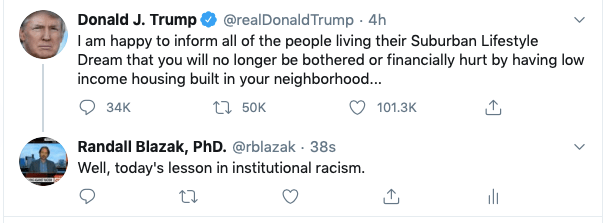
And we don’t have to go all the way back to Germany in the 1930s to see the populist swing to authoritarianism returning. Trump is straight up Nixon ’68, revisiting the racist “southern strategy” as he madly tweets at “suburban housewives” that black people (and Antifa!) are coming to destroy their bucolic worlds. The fear mongering worked for Nixon as race riots gripped American cityscapes. Things are different in 2020. The suburbs are different and most of those “housewives” are the primary breadwinners in their families. I doubt Mr. “Grab ‘em by the pussy” and his racist drumbeating is going to frighten them more than COVID-19 killing their children.
So then what to do? How do we deprive this racist lover of dictators of his oxygen? How do we kill the threat of Donald Trump to America?
It will be our veterans that show us the way
The absolute key to this racial mess is understanding the nature of trauma. Liberals and conservatives, antifascists and “patriots” all have a basic understanding of trauma. So here’s how it works.
Step One: Veterans – When was the last time we heard of someone coming back from a war zone and being spit on? We don’t do that anymore. Even hard core anti-war left wingers would never even think of doing that. My father used to joke about torturing a “shell shocked” Korean War vet who was his high school teachers in the 1950s. In the 1970s, tweaked Vietnam vets were the subject of derision. “Dude’s in his own private ‘Nam.” What changed?
In 1980, the American Psychiatric Association recognized Post Traumatic Stress Disorder (PTSD) as a very real and life-lasting cognitive condition. Because of the suffering and sacrifice of a lot of vets, we understand how acute trauma, like getting shot at, alters the brain. And we learned that trauma can lie dormant and be triggered by something random, like fireworks going off on the 4th of July. In 1998, I went to a special screening of Saving Private Ryan that honored surviving WWII vets. The opening scenes of the Normandy landing had men in their seventies convulsing like they were back on that beach 54 years prior. They nearly had to stop the film.
We’ve learned that PTSD has a whole host of ripple effects, like depression, substance abuse, and elevated suicide rates. That’s why there is near consensus on helping our vets heal instead of adding to their trauma.
Step Two: Rape victims – Rape is epidemic in our society. Depending on the measure, as many as one and four women in this country will be sexually assaulted at least once. Rape knows no political boundaries, no race or even age. We exist in a rape culture which traumatizes women with sexual violence and the looming threat of sexual violence. Even typing the word rape will traumatize some of the women reading this. I was lecturing about rape statistics in my criminology class at the University of Oregon and a young woman burst into tears and left the class, never to return. I re-traumatized her without even trying. It’s the impact not the intent.
We also have a mountain of research that shows rape victims suffer from PTSD just like our veterans do. The difference is women don’t walk off the battlefield. America is the battlefield, with the next potential attack just around the corner, or, more likely, in the next room. And having entertainment, like Game of Thrones, that turns rape into spectacle and a president who brags about his sexual assaults doesn’t help.
Even the most right-wing asshole dude has a mother or a sister or a daughter or a favorite teacher or a lover who has been wounded by sexual violence. Just like he would never tell an Afghan war vet to “just get over it,” it would be hard to imagine he would tell his wounded rape victim to “just get over it.” Even assholes have hearts.
Step Three: People of Color – I know there are white people who think racism magically ended in 1865, or 1964, or 2008 when Obama was elected. But anyone who has watched the 8 minute and 46 second execution of George Floyd knows that the trauma of racism continues and is a daily reality for people of color. Seeing grown black men, weeping on live TV, begging for black lives to matter was a wake up call for many white people.
Think of the cumulative trauma that results from slavery, Jim Crow, lynchings, mass incarceration during the phony “War on Drugs,” redlining, educational discrimination, white flight, police violence, and on and on. Where is the opportunity to heal when the traumatizing impacts of racism are still coming, while white people chant, “just get over it”?
Black, brown, Asian, and indigenous people are marginalized in ways that are often completely invisible to white people. It could be a simple micro-aggression (“So, what are you?”) or a lack of representation (How many black male teachers have you had?). The rising rate of hate crimes based on race is the icing and Trump’s attacks on black athletes as “sons of bitches” are the cherries on top.
If we can understand the trauma of veterans and rape victims, why can’t we understand the trauma of racism victims? As a dude on American Ninja Warriors recently said, “Ignoring race doesn’t fix racism.”
An embarrassing story about myself
Two years ago I was taking my daughter, Cozy, to her preschool. I got there early and saw a young African-American male sitting on the steps to the school. His hood was up and he was on his phone. Something ticked in my head, that said, “Danger Will Robinson!” so I took Cozy in a different door, giving the young man a wide berth.
When I came back out, I saw him getting on a school bus, doing what we want every teenager should to be doing. The preschool steps were his bus stop. I felt incredibly embarrassed about my assumption and as he got on the bus, he shot me a look that I will never forget. It said, “What do I have to do? I’m going to school and you still think I’m a thug.” I had wounded him and his day was just starting.
What happened? I grew up in racist America which means I internalized white supremacy, including the belief that black men are threats to our safety. That internalized white supremacy turned into implicit bias, that gut feeling that had me choose to walk in a different door. That young man experienced that as a micro-aggression, he knew I was walking in the far door because he was black. And that micro-aggression was a small but meaningful traumatizing event. Instead of helping him to heal, I gave him YET ANOTHER reminder that being black in America is to be marginalized. I wounded him. And I’m sure there were plenty more woundings that followed that day.
Our president thinks discussing concepts like internalized white supremacy, implicit bias, micro-aggressions, and racial trauma are anti-American. He’s come out hard against the New York Times 1619 Project that tries to undo the whitewashing we’ve done on the history and impact of slavery on America. He wants to institute some Orwellian “patriotic education” curriculum to indoctrinate kids back into the white washing. (School curriculums are mandated on the state level, so he’s just playing to his racist base, again.) I’m waiting for Trump to sign an executive order replacing Black History Month with Slave Owners Had Good Genes Month.
If “All lives matter,” then black lives matter. That’s how words work.
The road out of this backsliding moment is to talk to white people about trauma and healing. If they can understand the experience of veterans and rape victims with PTSD, they can understand the traumatizing impacts of racism and marginalization. If it makes sense that a wounded warrior might be triggered by firecrackers or a rape victim might be re-traumatized by another news report of a sexual assault, than a white person should be able to understand the cumulative impact of another unarmed black person who was killed by the police on black people in general. In 2020, it seems like black lives just don’t matter yet.
Except for sociopaths (and I understand the ranks of neo-Nazis and “Pro-Trump” activists have plenty of those folks), all human beings are capable of empathy. I’ve written about how my road from white supremacist kid from a Klan town to anti-racist educator started with the recognition of how I traumatized a black janitor in my freshman dorm at Oxford College by ripping up a book by Martin Luther King, Jr. and throwing it in the toilet. Good people don’t want to cause trauma. Good people want to help people to heal from their wounds.
The problem is that white people are so damn fragile. They run away from the term “racist,” thinking it only applies to cross-burning Klansmen. We’ve all internalized white supremacy, full stop. Myself included. The switch has to flick from, “I’m not a racist!” to, “I am racist but I want to reduce the harm that’s caused. How can I help the healing?” I think when white people understand the depth and length of racial trauma, they will want to be helpers instead of hurters. Take down your Confederate flag and unclench your white fist into an open hand.
Donald Trump has cast himself as the savior of white America. It might work. There are are still a lot of anxious white people that can’t handle a black football player who cares about justice, let alone people taking to streets, demanding to dismantle racist institutions. Trump’s racism has been unleashed in his desperate eleventh hour attempt to salvage the train wreck of his presidency. Perhaps calm conversations about the wounding racism has caused to people we care about can end his reign of injury.
You’ve heard it a thousand times. “If I was around in the 1960s, I would have been marching with Dr. King!” Or how about this one, “If I was around in the 1930s or 1940s, I would have been fighting the Nazis!” As if the moment you’re in right now doesn’t require you to pony up and join the frontlines in the fight against oppression. Your time is now.
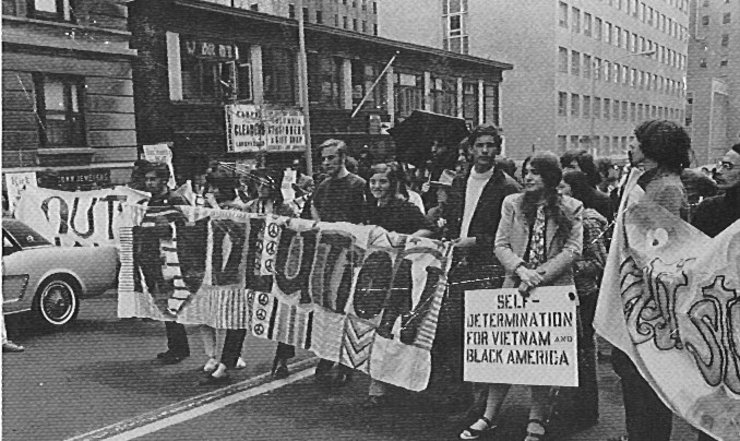
One of the great twentieth century sociologists, C. Wright Mills, wrote in 1959 that we tend to see our biographies as separate from the moments in history that we live in. We focus on the, often mundane, day to day parts of our lives and not our lives as part of a larger historical moment. Very few of the people engaged in the vibrant protests in 1968 thought, “I’m in 1968, making history!” They might have thought, “I’m going to this protest with my friend and then I need to pick up some milk on the way home.” We are making history because every day we are making history by merely existing. But Karl Marx once wrote, “Men make their own history, but they do not make it as they please.” However, there are times, like now, where we can actually alter the course of events.
Portland is again at the epicenter of national events. The media from around the world (including China and Canada) has been calling me to ask what to make of federal forces shooting “non-lethal munitions” into the faces of protestors and grabbing them off the street in actions that look more like Argentina in 1980 than anything America could ever be. And now President Trump has ordered federal police into Chicago, Kansas City, and Albuquerque in what he has branded, “Operation Legend.” (I won’t psychoanalyze how that title fits Trump’s delusions of grandeur.) State and local leaders and well as senators and congress members have demanded the federal forces leave. Oregon Senior Senator Ron Wyden tweeted, “@realDonaldTrump get your jackbooted goons out of my city.”
The arrival of federal forces has completely altered the dynamic of the conflict. The protests had been geared towards Black Lives Matter and the systemic racial injustices that were highlighted by the May 25th murder of George Floyd. Even in Portland they were beginning to lose steam, as they had in Minneapolis, Washington, DC, and other cities. We were trying to move to a sponsored dialogue phase of the conflict. I was working with the Department of Justice on a plan to get protestors and Portland police to the table together. Then, in a bizarre attempt at political theater (and perhaps a distraction from the unending COVID-19 headlines), Trump sends in federal forces to throw a tanker full of gasoline on to the fire. If it was his actual intention to quell the protests, he failed miserably. People who have never engaged in protests are now manning the barricades; grandmothers, veterans, dads with leaf blowers, all willing to take volleys of CS gas to the face to make a stand.
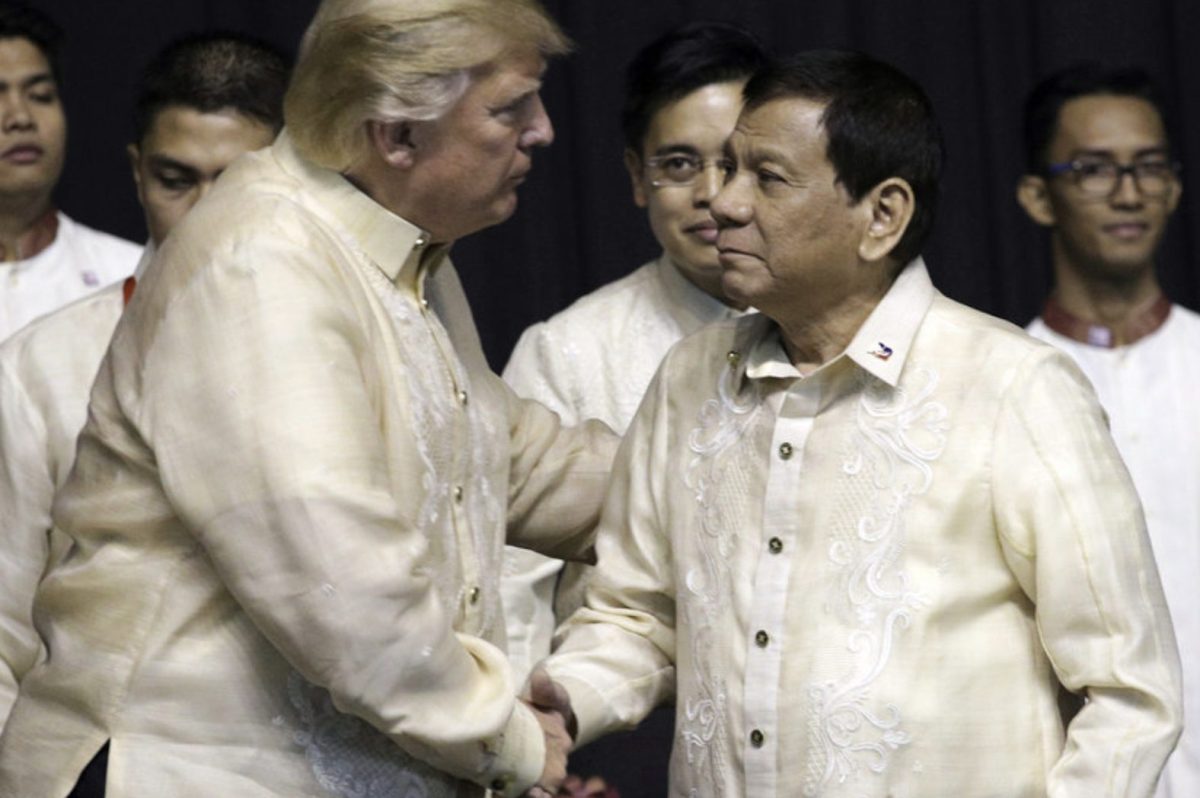
This is now about a lot more than Black Lives Mattering. This is about a shockingly rapid slide into authoritarianism. We don’t have go back 80 years to Germany, or even 40 years to Argentina. The parallel is the Philippines, where the 2016 election of “law and order” candidate Rodrigo Duterte turned the country into a police dictatorship in which the media are regularly imprisoned. In 2017, Donald Trump praised the dictator and invited him to the White House. The people who are protesting in America understand how fragile democracy is. The Philippines was a democracy. It is not one now. Those who mocked Antifa activists for warning about the threat of fascism in America are witnessing something that looks a lot more like fascism than it does democracy rooted in constitutional due process. When Fox New’s Chris Wallace asked Trump this week if he would accept the results of the election in November if he loses, his response was that he’ll “have to see.”
So here America is at a turning point. Will we move to civil war or an era of peacemaking and healing? Are the protestors who are risking their lives to drive the federal forces out of Portland lawless anarchists, American patriots, or both? My wife and I (who were tear-gassed at an earlier protest) have stayed up into the morning hours watching the nightly mayhem in a small area of the city, wondering what’s happening to this country. Whatever it is, it’s history unfolding before our eyes. You missed Tiananmen Square in Beijing in 1989 but you can show up to Chapman Square in Portland in 2020 for a front row seat for tomorrow’s American History textbook.
I’m lucky to have a wide range of friends that run the gamut from U.S. Attorney’s Office civil rights lawyers and police officers to members of the “Wall of Moms” and some of those “lawless anarchists.” I have to imagine all of us are aware that this is a true crossroads in U.S. history. It’s both exciting and frightening. It reminds me of the end of the Cold War and being in London clubs as newly freed eastern Europeans danced their asses off. But it could easily go the other way as Trump’s America continues to flirt with our most dystopian dark fantasies. Police riots and “law and order” rhetoric got Richard Nixon elected in 1968, extending the Vietnam War into the mid-70s, but I think America is in a different place in 2020. At least I hope so.
This is history. Future generations will debate what happened in America in 2020. This great transformation could be a wonderful act reconciliation or the death of America itself. Pay attention. You are not required to participate in this moment, but you are required to bear witness to it.








 Watching the Wheels