The James Bond Project #24: Quantum of Solace (2008)

This series is intended to evaluate each product of the James Bond film franchise through a feminist lens, and the relevance of the Bond archetype to shifting ideas of masculinity in the 2020s.

Quantum of Solace  (2008, directed by Marc Foster)

July 1, 2025

I wonder if ChatGPT could tell me which 007 movie had the most bullets fired at James Bond. I’m guessing Quantum of Solace would be in the top three. Thousands of rounds. After two dozen films and millions of bullets, I’m convinced our James has a magical forcefield around him. Is it wrong to want to see Bond shot just once? I mean, he’s shot so many people since 1962. Where is the equity?

Quantum of Solace is framed as somewhat of a sequel to Daniel Craig’s first Bond film, Casino Royale, as he seeks revenge for the killing of Vesper, who M described as “someone you loved.” But, because of the writers’ strike, it gets folded into a different film about another Elon Musk-like billionaire trying to corner the market on fresh water in South America. Directed by Marc Foster (Monster’s Ball, The Kite Runner), who in 2013 would direct my favorite zombie film, World War Z, QoS is a non-stop action film. Craig trained for the role this time but still sustained multiple injuries during the film, including losing the tip of a finger.

Maybe because this film was set up as a revenge caper for the death of Vesper in the last film, the fast cracking Lothario Bond is dialed way back and replaced with the one speed demolition man.  This episode’s Bond “girl” is Ukrainian actress Olga Kurylenko, playing Bolivian agent Camille Montes. (Future Wonder Woman Gail Gadot also auditioned for the role.) Kurylenko, who did many of her own stunts, went on to a long action film career, most recently starring as Taskmaster in 2025’s Thunderbolts*. French actor Mathieu Amalric, who plays the villainous Dominic Greene, broke the Bond mold of bad guys having some weird distinguishing characteristic. He’s just a dude.

Besides the endless hail of bullets, there are some Bond staples in QoS; Bond in a suped-up Aston Martin, Bond in a tux, Bond falling out of an airplane without a parachute, and a wide variety of exotic locations, including Haiti (with no references to voodoo!). This film is somewhat of a departure in that M, still played by Judi Dench, takes almost a co-starring role as she both helps Bond and tries to reign him in. It has a different feel because of that so let’s plug it into our matrix.

Driver of Action – James Bond movies will always be “James Bond” movies but I started to wonder if the formula of the femme fatale who was good in a fight, Camille in this picture, was tweaked to have Bond teamed up with a male crime fighter, if the film would have a different feel. With the exception of Michelle Yeoh in Tomorrow Never Dies, Bond’s female accomplices always seem very subordinate. QoS see the return of CIA gadfly Felix Leiter, but he’s relegated to the shadows. What’s different here is the upsized role of Judi Dench’s M. It’s almost a movie about Mom/Mum/Mam trying to discipline her wild boy. Dench was not given co-billing but it feels as much her film as it does Craig’s.

Role of Violence – 007 maximizes his license to kill in this film. Over two dozen bodies stack up, including a traitorous MI-6 agent shot after an insane rooftop chase in Sienna, Italy, a hitman killed in a knife fight in Haiti, and the main bad guy left to die in the driest desert on earth in Bolivia. Bond even instructs Camille how to kill. “Have you ever killed someone? The training will tell you that when the adrenaline kicks in you should compensate. But part of you’s not going to believe the training because this kill is personal. Take a deep breath. You only need one shot. Make it count.”

Vulnerability – QoS Bond is zipped up tight. I don’t think he even smiles once in this film. It’s re-iterated throughout the film how little he cared about Vesper, the last scene not being Bond in a boat with a woman, a flagrante delicto, but Bond throwing Vesper’s neckless into the Russian snow. Even bloodied, he’s laser-focused on the mission, whatever it is.
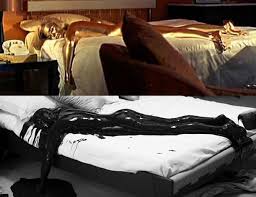
Sexual Potency – An hour into the film, James finally gets to unzip his pants. It’s with MI-6 underling Strawberry Fields (I’m not kidding). In an act of obligatory sexual harassment of company subordinates that’s become the most persistent cliche of the franchise, Bond gets his romp. There is no flirtation or chemistry. It seems purely contractual and you know that Ms. Fields will be dead before the end of the film. (Her naked body in a bed covered in oil, a nod to the famous scene in Goldfinger.) That’s it for the sex. He briefly kisses Camille, but it’s just sad all the way through for James.

Connection – There is one interesting bond in this Bond film, and that’s between James and M. She comes off as the strict mother, even applying face cream while she frets that her boy has gone off the rails. At the end of the film, she says, “Bond, I need you back.” To which he replies, “I never left.” Bond’s need to prove the threat of Quantum seems purely to prove the threat to M.

Toxic Masculinity Scale: 5

Summary

How can you be unhinged without appearing unhinged? QoS Bond is not a man. He’s a killing machine trying to prove a point that, ultimately, he doesn’t care about. But there’s a weird sense of balance in this film. On one side you have NONE-STOP action scenes, including classic Bond boat chases and airplane chases. On the other side, there’s the chunk of the film that is about M holding MI-6 and the entire geo-political order together. The brilliant theme song by Jack White and Alicia Keys hints at the promise of gender parity in the film, but it all goes off the rails amid the chaos. This includes the complete destruction of a hotel, that for some weird reason, is powered by hydrogen fuel cells. 

It should be mentioned there is an attempted rape scene. A woman working for exiled Bolivian General Medrano attacks her on a bed but is then killed by Camille, avenging the rape and murder of her family by the general.

Despite any real plot, Quantum of Solace was a box office smash, sailing on its over the top action sequences. You can literally hear Daniel Craig’s bones break in these scenes. The filming of this Bond coincided with the rise of the opioid painkiller epidemic so QoS doubles as a direct to consumer ad for OxyContin. The absence of Q and Moneypenny is made up for in the presented mythology of the indestructibility of the “good guy.”

Quantun of Solace premiered in London on October 29, 2008 as the American financial crisis, now known as the Great Recession, was just starting to drive Americans from their homes. QoS, Madagascar 2, and Twilight would give people brief escapes while the global economy crashed into a sinkhole. But steely-eyed assassins would not rescue their hope. It would be a man named Barack Obama.

Next: Skyall (2012)

The James Bond Project #23: Casino Royale (2006)

The James Bond Project #22:  Die Another Day (2002)

The James Bond Project #21:  The World Is Not Enough (1999)

The James Bond Project #20:  Tomorrow Never Dies (1997)

The James Bond Project #19: GoldenEye (1995)

The James Bond Project #18: License to Kill (1989)

The James Bond Project #17: The Living Daylights (1987)

The James Bond Project #16: A View to a Kill (1985)

The James Bond Project #15: Never Say Never Again (1983)

The James Bond Project #14: Octopussy (1983)

The James Bond Project #13: For Your Eyes Only (1981)

The James Bond Project #12: Moonraker (1979)

The James Bond Project #11: The Spy Who Loved Me (1977)

The James Bond Project #10: The Man with the Golden Gun (1974)

The James Bond Project #9: Live and Let Die (1973)

The James Bond Project #8: Diamonds are Forever (1971)

The James Bond Project #7: On Her Majesty’s Secret Service (1969)

The James Bond Project #6: You Only Live Twice (1967)

The James Bond Project #5: Casino Royale (1967)

The James Bond Project #4: Thunderball (1965)

The James Bond Project #3: Goldfinger (1964)

The James Bond Project #2: From Russia With Love (1963)

The James Bond Project: #1: Dr. No (1962)

Cooling Off the Hot Air of the Manosphere

April 28, 2025

I’m trying to navigate my newfound celebrity. For whatever algorithmic reason, my Instagram account has exploded. At this writing I have over 62 thousand people following and over 3 million views in the last 30 days. That includes a certain star of Pretty in Pink and The Breakfast Club. I’ve gone viral! My 90-second takes on the state of political crisis are generating a vibrant dialogue from people around the world who are concerned about the fate of American democracy.

And it’s also brought out the trolls.

It’s shouldn’t be surprising that right-wing trolls target my masculinity. They call me “gay,” “beta,” and “cuck.” It’s the same language of the schoolyard bullies who called me “fag” and “pussy.” One troll said, “I bet he can’t even do 20 push ups.” (I immediately got on the floor to make sure that I could.) Somehow they associate caring about democracy with being feminine and they associate being feminine with being weak. These “alpha men” must not know any actual women. And their AI girlfriends don’t count.

I’ve written endless words in this blog about the ginned up “mansophere,” the booming world of performative masculinity that is there for boys and men who can’t navigate the social changes that include seeing girls and women as human beings. These are the fragile fellas that rally for Trump and rail against all things DEI, that think the man should be the king of his castle. They love MMA and rapists like Andrew Tate because they  mourn the loss of the myth of unrestrained male id, to fight and fuck whoever they want. Trump allowed them to escape 4chan and take over Washington. Pete Hegseth is the Incel god.

The fragile troll boys aren’t much of an issue for me. I learned how to deal with them in high school. Redan High had a notorious bully named Ted who one day during lunch, unprompted, said, “Blazak, you’re a pussy.” I shot back, “Well, Ted, I guess you are what you eat, you dick.” I escaped while he tried to figure out what I had just said. These guys are never too smart. They can’t argue policy. They only have ad hominem attacks on how much you’re not like their avatar on Grand Theft Auto V.

Where the danger is in how these “alpha men” treat women and how they vote. The gender gap among the youth is widening. According to a recent NBC poll, only 24% of young women approve of Trump’s performance, but 45% of young men approve of Trump’s shit show. I see this in my college students. There are young men, including men of color, who see the MAGA movement as “preserving” a world where men had status over others. The idea of sharing power cripples them with fear. Trump, the sexual assaulter, with the porn star wife, is their redemption.

So they come after me as a “soy boy libtard.” It would be funny if it wasn’t so sad. Their hollow macho fantasies of fascism will ultimately bite them in the ass. This isn’t their imagined Roman Empire and it was never meant to be. But trying to beat them down only triggers their fight response. We need to learn how to talk to these boys and men to bring them into the family of man and woman. Alpha Men might just need a hug.

The James Bond Project #18: License to Kill (1989)

April 8, 2025

This series is intended to evaluate each product of the James Bond film franchise through a feminist lens, and the relevance of the Bond archetype to shifting ideas of masculinity in the 2020s.

License to Kill (1989, directed by John Glen)

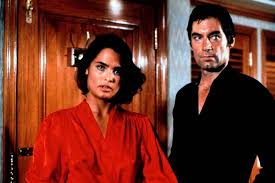
Timothy Dalton’s Dark Bond is back for the second and final time in this revenge film that calls itself a James Bond movie. Maybe Eon Productions thought gangsta rap fans in 1989 wanted a 007 who was closer to Scarface than the guy in Goldfinger. License to Kill sees Bond go rogue from MI-6 as he goes after the guy who kidnapped his friend, CIA agent Felix Leiter, and fed him to a shark (after killing his wife). There’s no time for snarky quips here. James is out for blood.

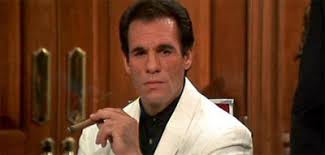
License To Kill brings the action closer to home, primarily Key West, Florida, a bit of Bahamas, and a fictional country called the Republic of Isthmus (that’s actually Mexico). Even M and Moneypenny’s London scene was shot in Mexico to save money. David Hedison, who played Felix Leiter in Live and Let Die, is back in the role 16 years later. Carey Lowell, who went on to fame on TV’s Law & Order, was this installment’s Bond “girl.” The object of Bond’s obsession is drug lord Franz Sanchez, expertly played by Robert Davi, who will always be Jake Fratelli from The Goonies, to me. His sidekick is played by a very young Benicio del Toro. The score was by the brilliant Michael Kamen, who had just done the music for Die Hard.

The last of Bond film of the 1980s was also a fond farewell of sorts. It was the final film produced by Albert “Cubby” Broccoli, who had produced every Eon Bond film since Dr. No in 1962. It was the last Bond directed by John Glen, who had filmed all five 007 films of the eighties. It was the last Bond project of screenwriter Richard Maibaum, whose work goes back to Dr. No. It was also the last film appearance of Robert Brown (M since Octopussy) and the final film of Maurice Binder, who had designed the iconic opening title sequences of every Bond film since 1962.

Even though License to Kill may have been an end of era, there will still plenty of reminders of the staples of the franchise, primarily sharks and Q. Desmond Llewelyn’s Q gets more screen time than in any Bond film to date. Like James, Q goes rogue and arrives in Isthmus to help 007 with his revenge fantasy. Like Batman’s butler Albert, he’s not afraid to be right in the action. And because the action returns to America, we see more African-American actors, including DEA Agent Hawkins (played by Die Hard’s Grand L. Bush) and CIA aid Sharkey (played by pro football player Frank McRae).

The Dark Bond of License to Kill is a bit more unhinged than in The Living Daylights, so let’s do the analysis.

Driver of Action – While LTK is formed around Bond’s revenge plot, he does share the screen. Pam Bouvier (Carey Lowell), his femme fatale is less fem and more fatal. She’s a shotgun toting ex-Army pilot who never plays the damsel in distress. In fact, she saves James more than once. Bond even says, “Yes, sir!” to her at one point because she’s clearly in charge.

Role of ViolenceLicense to Kill takes the title literally. This film is a blood bath. Bond kills at least a dozen people, some in gruesome ways. He throws a renegade DEA agent into a shark tank and watches him get gobbled up by a Great White. He rigs a diving pressure chamber on boat and watches as a drug trafficker explodes inside it, his head inflating like a balloon. In the final act of revenge, he sets Sanchez on fire with the lighter Felix gave him at the wedding. It’s supposed to feel cathartic, but it just feels sadistic.

Vulnerability – We don’t get the “Is Bond in love?” question from the last installment. More like, “Has Bond lost his mind?” as he resigns from MI-6 to go after Sanchez. There is a scene at the wedding where Felix mentions to his bride that Bond was briefly married where we get a glimpse into James’ trauma, but this 007 is hard as nails.

Sexual Potency – Dalton’s Bond is still low key swinging through the AIDS epidemic, but he’s a bit more Id-drivien than The Living Daylights. First of all, there is no scene with 007 and Moneypenny in LTK, so that banter is left on the table. His relationship with Pam is more equal than previous films. (She demands to be called “Ms.” Kennedy, while playing his accomplice). They share there first kiss on a small boat (!) in the Bahamas and the scene fades as the go below deck, implying some seafaring hanky panky. He also has a fling with Sanchez’s girlfriend, Lupe Lamora (played by model Talisa Soto, who went to be Johnny Depp’s love interest in Don Juan DeMarco). Pam’s jealousy about the James-Lupe link is played for laughs, because, you know, he’s James Bond. (When Lupe tells Q, “I love James so much,” Q’s eye roll tells the whole 27-year story.)

Connection – The fact that 007 is attending Felix’s wedding as the best man is a solid implication that these men have formed a tight bond over the many years. And the fact that he throws his career out the window to go after Leiter’s attacker is evidence of his loyalty to his CIA friend (or maybe a reflection of the trauma Bond suffered when Blofeld killed his own wife shortly after their wedding). James’ connection to Pam seems more transactional (unlike his tie to Kara Milovy in the previous film). At the end of the film, he does choose her over Lupe and they end the film, fully clothed, in a pool, kissing (They’ve already checked boat sex off the Bond to-do list), but there is no sense this relationship is going anywhere.

Toxic Masculinity Scale: 5

Summary

While the hyper-violent vengeance theme doesn’t feel very “Bond,” there are plenty of 007 hallmarks here, including underwater battles with frogmen, Bond hanging off of planes, Bond gambling in his tux, and even a completely random attack by ninjas (in Mexico). We even get a nod to Blofeld when an obscured man is holding a cat at Hemingway’s house in Key West. (It’s just M.)  And there is a great theme song by the fabulous Gladys Knight. The stunts are epic with plenty of massive explosions, and a comedic appearance from Wayne Newton as a televangelist fronting for the cocaine traffickers. (You know this was a comment on the PTL scandal that dominated the media in the 1980s.)

Dark Bond pays lip service to the changing gender rolls. When Pam asks why she has to play the roll of James’ “administrative assistant” when the arrive in Isthmus, and not the other way around, James says, “We’re south of the border. It’s a man’s world.” Carey Lowell is certainly a more masculine Bond girl than we’ve seen in the past (still with plunging necklines), but this isn’t exactly a feminist film. And Bond’s sadistic use of violence erases any enlightenment our James may have experienced over the decades.

License to Kill premiered on June 13, 1989, a month after Panamanian President Manuel Noriega staged a coup to retain power in his banana republic. Similarities between Noriega and Robert Davi’s Franz Sanchez, with regard to both physical looks and cocaine connections, were commented on when the film was released. The film generated less income than previous films, perhaps reflecting its divergence from the Eon Productions formula. There was to be a third Dalton Bond film called Property of a Lady, to be released in 1991, but studio contract conflicts got in the way and we would not see a new Bond film, and a new Bond, until the mid-1990s.

Next: GoldenEye (1995)

The James Bond Project #17: The Living Daylights (1987)

The James Bond Project #16: A View to a Kill (1985)

The James Bond Project #15: Never Say Never Again (1983)

The James Bond Project #14: Octopussy (1983)

The James Bond Project #13: For Your Eyes Only (1981)

The James Bond Project #12: Moonraker (1979)

The James Bond Project #11: The Spy Who Loved Me (1977)

The James Bond Project #10: The Man with the Golden Gun (1974)

The James Bond Project #9: Live and Let Die (1973)

The James Bond Project #8: Diamonds are Forever (1971)

The James Bond Project #7: On Her Majesty’s Secret Service (1969)

The James Bond Project #6: You Only Live Twice (1967)

The James Bond Project #5: Casino Royale (1967)

The James Bond Project #4: Thunderball (1965)

The James Bond Project #3: Goldfinger (1964)

The James Bond Project #2: From Russia With Love (1963)

The James Bond Project: #1: Dr. No (1962)

The James Bond Project #10: The Man with the Golden Gun (1974)

February 1, 2025

This series is intended to evaluate each product of the James Bond film franchise through a feminist lens, and the relevance of the Bond archetype to shifting ideas of masculinity in the 2020s.

The Man with the Golden Gun (1974, directed by Guy Hamilton)

This is the first “meh” of the Bond series. Guy Hamilton is back in the director seat, for the last time, and he seems to have run out steam. If Live and Let Die was meant to crib from blaxploitiation films, 1974’s entry is meant to riff on Kung Fu flicks popular at the time. (Bruce Lee’s Enter the Dragon grossed over $400 million in 1973 dollars.) Richard Maibaum turned in a flaccid script then bailed. The Man with the Golden Gun was the last Bond film to be joint produced by Cubby Broccoli and Harry Saltzman for Eon Productions and their falling out would end the “Bond film a year” schedule. That’s probably a good thing.

The good news is TMWTGG gets away from the Bond in America motif of the last two films. We’re back in the “exotic” far east. There’s no army of henchmen, no sharks, not even any Q designed gadgets, but there is (thank God) an underground lair. In the middle of the 70s Energy crisis, there’s a convoluted plot about how a former circus performer with three nipples named Francisco Scaramanga plots to control the solar energy market, as if that is not just called “capitalism.”.  Scaramanga is played wonderfully by Dracula icon Christopher Lee, who had just appeared on the cover of Band on the Run, the new album by Live and Let Die theme-singers Paul McCartney and Wings. The scenery in Hong Kong and Thailand is spectacular (even if the scene in Beirut was shot on a soundstage in London).

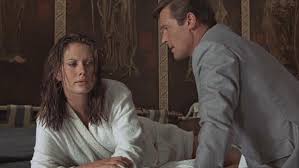
Roger Moore was back in his second 007 installment, already a bit weary. His quips fall flat (except for one at the end) and his mojo is dragging. TMWTGG was meant to be Moore’s entry into the Bond canon after You Only Live Twice. One wonders how 1967 Moore would have treated the role compared to 1974 Moore. As has become cliche, Scaramanga has a reluctant “lover,” played limply by Maud Adams (another Melania Trump clone). And, like the last film, there’s a bumbling but beautiful female MI-6 operative. This time it’s Mary Goodnight (Lord, these names) played by Swedish model/actress Britt Elkland, who was so great in 1971’s gangster classic, Get Carter. The great addition to the cast (and highlight of the film) is Hervé Villechaize as Scaramanga’s pint-sized right hand man, Nick Nack. Villechaize would go on to play Tattoo on TV’s Fantasy Island, cementing the words, “De plane!” into the English lexicon.

The Man with the Golden Gun was not well received upon its release in December 1974, the same week Nelson Rockefeller was sworn in as vice president, after Gerald Ford became president to replace “Tricky” Dick Nixon, who had resigned. A dozen years in, TMWTGG was seen as boilerplate Bond, dropped in for 1974’s chapter for fans of the franchise. There’s a super-70s car chase that ends with one car jumping over a river (with an Evel Knievel reference!) and a car literally flying away and a Swedish sex symbol in a bikini, but not much else to write home about.

Let’s plug it into our analysis.

Driver of Action – Again, this is all Bond all the time. We don’t even get Felix. There is a minor sidekick in Lieutenant Hip, the Hong Kong cop played by Soon-Taik Oh (who was a staple on 70s TV shows like MASH and Charlie’s Angels). In one scene, he and his teen nieces rescue James with some serious (and seriously dumb) Kill Bill Kung Fu action. But yeah, it’s the Live and Let Die formula with much less payoff. Maybe it’s Bond’s polyester suits.

Role of Violence – Surprise, surprise, Bond smacks Maud Adams’ character, Andrea Anders, hard in the face and threatens to do it again. Was Bond striking women in the face required in all 007 scripts? Didn’t someone say something? I mean, Helen Reddy’s “I am Woman” was #1 on radio while they made this. Someone could have said SOMETHING. Bond pulls out his little pistol a lot in this movie but only shoots Scaramanga in the climatic end scene, posing as a wax figure of himself (don’t ask). Bond also takes out a kung fu master, manly man that he is. His violence is balanced by Miss Goodnight, who throws Kra, Scaramanga’s only henchman, into a vat of liquid oxygen.

Vulnerability – Yeah, no. James loses his gun at one point. He seems a little annoyed that Goodnight wants to reconnect. This is Stepford Bond on autopilot.

Sexual Potency – We get glimpses of the Bond of old when James tries to suck a golden bullet out of a belly dancer’s navel and when he encounters a nude woman swimming in a Chinese crime lord’s pool. She introduces herself as Chew Mee, to which Bond replies, “Really?” The main sexual conquest is Bond’s bedding of Scaramanga’s lover, Andrea. In an über creepy scene he sneaks into her hotel room and watches her shower and then man handles her only to learn that (shock) she is a damsel in distress. Later, he’s decided that, why not, he’s going to have sex with Agent Goodnight, but Andrea shows up so he throws Goodnight in the closet and has sex with Andrea Anders instead. It’s pretty messed up.  Bond can’t keep his work life and his sex life separate. He does end up back in bed with Goodnight at the end of the film, but it feels more obligatory than romantic. 

Connection – 007 is even more isolated in this film. Even Moneypenny gets the brush off. Q and James seem annoyed by each other. James knocks a kid who fixes his boat into the river. When Andrea Anders is shot, he’s not phased. There are zero fucks given by this Bond. The film ends, are you ready for it, with Bond and Bond girl Britt Ekland in a boat! (This time it’s a Chinese junk.) James and Agent Goodnight are finally back in bed on a slow boat from China. But, as is now tradition, it’s a false ending. Tick Tack is waiting (for some reason) to kill 007. In an unnecessarily funny scene, there is a Bond vs. little person battle to expedite before James can get Mary back in the sack. When he does, in another moment of coitus interruptus, Q calls and asks to speak to Agent Goodnight. “She’s just coming, sir,” says James. Ah, there’s our man Bond. Then he sets the phone down so Q can listen them making the MI-6 agent with two backs. Really creepy.

Toxic Masculinity Scale: 6

Summary The Man with the Golden Gun does a little bit better on the race issue than Live and Let Die. We do get some cool street-level views of Thai culture, including some great moments of Thai boxing. The contrast of free Hong Kong (with casinos) and Red China is flirted with. But the martial arts bit is weak. There’s no way 007 bests a Kung Fu master so easily, let alone an army of them. We get the comedic return of the racist Sheriff J. W. Pepper (from Live and Let Die), here on vacation in Thailand. (That’s a hard sell.) And a scene where Kra, Scaramanga’s black henchman, gets a little rapey with Goodnight. The hope is that mainstream audiences might have used TMWTGG as a gateway drug into the explosion of brilliant martial arts films that were coming out of Asia in the 1970s.

There are some great moments in this film. Bond flying a seaplane through island outcrops in the China Sea must have looked brilliant on the big screen. The ahead-of-its-time concept about the power of controlling renewable energy sources is noteworthy. Hervé Villechaize is an absolutely brilliant foil and steals every scene. And (recognizing that this might not be the most feminist bit of analysis) Britt Ekland is completely loved by the camera, which, of course, in Bond-land represents the male gaze. But there’s just a lot of silliness here. How did Scaramanga build an underground lair in an outcropping? And why did he include a funhouse, like some Disneyland attraction gone horribly wrong? James is going save his kept woman, but not really. James fancies Agent Goodnight, but not really. There is a car spinning 360 through the air and another flying off into the sunset. It’s like the writers just threw every leftover idea at the wall without the energy to see them through.

Roger Moore’s Bond smokes a ton of cigars in this film (calling Dr. Freud), drives a 1974 AMC Hornet through the streets of Bangkok like a madman, and kills guy who might have prevented global warming. It’s a mess and partly so because Bond is stuck in a tired model of manhood that had already become a caricature.

Next: The Spy Who Loved Me (1977)

The James Bond Project #9: Live and Let Die (1973)

The James Bond Project #8: Diamonds are Forever (1971)

The James Bond Project #7: On Her Majesty’s Secret Service (1969)

The James Bond Project #6: You Only Live Twice (1967)

The James Bond Project #5: Casino Royale (1967)

The James Bond Project #4: Thunderball (1965)

The James Bond Project #3: Goldfinger (1964)
The James Bond Project #2: From Russia With Love (1963)

The James Bond Project: #1: Dr. No (1962)

The James Bond Project #4: Thunderball (1965)

January 8, 2025

This series is intended to evaluate each product of the James Bond film franchise through a feminist lens, and the relevance of the Bond archetype to shifting ideas of masculinity in the 2020s.

Thunderball (1965, directed by Terence Young)

Adjusted for inflation, Thunderball is the largest grossing of all Bond films. And it looked big, being the first Bond flick shot in widescreen Panavision. This was supposed to be the first Bond feature in 1962, but a legal dispute held it up in court. However, original director Terence Young was back at the helm so it had a very “classic Bond” feel. We end up back in the Caribbean (the Bahamas this time) so we see more black faces, including Bond team member Pinder, played by Earl Cameron (who some will remember from Dr. Who). And also sharks. Lots of sharks.

My initial thought watching this film was that all these “Bond Girls” look alike. Same cheek bones, same hair style, same dubbed in voice. Maybe it was just post-holiday malaise, but I found myself repeatedly confused as to which actress Sean Connery’s Bond was making the moves on. By film #4, they were virtually cookie cutter. The primary Bond girl in Thunderball is Domino. Producers originally considered Julie Christie, Raquel Welch, and Faye Dunaway for the part, but settled on beauty queen Claudine Auger (Miss France!). By film four you get the feeling that half the draw of a Bond film is just the cavalcade of beautiful women for James to plow through. However, there is a scene where SPECTRE assassin Fiona Volpe (played by Italian actress Luciana Paluzzi) blows up a car with rockets on her motorcycle and then takes off her helmet to reveal her flowing red hair that is pretty, um, empowering.

Thunderball premiered in Tokyo on December 9, 1965 at a time when the anti-Vietnam War movement was gaining steam in the U.S.. (On November 27, tens of thousands of protestors marched from the LBJ White House to the Washington Monument.) Thunderball skirts Cold War tensions by, again, making SPECTRE the bad guys. This time, #2, Emilio Largo (played by Italian actor Adolfo Celi), is ransoming NATO for £100 million in diamonds after stealing two nuclear bombs (a plot later spoofed in the first Austin Powers movie).

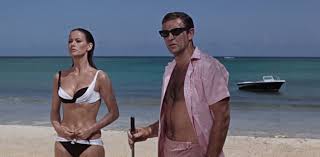
What this Bond film is most famous for is not the women or the evil plot (both a bit tired by 1965), but the extensive underwater filming. A quarter of this film takes place underwater, including shots of cool submersible vehicles and a massive speargun battle between the good guys and the bad guys. It must have been spectacular to see it on the widescreen in the mid-1960s. Apparently, the ocean shooting in Nassau had to be done at low tide because of the constant threat of sharks and the scene where Bond is in a salt water pool full of sharks almost ended with Connery getting chomped. The tropical locale means we get plenty of bikinis and bare-chested Bond as well as boats exploding (now a Bond film staple).

Let’s plug Thunderball into our feminist matrix.

Driver of Action – For the first time, we almost get Bond as a part of a team. Presumably assembled by MI-6, we get an on-the-ground team in Nassau put together to help James avert nuclear catastrophe, including familiar faces like CIA bro Felix Leiter (this time played by Rik Van Nutter) and MI-6 gadget guy Q, who, in Bermuda shorts, laments having to meet 007 “in the field.” He’s also joined by Pinder, another unnamed Afro-Caribbean dude, and CIA agent Paula Caplan, played by Martine Beswick (back from her role as “Gypsy Girl #2” in From Russia with Love). It’s mainly Felix who bales James out (in his handy CIA helicopter), but it should be noted that Paula is kidnapped by SPECTRE and commits suicide rather than rat on James. She’s the DDID. (Dead Damsel in Distress.) But it’s still Bond in the driver seat, whether he’s dodging sharks or ordering Beluga caviar.

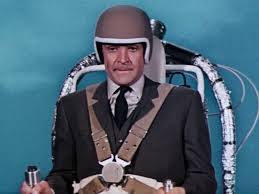
Role of ViolenceThunderball opens with Bond killing SPECTRE assassin Jacques Bouvar (who is dressed as a woman, so there’s that) and then escaping with a supercool (for 1965) jetpack. There’s a few henchmen (dressed in black, like an episode of Batman, which debuted the following year) that Bond kills, although they may just be stunned. Some henchmen throw another henchman into a pool of sharks. And whole bunch of frogmen, good, bad, and otherwise, get shot by spearguns in the Caribbean, some likely by 007. Other than the epic underwater battle, the body count is not giant and those scuba dudes who are killed are probably then eaten by sharks, so, the circle of life.

Vulnerability – It’s 007, so audiences don’t expect an inner window into Bond’s heart and it seems even more walled up than ever. He’s less dependent on technology than in Goldfinger, but James swallowing a radioactive pill so the CIA can track him seems like some kind of weird acknowledgement that maybe James can’t do everything by himself. There’s also a moment where James is trying to rescue Paula from Largo’s compound and he accidentally drops his gun off the roof he’s on. The look on his face seems to say, “Uh oh. My dick just fell off.”

Sexual Potency – Here’s where Thunderball goes off the rails. The first part of the movie, Bond is camped out at an English health spa called Shrublands, where he continually sexually harasses a masseuse (physiotherapist?) named Patricia (played by Molly Peters, featured in Playboy’s 1965 “James Bond’s Girls” spread). He forcefully kisses her and then when she thinks Bond’s bad experience on a, more Medieval than medicinal, stretching rack is her fault (it was a henchman) she frets that if her boss finds out, she could lose her spa job. “My silence could have a price,” James says then pulls her away for some quid pro quo sex. In the end, they’re in bed, with Bond doing the massaging.

Then there’s James’ relationship with SPECTRE agent Volpe. Her red hair is a classic signifier of a libidinous woman and when Bond walks uninvited into her bathroom to find her naked in her bathtub, he smirks with the recognition that he’s about to get another notch in his belt, “as if it was intended.” Because she’s a wicked redhead, she takes off Bond’s clothes and they end up in the sack where he tells her, “you should be locked up in a cage.” Rawr. Post coitus, she (and her henchmen) turn the tables on Bond, who seems shocked that he got caught with his pants down. In a moment for the Bond Girl demographic, she says, “But of course, I forgot your ego, Mr. Bond. James Bond, who only has to make love to a woman and she starts to hear heavenly choirs singing. She repents, and immediately returns to the side of right and virtue. But not this one.” Snap.

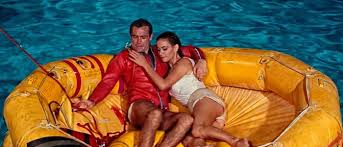
The final scenes are about rescuing Miss France/Domino from bad guy Largo. Bond sucks sea urchin poison from her foot and then they make love on the beach. When 007 says he needs her help catching Largo, she dejectedly says, “Of course. That’s why you make love to me.” Sex as transactional in Bond films. And also now cemented as a cliche, the film ends with Bond and Domino in a boat, this time a rescue raft floating in the Caribbean.

ConnectionThunderball begins and ends with Bond alone, acting or celebrating (with his prize) his actions. We do get to see a section of the Bond working with a team, but it’s sort of like Superman and his super-friends. Bond is in the lead. Again, as by Film 4, Bond is now the archetype of the man alone. He mocks love (including with Moneypenny), but he never actually has it. I wonder if writers ever considered developing a bromance between James and Felix. Maybe, at some point in this chronology, we’ll meet a James Bond who cares about somebody.

Toxic Masculinity Scale: 8

Summary By 1965, James Bond had officially become a franchise, produced by men to maximize 007 revenue. In the opening credits, the only females listed are “continuity girl” and “wardrobe mistress.” The fledgeling second wave feminist movement hadn’t yet turned its attention to Hollywood and the impact of this picture of gender. The normalization of sexual harassment in the 1960s (here, Bond’s treatment of spa worker Patricia) would later be unpacked by the brilliant AMC series Mad Men (2007 – 2015). But Bond is such a cad in Thunderball it makes watching his witty banter with the other characters in the film a lot less fun to watch. 

We do get tastes of gender subversions. There’s Volpe (Italian for “fox”) blowing stuff up, motorcycle between her legs, and later removing 007’s clothes and then sexually besting him. (“But not this one.”) Again, we get a female hotel concierge ogling Bond’s backside and Paula, the female CIA agent (who dies because, you know, lady CIA agents). But it all stands in the shadow of Bond’s hyper-masculinity. He even tries to feminize Largo by saying of his skeet shooting rifle, “That gun looks more fitting for a woman.” Huh?

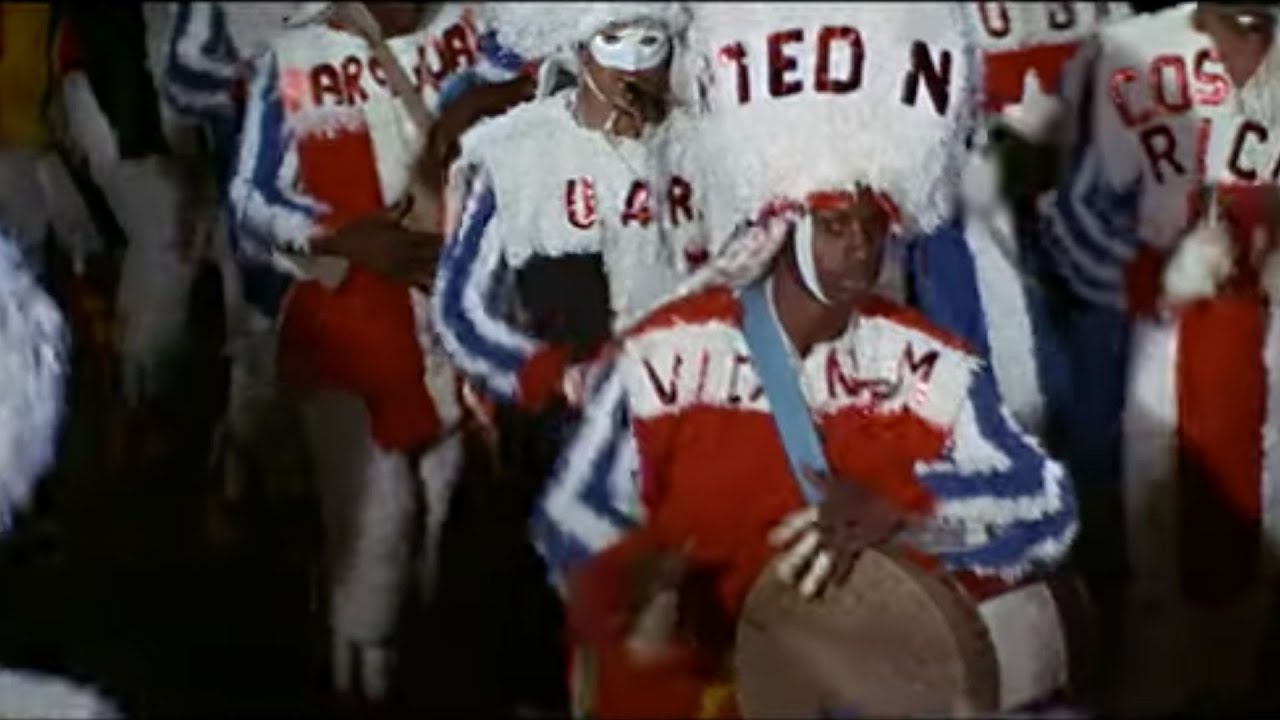
On a personal note, I appreciated the return to the Caribbean, especially Nassau where I experienced a particular “man making” experience as a 17-year-old boy. I loved the scenes shot during Junkanoo; Carnival in the Bahamas. It caught a glimpse of the decolonization that was happening in the black world in the 1960s and while there was no dreadlock rasta in Thunderball, behind the highly paid white actors in the camera’s focus there were a bunch of black faces who knew the world was changing. Those are the Bahamians I met when I was there as a teenager in the 1980s.

Next: Casino Royale (1967)

The James Bond Project #3: Goldfinger (1964)

The James Bond Project #2: From Russia With Love (1963)

The James Bond Project: #1: Dr. No (1962)

Watching Coach Walz and the Painfully Fragile Masculinity of MAGA

“Where did my friends go?” Wives as Unpaid Therapists

September 14, 2022

Masculinity is a truly fragile thing. In our youth, we are hit over the head with the message pushing male bonding. No girls allowed in the treehouse. There are plenty of negatives associated associated with that, including that it devalues all things female and blocks girls and women out of the avenues of power (“Bros before hos!”), but there is an unintended benefit to all the bro-time.

Men aren’t supposed to talk about their feelings and that’s what gets us into trouble. “When boys cry, they cry bullets,” I remember a child psychologist saying on The Oprah Winfrey Show after the 1999 Columbine shooting. But when we do manage to share a bit of vulnerability, it tends to be with our bros, maybe after a few beers or a lost match. We learn that we can lean on our male friends without being called a “cry baby” because they are looking for the same thing. Then after opening up, we have to “cowboy up” and revert to the same stoic bullshit.

So what happens when we get married?

The story goes that marriage means leaving our male friends behind on the playground, soccer pitch, or tavern. Male friends celebrate the interest of a single man and now he must trade his dudes in for a woman. John Lennon had to leave the Beatles for Yoko and her screaming. And now the wife is the “best friend.” On one feminist level, that makes a lot of sense if the man is leaving the toxic grab-ass world of Bro Culture to finally see at least one woman as an equal partner, but on another feminist level what does this really do for the wife?

This is exactly what happened in my marriage.

And soon as Andi and I connected and certainly after we got married and became parents, I shed my wonderful posse of friends, most of them men. No more going out to shows together, planning weekends at festivals, or just hanging out after work. She became “my world.” That can seem very romantic and much of it seems like a wonderful dream, but I never once saw the burden I was laying on her by making her “my person.”

She suddenly was cast into numerous roles, from my therapist to my financial (and fashion) advisor, all of which were unpaid. I relied on her opinion and no-one else. In co-dependent relationship, we often give people power they don’t actually want. You can put me in charge of the criminal investigation of Donald Trump, and while that might sound awesome, I don’t actually want that power. And it is a power thing because it’s not equally shared. If I played the exact same roles for her, it wouldn’t be an issue. I didn’t expect her to do the laundry but I did expect her to “fix” me.

I would often be confused by her response to me saying things like, “You saved me.” I considered it a compliment. But it wasn’t her job to save me. And who was supposed to save her if she was spending her time on the project that was her husband? She couldn’t save herself because she was supposed to be saving me. All this saving. It didn’t occur to me to just save my goddamn self. After all, I had her to do that.

It’s not surprising that my wife began to quietly resent me. My broad social circle shrunk down to just her and it must have been suffocating. She was my “rock,” which meant I relied on her for everything, without really returning the favor. Where, previously, I might complain about work with my friends over a beer, it was now on her shoulders. The encouragement to make it through the matrix of life now only came from her (and phone calls with my other female/therapist, my mother). Where was the reciprocity?

One of the wonderful things this separation has given us is the space to save ourselves. Watching her evolution this past year, free of my emotional burdening (and constant need of her approval) has been wondrous. I now have an amazing therapist who I pay to do the emotional servicing I expected from Andi. And I’m rebuilding my friendships with peers. I live in a city with countless coffeeshops and bars. There are plenty of places to share some bonhomie with my dudes.

The division of labor makes sense. Brothers, don’t expect your wife or girlfriend to be your “everything.” It’s not fair to them. You are not their project. Learn from my mistakes, save yourself. And get a good therapist.

Cancelling White Fragility: Can Progressives Get an Assist from Madison Avenue?

May 13, 2021

You gotta admit, “Make America Great Again” was a brilliant slogan. Besides doubling as a handy acronym (MAGA!), it was a “politically correct” way of masking the deep racism of Trump supporters who wanted to make America Jim Crow America again. Since Trump left office, Trump supporters in 47 states have introduced or passed voter suppression laws. (Shout out to my ass backwards home state, Georgia!) MAGA fit on hats, t-shirts, and hashtags and immediately conveyed where the supporter stood on transgender bathrooms, racial equity, and the 2020 election. Who came up with this perfect (if fascistic) slogan?

Speaking of “political correctness,” there’s a perfect example of how the left has a language problem. All political correctness is is an attempt to be mindful of the way words and practices marginalize and hurt people in our community. If African-Americans what to be referred to as people of color instead of “colored people,” show them the basic respect of doing it without whining. Those folks have been through some shit! But truth be told, nobody wants to be “corrected.” Ugh. And bothered about getting the he/she thing wrong? A recent study found that nearly 42% of non-binary and transgender youth attempted suicide. By just using a person’s preferred pronoun, you might save a life. Suck it up, snowflake! But there is a cottage industry dedicated to bitching about political correctness as if it was some grand conspiracy to suppress your first amendment right to be an asshole. Your constitutional right to be an asshole remains sacred and defended by both the Supreme Court and the liberal ACLU.

The progressive movement is full of terms, phrases, and slogans that get at the depth of inequity in our society and are intended to start conversations and affect change to transform America into a nation where there truly is liberty and justice for all. But these turns of phrase also trigger right wing trolls and news networks. Over 4 million people watch white supremacist Tucker Carlson each night. If something bothers him, it becomes an instant internet meme spread far and wide by the “proud” boys that want to make America 1950 again. Some of these slogans (and the responses by people who don’t take the time to understand them) include:

Black Lives Matter (“All lives matter!” – Or as my father tried to tell me, “Black Lives Matter means white lives don’t matter.” And yes, he’s a Trumpie.)

Defund the Police (“These anarchists just want criminals to run free!”)

Toxic Masculinity (“Masculinity built this nation!”)

Implicit Bias (“Don’t tell me I’m biased, I have a black cousin!”)

White Privilege (“I’m not privileged. I lived in a car!”)

Micro-aggression (“It’s MICRO! Get over it, libtard! Jeez, you can’t even make a joke anymore.)

And let’s not forget Hillary Clinton’s 2016 “basket of deplorables” line that became adopted by the not-too-bright Trump base as a badge of honor. If Clinton had tried to be less cutesy and just said, “You could put half of Trump’s supporters into what I call the cesspool of bigots,” you probably wouldn’t have seen an army of white people with “I’m a bigot!” T-shirts at Trump rallies. (Wait, I may have to rethink that.)

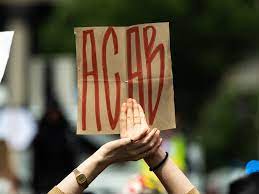
Sometimes the left’s slogans seem as if they were penned by right-wing agent provocateurs. Case in point, ACAB – “All Cops Are Bastards.” Now I understand that provocative slogan is meant to highlight the tendency in the policing world to prevent officers from addressing the systemic racism that has left countless George Floyd’s dead in the streets. (Police unions, I’m looking at you.) But I personally know many police officers, including BIPOC police officers, who desperately want to infuse policing with social justice values. Let’s not forget that several police officers testified for the prosecution in the trial of George Floyd’s uniformed killer. Are all black cops bastards? Are are all women cops bastards? The average woman who sees a cop carting off the man who assaulted her probably doesn’t spray paint ACAB on local businesses.

Anecdote: In 1987, my roommate and I called 911 in Atlanta. Yuppie ninjas had kicked in our apartment door and we’re going to attack us with num-chucks. Our call the the police scared them off but I had to turn off the music we were blasting before the cops arrived; NWA’s “Fuck the Police.” True story.

Perhaps the best example of this is the term, white fragility, which derives from Robin DiAngleo’s 2018 book, White Fragility: Why It’s So Hard for White People to Talk About Racism. The book is simply about the defensiveness that white people express when you alert them to the reality of racism. They say silly things, like “I was raised to be colorblind” (You weren’t) and “I can’t be racist, I voted for Obama! (You can). The innovative text is required reading in my Diversity class and has sparked insightful discussions among both white and non-white students. It was a best seller among people who read books and rose back to the top of the charts during the churning summer of 2020.

However, bring up the concept of white fragility to white people who haven’t read the book or have no interest in reading any book about racism, and you get a lot of, well, fragility. For easy reference, watch the June 2020 interview DiAngelo did with Jimmy Fallon on The Tonight Show. A seemingly interested Fallon allows DiAngelo to explain that all she is trying to do is ask white people to act with humility and grace and address their own internalized white supremacy. The YouTube video’s 27,000 downvotes sets up the 14,000 comments by fragile white people, accusing DiAngleo of racism herself. “The left: Let’s solve racism with more racism” (John Spinelli) “If ‘self-hatred’ was a person, it’d be Robin DiAngelo” (Jack) “This is what happens when you make a career out of gaslighting.” (SWJobson) Each comment perfectly proves DiAngelo’s central thesis about white fragility. Since “fragility” is feminized in our culture, there’s a macho pushback against it. The term “fragility” literally causes men to become fragile.

The “anti-woke” crowd is pretty good with staying on point. From “Drain the swamp!” to “Stop the steal,” it feels like the right has a high-power Madison Avenue team coining their slogans. What if the left had their own progressive Don Draper, instead of the Antifa Darren Stevens is who pens confrontational taglines on cardboard signs? (How about MCAB? Many Cops Are Bastards! Or what about BLMT? Black Lives Matter, Too!) I mean, whatever intern came up with “Stop Asian Hate” should be run out of the slogan business. “What have you got on your resume? Stop Asian hate. So just who do Asians hate and why should they stop? Come back kid when you’ve got something that makes sense.”

I generally loathe advertising, but we’re in a rut here. It’s time to rebrand white fragility. Maybe “I’m Not A Racist Freak Out Syndrome.” Or how about, “I’m Not A Racist But Those People Scare Me Dysphoria.” I don’t know. I’m a sociologist, not a marketing director. We got close to it with “Pro Choice,” but they beat our pants off with “Pro Life.” There’s gotta be better verbiage that doesn’t drive every Karen and Tucker into a “That’s reverse racism!!” spasm-fest.

The reality is these issues are more complex than a handy slogan could capture. They are nuanced and contextual and all the things that scare superficial thinkers that still think “pro-black” means “anti-white.” In my trainings, we get into the weeds, but it takes me an hour just to define the terms. You can’t get all the bullet points of my training on internalized white supremacy on a street banner let alone a bumpersticker.

So let’s pass the beanie and take up a collection to hire a radical marketing genius to help make America not horrible again.

If you’d like to continue this conversation, you can find me here: www.randyblazak.com

At which mass shooting will your loved ones be killed?

November 8, 2018

Cozy and I were at the zoo this week and she was really excited to see the fruit bats. To get to the Oregon Zoo’s bat cave we had to pass the giraffe enclosure. She was so focused on the bats she could have cared less about the giant giraffes. “But Cozy, there are two huge giraffes right there! Let’s stop and look at them.”  She looked back at me, like “meh. I’ve seen those giraffes before.”

Her blasé attitude about giraffes is how America feels about mass shootings. So what?

42-45809786

When I went to school in the UK in 1980s, people would often be amazed that, as an American, I didn’t live in constant fear of being killed by a mad gunman. “Aren’t you terrified you’ll be in a McDonalds and some guy will walk in and just start shooting?” This is the world’s picture of the United States. It’s a shoot out at OK Corral every day as boys and men unload their sacred weapons into soft targets at schools, synagogues, and college bars. “Meh,” we say, as the bodies stack up. Some of the victims of last night’s shooting in Thousand Oaks were also at last year’s shooting on the Las Vegas strip. How many mass shootings will you survive? Or not?

It’s more than disgusting that this is the hallmark of American culture. We are a nation of boys and men who see homicidal violence as an appropriate way of expressing pain and anger. Most of these boys and men are suicidal so the “good guy with a gun” myth only fits into their plan. Another day, another mass shooting in America. I have written about this too many times and the need to focus on the masculinity-gun violence connection. There will be so many more shootings, so many more grieving family members on TV. And then the next shooting will happen. This is America.

Simmel_01

Pioneering sociologist Georg Simmel (1858-1918) foresaw the “Meh Effect” in his 1903 essay, The Metropolis and Mental Life. He wrote of a relatively new phenomenon he called the blasé attitude. Life in the city had so much stimuli that we become overwhelmed and just tune everything out as sort of a coping mechanism. I remember the first time I saw a homeless person laying on a sidewalk, I jumped out of friend’s car to help. I thought they were having a medical emergency. My friend grabbed me and told me, “That’s just a homeless person. You see it all the time in the city.” Meh.

Nothing is shocking anymore. We see so much carnage from random gun violence in this country, it’s barely worth looking up from our phones. It must be how kids in Aleppo respond when they hear another bomb drop on their neighborhood. We are immune. Until it happens to us. Until the deep trauma has dropped on our doorstep.

44113547_10157784721969307_7688383143677526016_n

Because I do this work, I pay attention to the exit signs. Especially when I am out with my kid. When Cozy and I were wandering around Times Square last month, I made mental notes about where to go if a bomb went off or some guy just opened fire on the crowds. I did not, however, make a plan of how to respond if my daughter had been killed and perhaps I should.

The good news is violent crime in America has been dropping since 1993. The bad news is boys and men who shoot innocent people in orgies of violence has not. You are not safe anywhere. Not the movie theater. Not the mall. Not a yoga class. Not a church. Not a kindergarten class. So you better prepare yourself. If you are not willing to work to change the culture of boys and men who do this, you better be ready for when they do and kill someone you love.

shooting-calif10-ap-ml-181108_hpMain_16x9_1600

Guest Essay: The Status of Women

May 31, 2018

I like to occasionally feature the work of the only actual award-winning writer in the house, my wife, Andrea. She really pulls the #metoo moment together in this essay.

The Status of Women

by Andrea Barrios

Guest Essay

To paraphrase what Walidah Imarisha stated in her Martin Luther King, Jr. speech: wouldn’t it be nice to live in a world without the triple evils: militarism, materialism and poverty? Without the militarism that has placed neighbor against neighbor in Myanmar, sparking the Rohingya refugee crisis, or the genocide the military carried out under the government’s veil in Guatemala. Wouldn’t it be nice to live in a world where instead of valuing the vain interactions of our online personas trying to out-buy ourselves into acceptance and determine our self-worth measured by likes and followers, we valued more meaningful human connections? A world without the racism that puts up walls between human beings that would otherwise discover they have so much more in common than different. The kind of racism that makes some proclaim that “all lives matter” while they sit idle as young African Americans are shot or suffocated to death and immigrant families are torn apart. Indeed, it would be nice, and even finer if you could live in that world as a man. In a perfect world, men and women’s idea of a perfect world would be the same, but in reality, women have an additional set of visions of what makes a perfect world, and their world does not include sexism and misogyny. In the words of the man with the dream himself, Martin Luther King, Jr. once said, “faith is taking the first step even when you can’t see the whole staircase.” Like Imarisha mentions, women might have never seen a world imagined without sexism and misogyny, but lucky for the world, we’ve been taking that first step all along, and will continue to climb our way out of the fiction.

I, like many other women, imagine what our daily lives would be like if those specific evils that haunt us women were to suddenly evaporate. I wonder what it would be like to live in a world where I don’t have to worry about the simple act of walking to and from class without having to clench my pepper spray in my hand, a world where I felt completely free to just walk. I wonder what it would be like to be treated with respect regardless of how I look and how my hair decides to lay that day. A world where my decisions and expressions aren’t attributed to my being a woman or my anatomy. A world where I am not infantilized in the workplace or in the classroom, after all, I’ve stored my girlhood in exchange for womanhood. This world I speak of is nothing like the world I live in, so I have learned clench my fist as I walk, I speak my mind regardless of my bad hair, and although I cannot see the top, I take the steps.

As I take the steps, the freedom I do possess seems to anger my male peers. The way I walk is too confident for their liking. The way my unyielding silence rubs against their unwelcomed compliments is taken as insult. How dare I not say thank you for being acknowledged? Who do I think I am to take up space, to sway my arms without a care. Although I’ve been taught to, I no longer want to hold myself together and shrink into myself. I am the product of all the steps taken by women who came before me. Although the women in my own family have never walked across the stage at graduation, I am here because I am just as worthy of this education, and I am just as worthy of being listened to and learned from.

It is true that we cannot build that which we cannot imagine. The artist sketches out his creation before ever laying a brushstroke on canvas. The writer’s mind collects inspirations and absorbs ideas from everyday life. We cannot build without imagining, but often, the limits of what we can imagine were often not set by us. As a woman, I have come face to face with the limits set by society time and time again. You can be a leader, but be careful not to be pushy or bossy. You can be confident, but not so much that a man might feel threatened by you. As women, we bump into those limits so often that sometimes they run so deep we start to internalize and even embrace them. There are those chains that others impose on you, and those we impose on ourselves. You might ask, but why would someone who knows they are chained not just set themselves free? The truth of the matter is that women don’t hold all the keys, or if we do, they are just a tad out of reach and stretching our arms to reach them, would mean starting a fight with a system that has very defined roles for women.

There are many women taking these blind and hopeful steps. Countless women at all levels creating a path for themselves and others towards equality. The road to equality should not be a solitary journey, although it may feel like that sometimes. In order to create real change and live a closer life to the world we all imagine, we also need men’s help. We need men who are willing to offer a hand as they pull us closer to equality. We need men who will not let other men’s shortfalls become a regular event, especially when they affect girls and women directly. We need men who are willing to defend women’s rights just as much as they defend and guard their masculinity. The only way to move from symbolic solidarity to actual change is to get in motion and to act out and defend women’s rights through action, through community, through art. Action means using any means or talent one possesses and helping women carve out the path to their better world.

unnamed-1

The recent events taking place in our society are lingering echoes of the change that is to come. The echoes of women sharing their #metoo stories, of women and men proclaiming that #timeisup and #neveragain. Women and men are both visualizing a world where women are equal and men are set free from the chains of toxic masculinity. The real world will push back on those ideals, because its shape is so set in stone that it takes grinding and chisels to change it little by little. Step by step. For those of us who never shared our #metoo story, for those of us who are mothers and students, for those of us who are just finding our voice, know that there are steps that have already been taken for all of us, but plenty of space for growth and representation for those men and women that are ready and willing to climb.