Message in a Bottle: Watching the Wheels Turns One!

November 24, 2015

Screen Shot 2015-11-23 at 11.34.18 PM

This blog turns a year old today. It is officially a toddler. It’s definitely developed an attitude and occasionally runs away from me, leaving a trail of destruction. Since I started this little experiment, articles have been accessed over 280,000 times from nearly every country on earth. (I don’t know what’s the problem with Chad and Turkmenistan.) It’s been an opportunity to talk about things as micro as gender socialization of our daughter and as macro as immigration and refugee issues. I’ve tried to keep the theme of feminism in the forefront as it’s the paradigm that best helps me make sense of the world.
1 year

A year ago Andrea was starting her job at Planned Parenthood, I was on parental leave from Portland State and Cozy was just a cooing infant. That first blog post was about channeling John Lennon to embrace being a stay-at-home dad. Now Andrea is working at an amazing law firm in downtown Portland, I’m on permanent leave from PSU and Cozy is throwing all sorts of shade about not eating her chicken dinner. In that year we’ve taken Cozy to Canada, Mexico, Los Angeles, and Atlanta.

51N1BL6+zsL._SX326_BO1,204,203,200_

For the last year I have been writing like my life depended on it. We fully funded The Dream Police book and I’m wrapping up the seventh of nine chapters. My short story, “Elvis is My Rider,” was published in a great collection called A Matter of Words, and I try to get at least one blog post out a week, linking the big bad world to the tiny act of raising a baby girl.

Writing almost makes up for not teaching. It’s an inward act instead of an outward one, but it’s still about connecting the dots so you can connect people to each other.  The writer who is turning my first novel, The Mission of the Sacred Heart, into a screenplay, Elizabeth Carlton Chase, suggested that I try my own hand at screenwriting and that I enter the Short Screenplay Challenge that she won in 2006. I thought, “More writing! Let’s go!” The challenge is a series of five page screenplays. They give you the genre, the setting and a prop. Oh, and 48 hours to finish.

I didn’t even know where to start. I had to Google what a page of screenplay looked like. My first round assignment was a drama on a toxic river with a doll. I wrote a little play called “Letting Go,” about a couple in southern Georgia who live downstream from a paper mill and lose their daughter to leukemia. It was an exhilarating experience. If it wins its heat, I go on to the next round in December. Winning it all gets your foot in the door in a big way.

All this writing keeps me grounded but it’s also a lifeline out of this mess. Like messages in bottles, I throw each page out into the world and hope something reaches somebody who says, “This is really good. Let’s give this guy some money so he can write more.” Like a musician sending dozens of demos out into the universe in hopes one lands in the ears of a major label A&R person having a good day, I write my lottery tickets. Then the story can be told of how the big break came from a funny blog post or a convincing Amazon review.

530994_10150882268129307_121486302_n

When Mission first came out, I went down to LA to push it everywhere I could think of. I snuck copies on to the New Release shelf at Book Soup in West Hollywood and left a copy in the men’s room of the Directors Guild of America office on Sunset with the inscription, “This book will change your life.” It seemed like it would make a good story. I could hear Wes Anderson on Jimmy Kimmel saying, “There was just no good material out there and then I found this book about Portland in the bathroom of the Urth Caffé on Melrose…” And there’s Cozy strolling down the red carpet. A boy can dream, right?

I know my stuff is good on some level. I’m certainly no David Foster Wallace, but I’m also not overly tortured to the point of suicide. Having an author that you connect with can be such a rush. Every positive reader review I’ve had has been a dream realized. I want to do what my favorites did for me. My favorite writer is Milan Kundera (The Unbearable Lightness of Being) and the fact that we both have books for sale at Powell’s is really enough. I’m just happy that there are still plenty of people who want to read something longer than a tweet and some of them seem to really like reading my musings. It’s an honor really, that anyone would spend any of their time with something that started out for me as a blank page. (If you’ve read this far, snap your fingers two times.)

So a year after this blog started (and went completely viral with the help of a full blown fascist named Donald John Trump), I’m still writing away. After The Dream Police is done, it’s time for a non-fiction book about feminist fatherhood. I don’t have a title yet, maybe Sit Down and Pee, but I’m doing a lot of research. I write because I have to and if someone wants to give me some money at some point, I promise I won’t lose my hunger.
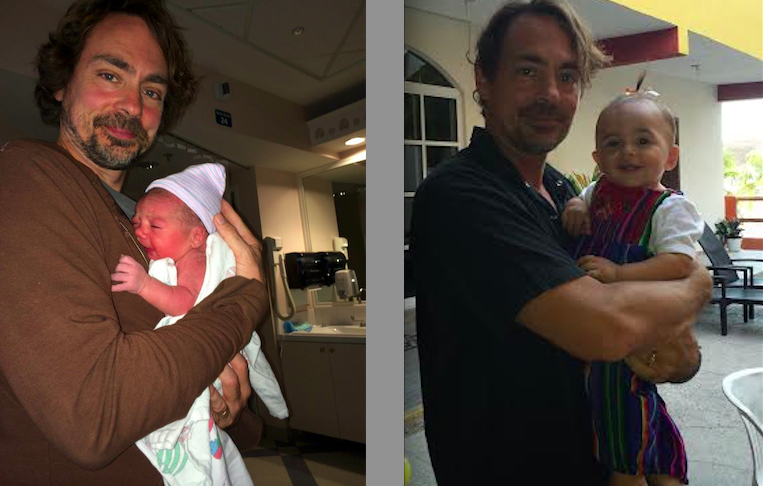
¡Cozy turns uno! Happy first birthday to our daughter!

Aug. 17, 2015

1 year cozt

It should be hard to imagine where we were a year ago, but the whole experience is frozen in amber. Our unborn daughter was ten days past her due date. Andrea had tried everything, from acupuncture to a hike up Mt. Tabor (aka Mt. Labor), but Cozy was on her own time table. When the labor started, it was no quick ride to parenthood.
The midwives came to our house and urged patience. Andrea’s mother was here from Mexico helping to hold her hand. When we did head into Alma birth center, it was just more labor, and day turned into night.  About 5 a.m. I drove to the house to get Andrea’s mother for support. On the way I saw a coyote in Irvington and took it as a sign that something magical was going to happen.

Mom!

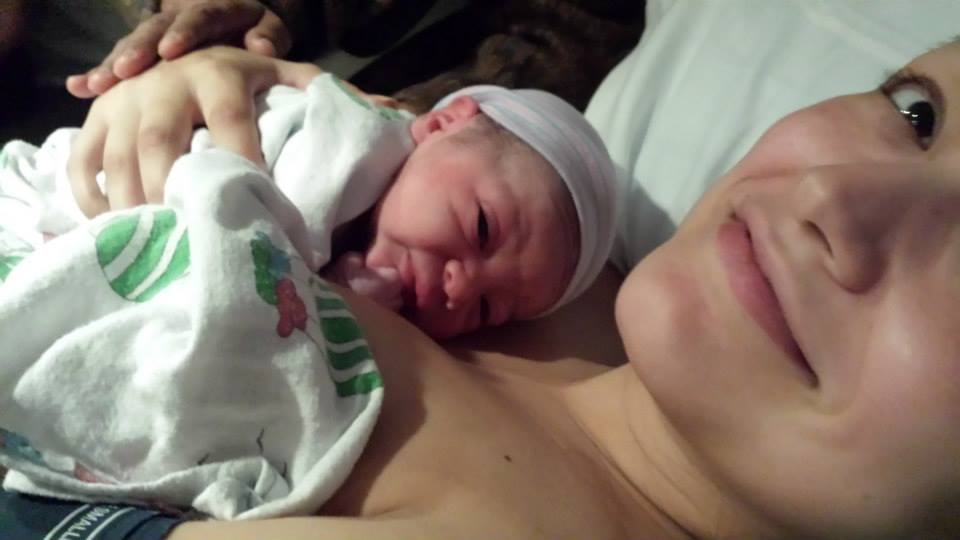
By the next morning it was clear that Cozy didn’t want to leave her cozy apartment and the midwife told us to head to the hospital. A frantic car ride to St. Vincent’s (with Andrea screaming that she was going to jump out of the car on to the Sunset Highway) and a security guard waiting with a wheel chair (who thought he was in an action movie) and then, finally, an hour of pushing. Thanks to the handy encouragement of Dr. Girolami and a herculean effort by my wife, Cozy made her magical appearance at 9:25 pm and the world suddenly became a better place.
Smile

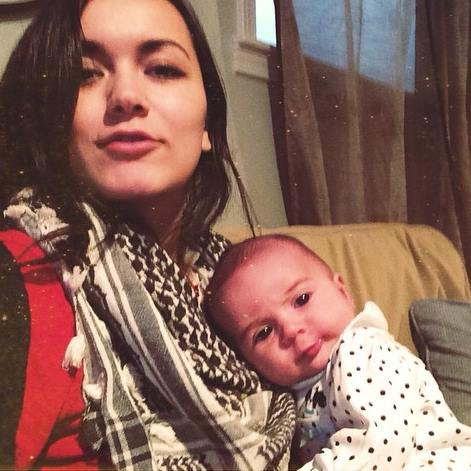
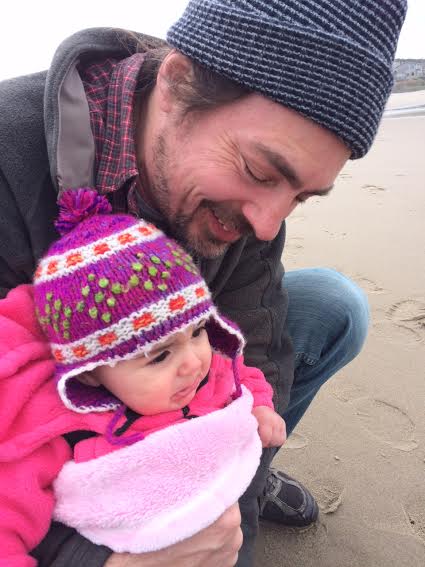
In the year that’s followed, it’s been a breathtaking journey watching that 8 lb. 6 oz. butter bean turn into a person full of personality and light. Anyone that knows Cozy knows that she is a charmer. Besides the smile that outshines the Batsignal, when she crawls into a room, she owns it. When she was very little, I would take her shopping with me at Fred Meyer and people would fall over themselves, asking about her, and Miss Cozette Valentia would work it for all it was worth. Now when we take her out to eat she has the whole restaurant eating out of the palm of her little hand. When we go to the Mango Cafe, here on the isla, we don’t need a high chair because the waitress and the owner just cary her around while we eat. That’s Cozy.

McCartney

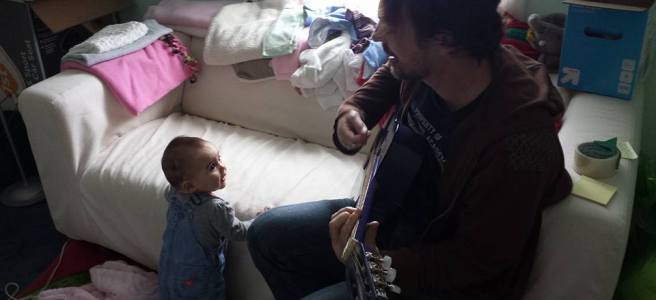
I know all parents project greatness on to their children at the start, but I really have to believe Cozy is going to be a mover and shaker. She’s got such a charismatic personality. Of course so did Hitler. But I think she already loves bringing joy so I’m not worried she’ll use that power for evil.  We were lucky in that she was born healthy and has thrived every day. Andrea is such a thoughtful mother, staunch advocate of breast feeding and brain stimulation. And of course, I sing the best songs and can be a good pillow for a nap. How can she not turn out great?

pinata

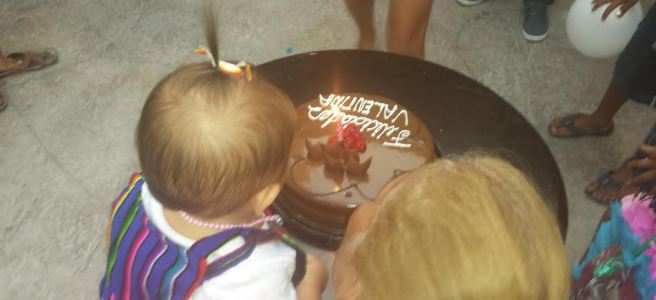
For Cozy’s first birthday, we threw a fiesta here on Isla Mujeres. Andrea’s mom made chicken molé and her sister dressed her in a funky party outfit. We had tried to find a Donald Trump piñata but a Frozen one was perfect. My students were there and so were a bunch of the kids from our neighborhood, La Lomita. (Andrea put the word out that there would be a piñata full of candy to smash and they came running.) The folks from our hotel, Hotel Paraiso, helped out and Cozy got the first swing. Cake and singing and our little girl smiling her face off.

Bimbo

So much to be proud of. 365 days and I didn’t drop her once. (So glad it wasn’t a leap year.) Probably 10,000 diapers changed. Moving her from the bed to the crib (and then back to the bed). First steps and swims in the ocean. Some amazing baby sitters to give mom and dad an occasional night out or short road trip. When Cozy was three months old we drove with her all the way to Los Angeles, so between that, the trip to Vancouver, BC to see U2 and summer here in Mexico, I think we’ve raised a traveler.

After a year of being a parent the big thing you learn is how much your heart can grow. I had no idea. I mean besides the endless worry, just the immense obsession I have with this child. And it’s extended to my wife as well. I love her more each day in ways I could never have imagined before. What’s happening to my brain? I just think about these two ladies constantly. They are my priority. I’ve forgotten to keep up with pop culture and music trends. I don’t even know what bands are on tour! Isn’t there something about El Niño destroying the earth this year? I don’t know. But ask me about la niña…

coolmom

We’ve created this bubble that’s called a family. Inside it there is a safe glow that all the drama from the outside cannot diminish. Cozy is strong like her mother and silly like me. She has brought deep happiness and focus to my corner of reality that I would have laughed at thirty years ago. If you would have talked to 21-year-old Randy, sitting on his Vespa outside the 688 Club that someday a baby would arrive to give him a whole new way of thinking about the world he would have probably thought you were in a cult. And then recited some lyric from a Minutemen song. (“God bows to math…”) Little did I know what was coming.

I’m a better person because of Cozy and Andrea. And I’m getting better all the time. It’s nice to have so much to look forward to with our little holy trinity. Someone once sang that three is a magic number. Yes it is.

Note: Bimbo is a bread company that sponsors the Mexican soccer team. This is still a feminist blog.

Feminist Herstory Part 5 – Hey Soul Sister

June 11, 2015

We’re back for the occasional history of feminist theory. Earlier posts are here:

Feminist Herstory Pt. 1 – It is discovered that Women are PEOPLE!!!

Feminist Herstory Pt. 2 – Here comes the FIRST WAVE

Feminist Herstory Pt. 3 – Let’s Judge Ourselves as People

Feminist Herstory Pt. 4 – The Swingin’ Second Wave arrives

Remember from Part One that modern feminism has its roots in the abolition movement. Unfortunately, the feminism that emerged in the 20th Century had a decidedly vanilla flavor. When Betty Friedan wrote about housewives stuck in suburban hell instead of having awesome careers in her seminal work, The Feminine Mystique, she was writing about upper-middle class white woman. When those women bolted for the joys self-actualization, guess who stepped in to clean their houses and feed their kids? It wasn’t the husbands. It was the women who have always worked. Women of color.

In the early 1990s I was teaching Intro Sociology at posh Emory University, but also at Dekalb Community College, where most of my students were poor and working class black women. I would talk a lot about gender socialization and patriarchal oppression and every single class black women would say, “I’m not a feminist, but…” and then say something completely in line with feminism; about exploitation at work, the pressure to be pretty, the routine experience of violence by men. The qualifier caught me off guard so I finally began asking why they felt that way, and it was always the same answer. Something like this; “Feminists are rich white lesbians that hate men and think they’re better than me.”

A is for Angela

The sad reality is that the feminist movement completely ignored the experience of women of color. Some of the same elitism that characterized the “old boys club” could be found at NOW meetings. The official feminists were being educated at private colleges, but the women who would find the drudgery of being the housewife a luxury were not invited to the revolution. When radical black women, like Angela Davis, tried to encourage white feminists to look at the problem of race, they were accused of “diluting the message.” (The same thing happened when lesbians and gays suggested feminism should take on homophobia, or when socialists said feminism should take on classism.) “Angry black women” were seen as an obstacle to the elite image of feminism coming from the pages of Ms. Magazine or the Women’s Studies classes at Sarah Lawrence College. 1970s groups like the National Black Feminist Organization and Combahee River Collective faced opposition from both mainstream feminists and more traditional civil rights groups.

But many Asian, Native, Latina, Black and other women of color knew that feminism offered emancipation for them as well. The intersection of race and gender even made it onto the radio when, in 1972, John Lennon and Yoko Ono released the controversial feminist single entitled, “Woman is the Nigger of the World.” When John and Yoko performed the song on the Dick Cavett Show and sang, “Woman is the slaves of the slaves,” many people got the connection. But it would take until the 1980s for black feminism to find a voice.

John Lennon and Yoko Ono – “Woman is the Nigger of the World”

Bellhooked

The black feminist voice had been around for a long time. It had crept into negro spirituals and old blues numbers about bad men. It was there in the jazz compositions of Nina Simone and the novels of Toni Morrison. Finally, that voice found a vessel in the writings of a girl from Hopkinsville, Kentucky named Gloria Jean Watkins, better known as bell hooks. hooks escaped the segregated South for college in California at Stanford. She earned her masters at Madison in 1976 and, finally, her doctorate at UC-Santa Cruz in 1983 (writing about Toni Morrison). A prolific teacher and writer, hooks work is much of the inspiration for this blog. As a graduate student in 1994, a member of Emory University’s Black Student Alliance gave me a copy of hooks’ new book Teaching to Transgress and it immediately changed my ideas about what it meant to be a teacher. Her first work, Ain’t I a Woman?: Black Women and Feminism (1981) was actually written when she was 19 and explores the intersection of race and gender.

Of her many books, her second volume, Feminist Theory: From Margin to Center (1984), might be the most widely read. The book is a stern critique of second wave feminism and the implicit racism of The Feminine Mystique. She points out the privileged position that mainstream feminists came from because of their skin.  “Had middle-class black women begun a movement in which they had labeled themselves ‘oppressed,’ no one would have taken them seriously,” she writes. But it’s not only the implicit racism in feminism that hooks highlights. She also called attention to the anti-male position common among radical feminists of the time. “Anti-male sentiments have alienated many poor and working-class women, particularly non-white women from the feminist movement. Their life experiences have shown them that they have more in common with men of their race and/or class group than with bourgeois white women.” Advocating for the involvement in all people against oppression (which she refers to as the white supremacist capitalist patriarchy), hooks sees men as “comrades in struggle.”

The great contribution of hooks’ Feminist Theory is the idea of interlocking “vectors of oppression.” Although it would later be named and advanced by black feminists Kimberle Crenshaw and Patricia Hill Collins, hooks was discussing intersectionality. A white working class woman, like my mother, may be oppressed in a patriarchal social system, but she still enjoys the privilege associated with her race, class, and sexual orientation. A poor black lesbian is going to have a much different experience of oppression (as is a disabled working class heterosexual male). We know inherently that working class masculinity is different than bourgeois masculinity (tractor pulls and polo matches). hooks writes, “Feminist analyses of women’s lot tend to focus exclusively on gender and do not provide a solid foundation to construct feminist theory. They reflect the dominant tendency in Western patriarchal minds to mystify women’s reality by insisting that gender is the sole determinant of women’s fate.” By exploring these vectors of oppression the many varied experiences of women (and men and transpeople) can be incorporated into feminist thought in a way that was difficult under second wave feminist discourse.

FemforEvery

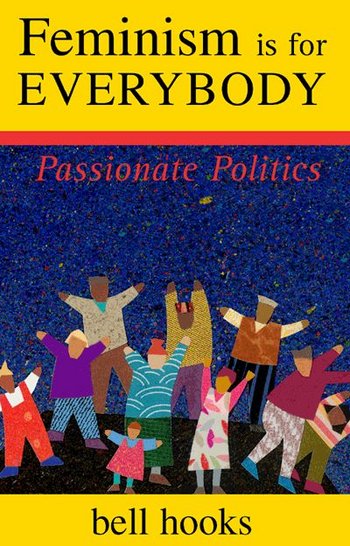
From books on black masculinity (We Real Cool (2004)) to analysis of pop culture (Reel to Real: Race, Sex, and Class at the Movies (1996)), and even children’s books (Be Boy Buzz (2002)), hooks’ work is unified by a desire to create a “love ethic” that undoes the personal and social harm done by the experience of oppression. Her brief 2000 book, Feminism is for Everybody: Passionate Politics, should be required reading for the human race. I’ve bought copies for friends and even my therapist. In it hooks covers the standard critiques of “the movement,” but also unlocks the potentials of better sex and relationships through being more in-tuned with women’s basic humanity. Plus it’s a book dudes look really cool reading.

Professor hooks is still active, recently discussing trans identities and feminism with Laverne Cox, from Orange is the New Black. She speaks to audiences all over the world. I’ve seen her at Portland State and Reed College and was this close to getting her face tattooed on my arm. A whole new generation of young people (not just my students) have discovered hooks’ ideas through the Saved by the Bell Hooks internet meme. Perhaps most importantly, her definition of feminism has become a universal starting point for how big the feminist tent can be.

Feminism is a movement to end sexism, sexist exploitation, and oppression.

The following books were mentioned in this post and are available at Powell’s books by clicking the covers below:

I Want a Free-Range Daughter

May 6, 2015

When I was 6 years old, I ventured into the deep woods on my own almost daily. I was in search of dinosaur fossils, but spent most of my time building dams in the creek and looking for crayfish under rocks. My only concern was the 500-foot tall bear that lived just past the go-cart track. The older kids once told me that Charles Manson lived back on a trail we called “The Saddle,” but I didn’t think he’d ever bother me. The woods were my world until mom rang the big iron dinner bell and I’d come running in, past the tire swing, past the crab apple trees, and the swinging pool, home to my Spaghetti-Os.

Can you imagine letting a first-grader play in a creek, in the woods, far from the house and adults in 2015? You’d have Child Protective Services called and you’d be a feature story on Dateline NBC. My, how things have changed.

There are two parts to this issue. The first is the culture of fear in which we are now living. Despite the fact that the crime has been dropping steadily for over twenty years, the world outside your door is full of terrorists, kidnappers, and child molesters. If the jihadists don’t get your kid, the pedophiles will! There are websites and viral videos and news programs that will pump all kinds of fear-based misinformation into parents. Bogus stats for already stressed-out caregivers:

UPDATE: “Over 700 Children are Abducted a Day” Says Viral Video (PS. This is not true.)

“Tonight at 5 – Caught on camera! See a crazy person abduct a sweet second grader!” It’s enough to make you want to declare war on the outside world. I recently blogged about how being a parent is to live in a constant state of fear and now you are going to shove more stories about Baby Jessica falling down a well, being eaten by a pit bull or being sold into child sex slavery? Cozy will not leave the house until she is thirty!

Then I remember how I explored the world on my bike (without a helmet) when I was seven. We dug foxholes and had dirt clod fights. By eight we were building forts in the woods with stuff we ripped off from construction sites and at nine we were ditching the baby sitter by sneaking out of the bedroom window. My parents seemed fine with it all. I never came across any scary adults other than a few hungover teachers who let us know how much they hated children.

41zWKCuHxDL._SY344_BO1,204,203,200_

As a parent, of course, I worry. But as a sociologist I’m reminded of the stats. The odds are in your favor. Way in your favor. Every American should read The Culture of Fear: Why Americans Are Afraid of the Wrong Things, by Barry Glassner. Glassner is now the president of Lewis & Clarck College, but when he wrote this he was just trying to get (white) people to calm the F down. I’ve walked through housing projects in Atlanta and DC and never once felt threatened. I know (white) people who won’t ride the bus in Portland, Oregon (Portland!) because they think they will get a “cap in their ass.” So much life is lost to the fear and we are foisting that loss on our children.

Of course you want to be “safe.” Bicycle helmets are a small price to pay. I’m old enough to remember when there were no seatbelts in cars, the front seat was like a vinyl couch and the dashboard was like a Ginsu knife. Sure, they were cool, especially if you wanted to make out at the drive-in, but, like Ralph Nader said, they were unsafe at any speed. And we didn’t have car seats in those days. Mom just held baby in her lap and hoped for the best. So, in general, the kids are alrighter.

But the other side is parents who are punished just for letting their kids walk to school. The recent story of the Maryland couple who were charged by the CPS with “child neglect” for letting their 10 and 6-year-olds play outside unsupervised pissed off a lot of us “old timers.” Not only would we walk home alone but as soon as we got there, Mom would say, “Go outside and play.” Now maybe that’s because she needed some time to sober up from her Valium snack, but we were still better for it.

So folks like mine (and all pre-2000 parents) are now refereed to as “free range parents” and are fighting back against the fear. I’m on board. I know I learned as much about the world mapping blocks on my bike or looking for arrowheads in the woods behind the school as I did inside the school. I also developed a sense of adventure. What’s around the next corner? Face your fear and find out. Yeah, I fell through the ice once and got a cool scar from trying to be Evil Knievel on my Huffy Wildfire, but so what? The kids locked inside, roped to their video games don’t have the stories that I have.

There are over 6 million latchkey kids in this country and that might be just be fine. Adult guidance is super-important but so is a sense of self-sufficiency. I’ve argued the opposite. That, because of the decline in wages, we’ve created an economy where kids have to raise themselves, so we shouldn’t be surprised when some of them go on shooting sprees. Latchkey kids have higher rates of drug use and obesity, but also more independent senses of self. So that kid who is home alone from 3 to 6 may become a stoned bad-ass who is a little chunky. That’s why you need to open the door and say “go outside and play.”

The other issue here is the gender thing. Girls have always had more supervision than boys. While boys were outside “sowing their oats,” girls were supposed to be inside as domestic apprentices, learning how to cook and clean shit. Research shows girls have earlier curfews and tighter strings. That’s partially as protection from the boys who are sowing oats. And by oats, I mean vaginas. But this is exactly what feminist Dorothy E. Smith meant by the public versus the domestic. Men get the whole outside world and women are confined to the inside. Don’t girls have oats to sow, too?

When I was 12, there was a girl named Tracy who ran with us boys. We called her a tom boy but I guess now she’d be referred to as a “free-range girl” or “future kidnap victim” depending on which side you are on. But she was just one of the gang, on her bike, playing softball, exploring half-built houses. I have a feeling she didn’t settle down. I bet she’s still going.

11142109_1421940391446525_30714784_n

I’m not advocating for a return to flammable pajamas. Everything is about balance. I don’t think I’ll send the 6-year-old Cozy into the woods alone to look for bugs and tell her to just head home when she hears the dinner bell. But I’m not going encase her in bubble-wrap either. The world is a lot safer than Nancy Grace will lead you to believe. So Cozy, there will be a day when you walk to school barefoot in the snow just so you can say you did. Just like your old man did.

The following book was mentioned in this blog and is available at Powell’s books by clicking the cover below:

Dad Love, Pt. 3 – Death and U2

April 29, 2015

Today I’m thinking about how much my life has changed in 30 years. April 29, 1985 was the best day in my life. It was my last day of college classes at Emory University. I was going to be graduating with a double degree in Sociology and Political Science and then heading off to Europe (and Live Aid) before starting grad school in the fall. It was No Business As Usual Day, a national day to protest Reagan’s arms race and I had organized a major teach-in on campus. It was the beginning of my relationship with my first girlfriend, a cool Danish-American freshman named Starla. I was 21.

22337_317856799306_8301681_n

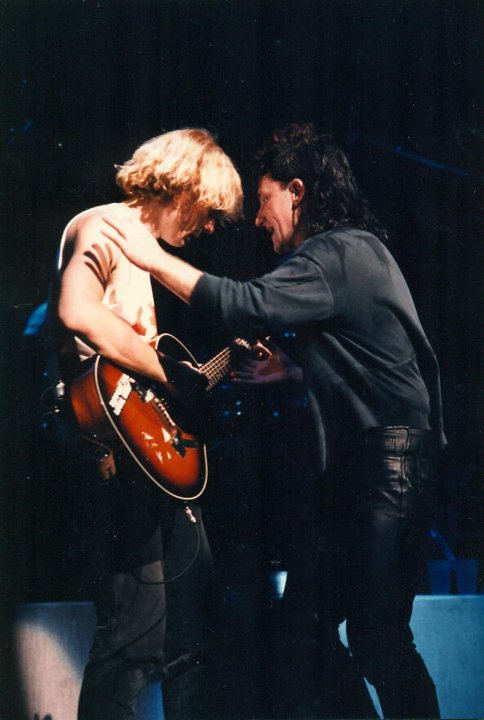
But the thing made it the best day ever is the fact that it was the day I played on stage with U2 at the Omni in front of 18,000 people. It’s a long story. I knew Bono from my time in Dublin so everybody thought it was a set up. I just helped him out in a pinch when his “Anybody can be a rockstar” bit on the Unforgettable Fire tour stumbled. They guy he pulled up on stage couldn’t play a guitar. He looked at me in a panic and asked, “Randy, can you do this?” So I played Dylan’s “Knockin’ on Heaven’s Door” in my hometown with the greatest band on earth. It was the moment every rock fan fantasizes about; to be pulled out of the crowd to join the band and looking back at the masses screaming for you. It was pure rock and roll bliss.

It didn’t hold a candle to the day Cozy was born.

I pretend to understand my brain, but it’s a complete mystery how I could love this kid more each day. From the second I first heard her heartbeat to the moment a few minutes ago when I gave her some smushed up prunes to help her poop, it’s been a unwavering incline of Dad Love. She’s an 8-month-old love factory. Sometimes she presses her forehead against mine and I feel like she is transmitting everything that is good in the universe into me. Bono never did that.

It’s weird to have a fully formed human completely dependent on us. Maybe that’s the evolutionary thing. Like by the time she’s 16 and doesn’t really need us for food and shelter, I won’t give a rat’s ass about her. But at the moment, I can’t seem to get her out of my head. Sure, there are little bits where I groan. Like when she wakes up at 7 am with a big smile on her face, pulling my hair to get the day started. (I thought one of the perks of being unemployed was getting to sleep in!) Or when I’ve done everything I can think of and she’s still crying and I just want to go make a Jack & Coke. But even then I’m madly in love with her.

So that’s where the fear of death comes in. Not mine, hers. There’s just so much horror in the world. There was a story in the local news recently about a 7-month-old boy who died when the baby-sitter purposely cracked his skull. Turn it off. Or the story last year of the Intel worker whose 6-month-old died when he forgot she was in the car at work. Too much to handle.

When Cozy was a newborn, we were watching the 1996 film Trainspotting. I wanted to share Ewan McGreggor man-crush with Andrea. I forgot about the scene where the women with the baby is so strung out on heroin that she neglects her kid in the crib. When she sobers up, the baby is dead. I just turned the film off at that point.

I think about driving and some asshole talking on his or her cell phone runs a red-light and plows into us. In the worst version of that is the car on fire and I can’t get Cozy out of the car seat. This is the shit you think about when you are a parent. I used to think about what band is coming to town. Now I just want to know if my sleeping child is breathing.

When I was a teenager, there was a fad of dead baby jokes. Why did the dead baby cross the road? It was stapled to a chicken. Stupid shit like that. We had a substitute teacher named Mrs. Neely, an older woman. Word got out if you told her a dead baby joke, she would flip out. We would just mutter “dead baby” when she walked into the room to see her squirm. I understand now that she must have lost a child and the guilt I carry haunts me. When people talk about “innocent children,” we were not innocent. We were little sociopaths. I can’t imagine what that must be like and I live in constant fear that it is a very real possibility.

This love is not rational and I guess the fear that goes along with it is not rational either. I’ve known people who have lost children and I don’t understand how it wouldn’t transform you. I think they are heroes for just sticking around. If something happened to Cozy, I think I would just be tempted to say, “Check please! I’m done.”

unnamed-1

But this isn’t meant to be a bummer blog post; just a commentary on how intense a parent’s love for his or her child can be. I just stare at her in disbelief. How did I help make something so perfect? Yeah, playing with U2 was pretty epic. But not nearly as epic as when my I see my lopsided smile on my daughter’s face. That truly rocks.

Note: Using a cell-phone while driving in Oregon is a Class C violation and the penalty can be as high as $500. Hang up and drive, asshole. ORS 811.507

Dad Love, Part 1

Dad Love, Part 2

Friends: My George Baily moment.

April 23, 2015

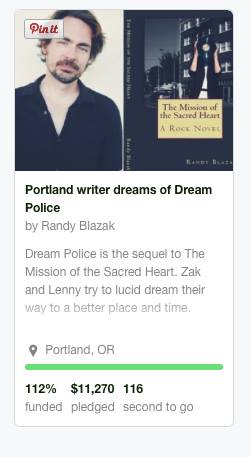
Yesterday about 8 am was the last minute of our big Kickstarter campaign to raise $10,000 in forty days for my new novel, The Dream Police. The idea was my wife’s and it basically saved my life, or at least my sanity.

11142384_1429232070714756_1495089016_n

Over the holidays, a small cabal at Hogwarts conspired to remove one of their most vocal critics. I was blindsided and my life, career, and my ability to provide for young family were turned upside down. I had worked hard to create something that meant something to the world, that tackled hard topics like gender and racial power dynamics. It was sacrificed out of spite by people who did it simply because they could. So, as you can imagine, I got pretty depressed. At one point, I was was ready to just check out on my own terms, not theirs. Fortunately, a little angle named Cozy sat on both shoulders.

It’s good to have a back-up dream. (I think a lot of bloggers have one.) Being a sociology professor at Portland State was a dream come true. I saw lives change nearly every day. But I’ve had a romantic vision of myself as a writer and have had some success in that area, so, as I discussed in this blog in January, I decided that was the direction to go. Then Andrea had the idea of turning it into a Kickstarter and it gave me not only added motivation to write, but a possible source of revenue to keep us in our home for at least a few extra months.

Andrea was smart enough to know I would become completely obsessed with the project and forget about the bureaucrats who sacrificed me at their alter of power. And I did. First it was just getting the word out. So I apologize to all the people I tagged on Facebook and Twitter. But it got the word out. People like Angie Bowie (yes, that Angie Bowie) helped put out the campaign through their networks. And then pledges started coming in. They came in from the music world, including a friend in the Waterboys and singer Kelly Hogan. They came in from old high school friends and and new neighbors. My former students really came to the rescue in ways that blew my mind. There were $5 pledges and one pledge for $648 by an old friend who wanted to see us reach the 10K goal a few days early. They came from Ireland, England, Germany and Japan. And they came from Stone Mountain, Georgia.

Screen Shot 2015-04-23 at 8.02.12 PM

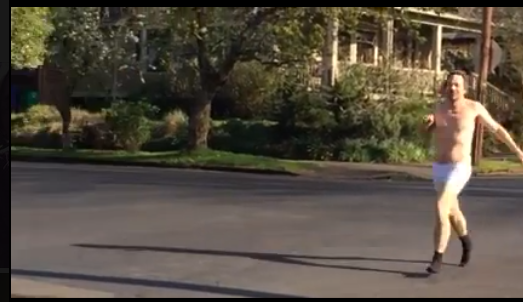
I tried to make it fun with rewards for pledgers (including my old and cherished rock T-shirts and paintings by Andrea). We began thinking of things to do to make certain benchmarks. To get to $6000 by a certain hour, I promised to eat a raw egg. (I did.) $7000 was a raw jalapeño. (I did and ouch.) $8000 was running down the street in my undies, Birdman style. (Yep.) And $9000 was a promise to go to a country bar and ride a mechanical bull. (I think I pulled a muscle on that one.) It kept the energy and focus on the campaign. I even got a call from the daughter of Cheap Trick singer Robin Zander, the original Dream Policer, who let me know she’d tell her dad about my take on the classic album. In the middle of all this a cranky Atlanta journalist posted on his Facebook page that I was “begging for money” for a vanity project, unaware of the reason I had turned to crowd funding, but, again, it was my friends to the rescue.

11133703_10153779139699307_3550117082788913734_n

In the end, the project was funded at 112%. (Most Kickstarters don’t reach their goal and, therefore, no funds are awarded.) We surpassed our goal by more than a thousand dollars. I was in tears. Obviously, the money will help (Kickstarter takes a small cut). But there were better rewards. First, having so many people who believe in my talent as a writer that they are willing to pledge their hard-earned money for my dream of this novel. How can you not feel inspired by that? But secondly, to know I have so many friends who are willing to help me get through this tough time. Some are close friends, some I haven’t seen in decades. I got a great pledge from my friend Barbara. We were good friends at Woodridge Elementary School and used to write songs together for school events. I had a bunch of Barbaras. Each one of those people has a new place in my heart.

In the end, I felt like George Baily at the end of It’s A Wonderful Life, with friends, old and new, bringing in baskets of cash and Zuzu hearing the bell on the tree. I am both humbled and committed to write a truly important piece of literature. Maybe more importantly, I’m committed to not ever entertaining the idea of quitting this adventure I am on. I am proof that the down times are there to propel you to the good times. Friends and family are all you need to get you through. And a little dream. So this a quick thank you to the world while Andrea is at her art class and Cozy is demanding some attention. I’m forgetting the villains in this story and remembering all the good people in my world.

Please help support other people’s dreams on Kickstarter, GoFundMe, and other crowd funding sites. It’s really a lot of fun.

I surrender the remainder of my time to my daughter.

April 17, 2015

“Mommy’s alright, Daddy’s alright, they just seem a little weird.” Cheap Trick, 1978.

11098537_811917425543347_1501264203_n

Today is our Cozette’s eighth month birthday. I could write about how fast the time goes. Indeed, I already have. Today I’m wondering where my time went. I realized that before she arrived, I had so much of it.

When you are childless, your time is your own. You want to join a kickball/drinking league? Do it. You want to go to Reno for the weekend and bet your tax refund? Do it. You want to go see the latest greatest band and then crash on a friend’s couch? Do it. The world is your alcohol-soaked oyster.

I used to spend a lot of time at a bar called Binks. I was there at happy hour and Saturday nights. The bartenders knew my name and I knew their’s. The regulars were like second cousins. It was just a place to be out in the world. The proverbial “second place” between work and home where community happens. Ah, those were the days.

Now baby sets the agenda. I thought as a stay-at-home dad I would have all the time in the world. I’d get all those projects done and read a ton of fiction. But there is no time. It’s a constant rush of activity. As I write this my wife is hiding in a long shower as I “watch” the baby. The baby is attempting to eat a book. It’s always something. I spent 10 minutes this afternoon dealing with the fact that I stepped on a turd that rolled out of her diaper.

Her first seven months we were living on her eating/crying/sleeping/pooping schedule. The sleeping time was like a gift from the gods. Maybe we would sleep, or maybe we would do some laundry or catch up on a show. Now that’s she’s crawling, everything is turned up to 10 (soon to go to 11). I got got got no time.

10462962_10153765618339307_8472379165650332971_n

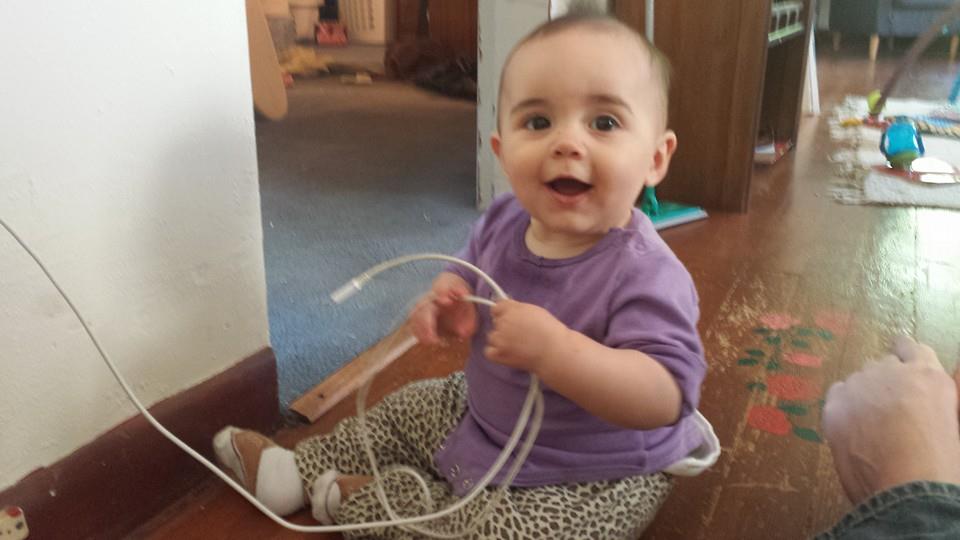
This kid now has two primary missions. #1 is to chomp into any electrical cables in sight. I have to think this is a prenatal memory of her first friend, her umbilical chord. As Marvel Comics as it would be to have her severe a cable with her teeth and acquire a superpower, it’s just a lot of me screaming, “No!!!” Mission #2 is to eat all paper on Earth. Goats are very hip in Portland, so she might just be trending. But I just pulled a page of the latest issue of Men’s Health out her gob so she wouldn’t choke on the workout that I wasn’t going to do anyway.

The fact that’s she’s mobile means that she could disappear at any moment, like the meatball that rolled under a bush. “Where’s the baby?” is the new chant. On top of that, she loves to pull herself up on things and practice standing. So we are busy securing bookshelves to the wall and moving TVs so she doesn’t end up like one of those kids in that Super Bowl ad.

You really don’t get much of a break. God bless trustworthy babysitters (Shout out to Delia and Gary in LA and Andrea’s family in Salem). As much as we love our little tornado, those moments away are much needed. You have to recharge your basic humanity so you can be fully present for the 24-7 job of parenting. You really can’t call in sick on this one.

A few nights ago, Andrea went out for a drink with a friend who had just gotten back from Paris. I was fine solo-ing. I was doing it 5 days a week while she was working at Planned Parenthood. But then Cozy woke up and screamed for 45 minutes straight. I flipped out, sending my wife a flurry of texts. “Where are you? You have a baby! Why aren’t you answering? You are a crappy parent!” Not good. I should have just taken a chill pill and gave the kid some mushed banana. But my mind is no longer my own. Man is the baby.

So this is a message to all you childless people out there – Enjoy the time you have. Take a nap, or a walk, or a road trip to Austin, Texas. Go out and drink and sleep under a rose bush. Be random. Make no plans. Let the wind blow you around like a dandelion seed. It’s a beautiful gift you might trade in one day for another gift. But you might be trading it away for a very, very long time.

Gender Notes: A Short Note About Nigeria

April 14. 2015

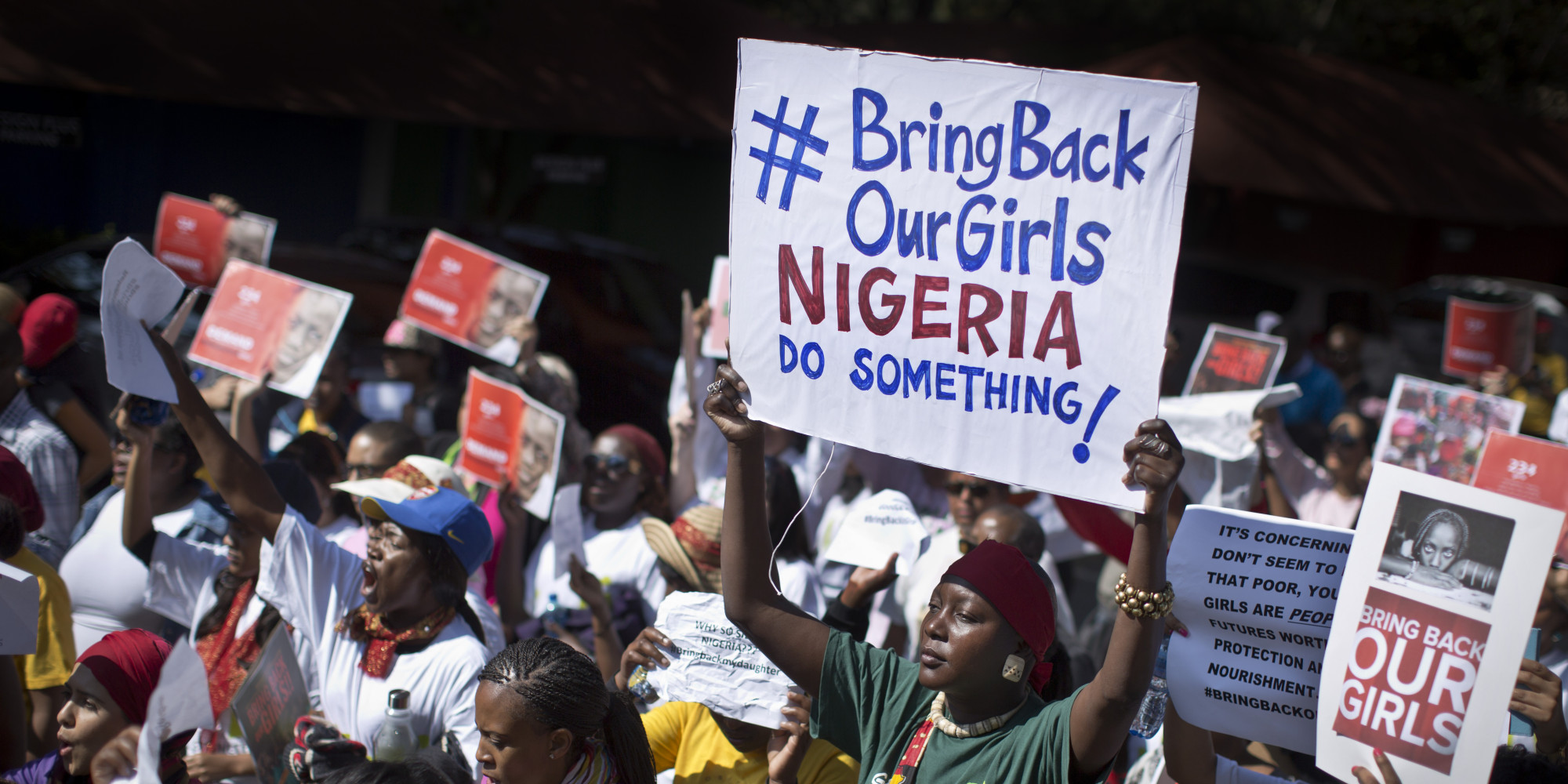
A year ago tonight, hundreds of Nigerian girls went missing in the middle of the night, kidnapped by extremists to be sold as virgin brides. Many are now free and three are going to school here in Oregon, but 219 girls are still missing.

Nigeria marks anniversary of Boko Haram’s kidnap of 200 schoolgirls

51Y07VKKHTL

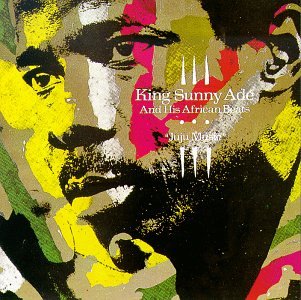
In the early 1980s, I fell in love with Nigeria, through the music of King Sunny Ade. His “juju” music, from the Yoruba tribe, hypnotized me and transported me to mythical Africa. I saw him first play at the Agora Ballroom in Atlanta in 1982 and was entranced by the colorful cothing of his band and their talking drums. But there was more to the “Giant of Africa,” than cool music. Unfortunately, now when you hear about Nigeria the only news is about Boko Haram and their abduction of young girls. Besides the fact that this is the country where Paul McCartney recorded Band on the Run, there is a rich gender history, of which #BringBackOurGirls is only one part.

Rooted in tribal groups, Nigeria has three large ethnic populations, the Hausa, Igbo, and Yaruba people. The Yaruba are the largest and have a long tradition of empowered women. In the pre-colonial era, land was communally owned and women had a central role in commerce. Women were a big part of long distance trade and many accumulated great wealth, rising in positions of power.

One of the things I’ve lectured about for decades is the way women lose power as they age in America. After 21, it’s all down hill, babe. Western African culture had the opposite take. It’s not about your looks, it’s about your wisdom. So older Nigerian women gained power as they aged. The matriarchal elements of tribal culture made girls and women valued as contributors to the whole.

What ruined this was the European colonizers who brought their heavy duty Church-backed patriarchal rule to Mother Africa. And the first thing the British did was establish an education system that invited the boys to school and sent the girls home. It’s an oversimplification to say that colonialism brought patriarchy to Africa, but the culture from the north dramatically altered the matriarchal and gender balanced relations of Nigeria.

After independence in 1960, the post-colonial education system raised the status of women. After a long period of military juntas, Nigeria saw a new era of democracy begin in 1999. But Nigeria is far from a human rights bastion. Child labor and the rape of inmates are common as is child marriage. Last year Nigeria past a law that allowed the government to sentence same-sex couples who marry to 14 years in prison and anybody who supports gay rights to 10 years in prison.

South Africa Nigeria Kidnapped Girls
The rise of religious extremist gangs, like the Islamic Boko Haram, is the pressing threat to females in Nigeria, especially in the northeastern part of the country that they control. A year later their oppression of females goes unchecked. Amnesty International estimates that they have abducted at least 2000 girls and women. According to UNICEF, over 800,000 children have fled their homes because of the conflict between Boko Harum, government forces and civilian self-defense groups. The war against women rages on.

Report: At least 2,000 women abducted by Boko Haram

The gender issues that Nigeria is facing in 2015, females face in varying degrees all over the globe. For my and all our daughters,  #BringBackOurGirls.

Feminist Herstory Pt. 4 – The Swingin’ Second Wave arrives

April 10, 2015

We’re back for the occasional history of feminist theory. Earlier posts are here:

Feminist Herstory Pt. 1 – It is discovered that Women are PEOPLE!!!

Feminist Herstory Pt. 2 – Here comes the FIRST WAVE

Feminist Herstory Pt. 3 – Let’s Judge Ourselves as People

The 1960s were exploding with numerous waves of consciousness raising. In a short period of time, masses of people (especially young people) were re-evaluating how they thought about race, war, politics, social class, sexuality and gender. Boys began to grow their hair like girls and reject the marriage/house in the suburbs trajectory. Girls, with the help of the birth control pill in 1960, stopped waiting for Prince Charming and started practicing “free love.” A lot of the same old bullshit continued, but second wave feminists were active on numerous fronts.

2blog-msmagazine

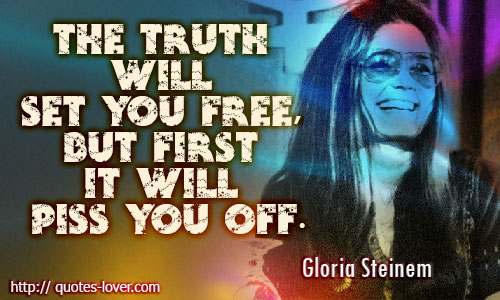
In popular culture, Gloria Steinem not only went after Hugh Hefner on a 1960s talk show for referring to grown women as “girls,” but helped change the language itself. Single women were referred to as “Miss,” while married (claimed) women were “Mrs.” There was no equivalent shift for males. They were always “Mr.” whether they were single or not. Why not refer to females as “Ms.”? (Steinem founded Ms. Magazine in 1971, which became the standard bearer of second wave feminism.)

Feminist themes began creeping into 60s pop culture, in TV shows, like That Girl, and songs, like Aretha Franklin’s reworking of Otis Redding’s “Respect” and even the Rolling Stones’ “Mother’s Little Helper.” Much of the feminist energy was not just a rejection of the plastic suburban lifestyle, but the gender politics of larger liberation movements. For example, young women would show up to participate in anti-war and New Left groups, like the Students for a Democratic Society (SDS) and find males running the program and females expected to prepare food, not author manifestos.

My mother was typical of many middle-American women who heard about the feminist movement (“women’s lib”) from the fringes. She was 20 in 1963, when Friedan’s book came out, and newly married. She remembers seeing her on TV frequently in the 1960s, talking about The Feminine Mystique but not making the connection with her own situation. She recently emailed me about it:

Men were getting paid more than women for the same job, (and they still are). The big saying in the 60’s for men was “keep your wife barefoot and pregnant.” I also felt that with or without the feminist movement, a women could get ahead on her own with hard work a few brains, and knowing how to maneuver in a man’s world, such as starting a company, which I did.

Stepford wives

I think my mother, like a lot of women, didn’t see herself in the faces of the activists who were railing against “patriarchal oppression” and protesting against Playboy magazine and stay-at-home moms (which was never really the target). In the 1970s, she found a space to start her own consulting business. But that small space was created by the feminist pioneers who fought to get their foot in the door. It’s interesting that she pointed out the 1975 film, The Stepford Wives, as more influential on her ideas about gender power. The horror flick was rooted in the core principles of The Feminine Mystique; that you can only treat women like robots for so long.

The feminist movement of the late 1960s and early 1970s was wide-ranging and defied any simple characterization of what a “feminist” was. (But, as we shall see in the Part 5, it wasn’t exactly inclusive). Liberal feminists, like Friedan, pushed towards an equality of the sexes, focusing on issues like equal pay and an end to job-discrimination. Marxist feminists, like Jeanne Gross, pointed out that women gaining access to the same jobs that exploit men is not true liberation. Their position was that, since capitalism turns women into commodities (and not just prostitutes), the best way to end sexist exploitation is to end capitalism.  Radical feminists, like Charlotte Bunch, pointed out that patriarchy predates capitalism and what feminists should focus on is various systems of oppression. And then socialist feminists, like Barbara Ehrenreich, were concerned about how all of these issues impact women’s individual economic lives.

So when people tried to characterize feminists as “bra-burning man-haters,” they were really just perpetuating a caricature favored by those who defend sexism. First of all, despite some of the un-evolved men at the SDS meetings, there were men engaged in consciousness raising groups and exploring their own male privilege. The debate within feminism was healthy and held together around two basic ideas. First was the idea that society is primarily organized around male power and that patriarchy is insidious in virtually every aspect of life. The second idea was the slogan, “The personal is the political.” Individual experiences of oppression are manifestations of social patterns and the solution to personal problems is collective action. The personal is the political!

By the early 1970s, the debates within the feminist movement were raging. Liberal feminists mobilized women to break through the old boys clubs of power and start cracking the glass ceilings. Radical feminists asked if claiming 50 percent of a world created by men was really best for women. Would a military in which half the members were female really be a transformation of society, or just one where women were good at playing men’s games? Some feminists were increasingly frustrated with the reluctance of the men in their lives to share power. Is it possible to have a truly equal relationship with a man? Some feminists suggested lesbianism and separatism as the only way to escape abuse, oppression and dehumanization. This extreme position actually makes a lot of sense when you think about it but separatist groups, like the Furies Collective, added to image of feminists as hating men.

As men (including many progressive men) dug their heals in to defend their patriarchal power (you could be Mr. Radical and still want “your woman” to get dinner on the table), the rhetoric heated up. Rage towards “male domination” and “male chauvinist pigs” may have been justified, but it fed into the hype that feminism was all about stoking the “battle of the sexes.” For me as a 9-year-old in Stone Mountain, Georgia, this was all manifested in a tennis battle between Bobby Riggs and Billie Jean King. Riggs was a loudmouth who’d been a tennis champion in the 1940s. He seemed personally offended by the notion of female equality and made something of a comeback by challenging female tennis pros. The grand match was on September 20, 1973. There was a ton of hype about the ultimate “battle of the sexes” and anyone with a soul was rooting for King. Billie Jean beat Bobby’s ass in all three matches and he disappeared back into his cave. If you know the Elton John song “Philadelphia Freedom,” you know the right person won that round.

billie-jean-king-bobby-riggs-battle-of-the-sexes

Despite some of the rhetoric from some of the more militant factions, feminism was never about turning the oppression of women into the oppression of men. I think that was the fear of a lot of men. Just like Southern whites feared free blacks would torture whites as blacks had been tortured, many men feared free woman would go all Amazon on men, forcing them to bake three-level cakes and wear open-toed high heels. But feminism was geared towards ending oppression in general and men could be strong allies in that cause. But in the early 1970s, feminism needed a good look in the mirror to achieve that.

As the second wave moved into the 1980s, many feminists began to explore intersectionality and expand the big tent of feminism (that’s the subject of Part 5). Some liberal feminists, like Hilary Rodham Clinton, figured out how to beat men at their own game. But some Second Wavers got stuck in the early feminist thinking that cast women as universal victims and all men as dastardly agents of patriarchy. Some of those folks found an enclave working in Human Resources departments, zealously looking for sexual harassers, denying the agency of women. As we will discuss in a coming section, third wave feminists rejected this reductionary view as denying the complexity of gender power. But it makes for engrossing movies on the Lifetime Channel. Those evil men! But we still owe the second wave a great debt for naming the problem with no name and fighting it on multiple fronts.

The following book was mentioned in this post and available at Powell’s by clicking the cover below.

“That dude has intense eyes!” Normative maleness and my baby

April 6, 2015

One of the main goals of my Intro Sociology class at Portland State was to get students to develop an understanding of what feminism is really about. I would start with a riddle;

“OK, imagine a father hasn’t seen his son in 5 years. They are reunited and spend the day together. They go to a ballgame and out for burgers. On the way home there is a horrible crash and the father is killed. Barely alive and in need of surgery, the boy is rushed to the hospital. In the ER, the doctor rushes up and, with a shocked look, says, ‘I can’t operate on this child. He’s my son!’

So who is the doctor?”

In a room of 100 students there is almost always dead quiet. When I first heard this my mind went to SoapOperaLand. Maybe they were switched at birth and the doctor thinks this is his child.

The answer is much more simple. The doctor is the boy’s mother. But in a patriarchal culture we are taught to assume the male. It’s called normative maleness. “Female” is the default position. Actors (and actresses), poets (and poetesses).  Even with animals we assume the dog is a “he” even if we haven’t checked underneath to be sure.

tumblr_mdrweq1Eex1r4gisno1_500

It happens everyday. Cozy has plenty of pink but most of her clothes are not. She wears lots of clothes that were mine 50 years ago. We were at the videostore yesterday and a young clerk looked at her and Cozy gave him the “Whatchu lookin’ at, Willis?” stare. The kid said, “Man, that dude has intense eyes!” Yeah, it’s a girl, young brother. I did it just this morning. I got a note that a child of Cheap Trick singer Robin Zander, Holland Zander, might be interested in talking about my Dream Police novel. I immediately replied, “Please email him!” Turns out Holland is a she (and Robin is a he, a very awesome he). In the 2000s, whenever I would see a news headline that read something like, “Clinton headed to China,” I would think, “Oh, Bill’s taking a trip!” It was always Secretary of State Hilary Clinton. Always.

So I lecture on normative maleness and how it serves to make females fade from view. It’s even in our politics. There are political issues and then “women’s issues,” like health care and education. All the women in the class, whether they call themselves feminists or not, get it. A lot of the guys have sort of a “so what” look on their faces, but I get 10 weeks in a quarter to work my magic. There’s a similar  situation of normative whiteness, how we assume a person is white unless we are told otherwise. What’s the picture in your head when you hear the term, “All-American kid”? It’s probably not a girl named Fatima.

Having a baby is a good place to see this play out on a daily basis. Since gender is socially constructed, babies start out genderless. We horseshoe them into pink or blue realities from Day 1. (Now we can start before they are even born!). But, in reality, babies don’t look much like boys or girls. They look like babies.

PATTON

We were out at the coast yesterday, a nice Easter road trip to Lincoln City. Cozy was in awe of the Pacific. I love seeing her see things for the first time. I snapped a picture of her. As soon as I looked at it I realized that my baby looks like comedian Patton Oswalt! When I posted it on Facebook, a friend commented that all babies look like Patton Oswalt. Whew. Love the guy but my projection on my daughter, as it turns out, is more gendered than I thought. If she’s going into comedy, I see her as more of a Cecily Strong an Amy Schumer. (Although, Patton Oswalt seems like a perfectly happy person, so I’ll take him.)

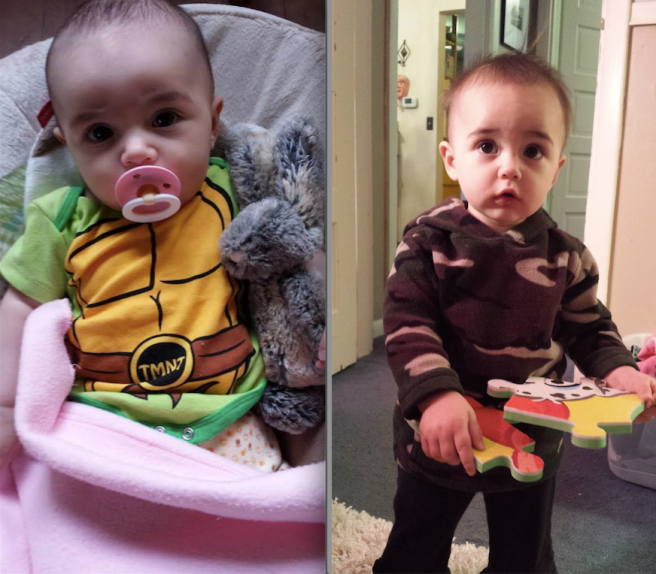
I’m a bit off point here. It’s just very telling how many people think Cozy is a boy when she is wearing her green sweater or sucking on her blue binky. In this “genderless” moment she is completely free. I love her gender transgressions and I hope it sows the seeds of not feeling trapped in the “girl box.” She’s Cozy Fucking Blazak! She can construct her own definition of gender.

This Dar Williams song makes me think about the time she has to be genderless.