I’m Vaccinated! Am I proud or am I ashamed of it?

March 24, 2021

I got vaccinated about a week ago and I don’t know if I should shout if from the rooftops or keep it on the down low. Never has getting a shot more been more fraught with social complexity. As of today, 127 million Americans have received at least one dose of a COVID-19 vaccine and about 14% of all Americans are now fully vaccinated. Is everyone who is vaxed as vexed as I am about how to respond? Let’s weigh this out.

On the one side, after a year of living in fear, according to the scientists, I am fully protected from the coronavirus and, apparently, the more infectious variants.

On the other side, those scientists can’t tell me if I can still pass COVID on to others.

On the one side, the more people who are vaccinated, the fewer hosts the virus has, slowing the pandemic down to something that starts to look like the mythical herd immunity.

On the other side, it’s really clear that the social inequities that marked higher infection and death rates for some populations are all reflected in who has access to the vaccine. My white privilege pays off in white life expectancy.

On the one side, I can stand as defender of science and encourage other intelligent people to get their shots as soon as possible.

On the other side, I’m aware there are a large number of idiots, including at least 50% of Trump voters, who said they won’t get the vaccine because they think COVID is a hoax. And those un-immunized idiots will birth mutant variants and put immunocompromised people (2.7% of Americans) at risk of infection and death.  (Dear idiots, Trump has been vaccinated and has said you should be, too.)

On one side, I don’t have to panic if I actually use a pen from the “dirty pen” holder when I’m signing the check at the coffee shop.

On the other side, these vaccines came out awfully fast. As a scientist, I’m bothered when corners are cut. And am I going to need another booster shot in a year? And when can my kid get vaccinated? And any info about long-term side effects? And…
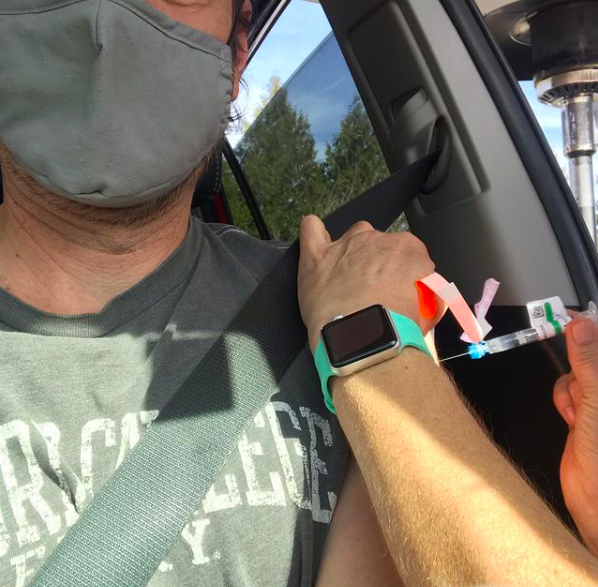
I got the Johnson & Johnson vaccine on sunny Saturday afternoon at the Portland Airport Economy Parking Lot. It was an impressive set up, like driving into Disneyland, with hundreds of volunteers donating their time to help put a dent in this pandemic that has killed nearly 3 million people on the planet (most here in the dirty USA). My first thought was about how people who didn’t have cars were going to get their shot in this very car-centric vaccination effort. (I didn’t even have to get out of the RAV-4.) Actually, my first thought was how lucky I was to get a spot so soon. K-12 educators are just getting vaccinated now. I think college educators like me are scheduled later, somewhere between Jiffly Lube workers and TikTok dancers.

A friend in the military had a vaccine opening and was already full of Moderna, so he offered it to me. I passed up on one of these “jump the queue” openings a month ago because I knew there were more deserving recipients. But, after hearing Dr. Anthony Fauci say, “If you have a chance to get a shot, get the shot,” I decided to play my educator-parent of a young child-I’m probably older than you and therefore at risk-card. This decision was made easier by the fact that there are reports that large numbers of vaccines have gone unused because of a disjoint in the demand and supply chain.

But it’s been clear that there is massive inequities in this vaccine rollout. African-Americans, who make up 12% of the U.S. population, are only 8% of those who have received a vaccine, according to the CDC. Since most vaccine scheduling is done online, the technological divide is hitting the offline hard. This includes the elderly, poor people, people with physical and mental disabilities, the unhoused, and those that live in rural areas with limited internet access. Those low vaccination rates will translate into higher infection and death rates.

I thought about this as I was on the wild ride of my “one and done” Johnson & Johnson poke. Eight hours after my shot, I was hit by the Corona Express, a quick trip into the “this what you get” black hole of side effects. I had the chills so bad I thought the teeth were going to bounce out my head. It all passed later the following day, and I felt ten feet tall and bulletproof. I had a great support system to hold my hand. The rumors of heavy side effects might make some folks who live a lone a little more vaccine hesitant. I know I was lucky, but it didn’t feel like it while I was sweating bullets.

I lecture a lot about privilege and how privilege should engage a sense of responsibility, not guilt. But there is a part of me that feels guilty that I got the vaccine when I know there are more deserving people who don’t have a friend who can put them on the immunization guest list. But maybe my shame should be reserved for the system that creates so many institutional injustices that play out in human suffering. It’s not an exaggeration to say that, in America, the best predictor of your life expectancy is the zip code you live in. I’m ashamed of that.

Ultimately, we’re all taking it on faith that the mass vaccination experiment will solve this new health problem. It’s already done a good job of adding to an old one.
Envisioning Our Renaissance at Home: Life After the Pandemic

March 8, 2021

A year ago, we were in a panic. I remember walking into the grocery store on February 29th, and seeing every roll of toilet paper gone. (I bought a 6-pack of Corona and went home.) Now, after over half a million deaths in America, the light is at the end of the tunnel. Things are beginning to open, like a late-winter purple crocus. Thirty million Americans have already been vaccinated. (I’m scheduled for my Pfizer vaccine on Saturday!) Schools are making plans to reopen and restaurants are starting to seat diners. The insanity of March 2020 is being answered by the hopefulness of March 2021. There are still incredibly high rates of infection (Don’t you dare take off that mask!), but the future looks bright.

I’ve done several trainings on racial and ethnic inequities related to the COVID-19 infection and death rates (and now immunization access) over the past year. I always try to balance all the doom and gloom with a “silver lining” ending about the power of resistance and resilience. Looking back at history, the explosion of cultural creation that began in the Renaissance of the 15th century was a life-affirming response to the “black death” of the 14th century’s bubonic plague pandemic. The “Roaring Twenties” were a celebratory pivot from World War 1 and the influenza pandemic that wiped out nearly 100 million people a century ago. Maybe this pandemic will give us a new Renaissance, I would offer my bummed-out audiences.

So let me throw an idea into our grand re-opening.

We’ve survived this year-long pandemic in various ways. Mainly retreating from bars, clubs, restaurants, block parties, and family celebrations, as we socially distanced from each other. We’ve retreated into our phones (Tik-Tok as therapy?) and endless binges on the small screen. (I’ve seen every iteration of 90 Day Fiancé and am now bingeing The Marvelous Mrs. Maisel.) We’ve become anti-social. The majority of my college students mute their videos during our Zoom classes. I’m not sure if they are human beings or Russian bots. Can I get a human interaction??? So the response to this year of isolation is to become SUPER SOCIAL.

People of America, let me reintroduce the once popular pastime known as home entertainment.

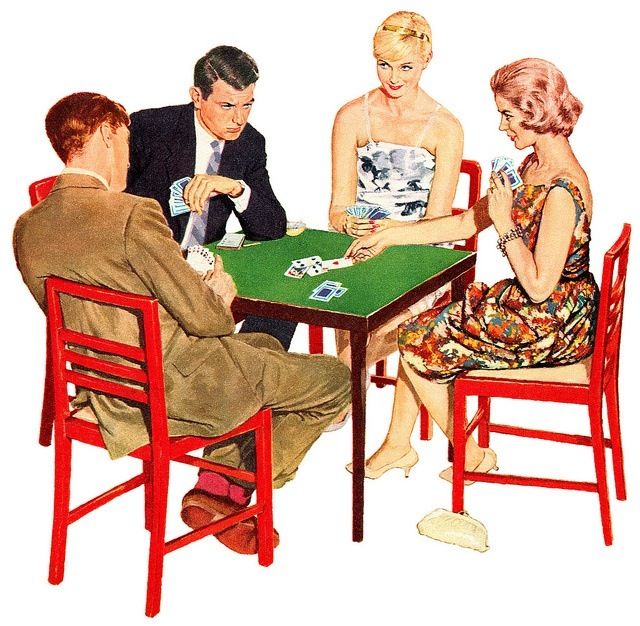
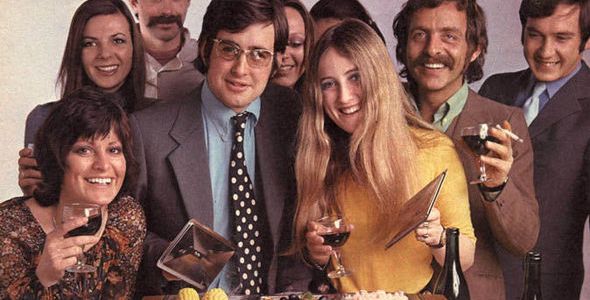
When I was a kid in the 1970s, my parents were always going to parties. My brother and I were either stuck with a babysitter, or peaking under the bedroom door wondering who all the laughing people in our house were. My mom hosted bridge parties, my dad hosted poker parties. My parents belonged to a gourmet dinner club and, when it was their turn, cooked and decorated the house for disco-era foodies. I grew up thinking every weekend was a house party. Complete with a wet bar. To this day when I hear Herb Albert and the Tijuana Brass my mouth waters for leftover hors d’oeuvres.

What did the swinging parents of the Seventies have that we don’t?

Well, for starters, they didn’t have social media sucking their eyeballs in an endless doom scroll. They also had better wages that allowed them to keep the wet bar stocked. But post-pandemic, we have a greater desire to be in a living room together, reading faces sans masks. (Did Ms. McGillicuddy just lick her lips while she handed me that Gin Rickey?) If there ever was a generation that was desperate to sit on a sectional couch and complain about kids and parents and government, it’s Generation Zoom.

So let’s bring it all back. Card games, Monopoly, charades, dinner parties, album listening sessions, jigsaw puzzles, Twister, fancy cocktails, inappropriate party games. All of it. Except the misogyny. We can leave that in the Seventies. (No key parties!) If the women want to smoke cigars in the backyard and complain about how their men are crappy at laundry while the men clean up the spilled Chex Mix, let ‘em. The kids can be locked in the bedrooms, watching the Wizard of Oz (or Ozark), while the parents crack open another bottle of pinot in the kitchen.

We’ll be back in the clubs and bars, seeing bands and getting Ubers home soon enough. But let’s not go back to normal. Normal sucked, too, if you remember. I don’t want 2019. Nobody wants 2019. If it’s Saturday evening, either you are going to somebody’s home for dinner, or you’re having somebody over for dinner. And then maybe an apéritif (Look up that word, loser) and a nice game of Parcheesi or even Cards Against Humanity. We need this! We need to sit across from each other, at a card table, and reconnect.

Great things can come from this. During the Enlightenment, salons became all the rage in Paris. People turned their living spaces into community meeting places, called salons. In apartments and front rooms, people would gather to discuss art, politics, and the meaning of existence in a post-Dark Ages Europe. German sociologist Georg Simmel invented the field of small group dynamics by observing interactions of salon participants. The next generation of grand ideas is not going to come from hunched-over trolls, sliding though endless posts on Instagram. It’s going to come from the collision of ideas that occur during a game of rummy, fueled by Whiskey Sours.

During the quarantine, we decided to take on a kitchen remodel in our 1909 Portland Craftsman home (with a very out-of-date 1960s kitchen). We want to turn our home into a welcoming place where people can bring a bottle of wine and stay as late as they want. No TV, we’re adding another couch to the living room for relaxed conversations. I’m going to re-learn how to play poker. (Seventh grade was a long time ago.) We want to start a circle of friends who feel comfortable inviting each over to their homes, even if it’s for a cocktail before heading out to the movies.  (Remember going to the movies? And friends?) Enough take out. Let’s cook in! And invite the neighbors! Home entertaining could be the great salve we’ve secretly craved. You’ve spent a year cleaning your place, for godssake.

Our culture is so divided right now. Let’s get to know each other again. Let our homes become safe spaces to argue and discuss and figure out what our Roaring Twenties should look like. I want you to dress for the occasion. I’ll bring the deviled eggs. Cheers!

The Dream Life of 2020

December 16, 2020

When we wake from a dream, half remembering the details and then immediately losing them, we only know what we don’t know. Keith Richards once wrote in his detailed autobiography, “Memory is fiction” as a way of letting himself off the hook for constructing a picture of his life that may have diverted from facts. But all history is a construction. George Washington told a lie or two. When I remember something in my own life, am I remembering it as it happened, or merely remembering my last memory of it? A picture of a picture, losing sharpness with each copy.

That’s sort of how I reflect on 2020, a year of years, as if a dream that I am just now waking up from. Did all that happen? The clouds of CS gas may have affected my cognitive ability. If I’m not mistaken, everything collapsed. Reality as we know it ended and I’m a bit foggy on whether that was a bad or a good thing.

The year for me really began on March 11. Before that it was the usual drama; war in the Persian Gulf, Democratic debates, stock market and helicopter crashes, and me trying to get my kindergartner dressed for school. The news about the “novel coronavirus” had been spreading fast and I remember telling my students in February that this was probably going to be the story of the year. Little did I know it would be a tsunami that would wash over every person on the planet. March 11 was the day the World Health Organization declared COVID-19 a pandemic. It was also the day that we were supposed to see Patti Smith in concert. We had tickets for show at the Seattle Paramount and were going to drive up after my Wednesday classes. That afternoon the show was cancelled out of fear of the virus spreading (Washington was the first state to get hit) and I had a feeling that it was just getting started. The following day Tom Hanks was was sick. As goes Tom Hanks, so goes the world.

The year now exists in a series of half remembered moments that may have been scenes from a movie and not my life.

I remember fleeing Portland because the wildfires in Oregon and California had clogged the air with smoke, making breathing impossible. We headed as far west as possible, ending up in Newport, Oregon, which was a mixture of smoke and fog but at least you could breathe. You couldn’t see the ocean and the escape it promised. We camped out in the Sylvia writers’ hotel, where we found sanctuary in old books as our daughter played with Shelly the Cat. (I am back at the Sylvia Hotel now, sitting next to my wife who is writing her book that will change the world. I can see the Pacific Ocean and it can see me. I’m finally starting Patti Smith’s The Year of the Monkey.) When the rains came back to Oregon, Cozy and I danced in the streets, thanking Gaia for protecting our house.

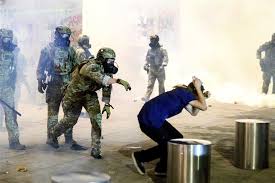
I remember Andi and I being in the streets of Portland as the revolution ramped up. Trump’s federal troops had come in to quash the Black Lives Matter protests, which only brought more anti-fascist Americanos to the fight. By that week’s Battle of Portland, we already had a few tear-gassings under our belt. There was a moment this July night (really morning) when I was hiding behind a concrete pillar on SW 5th Avenue as the DHS troops fired rounds at unarmed protestors. Was this Argentina, 1979, Mexico City, 1968, Belfast, 1972, Cairo, 2013? What country was I in and would I be killed by a hastily assembled gang of federal forces whose only mandate was to show that Trump was tough on “antifa”? Andrea and I made a mad dash across the street to a safer alcove. In 1994 I had tried to get to Sarajevo from Austria and was blocked at the border. In 2020, I was in the middle of something equally as historic. A group of protestors came marching eastward, chanting “No cops, no KKK, no fascist USA” and the federal forces fired rounds and them and then chased them down to attempt mass arrests. “Oh my God” Andi screamed. Was that America or was that a dream?

I remember having to move my college classes to a remote set-up and hoping my students, laid flat by deportations, lay offs, depression, and the virus itself, would show up. Weekly Zoom meetings became more like therapy sessions and I found myself longing to see their two-dimensional faces. Most typically kept their cameras on mute, making me wonder if I was dreaming them or they were dreaming me. Did they even exist? A name on a role and on a screen. Had the virus erased them, as well? While my daughter found community in a neighborhood “pod school” with four other first-graders, I was stuck in my living room, whiskey in my coffee, pretending I was a college professor.

I remember watching the body count. 1000 dead. 50,000 dead. 250,000 dead. 294,535 dead, just in the U.S.. All while the president played golf and held super-spreader rallies, proclaiming it would magically go away after election day. (Didn’t he get the virus? And his wife? And his kids? And his greasy-hands-in-pants lawyer?) I remember thinking that I had COVID more than once, including this morning. (That was just a hangover from drinking Gin Rickies in the F. Scott Fitzgerald room at the Sylvia.) I remember worrying I wouldn’t be able to say goodbye to Andi and Cozy with a ventilator down my throat. My parents, in their seventies in hard hit Georgia, stayed in my mind. Would I get to see them again? Would anything be anything again?

I remember a gameshow president trying to imitate his dictator pals, even after he lost the election BY A LOT. I think about his cult-like followers caravanning into Portland in pick-up trucks, shooting paintball guns (and real ones) at protesters, oblivious to the 1922 March on Rome that brought fascism to Italy wrapped in a national flag and the cry, “Kill the communists!” I wonder where those people are now. Training for Civil War II, I imagine, their orange lord encouraging to them face the bullets while he snorts Adderall in his last moments in the White House. Donald Trump was cancelled like Coachella, but the specter of his idiocy hovers like a toxic cloud from a sewage plant fire.

I remember a planet convulsing with the burden of having to carry the human race for another year. So many hurricanes they had to start the alphabet over again. Endless fires and floods and people wondered, “Is Tiger King on?”

And I remember black people begging for their lives to matter. Not begging, demanding. Tired of this shit 155 after the end of slavery and yet it continues. The signs said it all, “Enough is enough!,” “Black trans lives matter!” “Stop killing us!” and a thousand others. A hundred nights of protests in Portland. Americans being gassed in Lafayette Park so Trump could hold a prop Bible. White People reading White Fragility and then looking in the mirror. A racial convulsion of a nation that had too long denied its sins. Was this an awakening or were we still asleep?

But I also remember the more personal moments, like my wife being awarded her masters degree and then landing a teaching gig at Reed College, or my daughter learning how to ride a bike or communing the the lemurs at the Zoo. Those moments seemed more real than watching the death throes of the American Century. Deep, quarantine-time conversations with my wife about how to make our marriage a friendship meant more than worrying about Melania and her celebrity apprentice.

With the vaccine and Inauguration Day on the way, I’m ready to wake up and see how this year will be remembered. But I’m happy to wait for the grand historical recap to be told. Or the post mortem. In 2021, when we open our eyes, there will be a dance where we once again embrace and celebrate the joy of life, vowing to not go back to sleep.

“I wish I was alive in 2020.” Witnessing History from the Frontline

July 22, 2020

You’ve heard it a thousand times. “If I was around in the 1960s, I would have been marching with Dr. King!” Or how about this one, “If I was around in the 1930s or 1940s, I would have been fighting the Nazis!” As if the moment you’re in right now doesn’t require you to pony up and join the frontlines in the fight against oppression. Your time is now.

Columbia-1968

One of the great twentieth century sociologists, C. Wright Mills, wrote in 1959 that we tend to see our biographies as separate from the moments in history that we live in. We focus on the, often mundane, day to day parts of our lives and not our lives as part of a larger historical moment. Very few of the people engaged in the vibrant protests in 1968 thought, “I’m in 1968, making history!” They might have thought, “I’m going to this protest with my friend and then I need to pick up some milk on the way home.” We are making history because every day we are making history by merely existing. But Karl Marx once wrote, “Men make their own history, but they do not make it as they please.” However, there are times, like now, where we can actually alter the course of events.

Unknown

Portland is again at the epicenter of national events. The media from around the world (including China and Canada) has been calling me to ask what to make of federal forces shooting “non-lethal munitions” into the faces of protestors and grabbing them off the street in actions that look more like Argentina in 1980 than anything America could ever be. And now President Trump has ordered federal police into Chicago, Kansas City, and Albuquerque in what he has branded, “Operation Legend.” (I won’t psychoanalyze how that title fits Trump’s delusions of grandeur.) State and local leaders and well as senators and congress members have demanded the federal forces leave. Oregon Senior Senator Ron Wyden tweeted, “@realDonaldTrump get your jackbooted goons out of my city.”

The arrival of federal forces has completely altered the dynamic of the conflict. The protests had been geared towards Black Lives Matter and the systemic racial injustices that were highlighted by the May 25th murder of George Floyd. Even in Portland they were beginning to lose steam, as they had in Minneapolis, Washington, DC, and other cities. We were trying to move to a sponsored dialogue phase of the conflict. I was working with the Department of Justice on a plan to get protestors and Portland police to the table together. Then, in a bizarre attempt at political theater (and perhaps a distraction from the unending COVID-19 headlines), Trump sends in federal forces to throw a tanker full of gasoline on to the fire. If it was his actual intention to quell the protests, he failed miserably. People who have never engaged in protests are now manning the barricades; grandmothers, veterans, dads with leaf blowers, all willing to take volleys of CS gas to the face to make a stand.

US-Philippines-Donald-Trump-Rodrigo-Duterte-ASEAN-Summit-November-2017-e1560162132752

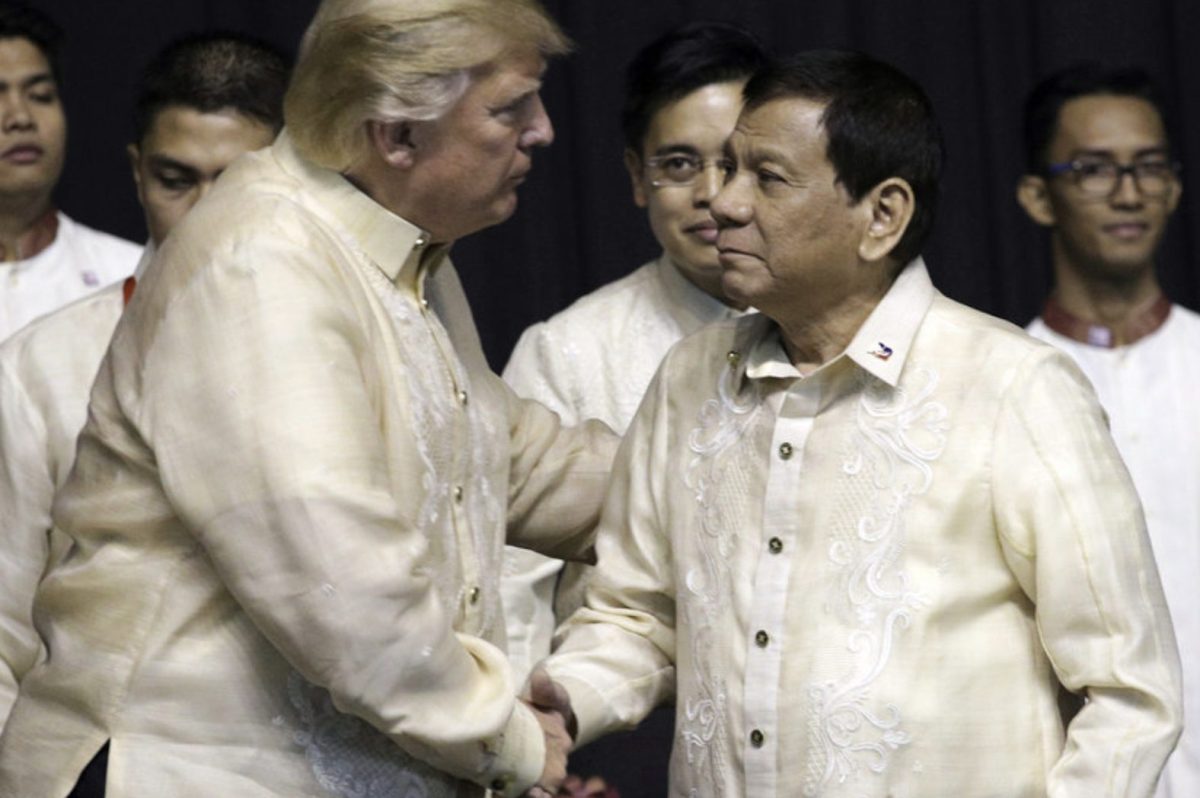
This is now about a lot more than Black Lives Mattering. This is about a shockingly rapid slide into authoritarianism. We don’t have go back 80 years to Germany, or even 40 years to Argentina. The parallel is the Philippines, where the 2016 election of “law and order” candidate Rodrigo Duterte turned the country into a police dictatorship in which the media are regularly imprisoned. In 2017, Donald Trump praised the dictator and invited him to the White House. The people who are protesting in America understand how fragile democracy is. The Philippines was a democracy. It is not one now. Those who mocked Antifa activists for warning about the threat of fascism in America are witnessing something that looks a lot more like fascism than it does democracy rooted in constitutional due process. When Fox New’s Chris Wallace asked Trump this week if he would accept the results of the election in November if he loses, his response was that he’ll “have to see.”

So here America is at a turning point. Will we move to civil war or an era of peacemaking and healing? Are the protestors who are risking their lives to drive the federal forces out of Portland lawless anarchists, American patriots, or both? My wife and I (who were tear-gassed at an earlier protest) have stayed up into the morning hours watching the nightly mayhem in a small area of the city, wondering what’s happening to this country. Whatever it is, it’s history unfolding before our eyes. You missed Tiananmen Square in Beijing in 1989 but you can show up to Chapman Square in Portland in 2020 for a front row seat for tomorrow’s American History textbook.

5f1675e4f0f41913a5432854

I’m lucky to have a wide range of friends that run the gamut from U.S. Attorney’s Office civil rights lawyers and police officers to members of the “Wall of Moms” and some of those “lawless anarchists.” I have to imagine all of us are aware that this is a true crossroads in U.S. history. It’s both exciting and frightening. It reminds me of the end of the Cold War and being in London clubs as newly freed eastern Europeans danced their asses off. But it could easily go the other way as Trump’s America continues to flirt with our most dystopian dark fantasies. Police riots and “law and order” rhetoric got Richard Nixon elected in 1968, extending the Vietnam War into the mid-70s, but I think America is in a different place in 2020. At least I hope so.

This is history. Future generations will debate what happened in America in 2020. This great transformation could be a wonderful act reconciliation or the death of America itself. Pay attention. You are not required to participate in this moment, but you are required to bear witness to it.

What is the feminist position on the COVID-19 pandemic?

May 19, 2020

The nice thing about having a “paradigm” is that there’s a formula to plug in to when challenging issues emerge. Liberals and conservatives, religious fundamentalists and scientists all have “narratives” they can utilize to make sense of the world. Similarly, feminists have a good starting position, that elements in society work to uphold patriarchal male power structures or challenge them. That’s feminist thinking in a tiny nutshell.

Unknown

So what’s the feminist position on the coronavirus?

Feminism is not monolithic. There is as much debate within feminist circles. Just mention Hillary Clinton. A liberal feminist, a radical feminist, a Marxist feminist, and an eco feminist walk into a bar… So rushing to a feminist position on a global pandemic is harder than it looks. Even after three months of pondering the matter.

While no feminist would celebrate sickness and death (that’s a male thing), there could be a feminist “I told you so” element to this mess. Mother Earth might be offering humanity a time-out for the bad behavior of waging war and dumping killing pollution. Eco feminists highlight the importance of healing and with endless wars and traffic jams on pause for a minute, we get to experience the joy of a planetary healing. There are sea turtles on Miami Beach and dolphins swimming in the canals of Venice! Will we really want to return to the nasty business as usual after this micro-organism mandated retreat? Regardless, the lesson remains that man does not control this planet.

Unknown

And here’s a little “gender equality amid pandemic” point that my wife brought up; Zoom as a great equalizer. Zoom and other remote meeting platforms have become the new way to exist publicly. My classes have weekly Zoom meetings. On these platforms every person has an equal space, both in terms of the size of their video box and their volume. (“Everyone on mute?”) Since we are working and learning from home, the impression management is way down. Women don’t have to do their makeup and men don’t need a tie. We’re all equally casual in our Brady Bunch grids. I’ve done lecture videos after waking up from a nap and done interviews with a beer in my hand. There’s no judgement in a pandemic. We’re all in this bad hair day together. And if a woman is Zooming in to work with a toddler climbing on her neck, all respect for her for even bothering to unmute her video.

The other side of the ledger is less hopeful. There’s plenty of reasons to see this nightmare as another opportunity for patriarchal power grabs. The first thing to come across the wire when all this started was the impact that the lockdown was having on women who were in domestic violence situations, trapped in spaces with their abusers. By April, reports of calls spiking to domestic violence around the globe made the sad trend undeniable. Women began passing desperate messages in code to pharmacists, hoping for a lifeline away from the violence. Similarly, young LGBTQ people who are stuck at home with homophobic adults must be praying for the moment for this whole thing end.

The women on the frontline of the pandemic have taken the brunt of the risk. Working in health care and food services, taking care of the elderly, they are the most essential of workers, and the most expendable when the crisis hits the fan. They clean the bedpans of the infected, while Ivanka fixes her father’s make-up.

images

As is the norm these days, Donald Trump simplifies things for us. Watching him puff up his chest in his daily performance as the manly man in charge (He don’t need no mask!), is just a lesson in the absurd limits of masculinity. (The fact that he’s claiming to take hydroxychloroquine just adds to his soft orange underbelly.) But it’s not his buffoonery that props up patriarchy, although if a female leader demonstrated such incompetence, with nearly 100,000 Americans (so far) dead, she would have been eaten alive.

It’s Trump’s “war-time president” rhetoric that’s the big gender reveal. While things are cooling down on the battlefields of Afghanistan, Syria, and Yemen, look at how quickly we long to be going to war against something. And like those wars, it’s always futile. The War on Poverty, the War on Crime, and the War on Drugs didn’t end poverty, crime, or drugs either. And some would argue that they made those problems worse. Likewise, the war on Trump’s “invisible enemy” won’t “defeat” COVID-19. We learn to live with disease, and adapt to the coexistence. If you’ve ever gotten a flu shot or worn a condom, you have participated in that adaptation. Trump’s war has inflated the curve, not flattened it.

Unknown-1

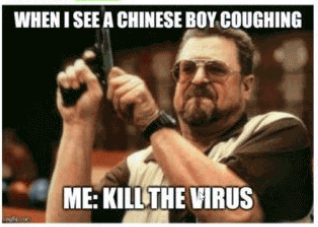
When he refers to the “invasion” of the “Chinese virus,” (most infected folks entered the U.S. from Europe), he’s playing into the “Us vs. Them” binary that masks the naturally complex path diseases take. But he has to keep it simple for his simple base. This has involved the president of the United States of America sending tweets to quasi-domestic terrorists. His call to “liberate Michigan” (governed by “that woman,” as he calls her), and other states governed by Democrats, has triggered the anti-government militia men. Armed with AK-47s and rocket launchers (seriously) these “freedom” lovers in MAGA hats (and a handful of “their women”) have been seen on state capitals, spreading their germs and threatening to launch a civil war if they don’t get back their God-given right to go to the mall to buy camo wife-beaters.

Screen Shot 2020-05-19 at 12.26.52 PM

The “War on” rhetoric is tired but it works. It gets boys to men ginned up to go in to battle. And like all battles, there are casualties. The workers in the meat packing plants in Iowa who have died with ventilators down their throats are just abstract statistics to his base. And mostly brown statistics, at that. Ivanka is still healthy and the family stock price in hydroxychloroquine is only going up. As Sartre once wrote, “When the rich wage war it’s the poor who die.” Trump, the four-time draft dodger, is great at pretending to be a warrior (remember his celebration of “his generals”?), but the men, women, and children who will suffer and die because of his hubris are evidence of dire limitations of the blade and the perils of unchecked toxic masculinity.

So has this virus reinforced patriarchal power and the oppression that comes with it?

While we take a break from mass shootings and realize the great labor of all the women who stayed home with the kids without pay, I’m hoping we can use this moment to deflate the dumb puffed up chests of male rule. We have a moment to just talk to each other. Just think of all the conversations husbands are having with their wives because there is no basketball on TV. If ever there was a time to listen to women, it’s now. Maybe, anti-government/pro-Trump “protestors” aside, the earth is turning the corner. We’re ready for a paradigm shift.

images-1

Confronting Our Deaths in a Pandemic

April 7, 2020

It’s not a good time to be watching the news. The stories of people losing loved ones to COVID-19 can have me sobbing like a baby. Parents, like, me leaving their families too quickly. Some are frontline medical workers, some are educators, some are bus drivers that an idiot coughed on. They were here and then they were gone. Most got a test too late, not that there’s much help that’s available once you slide down the hole. I have a very old friend who is on a ventilator in a hospital room in Atlanta and we’re just hoping the wind shifts direction and blows him back to his family. So turning on the TV at the moment is sure to remind you that the glass is half empty as it’s being used to waterboard you.

JohnSean

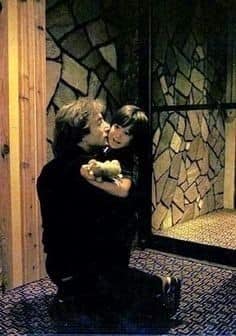
I started this blog in late 2014 because I was inspired by John Lennon’s decision to leave work and become a stay-at-home father for his son, Sean. I wanted to give the same kind of intensive care to our daughter, Cozy. Cozy, 5, is now the same age as Sean was when John was killed by a gunman in front of their New York home. In numerous interviews, people ask Sean Lennon what he remembers about his dad and he honestly replies not much. That answer shakes me to the core. I’ve gotten to meet Sean a few times (and so did Cozy, in the womb), and I always wonder how his life would have been different if he had gotten two or three more years with his fab father.

The specter of death seems very real today, watching the rising death count from coronavirus. (Remember on February 26th, when Donald Trump said that in a couple of days, the virus would disappear, “like a miracle”?) You can tell me that I’m statistically more likely to be killed by a falling Comcast satellite than to die of the novel coronavirus, but that’s not going to register, especially since there’s a pretty good chance I’m already carrying it. My persistent cough worries me. There’s no fever but the “science” on what this thing is seems to change daily. We certainly don’t have any leadership on the issue from our president, just daily campaign rallies where the science is attacked along with journalists and handy scapegoats (“China!”).

Screen Shot 2020-04-07 at 5.59.27 PM

Screen Shot 2020-04-07 at 5.48.16 PM

The rate at which people go from fine to dead, body stacked in a refrigerated truck, is horrifying. The Detroit bus driver who went on social media to complain about coughing passengers was dead in 11 days. And like the Class of 2020 high school seniors who will never be in high school again, no prom, no hugging your favorite teacher, there’s little chance to get your house in order and say goodbye. If you’re lucky, you’re isolated from all humans, including your family, with a ventilator tube down your throat. People have brought family members to emergency rooms “just to be safe” and then never seen them again.

I’m not obsessed with death. Other than being over 50, I’m not particularly “high risk,” but what does that even mean? I’m the family member who makes the supply runs to the grocery store, where two employees tested positive. I touched an avocado to see if it was ripe. Then I touched my face. I’m probably gonna die. It’s been nice knowing you. When I was 7, I stole a piece of Brach’s candy from a Piggly Wiggly. There, I said it.

I do worry about leaving my family in the lurch if I succumb to this thing. I know it’s fashionable and all, but it seems like more trouble than it’s worth, and I think my wife would be pissed off if I got COVID-19 after running to the store because I suddenly had a mad craving for Pop Tarts. I think she actually likes me and appreciates my ability to, um, well, do something. God, I don’t even know. I do know my daughter thinks pretty highly of me and I’d prefer to stick around long enough for her to learn that I made some life changing decisions so this wonderful family could exist. Am I the only one who is thinking about how all these fragile relationships turn out if I become a part of the daily corona body count? I mean they can’t even have a funeral for dead me. I require a wake with multiple drunken awkward moments! But I was just cremated along with all the other wheezers. Poof.

92634429_2597423547196657_3991994848331694080_n

For those of us that have wrestled with depression, there’s a real need to constantly monitor our mental states. The moment it really hit me was the first time I had to wear a cloth face mask in public. I sat in the grocery store parking lot trying to get my courage up to don a cute face covering that one of our crafty neighbors had made. I knew it was the responsible thing to do, maybe even saving lives (I had touched the avocado, after all), but it felt like I was giving into the fear. Once inside the Fred Meyer, mask in place, I saw all the other depressed faces hidden behind their masks. It felt like an awful version of The Handmaid’s Tale. The sinking feeling that this was normal now had me wanting to go lay down in the bread isle and cry. What started out as kind of funny (“Why the hell is everyone buying toilet paper?”) is now centered around saving the lives of family members. On a beautiful spring day, it can seem so dark.

Those of us that don’t die, will get through this. And maybe we’ll have that promised renaissance afterwards. I just wish we had an actual leader to help guide us through the darkness instead of a self-serving madman. I guess it’s up to us. I guess it’s always been up to us. Let’s live. At least until we can have funerals again.

Protecting Our Children from the Trump Virus

March 24, 2020

I’m not sure what day of the self-quarantine this is. I know it’s the second day of Oregon’s “shelter in place” order but the streets of Portland have been increasingly empty for over the last ten days, since the governor ordered all the schools closed a week before spring break, dropping thousands of kids in the laps of trying-not-to-panic parents. We don’t know what’s happening. I wonder if they do.

Our Cozy, at 5 and a half, is pretty smart. She rides around the car with me, secretly listening to NPR (I thought she was staring out the window, thinking about unicorns). Like most, I’ve been a little too addicted to the news about the advancing Trump virus. “Hey, Coze, where do you think this coronavirus came from?” I asked, trying to gage her comprehension of the global slowdown.

“It’s from sick bats in China,” she calmly said. I was expecting some kindergarten-level theory about it coming from flying monkeys hiding inside rain clouds. She’s probably been checking the infection rates on the Johns Hopkins website.

LemurKitchen

But the reality of the impending sense of doom as the Trump virus shuts down the world she knows lurks like a monster in the closet. Our spring break tradition includes a trip to the super weird and wonderful Enchanted Forest amusement park, south of Salem. Closed due to the virus. We had planned a trip to Joesph, Oregon to hike around the eastern part of the state. Prohibited. Play dates, ice cream shops, jungle gyms, The Old Spaghetti Factory, all her favorite things are off limits for now and we don’t know when they won’t be. She doesn’t care about the stock market, but the fact that she can’t hug her friends is a red flag that things have changed drastically.

2256666112

This might be every parents secondary concern right now (the first being how to protect their children from contracting the Trump virus). How do we keep the kids from being infected with our generalized anxiety? Things are about to get even worse, but I don’t want my small child to know. She’s got washing her hands to “Happy Birthday” twice down pat, but does she realize that she’s not returning to her kindergarten class? The next time she goes to school she will be a first grader (God, please) and everything will be different. I keep thinking of that 1997 movie, Life is Beautiful, where Roberto Benigni and his young son are in a Nazi concentration camp and he convinces his son that they are actually in an exciting game to keep him from being completely traumatized. Dad is murdered by the Nazis in the end.

I’ll be honest, this Dad has been struggling. The Trump virus has upended the economic stability I started to find in 2019. It’s put my 70-something parents at risk. I’ve got an old friend in the ICU in an Atlanta hospital with a COVID-19 infection, and the dumbass Spring Breakers at the beach are not exactly flattening the curve. I feel like I’m inside a Joy Division album. Cozy is frustrated that Dad spends so much time watching the news or checking in on line. What to do, as we slide deeper into the social distance?

As usual, my bad ass wife snapped me out of the funk. She reminded me of all the positive things that are happening in this moment, most importantly all the wonderful family time that we’ve been gifted that will have a huge impact on our daughter. We’ve gotten to be homeschoolers, play dates, and creative time passers. (Andi has already given Cozy a haircut, two (henna) cat tattoos, and lots of weekday attention.) We’re planning some family art projects and Cozy and I are committed to learning how to play chess before this thing is over. We’re also catching up on Disney movies (Thank you, Disney+ for releasing Frozen 2 three months early!) And we’ve got a daily calisthenics routine we do on the sidewalk, to the delight out our neighbors.

90971054_10159437383954307_580178282721312768_n

I’ve been running daily (now that the gym is closed) and reconnecting with the music of my youth. (You can run really hard to Van Halen). In the process, I’ve noticed neighbors and strangers seem more friendly, waving from their bubbles. The explosion of live music coming in from my social media platforms has put me in the room with some of my favorite performers, including Patti Smith, Michelle Malone, and Ben Gibbard (every day at 4 pm!). Something is happening. It’s like a government imposed artist retreat (as Patti called it) that’s also producing some much needed civility. The Trump virus is the great equalizer, but beautiful things may emerge from it. Andi and I have even started on a screenplay project!

She was quick to remind that when all this is over, people might slip back to their 9 to 5 grooves, complaining about how they don’t have any time to do the things that they really want to do. As a sociologist, I’m hoping this is a paradigm shift. That once we taste this new version of our lives, we won’t want to go back to the rut. We’ll create a new synthesis, transformed by the quarantine into a new global community.

445px-Botticelli-primavera

So this is what we must share out with our children, that out of crisis comes opportunity. Not to make a fast buck, like those looking for a corporate bailout from the Trump virus aid package. The opportunity to create new things, that connect us in new and beautiful ways. Cozy wants to write postcards! The social organism is adapting. We might look on this moment in history like how we look at how the Black Plague in 1340s Italy paved the way for the Renaissance, as Europeans embraced a lust for life instead of endlessly pondering the afterlife. Let the Trump virus unleash our lust for life and let our children know all the beautiful things that are coming.

Let us come out of this a new version of us, connected and complete. And let the optimism of our children be our guide.

Love In The Time of Corona

March 15, 2020

IT WAS INEVITABLE: Society was due for a course correction. We’d settled into our accepted state of idiocracy, whining about our moron leaders while sipping our over-priced coffee drinks. Their delusions of nationalism were destined to bite all of us on the ass. Brexit, “America First,” Polish nationalism, and all the rest. Build a wall and crime will fall, they said. They were too stupid to know that germs don’t recognize man-made boundaries.

Unknown

In less than two weeks the fantasy of “national borders” was laid to waste by the creeping, then accelerating, coronavirus. We are the world, sneezing and coughing together, engaged in a collective fear that our inherent sociability is killing off our elders, one nursing home at a time. Our anti-science president thought he could employ his jingoism by placing his executive power in front of this “foreign virus” (his words). COVID-19 laughed at his hubris. It was already here, spreading like a kerosene fire.

So here we are, in lockdown, trying to “flatten the curve,” riding out the pandemic in our under-stocked bunkers, socially distancing ourselves from our neighbors. Thank the gods for Netflix and chilling. (We now know what will come after Gen Z, the Coronials. See ya in 9 months, babies!) What does this mean for our society, as food servers run out of grocery money and Trump thinks of another way to help his rich friends, again? (“Fed to pump in more than $1 trillion in dramatic ramping up of market intervention amid coronavirus meltdown”) It seems like once they closed down Disneyland, we were racing to a complete social collapse. At least my gym is still open, for now.

In times like this, people crave togetherness, something more than posting memes about empty toilet paper shelves at Costco. Older readers will remember how after 9/11 there was a strange sense of unity that fell over the country. We were all bonded by our grief and needed to be together, hugging strangers and lending handkerchiefs to wipe away others’ tears. Ah, those were the days. How can we accomplish this same cathartic social ritual with three feet between us at all times? I want to hug my elderly neighbors who are already “socially distanced,” but will that kill them?

Unknown-2

Our founding sociologist, Emile Durkheim, asked, over a hundred years ago, why we need religion. In a time of growing scientific explanation, it seemed like religion was less and less required to make sense of the world and yet people were still flocking to churches, synagogues, and mosques. What he found made a lot of sense. People’s need for religion didn’t have anything to do with needing “God,” but needing each other. We needed a sense of community, from the Amish to Zoroastrians. We needed to be in one place together, breaking bread and engaging in rituals that gave us a sense we were connecting the sacred mysteries and the profane reality.  Religion gave us the social cohesion needed grease the wheels of a functioning society. As a kid who grew up in the Bible Belt, you never asked where someone was on Sunday mornings. They were at church, with their friends.

In the twenty-first century, social media has given us much of that sense of community we used to find at our various worship services, but it’s still not the same. Even with online shopping, online dating, and online education, there is still an innate desire to be in a room together. Maybe it is tied to our tribal origins, the rule by consensus. Checking in with each other by taking stock of body languages. “Yeah, I get the feeling people don’t want to go the Chili’s after work.” We need to be reminded of the flesh and bones of us, that we are not a series of illuminated screens.

Screen Shot 2020-03-15 at 6.33.07 PM

So how will we get through this? My intellectual mind understands that limiting social contact will slow down the spread of the virus and put this thing in the dumpster with the swine flu, the bird flu, and various monkey-born illnesses. But my emotional mind wants to take my family out for dim sum to support our suffering Asian community and later grab a drink at my local bar in hopes a few shots of whiskey will immunize me. (Guilty of doing both this week.) Facebooking and ordering delivery just doesn’t cut it. Will my very human need to be in the world (and putting my money where my asymptomatic mouth is) extend this nightmare and maybe take out a few humans in the process? How can I be the needed citizen of the world and also stem the economic collapse in my little part of the world?

Durkheim believed that even horrible things can be functional for society. Maybe COVID-19 is functional as a great reset for the human race, to remind us that borders and nations are luxuries that quickly fade when we realize we’re all in this germ factory together. I’m wrapping my arms around the world. And then washing my hands.